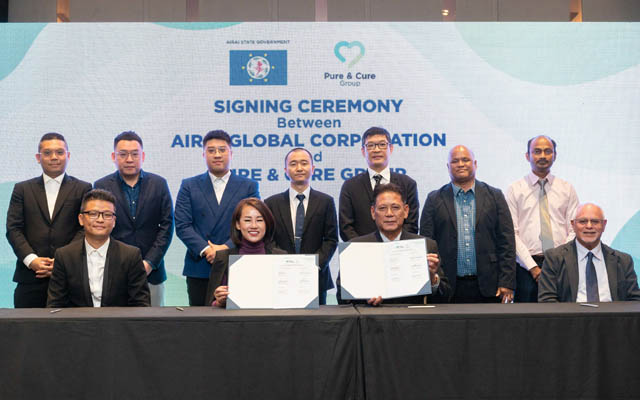
The Airai State Government is collaborating with Airai Global Corporation (AGC) to revolutionise eco-tourism and healthcare in Palau with two key signings on January 19 at Sheraton Petaling Jaya Hotel.
The agreement outlines the development of an integrated eco-resort and various facilities across a land area of up to 23 million square meters, which will help drive economic growth in Palau. This will comprise the development of special economic zones in fields like non-invasive modern healthcare, exclusive premium villas, marina, seaport, tourism infrastructure, and theme parks.
The two signings will see the development of Palau as an eco-tourism and healthcare destination
AGC is also joining forces with Pure & Cure Health Care Group to provide high-quality healthcare services with plans for a local cell therapy centre. Both companies aim to address prevalent health issues, such as diabetes and cardiovascular diseases, benefitting both locals and foreign tourists.
There is also the passport programme for migration to Palau to bring about more high net-worth foreign migration traffic.
Acting on the government’s call for more foreign investor participation in recent years, AGC has forged ahead with the Tourism+ initiative to build an integrated leisure destination encompassing culinary and recreational attractions, shopping, entertainment, culture, arts, healthcare and more. It will also strengthen cooperation with public and private sectors, and expand the list of countries of inbound tourists and boost diversification.
An AGC spokesperson commented that Palau is not only “a paradise for investment but also the largest all-natural health and wellness paradise in the region”, remaining mostly pure and pollution-free due to no heavy industries and intensive agriculture at the destination.
Trip.com Group’s CEO Jane Sun shared insights on new trends and opportunities in the post-lockdown travel landscape at this week’s World Economic Forum annual meeting held in Davos, Switzerland.
She also expressed optimism about Asia’s continued growth and shared her perspective on its investment potential during the panel discussion titled Asia – the world’s next growth anchor?, which convened influential stakeholders to delve into the opportunities and new challenges emerging in Asia.
From left: Standard Chartered Bank’s Ben Hung, Manulife’s Roy Gori, Trip.com Group’s Jane Sun and Khazanah Nasional’s Geoff Lee
Trip.com Group has witnessed strong booking interest in Asia, with Thailand, Japan, and South Korea among the top travel destinations. The rise in consumer income has also led to growing trends in the region such as high-quality wellness experiences and event tourism, particularly for sought-after events like concerts and music festivals.
Sustainable tourism is another shift that is picking up steam, with environmental awareness motivating more travellers to choose low-carbon travel options, such as hotels that adhere to sustainable standards. The group has also prioritised options such as the rental of electronic vehicles and offering flights with lower carbon emissions.
Zooming in on the post-lockdown economic trajectory in one of Asia’s largest regions, Sun asserted that China offers more investment opportunities than what some may have perceived. She said: “Investors should not overlook the thriving travel, wellness or entertainment sector in China. With its vast size, diverse industries, and varying levels of consumer buying power, the investment opportunities are abundant.”
In particular, the travel sector presents numerous untapped growth opportunities, such as the rapid increase in inbound and outbound travel, as well as favourable policy developments.
Sun expressed optimism about the growth of the tourism industry, especially with recent positive developments, such as increased flight capacities and expanded visa-free arrangements, that have facilitated international travel to and from China.
Since July 2023, China has removed visa requirements for citizens of 11 nations. These include the recent unilateral visa-free policies for several countries, including France, Germany, Spain, Italy, and the Netherlands, mutual visa-free agreements with Malaysia, and plans for similar arrangements with Singapore and Thailand. China also announced earlier in the week that it will unilaterally grant visa-free entry to Swiss and Irish nationals.
According to Trip.com Group data, significant increases have been recorded in inbound search and booking volumes from countries such as Germany, Spain, and the Netherlands. Those with visa-free arrangements or plans for relaxed visa policies, such as Malaysia, Singapore and Thailand are among the top destinations favoured by Chinese tourists for the upcoming Chinese New Year.
Moreover, since its launch in September 2023, Trip.com’s China Travel Guide, which provides information about hotel, transport, payment, and other travel-related issues, has served nearly 100,000 international travellers planning to visit China.
Meanwhile, as of mid-January, outbound travel orders for the upcoming Chinese New Year holidays have surged more than 10 times compared to the previous year.
For the wider Asian economy, Sun maintained that its prospects remain robust, citing projections that it will contribute to around 50 per cent of global GDP growth. The rapid development of the tourism industry in Asia, coupled with the strong purchasing power of Asian customers, has indicated the potential for sustained growth in the region.
“We are committed to forging an influential network for our global partners, empowering them to welcome customers from every corner of the world,” commented Sun. “Equally, we stand poised to usher Asian customers into the global arena, opening doors to boundless opportunities and creating pathways for unprecedented international success.”
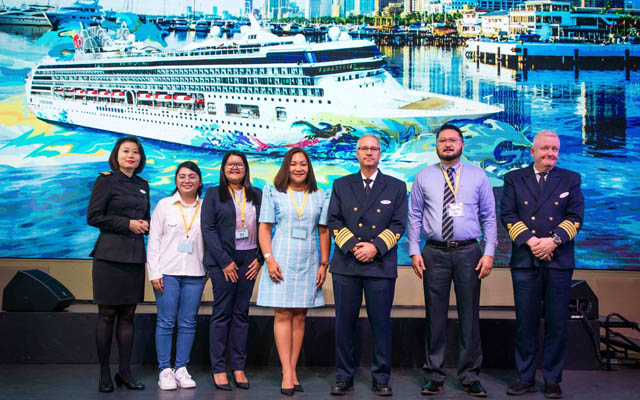
Resorts World Cruises (RWC) kickstarted 2024 with the maiden voyage of Resorts World One to the Philippines.
As part of her special and inaugural five-night sailing from Hong Kong, Resorts World One arrived at Manila yesterday and is scheduled to arrive in Boracay today.
A special ceremony was held on Resorts World One to commemorate her arrival in Manila
With the Resorts World One homeport in Hong Kong year-round, the cruise ship offers a variety of itineraries to many different destinations for its two-, three- and five-night cruises, which include the Philippines for this special sailing, complementing current destinations to Sanya, Okinawa (Naha and Miyakojima) in Japan, as well as to Danang and Nha Trang in Vietnam.
“The Philippines marks our first new destination in 2024 and we are excited to include both Manila and Boracay as part of this special five-night cruise aboard Resorts World One from Hong Kong,” said Michael Goh, president of RWC. “We look forward to exploring future opportunities together to boost the cruise tourism sector for the Philippines and the region.”
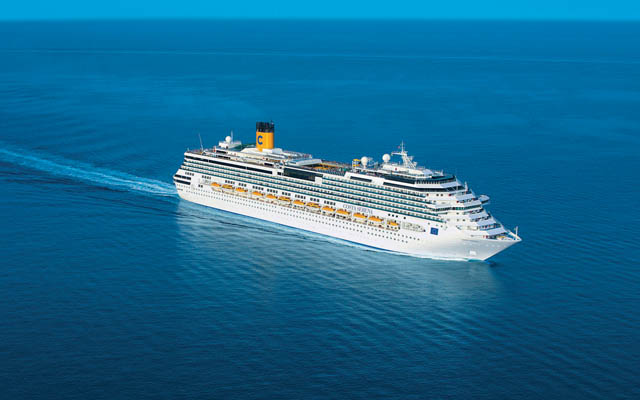
Costa Cruises, along with cruise operator Hwajing Travel & Tours (Hwajing), has established its first international cruise homeport at Port Klang in Malaysia.
The strategic decision to anchor Costa Serena at Port Klang aligns with Hwajing’s commitment to exploring new markets and offering passengers an unparalleled travel experience.
Costa Serena will homeport at Port Klang in Malaysia
Both companies have also embarked on a journey to explore the vast potential of the untapped Muslim travel market, customising its services and offerings to cater to the specific needs and preferences of Muslim travellers.
With a 75-year history, Costa Cruises made its foray into the Asian market over 15 years ago. Costa Serena homeporting at Port Klang will not only redefine luxury cruising in Malaysia, but also acts as a catalyst for sustainable economic growth – as the inaugural international cruise homeport, it will have a spill-over effect, invigorating Malaysia’s economy and unlocking opportunities across various sectors.
“This Costa Cruises and Hwajing partnership signifies a paradigm shift in travel,” said Francesco Raffa, director of region and growth markets, Costa Cruises. “This collaboration promises a positive and promising trajectory for Malaysia’s cruise industry, reflecting a shift towards culturally sensitive and friendly travel experiences.”
“Even during the pandemic, we maintained a close working rapport with Costa Cruises,” said Kenny Cheong, managing director of Hwajing Travel & Tours. “The strategic choice of Port Klang as Costa Serena‘s homeport underscores Malaysia’s emergence as a maritime hub, poised to cater to a diverse international clientele.”
Travel DMC Group and its subsidiary, KP Transport, have launched the Sit in Coach programme in Singapore, an initiative designed to redefine the travel experience for a global audience, offering a suite of services that includes airport transfers, attractions transfers, and city tours.
Travellers can now experience seamless and luxurious airport transfers to and from Changi Airport; dedicated transfers to Singapore’s iconic attractions; and explore the city’s cultural landmarks, historical sites, and vibrant neighbourhoods with an experienced guide.
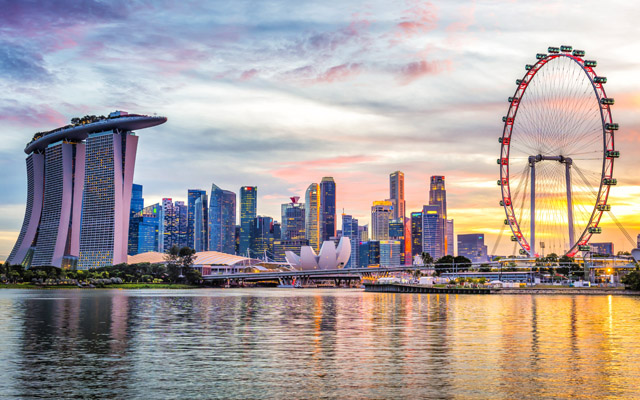
The Sit in Coach programme offers airport transfers, attractions transfers, and city tours around Singapore
To celebrate the launch of the programme, Travel DMC Group and KP Transport are offering special rates on platforms Globaltix and Kkday, as well as directly on KP Transport’s website.
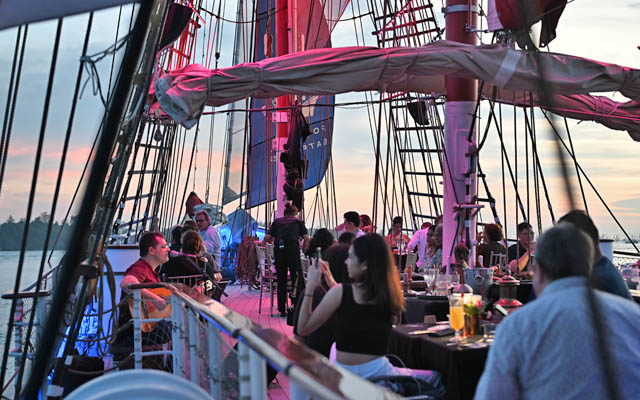
Go City and Tall Ship Adventures are offering exclusive bundle deals for the Sunset Dinner Cruise onboard the Royal Albatross and a choice of two Go City passes in Singapore.
The Royal Albatross’ Sunset Dinner Cruise is known for its unique, elegant, gourmet dining experience set against the backdrop of 360-degree sea views along the Sentosa Coastline.
Royal Albatross’ Sunset Dinner Cruise is known for its unique, elegant, gourmet dining experience
The bundles include the Sunset Dinner Cruise on Royal Albatross and their preferred choice between the Go City All-Inclusive Pass and the Go City Explorer Pass.
The Sunset Dinner Cruise Ticket and Go City All-Inclusive Pass (two-day pass) is priced from S$456.82 (US$341) per pax, while the Sunset Dinner Cruise Ticket and Go City Explorer Pass (two-choice pass) starts at S$328.53 per pax.
Furthermore, Go City customers can now experience even greater cost savings up to S$170, and utilise a S$125 voucher when acquiring tickets for the Royal Albatross Sunset Dinner Cruise with a seven-course degustation menu upgrade, worth S$89.93 per pax, with their Go City Singapore pass.
Tickets are available at their on-site ticket booth in Sentosa, and on the Royal Albatross website.
La Vie Hotels & Resorts has promoted industry veteran Alan Christie to the role of senior director – growth & business development, Asia, Middle East and Africa.
In this newly-created role, he will be based out of La Vie’s Bangkok head office where he will take charge of growing La Vie Hotels & Resorts portfolio across Asia, Middle East and Africa and increasing awareness of this business model.
He was most recently La Vie’s area general manager, Sri Lanka, where he was responsible for managing the strategic performance of the Radisson portfolio in Sri Lanka.
Minor Hotels has appointed Vijay Krishnan-Vazhvelil as vice president – operations, India.
With over 20 years of experience, he is an experienced business leader with a focus on luxury hospitality, wildlife tourism and experiential travel.
He will be based in Dubai and Bangkok, and will play an instrumental role in building a sustainable pipeline and operations in India. His most recent role was as vice president of operations at Royal Orchid & Regenta Hotels & Resorts.
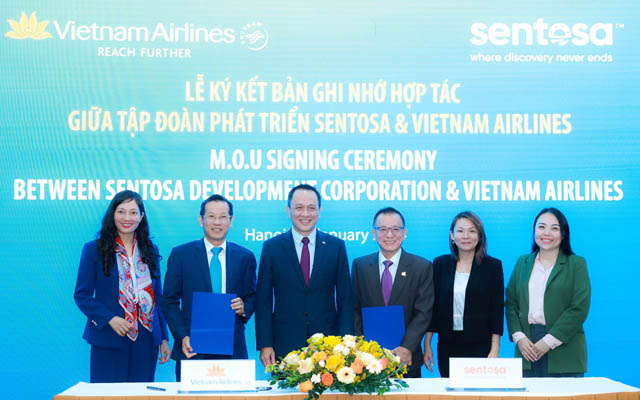
Vietnam Airlines and Sentosa Development Corporation (SDC) have signed a one-year Memorandum of Understanding (MoU) to promote tourism between Vietnam and Singapore.
As part of the MoU, Vietnam Airlines and SDC will collaborate and develop tourism products and promotional offerings aimed at cementing Sentosa Island as a destination of choice.
The partnership aims to promote tourism between Vietnam and Singapore
Vietnamese passengers travelling on Vietnam Airlines to Singapore can enjoy complimentary admission into Sentosa Island, as well as a complimentary ticket to either one of the island’s top attractions – Wings of Time, a light and water night show, or the Sentosa Island intra-island cable car.
In addition, these travellers will receive exclusive privileges with their Vietnam Airlines boarding passes, including discounts on the Sentosa Fun Discovery Pass which provides access to multiple leisure experiences and attractions across Sentosa.
Vietnam Airlines currently operates direct flights from Ho Chi Minh City and Hanoi to Singapore, with 28 flights per week. Furthermore, a year-on-year increase of 22 per cent in visitor arrivals from Vietnam was recorded from April to November last year, according to statistics by Singapore Tourism Board.
Dang Anh Tuan, executive vice president, Vietnam Airlines, said: “The collaboration (aims) to not only bring exceptional benefits to travellers between Vietnam and Singapore but also to enhance the role of the national airline contributing to fostering economic, commercial, and cultural exchanges between the two countries.”
Chin Sak Hin, assistant chief executive and chief financial officer, SDC, added: “Given the growth potential of the country, this MoU offers tourists on Vietnam Airlines a host of privileges… with our newest day-to-night attraction Sentosa Sensoryscape set to soft launch in March, there will be even more new adventures and experiences to be discovered and we welcome our friends from Vietnam to Sentosa’s shores.”
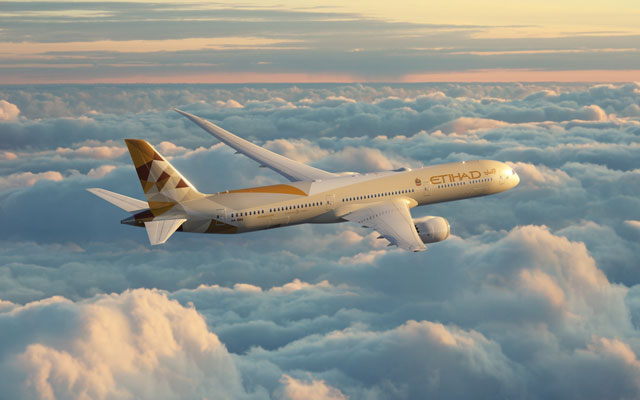
Travelport and Etihad Airways have renewed and expanded their content distribution agreement which will include New Distribution Capability (NDC) content and servicing.
The agreement deepens the partnership between Travelport and Etihad Airways, as the companies will collaborate on the delivery of NDC content and servicing for Travelport-connected agencies.
Etihad Airways has renewed its content distribution agreement with Travelport
As part of this multi-year deal, Travelport customers will have continued access to Etihad Airways’ extensive and growing global travel network through the Travelport+ platform.
Additionally, Etihad will continue its participation in Travelport’s rich content and branding programme and digital media marketing product solutions, such as sponsored flights.
“Our collaboration with Travelport will bring more offers to travel agencies and more choice to travellers across our growing worldwide network,” said Arik De, chief revenue and commercial officer, Etihad Airways. “With this renewed deal, we will continue to provide our agency partners access to our complete range of content and fares, as well as upcoming products and services, which will further enhance our guests’ travel experience.”
“Our new long-term agreement with Etihad Airways offers our customers using Travelport+ a complete solution that makes it easy for them to search, sell and service Etihad Airways content from any source,” said Jason Clarke, chief commercial officer, travel partners at Travelport.




 He was most recently La Vie’s area general manager, Sri Lanka, where he was responsible for managing the strategic performance of the Radisson portfolio in Sri Lanka.
 He will be based in Dubai and Bangkok, and will play an instrumental role in building a sustainable pipeline and operations in India. His most recent role was as vice president of operations at Royal Orchid & Regenta Hotels & Resorts.