NEOM, meaning new future, is Saudi Arabia’s US$500 billion project being built from the ground up based on “liveability and sustainability” and where a futuristic luxury travel destination is rising.
Located on the Red Sea in the north-west, NEOM will feature hyperconnected, cognitive cities, ports and enterprise zones, research centres, sports and entertainment venues.
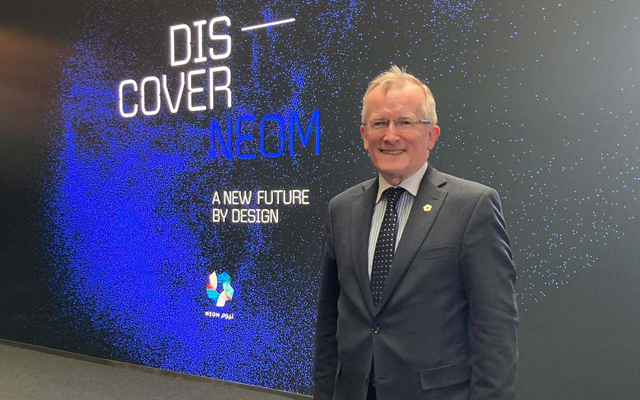
NEOM’s Niall Gibbons recently visited Singapore, South Korea and India as part of the Discover NEOM Asia Tour, and will head to Japan next (Photo: Caroline Boey)
Managing director of tourism, Niall Gibbons, visited Singapore as part of the Discover NEOM Asia Tour. He had already made stops in South Korea and India, and will head to Japan next.
NEOM, he remarked, had identified 16 trade shows including those organised by ITB, WTM and ILTM to “build trade relations” and most recently attended ITB China in Shanghai.
The destination comprises 468km of coastline and spectacular islands, scenic snow-capped mountains reaching up to 2,600m, views across the Gulf of Aqaba and the Red Sea, and idyllic and peaceful desert expanses.
According to a NEOM statement, Sindalah – a multifaceted island featuring world-class design combined with nature to offer a luxury eco-experience – has partnered prestigious BWA Yachting as the Red Sea’s first superyacht destination.
The world’s superyachting clientele is expected to arrive from 1Q2024, the statement added.
In addition, Gibbons shared that a proposal had been put up to establish an airline for NEOM, and NEOM Bay Airport was being expanded to meet international demand.
NEOM’s tourism statutory board, he noted was tasked to oversee regulation and planning, destination development, sales and marketing and digital development and the creation of an app to provide a seamless booking platform experience.
NEOM is the vision of crown prince Mohammed bin Salman, and is one of the most important projects in Saudi Arabia’s Vision 2030 which plans to grow and diversify the Saudi economy and position the country to play a leading role in global development.
At the UNESCO World Heritage Committee’s 45th session in Riyadh on September 19, Si Thep Historical Park in Phetchabun Province achieved World Heritage site status, showcasing years of effort by Thai conservationists.
This accolade, however, has also sparked concerns over the site’s capability to manage increased tourist footfall due to its limited infrastructure.
Si Thep Historical Park has been named a UNESCO World Heritage site
Marking Thailand’s first cultural inclusion in the UNESCO list in 31 years, Si Thep joins Ayutthaya, Sukhothai, and Ban Chiang – which was added in 1992 – bringing the total of Thai UNESCO cultural sites to four, and the total number of Thai World Heritage sites to seven, the other three being natural heritage sites.
Thapanee Kiatphaibool, governor of the Tourism Authority of Thailand (TAT), praised the acknowledgment, attributing it to the relentless endeavours of individuals dedicated to preserving Thai heritage and culture, conveying that she hopes this distinction will catalyse further interest and conservation efforts for the site.
Si Thep, often overshadowed by its more illustrious counterparts Ayutthaya and Sukhothai, houses Dvaravati and ancient Khmer-style remnants of ancient Phetchabun dating back to the 11th century.
As for the concerns, park head Sittichai Pooddee told AFP that the site is nearing its daily capacity of 2,000. Other areas of concern include possibilities of looting, as well as current boundary and zoning disputes affecting local residents.
Pacharaporn Panomwon Na Ayutthaya, a lecturer at Chulalongkorn University, also warned of the site’s unpreparedness for a visitor surge and highlighted the pressing need for essential infrastructure upgrades such as better waste management, improved roads, and parking for tour buses. She emphasised the immediate need for proactive conservation efforts and infrastructure enhancement to preserve the site’s integrity and accommodate future visitors effectively.
Located approximately a five hours’ drive from Bangkok, Petchabun province is renowned for its temperate climate and mountainous terrain which has led to it being referred to as the ‘Switzerland of Thailand’. The province was featured in the TAT’s 2018 Green Travel Guide, promoting sustainable travel to hidden gems in the lower north of Thailand.
Initiatives are underway to propose at least six additional sites in Thailand for UNESCO recognition, including Phu Phra Bat historical park in Udon Thani, backed by the Department of Cultural Promotion, and Kru Ba Sri Wichai, backed by the Department of Religious Affairs.
Aman Group is poised to expand globally after securing a further investment of US$360 million on top of its existing investment of US$900 million from Public Investment Fund and Cain International, bringing the company value to US$3 billion.
The second investment comes from a group of strategic partners, including Mubadala Capital, the asset management subsidiary of Abu Dhabi’s Mubadala Investment Company, and Alpha Wave Ventures, a private equity growth fund co-managed by Alpha Wave Global and Chimera Capital.
Aman Group plans to expand globally after securing a further investment; Amanpuri beach resort in Thailand, pictured
The future commitments from this strategic group of investors will support the company’s ongoing global expansion, securing future Aman and Janu projects, and new brand development.
Speaking on the investment, Vlad Doronin, owner, chairman and CEO of Aman Group, said: “My long-term strategic vision has been to create ecosystems which centre on the complete Aman lifestyle both in urban destinations and resort settings. The proven success of this model, while always retaining the brand’s DNA, has resulted in a diverse pipeline which will enable us to continue to create unparalleled experiences for our guests and owners.
He continued: “The validation of Aman’s strategy by prominent investors in regions where we have considerable expansion planned enables us to leverage the extraordinary potential of the Aman brand and accelerate the pipeline to deliver sustainable growth.”
Aman currently has a collection of 34 hotels across 20 countries, 12 of which include Aman Branded Residences, with a robust pipeline of further hotels and residences projects under construction in countries including the US, Japan, Mexico, South Korea, Saudi Arabia, and several European destinations.
Meanwhile, the group’s sister-brand, Janu, will launch its flagship destination, Janu Tokyo this winter.
Wellness has become a big aspect of travel for people, with expectations ranging from the simpler outdoor walks in nature to more scientific approaches to rejuvenation.
This has inspired NTOs and stakeholders in the travel and health space to come up with innovative offerings to win over travellers.
The Singapore Tourism Board’s (STB) Wellness Tourism Roadmap identifies key strategies and initiatives to develop the city-state’s wellness offerings.
In its effort to become a leading urban wellness haven, STB partners with global fitness and wellness aggregator ClassPass to promote Singapore’s wellness offerings on the platform.
Wellness Festival Singapore (WFS) was launched last year and the second edition hosted this year, to promote and increase the accessibility of Singapore’s wellness repertoire. WFS is organised by STB in collaboration with Enterprise Singapore, Health Promotion Board, National Arts Council, Sentosa Development Corporation, and Sport Singapore.
Held at Marina Bay Sands (MBS) from June 17 to July 9, this year’s event was bigger than the last. There were altogether more than 180 wellness activities across Singapore, focusing on fitness, mental and emotional health, as well as lifestyle offerings. In 2022, the event offered 130 activities.
The second edition of Glow Festival also materialised in February. It debuted in 2019, drawing a crowd of 15,000 active participants to Sentosa, but was disrupted by the pandemic in the subsequent years.
The home-grown festival, supported by STB and MBS, focuses on wellness activities, with the 2023 programme comprising workshops designed and conducted by wellness experts, in-person and digital experiences, and a line-up of international celebrity fitness instructors.
Among the highlights were a multi-sensory studio space by Kingsmen, which spans the size of four tennis courts; and The Glow app, which gamified fitness challenges island-wide.
Martin Capstick, chief executive of Exceed Sports & Entertainment and founder of Glow Festival, said: “Mental, physical, and emotional well-being are at the core of Glow Festival 2023’s messaging. We want to inspire festival goers to adopt new practices to live happier and healthier lives and present them with a truly unique opportunity to unwind.”
Over in Thailand, wellness tourism takes on a unique angle. The country became the first in South-east Asia to legalise the production, import, and export of cannabis for medical purposes in 2018. The plant is said to help relieve stress, reduce fatigue, increase appetite, encourage deeper sleep, stimulate the intestines, and soothe inflamed skin.
This led to a rise in cannabis treatments available at various hospitality businesses. For example, Panpuri Wellness, a luxury spa in Bangkok, offers Holistic Cannabis Wellness Experiences while spas within Anantara hotels utilise cannabidiol oil – the second most active ingredient in cannabis – in some of its treatments. Anantara Chiang Mai Resort even serves up “healthy and nutrition-rich” cannabis-infused dishes at its Service 1921 restaurant.
AWMI hopes to strengthen Indonesia’s reputation in herbal medicine and make it more accessible to tourists
In an earlier interview with TTG Asia, Chunxia Gao, group director of spa & wellness at MSpa International for the Asia region, opined: “There is growing interest in the therapeutic benefits of CBD (cannabidiol oil). With CBD safety guidelines ensuring the quality of the products, we can only foresee great success in CBD-infused products, superfood choices, and CBD spa and wellness experiences.”
On a broader scale, Tourism Authority of Thailand (TAT) initiated the Amazing Thailand, Amazing New Chapters: Thailand Meaningful Wellness project to raise the profile of Thailand’s vast selection of health and wellness travel products and services. Within this broad project is the Discover the New You campaign, launched in July this year with the support of more than 130 leading health, wellness business operators, hotels, wellness resorts and spas, as well as hospitals and specialised clinics. A range of products, from wellness stays at resorts to health check-ups, is created for this.
TAT expects the campaign to attract more than 3,000 new tourists to Thailand and generate over 18 million baht (US$528,859) by this September.
These developments are expected to power up Thailand’s wellness tourism advantage. According to the Global Wellness Institute’s The Global Wellness Economy: Thailand report, published in September 2022, Thailand is the fourth largest wellness tourism market in Asia, after China, Japan, and India. Its wellness economy in 2020 was worth US$29 billion. Thailand also ranks 17th globally for Traditional & Complementary Medicine.
In Malaysia, more than 10 million travellers from around the world have visited the country for healthcare purposes in the last decade, contributing over 9.2 billion ringgit (US$2 billion), according to Malaysia Healthcare Travel Council (MHTC).
Healthcare travellers visiting Malaysia peaked at 1.22 million in 2019, contributing 1.7 billion ringgit in earnings. As the country recovers from the impact of Covid-19, healthcare arrivals are back up to 850,000 in 2022, while revenue was 1.3 billion ringgit.
Explaining Malaysia’s allure for healthcare services, Musa bin Yusof, deputy director general, promotion, Tourism Malaysia, said: “Our facilities are world-class (and) easily accessible. We are multicultural and multilingual, so there is no language barrier, and services are value for money as we charge in Malaysian ringgit.”
He added that healthcare visitors are well supported with customs clearance via a dedicated immigration lane, airport meet-and-greet, and access to a special lounge for arranged transport to their hospital.
Anantara Chiang Mai Resort serves up cannabis-infused dishes
To advance the country’s healthcare tourism sector, MHTC launched the Malaysia Healthcare Travel Blueprint 2021-2025. It aims to sharpen the travel ecosystem and the Malaysia healthcare brand, and deepen market reach. A revenue target of 1.7 billion ringgit is set for 2025.
As part of the blueprint, Malaysia introduced its flagship Medical Tourism Hospital Programme, which is expected to play an important role in transforming the healthcare environment. Four hospitals have been appointed for this – National Heart Institute, Island Hospital, Mahkota Medical Centre, and Subang Jaya Medical Centre.
Indonesia is, too, deepening its development of health and wellness tourism. While Balinese and Javanese massage often come to mind among travellers in search of a relaxing holiday in the country, Indonesia has far more to offer.
The Ministry of Tourism and Creative Economy (MoTCE) and the Ministry of Health are collaborating to expand the country’s health and wellness offerings.
Aligned with the government’s direction, the Indonesia Medical Tourism Association (AWMI) is now developing medical tourism in rural areas.
Taufik Jamaan, chairman of AWMI, said the association’s work had started in late-2022, and ongoing efforts include collaborating with food processing trainers to ensure hygienic food processing.
AWMI is also embracing digitalisation through the implementation of the Community Telehealth Pavilion (ATM Health). This solution, linked to the Ministry of Health, allows travellers to conveniently check their blood pressure, cholesterol levels, blood sugar, and oxygen saturation.
“For instance, before embarking on a mountain climb, individuals can assess their health condition using ATM Health,” Taufik explained.
The portable nature of ATM Health, which resembles a suitcase, gives it mobility and ease of use in tourism villages.
Taufik explained that AWMI’s role extends beyond medical tourism promotion, as it also actively develops businesses avenues, educates the public, and conducts research on herbal resources across the country. It recently welcomed the Association of Indonesian Herbal Medicine Doctors as a partner in its medical endeavours.
Looking ahead, AWMI aims to establish downstream processes to ensure that the community can benefit from research findings. By leveraging research outcomes, it plans to develop various products, such as supplements, powders, herbs, and beverages, which will strengthen Indonesia’s reputation in herbal medicine.
At present, it is collaborating with pharmaceutical companies on the verification of herbal medicine by the National Agency of Drug and Food Control and to make herbal medicine more easily accessible to tourists.
According to the latest data from UNWTO, international tourism has continued to recover from the worst crisis in its history as arrival numbers reached 84% of pre-pandemic levels between January and July 2023.
The Middle East, Europe and Africa lead the global sector’s rebound.
The UNWTO World Tourism Barometer showed that international tourist arrivals reached 84% of pre-pandemic levels by the end of July
Tourism on track for full recovery Tourism demand continues to show remarkable resilience and sustained recovery, even in the face of economic and geopolitical challenges. The new issue of the UNWTO World Tourism Barometer tracks the sector’s recovery over the course of 2023 up to the end of July.
The UNWTO Barometer revealed that by the end of July, international tourist arrivals reached 84% of pre-pandemic levels, with 700 million tourists having travelled internationally between January and July 2023, 43% more than in the same months of 2022.
It also showed that July was the busiest month with 145 million international travellers recorded, about 20% of the seven-month total.
UNWTO secretary-general Zurab Pololikashvili said: “UNWTO data once again shows how tourism is recovering strongly in every part of the world – but as our sector recovers, it also needs to adapt. The extreme weather events we have witnessed over recent months as well as the critical challenges of managing increasing tourism flows underline the need to build a more inclusive, sustainable and resilient sector, and ensure recovery goes hand-in-hand with rethinking of our sector.”
Results by region All world regions enjoyed strong rates of tourism recovery over the first seven months of 2023, driven by demand for international travel from several large source markets.
The Middle East reported the best results between January and July, with arrivals 20% above pre-pandemic levels. The region continues to be the only to exceed 2019 levels so far.
Europe reached 91% of pre-pandemic levels, supported by robust intra-regional demand and travel from the US.
Africa recovered 92% of pre-crisis visitors this seven-month period and the Americas 87% according to available data.
In Asia and the Pacific, recovery accelerated to 61% of pre-pandemic arrival levels after the opening of many destinations and source markets at the end of 2022 and earlier this year.
The UNWTO World Tourism Barometer contains results by region, sub-region and country, including best-performing destinations in terms of international arrivals and receipts over the first seven months of the year.
Looking ahead These results show international tourism remains well on track to reach 80% to 95% of pre-pandemic levels in 2023. Prospects for September to December 2023 point to continued recovery, according to the latest UNWTO Confidence Index, though at a more moderate pace following the peak travel season of June to August. These results will be driven by the still pent-up demand and increased air connectivity particularly in Asia and the Pacific where recovery is still subdued.
The reopening of China and other Asian markets and destinations is expected to continue boosting travel both within the region and to other parts of the world.
The challenging economic environment continues to be a critical factor in the effective recovery of international tourism in 2023, according to UNWTO’s panel of experts.
Persisting inflation and rising oil prices have translated into higher transport and accommodations costs. This could weigh on spending patterns over the remainder of the year, with tourists increasingly seeking value for money, travelling closer to home and making shorter trips.
The proposed budget of the Philippines’ Department of Tourism (DoT) during the plenary deliberations on September 19 has been approved by the House of Representatives (HoR).
Tourism secretary Christina Garcia Frasco commented: “(HoR’s) resounding support reflects their recognition of tourism as an essential economic pillar for our country, which, given the fiscal tools to expand, can only increase the 1.87 trillion pesos (US$32.9 billion) in visitor receipts and 5.35 million jobs contributed by tourism to our economy thus far.”
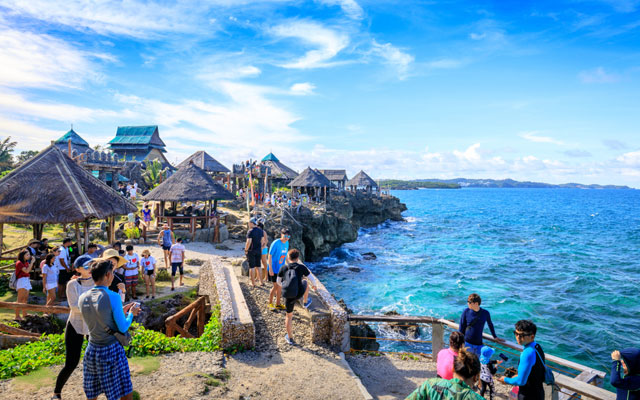
The budget increase will be used to transform the Philippines into a tourism powerhouse in Asia; Crystal Cove Island near Boracay, pictured
She said the budget will be utilised with “utmost efficiency, transparency, and accountability” to bring the president’s vision of “transforming the Philippines into a tourism powerhouse in Asia” to reality.
As of September 19, the DoT has recorded 3,877,183 visitor arrivals, or 80.77 per cent of the department’s 4.8 million target for 2023.
“While the tourism industry has had robust recovery in the first year of the Marcos Administration, there is still much to be done to improve and increase competitiveness especially on the aspects of infrastructure, connectivity, digitalisation, and equalisation of tourism development across the country. We remain committed to take on the challenge of transformation inspired by our president’s prioritisation of tourism,” shared Frasco.
The tourism sector in the Philippines continues to receive one of the lowest budgets among the national agencies, which prompted lawmakers to bat for the increase in the budget by noting the significant contribution of the tourism industry to the Philippine economy.
During the HoR committee on appropriations deliberations, Frasco presented major tourism wins, including the establishment of the DoT Tourist Rest Areas across the country, improvement of gateways starting with the Ninoy Aquino International Airport Terminal 2, the facilitation of seamless entry protocols for travellers, and the diversification of tourism products and portfolio through various initiatives such as the Philippine Experience Program, among others.
She said: “The approved budget will allow for the efficient and successful implementation of the department’s programmes, projects, and activities designed to provide long-term solutions to some of the most pressing challenges that confront our country’s tourism industry as summed up to three basic but crucial components of connectivity, convenience, and equality. The DoT is committed to utilising the allotted resources judiciously with the benefit and well-being of the country as the most important concern.”
Ant Group has added seven new leading e-wallets and payment apps from Asia to the Alipay+-in-China Program, bringing the total number of overseas e-wallets accepted in the Chinese mainland to 10.
Piloting the programme in late 2022 were AlipayHK (Hong Kong SAR, China), Touch ’n Go eWallet (Malaysia) and Kakao Pay (South Korea). Now, users of mPay (Macao SAR, China), Hipay (Mongolia), Changi Pay (Singapore), OCBC (Singapore), Naver Pay (South Korea), Toss Pay (South Korea) and TrueMoney (Thailand) will be able to use their familiar home e-wallet on their own phone to enjoy seamless mobile payment experience in the Chinese mainland across Alipay’s merchant network.
Ant Group has added seven e-wallets to its Alipay+-in-China Program, allowing users to use their own payment app in mainland China
Users of these e-wallets may use their own payment app wherever Alipay works, to enjoy secure, smooth and cashless payment, and transparent and competitive exchange rates. They can also enjoy additional promotional deals via Alipay+ Rewards, a digital cross-border marketing hub integrated into select wallet apps. The wallets’ teams are also providing familiar customer support to their roaming users.
Outside of China, Alipay+ covers five million merchants in 56 markets, and works with over 20 mobile payment partners across Asia which together serve over 1.4 billion consumer accounts. The programme now extends Alipay+ service to tap into China’s merchant network with tens of millions of points of sales (POS).
Travellers may also choose to bind their international bank cards to an updated international version of Alipay to enjoy mobile payment and digital life services while in China.
In addition, Ant Group is rolling out extensive merchants’ education and marketing campaigns across the Chinese mainland to welcome Asian athletes, fans and travellers.
Douglas Feagin, senior vice president of Ant Group and head of Alipay+ Cross-Border Mobile Payment Services, said expanding partners and merchant network, and enhancing digital operational capabilities of SMEs are key to Alipay+’s future strategy.
“We will invest faster and deeper in payment and digital marketing technologies to help our partners and merchants achieve robust, omni-channel growth,” said Feagin.
The total number of payments made in China through the pilot Alipay+-in-China Program wallets grew 47 times in six months between March and August 2023. Shanghai, Guangzhou and Shenzhen top as destination choices while F&B, retail and transportation are the three most common scenarios for these transactions.
Royal Caribbean International’s Utopia of the Seas floated for the first time over the weekend and is now one step closer to her debut in Port Canaveral (Orlando), Florida, in July 2024.
This marks a major milestone for the Oasis Class ship, leading to the next phase of construction at the Chantiers de l’Atlantique shipyard in Saint-Nazaire, France.
Utopia of the Seas is now one step closer to her debut in Port Canaveral, Florida, in July 2024
Known as the float out, this key moment in the construction of Utopia took 17 months to reach. The process itself took nearly 15 hours, beginning with filling the new ship’s dry dock with more than 46 million gallons of water overnight. Utopia was then moved into an outfitting dock, where she will be completed in summer 2024. The ship will soon come to life as her features are installed, such as the 295-foot-long Ultimate Abyss – the longest dry slide at sea – to a first-of-its-kind immersive train car dining experience.
Utopia will introduce to vacationers more than 40 ways to dine and drink, more pools and many ways to chill and more. The three-night weekend and four-night weekday getaway will be the first in the Oasis Class to offer short escapes when she debuts. Every voyage will feature visits to Nassau, The Bahamas, and Perfect Day at CocoCay – Royal Caribbean’s private island – that will feature its first adults-only slice of paradise, Hideaway Beach, starting in January 2024.
Utopia will be the first Oasis Class ship powered by liquefied natural gas technology, and will combine this with a line-up of the brand’s already-established environmentally-friendly initiatives and features, from waste heat recovery systems to shore power connection.
Cathay’s new premium travel lifestyle brand is officially rolling out to markets around the world, where customers can look forward to an array of new and aspirational offerings in holidays, shopping, dining, wellness and payment.
Cathay’s new master brand will simplify the way it engages and interacts with customers. It will comprise a host of complementary categories, such as flights, holidays, shopping, dining, wellness and payment. Its airline brand, Cathay Pacific, will remain as is.
Cathay’s new master brand will comprise a host of complementary categories, with Cathay Pacific as its airline brand
Cathay’s CEO Ronald Lam said: “This month of September marks 77 years since the Cathay story first began with a single Douglas DC-3 aircraft nicknamed ‘Betsy’ and a drive to connect the world and its people. As the habits and needs of our customers have changed over the years, so too have we. Our evolution into Cathay marks an exciting new chapter in our history, and reflects our renewed focus on the customer and our determination to fulfil our vision of becoming one of the world’s greatest service brands.”
To celebrate this milestone, the brand has also launched its first global campaign in three years – Feels Good To Move. This campaign will feature content that celebrates how good it feels to move and aims to encourage people to keep moving.
Travelport is making it easier for agents and travellers to choose carbon-conscious trip options with the launch of transparent and enhanced flight emission estimates.
This new feature is calculated using the publicly accessible Travel Impact Model (TIM), which has been developed by Google in partnership with the Travalyst coalition.
Travelport’s transparent and enhanced flight emission estimates enables agents and travellers to choose eco-friendly options when planning their trips
Travel retailers using Travelport can easily compare CO2 estimates generated by the TIM per flight, per passenger, across carriers, at the point of sale based on factors such as the type of aircraft, seat configuration, distance of the flight, load factors and more. These enhanced TIM carbon emission estimates for air segments can be accessed via Smartpoint, Trip Quote and the Travelport API Suite in the Flight Service Information Display and In-Flight Search Response views.
Tom Kershaw, chief product and technology officer at Travelport, said: “Agents and travellers are seeing different carbon emissions scores and rankings for the exact same flight options when searching them in different channels. As an industry, adopting a free, publicly accessible data framework will allow us all to be more transparent and consistent in the way travel options are displayed and scored based on factors like carbon emissions, environmental certifications, or waste initiatives.
“By adopting the Travel Impact Model and using this data methodology for flight emission estimates displayed on agents’ screens, we’re able to align with all of the major global travel platforms to provide more transparency and eliminate confusion with inconsistent rankings across platforms.”