TTG Asia
Asia/Singapore Thursday, 24th September 2026
Page 4

Minor Hotels signs Avani+ Hanoi

0
xx

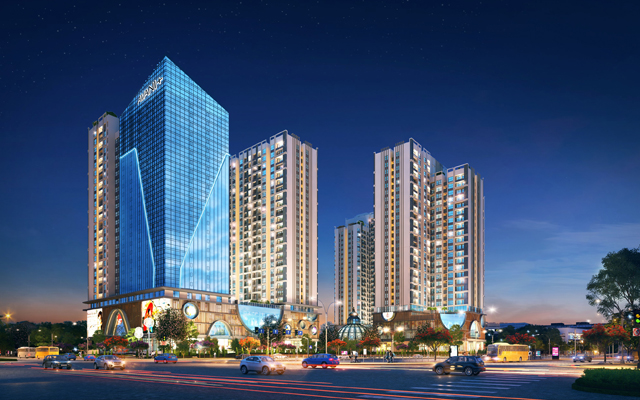
Trading Construction Works Organization has signed Minor Hotels into a management agreement for the new-build Avani+ Hanoi, a 310-key hotel in the Vietnamese capital city’s Bach Mai Ward.

Scheduled to open in 2028, the hotel forms part of a mixed-use precinct anchored by Hinode City, a new lifestyle mall, alongside 1,099 residential and serviced apartments. Located at the intersection of Minh Khai and Kim Nguu Street, the development benefits from a vibrant neighbourhood and convenient transportation links with the city’s Old Quarter a 10-minute drive away.

The 310-key Avani+ Hanoi is Minor Hotels’ first property in the Vietnamese capital

Avani+ Hanoi marks a continuation of Minor Hotels’ growth in Vietnam, where the group operates four properties under its Anantara and Avani brands – Anantara Hoi An Resort, Anantara Mui Ne Resort, Anantara Quy Nhon Villas and Avani Quy Nhon Resort – along with luxury train carriages, The Vietage by Anantara.

The signing is Minor Hotels’ first property in Hanoi.

Avani+ Hanoi is positioned as a premium lifestyle hotel, with facilities including an indoor swimming pool and deck, a fitness centre, all-day dining and specialty restaurants along with meeting and function spaces.

Priority Pass to accelerate travel innovation, backed by fresh financing

0

Collinson Group’s 500 million pound (US$669.7 million), five-year investment programme, which is now accelerated by a new 350 million pound financing facility, will result in an expansion of its proprietary lounge network and investment in the Priority Pass airport experiences programme.

Priority Pass will see the development of digital, AI and data capabilities, and efforts to broaden its range of travel services for clients and travellers.

Collinson Group’s massive investment programme will facilitate extensive enhancements of Priority Pass capabilities and services

The investment builds on significant enhancements already underway across Priority Pass. These include a new enterprise-level technology platform leveraging modern data and AI architecture, alongside the global rollout of the new Priority Pass+ app. These enhancements are designed to create a more connected digital ecosystem for clients, partners and members, while enabling greater personalisation over time.

Collinson takes a long-term approach to growth, continually reinvesting in its businesses, clients and their customers, and partners. This has enabled Priority Pass to continue expanding its global network and developing new solutions and services, while growing ahead of the wider travel market.

An extensive part of Collinson Group’s investment programme will be focused on expanding its global airport lounge footprint, through Airport Dimensions, sister company to Priority Pass. This additional lounge capacity within the group will help to protect and enhance the experience available to Priority Pass members as global air passenger traffic is expected to almost double to nearly 19 billion journeys a year by 2045. Priority Pass recently surpassed 1,900 airport lounges and travel experiences worldwide, with its global network expanding by 6.7% over the past 12 months.

Christopher Evans, CEO of Collinson International, owners of Priority Pass, said: “Travel plays an increasingly important role in people’s lives. While operating costs across the travel industry continue to rise, so too do traveller expectations, with people seeking journeys that are more seamless, connected and personalised. That makes investment in the customer experience more important than ever before.

“This investment reflects a principle that has remained core to our business for more than 35 years: that investing in better travel experiences creates genuine value for our partners, our clients and travellers alike. Recent shifts in what technology can enable means we need to increase our investment levels to realise the value new technology can bring through Priority Pass, further allowing our clients to offer differentiated and personalised experiences to their customers.”

Soon to come enhancements in Priority Pass will include intuitive travel planning that leverages AI, past behaviours and real-time geo-location where enabled to proactively suggest suitable lounges and travel experiences for members’ journeys, along with easier activation, saved card functionality, biometric authentication, and email or mobile one-time verification.

Miral invests in five-year development pipeline to strengthen Yas Island’s global appeal

0

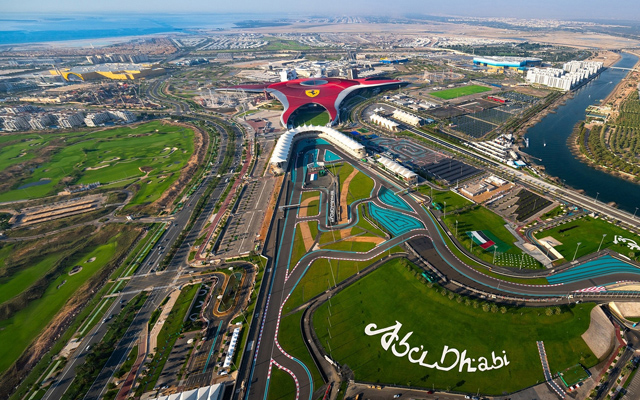
Miral, which is behind destination experiences across Abu Dhabi, is investing more than 12 billion dirham (US$) across Yas Island over the next five years to enhance and expand leisure attractions and entertainment that will support Abu Dhabi’s Tourism Strategy 2030.

This next-phase development reflects a clear focus on expanding Yas Island’s existing theme parks and attractions, as well as introducing new immersive rides and experiences. The investment will also grow the island’s hospitality offering, adding new hotel rooms and elevating its accommodation portfolio.

Miral’s next phase of development for Yas Island will expand existing theme parks and attractions, introduce new immersive rides and experiences, and grow hotel offerings

Mohamed Khalifa Al Mubarak, chairman of Miral, said: “This investment reflects our commitment to Abu Dhabi’s long-term vision and our ambition to continue shaping one of the world’s most dynamic tourism destinations. Yas Island has become a global success story, demonstrating how world class experiences contribute to economic growth, enhance quality of life, and strengthen Abu Dhabi’s appeal to audiences from around the world.

“Over the next five years, this investment will build on that momentum, introducing new experiences and expanding our hospitality and leisure offering to meet our evolving visitor expectations. As Abu Dhabi continues to strengthen its position as a global centre for tourism and entertainment, we remain focused on creating lasting value for residents, visitors and future generations, while contributing to the emirate’s sustainable growth and diversification ambitions.”

The 12 billion dirham investment is separate from the previously announced Disney project.

Grounded ambitions

0

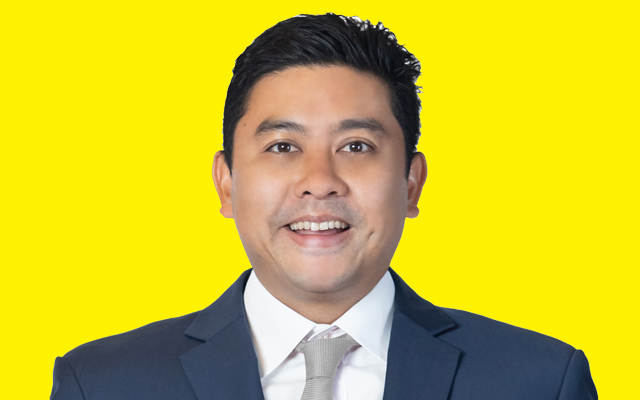
Onyx Hospitality Group began as a construction company that became a hotelier in Pattaya six decades ago. How did the group get from that first lodge to today’s four-brand portfolio?
It started with my grandfather, who founded the group. We still run Italthai, one of the largest construction companies in Thailand, and 60 years ago, in the boom that followed the Second World War, the Eastern Seaboard was opening up and we had the chance to build a hotel in Pattaya. The foreign investor behind it wanted to exit, so we took the asset we had helped develop into our own hands.

That first property was Nipa Lodge, then Orchid Lodge nearby, and the Amari brand was effectively born in Pattaya. The company that began as Siam Lodge became Amari Hotels & Resorts, a single brand with 12 properties.

About 20 years ago, I rebranded it as Onyx Hospitality Group so we could carry more than one brand: Amari as the core, alongside Ozo, Shama serviced apartments, and Oriental Residence.
Why did you choose the name Onyx?
We worked with brand consultants two decades ago and wanted a common name that was not already registered. Onyx is a black mineral, solid, with a steady base, and it comes from the earth, so everything about it is grounded. Our business is hospitality, and hospitality has to be grounded, so the idea fitted.

For the first years the name was a blur, and it is really only in the past six years, since I took the chief executive’s seat, that you can see genuine traction and visibility for Onyx Hospitality Group. Then Covid hit. We survived it, and we have re-emerged as a company that is 60 years old but feels new, rejuvenated and reborn in how we run our assets inside Thailand and beyond.

As Onyx Hospitality Group marks its 60th anniversary, what are you most proud of?
For me it is surviving the fire. Never before in 60 years had a shareholder come in as an active chief executive, but the crisis forced me into operations, to dive into the pool of chaos and sort things out one by one. Covid forced us to see the real self, the people who genuinely wanted to turn the company around.

Much of the work was a clean-up. When I took over there were 60 active contracts, some carrying heavy future liability or weak returns, and I brought that down to fewer than 40 before rebuilding to today’s 45, deliberately balanced at half serviced apartments and half full-service hotels. I am not a hotelier by training; I am a developer, but learning to be an operator is not that hard once you are in it.

Many view hospitality as a scale game. Why do you place such a strong focus on disciplined growth?
For Italthai, we take a long-term view. A hospitality business takes time, and we call these generational assets, the kind you do not sell but protect, ensure it stays competitive and relevant, and hopefully profitable, and pass down. But it is not easy in this sector, because it is very competitive.

Everyone says it is all about scale. But comes back to focus. A healthy portfolio is about selecting the right partner and the right opportunity, in a market you truly understand, and not chasing scale for its own sake.

Too many hospitality companies overstretch on resources and people, and they treat mergers and acquisitions as the quickest way to expand.

The discipline is to grow through the right contracts, not for the sake of a bigger number.

I would rather take one 500-key MICE hotel in a capital city than a 120-key resort on an island away from the boom, because the former is where the volume and positive cash flow sit.

I go hunting for the whale, not the sardine. The whale is hard to find, but there is always one somewhere if you keep your pace and focus.

You have set out to become the best medium-sized hospitality management company in Asia-Pacific. Why not something bigger?
At first the dream was smaller, to be the best in South-east Asia, but as we have grown as a company, we’ve realised that our clientele sits across Asia-Pacific. That does not mean planting a flag in every country.

We feel we want to develop our position to be a trusted business partner and hotel or hospitality operator in the region. We already have a presence in China and Hong Kong, and in time we can stretch to the whole of Australia and Indonesia, which we would like to explore as well – but the ambition is to be trusted, not to be everywhere.

Some in the trade will ask whether a medium-sized, Thai-rooted operator can stay relevant against global groups with more resources. What is your answer?
We are more agile and diligent than the old hospitality groups, the ones locked into a cookie-cutter mould they cannot step out of. We are agile and flexible with reason, while still having a clear brand and position.

We’re open to being creative with our partners and team members to ensure that Onyx is not a boring company. We make sure the group becomes a sizeable company that generates profit. Some operators get so fixated on expansion that there is no return to shareholders, and as a shareholder myself, that is a big lesson for me.

With the portfolio heading from 45 to more than 70 properties by 2030, which markets are your priorities?
The big focus now is Thailand, Malaysia and Laos. In Laos we already run two Amari, with a Shama coming and hopefully an Ozo in Vientiane. China is a very difficult market, so we mostly keep Shama there on a franchise model, with the Y Hotel Nanshan Shenzhen as the exception – a white-label – that we’ve taken on full management for our Hong Kong owner.

In South Asia we are looking at resort products in Sri Lanka, where we already have a presence, and in Bangladesh. India is not in the near term.

On the equity side our money goes forward in Thailand through joint ventures and greenfield projects funded with our own capital, into assets such as Amari Koh Samui and Amari Phuket.

Your 60th anniversary plan targets total revenue of 10.33 billion baht (US$309 million) in 2026, a 14 per cent rise, backed by 5.5 billion baht of investment over three years. Where is that investment going?
We are already working on development and site construction for EQ Phuket, the first EQ-branded property on Phuket island. It is an extension of the EQ Kuala Lumpur, which is part of the Equatorial Hotel Group, based in Malaysia. Itis the first joint venture (JV) for them as well to co-develop this resort with us. The project size is already 2.8 billion baht.

Secondly, we have a JV with our Japanese partner JR Kyushu, in which we will develop a Shama serviced apartment in Pattaya’s north. This will cost us about 800 million baht.

These two JVs will keep us busy over the next two years.

In the meantime, we also have a pipeline for the three Amaris that we own – Amari Bangkok, Amari Koh Samui and Amari Phuket – to be expanded and renovated.

We will be transforming Amari Phuket to Amari Resort & Villas, with an investment of 1.5 billion baht, and developing a new wing at Amari Koh Samui, which will consist of premium villas and suites, with investment of 700 million baht.

In doing so, we need to launch our Onyx REIT which has already been formally approved – we will be selecting the first three assets that will go into the fund and hopefully we can go public in 4Q2026. That will raise about 4.6 to 4.8 billion baht of free cash to come in.

As part of the anniversary you have repositioned four core brands: Amari into upper-upscale, Ozo into upper-midscale lifestyle, Shama in serviced apartments, and Oriental Residence into a more understated luxury. Why refresh now?
The hospitality industry today is so competitive that a brand which has looked the same for 15 years becomes a liability, so you keep upgrading to stay level with the global groups that have the luxury of launching new brands whenever they like. Creating a new brand takes 20 years to reach economy of scale, so I would rather evolve and uplift what we already have.

We want our guests to feel the brand is changing, and the service has to rise with it. For me, there must be return on asset: price needs to go up and cost needs to come down.

Amari Buriram United, now fully renovated, is exactly that kind of upgrade.

Thailand faces a hospitality talent shortage, and a younger generation that is less drawn to service work. How do you build the people to run more than 70 properties?
We have kept the corporate office lean, at around 110, so that everyone can know each other well. We want to grow this pool of talent as we expand.

We build this pool of talent through the Onyx Academy, an in-house programme that sits inside our Onyx Universe framework.

Our own management team writes the curriculum in-house; we select the right staff to take part, and we have co-developed programmes with major universities like the Sasin School of Management and Mahidol University. We work with many online programmes overseas as well – it is something we have evolved over the past three to four years, and it has won us several HR awards.

Every brand has its own standard operating procedure, so we have a roadmap to pick and choose and develop different groups of people to fit each one, to grow general managers, heads of department and individual talent.

It is a long programme, because while you build one pool of talent, you also face turnover every year. Instead of 30 people, you may end up keeping fewer than 20, so you can never stop (developing talents). We draw from all nationalities and all the courses are taught in English.
Underneath all of it, my mission is to achieve job security for Thai people – to have our own brands like Amari, Ozo and Shama – and to develop local talent alongside the regional talent we work with in Malaysia and Laos.

As Onyx Hospitality Group enters its next chapter after 60 years, how do you define the company’s mission today, and its ambition in the Asia-Pacific hospitality landscape?
The focus is to be a genuine regional player, a trusted business partner and operator across Asia-Pacific, without needing a flag in every country.

I keep coming back to one conviction: Asia needs to stick together. There is so much potential in this region for all of us to grow, from the technology coming out of China to the untapped wealth still sitting in India. If we build on our Thai roots with that regional outlook, Onyx Hospitality Group can stay relevant here for another 60 years.


Middle East tourism expects strong recovery after 2026 dip

0
xxx; photo by Rohit Kaul

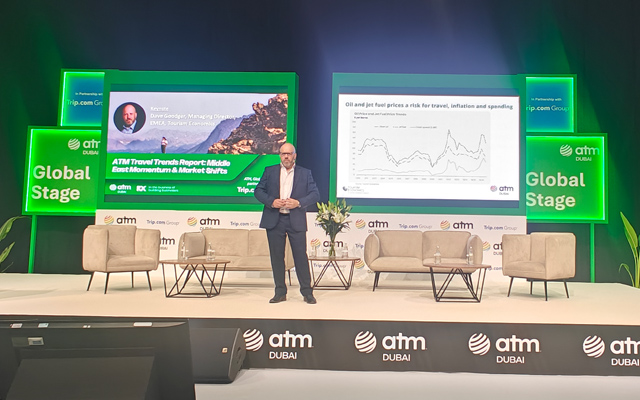
The highs of international travel into the MENASA (Middle East, North Africa, South Asia) region in 2025 will give way to a decline this year due to geopolitical tensions in the Middle East, according to Tourism Economics data.

Sharing its report on Middle East Momentum & Market Shifts during Arabian Travel Market (ATM) 2026 at Dubai World Trade Centre on Tuesday, Dave Goodger, managing director, EMEA of Tourism Economics, said: “Last year has been a record year for international travel. Inbound visitor nights to MENASA increased 61 per cent between 2019 and 2025, compared with just 12 per cent globally.”

Tourism Economics’ Dave Goodger highlights data that points to GCC markets driving inbound growth for the Middle East, North Africa, South Asia region over the next five years; photo by Rohit Kaul

However, the strong growth trajectory is expected to be disrupted this year. Tourism Economics forecasts a 14 per cent decline in international travel to MENASA in 2026. Arrivals into the Middle East are expected to fall by more than a fifth while travel into the Gulf Cooperation Council (GCC) countries will dip over 30 per cent, although this is partly buffered by modest gains in North Africa and South Asia.

Yet, the report retains an optimistic outlook: the GCC nations will drive inbound growth in MENASA with visitor nights set to increase 10 per cent per year over the next five years.

Goodger said a combination of established long-haul markets and rapidly expanding emerging markets would underpin the Middle East’s future tourism growth.

“The long-haul markets like Germany, the UK and the US are going to generate a significant number of tourist arrivals into the Middle East. The region is also expected to see strong growth from emerging markets like India, China, Thailand, and Indonesia,” he added.

The report also states that visits to the Middle East from beyond the region are projected to grow 43 per cent between 2025 and 2030, compared with growth of 30 per cent from intra-regional arrivals.

Yogyakarta evolves festival to build cultural and wellness ecosystem

0
xxx

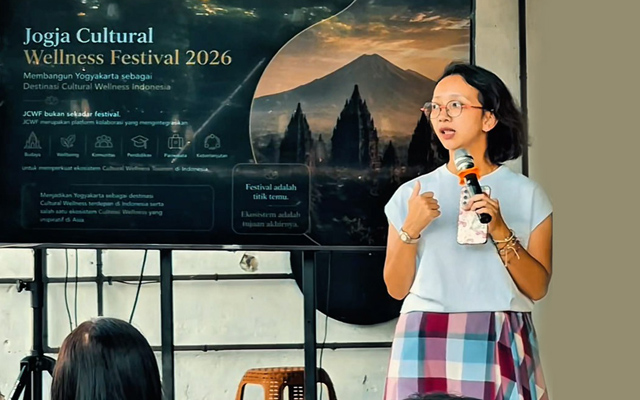
Yogyakarta will host the Jogja Cultural Wellness Festival (JCWF) 2026 from November 6 to 8, 2026, an event that encourages visitors to move beyond typical sightseeing and engage directly with the region’s living traditions.

Initiated and led by Gusti Kanjeng Ratu Bendara, chairman of the Yogyakarta Tourism Promotion Board, the JCWF brings together several sectors – including government agencies, hospitality providers, healthcare professionals, cultural communities, and environmental advocates – into a collaborative network. It will be hosted at Loman Park Hotel in Sleman.

Jogja Cultural Wellness Festival 2026 will serve both B2B and B2C functions

Bendara said JCWF evolves every year, ever since its launch in 2023.

“New this year is its direction and conceptual strengthening: transitioning from a standalone festival into a platform designed to develop Yogyakarta’s cultural wellness ecosystem,” she said.

JCWF 2026 is designed to be a hybrid event that serves both B2B and B2C functions.

Bendara said: “The B2B component creates a collaborative space to bring together government bodies and tourism stakeholders. Its objective is to foster collaboration, business matching, product development, wellness tour packages, networking, and market access expansion.

“On the other hand, the B2C component serves as an experiential platform for the public and travellers to directly encounter Yogyakarta’s cultural wellness through various programmes, activities, community initiatives, culture, arts, nature, culinary experiences, healthcare, and well-being.”

Instead of positioning wellness purely as leisure, JCWF presents traditional Javanese practices as practical tools for personal balance. Participants can learn focus and self-control through jemparingan (traditional archery), explore rhythm and mindfulness through gamelan music, and study traditional health practices through jamu (herbal remedies).

The event is built around three main pillars: Reconnect People, Reconnect Culture, and Reconnect Wellbeing. Central to this concept are long-standing community values such as srawung (communal interaction), unggah-ungguh (social etiquette), and gotong royong (mutual co-operation).

“Through these principles, visitors participate alongside local residents, who act as knowledge holders and cultural guardians rather than simple performers,” she explained.

As interest in wellness travel grows worldwide, JCWF offers an alternative to standardised retreats. It suggests that wellness does not always require new remedies; instead, it can mean reconnecting with basic elements of human life – community, nature, and cultural values passed down through generations.

Through this framework, Yogyakarta invites travellers to experience its culture as an active journey of reconnecting with others, nature, and oneself.

LLAN Asset lines up new Bangkok hotel after Canopy debut

0
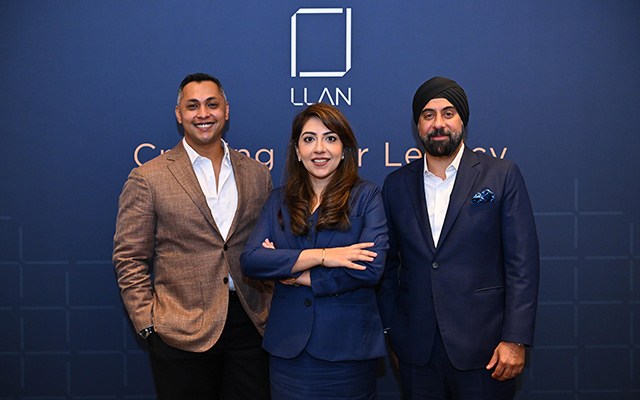
Canopy by Hilton Bangkok Sukhumvit developer Lucky Living has rebranded as LLAN Asset while hinting at further upscale hospitality projects; photo by LLAN Asset

LLAN Asset, the Bangkok developer behind the first Canopy by Hilton in South-east Asia, is preparing a new upscale hospitality project near a city mass-transit line.

Formerly Lucky Living, LLAN Asset opened Canopy by Hilton Bangkok Sukhumvit on August 1, 2026, a premium lifestyle hotel with 174 rooms across two buildings and eight floors, marking the brand’s debut in South-east Asia.

Canopy by Hilton Bangkok Sukhumvit developer Lucky Living has rebranded as LLAN Asset while hinting at further upscale hospitality projects

The property is the company’s second hotel after it developed Thailand’s first Four Points by Sheraton, the Four Points by Sheraton Bangkok Ploenchit Sukhumvit, in Bangkok in 2010.

“We have done four residential projects since, and this is our second hospitality project,” said Ishmit Bajaj, managing director.

He added that LLAN Asset will soon announce an upscale hospitality project in a “super-prime” location near a Bangkok BTS station, positioned so as not to compete with Canopy by Hilton. Future acquisitions too would be strictly in prime locations.

Land price and timing are some of the deciding factors for the company on whether a site becomes residential or hospitality.

Suki Bajaj, LLAN Asset’s other managing director, elaborated that standing out was essential to compete in the crowded upscale hospitality segment in Bangkok.

She noted that local building limits – 10,000m² for low-rise sites and up to 30,000m² for high rise sites – create an opening for private developers. As strict floor-space caps prevent operators from relying on high room counts and sheer volume to generate returns, developers are driven to maximise yield per square metre through bespoke, creative design rather than filling generic mid-rate towers.

“That is the opportunity with a private developer like ourselves, where we can add creative expression and deliver something different, rather than one big rectangular building filling in as many rooms as possible and trying to get 80 to 90 per cent occupancy at a mid-level rate,” she said.

That search for differentiation drove LLAN Asset’s shift from upper-midscale properties, such as the Four Points by Sheraton property that it opened in 2010, to experience-led lifestyle brands like Canopy by Hilton in 2026.

She attributed the transition to evolving guest expectations over the past 16 years, where standardised international brands have lost their novelty and younger travellers are more willing to pay a premium for tailored experiences.

Lifestyle hotels remained thin on the ground around Sukhumvit, she added, even as more developers moved into the segment.

As the company prepares its next phase of expansion in upscale and upper-upscale hospitality, Ishmit emphasised that the rebranded entity will serve as the growth vehicle “as we scale that business.”

Klook deepens commitment to supporting tourism growth for destination Vietnam

0
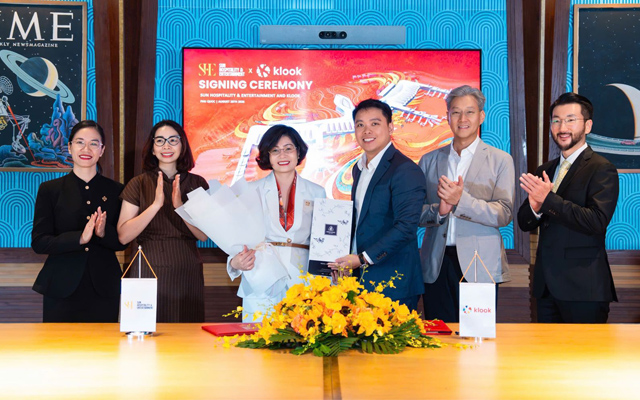
new MOUs focus on curating experiences that support destination development, while strengthening how Klook drives and captures demand for Vietnam

Against a backdrop of rising traveller interest in Vietnam, especially out of Singapore, experiences platform Klook has signed two new strategic Memorandum of Understanding (MOU) with local partners and hosted Kreatorverse 2026, its content creator summit in August.

The new partnerships are with Vinpearl and Sun Hospitality and Entertainment – two of Vietnam’s largest attraction operators.

Klook signs MOUs with Sun Hospitality and Entertainment (pictured) and Vinpearl on collaborative efforts in curating destination Vietnam experiences

The new MOUs focus on curating experiences that support destination development, while strengthening how Klook drives and captures demand for Vietnam. Under the MOUs, Klook and its partners will collaborate across three areas: marketing management, strategic expansion and product development, and data-sharing and performance review.

Tran Thu Thuy, deputy CEO of sales & marketing, Vinpearl, said: “As Vietnam’s tourism sector continues to grow, we want Vinpearl to be at the heart of that story, welcoming more of the world to Phú Quốc, Nha Trang, and beyond. Our partnership with Klook is an important step towards that ambition, connecting Singapore travellers with the destinations we’re building for Vietnam’s future.”

Tran Nguyen, deputy CEO, Sun Hospitality and Entertainment, also commented: “As more travellers look to Vietnam for their next trip, we want Sun Hospitality and Entertainment’s destinations to be part of that journey. Our partnership with Klook is a step toward bringing these experiences to more travelers around the world. We also hope that the innovative solutions developed through this partnership will serve as a catalyst not only for Sun Hospitality & Entertainment, but also for Vietnam’s tourism industry.”

Sarah Wan, general manager, Indonesia, Malaysia, Singapore and Thailand at Klook, said it was important to “work together to make more of Vietnam easier to discover and experience”.

Klook’s commitment to growing Vietnam’s tourism performance is anchored by its global creator summit event, which was hosted in Da Nang and Phu Quoc. The Vietnam edition this year brought together more than 120 content creators from 17 markets, alongside regional and local media, tourism boards, and merchant partners, to spotlight and surface Vietnam’s key destinations and experiences for online social discovery.

lyf Chinatown Singapore: Hop, skip and a jump away from heritage icons and dining buzz

0
xx
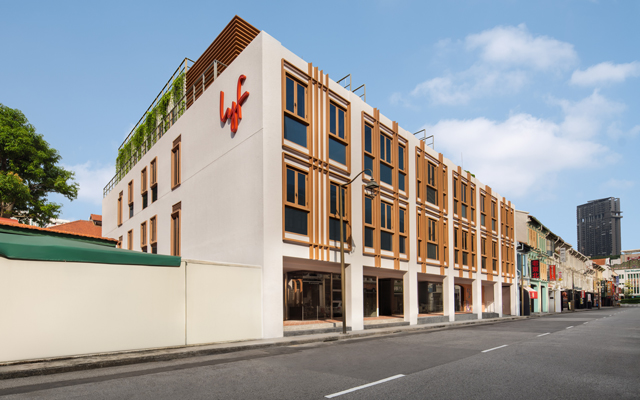
lyf Chinatown Singapore places guests within easy reach of heritage landmarks and a variety of dining venues for different budgets

Location: In the heart of buzzing Chinatown
The 90-key property occupies a row of conserved shophouses and a new-build wing, and boasts a location that is within stone’s throw from two MRT train stations serving different lines. This makes the hotel a convenient base from which to explore Singapore.

Its location in Chinatown is also stellar for experiencing iconic heritage landmarks in an area where Singapore’s early migrants – both the Chulia community, comprising Tamil Muslim immigrants from southern India, as well as Chinese forefathers – once built their lives and businesses. Trace the laneways to arrive at the Sri Mariamman Temple, Buddha Tooth Relic Temple, and Chinatown Heritage Centre. Keep an eye out for murals that tell the stories of the communities that once called Chinatown home.

Numerous eateries span out from lyf Chinatown Singapore, ensuring that guests will find something that whet their appetite and fit their budget.

A longer stroll away lies Ann Siang Hill Park, Thian Hock Keng Temple, and a collection of conserved shophouses that now house stylish eateries, cafes and bars.

Accommodation: Rooms rate high on aesthetics and functionality
lyf Chinatown Singapore is a co-living serviced apartment, which means guests are presented with opportunities to get out of their rooms and socialise across numerous shared spaces.

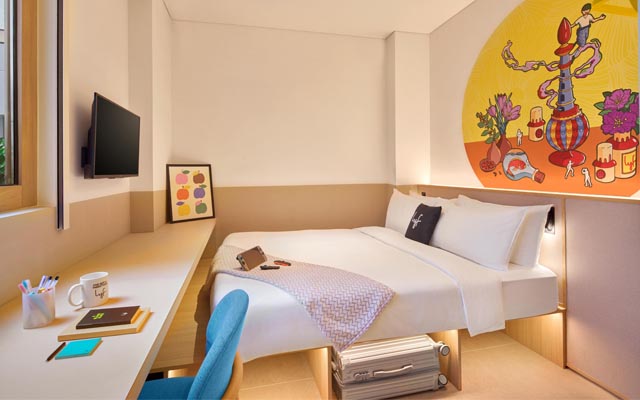
Apartments here are may be smaller in size than regular serviced apartments, but they rate high on functionality – expect quality bedding, smart TV, high-speed Wi-fi, excellent air-conditioning, spacious writing desk, clear lighting throughout the unit, and eco-friendly bath amenities.

There are nine room categories at lyf Chinatown, with the smallest and simplest option being the Nano Single, which comprises a single bed, ensuite bathroom, smart TV, desk, and basic room amenities such as hair dryer and bedroom slippers.

The other room types are Nano Twin, Nano Queen, Nano Queen Plus, Level Up, Level Up Plus, Side by Side, One of A Kind, One of A Kind Plus. They accommodate two guests in each unit.


Families or groups of friends can opt for the Two of A Kind or All Together Two-Bedroom room types, which are perfect for four guests in each apartment. Two of A Kind apartments feature a shared kitchenette and two bedrooms with their own bathroom. All Together units feature two bedrooms with queen beds, one shared bathroom, and a shared kitchenette.

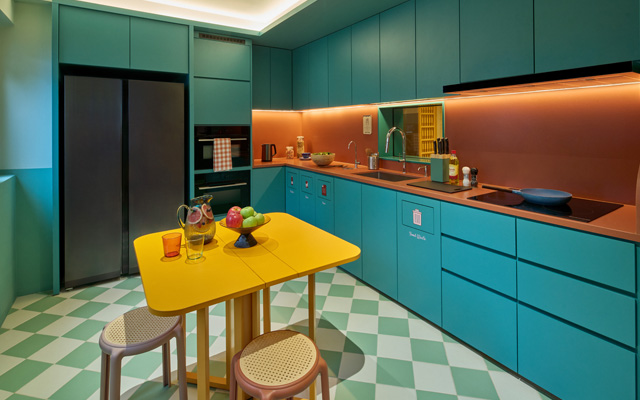
I spent a night in a Two of A Kind unit, where two bedrooms stand across each other at the end of an elongated kitchenette. Individual keycards are issued for each bedroom, but guests have the option of leaving doors open if they so desire. Both keys will unlock the main door. Both bedrooms offer a queen bed on a raised platform with ample storage underneath, a desk, and ensuite bathroom with shower. The kitchenette in our unit is well-equipped for simple cooking: induction cooker and hood, sink, glassware, crockery, cutlery and utensils.

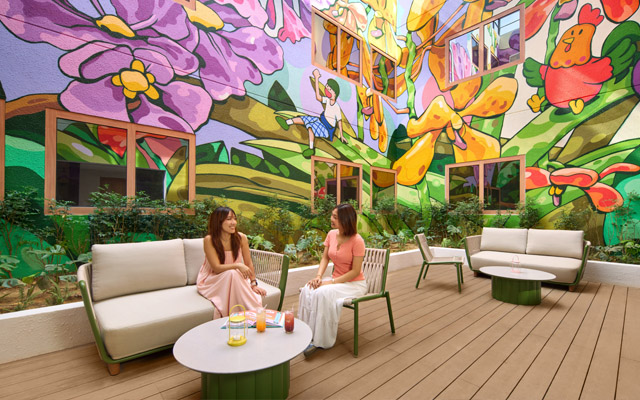
The décor is cheerful – brightly-lit, bathrooms sport rosy glazed tiles, and windows open up into the beautiful Unwind Social Space, which is furnished with cosy benches and dressed in adorable murals featuring the Queen’s Crepe Myrtle, a flower native to South India’s Coromandel Coast, and whimsical traveller figures.

In fact, these murals ­flow across lyf Chinatown Singapore, from public spaces to guestrooms, and feature recurring and familiar icons such as historic shophouses, lanterns, durians, prosperity cat, and koi fish.

I enjoyed exploring all floors of lyf Chinatown Singapore to uncover different artworks.

All indoor murals are the creation of Benedict Tay while the outdoor ones are by Lucas Goh.

Units enjoy housekeeping support: light cleaning is provided every three nights while full cleaning is conducted every seven nights

F&B: Options aplenty within steps
There are no onsite restaurants but Bond: Social Kitchen is well-equipped for residents to whip up a storm and trade beloved recipes with fellow guests. This facility comes with a spacious double-door refrigerator, stove, and utensils that guests are welcome to use. There are also several dining tables in this space that guests are free to use.

Access to a host of casual eateries and restaurants is easy from lyf Chinatown Singapore. Guests are also welcome to enjoy their take-outs back on property.

Facilities: Shared spaces that make sense
It is easy for guests to meet, connect with, and build new friendships during their stay.

This starts from the lobby’s Connect communal lounge, where guests can work, rest, socialise or dine in comfort. A traditional food cart offers complimentary nuts and tea for guests using this space.

Guests can also gather at the Attic on the fourth floor, Outdoor Courtyard on the second floor, and Collab meeting room on the second floor. The latter requires an advanced and paid booking.

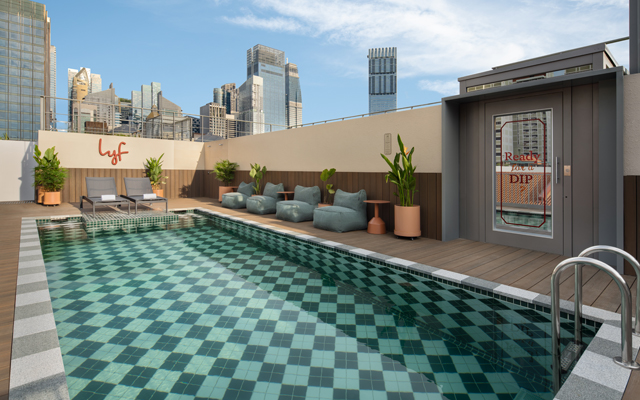
For fitness buffs, lyf Chinatown Singapore offers the 24-hour Burn: Social Gym and Dip: Swimming Pool on the rooftop. The pool is an attractive spot for social media photos – it adopts a palette that brings the Amalfi Coast to mind and is surrounded by sights of old Singapore.

Service: Neighbourhood connections
One glorious advantage of staying at lyf Chinatown Singapore is the opportunity to interact with the local community through curated programmes led by the property’s well-connected ambassadors of buzz.

Guests have access to lyf Hacks, an insider guide curated by the lyf crew to help guests experience Chinatown, as well as a rotating line-up of programmes that connect guests with the neighbourhood’s culture and character. A highlight is the 1.5-hour guided Heritage Walk that introduces guests to significant landmarks in Chinatown and spills interesting fun facts – this is perfect for those who are just settling into their stay and need an informative orientation.

Throughout their stay, guests can join workshops on Chinese calligraphy, henna artistry, Muslim-friendly perfumery, and making local snacks. These activities are developed with local partners.

Verdict: Is lyf Chinatown Singapore worth a stay?
The location is stellar for experiencing a side of Singapore that is not all skyscrapers and swanky malls, while still being conveniently connected to the crucial train system that weaves through the country. Rooms are cheerful, functional and comfortable. As this is a serviced apartment, guests will need to book a minimum six nights here.

Contact details: 
http://www.discoverasr.com/en/lyf


Frequently Asked Questions about lyf Chinatown Singapore

How do I get to lyf Chinatown Singapore from Singapore’s Changi Airport?
Taxi and private hire rides are easily available, and guests have the option of taking the MRT city train. lyf Chinatown Singapore is a two-minute walk from Chinatown MRT Station (NE4/DT19) and a five-minute walk from Maxwell MRT Station (TE18).

Does lyf Chinatown Singapore have family rooms?
Apartments at lyf Chinatown Singapore welcome families and groups of friends. Pick the Two of A Kind or All Together room types, which are perfect for four guests in each apartment. Two of A Kind apartments feature a shared kitchenette and two bedrooms with their own bathroom. All Together units feature two bedrooms with queen beds, one shared bathroom, and a shared kitchenette.

Does lyf Chinatown Singapore offer breakfast?
The co-living hotel does not offer breakfast service. However, there is a shared kitchen with a spacious double-door refrigerator, stove, and utensils that guests are welcome to use. Access to casual eateries and restaurants is also convenient from lyf Chinatown Singapore.

Is there a minimum stay requirement at lyf Chinatown Singapore?
Yes, lyf Chinatown Singapore requires a minimum length of stay of six nights.

New hotels: Anantara Siam Bangkok Hotel, Wyndham Garden Manila Bay, and more

0
Anantara Garden Pool Suites

Anantara Siam Bangkok Hotel, Thailand
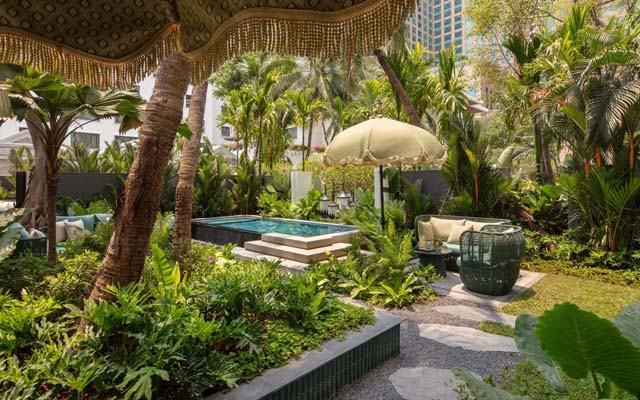
Anantara Siam Bangkok Hotel has unveiled a landmark transformation that touches all 335 guestrooms and suites, restaurants and bars, meeting and event spaces, public areas, as well as wellness experiences.

The transformation places Thai luxury at the heart of Anantara Siam Bangkok’s differentiation, bringing together heritage, design, gastronomy, wellness and personalised hospitality.

Along with guestroom renovations, the hotel has rolled out new Anantara Garden Pool Suites, which feature private pools set amid lush tropical gardens, as well as the Jim Thompson Suite, a reimagined two-bedroom suite created through a collaboration with Thailand’s legendary Silk King, Jim Thompson.

Guests will discover elevate its dining and lifestyle experiences through a collection of nine restaurants and bars, spanning authentic Thai, contemporary Italian and refined Japanese cuisine to premium steaks and vibrant South American flavours.

Anantara Spa and Siam Sport Club welcome guests with a brand-new fitness centre equipped with Technogym, a dedicated Pilates studio, and outdoor wellness spaces for Muay Thai, rock climbing and functional training.

Wyndham Garden Manila Bay

Wyndham Garden Manila Bay, the Philippines
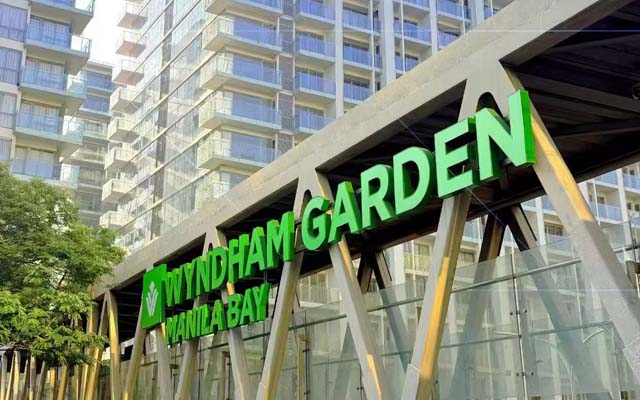
The new Wyndham Garden Manila Bay brings 300 keys into the heart of the Philippine capital city. Designed for both business and leisure travellers, the hotel is outfitted with versatile meeting and event spaces, an inviting dining restaurant and lounge bar, an outdoor swimming pool, and a fully equipped gym. Located along Roxas Boulevard in Parañaque City, the hotel is just four kilometres from Ninoy Aquino International Airport and provides convenient access to key commercial districts, entertainment precincts and cultural attractions.

Sheraton Jeju Hotel

Sheraton Jeju Hotel, South Korea
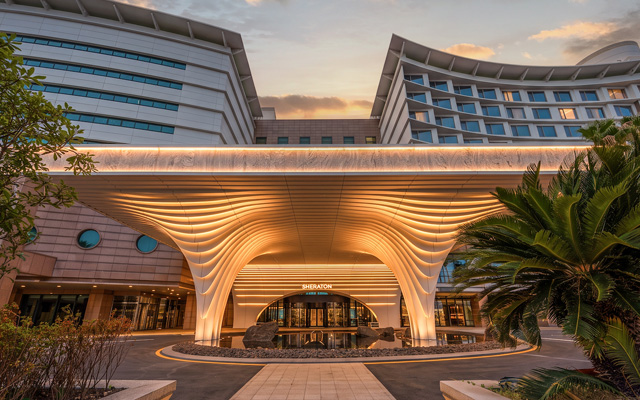
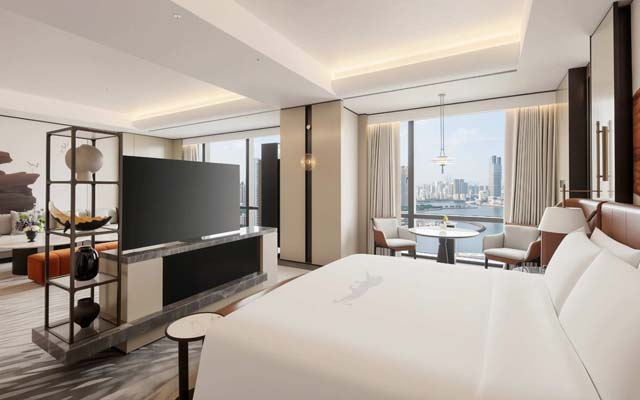
Overlooking Jeju City’s Tapdong waterfront, the 402-key Sheraton Jeju Hotel offers refined guestrooms and suites with ocean, harbour or city views, spaces that encourage guests to gather, and an all-season infinity pool.

The lobby carries the brand’s global concept, The World’s Gathering Place, providing a vibrant space for guests to come together. Anchored by Sheraton’s signature Community Table, the space invites guests to gather, work, or unwind in an environment that blends residential warmth with modern functionality. Guests can utilise the Studio, a flexible meeting space, or retreat into soundproof Booths.

Dining is also designed to be social events, with Daily Social presenting live cooking stations and fresh seasonal menus all day; &More offering a lounge setting for light bites and leisurely gatherings; and 28g dishing out artisan baked goods and gourmet desserts daily.

The hotel is positioned as a premier destination for events. It offers a grand ballroom for 1,500 guests along with sea-view wedding venues and flexible banquet spaces.

MGM Shenzhen Prince Bay

MGM Shenzhen Prince Bay, China
Embedded within a vibrant cultural precinct featuring K11 ECOAST and Sea World Culture and Arts Center, the new MGM Shenzhen Prince Bay welcomes guests with 298 ocean-view guest rooms and suites that address the needs of both business travellers and holidaymakers, five distinctive dining venues, over 3,000m2 of flexible banqueting and meeting space, as well as a fitness centre and heated swimming pool that promises sweeping views of the urban harbour.