TTG Asia
Asia/Singapore Tuesday, 16th December 2025
Page 396

Koh Samui wants long-term visas for Europeans

0

As Thailand looks forward to a 140 billion-baht (US$3.8 billion) surge in revenue from Chinese tourists looking to benefit from relaxed entry regulations, there are calls from Koh Samui to extend the campaign to visitors from other regions.

As of September 25, and running until February 2024, Chinese tourists are encouraged to visit without a visa, reducing the financial burden and need for fiddly paperwork to experience an extended five-month stay in the country.
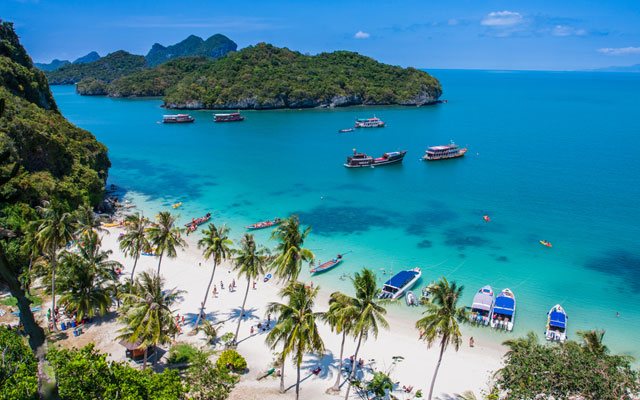
Koh Samui hopes the visa exemption will be extended to visitors from other regions, namely Europe

The scheme was introduced to boost arrivals from the Chinese mainland, the leading tourist source market before the Covid-19 pandemic, to previous levels and increase GDP.

However, on Koh Samui, where Chinese travellers only make up 10 per cent of arrivals, there are calls for a similar scheme to be rolled out to Europeans.

Susan Field, owner of Tembo Beach Club & Resort and former PR agency owner in Hong Kong, pointed out the country’s appeal for European digital nomads and remote workers.

“Tembo absolutely supports longer-term visas for Europeans 100 per cent. In general, the one-month Visa +1 month extension is fine for many, but the appeal of working virtually continues to grow, and the many benefits of Thailand, such as climate, good quality/value accommodation, and low cost of living, are appealing,” she shared.

“Flights are expensive these days, so attracting tourists to stay longer makes sense, especially if they don’t need to be in an office. Even the UK government allows its staff to work from overseas. It’s a trend we see growing.”

Jane Soergel, general manager for InterContinental Koh Samui, cited the success of previous schemes to encourage European travellers as a reason to reintroduce extended stays to other citizens from other countries: “This could greatly benefit both Thailand and Koh Samui in terms of boosting tourism, particularly during the winter months. This initiative was (first) introduced in 2022 as a means to aid tourism recovery, but unfortunately, it hasn’t seen an extension.”

Soergel also pointed out the differing entry requirements for Chinese and European tourists: “It’s important to note the difference between the newly implemented visa exemption for Chinese tourists and the current request for extended stay tourist visas for European visitors. Prior to this exemption, Chinese tourists were required to apply for a visa, whereas European Tourists are allowed to enter Thailand without applying for a visa.”

Another general manager from one of Koh Samui’s leading five-star luxury hotels, who chose to remain anonymous, noted that existing visa rules discourage long stays from all tourists, whatever their nationality.

“If visas are extended from 30 to 90 days to European countries, it will definitively help Samui as a destination. Samui is a destination where travellers return to and stay for a long time,” shared the general manager.

“The procedure of the tourist visa extension is annoying, time-consuming and puts travellers off. Instead, they may move on to another South-east Asian country instead of staying longer in Thailand. Especially with today’s travel habits and digital nomads, travellers will stay longer in Samui (and in Thailand).”

Greenview urges Phuket hotels to unite in benchmarking climate impact

0

Last month at Phuket Hotels for Islands Sustaining Tourism (PHIST) 2023, Greenview CEO and founder Eric Ricaurte urged Phuket hotels to unite in benchmarking themselves against existing data to measure where they stand in terms of climate impact.

In an analysis by Greenview, Phuket’s hotels emerged as the third-lowest consumers of water among nine surveyed South-east Asian cities, and also showed promising restraint in energy consumption, ranking second least. The cities considered for this comparative study included major hubs like Kuala Lumpur, Bangkok, Singapore, and Jakarta.

Phuket emerged as the third-lowest consumer of water among nine surveyed in South-east Asia

Phuket’s resorts were not included in the study. 

Recently released findings from the Office of the National Water Resources show the resort island is already facing water shortage issues. The office recently called on Phuket hospitality to reduce water consumption, as demand for water supply is predicted to intensify progressively with tourist growth.

Ricaurte has said that the island’s resort-centric composition contributes to high water usage overall.

“Resorts typically consume a lot more water, with bigger swimming pools, more towels to wash, more amenities, and more expansive landscapes and gardens,” he explained.

Ricaurte lauded resorts for incorporating sustainable practices more thoroughly despite their increased resource intensities, saying that resorts also tend to do more to incorporate the best practices of sustainability.

In praising Thai hotels and resorts for their widespread adoption of glass water bottles, a rarity in South-east Asia, Ricaurte highlighted the disparity in sustainability performances across the country.

He emphasised the imperative need for a local industry standard, asserting that “out of 100 Thai hotels, the worst 25 can be very poor-performing”, thus pulling down the collective sustainability performance.

“The opportunity in Phuket is to collaborate through initiatives like PHIST or the Phuket Hotels Association to encourage the more poor-performing hotels to improve,” stressed Ricaurte.

He urged Phuket hotels to unite in benchmarking themselves to uplift the industry standard by adopting robust tools such as Greenview’s Hotel Footprinting Tool.

The tool has been updated to provide more accurate calculations of hotel stay footprints using the results of the latest Cornell Hotel Sustainability Benchmarking Index 2023 which references a dataset of over 27,000 hotels.

It can be used to calculate the carbon footprint of hotel stays or meetings anywhere in the world, and also enables hotels to discern their standings and identify improvement areas in energy, water, and carbon metrics.

Editor’s note: A correction has been made to this article. The previous version incorrectly stated that Phuket’s hotels emerged as the third-highest consumers of water among nine surveyed South-east Asian cities.

Hotel revenues in Asia-Pacific set to continue rising in 2024: JLL

0

Hotel occupancy levels in Asia-Pacific continue to rise steadily following the reopening of all key markets, the ramping up of air capacity, and a strong pick up in conferences and events around the region.

According to JLL’s Hotel Operators’ Sentiment Survey 2023, conducted with over 360 hotel operators across Asia-Pacific to gather the sentiment of hotel owners and operators, there remains an industry disconnect and uncertainty amid strong tourism demand and macro-economic headwinds.

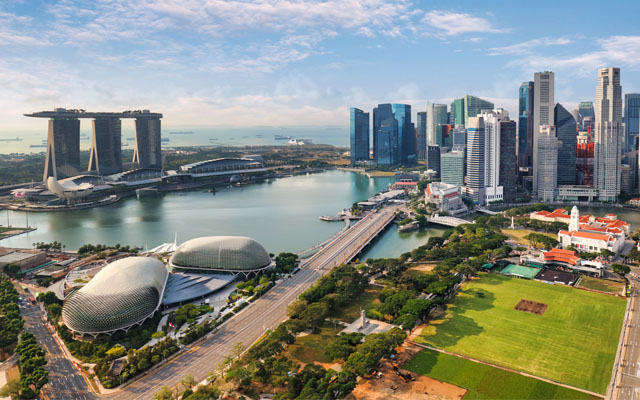
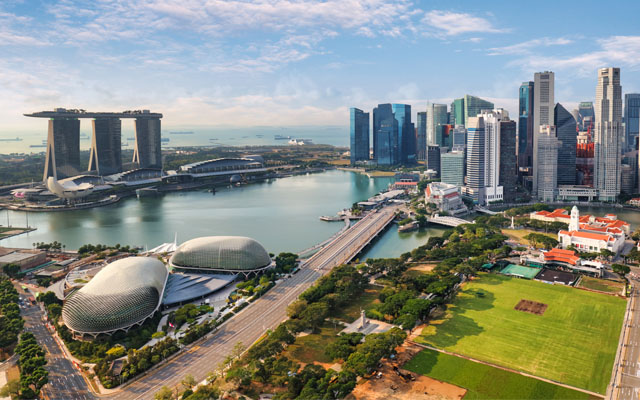
Singapore’s average daily rates have surpassed pre-pandemic levels by over 20 per cent

In markets such as Bali, Phuket, and Singapore, average daily rates (ADR) have surpassed pre-pandemic levels by over 20%, primarily driven by leisure tourists. The survey indicates that 77% of hotels in Asia-Pacific anticipate a further rise in occupancy levels in 2024, particularly in the upper upscale and luxury segments. Furthermore, 73% of hotels in the Asia-Pacific region expect ADR to rise. Among the sub-regions, South-east Asia exhibits the most optimistic outlook, attributed to strong tourist arrival growth momentum in most countries.

Most respondents (66%) are optimistic about total revenue exceeding pre-pandemic levels in 2024, while sentiment in the economy segment remains lower (33%). Economy hotels are less optimistic due to reliance on tourist groups and the increased cost of travel. However, the recent expansion of group tours destinations from China from August 2023, including Australia, South Korea, and Japan, is expected to bring positive prospects for economy hotels in the next six to 12 months.

“Leisure travel continued to drive demand in Asia-Pacific in 1H2023. Concurrently, corporate spending has been under pressure, but we’re witnessing a steady increase in bookings from both leisure and business, supported by a growing number of major sporting and business events,” said Nihat Ercan, CEO, Asia Pacific, JLL Hotels & Hospitality Group.

The labour shortage in the region has led to increasing associated costs since 2022, and by 2024, labour costs are expected to have increased by 10% to 20% compared to 2019. In many cases, this has been somewhat mitigated by redefining job roles, reducing service standards, and reducing maximum occupancy.

While adoption of technological advancements such as mobile check-in, cleaning robots, and guest request tools, could help mitigate some of this labour constraint, the hospitality sector, known for its higher level of service touch points, has been relatively slower in adopting technology.

Energy prices in the region have also been rising due to ongoing political unrest and post-lockdown challenges. Looking forward to 2024, 32% of the respondents expect to see energy costs increase by more than 10%, which is down significantly from the 51% currently experiencing 10% or more in 2023 compared to 2022. This indicates that energy costs will be a reduced concern for hotels in 2024 compared to this year, attributed to energy-saving measures implemented by hotels who have adopted sustainability initiatives, positively impacting their cost base.

Stakeholders in the hotel sector are becoming increasingly aware of the need to embrace sustainability and broader Environmental, Social, and Governance (ESG) principals. Some 65% of respondents have now implemented a carbon emission reduction plan. Notably, a higher proportion of hotels in the higher-end segments have embraced this initiative.

As investors and guests favour ESG supportive hotels, the inclusion of green terms and incentives into hotel management agreements may align the interest between owners and operators around sustainability measures. However, hotels in the region continue to face challenges in their sustainability journey, including the lack of funds, lack of in-house expertise and technology.

In 2022, the main challenge faced by hotel operators was the difficulty in measuring sustainability goals. To spur positive change in the region, the Uniform System of Accounts for the Lodging Industry (USALI) will be updated by early 2025 to incorporate sustainability metrics and various reporting guidelines.

By obtaining a sustainability rating, hotels can demonstrate their commitment to environmental standards, energy efficiency, waste management, water conservation, and other sustainable initiatives. The majority of hotels in Asia-Pacific intend to get their ratings by 2024, an increase from the 38% who are already rated.

“The hotel sector has seen a remarkable comeback after the pandemic, yet there are headwinds which need to be navigated in the medium term and continued profit growth will take more active management. With changing guest preferences and increased competition, owners should take the opportunity to critically look at their concept and positioning, rethink their market segmentation, evolve their approach to attracting and retaining talent, and commit to a clear sustainability pathway,” says Xander Nijnens, head of advisory & asset management, Asia-Pacific, JLL.

Philippines’ foreign visitor arrivals reaches 4M mark

0

The Philippines’ Department of Tourism (DoT) is optimistic about the Philippine tourism industry’s continuing resurgence post-lockdown, with visitor arrivals to the country breaching the four million mark on September 29.

Tourism secretary Christina Garcia Frasco announced that the DoT recorded a total of 4,005,465 visitor arrivals to the country from January 1 to September 29, 2023, bringing the country’s economy to over 316 billion pesos (US$5.5 billion).

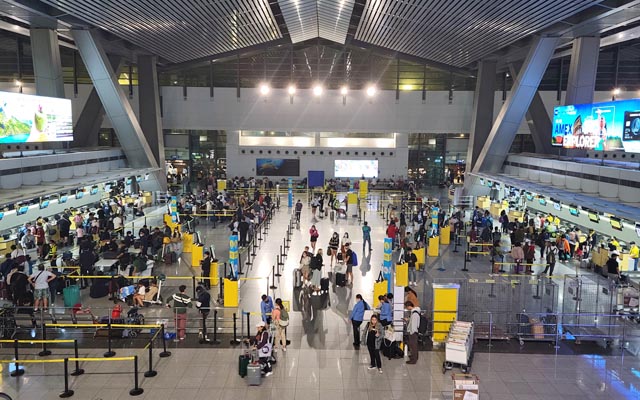
Foreign visitor arrivals to the Philippines has breached the four million mark; Ninoy Aquino Airport, pictured (Photo: Nate Hovee)

The recovery of the tourism industry has not only contributed 6.2 per cent to the country’s GDP, but also resulted in the employment of Filipinos in 5.35 million tourism-related jobs, she pointed out.

Furthermore, the DoT is vigorously carrying out initiatives under the National Tourism Development Plan 2023-2028 that would sustain this growth and allow the industry to meet its target of 4.8 million arrivals this year.

Of the total arrivals for the period, 91.58 per cent are foreign visitors, while 8.42 per cent are Filipinos living overseas.

South Korea ranked first in terms of the country’s top source markets, delivering more than a quarter of the total international arrivals to the Philippines with 1,046,176, followed by the US with 679,090; Japan with 221,671; China with 194,258; and Australia with 187,143.

Other visitors came from Canada with 164,168; Taiwan with 146,396; the UK with 114,096; Singapore with 107,674; and Malaysia with 72,008.

EXO Foundation shows support for sustainable tourism with inaugural awards

0

The EXO Foundation, a non-profit organisation supporting sustainable tourism initiatives, held its first-ever Sustainability Awards on September 28, with more than twenty projects awarded prizes totalling US$40,000 in value.

Collaborating with LightBlue Consulting and Considerate Group, the awards aim to identify, support and promote exemplary projects that seek to innovate sustainability in Asia. From an initial fifty applicants, it was narrowed down to twenty nominees across five categories – Climate Action, Circular Economy, Regenerating Nature, Empowering Communities and Protecting Cultural Heritage.

The EXO Foundation’s inaugural Sustainability Awards aim to identify, support and promote projects that seek to innovate sustainability in Asia

A panel of internationally-recognised sustainable tourism professionals was enlisted to evaluate each nominee and vote according to its merits, with a sixth People’s Choice Award granted based on a month-long public vote.

In addition to the awards ceremony, EXO Foundation also hosted a panel discussion to further explore the role of sustainable practices in the tourism sector.

Alexandra Michat, chief purpose officer of EXO, said: “Through the organisation of these awards, we are aiming to enhance collaboration among responsible tourism stakeholders in our destinations and to ensure that people and nature will continue to be preserved, protected and cared for.”

TBO.com, WebEngage join hands to deliver hyper-personalised services to customers

0

Global travel distribution platform TBO.com has partnered with WebEngage, a leading marketing automation company, to empower travel agents to serve their customers effectively.

TBO.com’s Business to Agents (B2A) global travel distribution platform will harness WebEngage’s marketing automation stack to consolidate data, derive valuable insights, and enable travel agents to hyper-personalise customer engagement.

The partnership will benefit travellers returning to agents for customised, hassle-free, and convenience-oriented tourism services

Known for its B2A strategy in the tourism industry, this strategy aims to meaningfully cater to travellers returning to agents for customised, hassle-free, and convenience-oriented tourism services. Such B2B strategies, coupled with round-the-clock agent support and acceptance of over 55 currencies, have enabled TBO to expand its purview to over a million hotels and 120 countries globally.

Gaurav Bhatnagar, co-founder and managing director, TBO.com, shared: “Travel distribution platforms such as ours are ripe for technological adoption aimed at higher conversions and insights-led engagement. The partnership will enable us to deliver personalised services to our agents and partners and, through them, a multitude of travellers across the glove.”

Reiterating the need for marketing automation in tourism distribution, Hetarth Patel, vice president, MEA and managing director – UAE of WebEngage, remarked that business-facing companies must engage like they are dealing directly with customers.

“The next phase of B2B growth will hinge on superior customer experiences. Therefore, in tourism distribution, a unified view of agents, dynamic segmentation, and the ability to automate and orchestrate cross-channel communications at scale will constitute a competitive edge. Our partnership with TBO is built on that objective,” said Patel.

Air Canada connects Singapore and Vancouver with new route

0

Air Canada is launching a new global route connecting Singapore and Vancouver starting from April 4, 2024. This will be the airline’s second non-stop route between South-east Asia and Canada.

Air Canada will fly direct from Singapore to Vancouver four times weekly from April next year

Air Canada will fly non-stop from Singapore to Vancouver four times weekly year-round onboard its flagship Boeing 787 Dreamliner fleet which offers three cabins of service for customers to choose from, including Signature Class with 29 lie-flat seats, Premium Economy with 21 spacious seats and Economy class with 247 seats.

Amora Group doubles down on hotel investments

0

Family-owned Amora Group is ramping up hotel investments in Thailand and Australia with the refurbishment of Amora Beach Resort Phuket and Amora Hotel Brisbane.

Its flagship property Amora Beach Resort Phuket, first opened in 1999, will undergo an extensive refurbishment costing 500 million baht (US$14 million), while the newly-purchased Amora Hotel Brisbane will be transformed into a five-star hotel.

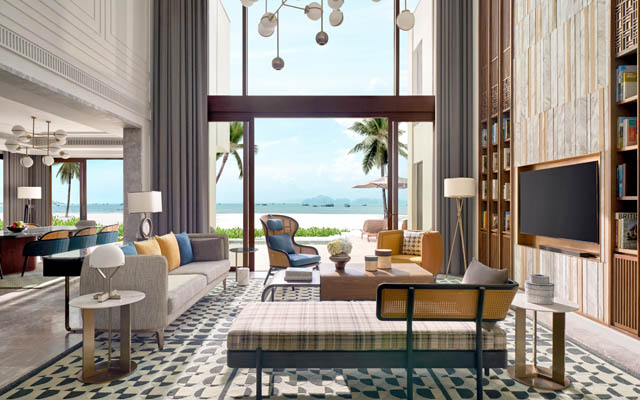
Amora Group is aiming to cement its footprint as a five-star hospitality group in Australia and Thailand

As tourism demand returns, Amora Group is also gearing up to cement its footprint as a five-star hospitality group in Australia and Thailand, with a longer-term goal of expansion in key cities in Asia-Pacific and developing properties in South-east Asia.

With Phuket expecting more than 14 million international and domestic arrivals by end 2023 as stated by the Phuket Tourist Association, the reopening of Amora Beach Resort Phuket, scheduled for December 2023, will help meet this demand.

Key highlights of the flagship’s transformation include newly-built facilities such as a new-concept beach club, a wellness and fitness centre, two pools, a kids’ club, a restaurant, a beachfront event lawn, a grand ballroom and four meeting rooms.

Amora Hotels & Resorts’ owner and director Earp Siriphatrawan said: “The group is confident that Amora Beach Resort Phuket will offer a distinctive guest experience that honours over 20 years of tradition in hospitality and yet adapts to the future with a young and innovative approach.”

As for manpower, he shared that each property is operated by the company and “remains very autonomous in their management, while adhering to guidelines”.

He explained: “General managers have the flexibility to adapt protocols in such a way that they are able to provide unique, unscripted and even spontaneous service that creates memorable moments for our guests.

“At Amora, we have many long-serving staff who are passionate about what they do, and have established a warm rapport with returning guests – a key factor that translates into brand loyalty and differentiation.”

Sticking to the familiar: YouGov

0

The latest international YouGov survey showed that tourists are less likely to consider exploring unfamiliar tourist destinations, opting to travel to locations that they are more familiar with.

The survey of over 17,500 people, commissioned by the Saudi Tourism Authority and published ahead of this year’s World Tourism Day in Riyadh, was carried out in 15 countries across Asia, Africa, America, Europe and the Middle East. While results vary between geographies, the study reveals that 66% of tourists prefer traveling to countries that provide familiarity, while 67% tend to travel to destinations that they have previously visited or have heard about through their network, such as family and friends.

YouGov’s survey showed that more tourists are opting to travel to locations that they are familiar with

There are some global differences in the findings with 90% of tourists from Middle Eastern countries seeing familiarity with the destination as a key factor in making travel decisions, while British (62%), French (75%), Chinese (68%) and Japanese (74%) tourists feel more comfortable travelling to places that they know less about.

The implication for those destinations that have a developing tourism sector with less spending power for international promotional efforts is that they lack the ability to generate the familiarity which is clearly an important factor for people when choosing where to travel. On the other hand, the challenge for more mature tourism destinations is to encourage tourists away from the hotspot locations and into their lesser-known regions.

Resonating with previous studies which found that 80% of tourists visit just 10% of the world’s tourism destinations, the stark findings of this survey not only emphasise tourists’ preference for familiar destinations but also shed light on the need for more sustainable tourism practices worldwide.

Fahd Hamidaddin, CEO and board member of Saudi Tourism Authority, said: “The findings of this international survey give us great insight into the trends and habits of global tourists and how important a sense of familiarity is to them when choosing destinations.

“However, familiarity does not mean that destinations need to compromise their authenticity as the research also supports the notion that visiting new places deepens our appreciation of diverse cultures and fosters mutual understanding. When we travel, we are agents of good – we export our own cultures and return home with new discoveries, new ideas and new perspectives.”

The results support recent news reports from nations, such as Croatia and France, who have implemented measures to better control high volumes of tourists in their most popular destinations. The city of Dubrovnik, Croatia, has implemented a Respect the City campaign to manage tourism and minimise its impacts, while French Tourism Minister Olivia Gregoire asserted that France needed to better manage influxes during peak season that threatened “the environment, the quality of life for locals, and the experiences of its visitors”.

Of tourists that have ventured to new destinations, 83% report that the experience changed or broadened their perspective providing compelling evidence of the profound impact of tourism in connecting people and enhancing mutual understanding.

Sabre’s new AI-powered retailing solution to optimise airlines’ premium cabin inventory

0

Sabre Corporation has launched its newest AI-powered retailing solution for airlines – Sabre Upgrade IQ – which can help airlines generate incremental and diversified revenue by optimising the available inventory in their premium cabins, while elevating and streamlining the customer experience.

Upgrade IQ is a PSS-agnostic solution which allows airlines to give travellers the opportunity to bid for a seat upgrade at any stage during the pre-travel timeframe – throughout the booking flow, at check-in, in the airline’s mobile app or via email communication.

Sabre’s Upgrade IQ allows airlines to give travellers the opportunity to bid for a seat upgrade at any stage during the pre-travel timeframe

Using the advanced AI and machine-learning models powered by Sabre Travel AI, Upgrade IQ streamlines the management of seat upgrades for airlines with an intuitive and automated interface that can automatically accept traveller bids, change the flight itinerary cabins, re-issue and revalidate the tickets, process payments and send receipts and confirmation information to the traveller. It also supports instant upgrades, where the traveller chooses to pay full price for a guaranteed upgrade.

During beta testing, Upgrade IQ demonstrated the ability to deliver up to 20 per cent uplift in incremental upgrade revenue by filling empty seats in premium cabins.

In addition to leveraging AI capabilities from Google, Sabre integrated with Hopper’s platform to create a frictionless and streamlined customer experience. The new Sabre solution incorporates Hopper’s advanced bidding platform which facilitates the bidding process and enables airlines to communicate with travellers in multiple languages and in-real time.

“By collaborating with Google and Hopper on some of the core technical capabilities, we have delivered a modern retailing solution to help airlines better manage seat upgrades and create differentiated customer experiences,” said Garry Wiseman, chief product officer, Sabre Travel Solutions.