TTG Asia
Asia/Singapore Thursday, 25th December 2025
Page 395

Thailand’s cannabis businesses respond to reformed legislation

0

As Thailand moves to end confusion over its cannabis laws with the new prime minister, Srettha Thavisin, the country’s tourism industry has welcomed the move.

The partial legislation of cannabis last year in June had an instant effect, and almost overnight, hundreds of coffee shops and dispensaries selling cannabis products appeared across Thailand, particularly in Bangkok and other popular tourist destinations.

Thailand will be legalising cannabis for medicinal use only

However, the hazy nature of legalisation created a legal vacuum and a lot of confusion on what types of products would be legal in the long term.

Following his comments to journalists in September, where Srettha stated that “cannabis policy will be medical cannabis”, the prime minister began the countdown to a reformed cannabis economy by declaring that legislation to limit the drug to medicinal use only would be put in place within six months.

Somil Sawansukha, co-founder and business development at Eastern Spectrum Group – a manufacturer of medical-grade and hemp-derived cannabinoid products– said: “We had anticipated that whichever government was elected would announce this policy. Any steps towards clearer regulations are good for the industry here in the long term, as they allow players like us to plan ahead with our investment in beneficial medicinal products.

“At ESG, we have always focused on the medicinal side of the plant and, therefore, operate a processing facility that adheres to international medical production standards.”

Believing that the development would not harm the recovery of the Thai tourism industry, he added: “Overall, the impact on tourism should not be significant. Tourism in Thailand was growing even before the legalisation. On the other hand, it might be better for the tourism sector as more families will feel safe travelling to Thailand, allowing the country to emerge as a medicinal tourism hub by providing high-quality cannabis and hemp products.”

According to Arun Avery, content manager for Highland Network, operators of the Highland Café, the new direction was always expected to happen.

“A lot of politicians or their relatives have invested in cannabis. They have consistently advocated for cannabis to be added to the narcotics list to have more control over the products and create revenue through licensing. If this is the plan, then new regulations should be in place before cannabis use is reclassified,” opined Avery.

Traveloka focuses on boosting tourism to Thailand

0

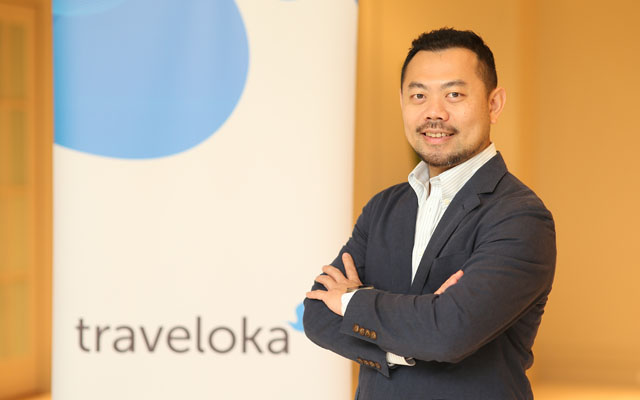
Traveloka is aiming to leverage its position as a consumer-focused regional industry enabler to propel Thailand’s travel and tourism sector into its next phase of growth.

With solid momentum for Thailand’s travel and tourism industry this year, Traveloka is anticipating even more success heading into 2024.

Indra: ready to leverage our position to further stimulate travel and tourism growth in Thailand

“In addition to being South-east Asia’s second-largest market, Thailand has traditionally been a tourism powerhouse. With the pandemic behind us, Thailand’s travel and tourism industry is ready for its next phase of growth,” shared Caesar Indra, president, Traveloka. “As we continue to increase our presence in Thailand, Traveloka’s contributions to local job creation, sustainable tourism, and growth for local businesses, will reach new levels in 2024. Thailand is a key market for Traveloka, and we are ready to leverage our position as an innovative and technology-focused industry enabler, to further stimulate travel and tourism growth in this country.”

Traveloka revealed its recent business data and findings for Thailand, and highlights new industry trends that are boosting local travel and tourism.

For event-based tourism, it showed a growing trend to travel internationally for music, sports, and other major events. With the global music tourism market forecasted to reach US$14 billion by 2033, Thailand is well-positioned to take advantage of this trend. Traveloka’s data showed there has been a significant increase specifically for inbound flights, with the number of flight transactions rising by almost five times in 1H2023, compared to the same period last year. This surge in flights has also positively impacted accommodation needs, with hotel bookings in Bangkok also increasing significantly.

Next, the Tourism Authority of Thailand (TAT) is using High-Value & Sustainable Tourism as a key initiative to help elevate the tourism supply chain and sustainability standards in Thailand. According to a Traveloka customer survey conducted this year, 80 per cent of customers prefer to book certified sustainable accommodation. Furthermore, 43 per cent of accommodation businesses that lack sustainability certifications have expressed their intention to seek certification within the coming year.

In May 2022, Traveloka partnered with the Global Sustainable Tourism Council (GSTC) for a series of training programmes covering Sustainable Tourism Best Practices for Traveloka’s hotel partners in Thailand this year.

Finally, travellers are looking to prioritise their physical and mental well-being during holidays, with yoga retreats, spa treatments, and wellness-focused culinary experiences in high demand. Traveloka experienced significant monthly growth in ‘Spa & Wellness’ bookings in August, with an increase of nearly 40 per cent.

“By focusing on the customer’s point of view and partnering with local stakeholders, Traveloka can solve many of our customers’ travel problems, provide a seamless end-to-end experience, and make travel accessible to all,” concluded Indra.

Intercontinental Phuket

0

Location
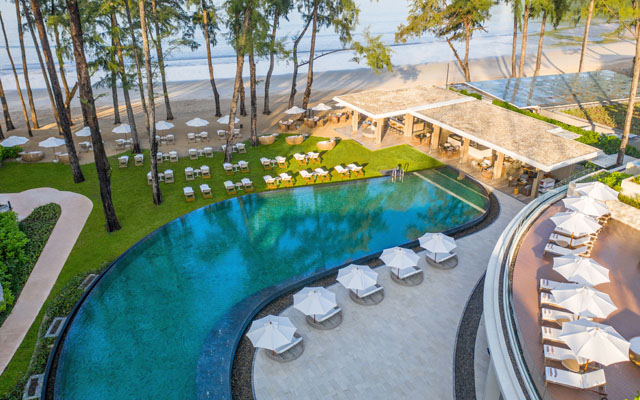
Nestled in Kamala Beach, often dubbed the “Beverly Hills of Phuket”, lies Intercontinental Phuket, just 30 minutes’ drive from Phuket International Airport. The resort’s layout has a quarter of the resort gracing the pristine beachfront, while three-quarters are nestled amid the lush mountainside.

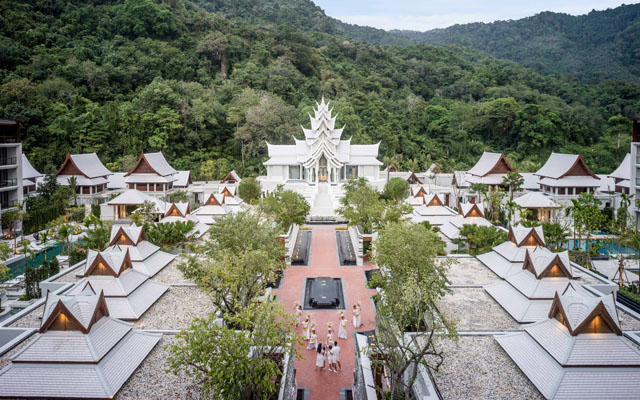
In a clever nod to Thai folklore, the mountainside segment – which houses the property’s iconic white temple, villas, lagoon pool and lobby – is affectionately known as ‘heaven,’ while the beachfront side housing sea-view accommodations, swimming pool and beachside eateries, is referred to as ‘earth’.

To bridge these two realms, a charming pedestrian tunnel was constructed beneath Kamala Beach Road. This unique tunnel, adorned with vibrant murals drawn by local schoolchildren, narrates Phuket’s rich heritage, adding a touch of wonder to the journey between these two realms. Traversing this underground pathway became a delightful part of my stay, especially when venturing from my villa or the lobby to Jaras Restaurant and other beachside amenities.

Within the lobby, visitors are immersed in another allegory. Meant to represent a mythical river separating heaven and earth, the lobby features flowing silver wave and diamond-patterned wallpaper adorning the vast ceiling, lending itself to the analogy.

Accommodation
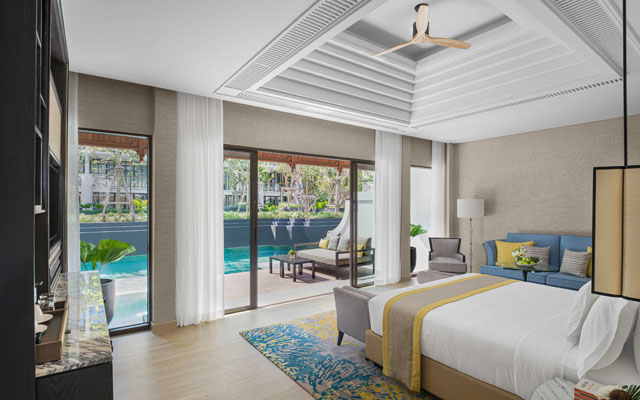
Each of the six pool villages, furnished with their own private plunge jacuzzi pools, seamlessly connects to the sprawling lagoon pool. The villas come with club access and offer a slightly more affordable option compared to the opulent standalone one-, two-, and three-bedroom villas, which are secluded by enclosed walls and private pools, making them ideal for families and group gatherings, including memorable hen and stag nights.

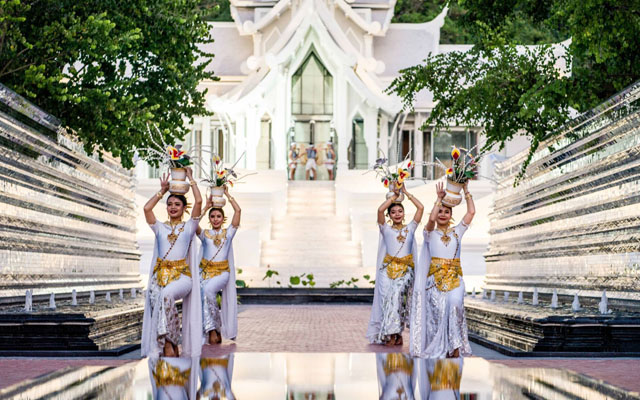
Glittering silver-tiled walls adorn the fountained courtyard betwixt all villas, evoking the opulent grandeur of the Grand Palace in Bangkok and guiding guests on a resplendent pathway towards the white temple – dubbed the Sawaan Pavilion – which houses Hom and the Sati spa.

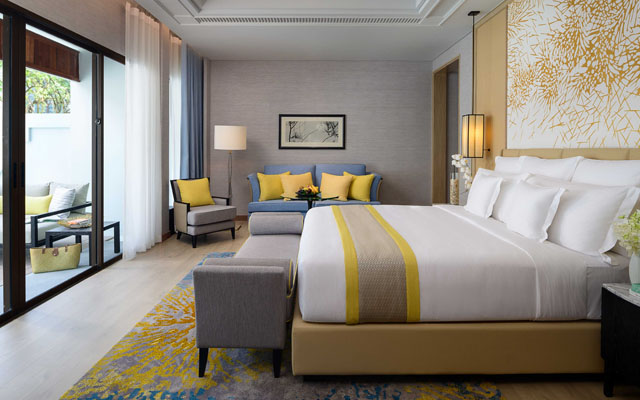
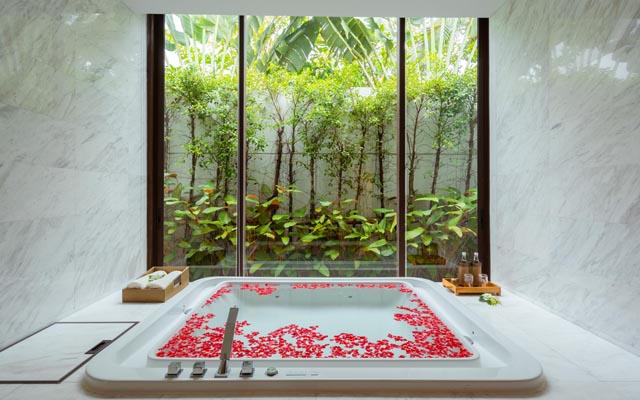
Within the villa, I found six pillows of different levels of firmness to choose from, along with sumptuously soft cotton bedding ready for me to sink into after a long day. The spacious, well-lit bathroom offered an indulgent tub, set against verdant garden views seen through a floor-to-ceiling window. Double sinks and ample closets provided extra convenience, along with ultra-plush terry-cloth bathrobes and upscale Harnn bath products. One of the nicest architectural features in the room is the raised, LED-lined coffered ceiling housing a wooden fan.

For literary enthusiasts, a rich in-room book selection containing titles like Lonely Planet’s Marvels of the World, invites guests to unwind with a good read.

F&B
Intercontinental Phuket offers seven dining establishments, including the latest additions, Hom and Triple 333 – the latter being positioned right on the beach and available for book-out for Intercontinental’s growing wedding clientele. Pinto hosts a delightful breakfast brunch, while the elegant Devas’ Lounge serves afternoon tea. Other options include Pine beachside lounge and Jaras Restaurant.

Positioning itself as the epicentre of the property’s dining experience and clear visual focal point is Hom – head chef Ricardo Nunes and restaurant manager Peter Lucas aspire to elevate Hom into a sought-after dining destination, promising a “10-moment” fermented culinary journey of rare-to-find native ingredients to tempt locavores. Unfortunately, I did not get to dine there as the restaurant was closed on the night of my stay.

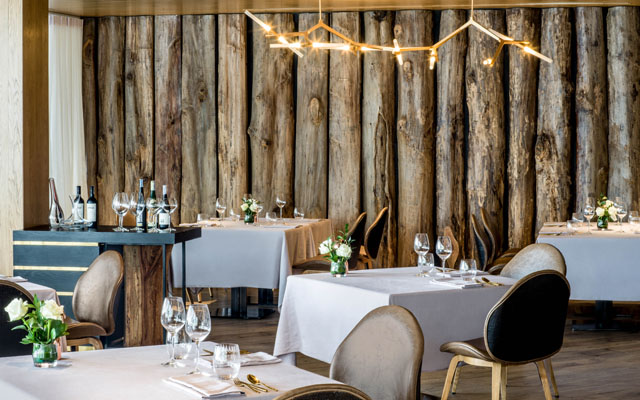
Jaras Restaurant, named after the owner’s grandmother, stands out with its refined dining menus. What truly impresses here is the dedication of its staff to showcase the flavours of southern Thai cuisine. Many team members were locals who passionately shared the stories and uniqueness behind each dish to me, adding depth to the dining experience.

Pinto left a lasting impression with its thoughtful service. Upon mentioning my room number at the breakfast buffet, the attentive staff promptly noted my gluten-free dietary preference and assured me of a tailored dining experience. They even took initiative to offer an à la carte gluten-free pancake dish from the hybrid buffet selection.

I found the breakfast buffet at Pinto exceptional – featuring house-made compotes of lychees and papayas, an extensive Thai porridge condiment and garnish selection, and a delightful soy milk station with traditional soy milk toppings. I feel it does a good job paying homage to the breakfast staples of local Thai kopitiams.

Facilities
Intercontinental Phuket boasts an expansive lobby with high ceilings and a bright atmosphere, making it a nice place to spend time co-working, winding down or waiting for friends.

A noteworthy feature during my visit was the presence of a Bangkok Hospital nurse onsite, ready to provide medical advice and assistance when I required painkillers – a thoughtful touch.

A visit to Sati Spa cannot be omitted, where the soothing sounds of a gong set the tone for a serene experience. The treatment room and massage table are exceptionally comfortable, especially in terms of room temperature and humidity levels, connecting seamlessly to a changing room equipped with a shower and jacuzzi for ultimate relaxation. I was also given soft white cotton pyjamas to wear for my massage.

The hotel’s facilities offer a diverse range of experiences, from the rooftop infinity pool atop the lobby building to the beachside Naga-shaped swimming pool flanked by beach chairs. I did not swim in the ocean during my visit, as Kamala Beach is only suitable for swimming from November to April of each year.

Families will appreciate the kids’ playroom, and IHG Club members can enjoy exclusive privileges.

The LEED-certified property’s commitment to sustainability is commendable, with assertive measures like funding beach clean-ups for a three-kilometre stretch of Kamala Beach, and a garbage collection catamaran during appropriate seasons of the year. Guests can also participate in local bike tours and engage their children in plastic collection activities, with souvenirs crafted from recycled plastic as a reward. Led by a dedicated Green team, the hotel is passionate about fostering a holistic love for sustainability that goes beyond recycling and reducing single plastic use.

For those traveling on business, the property goes above and beyond to cater to luxury MICE clientele with its meeting packages. The Events Centre offers five versatile venues, including the Banyan Ballroom, with a combined space of 268m² capable of accommodating up to 120 guests for intimate private gatherings.

Service
Intercontinental Phuket sets the gold standard for service, offering a reassuring reminder of five-star hospitality excellence. From warm greetings by the general manager, who is also the president of the Phuket Hotels Association, to the kindness and enthusiasm of all other staff, it is a heartening testament to the enduring quality of five-star hospitality in the modern era.

Verdict
The high standards of the staff and attention to detail ensure that travellers will not be disappointed, especially when it comes to efforts taken to create an atmosphere of warmth, kindness and dedication to providing context and sharing local heritage with visitors.

The fact that the entire property is a concrete allegory to a Thai legend is a plus. Although many buildings in Thailand pay homage to Thai mythology and legends, it’s not often that you get to walk or inhabit a concrete rendition of a legendary universe.

Contact details
Email: icphuket.sales@ihg.com
Website: http://phuket.intercontinental.com/

Centara introduces new Bangkok promotion

0

In celebration of Centara Hotels & Resorts’ 40th anniversary, guests who book a minimum three-night stay in Bangkok between now and November 9 for stays through November 30 will enjoy an exclusive 33 per cent discount on their accommodation.

In addition, up to two children under the age of 12 with no extra bed required can stay for free – perfect for family getaways!

Centara Hotels & Resorts celebrates 40 years with special stay deals

Guests can sample local street food or savour the cuisine at Centara’s dining options, shop at famed markets or luxury malls, or dive into Bangkok’s rich heritage and culture with a day of sightseeing.

For more information, visit Centara Hotels & Resorts.

Paragon shooting incident during Golden Week stirs heightened safety fears among Chinese visitors

0

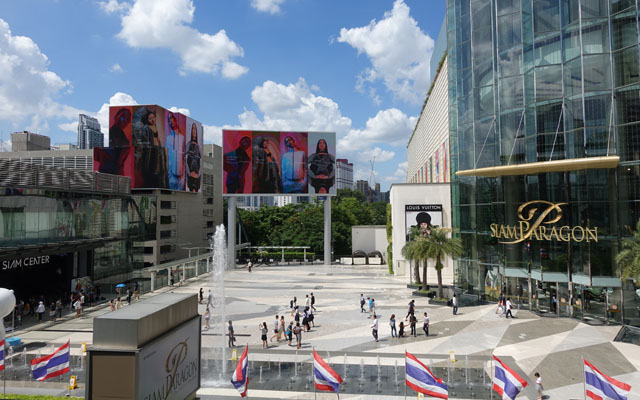
In a disheartening twist, a 14-year-old shooter wielding a modified blank gun unleashed terror in Bangkok’s iconic Siam Paragon mall on Tuesday. Two innocent lives were lost, including a 34-year-old Chinese mother of five-year-old twin girls, and a Burmese migrant worker. Among the five injured was also another Chinese tourist.

This incident has cast a long shadow over Thai tourism efforts, especially during the highly-anticipated Chinese Golden Week holiday from September 29 to October 6, and sent Thai officials scrambling to mend diplomatic ties and reassure the world about traveller safety.

Thai officials are taking measures to tighten security and reassure the world about safety in Thailand after the recent shooting at Siam Paragon on Tuesday

The Chinese woman slain had entered Thailand on September 27, just two days after the Thai government launched the five-month Chinese visa waiver ahead of Golden Week and boosted flights to Chinese cities – all in an effort to try to propel Chinese tourism towards pre-pandemic levels.

The power of movies and social media
The rapid spread of the incident on Chinese social media platforms underscores the interwoven relationship between online discourse and tourism.

Adith Chairattananon, honorary secretary-general of Association of Thai Travel Agents and owner of inbound supplier Golden Discovery Express, told TTG Asia: “Although the new government has tried to sell a positive image of Thailand, this incident has reinforced existing fears about safety in Thailand.

“In recent times, Thailand has been grappling with Chinese social media perceptions. Two films, No More Bets and Lost in the Stars, have considerably influenced the IndoChinese tourism perception.”

The rampant spread of fake news about Thailand among Chinese netizens is also a culprit, to the point that tourism stakeholders recently pleaded with Thai prime minister Srettha Thavisin to address the issue with the Chinese government.

Thailand’s association with Chinese entertainment isn’t new; in 2012, a Chinese movie called Lost in Thailand about three Chinese men travelling to Thailand went viral, boosting tourist numbers and helping to propel Chinese tourism over the following years towards its peak of nearly 11 million visitors in 2019.

Yet, this time, viral posts on platforms like Weibo, from the shooting victim’s extended family and tourists recounting the incident in the mall, have cast a pall over the country’s tourism aspirations.

Local news site The Thaiger found that thousands of Chinese users on Weibo expressed their criticism of the shooting event, with some declaring they would never travel to Thailand in the future.

Questions about safety and security
Following the shooting, a loud chorus has arisen questioning the efficacy of security measures in Thai malls, calling for more detailed scans, better alert systems, and quicker response times from local authorities and medics.

Proposed solutions like cell broadcasting alert systems, which offer timely warnings, have gained traction – but language barriers for tourists also need to be considered.

Social media is also abuzz with discussion about Thailand’s gun control laws after the incident. Remarkably, the country’s gun laws have not seen an update in over seven decades. Thailand, with approximately 10 million guns circulating, stands out for its high ownership rates in the region. Although large-scale shooting incidents remain rare, the recent event is the third significant attack in recent years.

The aftermath
Sretta has extended apologies to the Chinese diplomat while reaffirming the commitment to traveller safety. Additionally, the Siam Paragon mall has vowed to support the victims’ families and bear all medical expenses, also setting up a one-week pop-up psych ward on its M-floor to support staff and visitors.

However, the industry is experiencing blow upon blow. The Tourism Council of Thailand (TCT) reports the tourism confidence index in Thailand has already seen a sharp decline, from 91 in 2019 to a dismal 69 in 3Q2023 due to weak economic conditions domestically and globally.

The road to recovery seems challenging, but as Chairattananon optimistically noted: “In a few weeks, with the Thai government’s reinforced security measures, visitors might regain their confidence.”

He cited improved security measures from the Thai government – including Thai police and immigration – as being instrumental to regaining visitor confidence, such as setting up a command centre for quicker response times, using technology to keep tourists informed during emergencies via online and offline channels, and boosting the country’s image by creating a Thai volunteer force that will support any tourists in the vicinity during a crisis.

Phuket launches sustainable strategies for a diversified future

0

This month, in a collaboration between the private sector and local government, Phuket province is launching its Phuket Sustainable Strategies 2030, a 10-pillar framework designed to propel the province towards global Sustainable Development Goals (SDGs).

The freshly-minted framework refines the 10+ pillars strategy, notably merging Fisheries & Farms into a singular Value-Based Agriculture pillar for greater clarity. Additionally, while gastronomy once spearheaded the plan, the baton has now been passed to education, reflecting a strategic shift in priorities.

Bhummikitti: tourism and the environment are two sides of the same coin

The plan is designed to recalibrate Phuket’s predominant reliance on leisure tourism, historically accounting for 95 per cent of its income. Three of the pillars will help the province in diversifying its tourism focus to MICE, becoming a Medical and Wellness Tourism hub, and transforming into a centre for Sports Tourism & Training Camps.

Deputy governor Amnuay Pinsuwan notes the strategic move towards a “new economy”, lessening tourism dependence and delving into varied sectors. Other pillars include becoming the education hub of Asia, a maritime industry centre, the smart city initiative sandbox, an SME-focused ecosystem, and further emphasising its culinary side as a creative gastronomy city.

Bhummikitti Ruktaengam, president of the Sustainable Tourism Development Foundation (STDF) and key advisor to the Phuket Tourism Association, stressed the integral role of tourism in Phuket’s socio-economic fabric: “Tourism and the environment are two sides of the same coin. Beyond environmental sustainability, our vision encompasses broader ESG goals. To make Phuket’s tourism truly sustainable, we’re laying down strategies that foster a ‘Better Phuket’ for future generations.”

The STDF has launched four pivotal projects that are key to the Better Phuket initiative.

The Food (Before) Waste project seeks to utilise unused food from hotel buffets and surplus stock from supermarkets at the foundation’s Metta Kitchen, where culinary students from local universities transform the leftovers into hygienic dishes. At the Kitchen, customers can pay what they feel is appropriate.

“We don’t believe in giving away things for free, but with the ‘pay as you wish’ model, we hope to increase accessibility to good food and lessen the societal gap,” commented Ruktaengam.

Additionally, Phuket Tourism Carbon Learning Center is a research-centric endeavour aiming to transform Phuket’s Old Town. In this collaborative hub, agencies can converge to champion low-carbon tourism and mitigate the carbon footprint. In line with this, the STDF is also collaborating with Phuket Old Town to pioneer research on low carbon tourism, underscoring the importance of carbon-free walking tours, waste reduction in the Sunday Market and wastewater management.

A new board of directors dedicated to the preservation of Phuket’s largest timbers has been established with the Phuket Big Trees initiative, coupled with programmes to educate on holistic tree maintenance and pruning for optimal shade.

The fourth initiative focuses on the inception of green financing tailored for SMEs, which extends to small businesses in every sector including hospitality.

Ruktaengam noted that for it takes financial support for businesses to become energy-conscious, and with no such financial initiatives presently available, it is “something we want to instigate”.

All four initiatives are being operated with the support of significant stakeholders, including the Phuket Chamber of Commerce, the Phuket Tourism Association, the Thai Hotels Association’s Southern Chapter, and the Phuket Hotels Association.

Tourism has an opportunity to change the world: PATA chair

0

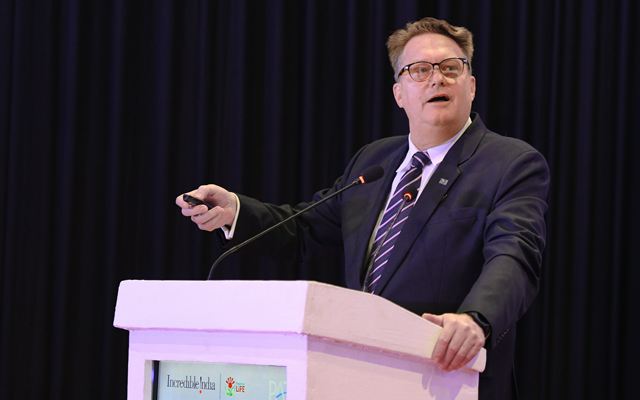
PATA chair Peter Semone delivered a sobering message in his opening keynote at PTM Forum, held on October 4 in conjunction with PATA Travel Mart 2023 in New Delhi: the joint existential threats of climate change and socio-political and geopolitical unrest could destabilise global well-being and devastate the travel and tourism industry.

“The world is entering a critical time. We are living in a time where opportunities are boundless. However, risks of devastating crises that can destabilise global well-being are at an all-time high,” he stated.

Semone: without nature, there is no tourism; without peace, there is no tourism

“I don’t have to explain to you the pain Covid brought across the globe, but that could turn out to be nothing compared to what we have to deal with going forward,” he added.

Semone was quick to point out that his address was not meant to be a “doomsday” warning; instead, he hoped to inspire members of the travel and tourism industry to be “a little more proactive because we – the travel and tourism industry – can be the solution to these problems”.

“Think about this: without nature, there is no tourism; without peace, there is no tourism,” said Semone.

He noted that the absence of tourism would leave a trail of disrupted jobs and damaged economies, especially in less developed countries – as the Covid pandemic disruption had shown.

Furthermore, without tourism, it would be even harder to achieve the United Nations Sustainable Development Goals (UNSDGs).

He warned against thinking that the implementation of UNSDGs should be someone else’s job.

“According to the United Nations, failure to achieve the UNSDGs may fuel greater political instability, upend economies, and lead to irreversible damage to the natural environment. If that happens, travel and tourism will be decimated,” he said, urging a change in mindset that recognises sustainability as a responsibility for all and one that is “imperative of our times”.

He also referenced the recent UNWTO’s World Tourism Day as an example of the industry’s ability to inspire world peace. He noted that the event, hosted in Saudi Arabia’s Riyadh, was attended by 500,000 public and private officials, including an Israeli delegation. The Saudi Arabia tourism ministry pushed messages of tourism and peace.

“I have been in tourism for a long time, and I recognise this as a watershed moment. Our industry is super important for mitigating socio-political and geopolitical unrest,” he reflected.

“As members of PATA, we can be a catalyst for (positive) change,” he said, adding that the diverse Asia-Pacific region could set the ideal example for the world in the areas of sustainability as well as socio-political and geopolitical stability.

“Our region is like a living museum, with an emporium of natural and culture assets that is unlike any other place on Earth. If our part of the world – where we have a mix of religions, cultures and people – can show peace, we can set an example for the rest of the world.”

Concluding his keynote, Semone suggested making 2026 the Year of Peace Tourism, and to show that tourism could well be part of the solution for world peace.

The year will coincide with PATA’s 75th anniversary.

“PATA could partner with UN members and alliances of civilisations to organise events aimed at reducing cross cultural tensions and build bridges between communities globally,” he said.

South Koreans sweep into Danang

0

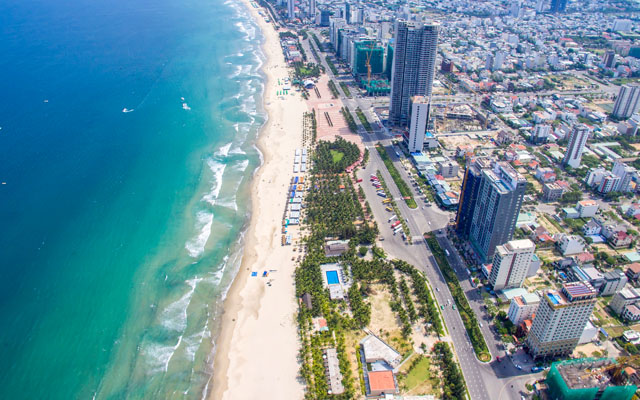
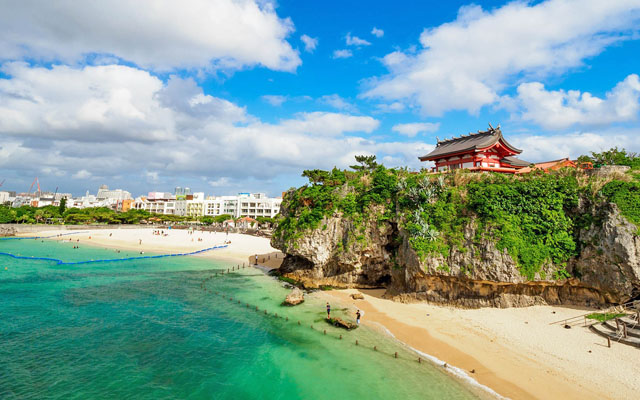
The Central Vietnamese coastal destination of Danang is enjoying a huge increase in visitors from South Korea, and tourism players are tapping into the surge.

According to figures from Vietnam National Authority of Tourism, Vietnam welcomed more than 2.274 million South Korean visitors in the first eight months of 2023 – making it the country’s top source market. This is about 16 times the growth of the same period in 2022.

More South Koreans are flocking to the Central Vietnamese coastal destination of Danang

Dinh Quoc Thich, founder of Thich Tours, said many South Koreans are now flying directly to Danang, drawn to its coastal location and cooler climate, combined with a strong shopping scene, integrated resorts, food and proximity to cultural sites such as Marble Mountains and Hoi An.

This is in addition to a flight time of about five hours, and up to 20 direct flights a day connecting major cities Seoul and Busan being offered by several airlines.

Pham Ha, founder and CEO of LuxGroup, noted a “significant” increase in interest from the South Korean market.

“Eight years ago, along with Japanese and Chinese tourists, South Koreans knew Danang for its golf tourism. Now, South Korean tourists also love many other experiences, such as culinary, variety of entertainments, luxury resorts, clean beaches and culture,” he said.

“It’s also easy to take direct flights connecting major Korean cities with Danang, which make access more seamless.”

Noting the potential the market holds, LuxGroup is adjusting its marketing strategy. This includes offering more content in the Korean language, partnering with South Korean travel agencies, and creating packages that suit South Korean travel preferences.

Guilhem Cavaille, general manager at Diethelm Travel Vietnam, said: “South Koreans coming to Danang is supported by an impressive number of daily direct flights at very interesting rates. They come for the beach, the golf, and ease and accessibility of many diverse activities. In the region, there are not so many other destinations gathering all these advantages.”

Dispersed tourism trends on the rise

0

Dispersed tourism is gaining strength as travellers seek out more meaningful experiences in off-the-beaten-track destinations.

Willem Niemeijer, CEO of YAANA Ventures, said he was among the trendsetters with Tad Fane Resort in Paksong, Laos, which opened in 1999.

Niemeijer: it is very important to stay on the cutting edge of new experiences

“It took another two decades or so for visitor dispersion to take off, but we’re seeing this becoming a trend,” he shared.

Niemeijer attributed this to demand, environmental awareness, and lower investment costs, in addition to improved infrastructure, including the high-speed railway in Laos and the expressway that connects Phnom Penh in Cambodia with the coast.

Examples of rising destinations with strong tourism dispersal ability include Champasak in Laos, Guilin in Guangxi, China, and Kep in Cambodia.

Catherine Germier-Hamel, chief executive officer at Destination Mekong, said while countries in the Greater Mekong Subregion have become increasingly popular, they have yet to tap into their full tourism potential, especially with regards to diverse culture and natural resources.

“As a result, many destinations and sites have been overcrowded, while others remained untapped,” she observed. “Dispersed tourism can be part of a development and diversification strategy to meet new needs and interests for unique, off-the-beaten-track untapped destinations and experiences.”

Germier-Hamel noted that while dispersed tourism remains limited to niche experiences and remote destinations, there is growing interest in tourism forms that require smaller groups and take place in less visited areas.

She cited ecotourism, community-based tourism, and agritourism as
examples.

“In that case, dispersed tourism can bring additional and complementary income to local communities and help reduce disparities,” she stated.

Niemeijer added that offering these experiences forms a key part of YAANA Ventures’ business model. “For our companies, it is very important to stay on the cutting edge of new experiences, and we’re putting this into action with our lodge developments and travel products,” he told TTG Asia.

Dusit Hospitality Academy programme to elevate service industry standards

0

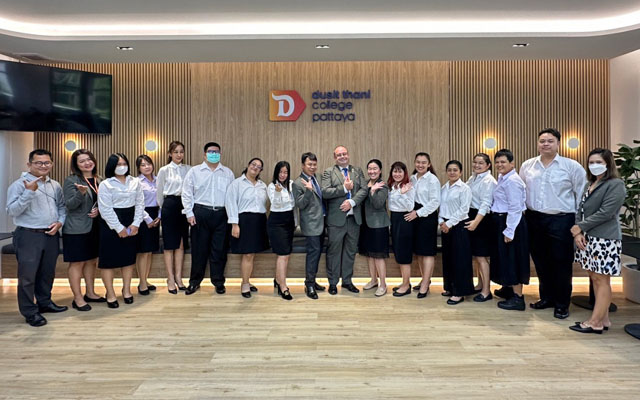
Dusit Thani College has unveiled an ambitious skills development initiative called the Dusit Hospitality Academy (DHA) at its Bangkok and Pattaya campuses aimed at raising the bar for excellence in the service industry.

“As the oldest and largest (hotel) school in Thailand, we have produced over 10,000 hospitality and culinary graduates who have gone on to work in hotels in Thailand and all around the world. Being owned by Dusit Thani hotels, we are uniquely influenced by the needs of the industry. That means from a top-down approach, our curriculum is often dictated by industry requirements,” shared John Lohr, executive director, external affairs, Dusit Thani College.

Dusit Hospitality Academy is suited for individuals from varied backgrounds

Although previously focusing on traditional formats like Bachelor’s and Master’s degrees, he shared that the college has responded to industry needs by creating, under the DHA, “new programmes that are designed to give short bite-sized knowledge and training in skills development to deliver talents faster” to hospitality businesses.

Currently offering four courses – Culinary Arts, Pastry Arts, Restaurant Service, and Hotel Service – the academy is suited for individuals from varied backgrounds, including those who aspire to enter the service industry or those already in hospitality seeking career advancement opportunities.

Furthermore, DHA offers a licensing model that empowers hospitality companies and employers to develop their own continuous professional development programs on Lobster Ink.

They can adopt DHA’s proven curriculum and receive comprehensive train-the-trainer services from the Dusit Thani College team. This innovative approach ensures that organisations can attract and retain top-tier talents while nurturing their professional growth.

At present, the DHA is operated on Dusit Thani College premises in the Srinakarin area. However, a dedicated facility for the DHA is in the works, which will be situated in the heart of Bangkok.

Established in 1993 under the leadership of Thanpuying Chanut, Dusit Hospitality Education (DHE), the educational arm of the Dusit Thani Group, was founded with the mission of delivering top-tier hospitality education to contribute significantly to the broader industry.

Presently, DHE oversees various scholastic institutions, including Dusit Thani College with campuses in Bangkok and Pattaya, Le Cordon Bleu Dusit Culinary School in Bangkok, and The Food School based in Bangkok.