TTG Asia
Asia/Singapore Thursday, 25th December 2025
Page 393

India sets out tourism villages ambition

0

A number of Indian states have identified rural tourism as a vital area for promoting sustainable experiences.

India’s southern state of Tamil Nadu, which recently came up with a new five-year tourism policy centred on establishing a sustainable tourism ecosystem, has made home-stays in rural areas and community awareness programmes in villages part of its action plans.

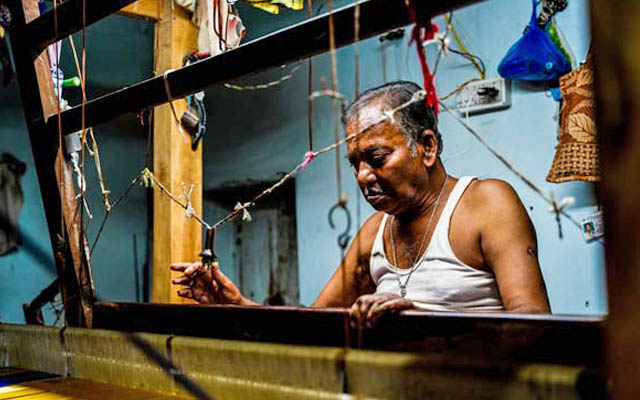
Pochampalli was the only Indian tourism village recognised by the UNWTO programme in 2021

Kerala state is also keen to promote rural tourism under its responsible tourism initiatives, especially in the areas of Kumarakom, Thekkady, Kovalam and Vaikom. Tourists are able to explore villages in unique ways, such as by caravans, and experience local way of life through home-stays.

Prem Krishnan S, additional director general, tourism, department of tourism, Kerala, told TTG Asia that this focus would provide employment opportunities for locals.

On a broader scale, India’s Ministry of Tourism is getting the ball rolling on a village tourism programme that was recently approved by the central government. The programme supports the ministry’s goal of diversifying the country’s tourism experiences.

Manoj Kumar Singh, nodal officer, responsible tourism, Madhya Pradesh, said: “We are working on six major community development projects in Madhya Pradesh. Rural tourism and homestay promotions are important parts of these projects.”

He shared that 100 villages in Madhya Pradesh are involved in this initiative, and 30 of them have the necessary infrastructure to host tourists. The remaining villages will be brought up to standard by 2024.

Industry players are aware that not a single tourism village in India had made it to the list of UNWTO Best Tourism Villages awardees in 2022, which inducted 32 villages from 22 countries.

The village of Pochampalli was the only Indian tourism village recognised by the UNWTO programme in 2021.

UNWTO maintains a strict criteria for recognising tourism villages under its Best Tourism Villages initiative. Candidates must meet nine stringent requirements, such as Health, Safety and Security; Promotion and Conservation of Cultural Resources; and Social Sustainability.

However, villages that are close to making the cut will get support from the Upgrade Programme, which addresses gaps identified in the evaluation process.

Kerala’s Krishnan said his team is “working towards parameters that will help us to meet the criteria required by UNWTO Best Tourism Villages initiative”. – Additional reporting by Karen Yue

Indian aviation soars amid industry challenges

0

The Indian aviation industry, a critical driver of both domestic and international tourism, has witnessed exponential growth over the past decade, with 192 million passengers processed in the past year.

In comparison, the combined passenger count for domestic and international flights stood at approximately 98 million in 2013.

Naidu: airlines in India are taking proactive steps to establish their own academies to bridge the gap

Current projections suggest that by the end of 2024, the industry could surpass all previous records, stated Tara Naidu, chief of commercial, Air India Express, during the Examining Aviation’s Path in India and its Impact on Travel and Tourism session at PATA Travel Mart 2023 Forum.

The boom in passenger numbers is accompanied by substantial aircraft orders from major Indian airlines. In June 2023, Air India firmed up its order for 250 Airbus aircraft and 220 Boeing jets, while domestic rival IndiGo agreed to purchase 500 planes from Airbus.

With these confirmed orders, Naidu shared that there are “plans to expand and grow into Asia-Pacific”, and tap on markets within a “6.5-hour radius from India”, like Singapore, Malaysia, Cambodia, and Thailand.

The industry, however, can expect some turbulent weather on the horizon.

“(The availability of) skilled human resources, in particular pilots, remain a concern, but airlines in India are taking proactive steps to establish their own academies to bridge the gap,” revealed Naidu.

Rising fuel prices, regulatory constraints, and airport capacities are also constant challenges as the industry looks to expand.

On the bright side, only “four per cent” of India’s population currently flies, which indicates “vast opportunities” for the aviation industry.

The Indian Ministry of Civil Aviation has also set a goal of reaching one billion air passengers by 2040, as stated in a Vision 2040 for the Civil Aviation Industry in India document.

Recognising the need to ensure infrastructure can accommodate the increase in passengers, the Indian government has outlined plans for an additional 26 airports, and will invest billions to construct new airports by 2025.

SITA, KL Sentral Station renew partnership to enhance passenger airport experience

0

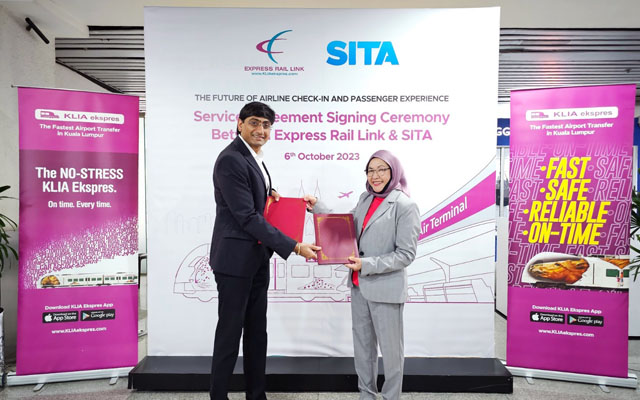
Express Rail Link (ERL) has signed a service agreement with aviation technology provider SITA to equip ERL with SITA Check-in Kiosks and SITA Self Bag Drop (SBD) services at KL City Air Terminal in KL Sentral.

Expected to be installed and operational by 2Q2024, passengers will be able to check in faster and drop their bags off within 30 seconds at the train station prior to taking the KLIA Ekspres train to the airport.

The renewed partnership will modernise Express Rail Link’s check-in process and enhance passenger experience

The hardware is a next-generation platform, supported by SITA Flex, that enables smooth and efficient passenger processing at the airport.

Under the new five-year contract, SITA will provide four self-check-in kiosks and two SBD kiosks initially and this set-up can be easily scaled up to match growing demand in the future. Three conventional manned check-in counters will be maintained for those who still need staff assistance.

ERL’s CEO Noormah Mohd Noor said: “Our renewed partnership with SITA aims to modernise our in-town check-in process and enhance passenger experience. Self-check-in and self-bag drop facilities can potentially provide cost efficiencies for airlines while offering added convenience for passengers. The self-check-in kiosks are identical to those at the KL International Airport (installed in March 2018), and every airline that currently allows their passengers to do kiosk check-in at the airport can automatically extend this convenience to KL Sentral.”

Sumesh Patel, president, Asia-Pacific, SITA commented: “Whatever the form of travel, there’s the need for safe, automated, smarter, and more efficient journeys. Across the travel industry, we face similar issues and there is a need to tackle these together through common and shared approaches – be that for air travel, cruises, railways, or events.”

Resorts World Cruises adds Vietnam and Philippines to sailings

0

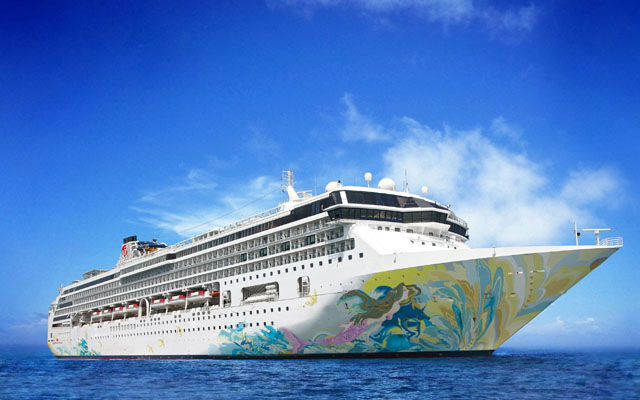
Resorts World Cruises has added Vietnam and the Philippines to Resorts World One’s five-night cruises itinerary departing from Hong Kong.

The new destinations will complement the current five-night Okinawa cruise, and the five-night Nha Trang–Danang cruise, as well as the five-night Boracay–Manila cruise which starts on January 21 next year.

Resorts World One now sails to Vietnam and the Philippines

“Our five-night cruises from Hong Kong aboard the Resorts World One offer travellers an alternative leisure and travel option that is convenient and comfortable to visit multiple destinations within a country. The inclusion of these new destinations will help cast a wider net to rejuvenate the cruise tourism industry across the region,” said Michael Goh, president of Resorts World Cruises.

Highlights in Vietnam include beaches, such as Long Beach that is home to surfing spots and seafood joints, mud baths, hot springs, island hopping, street food dining, and visiting sights like the 78-foot tall Buddha statue, centuries-old Po Nagar Cham Towers, and Marble Mountains.

In the Philippines, attractions comprise rich heritage sites from the old Hispanic Fort Santiago to the Baluarte de San Diego tower and various iconic landmarks, churches and cathedrals. In addition, foodies can go on a street-food escapade when in Manila.

Western hotels miss out on Chinese traveller market during Golden Week: DidaTravel

0

By not actively promoting their properties ahead of the Chinese Mid-Autumn Festival which took place last week, western hotels have missed a great window of opportunity for capturing the attention of international outbound Chinese tourists, according to DidaTravel.

The Chinese Mid-Autumn Festival is historically one of the busiest outbound tourism periods due to back-to-back national holidays: Mid-Autumn Festival and China National Day. This results in many Chinese citizens combining the national holiday days with work holidays to take one week off for holidays.

By not reactivating Chinese sales & marketing channels, western hotels have lost out on the outbound Chinese traveller market

While the China outbound tourism market, in general, has yet to return to where it was pre-Covid, this year’s Mid-Autumn Festival could have provided an excellent opportunity for Western hotels to actively market themselves to Chinese audiences, and positioning themselves for the recovery.

Eric Zhuang, chief strategy officer at DidaTravel, shared: “This Mid-Autumn Festival period has been a big missed opportunity for most Western hotels as they have not yet reactivated their sales and marketing efforts when it comes to Chinese outbound travellers – they are basically risking missing out on the recovery which is already underway, allowing competitors to capture their market share.”

Reactivating China sales will require more than simply re-employing Chinese-speaking sales and marketing teams however, he noted.

“Technology plays an ever-increasing important role in reaching Chinese travellers via B2B2C sales distribution channels and such technology solutions have evolved significantly since 2019.”

Zhuang stressed that it is not as simple as switching “back on old tech solutions”, but to realise that the nature of the local sales market has also changed.

“Many B2B2C sellers are now selling in a very different way and thus require different types of content and pricing,” he added.

Luxury Lodges of Australia launches new trade and media portal

0

Luxury Lodges of Australia (LLoA) has launched a new portal for its trade and media partners to navigate the complexities of planning experiential luxury travel in Australia.

The comprehensive online resource provides easy access to high quality marketing assets, media resources, planning and training materials to an extensive suite of backgrounders relating to experiences and sustainability in travel, accommodation configurations and child policies required by travel planners.

The new portal provides access to marketing assets, media resources, and other information required by travel planners; one of the properties, Sal Salis, pictured

It is a consolidation of the tools, resources and reference tools the team at LLoA has developed over the 14 years since the organisation’s inception in 2009 to assist media and trade distribution partners navigate the detail required to accurately and professionally plan, promote or sell high-end experiential travel to and within Australia.

The online portal is accessed via a one-time registration and offers five key sets of materials.

Marketing Assets include links to high quality, up-to-date assets including image and video libraries, YouTube and Vimeo channels, white label brochures, social media connections, maps and logos.

Media Resources offers access to a set of current and evolving media backgrounders, such as news on the lodges’ collective impact on the regional communities in which they operate, while Planning Tools include resources such as suggested itineraries, range of experiences, a live availability calendar, ideas and information for small group travel, child policies, what’s included at each lodge, and more.

There are also interactive training sessions and access to Tourism Australia’s Aussie Specialist Program, as well as foreign language resources under Training Resources. The Enquires section offers next steps for connection with the lodges and some of Australia’s signature experiences.

LLoA’s executive chair Penny Rafferty said: “We’re thrilled to share this online resource which we hope will be useful for our partners to inspire more travellers to discover the incredible people, places, culture and stories that define Australian travel.”

Trifecta opens in Singapore with month-long festival

0

Asia’s first snow, surf, and skate lifestyle destination, Trifecta, will be opening in Singapore from October 28 in Orchard Road, and welcomes all riders and non-riders from around the world to explore the island’s best acts across surf, snow, skate, art, music, food, drinks and lifestyle from October 28 to November 19.

Part of the launch is the inaugural Trifecta Music Festival happening on November 18-19, spanning three stages and festival zones, including the Somerset Skate Park. The festival will bring together headliners and the best of Singapore’s local music talent, with activities throughout the day, discussions around board sports, creativity, and entrepreneurship, as well as F&B and retail options.

Trifecta will celebrate its opening with celebrations lasting four weeks

From October 28 to November 5, there will be a line-up of 101 workshops for riders and non-riders with experts from Citywave and The Ride Side, community snow and skate jams, community art market featuring local creators, film screenings, and more. Participants can also meet Sakura Yosuzumi, the world’s first Olympic women’s park skateboarding Gold Medallist and Red Bull Team Athlete, as she makes a special appearance on October 28 and 29.

Other highlights include the launch of Singapore’s first board-sports specialty store with an extensive range of boards and gear, and the launch of Butter which offers an all-day dining experience and signature dishes such as a butter-tasting flight, butter-flavoured desserts, and trademark bagels.

Trifecta’s bi-annual Art Show will also debut the weekend of November 11-12, showcasing creativity in the worlds of art and board sports from professional and up-and-coming artists.

At Trifecta, visitors will be able to experience Asia’s largest standing wave pool by Citywave, VR ski simulators, Singapore’s first ski-snowboard freestyle dryslope area featuring a jib area and airbag jump, as well as the nation’s first surf-skate and skateboard hybrid bowl.

Trifecta is free for visitors to enter, and activities can be enjoyed with hourly tickets, shareable credit packs, and monthly season passes.

Festival activities in the first three weekends will be free for the public while membership is required for use of the facilities, and registration is required for lifestyle workshops.

Trifecta Music Festival tickets are available for sale on Trifecta’s website.

For more information, visit Trifecta.

A favourable outlook

0

Could you outline PATA’s action plans for the next 12 months?
Following two strategic workshop sessions organised in conjunction with regular meetings of the executive board, we agreed on establishing five expert task forces (ETF).

ETF 1 will cover PATA Brand and Voice; ETF 2 Travel Mart and PATA Events; ETF 3 oversees Membership Engagement and Value; ETF 4 Organizational Design, and ETF 5: Digital Readiness.

Along with key issues such as sustainability, the ETF’s aim is on operational areas that require focus in the coming 12 to 24 months in order to strengthen PATA institutionally and maintain relevance to its members and the greater Asia-Pacific travel community.

With the on-boarding of our new CEO, Noor Ahmad Hamid, I look forward to focusing on how to implement new initiatives and ensure membership value and association growth for years to come.

More businesses and destinations are actively pursuing sustainable tourism. To what extent have stakeholders in the Asia-Pacific region embraced sustainability?
Organisations like PATA and the Asia-Pacific tourism industry have been advocating sustainability for over four decades. However, implementation and action have been slow.

For instance, discussions on sustainability were held as early as 1991 during a PATA conference in Bali, featuring renowned speaker David Suzuki. Despite these conversations, there remains a need for concerted efforts from both tourists and destinations to achieve sustainable practices.

Tourists are just as responsible for practising sustainable behaviour as the suppliers of tourism services. Implementing a code of conduct for visitors when they arrive at a destination could be a valuable step. Poor behaviour by tourists has become a significant issue, as seen in Bali, where cultural and environmental values are often disregarded.

Another important aspect is to drive sustainability from the demand side. If customers start demanding more sustainable practices from hotels, restaurants, and tour operators, it will force the industry to move beyond mere lip service and adopt sustainable measures.

The industry in the region, including PATA, is actively seeking answers to the complex questions surrounding sustainability. I am not naive to suggest sustainability at the expense of profit. Still, there has to be a lot of balancing – including economic and environmental balancing, and the communities that are affected by tourism.

How can an organisation like PATA assist destinations in achieving sustainable goals?
Firstly, raising awareness about the challenges and admitting existing problems are essential initial steps.

PATA, through events like conferences, aims to create awareness among tourism leaders and foster discussions on how to tackle sustainability challenges. By bringing together representatives from multiple countries, we can serve as a platform for sharing best practices and creating awareness

PATA can also act as a repository of good practices, collecting and disseminating successful sustainable initiatives from various destinations.

As we have a membership that spans 45 countries, ranging from small Pacific islands to large nations like India and China, we have the unique opportunity to showcase diverse experiences and learnings. Sharing these practices can inspire and guide other destinations in their sustainability efforts.

In your speech at the PATA Destination Experience Forum and Mart 2023 in Kuching, you mentioned the importance of rethinking how we measure tourism success. Could you elaborate?
We need to rethink how we measure tourism success. It is crucial to develop a more comprehensive understanding of its impacts.

Currently, many destinations in the Asia-Pacific region focus on marketing their attractions and increasing demand, rather than effectively managing the impacts of tourism. It is essential to shift the focus from solely boosting visitor numbers to considering broader metrics for success.

One approach is to conduct a baseline analysis of a destination without tourism and compare it to the existing situation. By understanding the positive and negative aspects of tourism, we can develop a more holistic view of its impacts.

For example, we should consider the employment opportunities created by tourism, the businesses that depend on it, and the positive contributions to the local economy. On the other hand, we must also acknowledge the potential degradation of the environment, culture, and the cost burdens that tourism places on a destination.

Additionally, we need to consider the concept of “the commons”. In the tourism industry, as we promote tourism we say “a great place to live is a great place to visit”. A great place to live is a place that has a great public area that is funded by the government and the residents pay the tax.

However, tourists often use these public services without directly contributing through taxes, which can place a burden on the residents. Accounting for the invisible burdens of tourism, including the costs of hosting visitors, is crucial for a comprehensive evaluation of tourism’s economic and social impacts.

In summary, we need to conduct an honest assessment of both the revenues and expenses associated with tourism. This accounting should include the invisible burdens and the long-term costs of tourism. By re-evaluating our measurement metrics, we can develop a more accurate understanding of tourism’s true impact and make informed decisions for sustainable development.

Some countries, like New Zealand and Thailand, have started to collect tourism taxes, and Bali has announced it will start doing so next year. Do you think this is the way to offset the invisible costs for tourist destinations going forward?
The tourism industry needs to test a lot of different sustainable and responsible tourism models over the next five years. What works for one destination may not work for another, given the diversity of the Asia-Pacific region.

Each destination will have a different solution to manage and mitigate the positive and negative impacts of tourism. Each customised approach will align with the destination’s specific circumstances, including cultural and religious backgrounds. Sharing successful models and experiences among destinations is crucial to finding the most suitable solution for each location.

As a culturally and environmentally diverse region, Asia-Pacific has a unique opportunity to lead the way in global sustainability. Preserving the region’s rich heritage and natural beauty is a collective responsibility that requires cooperation, innovation, and continuous improvement.


Japan levels up on adventure activities to entice travellers

0

Japan’s nascent adventure tourism industry is growing at speed, aided by public and private investment, including by domestic and overseas tour companies.

Adventure travel (typically defined as involving at least one of the components of physical activity, a connection to nature and a cultural experience) is a key pillar in the government’s 2023–2026 tourism plan to increase regional tourism and visitor consumption.

Tourists can experience rafting, stand-up paddle boarding, hiking and fishing at the countryside, such as Akigawa Valley in Tokyo, pictured

The Japan National Tourism Organization is therefore promoting adventure travel in a bid to attract visitors to rural areas where adventure activities, which are typically more costly than sightseeing, tend to take place.

“Adventure travellers enjoy interacting with cultures that are particular to each destination, so each region of Japan offers something of interest,” said a representative of JTB Corporation.

Stakeholders in Osaka and Tokyo, which were visited by 80 per cent of all tourists pre-pandemic, are hopeful they can entice visitors into the nearby countryside.

Osaka Convention & Visitors Bureau (OCVB) has launched Adventure Osaka, a website introducing routes for hiking, e-biking and kayaking, as well as places to experience local culture.

“Osaka is about so much more than the city; we are a prefecture of diverse adventures,” Shirley Zhang of the OCVB’s PR department told TTG Asia.

Tatsuya Morooka, senior manager of Fourth Wellness, which organises activities in the capital’s Akigawa Valley, said: “We want to show visitors another side of Tokyo, where they can experience rafting, SUP (stand-up paddle boarding), hiking and fishing.”

Overseas companies are also increasing their footprint in Japan.

“We’re experiencing so much pent-up demand,” said Fiona Marshall, product director of UK-based Macs Adventure, whose Japan self-guided walking tours are booked throughout the remainder of 2023. “We’re very interested in expanding to offer more tours across Japan.”

Growth in the industry is also stimulating domestic demand and is even anticipated to inspire more Japanese travellers to try adventure activities overseas.

“We’re looking forward to welcoming more of the Japan market, as direct flights have resumed between Narita and Fiji,” said Brent Hill, CEO at Tourism Fiji, adding that the country is popular for snorkelling and diving.

Indian tourists in Malaysia embrace year-round exploration

0

Travel patterns from India to Malaysia have shifted from summer and year-end peaks – common during pre-pandemic – to exploration throughout the year now.

Malaysian agents handling the Indian market also shared that Indian customers are now spending one or two nights more and are increasingly open to investing in memorable experiences and embracing new adventures.

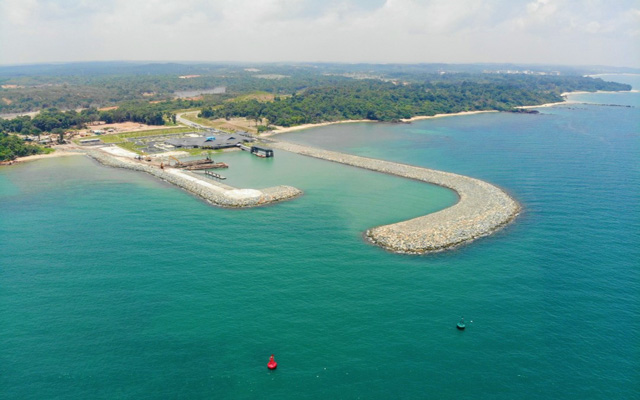
Indian travellers are keen to visit emerging destinations such as Melaka and Desaru Coast in Johor, pictured

Muhammad Arsalan, general manager of Universal Holidays, disclosed that in the past year, his Indian travellers are staying an average of four to six nights, compared to the previous two to four nights.

Another noteworthy observation he made was that many Indians were now opting for four- and five-star international hotel brands in Kuala Lumpur, Penang, and Langkawi, whereas previously they preferred three-star options or local four- and five-star brands that were less expensive than international ones.

Arsalan attributed this upgraded accommodation preference to the weak ringgit, which has given Indian travellers more buying power in Malaysia.

Zulkifli Rahman, director of sales and marketing at The Ritz-Carlton, Langkawi, has also noticed changes in Indian travel patterns.

He shared that, on average, Indian guests are now spending five to seven nights, as compared to three or four nights pre-pandemic. There is also a spike in multi-generational Indian groups on property, with guests dedicating more time to exploring the destination rather than confining themselves in the resort.

Zulkifli added that long girlie weekends are also becoming popular among Indian female customers.

For repeat Indian travellers, SBS Pradeep Kumar, director and COO, Asian Famous Tours & Travel, said new and exciting destinations are big draws, especially as they move beyond popular traditional places like Kuala Lumpur, Genting, Penang, and Langkawi. He noted a growing interest in places like Kota Kinabalu and Sandakan, as well as emerging destinations such as Desaru Coast in Johor and the city of Melaka among repeat guests.

And in a world where social media rules, Instagram-worthy experiences are an important motivator for Indian millennials to pick fresh destinations, observed Pradeep.