TTG Asia
Asia/Singapore Wednesday, 24th December 2025
Page 390

Keeping the edge without losing fundamentals

0

You’re days away to opening the first Maqo hotel in Changsha, China (November 1), congratulations! Tell us why you’ve launched this third brand.
We always ask ourselves: What has changed in the industry? What are customers telling us? What do we think needs to be done? Where can we make a mark?

Covid-19 was such a traumatic period in our industry. We went from the highs to the lowest lows – and not just for a moment but three years. For Hong Kong, it was even longer (because of the student protests 2019-2020). So, we took the opportunity to ask those questions again, and from that came Maqo.

What were the key points from the review?
Before, we talked of ‘leisure travellers’ and ‘business travellers’, but the reality is work and pleasure run parallel continuously throughout the day. We all have been there ourselves – I find myself going from meeting to meeting when visiting our hotels, then sitting at the bar at five o’clock with the general manager for a talk that is both business and casual. If I still have some time before dinner, I’ll do some emails, or put my laptop aside and watch something interesting.

So with Maqo, we don’t create hotel facilities but spaces. There’s a space everywhere for every need, be it a private space where you can work or, in the same area, relax alone or dine with friends. You don’t have to go to the restaurant, the bar, the business centre to do one thing. You can do whatever you want, wherever you are, in the moment at the hotel.

When I started in this business, we would categorise travellers as ‘purpose-driven’. They want to make a deal. They want to know exactly how far the hotel is from the airport, and from the hotel to their appointment locations. Today, they want to know what’s around the hotel – they get excited about the destination as much as about the business. They want to smell, taste, see something different.

So Maqo’s ethos is ‘More is not better, only better is better’. For instance, we won’t have a bar full of liquors. Rather, we bring it down to, say, six gins but travellers will find something that is unique, local, attractive and trendy in the selection that will help influence their choice. We have lots of what we call ‘edits’ (where editors craft art and culture programmes, F&B offerings, music playlists and wellness concepts).

The fundamental needs of a traveller – cleanliness, safety, a good night’s sleep – never change, but guests don’t want to be in cookie-cutter hotels anymore. So, companies that have built themselves on standardisation will need to rethink.

Is it time to rethink a legacy brand such as Marco Polo Hotels?
Yes, the revitalisation of Marco Polo is absolutely the next thing for us. These are great hotels, with traditional European design and traditional five-star structure.

We want the brand to express the art of hospitality. We don’t want people to forget what good service is, and we will put a stronger emphasis on F&B at these hotels so people won’t forget what good, tasty food is like.

It doesn’t mean we have to have tails and tuxedos when we do service, however, there is an art of talking to a customer; there is the art of going through a menu and explaining what a dish is to guests. Today, if I ask my staff ‘How’s the food?’, they say ‘good’; but good is not the taste! They struggle to describe the taste. Besides, good hurts. I don’t want to be good, I want to be really good or I want to be different. People now understand what quality is and appreciate it.

Our industry went through periods of fast development, quick promotion of people and high turnover. There’s definitely a case for training the next generation so we don’t lose the passion for hospitality and the art of service.

We have made the first steps towards the revitalisation of Marco Polo. We’ve renovated the Prince Hotel in Hong Kong (which is under Marco Polo Hotels) and are getting positive feedback for it. We’re also renovating Marco Polo Wuhan. The first half will be done by the end of the year and we will continue doing the second half after the Chinese New Year.

How do the three brands stack up?
Marco Polo and Niccolo are both in the luxury tier (the latter a collection of contemporary hotels). Maqo is a premium lifestyle brand.

We get a lot of traction for Niccolo hotels. We are proud of them as they do extremely well against competitors. We have a solid business model there. With Niccolo hotels, we took a lot of lessons about display, attentiveness, individuality from our experience in luxury retail. You walk into the lobby and a staff is ready to welcome you, recognise you, personalise your experience, just like if you go to Gucci, Versace or Armani in Hong Kong.

Some owners really love the Niccolo brand and say it’s great even for resorts where stays are traditionally four to seven nights. With longer stays, people can start to relax and enjoy the Niccolo experience while doing work on the side.

You have a ‘25 by 2025’ goal to expand Wharf Hotels, from 17 owned or managed properties in Hong Kong, China and the Philippines now. Isn’t it challenging for smaller hotel groups to enter markets such as Singapore or Tokyo? What is your strategy?
(Size) doesn’t matter, or whether it’s Marco Polo or Niccolo, because the first question every investor asks me is: how good are you in operating hotels?

Our balanced scorecard show that in all markets where we operate Niccolo hotels, we are number one or two, and we’re competing against all the other big players you can imagine in these markets. Overall, we are proud that we beat our competitors in each brand with a difference of six per cent, or even more in some cases, which is really a good margin.

Being a small company allows us to react fast and work with each owner, as seen during the pandemic. We changed the operating models and cost structures quickly, and we went deep, although, it hurt as well of course.

Before we sign a project, I meet with the owner – when we develop the project, right through when we open and operate that hotel – so from the beginning to the end, he will work with the same people. It’s not like somebody signs the contract and you never see him again, or like the pre-opening team opens the hotel and you never see them anymore; resulting in the general manager, who has no idea what was promised, saying he needs more money to make things work. There are owners who want a partnership where we suffer together, and celebrate together.

As a result of Covid, some hotel companies made their management agreements absolutely watertight so that if anything happens, they are safe. We don’t hide behind 300 pages of a management agreement. No, we talk about the issues on hand with the owners. We say what we can or cannot do. We have a great track record as a reliable partner, with the right products and the right attitude. Plus, we have a solid (parent) company on our back. I’m convinced we will grow.

You were vice president operations of Wharf Hotels for four years and was named president in May 2022 when then-CEO Jennifer Cronin resigned. How has it been and how are you different from Cronin in leadership style?
Jennifer was great. She had the vision of where she wanted to bring the company. I was always from the operations side, so when there is a promise made by the president, my brain is like: how do we make it happen?

With Covid, any vision or plan went out of the window as every month the forecast was low. We were restructuring, cutting expenses and actually, that was the easy part. The hard part was putting the puzzle back together with a leaner workforce – it was a cost-balancing act.

My focus is much more on my customers and on our workforce, in particular how we build the workforce and train our people. Don’t forget that when we lose a staff, we also lose the knowledge and years of experience he/she has accumulated.

However, it’s good to have new people, as they have new perspectives and new ideas. That said, I’m a bit conservative and like to keep the fundamentals where they belong. For me, attentive service and tasty food will still beat whatever statistics. Let’s bring the fundamentals back to life and let the customer be the judge of whether we’re really good or not.
Skyscanner’s new generative AI tool to launch in Singapore, Australia and India

0

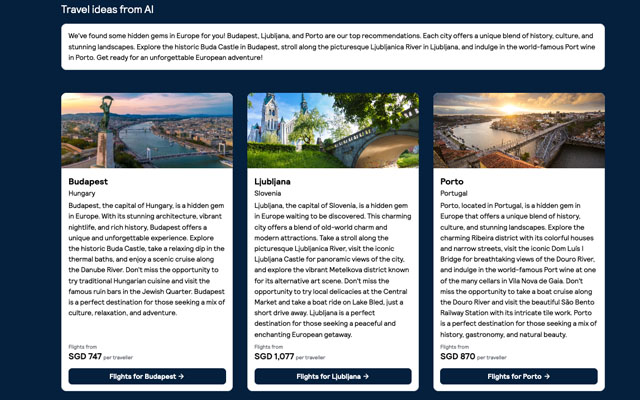
Skyscanner has unveiled a new search discovery and inspiration tool, Dream and discover with AI, which is powered by generative AI. It will initially launch in beta in Australia, India, and Singapore to test traveller behaviour when it comes to using AI for trip planning, with other markets set to follow.

The beta phase will allow Skyscanner to gather feedback, engagement, and conversion data to optimise and enhance future traveller first product development.

Skyscanner’s new AI tool can generate travel ideas and recommendations as well as destination suggestions

Powered by Open AI’s Chat GPT technology, travellers can ask open-ended statements and questions such as “best cities for cultural tours” or “what are some hidden gems in Europe?”, and includes a variety of prompts ranging from “short flights next weekend” to “foodie city breaks”. The tool will then generate travel ideas and recommendations as well as three destination suggestions with links to the best flight options for each.

Unlike other generative AI travel tools and chatbots, imagery is combined with rich destination descriptions to highlight the unique characteristics of each suggestion. Upon deciding a destination, travellers are taken straight into Skyscanner’s flight search funnel to choose their flight.

Piero Sierra, chief product officer at Skyscanner, commented: “Generative AI is such an exciting technology that we as a travel industry are only just beginning to apply. 56 per cent of travellers are coming to Skyscanner for inspiration, so with this beta launch we are looking to understand how it might help travellers in the discovery phases of the travel planning journey, and importantly how they engage with the technology versus existing tools.

“This is one of many experiments we are running to see how generative AI can be incorporated into the core Skyscanner proposition – helping travellers plan and book their trip with ease and confidence – in the future.”

Lufthansa City Center appoints Blue Horizons Travel & Tours as agency in Manila

0

With effect of November 3, Blue Horizons Travel & Tours will start operating under the new name Blue Horizons Travel & Tours Lufthansa City Center – it will remain under the same ownership and legal status.

With a leading role in the economical surrounding enforcing new trends, revealing improvements and offering individual and tailor-made solutions, Lufthansa City Center (LCC) will play a predominant role in the Manila office’s communication.

Blue Horizons Travel & Tours is now under the umbrella of Lufthansa City Center, operating in Manila, pictured

LCC was founded in Germany in 1991, and has become one of the fastest growing international travel agency co-operations in the world. Today, with more than 550 offices in over 100 countries, the international LCC franchise co-operation belongs to the largest travel agency chains in Germany.

Both Blue Horizons Travel & Tours and LCC network in more than 100 countries to provide a uniform, top-quality service in all locations throughout the world.

Operating exclusively in a franchise, LCC travel agencies retain their independent entrepreneur status and their locally-renowned travel agency name, complemented by the LCC brand. Entrepreneurial companies run by the LCC owners receive a high level of service quality and commitment towards customers. With its selection of reputable travel agencies, LCC has combined local experts with extensive market knowledge under the umbrella of a global travel agency chain.

LCC focuses on individual tailor-made customer service for both leisure and corporate customers, offering the complete range of travel management solutions, combining flexibility and innovation, competence and experience with a comprehensive service portfolio, staff and a worldwide network.

Based on these key assets, a customer’s travel ideas are realised professionally, guaranteeing a high customer satisfaction combined with a price-performance ratio based on a trustworthy customer relationship.

In addition, LCC offers a professional B2B incoming agency network (LCC DMC network), a premier resource for extraordinary travel experiences offered by more than 75 DMC partners worldwide. These range from incoming offers to individuals or groups on leisure, luxury, MICE, or special niche offerings.

Editor’s note: A correction has been made to this article. The previous version incorrectly stated that Blue Horizons Travel & Tours rebranded but it was actually appointed as an official Lufthansa City Center.

South East Travel to expand in Asia-Pacific with Amadeus partnership

0

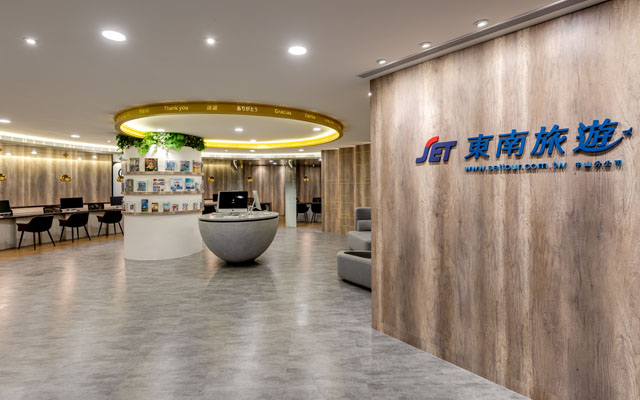
South East Travel has joined forces with Amadeus to grow its footprint in Taiwan and across Asia-Pacific – the Taiwan travel agency will implement Amadeus’ New Distribution Capability (NDC) as well as Master Pricer Instant Search to enhance its retailing capabilities.

This partnership will ensure South East Travel can provide richer, NDC-sourced content that is available on Amadeus Travel Platform using the Amadeus Travel API to its customers in Asia-Pacific. This NDC-enabled solution delivers a holistic, end-to-end integration that allows travel sellers to not only search, book and service NDC-sourced content at scale, but also to compare it alongside other types of content in one merged display, and with a deep integration into the existing travel seller ecosystem for maximum efficiency.

The partnership will help South East Travel provide richer, NDC-sourced content to its customers in Asia-Pacific

Joe Huang, air ticketing general manager, South East Travel, commented: “I firmly believe that our combined expertise and resources will drive future growth and solidify our position as a leading travel agency and (is) an important step forward in our technology modernisation journey.”

“This multi-year agreement is testament to both the strength of our partnership and South East Travel’s commitment to laying the foundation to modern retailing. We look forward to supporting its growth and help deliver content and services at the right touch points in its travellers’ journeys,” said Javier Laforgue, executive vice president & managing director, Asia-Pacific, Amadeus.

Travel Trade Marketplace introduces new one-stop platform for the tourism industry

0

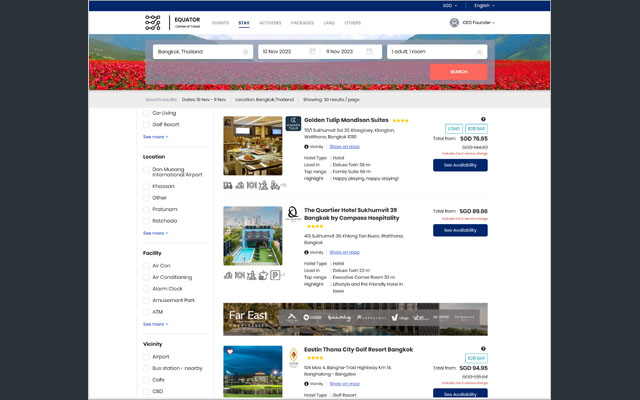
Singapore online travel company, Travel Trade Marketplace, has launched Equator, a one-stop trading platform and marketing channel for the tourism sector.

All companies can buy and sell on one platform which integrates the B2B and D2C business models. Sellers have full control over segment pricing and customer engagement based on a low transaction fee.

The Equator platform integrates the B2B and D2C business models

Its initial release lets accommodation operators promote rooms and F&B to pre-qualified customers from different industries and business segments. Other products are scheduled for subsequent releases.

Equator’s e-commerce model provides full transparency between buyers and sellers, content from original source, and undisrupted pricing. The co-marketing solution further lowers marketing costs.

Its Market Segmented Pricing (MSP) System gives sellers full control over customer viewership and pricing by markets, industries, and business segments; while the B2B creators’ module lets sellers enhance product offerings by adding complementary products from other operators. The best practices of online and offline sales are combined to generate more quality business, stronger coverage and wider reach at lower cost of sales.

“Within the vast online landscape, Equator’s different ways of driving online travel sales, serves as the gateway to boundless new possibilities,” said Nicolas Ishkanian, senior vice president – global distribution, Absolute Hotel Services (operator of Eastin Hotels, U Hotels & Resorts, and Travelodge Hotels).

Equator’s major shareholder, Chan Brothers International’s Anthony Chan, also group managing director of Chan Brothers Travel, commented on Equator’s distribution system: “It provides ready to market products at unmarked B2B prices from operators. We can ensure best pricing for our customers and expand our relationship with travel operators.”

In addition, Equator’s founder and CEO Fred Seow highlighted that the company will be launching its first industry-wide initiative – the Tourism ID staff programme.

“All personnel in tourism, especially the many behind the scenes, can enjoy industry rates for personal travel. At zero mark-up and zero commission, deals that are direct from operators are genuine, alike an industry privilege. As we usually travel off peak when less busy, it’s a win-win for all parties,” shared Seow.

“From positive response, we will bring forward our co-marketing module for hotels to achieve continuous engagement with customers. We believe Equator is a sustainable alternative for travel operators to drive more direct business, deliver stronger benefits to partners and offer stronger values to travellers.”

Follow the scent

0

Thailand, the world’s fourth most favoured travel destination for international tourists according to the Visa Global Travel Intentions Study last year, is loved for many things – its culture, range of recreational and wellness options, and shopping opportunities.

However, Thailand’s gourmet draws may well be the one common magnet for almost all loyal fans of the destination.

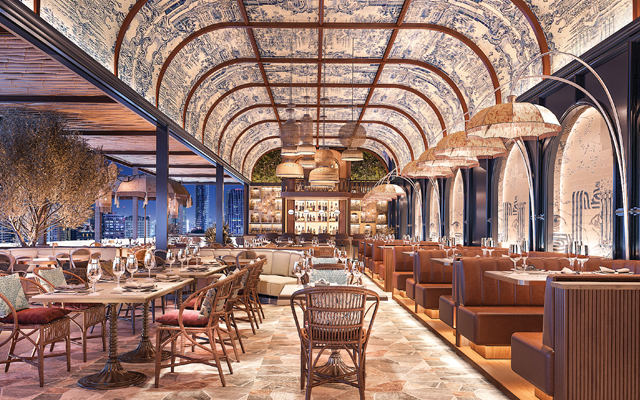
Pastel Rooftop Bar & Mediterranean Dining is one of Bangkok’s latest dining venue

Making a move on foodies, the Tourism Authority of Thailand (TAT) launched in May the Amazing Thailand Culinary City project to further develop and promote Thailand as a world-class gastronomy tourism destination.

The project made its debut at the recent Thailand Travel Mart Plus (TTM+) 2023, held from May 31 to June 2 at the Queen Sirikit National Convention Center in Bangkok. It brought together entrepreneurs in the food tourism sector to create business matching opportunities, presented an exhibition on local dishes from across the country, and invited visitors to sample delicious treats from various participating restaurants as well as try their hand at making Thai desserts.

This launch was accompanied by a series of consumer-focused culinary events throughout May and June. These were hosted in four regions – Chiang Mai (North), Khon Kaen (North-east), Phuket (South), and Chanthaburi (East) – during which cooking workshops and demonstrations, food exhibition and sampling sessions were conducted.

However, TAT’s Amazing Thailand Culinary City project has loftier ambitions. Conceptualised under the BCG Economy Model, the project encompasses Agriculture, Gastronomy, Food Safety, Experience, and Creative Entrepreneur components.

“Activities are designed to stimulate a circular economy and underline the country’s vision for national development to achieve prosperity in terms of economic, social and environmental sustainability,” said Chattan Kunjara Na Ayudhya, deputy governor, marketing communications, TAT.

Sitting alongside TAT’s culinary development efforts are continued innovation on the part of hospitality players in Thailand, whose efforts also serve to highlight the country’s cosmopolitan dining scene.

Opened in April this year, Pastel Rooftop Bar & Mediterranean Dining on the 22nd floor of Aira Hotel on Bangkok’s Sukhumvit Road injects a festive vibe through its colourful interior décor and artistic murals. The menu is big on Mediterranean flavours, with a focus on farm-to-table ingredients. Small and large plates are designed to encourage carefree, communal dining.

Also new is Gaston, which replaces the well-known Spasso Italian restaurant and bar at Grand Hyatt Erawan Bangkok. Gaston is styled after a classic Parisian bistro, where the menu features familiar French favourites like pork terrine, duck foie gras, and confit de canard.

After building a strong following for The Siam Tea Room, Bangkok Marriott Marquis Queen’s Park has gone on to open a second outlet at Asiatique The Riverfront. The new riverside outlet is focused on Thai favourites too, with a menu inspired by a journey to Old Siam.

The Standard, Bangkok Mahanakhon, which celebrated its first birthday in July, contributes to Bangkok’s vibrant dining scene, with options including the award-winning Chinese cuisine Mott 32.

If responsible dining is what travellers seek, then they shall find it at Wyndham Grand Phuket Kalim Bay, where guest meals are prepared using fresh produce from the resort’s own orchard and herb garden. This food resilience effort started in December 2022, when the resort converted a 6,000m² plot into lush grounds bursting with 160 coconut trees, 180 banana trees, 180 papaya trees, and four kinds of home-grown spices that are commonly used in Thai cooking.

Harvests are channelled to the four F&B outlets on property, while guests joining the resort’s cooking classes can pick their own fruit and spices from the garden.

New Zealand’s Qualmark receives GSTC recognition for sustainability standards

0

Qualmark’s Sustainable Tourism Business (STB) Criteria has been given the GSTC-Recognised Status from the Global Sustainable Tourism Council (GSTC), becoming the first in New Zealand to achieving this certification in meeting global standards of sustainability.

A subsidiary of Tourism New Zealand, Qualmark provides evidence that a business has been independently validated as a quality tourism business. It currently has over 2,000 tourism business members, and recently refreshed its criteria for members in alignment with the GSTC Criteria in May.

Qualmark’s Sustainable Tourism Business Criteria has been given the GSTC-Recognised Status, the first in New Zealand to achieve this certification; Auckland, New Zealand, pictured

The GSTC Recognition guarantees that all Qualmark businesses are following a standard that aligns with universal criteria for sustainable management, social and economic benefits to the local community, cultural heritage preservation and the reduction of pollution. It does not impact the current Qualmark assessment process.

Qualmark Accommodation providers may be eligible to participate in GSTC’s Market Access programme where prominent OTAs and various international travel providers highlight sustainable accommodation.

Qualmark general manager Steven Dixon remarked that the new global status can help “support their business and New Zealand’s transition to a regenerative tourism system”, which ensures that visitors explore further, connect with communities and contribute positively to the destination’s economy and environment.

Clinton Farley, general manager of The Hotel Britomart, said that each tourism business can play its part in protecting New Zealand and leading the way on sustainability, while dolphin tour operator Carino Wildlife Cruises’ general manager Vanessa McKay commented that the status demonstrates the country’s commitment to global sustainability standards.

Thai hoteliers embrace TAT’s forthcoming expat focus

0

The Tourism Authority of Thailand’s (TAT) recent announcement on the pivot towards offering benefits to expatriates in its 2024 strategy has garnered positive responses from leading hoteliers in the country.

Thailand, known for its cultural richness and scenic beauty, has attracted 156,596 expatriates in 1Q2023 alone, reported the Bangkok Post.

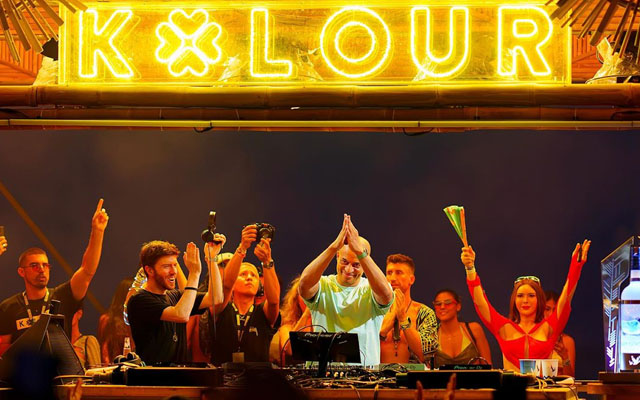
The Standard Hua Hin hosted the Kolour Hua Hin 2023 music festival in August as a way to attract the expatriate crowd and entertain long-stay visitors 

TAT governor Thapanee Kiatphaibool in late September announced plans to organise promotional campaigns for expatriates, such as reduced entrance fees to national parks and attractions – an idea which has long been championed within the local expat community.

As the lines between leisure and business travel blur, the hospitality sector is presented with unprecedented opportunities.

“We are confident in TAT’s 2024 strategy,” stated Jakob Helgen, area vice president, Marriott International – Thailand, Vietnam, Cambodia & Myanmar.

He elaborated: “The strategy takes advantage of the rising trend of digital nomads and remote workers, which will strategically position Thailand for a bright future. We are also pleased with TAT’s focus on sustainable tourism and quality over quantity, which are in line with Marriott’s focus on positively impacting the environment and communities where we operate.”

Marriott Executive Apartments, the group’s extended-stay concept, has several locations in Bangkok, with three more set to launch next year.

Boripat Louichareon, managing director of Standard Asia, echoes these sentiments.

“Thailand has long been a popular destination for tourists seeking both short-term holiday breaks and now catering for long-term stays. The rise of bleisure travel – where business meets leisure – fits right into this trend,” Boripat said. “We wholeheartedly welcome this rising trend led by the TAT. Bleisure travellers typically stay longer in a destination, extending nights at hotels and boosting revenue, empowering hotels to maintain higher occupancy rates.”

In the bigger picture, Boripat believes this strategy will greatly benefit Thailand’s tourism.

“Increasing the average length of stay and expanding the international reach can have substantial benefits not only for the tourism industry but also for the entire country’s economic growth,” he said.

Both hotel groups offer perks to long-stay visitors.

The Standard has also focused on weekly programming – such as local festivals and art events – to draw the expatriate crowd and entertain long-stay visitors. The Standard Bangkok hosted the popular Hotel Art Fair in November 2022, while The Standard Hua Hin hosted the Kolour Hua Hin 2023 music festival in August.

Marriott’s Helgen also expressed enthusiasm for initiatives that bolster the essence and value of tourism in Thailand.

“Looking ahead, as the boundaries blur between business and leisure, we envisage considerable opportunities in the extended-stay sector,” he concluded.

SITA continues to enhance airport experience with technology innovations

0

Global travel rebound, now close to 2019 levels, has proven to be challenging for airports and airlines, according to SITA, but increased traveller acceptance of technology in areas such as biometrics and robotics in customer service bodes well.

SITA recently launched the findings of the 2023 Passenger IT Insights and found that “passengers were increasingly comfortable using technology and demanding new services during travel”.

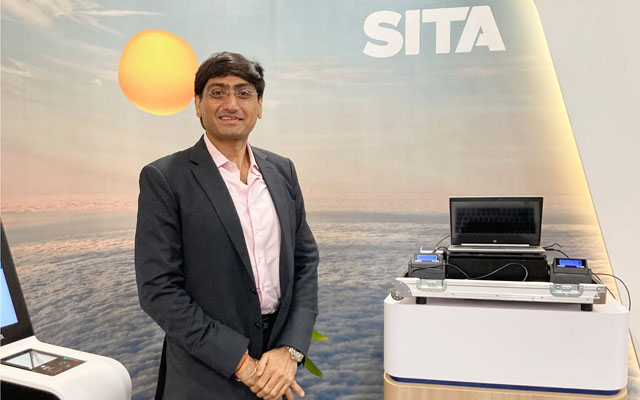
Patel: post-Covid passengers want control of their travel journey via their smart devices

The report said passenger behaviour had changed, and that biometric identity verification is now more accepted, especially for boarding, security and identity verification.

Sumesh Patel, SITA president, Asia-Pacific, commented that SITA Lab Solutions was testing no passport biometric technology at airports, and Singapore was taking the lead.

“No other country is looking at it now in terms of thinking, implementation and co-operating with stakeholders,” he opined, adding that Singapore’s investment in biometrics would augment its existing system.

He continued: “When Singapore is fully biometric, incoming travellers can register their passports and exit without them and do not have to see an immigration officer anymore.”

SITA is also experimenting with robots using generative AI for passenger assistance as well as in airport operations.

The 2023 survey showed a clear and sustained preference for check-in bags, with three in four passengers expecting to book at least one intermodal trip across air, land and sea, and wanted the ability to entrust baggage handling to smart systems and have operators effectively handle and resolve disruptions.

SITA, Patel shared, was helping airlines solve the problem of lost bags, save money, and deliver a better passenger experience with its auto-reflight technology.

He said Lufthansa had begun using SITA’s new offering, Bag Reflight, mainly on its regional network.

Passengers, post-Covid, “want control of their travel journey” via their smart devices and to leverage biometrics, Patel added.

According to SITA, passengers in 2023 continue to adopt mobile as a remote control for the journey, with boosted usage across booking, check-in, dwell time, on board, and bag collection.

Malaysia’s King’s Park to sponsor hospitality training at new entertainment hub

0

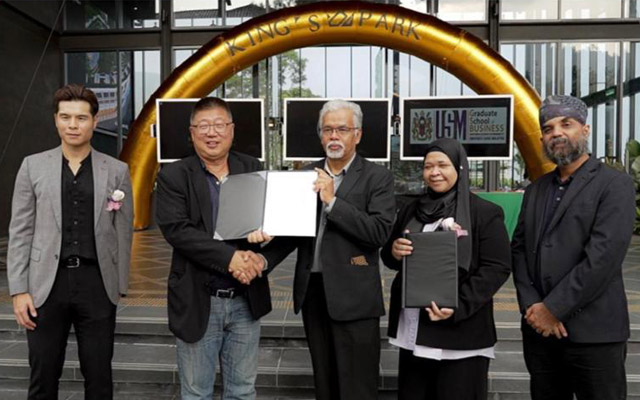
King’s Park Genting Highlands has teamed up with Cornell Academy in Malaysia to sponsor training opportunities for 1,000 students at its upcoming integrated entertainment hub, set to welcome visitors from 2026 to 2028.

This expansive hub will encompass retail outlets, restaurants, hotels, wellness centres, theme parks, and other attractions.

King’s Park Genting Highlands will sponsor training opportunities for 1,000 Cornell Academy’s students at its new entertainment hub when opened

Cornell Academy is an educational institute certified by Universiti Sains Malaysia, Graduate School of Business. It offers a myriad of professional development and skill enhancement courses in the field of business management, hospitality, with more programmes to be revealed soon.

Cornell Academy’s managing director, Darren Yang, said: “As we look ahead, we envision an expansion into diploma programmes covering Food & Beverage, Retail, Business Management, and Entrepreneurship. This holistic approach will underscore a profound understanding of ESG principles, fortifying our commitment in sustainable education.

“The tourism industry is burgeoning, necessitating elevated training and a profound understanding of comprehensive business management, with a keen focus on the nuances of hospitality and delivering exceptional customer service. We aspire to elevate ambitious young talents to new heights in these domains. Our goal is to provide them not only with academic credentials but also a comprehensive understanding and practical experience in the industry, broadening their horizons.”

Sean Chen, executive vice president, King’s Park Development, shared: “The growing importance of possessing industry-relevant skills from the get-go cannot be overstated, as it kickstarts efficiency and productivity upon entry into the workforce.

“We firmly believe that engaging and supporting local development will empower the region’s youth through enhanced educational and job prospects. This sponsorship’s diverse group of recipients will significantly contribute to promoting workforce diversity, fostering an inclusive culture within the industry. Our aspiration in sponsoring these individuals is to witness their transformation into invaluable assets, not only benefitting King’s Park but also enriching the entire industry.”

Course registration will commence in 2025, and are priced at approximately 36,000 ringgit (US$7,605) for a three-year duration, which integrates five days of hands-on training and one full day of classroom education per week. Students are guaranteed job opportunities upon successful course completion with no post-training bonding requirements.