Who are the members of EATOF and why was it formed?
EATOF was launched in 2000 with the nine member local governments of Gangwon State (formerly Gangwon Province, South Korea), Tottori Prefecture (Japan), Jilin Province (China), Tuv Province (Mongolia), Cebu Province (the Philippines), Sarawak (Malaysia), Special Region of Yogyakarta (Indonesia), Primorsky Territory (Russia) and Chiang Mai Province (Thailand) to promote awareness of the importance of the tourism industry in regional development, the need for exchange and cooperation between regions, and to achieve common prosperity.
In 2009, Quang Ninh Province (Vietnam), Luang Prabang (Laos) and Siem Reap (Cambodia) became members.
What was the vision and mission of EATOF when it was established and what is the federation planning for the future?
The founding member local governments were seeking a new leap forward in co-existence and co-prosperity by promoting joint cooperation while respecting complementarity and diversity.
There has been exchange of tourism information and tourism human resources, joint promotion and marketing and the broadening of the scope of culture, arts and sports exchanges.
Prior to lockdown, EATOF functioned as a forum which focused on sharing tourism policies and benchmarking best practices.
The grouping was officially relaunched as a federation in 2022 at the EATOF General Assembly in Quang Ninh, Vietnam by transforming into an organisation focused on practical action.
In 2025, the meeting of the 23rd EATOF Standing Committee will be held in the Philippines’ Cebu, and efforts will be made to expand exchanges between EATOF member local governments and to jointly achieve sustainable tourism through global alliances with ASEAN, PATA and Green Destinations.
What are some highlights of cooperation and active exchanges between members, and what has been achieved?
In the area of cultural and sports exchange, traditional performances from each region were presented through the dispatch of an EATOF delegation and cultural performance troupe to the PyeongChang 2018 Winter Olympics, dubbed the Cultural Olympics.
Through the GOGO Gangwon global leaders exchange programme from 2019 to 2021, more than 1,000 EATOF youth were invited to Gangwon to build friendships while experiencing winter and cultural content.
In joint risk management, there was sharing of regional Coronavirus management policies through the EATOF online conference and status sharing of campaigns related to tourism recovery and more.
Best practice sharing is a continuous joint marketing effort through mutual invitations to events such as the Lao New Year Festival (Luang Prabang), Suroy Suroy Sugbo (Cebu), Gangneung Danoje Festival, Gangwon Forestry Expo and Son Heung-min Youth International Football Competition (Gangwon), and dispatch of cultural performance troupes.
Tour product development of inter-regional tour packages have been achieved through charter flights between Gangwon-Tuv and Gangwon-Manila, and ferry trips for Gangwon-Tottori.
EATOF recently signed an MoU and new partnership with PATA. How can EATOF and PATA benefit from each other? By sharing tourism trend data between the two organisations, we can support strategies for the development of tourism in the Asia-Pacific region and promote global sustainable tourism through joint efforts.
EATOF tries to achieve its goals by utilising cohesion as a small and medium-sized regional initiative.
Who are the other EATOF partners?
Green Destinations is an official certification body of Global Sustainable Tourism Council which evaluates and certifies the achievement standards of sustainable tourism in government and the private sector, and promotes the expansion of public-private sustainable tourism practices in East Asia through joint certification with EATOF member local governments.
We are also trying to expand the scope of EATOF’s activities through various platforms such as the Korea-ASEAN Free Trade Agreement economic cooperation and transform it into an organisation that provides practical benefits.
As the lead and base of the EATOF Permanent Secretariat, what can you share about tourism development in Gangwon State that others can learn from?
In collaboration with telecommunication companies and the immigration office, the Gangwon Tourism Organization – along with the digital industry department of Gangwon State – publishes a monthly ICT Smart Travel report.
This report highlights traffic changes, points of interest, demographic data and traveller behaviour to help navigate strategic planning.
Additionally, the Gangwon Tourist Taxi service, which has been successfully operating for more than six years, publishes a monthly report through three City Halls and an appointed agency.
This initiative enables Gangwon to understand user demographics and set effective strategies for attracting future FIT tourists.
Gates have been installed on Japan’s tallest peak, Mount Fuji, for the first time amid concerns of overcrowding, “bullet climbing” without rest, and environmental damage.
From July 1, the start of climbing season, gates at the fifth station of the Yoshida Trail will be used to limit the number of climbers to 4,000 daily. Each person will be required to pay a hiking fee of 2,000 yen (US$11.70) and the gates will be closed from 16.00 to 03.00.
Gates have been installed at the fifth station of the Yoshida Trail to limit the number of daily climbers
The optional donation of 1,000 yen to support the peak’s conservation, which was introduced in July 2013, will still be accepted.
In addition, “optimisation rangers” will be deployed to ensure visitors behave safely and responsibly while on the mountain.
Yamanashi Prefectural governor Kotaro Nagasaki said the prefecture is introducing the measures to protect climbers and the mountain, whose Yoshida Trail attracted 137,236 climbers from early July to mid-September 2023.
“The number of people climbing Mount Fuji has recovered to pre-pandemic levels and last year we saw excessive crowds as well as ‘bullet climbers’ who go straight to the top,” he said, pointing out the risk of “domino-effect accidents” as well as an increased likelihood of altitude sickness and hyperthermia for those who climb without taking breaks.
In 2023, there were also more cases of people sleeping or setting bonfires by the trail rather than stay at one of several huts on the way to the summit, he said.
Yamanashi Prefecture’s efforts aim to address the three issues pointed out by UNESCO when the peak was added to the World Heritage List as a cultural property in 2013, namely: too many climbers, too much artificial landscape such as car parks, and too high an environmental load.
“We have not done anything over the past 10 years to address these issues. We’re worried that if we continue along our current trajectory, Mount Fuji will lose its UNESCO status,” said Nagasaki, adding that limiting the number of climbers will not only protect climbers and the mountain but also “raise the satisfaction of people on the mountain at any one time”.
The area where Bali’s first international hotel, the Grand Inna Bali Beach Hotel, Sanur, once stood has been transformed into a special economic zone (SEZ) featuring two hotels, a convention centre, shopping mall, and a soon-to-open international hospital.
Developed to become a world-class wellness and tourism destination with integrated facilities, the 41.2-hectare Sanur Health SEZ will house a convention centre with capacity for up to 4,700 guests; the 184-suite The Meru Sanur; and the 273-room Bali Beach Hotel, the Heritage Collection, which has been rebranded from Grand Inna Bali Beach Hotel, Sanur that originally opened in 1966.
The Meru Sanur offers 184 suites that come with private balconies or terraces
Both properties and the convention centre are open for business, with the rest of the works to be completed in 3Q2024.
The Bali Beach Hotel, the Heritage Collection will offer three F&B outlets, a swimming pool, fitness centre and kids’ club.
At The Meru Sanur, all rooms come with private balconies or terraces with views of Sanur Beach or the garden. Elsewhere, the hotel features a restaurant, lounge, spa, swimming pool, fitness centre and kids’ club.
Meanwhile, the Bali Beach Convention Centre spans over 3,750m², where the main hall can be divided into three rooms. The centre is equipped with 22 breakout rooms with capacities ranging from 70 to 280 pax theatre style – all boasting views of Sanur Beach.
Also in the SEZ is the upcoming Bali International Hospital (BIH), set to open in September this year, as well as Bali’s biggest shopping mall, Icon Bali mall, which started operations on June 7.
Patrick Sibourg, general manager of The Meru Sanur, shared: “Both hotels have been developed to cater and support the SEZ concept. The Meru Sanur is designed as a slow-living sanctuary with a big spa facility to cater to the wellness market, while the Bali Beach Hotel caters to leisure and business events as well as hospital guests and their families.”
Sibourg added that both hotels were running at high occupancy with both leisure and business activities, particularly from the government, state-owned companies, and local associations. He shared that booking enquiries for corporate and medical association meetings have started coming in for later this year and 2025.
Priyanda Orah, vice president, commercial, Indonesia Healthcare Corporation (IHC), which manages BIH, stated that the hospital was designed to become a leading medical tourist destination in the country, specialising in critical illness management including cardiology, oncology, neurology, gastroenterology, orthopaedics and a medical check-up department.
He said: “We are going to come up with packages that include airport transfers and accommodation at the hotels (next door), for patients who are doing their medical check-up, or those on post-treatment recovery process.”
Cross Hotels & Resorts has signed a management agreement with Yetosa Pratama Sukses (Puri Group) for Cross Batam Antapura, a 340-key tropical island paradise, scheduled to open in 2027.
This is Cross Hotels & Resorts’ inaugural property on the Indonesian island.
An overview of the Cross Batam Antapura development, which will open in 2027
Located only 13 minutes from Hang Nadim International Airport, a short drive from the international ferry terminal and close to three international golf courses, Cross Batam Antapura will offer 250 guestrooms and 90 luxury pool villas, all centred around a low-rise Water Courtyard. Facilities include F&B options, a swimming pool with a sunken bar, spa, fitness centre, ballroom, wedding chapel, and ample parking spaces.
“While Cross Batam Antapura is our first resort on Batam Island, it becomes our eighth property in Indonesia. Not only does Cross Batam Antapura encapsulate our Luxury by Design concept, but it also strengthens our sustainable architecture initiatives,” said Harry Thaliwal, CEO of Cross Hotels & Resorts.
Wagiman, president director of Yetosa Pratama Sukses (Puri Group), shared: “Cross Hotels & Resorts portfolio in Indonesia is growing so fast that we saw an opportunity to develop this luxury project together. We believe that what we are creating with this partnership will be hugely successful.”
Radisson Hotel Group (RHG) is introducing a new five-star property to Cagayan de Oro, located in the Northern Mindanao region of the Philippines.
The 717-key Radisson Blu Hotel & Residences, Cagayan de Oro will become the first internationally-branded mixed-use development, and will feature a choice of accommodation styles, two restaurants, a rooftop pool, pool bar, spa, fitness centre, and event venues. In addition, residence owners will be offered exclusive access to a private clubhouse.
From left: RHG’s Ramzy Fenianos, Christine Angela Sevilla, and Elie Younes; and AppleOne Group’s Ray Go Manigsaca, Venus H Manigsaca, and Samantha Manigsaca
Cagayan de Oro is a major commercial hub and tourism destination, with many natural attractions including pure seas, lush forests and mountains, and activities such as trekking, white-water rafting, sailing and kayaking. Just offshore, Camiguin Island is an ASEAN Heritage Park with volcanoes and beaches. For business travelers, a new economic zone is being planned just outside Cagayan de Oro, and construction work recently commenced on the expansion of Laguindingan Airport, Northern Mindanao’s main aviation gateway, to cater for an expected rise in visitation.
Ray Go Manigsaca, president and CEO, AppleOne Group, commented: “We are excited to partner with Radisson Hotel Group to introduce the first internationally-branded hotel and residences to Cagayan de Oro, and the entire Northern Mindanao region. This will also be the city’s first 5-star hotel.”
Ramzy Fenianos, chief development officer – Asia Pacific, RHG, added that the company is “in discussion with AppleOne Group regarding another branded project in the pipeline”.
Moxy Bangkok Ratchaprasong is offering a unique stay experience packed with special privileges for travellers who crave longer stays and city tours.
The Moxy Madness promotion promises a memorable time with city tours, shopping sprees, and culinary delights around Bangkok, all while enjoying a special meal in Moxy style.
Guests can enjoy a stay at Moxy Bangkok Ratchaprasong coupled with city tours, F&B credits, and more
Guests can enjoy a 24-hour stay in the hotel’s guestrooms, and with a BTS 1 Day Pass included, they can explore the city, and enjoy F&B credits worth 500 baht (US$13) per stay.
Priced from 3,600 baht, this offer is available for a minimum of two consecutive nights from now to September 30, 2024. Guests can also earn Marriott Bonvoy Bonus Points for up to 5,000 points per night.
In addition, enjoy a specially curated set menu experience with Moxy’s Eat Out by Marriott Bonvoy promotion, exclusive to Marriott Bonvoy members.
The Sanchaya in Bintan has appointed Ricky Yu as its director of sales and marketing.
He brings with him 15 years of experience in the luxury hospitality industry, and will helm sales and marketing initiatives at The Sanchaya in his new role.
He joins The Sanchaya from his previous tenure as director of sales – Asia at the Mandarin Oriental Hotel Group in Bangkok.
International arrivals are on the rise at Japan’s regional airports, particularly those with direct flights from neighbouring countries such as Taiwan and South Korea, as the speed of inbound recovery to the country’s regions increases.
The post-lockdown rebound of Japan’s inbound travel has been swift so far, with 25.1 million international travellers in calendar year 2023 (almost 80 per cent of the 2019 level) and record-high numbers of arrivals in 2024.
Kumamoto Airport welcomed 233,000 international passengers in 2023, double that of 2019 (Photo: Mei Yi)
Most tourists, though, have arrived via airports in Tokyo, Osaka, Nagoya, Fukuoka, Sapporo and Okinawa.
Now, as air routes are resumed or launched and the number of flights increase, smaller regional airports are enjoying greater recovery. Nationwide, traffic reached about 60 per cent of the 2019 level during fiscal year 2023 (April 2023 to March 2024), according to aviation data.
Airports serving nearby destinations are faring better and even seeing growth. Eight of Japan’s 43 regional airports reported passenger numbers in excess of pre-pandemic levels in the last fiscal year.
In 2023, Kumamoto Airport, which offers direct flights to Taipei, Seoul and Hong Kong, welcomed 233,000 international passengers, double that of 2019, and passenger load had risen to 80 per cent as of May 2024.
International tourists have also been arriving at Kochi Airport in southern Shikoku for the first time following the launch of low-cost carrier Tigerair Taiwan’s flights in November 2023. The airline is experiencing increasing traffic on its two flights per week between Taoyuan and Kochi.
Still, some airports remain hampered in their recovery due to a lack of ground staff and the slow recovery of the Chinese market. Only 2.4 million Chinese travellers visited Japan in 2023, equating to about one quarter of the number in 2019.
Resorts World Cruises (RWC), the first international cruise line to homeport in Jakarta in June and July, followed by a six month deployment in Dubai from October, is expecting Muslim passenger growth to increase by 50 per cent.
RWC president Michael Goh said the company projected Muslim passenger growth percentage “may increase from 10 per cent (in 2024) to 15 per cent (in 2025)”.
Resorts World One will feature a variety of halal cuisine and a wide selection of international fare (Photo: Resorts World Cruises)
Resorts World One, deployed in Jakarta during the local school holidays for four six-day/five-night itineraries to Singapore and Kuala Lumpur, will feature a variety of halal cuisine, including authentic and popular Malaysian and Singaporean cuisine, and a wide selection of international fare.
Goh said the Asian home-grown cruise line with deep-rooted Asian heritage, and an extension of the Resorts World global brand, with 50 years of cumulative expertise in hospitality, entertainment and cruising, is well equipped to effectively cater to the needs of different ethnic and religious markets within the region.
With its expertise in delivering certified halal offerings on cruise ships and with the enormous potential growth of the Muslim segment in the region, Goh added, RWC is focused on being the first mover and pioneer of that market space for the cruise industry.
RWC was a partner of the first HalalTrip Gastronomy Awards 2024, launched recently in Singapore by HalalTrip in collaboration with the Singapore Halal Culinary Federation, and he noted: “We are excited to be at the forefront and creating new opportunities to expand our market share with the Muslim segment.”
Halal-friendly services on Resorts World One include prayer rooms, same gender services at the spas, breaking fast during Iftar and special business event sailings that are customised for the Muslim segments.
Goh shared that the percentage of Muslim travellers on its ships is growing across the different demographics and gender, and RWC continues to see a year-on-year increase from the Muslim segment.
“With its strong potential, coupled with the right and innovative offerings and services, we are optimistic that these cruises will continue to gain traction and upward growth. It is a market we remain committed in developing further.”
From Dubai, Resorts World One will offer two- and three-night cruises to Sir Bani Yas, the UAE; Khasab and Muscat in Oman; and Doha in Qatar.


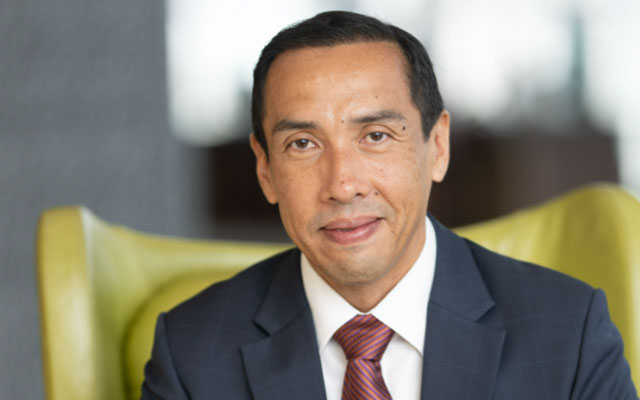
 He has held key positions in some of the group’s most prestigious properties during his tenure.





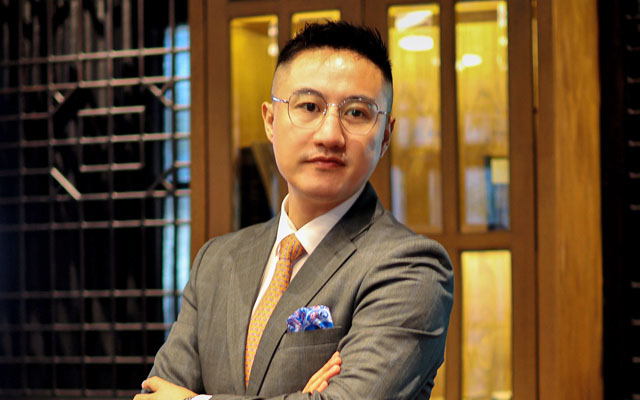
 He joins The Sanchaya from his previous tenure as director of sales – Asia at the Mandarin Oriental Hotel Group in Bangkok.







EATOF was launched in 2000 with the nine member local governments of Gangwon State (formerly Gangwon Province, South Korea), Tottori Prefecture (Japan), Jilin Province (China), Tuv Province (Mongolia), Cebu Province (the Philippines), Sarawak (Malaysia), Special Region of Yogyakarta (Indonesia), Primorsky Territory (Russia) and Chiang Mai Province (Thailand) to promote awareness of the importance of the tourism industry in regional development, the need for exchange and cooperation between regions, and to achieve common prosperity.
In 2009, Quang Ninh Province (Vietnam), Luang Prabang (Laos) and Siem Reap (Cambodia) became members.
What was the vision and mission of EATOF when it was established and what is the federation planning for the future?
The founding member local governments were seeking a new leap forward in co-existence and co-prosperity by promoting joint cooperation while respecting complementarity and diversity.
There has been exchange of tourism information and tourism human resources, joint promotion and marketing and the broadening of the scope of culture, arts and sports exchanges.
Prior to lockdown, EATOF functioned as a forum which focused on sharing tourism policies and benchmarking best practices.
The grouping was officially relaunched as a federation in 2022 at the EATOF General Assembly in Quang Ninh, Vietnam by transforming into an organisation focused on practical action.
In 2025, the meeting of the 23rd EATOF Standing Committee will be held in the Philippines’ Cebu, and efforts will be made to expand exchanges between EATOF member local governments and to jointly achieve sustainable tourism through global alliances with ASEAN, PATA and Green Destinations.
What are some highlights of cooperation and active exchanges between members, and what has been achieved?
In the area of cultural and sports exchange, traditional performances from each region were presented through the dispatch of an EATOF delegation and cultural performance troupe to the PyeongChang 2018 Winter Olympics, dubbed the Cultural Olympics.
Through the GOGO Gangwon global leaders exchange programme from 2019 to 2021, more than 1,000 EATOF youth were invited to Gangwon to build friendships while experiencing winter and cultural content.
In joint risk management, there was sharing of regional Coronavirus management policies through the EATOF online conference and status sharing of campaigns related to tourism recovery and more.
Best practice sharing is a continuous joint marketing effort through mutual invitations to events such as the Lao New Year Festival (Luang Prabang), Suroy Suroy Sugbo (Cebu), Gangneung Danoje Festival, Gangwon Forestry Expo and Son Heung-min Youth International Football Competition (Gangwon), and dispatch of cultural performance troupes.
Tour product development of inter-regional tour packages have been achieved through charter flights between Gangwon-Tuv and Gangwon-Manila, and ferry trips for Gangwon-Tottori.
EATOF recently signed an MoU and new partnership with PATA. How can EATOF and PATA benefit from each other?
By sharing tourism trend data between the two organisations, we can support strategies for the development of tourism in the Asia-Pacific region and promote global sustainable tourism through joint efforts.
EATOF tries to achieve its goals by utilising cohesion as a small and medium-sized regional initiative.
Who are the other EATOF partners?
Green Destinations is an official certification body of Global Sustainable Tourism Council which evaluates and certifies the achievement standards of sustainable tourism in government and the private sector, and promotes the expansion of public-private sustainable tourism practices in East Asia through joint certification with EATOF member local governments.
We are also trying to expand the scope of EATOF’s activities through various platforms such as the Korea-ASEAN Free Trade Agreement economic cooperation and transform it into an organisation that provides practical benefits.
As the lead and base of the EATOF Permanent Secretariat, what can you share about tourism development in Gangwon State that others can learn from?
In collaboration with telecommunication companies and the immigration office, the Gangwon Tourism Organization – along with the digital industry department of Gangwon State – publishes a monthly ICT Smart Travel report.
This report highlights traffic changes, points of interest, demographic data and traveller behaviour to help navigate strategic planning.
Additionally, the Gangwon Tourist Taxi service, which has been successfully operating for more than six years, publishes a monthly report through three City Halls and an appointed agency.
This initiative enables Gangwon to understand user demographics and set effective strategies for attracting future FIT tourists.