Brought to you by PARKROYAL COLLECTION Pickering, Singapore
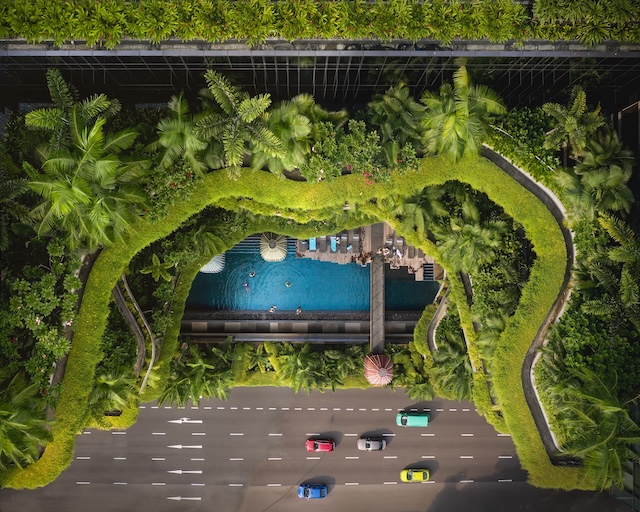
Nestled in the heart of Chinatown and at the gateway to Singapore’s Central Business District stands the 367-key PARKROYAL COLLECTION Pickering, Singapore, known not just for its eye-catching design of abundant greenery, but for leading the way in sustainable hospitality.
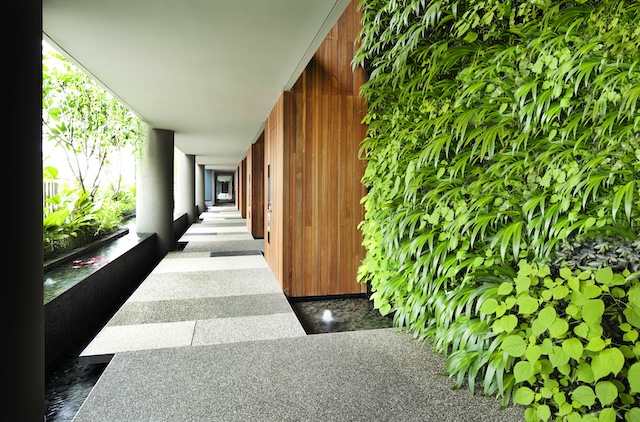
Since its opening in 2013, PARKROYAL COLLECTION Pickering, Singapore has championed sustainability through its design, operations, building management, and in-room amenities. Not to mention, the hotel’s green design makes up over 15,000m² contributing to more than twice its total land area.
Certified by the Global Sustainable Tourism Council, where it achieved the global standard for sustainable travel and tourism, the property has implemented systems to reduce and reuse wherever possible in its operations.
For instance, the rainwater harvesting and auto-irrigation systems conserve six million litres of water annually, while 262 solar panels generate 65,000 kWh of renewable energy per year. The hotel even converts food waste into greywater, which is discharged into sewage instead of landfills.
Innovative methods for greater efficiency and impact
Central to PARKROYAL COLLECTION Pickering, Singapore’s sustainability efforts are its innovative measures that leverage technology to reduce environmental impact and improve operational efficiency.
For one, check-in has been streamlined and made more efficient with the hotel’s E-Visitor Authentication, which uses facial recognition technology to automate parts of the process. Guests can go online to input their details ahead of their stay or via an iPad at the reception for a paperless experience. For guests driving to the hotel, they can easily scan a QR code to fill in a form for parking coupons.
As for in-room convenience, guests will soon get to experience a more integrated and seamless smart room with the introduction of a tablet featuring an AI-powered voice assistant. This allows them to control room settings, request amenities and housekeeping, order in-room dining, and make reservations at Lime Restaurant and Bar.
Behind the scenes, various processes have also been enhanced with the help of technology.
An all-in-one cloud-based service management mobile platform utilises AI to prioritise tasks based on factors like room occupancy, check-out times, and guest requests, ensuring efficient resource allocation and timely room cleaning.
Bluetooth Low Energy beacons track movable objects such as in-room dining trays, improving the tray retrieval process. Additionally, items like uniforms, linens, and banquet chairs are tagged with Ultra High Frequency RFID technology for accurate asset tracking, eliminating the need for manual counting.
Guests get to play their part
All sustainability measures by the hotel enable guests to minimise their environmental impact as well, from thoughtfully planned in-room amenities to dining options.
Rooms no longer provide single-use plastic water bottles – instead, premium filtered water dispensers are available in all rooms, saving around 230,000 plastic bottles each year. Recycling bins are also found in guestrooms and public areas throughout the hotel.
In a tropical country like Singapore, the hotel conserves energy through naturally ventilated corridors, water features and green walls, which also ensure a cool and comfortable indoor climate for guests.
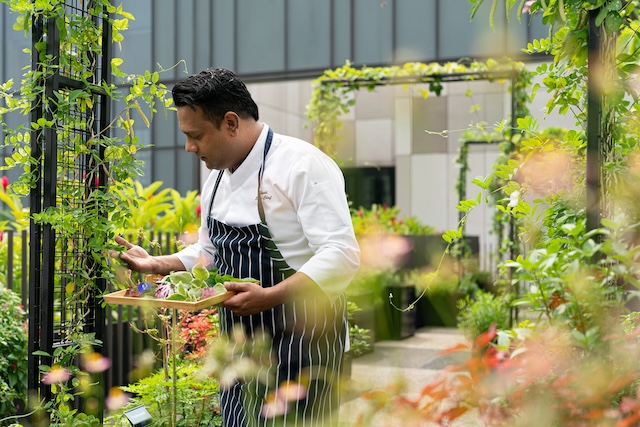
When it comes to food, guests will appreciate the hotel’s Urban Farm on the top floor – home to more than 50 varieties of vegetables, fruits, herbs, and edible flowers – which supplies ingredients to Lime Restaurant and Bar, embodying the farm-to-table concept.
Plus, the restaurant embraces conscious dining, showcasing nutritious dishes made from locally sourced ingredients, a commitment that has earned it the highest tier recognition in the Singapore Food Agency’s Farm-To-Table Recognition Programme.
This dedication to sustainability extends beyond the plate. Lime Bar exemplifies this sustainability ethos with its zero-waste cocktails where bartenders use every part of the fruit – from seeds and leaves to skin and roots – while displaying their creativity in crafting innovative and delicious drinks.
As for what lies ahead, PARKROYAL COLLECTION Pickering, Singapore is certainly not one to rest on its laurels. The hotel remains fully committed to reducing its impact and continues to set the benchmark for sustainable hospitality through the integration of advanced technology and the implementation of innovative practices.
Want your favourite travel brand to win at TTG Travel Awards 2024, Asia-Pacific’s Most Prestigious Travel Industry Accolade? Vote for PARKROYAL COLLECTION Pickering for Best Hotel – Singapore and Best Business Hotel – Singapore now.


















Langham Hospitality Group (LHG) is off to a strong start this year, following an excellent year of business performance where the company recorded a 78 per cent growth over the previous year as well as several “amazing” hotel openings.
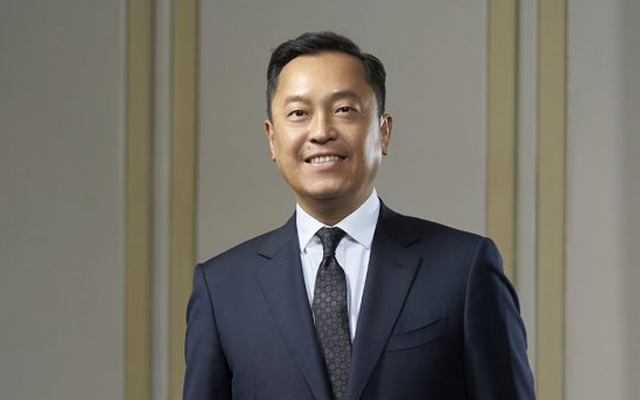
Speaking to TTG Asia at ILTM Asia Pacific 2024, LHG’s senior vice president, sales and marketing, Lawrence Ng, remarked that even geopolitical tensions have failed to put the brakes on corporate growth. “We are also performing better than last year at this point,” he remarked.
The group is making deeper inroads through China’s important business cities. It opened the five-star Cordis, Xuzhou in China last year, marking the brand’s entry into the rising tier-three Chinese city. It is also in the midst of putting the Cordis label on a hotel in Foshan, China – another key city in the booming Greater Bay Area.
Ng shared that Cordis, Foshan, Lingnan Tiandi, which will unveil the results of its massive transformation this September, will be an important showcase of the brand.
Earlier in February, the group signed management agreements for three hotels on a single plot in Xiamen, China, which are part of Xiamen Seaworld, China Merchants Group’s mixed-use development perched on the western shore of Xiamen’s main island. Set to open in 2025, each hotel will carry a different brand – the flagship Langham, Cordis, and Ying’nFlo.
However, portfolio expansion will not be limited to Greater China, where its parent company, Great Eagle Holdings, is based. In the coming years, the group will take its brands to destinations including Riyadh in the Middle East; Venice in Italy; San Francisco and Seattle in the US, and more.
Besides new openings, several properties will undergo major renovations “to make them look even better”.
Ng said the group intends to be present in all key cities, with priority given to prime and unique locations within each.
“For instance, we knew we must be in Shanghai, but there we wanted an amazing location. So, we opened in Xintiandi (The Langham, Shanghai, Xintiandi) in the entertainment hub.
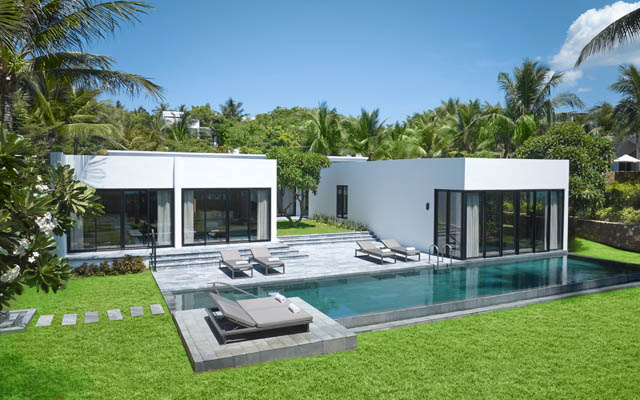
The group is also keen to grow its presence in resort destinations. While it currently has a number of urban resorts – city properties with indulgent facilities and a variety of recreational and celebratory experiences, Ng said the company’s developers are hunting down opportunities in beachfront locations.
Ng teased that some announcements would be made soon along these lines while Shelley Tso, vice president, marketing and communications, shared that the parent company has set a target for the hospitality group to achieve one opening every month.
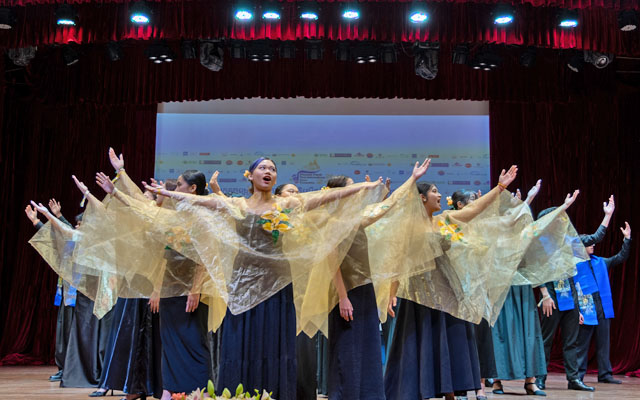
“However, this growth will be matched by equal commitment to our community and to bring our people closer together. Our Eaton brand, for example, supports local arts and our properties host a lot of amazing activities with local artists and musicians. Cordis is another brand that is big on arts and culture, and every property has some form of collaboration with local artists,” Ng said.
Additionally, Ying’nFlo’s recent collaboration with acclaimed Hong Kong-based artist Bao Ho has resulted in a vibrant mural on an exterior wall of Ying’nFlo, Wesley, Admiralty. The mural is said to symbolise the intricacies of the human condition, and serves as a portal to people’s inner worlds and imagination.
Langham Hospitality Group, cluster managing director, Adam Hipp, said the artwork “aligns perfectly with Ying’nFlo’s vision of creating immersive and inspiring experiences for its guests”.
“We have always believed that art has the power to evoke our emotions and transform us, and this mural is a testament to that view,” stated Hipp.