

Marriott International to open five more properties in Indonesia

Marriott International has signed an agreement with Pakuwon Jati to develop five additional properties from Jakarta to Surabaya and Batam.
The multi-deal agreement will comprise more than 1,300 rooms across Indonesia, adding to the current 1,925 rooms across seven hotels and one golf club for Pakuwon Jati that Marriott International currently manages.

The properties include Jakarta Marriott Hotel Kota Kasablanka, Aloft Surabaya, Pakuwon Indah, Courtyard by Marriott Batam, The Jakarta Edition and The Westin Batam.
Opening in December 2029 are Jakarta Marriott Hotel Kota Kasablanka, which will boast 320 guestrooms and suites, an all-day dining restaurant, pool and bar, patisserie, spa, fitness centre, and event venues; Aloft Surabaya, Pakuwon Indah which will feature 243 rooms and 23 suites, including four Family Suites; and the 306-key Courtyard by Marriott Batam which will offer an all-day dining restaurant with live stations, café and bar, swimming pool, fitness centre, and meeting spaces.
Then in December 2030, Indonesia will welcome its first The Jakarta Edition, which will house 240 rooms, F&B offerings, as well as leisure and business facilities. Also opening in December 2030 is The Westin Batam with 230 rooms and suites, as well as a sky bar, executive club lounge, event venues and more.
Rajeev Menon, president, Asia Pacific excluding China, Marriott International, said: “With 77 operating properties, we are optimistic and focused on strengthening our presence in Indonesia, in line with the strong demand for leisure and business travel.”
“By leveraging the expertise of Marriott International in the hospitality industry, this long-standing strategic collaboration promises to introduce innovative services and amenities tailored to meet the evolving astute needs of modern travellers and deliver unparalleled experiences that exceed the expectations of our discerning guests,” added Eiffel Tedja, director of Pakuwon Jati.
Indonesia moves to update tourism law

The Indonesian House of Representatives (HoR) and government will be revising its tourism law to ensure it remains relevant for the current and future tourism landscape in the country.
Proposed by HoR and the Indonesian Regional Representative Council, the Draft on Tourism Law addresses Law Number 10 of 2009. Key points from the draft include regulating tourism based on a new paradigm, managing both mass tourism and sustainable tourism effectively, and strengthening the identity of the nation by preserving community values, customs, natural resources, and cultural heritage.

Sandiaga Uno, minister of tourism and creative economy said: “The law has been around for almost 15 years now. (It is about time that) we redesign it together to provide a more significant contribution (particularly) to policy, budgeting and (public and private) involvement.”
Agustina Pramestuti, deputy chair of Commission X (10) of the HoR, stated that at least five meetings have been held since March 2024 to discuss the Draft on Tourism Law as well as the Draft on State Revenue and Expenditure Budget.
However, the Indonesian Tourism Industry Association (GIPI) remarked that the draft does not reflect the industry’s aspiration, and has requested the discussion be halted and resume only when the new HoR takes office on October 1 – a motion that was backed by Sandiaga.
GIPI chairman Hariyadi Sukamdani said: “The drafts issued by the HoR on April 5 and July 2 were not in line with the aspirations of tourism players. We hope the discussion of the draft (will involve) the tourism industry.”
Haryadi pointed out issues , such as the exclusion of the Indonesia Tourism Promotion Agency and GIPI, which are two institutions mandated in the existing law.
He continued: “Despite the mandate, the tourism promotion agency has not been formed, while GIPI – a forum for the collaboration of tourism business players – is removed from the draft. (On the other hand), the draft mentioned a new National Tourism Institution, which may have the potential to eliminate the role of the Ministry of Tourism.”
Maulana Yusran, deputy chairman of GIPI, also questioned the mention of the new institution in the draft, and whether the government intended to dissolve the “organisation and form a new agency”.
Khiri Travel adds the Philippines to its destinations

Khiri Travel has acquired Travel Authentic Philippines (TAP), adding the Philippines as its ninth Asian destination alongside Thailand, Indonesia, Cambodia, Vietnam, Laos, Sri Lanka, the Maldives, and Myanmar.
The DMC’s priority is to ensure that its Philippine products satisfy the broad range of tour operator clients that it currently serves, including specialist operators in sectors such as educational travel, adventure, luxury, as well as individual travellers.
The rebranding from TAP to Khiri Travel Philippines will be completed by this month.
Apart from exploration and insights in nearly all the main areas of the Philippines, Khiri Travel’s guests in the destination can expect themed tours such as island hopping, indigenous culture discoveries, architecture and heritage trips, home stays and general sightseeing – all which will be featured during the World Travel Market in London in November.
There will also be opportunities for giving back to the Philippine communities through projects for the Tagbanwa and Ifugao peoples, and more.
TAP country manager, Paulette Viacrucis, will retain her role with Khiri Travel Philippines, and will be supported by Stuart Tayler, who will lead the development and updating of product offerings from Khiri Travel’s office in Cebu City.
“We aim to ensure the Philippine experience for our guests is authentic, original and innovative with a keen eye for community, culture, conservation and sustainable profitability,” said Willem Niemeijer, founder and CEO of Khiri Travel.
Joey Gaston, co-founder of TAP, and now a board member of Khiri Travel Philippines, said that the goal will be to continue promoting tourism to non-traditional destinations around the country.
He shared: “Indeed, Khiri Travel Philippines will offer immersive and responsible travel experiences that highlight the beauty of our wonderful archipelago. We will do this while ensuring sustainable benefits for both the environment and local communities.”
Archipelago International expands presence in Cebu and Manila
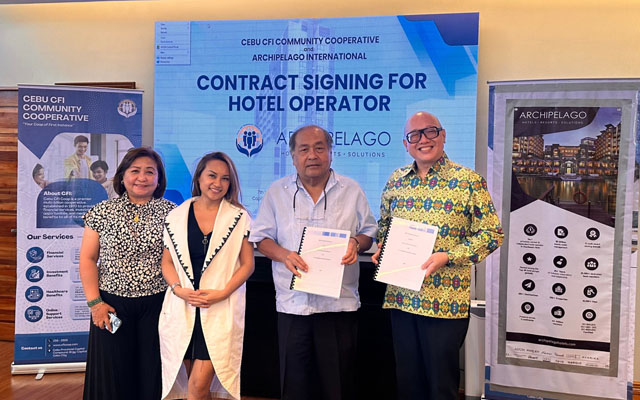
Archipelago International has joined forces with Cebu CFI Community Cooperative to bring two new hotel properties to life in Taft, Manila, and Caretta, Cebu.
The Taft property will feature 207 rooms, dormitory spaces, gym, retail outlets, co-working areas, and a rooftop bar, while the hotel in Caretta will offer 216 rooms, co-working spaces, and a roof deck community hub with a bar.
“This partnership is a major milestone for Archipelago International, expanding our footprint in these key Philippine cities. We’re excited to apply our hospitality expertise to these new ventures, enhancing guest experiences and benefiting local communities,” said Chris Legaspi, chief commercial officer of Archipelago International.
Travel scores highest credit card spend for Asia-Pacific consumers: Collinson International

Collinson International’s new Asia-Pacific research titled 2024 Travel Benefits and Customer Engagement Report revealed that travel is one of the highest credit card spend categories for survey respondents, accounting for almost a third (27%) of annual expenditure.
Surveying 7,250 respondents across 14 markets in Asia-Pacific, the report analyses the behaviours, perceptions, and preferences of travellers in the region.
The research also showed South-east Asia to be an emerging travel powerhouse. The annual travel spend for survey respondents based in Singapore is US$10,619, almost double that of markets such as mainland China (US$5,014), and Japan (US$4,529). South-east Asian survey respondents in Malaysia and Thailand also spend considerably on travel annually, budgeting US$5,939 and US$5,548 respectively.
Consumers in Asia-Pacific are not just looking to travel more, but are also desiring enhanced experiences. On average, survey respondents in the region advised that they spend US$4,763 per annum on travel; with the average spend on a domestic return trip at US$700 and US$2,000 for an international trip.
When asked which travel perks they value most, 44% of respondents ranked airport lounge access as their top travel-related credit card benefit – surpassing more service-oriented benefits, such as security fast-track (11%) and airport transfers (9%).
In fact, 90% of respondents in Asia-Pacific agreed that access to airport lounges is a travel benefit that they would expect on any credit card with an annual fee. 89% would consider switching to a new card that offered membership with their favourite airport lounge access programme if it was no longer offered by their current card, with Japan (96%), Malaysia, Taiwan region (both 92%), the Philippines and Singapore (both 91%) feeling this most strongly.
According to the report, 92% of respondents informed that they are more likely to use their payment cards for everyday spend and travel expenses if the cards offer travel-related rewards or benefits. Notably, 45% of respondents ranked travel benefits as the most important when choosing to sign up for one credit card over another; placing them above other benefits, such as everyday rewards, the prestige associated with the card, and sign-up bonuses. Travel benefits are particularly important in Japan (56%), Malaysia (53%), and Thailand (50%).
The research also revealed that travel experiences beyond airport lounge access, such as accessing dining offers while travelling, are highly valued among Asia-Pacific travellers – with respondents in Thailand, Malaysia, Australia, Hong Kong SAR, Taiwan region, Singapore, and the Philippines having listed ‘dining offers’ in their top five most preferred travel benefits.
Rohan Bhalla, Asia Pacific vice president, business solutions at Collinson International, commented: “Our research has shown that travel is a key driver for consumer expenditure. This travel resonance is especially strong with South-east Asian survey respondents, further demonstrating how much the region is primed to be the next travel powerhouse. Beyond the rise of Indian outbound travellers and the much-anticipated Chinese outbound travel resurgence, we should not ignore the potential of South-east Asia’s travel market; a dynamic region that generated over 40 million departures and US$53 billion in outbound travel expenditure pre-pandemic.”
Catering to the rapid recovery of travel and to the evolving needs of travellers, Collinson International has expanded its network of airport lounges and travel experiences in Asia-Pacific by 15% over the last 12 months. Today, there are close to 650 airport lounges and travel experiences within Collinson International’s Priority Pass network in the region, of which more than 100 are travel experiences.
Bhalla added: “By integrating travel and airport related benefits and experiences – such as lounge access, security fast track, airport transfers, dining and duty-free offers – into customer engagement and loyalty programmes, brands are able to level-up their customer value proposition, enhance customer satisfaction, differentiate from competition, and deliver measurable business impact.”
The 2024 Travel Benefits and Customer Engagement Report can be viewed here.
Grand Hyatt Singapore


Location
Grand Hyatt Singapore rises on the starting point of Orchard Road shopping belt – ideal for shopaholics who enjoy systematically combing through malls from end to end. Its central location also allows guests to get to major city attractions easily.
Facilities
The hotel was a favourite weekend haunt of the ladies in my maternal family; Mezza9 and Pete’s Place were where we dined and chatted. I could retrace my steps, from the iconic tilted main doors down to the basement where Pete’s Place was or up the winding stairs to Mezza9, and later all the way through the belly of the hotel to access the carpark, passing the dramatic waterfall along the way.
The main structure of the hotel remains, but so much has changed. The lobby feels a lot more cavernous and lush. Large planters flank the walkways, transporting me momentarily to gardens.
While Grand Hyatt Singapore is progressively reopening, starting from its official launch on July 10, most facilities are already welcoming customers when I was there for a brief night’s stay on August 31.
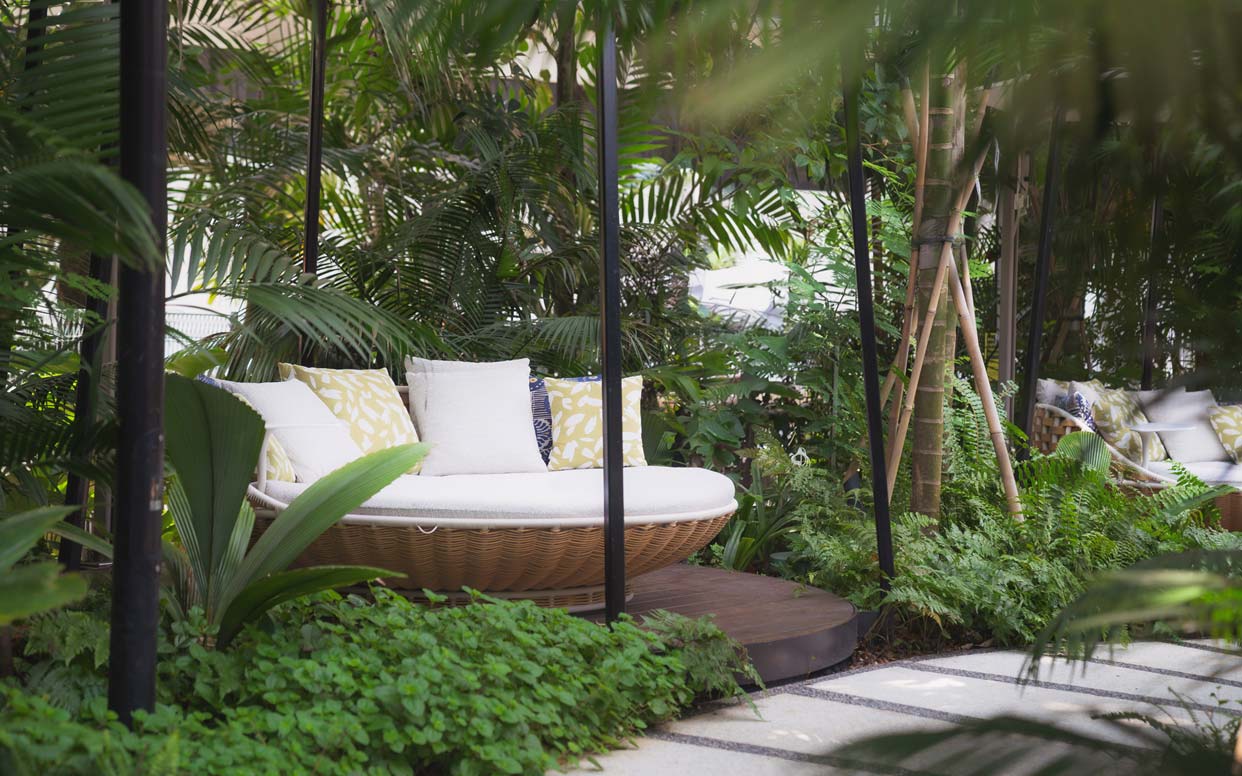
The recreational deck on level one is brilliantly transformed. The Oasis pools and surrounding gardens give this city hotel a strong resort vibe. Exiting the elevators, one meanders down a shady trail with shrubs and trees all around and ends up at a free-form wellness pool with therapeutic water jets.
The many cabanas and bird’s nest daybeds under a canopy of trees beckoned me to pick my desired spot to sit and daydream.
Serious swimmers can get their laps in at a larger pool deeper inside the Oasis, where there are plenty more sun loungers.
Damai Spa on the same level is not opened yet, but the gym next door is.
The Grand Club is still in the works, with an opening planned for 2025, so privileged guests are welcomed at 10 Scotts lounge for now.
Accommodation
The renovated hotel has 699 rooms – more than the 677 keys before. For now, only the Terrace Wing is receiving guests. The Grand Wing will be ready next year.
A new accommodation offering at the hotel is the Garden Studios, located on the same level as the Oasis pool and garden. There are five of them, converted from what were previously spa treatment rooms. Doors open right into the garden, making this room type ideal for resort escapes that are not too far away from city conveniences.
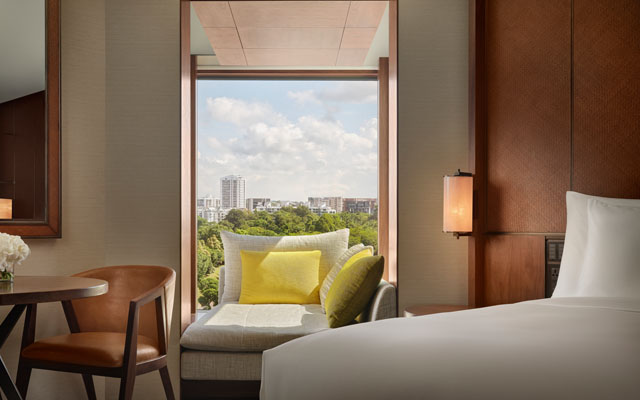
My family and I had two connecting rooms in the Terrace Wing – one with a king bed and the other with twins. Both are large, at 42m² each, and dressed in dark wood panels, white marble flooring, and tender shades of green. With such a size, the room is able to take in an en-suite bathroom with dual-sink vanity and rain shower, walk-in wardrobe, a proper table to work or dine at, and – our favourite part of the room – a sunlit alcove with a comfortable daybed.
I was won over by all these material comforts, but what made me nod in appreciation was the numerous multi-outlet charging points across the room. I found them strategically placed by the bed, at the table, and in the alcove – all ready to juice up the devices we were so addicted to.
F&B
There are eight F&B outlets across the hotel, and most are open. Straits Kitchen, Pete’s Place, Brix, Oasis Bar on the pool deck, and The Shop for premium takeaways are in business, while 10 Scotts currently stands in as the club lounge.
Soon to come are the Martini Bar, Oasis Restaurant, and Michelin-starred chef Sergio Herman’s Le Pristine Singapore; the latter will take over where Mezza9 used to stand.
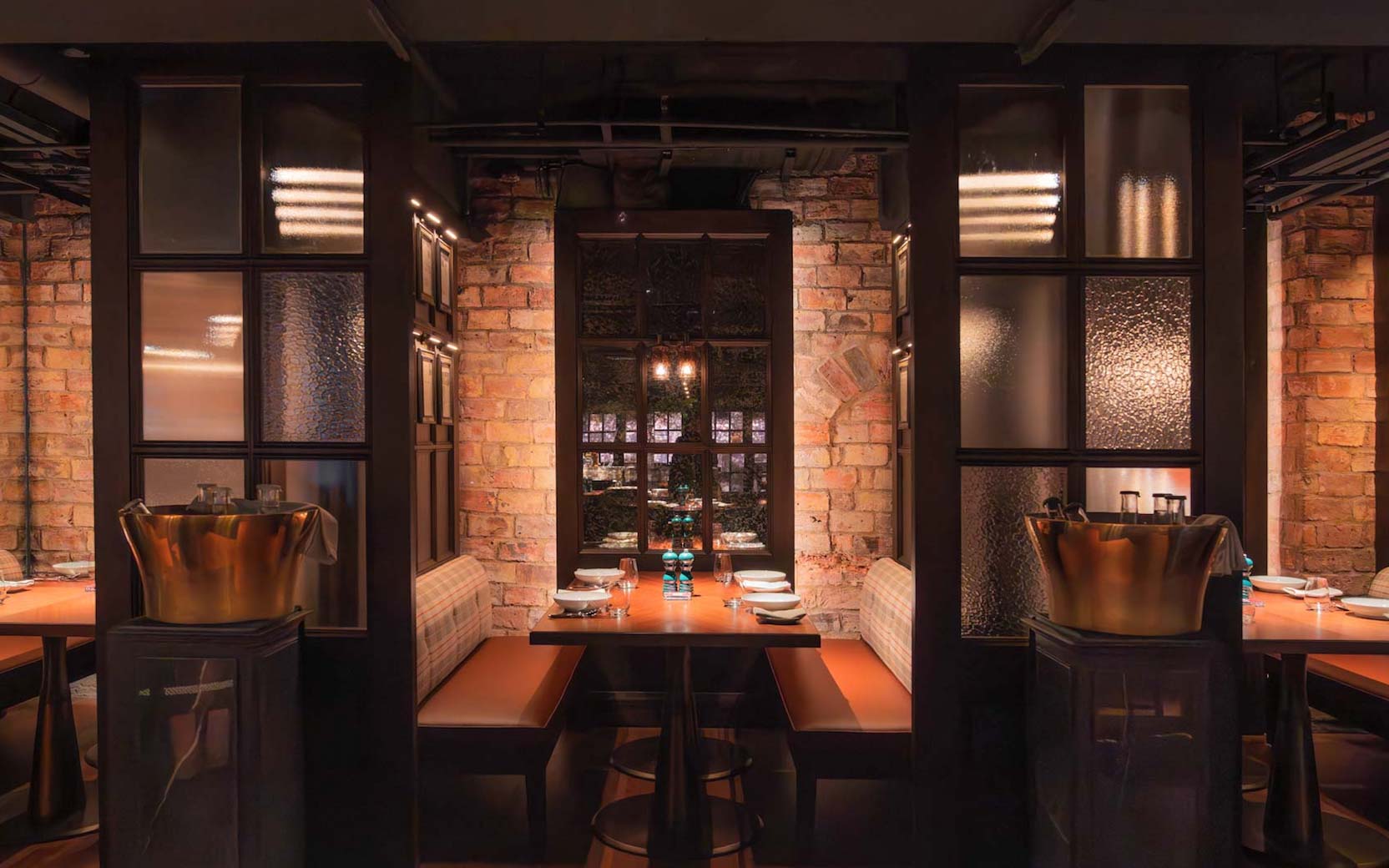
The ladies in my family counted down to the reopening of Pete’s Place on August 19, and we were quick to plan a gathering that weekend. The red chequered cloth-covered tables that look straight out of nonna’s kitchen are now gone; in their place are modern furniture and cosy booth seats.
An interior design feature to spot is the repurposed red brick wall with artworks made from dismantled furniture of the former restaurant and photos from the past.
The menu is extensive. Between 18 of us, we were able to try a wide selection of antipasti and pasta, as well as two highly recommended protein bombs – costoletta alla Milanese breaded veal chop and bistecca alla Fiorentina bone-in ribeye steak. We rounded off our feast and emotional reunion with copious tiramisu, vanilla panna cotta, and shots of caramello made of vodka, cream and coffee.
I can see myself returning many times over just for the costoletta alla Milanese, tiramisu and caramello.
During our hotel stay a week later, we dined at Straits Kitchen where Indian, Malay and Chinese favourite dishes were served on a buffet line. That evening, we picked up flavourful satay, smoky tandoori chicken, tender Hainanese steamed chicken, creamy laksa, a fiery popiah filled generously with plump prawns and soft shredded turnip, and frothy teh tarik. Dishes were as authentic as I could find at any local hawker centre.
It is also good to know that Straits Kitchen is one of the very few top-end halal hotel buffet restaurants in Singapore.
10 Scotts will return as a tea lounge in 2025, serving up favourite dishes from around the world. While waiting for this to happen, I think the beautiful Oasis Bar may well be my favourite back-up. The lush landscaping throughout the Oasis recreational floor flows through this venue. Its wooden pillars and roof structures remind me of giant trees. Here, craft cocktails are served on tap. I picked Midnight Flower for my thirst-quencher – it was pretty to look at and packed a strong punch.
Service
Jolly crew at check-in/out, Straits Kitchen, Oasis Bar, and Pete’s Place make anytime at Grand Hyatt Singapore a good time.
Verdict
Grand Hyatt Singapore scores with its beautiful spaces for restful retreats and quality dining.
Contact details
Website: www.hyatt.com/grand-hyatt/en-US/sinrs-grand-hyatt-singapore
Protected: Make Ho Chi Minh City your next destination for MICE
Michael Groll joins The Landmark Mandarin Oriental, Hong Kong as GM

Mandarin Oriental Hotel Group has named Michael Groll as general manager of The Landmark Mandarin Oriental, Hong Kong.
Groll began his hospitality journey with Mandarin Oriental Hyde Park, London in 2004 as food and beverage management trainee, before furthering his career in various leadership roles across Mandarin Oriental properties in Asia and the Middle East, including The Excelsior Hong Kong, Jakarta, Doha, Singapore and Kuala Lumpur.
 He was most recently the hotel manager at Mandarin Oriental, Hong Kong.
Philippines launches Muslim-friendly cove at Boracay Island
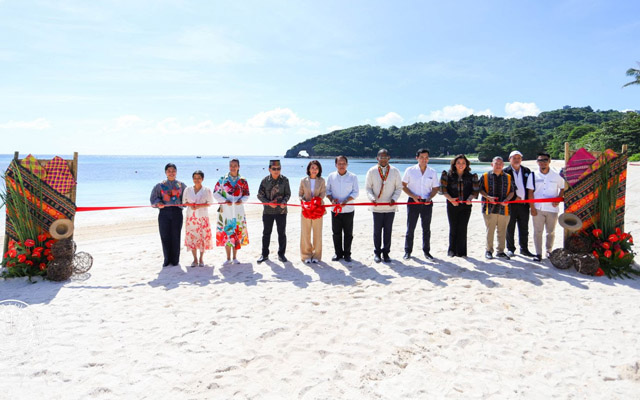
The Philippine Department of Tourism (DoT) has unveiled Marhaba Boracay, a first-of-its-kind Muslim-friendly cove for families and travellers.
Initiated by the Local Government Unit of Malay (LGU-Malay) and the DoT, in partnership with Megaworld Hotels and Resorts, Marhaba Boracay is located in the cove area of the Boracay Newcoast private beach.
The Marhaba Boracay project is in line with the DoT’s goal of promoting sustainable and inclusive tourism and strengthening the position of key destinations such as Boracay Island on the world stage.
Patterned after other existing Muslim-friendly beaches in tourism destinations such as the Maldives and Thailand, the Marhaba Cove spans around 850m² and is envisioned as a special-use area for Muslim travellers and families, taking into consideration Islamic laws. The island will also serve up halal and Muslim-friendly culinary offerings.
To further respond to the needs of Muslim guests, the DoT has actively carried out its accreditation of Muslim-friendly Accommodation Establishments (MFAEs) – as of December 2023, there is a total of 289 MFAEs and 237 Muslim-friendly restaurants nationwide.
Earlier this year in May, the DoT and Megaworld Hotels and Resorts entered into an agreement during the Arabian Travel Market in Dubai, seeking to transform all 13 of their properties into MFAEs. Since the signing, two of the group’s hotels, Savoy Hotel and Belmont Boracay, have been accredited as MFAEs.
Boracay Island is also famous among divers, being home to numerous dive sites and offerings. To enhance the overall safety of tourists and divers visiting the island, the DoT, through its infrastructure arm, TIEZA, will install hyperbaric chambers on the island, and launch its own Tourist First Aid Facilities across the country, with Boracay Island identified as a pilot destination.
Tourism secretary Christina Frasco commented: “Marhaba represents our dedication to ensuring that all travellers, regardless of faith, can enjoy the world-renowned shores of Boracay. Our efforts in the halal tourism portfolio are just beginning, and with the continued support from our partners, we envision that the Philippines will not only emerge, but thrive as a halal and Muslim-friendly destination.”






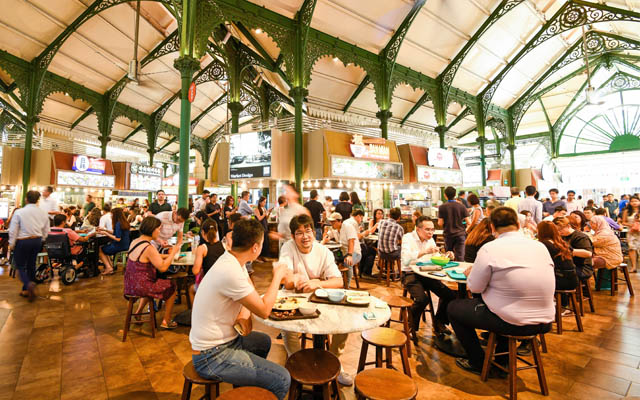
Travel DMC Group Singapore (TDMC) has teamed up with 20 local hawker centres to elevate the travel experience for guests from China and India, showcasing Singapore’s rich culinary heritage while promoting eco-friendly practices.
TDMC’s latest endeavour will see it collaborate with 20 renowned hawker centres to offer tourists a unique taste of Singapore’s diverse food culture. This partnership not only introduces travellers to the best of local cuisine but also contributes to the economic vitality of these local establishments.
As part of this initiative, TDMC will provide reusable water bottles in welcome kits for all clients, along with comprehensive information about the participating hawker centres, sustainability tips, and a guide to responsible tourism.
About 9,500 guests are expected within the next six months, during which they will be guided on tours to explore the local food scene.
Starting in 2025, TDMC will be reducing its carbon footprint by introducing six electric vehicles to its transportation services, a move that is expected to lower carbon emissions by 30 per cent.
“Partnering with local hawker centres is a natural extension of our commitment to promoting Singapore’s rich culture while supporting the local economy,” said Shiv Kumar Gokhar, managing director at Travel DMC Group Singapore. “We are excited to offer our guests an authentic culinary journey and contribute to a more sustainable future.”