


Adventurous travellers will have more options to discover wildlife and cultures next year, as Silversea resumes its West Africa sailings and expands its fly-cruise operations to Antarctica.
Conrad Combrink, senior vice president, expeditions, destination & itinerary management at the luxury cruise company, told TTG Asia that the marketplace has been waiting for the return of the West Africa programme since it was put on hold as a result of the Covid-19 pandemic.

The itinerary was first developed in 2011/2012 and took off to great success, Combrink recalled.
The 40-day Cape Town to Lisbon journey on Silver Wind will sail off on April 3 and conclude on May 13. It will call at 23 ports in 14 countries, with stops in Walvis Bay, Bom Bom Island, Pointe Noire and enjoy overnights in Lomé and Tema.
Combrink described the itinerary as “unique”, granting guests access to places that are “almost impossible to get to on their own”.
“In a single trip, we will visit Namibia, Angola, the Democratic Republic of Congo, Togo, Ghana, Ivory Coast, Sierra Leone, and more,” he said, adding that guests will not only discover African wildlife, but also uncover fascinating facets of African culture and way of life.
For those looking to explore the South Pole, Silversea will offer Antarctica Bridge expeditions on two ships next year. Currently, Silver Endeavour is the only expedition ship to sail six-night fly-cruise voyages that skip the Drake Passage. Come December 2025, Silver Cloud will also be deployed to the Antarctica Bridge. Altogether, Silversea will offer 18 Antarctica Bridge sailings in 2025/2026.
Combrink said these short expeditions have been a hit, as guests could experience the beauty of Antarctica in a very short time.
“By flying across the Drake Passage, we allow our guests six full nights of immersive experiences in the Antarctica Bridge,” he explained.
These 2025 expeditions are expected to charm Asia-Pacific travellers, who “look for quality both onboard and within the destination”.
“Silversea has such a wonderful reputation around the world, and customers in Asia-Pacific know that Silversea is really a unique opportunity to get both (quality cruise and shore experiences),” he remarked.
He said Silversea’s Best Ocean Cruise Line award at the recent 36th annual Virtuoso Travel Week is proof of the product.
“Our ships are all about understated luxury. We combine (the hardware) with very true, very unique destination experiences led by expedition staff who are extremely well trained. Most of our expedition staff work permanently or exclusively for Silversea, which means that their commitment to the destination, our company, and our guest is unique in many ways,” he added.
To ensure Asian guests feel at home and get the most out of their experiences, Silversea expeditions will bring onboard Mandarin-speaking staff when guests from Hong Kong and China are onboard, for example.
Silversea takes pride in its “industry-leading” crew-to-guest ratio on its expeditions. While the International Association of Antarctica Tour Operators and the Association of Arctic Expedition Cruise Operators require a ratio of one crew to every 20 guests onboard, Silversea offers one expedition staff member to every 10 guests.
Extensive crew support is complemented by a large fleet of nimble Zodiac boats, allowing Silversea to get all guests off the ship for adventure at the same time and quickly.


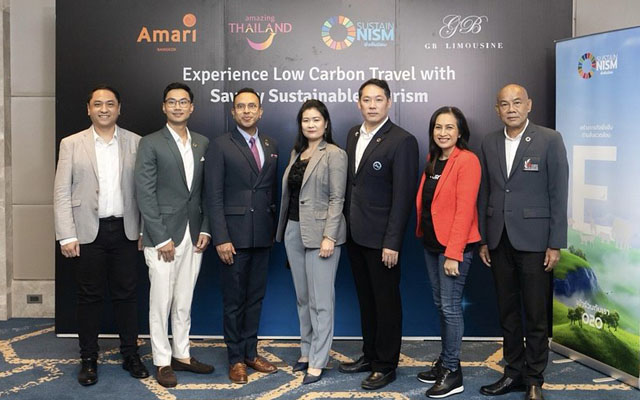















Onyx Hospitality Group (Onyx) is joining forces between its flagship Amari property, Amari Bangkok and GB Limousine Co. – along with industry leaders such as the Tourism Authority of Thailand (TAT) – to promote sustainable tourism.
The partnership will focus on selecting low-carbon transportation systems and discussing innovations in eco-friendly tourism.
During the press conference held at Amari Bangkok, Sukamal Mondal, area general manager of Onyx Bangkok properties, emphasised that in an era where sustainable development and environmental and social care are critical issues for all sectors, adopting low-carbon transportation systems is essential.
He noted that this approach is crucial to promote sustainability, particularly for the tourism industry, which is inherently linked to travel and transportation.
“Amari Bangkok has various projects aimed at reducing environmental impact, supporting local communities, and promoting ethical governance. These efforts benefit not only the environment and society but also enhance Amari Bangkok’s reputation, attracting sustainable travellers and tourists to choose our services, which may lead to long-term financial success,” he said.
“The adoption of low-emission vehicles, implementation of environmentally-friendly practices, and participation in community-driven projects demonstrate our serious commitment to developing our business while genuinely working on environmental and social sustainability. This not only tangibly reduces carbon dioxide emissions but also enhances brand value and increases customer trust. This approach not only ensures long-term customer satisfaction and loyalty but also positions us as a responsible and visionary leader in the limousine industry,” added GB Limousine Co.’s chief marketing officer Satit Chivangkur.