The 12th Bali & Beyond Travel Fair (BBTF 2026) will take place from May 28–30, 2026 at the Bali International Convention Centre located at The Westin Resort Nusa Dua.
Organised by the Association of The Indonesia Tours and Travel Agencies Bali Region, this year’s BBTF theme is Redefining Indonesia’s Gastronomy Journey: A Celebration of Taste, Culture, and Sustainable Heritage.
This year’s theme was conceptualised in response to today’s crowded regional market. Destinations need a stronger identity, deeper storytelling, and more distinctive reasons to attract tourism – and gastronomy makes for a compelling lure.
This signals a strategic shift: tourism is no longer sold only through scenery, hospitable people, unique culture, but through experiences that travellers remember, engage with more deeply, and return for through longer stays.
It is especially important as Bali continues to defend its standing as one of the world’s most desired destinations while facing growing pressure to improve visitor experience, strengthen destination management, and build more resilient tourism value. Gastronomy is positioned as a gateway to culture, heritage, local communities, and sustainable tourism product development.
BBTF’s strategic role, then, is not only to generate business leads at this B2B platform, but to help reposition Bali and Indonesia through bookable, experience-led travel that is richer in meaning, stronger in market appeal, and more resilient for the future as destinations of depth, quality and long-term relevance.
For more information about the fair and exhibitors, visit BBTF now.
Singapore is investing in next-generation cruise ports to support its long-term cruise tourism ambitions. One of the immediate infrastructure projects is the relocation of the Singapore Cruise Centre, currently located at HarbourFront Centre.
Set to open on July 15, 2026, the new Singapore Cruise Centre (HarbourFront) “presents an opportunity for (it) to enhance the overall passenger experience through upgraded facilities that improve passenger flow while supporting future travel demand”, stated Jacqueline Tan, CEO of the Singapore Cruise Centre.
The new Singapore Cruise Centre (HarbourFront) is part of wider plans to improve passenger experience and support future cruise demand
Tan outlined the features of the new passenger terminal in an interview with TTG Asia: “Designed to support a more seamless and efficient passenger journey, the new terminal will incorporate a range of automated features. These include self-service check-in kiosks, baggage drop facilities, self-service boarding gates, and biometric immigration clearance integrated with Singapore Immigration & Checkpoints Authority’s Automated Border Clearance System. These enhancements are aimed at improving processing efficiency and reducing waiting times, particularly during peak travel periods.
“Waiting areas within the terminal have also been expanded and are approximately 50 per cent larger than those at our current terminal. For the profile of cruise lines that call at Singapore Cruise Centre (HarbourFront), a new VIP lounge will also be part of the pre-trip facilities that passengers can enjoy.
“Beyond operational improvements, the new terminal will also house over 20 retail and service tenants, including Lagardère Travel Retail, which operates the duty-free concessions at both our HarbourFront and Tanah Merah terminals.”
The relocation to 5 HarbourFront Avenue, adjacent to the current site, forms part of the broader rejuvenation of the HarbourFront precinct. The area is set to evolve into a business and lifestyle destination within the Greater Southern Waterfront, an urban development stretching from Pasir Panjang to Marina East.
Tan said the proximity of the new facility to the existing site ensures that Singapore Cruise Centre (HarbourFront) retains its “excellent location” and convenient access to multiple transport modes, allowing it to function as a “key gateway for regional ferry and international cruise travel”.
She added that the Singapore Cruise Centre is looking to strengthen partnerships within the Sentosa-HarbourFront precinct to enhance passenger experiences.
Preparations for the move are underway.
“The ferry operators, cruise lines, port agents, and ground service operators have been regularly updated with the progress of the new terminal and even prior to the build-out, we have also taken on board feedback from key stakeholders to shape the new terminal planning and offerings.
“We have conducted familiarisation sessions, covering passenger flow, baggage handling processes, and the terminal’s new systems and operating procedures. These efforts are aimed at ensuring that there will be operational continuity and minimising disruption during the transition in July 2026,” she said.
In addition to the HarbourFront development, a study is underway to assess the potential for an integrated cruise and ferry terminal to meet future demand, said Melissa Ow, chief executive of the Singapore Tourism Board (STB), during her address at the Tourism Industry Conference on May 8.
A proposed integrated cruise and ferry terminal aims to increase capacity and strengthen regional connectivity
The study is being conducted by STB and the Maritime and Port Authority of Singapore.
Ow noted that “cruise demand is expected to grow steadily”, and “ensuring we have sufficient capacity to support our growing pipeline of cruises is therefore imperative”.
According to Grace Fu, minister for sustainability and the environment and minister-in-charge of trade relations, the proposed site may be at Straits View, adjacent to Marina Bay Cruise Centre Singapore (MBCCS).
Fu shared that the new terminal could support three cruise berths and up to 10 ferry berths, with a passenger capacity approximately 1.5 times that of MBCCS and twice that of the existing HarbourFront terminal.
“This represents not only a significant increase in international cruise capacity, but also greater regional connectivity,” she said.
According to STB data, cruise passenger throughput has shown strong growth, except during the pandemic years: 1.8 million in 2019; 1.2 million in 2022; two million in 2023; 1.8 million in 2024; and over two million in 2025.
STB told TTG Asia it will continue to work with cruise partners to support cruising experiences that meet the needs of visitors, including through schemes such as the Cruise Development Fund to help defray costs and support cruise deployments in Singapore. These efforts align with Singapore’s Tourism 2040 vision of advancing a future-ready industry while strengthening its appeal to regional and longhaul visitors.
The Singapore Tourism Board (STB) outlined plans to transform, expand and rejuvenate two key precincts – Orchard Road and Sentosa – at its annual Tourism Industry Conference last Friday.
“We envision Orchard Road to be an iconic lifestyle destination for all – enlivened by vibrant activations, concepts and experiences set within a city garden,” Grace Fu, minister for sustainability and the environment and minister-in-charge of trade relations, said in her opening speech.
Tanglin Shopping Centre will be redeveloped into a mixed-use development as part of Orchard Road’s transformation; rendering by Pacific Eagle Real Estate
Starting in mid-2026, the Orchard Road Rejuvenation Initiative will invite stakeholders to innovate across building façades, experiential art and night-time programming. Mark Shaw, chairman of the Orchard Road Business Association, told TTG Asia that the focus is on “night-time initiatives and experiential concepts” to improve street vibrancy and make the precinct more “Instagrammable”.
To support this, a tender will be launched in May 2026 for three “plug-and-play” pop-up spaces between Wisma Atria and Ngee Ann City. These spaces will host a rotating selection of brands on short-term leases. Shaw noted that success relies on “continuous programming” rather than one-off events to keep the experience evolving. For instance, Scape Street Show, scheduled for July, is a recurring street performance platform showcasing a range of creative talents.
This effort will be supported by infrastructure projects such as the 3,000-capacity Grange Road events venue, managed by Live Nation, which will function as both a business events venue and a space for concerts and local arts. By late 2027, the Somerset Belt will evolve into a dedicated youth precinct, featuring a skate park and incubation spaces.
Orchard Road’s identity will be further developed in 2H2026 through a Creative Exploration System, featuring artistic markers and local poetry across Tanglin, Orchard, Somerset and Dhoby Ghaut. Visitors will be able to scan QR codes on these landmarks to discover activities across the precinct.
“New precinct markers and creatively designed street benches will showcase Orchard Road’s unique identity. We look forward to a transformation that injects new concepts and experiences into the street,” said STB chief executive Melissa Ow.
Meanwhile, hospitality and heritage developments include a forthcoming tender for the 37 Emerald Hill site and the late-2026 opening of Asia-Pacific’s first NoMad luxury hotel at the redeveloped Faber House. The transformation extends to Tanglin, where Tanglin Shopping Centre will be redeveloped into a mixed-use project, while four heritage bungalows at the 1.9-hectare Seton Close site will be tendered for hospitality use.
Looking ahead, Istana Park is set to expand to three times its current size, integrating a pedestrianised stretch of Orchard Road to create a family-friendly green space.
Beyond the city centre, the Greater Sentosa Master Plan – encompassing Sentosa and Pulau Brani – will be developed into a major tourism destination over the next two decades. Fu noted that the 120-hectare Pulau Brani will be a focal point of this transformation, with expansion expected to double the precinct’s current visitorship. A key component is the Resorts World Sentosa (RWS) 2.0 redevelopment, scheduled for completion around 2030.
Si Chen, chief operating officer at RWS, said: “We are refreshing and enhancing our attractions and hotels, as well as building RWS 2.0, which will introduce two new luxury hotels with 700 rooms, an iconic waterfront with its own mountain trail, and a landmark Heatherwick light sculpture.”
In addition, the Brani West zone has been designated for a new anchor attraction. To support increased visitor numbers, the existing monorail is planned to be replaced with a higher-capacity people-mover system.
The transformation will also focus on integrating architecture and nature. Plans include a three-kilometre islet-hopping boardwalk, expanded waterfront areas, and a new Imbiah Canopy offering skywalks and treetop dining. The island’s beachfronts are also set for rejuvenation, featuring a new water and light show and the Sensorium wellness experience.
Scoot has placed a firm order for five Airbus A320neo family aircraft and exercised options for six additional aircraft from its earlier agreement with Airbus. The 11 aircraft are scheduled for delivery from 2028.
With this addition, Scoot’s A320neo family orderbook will increase to 20 aircraft. The new aircraft will be powered by Pratt & Whitney PW1100G-JM engines and configured in a single-class layout, with 186 seats on the A320neo and 236 seats on the A321neo.
Scoot will expand its Airbus A320neo fleet with new aircraft deliveries from 2028
The additional aircraft are intended to support network expansion within a five- to six-hour range from Singapore, enabling the airline to introduce new routes and optimise connections within the wider Singapore Airlines Group network.
Scoot has continued to expand its network in recent years, adding 25 destinations since FY2022/2023, including Chiang Rai and Phu Quoc, as well as Vienna. By June 2026, the airline is expected to serve 85 destinations, with 37 operated exclusively by Scoot, contributing to connectivity through Changi Airport.
The airline currently operates a fleet of 63 aircraft, including Boeing 787 Dreamliners, Airbus A320 family aircraft and Embraer E190-E2 jets. As part of its fleet renewal programme, Scoot plans to retire its remaining A320ceo aircraft by 2028.
New-generation aircraft form part of the airline’s efforts to improve fuel efficiency. The A320neo family is expected to reduce fuel consumption and emissions compared to earlier models, supporting broader sustainability targets within the Singapore Airlines Group.
“We expect travel demand to continue growing, particularly in the Asia-Pacific region, in the coming years. The range and capacity of the A320neo family aircraft will enable Scoot to expand and deepen the SIA Group’s network connectivity, providing the SIA Group with new growth opportunities and offering customers more seamless travel options,” said Leslie Thng, CEO of Scoot.
“Scoot’s mix of Embraer E190-E2 regional jets, Airbus A320 family narrowbody aircraft, and Boeing 787 family widebody aircraft allows us to operate an extensive network of flights. This covers short, medium, and longhaul routes, which complement the broader SIA network and further enhance Singapore’s position as a leading global aviation hub,” he added.
Klook has partnered the Korea Railroad Corporation (KORAIL) to introduce a real-time rail booking service, aimed at improving access to destinations beyond Seoul across South Korea.
The integration adds KORAIL’s national network, including high-speed KTX and regional Saemaul and Mugunghwa lines, to Klook’s rail portfolio across Asia-Pacific. The platform now covers the majority of high-speed rail stations in the region, strengthening transportation as a core offering.
Klook’s integration of South Korea’s rail network aims to make regional travel more accessible while supporting broader tourism flows beyond Seoul
The development comes as South Korea continues to attract international visitors, alongside efforts to encourage travel beyond the capital. By linking real-time rail inventory with global booking and payment systems, the service is designed to simplify trip planning for overseas travellers.
Klook’s internal data indicates growing interest in regional destinations. Based on year-on-year 1Q growth, locations such as Busan, Gangneung, Chungcheongnam, Jeonju, Sokcho and Seogwipo have seen increased demand. This reflects a wider shift towards multi-destination travel, particularly among younger travellers, with rail playing a key role in enabling such journeys.
The platform provides real-time seat availability up to 90 days in advance, with access in more than 20 languages and 40 currencies. Travellers can complete bookings using international cards and selected digital wallets, and receive digital tickets for direct boarding.
The addition of KORAIL further expands Klook’s transport offering in South Korea, complementing its existing rail, bus and car rental services. A joint promotional campaign involving KORAIL and the Korea Tourism Organization (KTO) is planned to support broader connectivity and regional access.
Klook, KORAIL and the KTO will also collaborate on initiatives to support more balanced tourism distribution across the country.
“As rail is a core means of transportation for international tourists in (South) Korea, we aimed to enhance both accessibility and scalability through this integrated system,” said James Lee, general manager of Klook Korea.
“Moving forward, we will expand travel products linked to rail travel and continue to evolve our services so that international tourists can easily experience various regions across (South) Korea.”
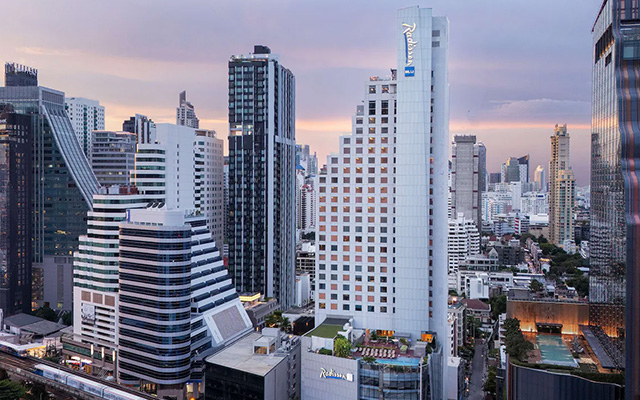
Radisson Hotel Group has signed a new property in Perth, marking the brand’s entry into Western Australia. Radisson Perth is scheduled to open later this year within the Sydney Charles Quarter (SCQ) precinct in West Perth.
Developed by APPL Group and operated by Mandala Hotels & Resorts, the hotel will form part of a mixed-use development combining residential, commercial and lifestyle elements. The project is designed as an integrated precinct on the western edge of the CBD.
Radisson Perth is set to open in West Perth as part of the Sydney Charles Quarter mixed-use development
The hotel will offer 120 guestrooms and studios, alongside a rooftop bar and restaurant, meeting facilities and a swimming pool. The property will also incorporate art and curated guest experiences as part of its positioning.
Located in West Perth, the site provides access to the CBD, nearby commercial districts and major transport links, including connections to Perth Airport. Its location is expected to support both corporate and leisure demand.
Radisson Perth forms part of the Group’s broader expansion strategy in Australasia, focusing on urban locations and mixed-use developments aligned with changing travel patterns.
Danilo Curcuruto, director of development, Australasia, Radisson Hotel Group, commented: “Radisson Perth is a strong addition to our growing presence in Australia and reflects our focus on partnering with high-quality developments in key urban locations.”
“SCQ has been designed as a modern connected village, and the inclusion of Radisson Perth is a key component in bringing that vision to life. We were seeking a brand that stands apart in the market, with a strong identity and the ability to enhance the overall positioning of the village, and Radisson was a natural fit,” said Michelle Prater, director, APPL Group.
“We’re pleased to partner with Radisson Hotel Group and APPL Group to deliver a hotel that elevates the precinct, strengthens the market, and reflects the confidently different approach Mandala is known for,” added Gemma McCourt, COO, Mandala Hotels & Resorts.
Regent Seven Seas Cruises has introduced its shore excursion programme for Seven Seas Prestige, the brand’s first new ship class in a decade, offering a mix of cultural and leisure experiences included as part of its all-inclusive voyage fare.
Guests will be able to book an unlimited number of included shore excursions in each port of call, allowing for flexible itinerary planning. Additional Regent Choice excursions will also be available at an extra cost.
Guests can visit Barcelona as part of select Seven Seas Prestige Mediterranean itineraries
Shore excursions can be reserved 210 days before sailing for guests in Concierge Suites and above, and 180 days prior for those in Deluxe Veranda Suites and above, starting with the ship’s maiden voyage in December 2026.
The programme spans 56 voyages through April 2028, with up to 141 excursions per sailing across regions including the Caribbean, Mediterranean and Northern Europe.
Experiences range from cultural and historical tours to outdoor activities. Highlights include visits to Guatemala’s Comalapa art community, a catamaran cruise in Antigua with lunch, a guided walk through Rouen in Normandy, and archaeological exploration on the Greek island of Delos. Other options include touring the UNESCO-listed site of Mystras in Greece, jungle rafting in Belize, and an evening glass-bottom boat cruise in Bermuda.
Amid several positive tourism development announcements made at the Singapore Tourism Industry Conference on May 8, Singapore’s tourism leaders acknowledged concerns about the Middle East energy crisis, its knock-on effects on consumer spending, and strains local tourism businesses are under due to persistent global uncertainty.
The reality check comes as Singapore reported a successful year of tourism in 2025, when it made a record S$32.8 billion (US$25.9 billion) in tourism receipts and welcomed 16.9 million visitors. At the same time, Changi Airport welcomed an all-time high of nearly 70 million passenger movements, while 375 ship calls and over two million in passenger throughput contributed to Singapore’s cruise tourism endeavours.
Singapore tourism maintains momentum but braces for headwinds from global economic and energy pressures
Melissa Ow, chief executive of Singapore Tourism Board (STB), said: “While visitor arrivals held up in the first quarter with a three per cent year-on-year growth, we expect muted demand in the months ahead. But as during SARS and Covid-19, I am confident that our solidarity and adaptability will carry us through.
“STB has already stepped up our efforts to support our industry partners to overcome immediate challenges. We will monitor the situation and adjust our support as needed.”
Grace Fu, minister for sustainability and the environment and minister-in-charge of trade relations, conveyed commitment to “support initiatives to help our industry capture opportunities and navigate near-term challenges” through the enhanced Tourism Development Fund, which has been given an additional S$740 million this year to be disbursed over the next five years.
Among immediate initiatives is an excess of S$20 million in total investments from STB and in-market partners to expand over 20 key trade partnerships across top 10 source markets. These partnerships aim to build destination awareness among potential visitors, accelerate bookings, and sustain visitor demand amid the challenging environment.
The new Market Access Fund, worth S$5 million, will help businesses grow their presence in new country source markets as well as secondary cities of established source markets, by reducing the financial risks of expansion.
Ow told TTG Asia: “We have earlier identified a few emerging markets that have yet to demonstrate very strong tourism potential, but (possess) very favourable factors that will augur well for outbound (traffic).”
She cited Poland and Spain as country examples and Australia’s Sunshine Coast, Indonesia’s Semarang, and Malaysia’s Kota Bahru as secondary city examples.
While the Market Access Fund “may not immediately yield results, it’s something which we’re hoping (Singapore tourism businesses) will appreciate is critical as they build resilience and competitiveness in the mid to long term”, Ow added.
Another S$5 million will be directed to the Business Events in Singapore (BEiS) Grant to expand support for businesses undertaking marketing activities aimed at building attendance.
STB is also supporting the Association of Singapore Attractions (ASA) in launching targeted marketing campaigns to drive visitorship to our attractions.
The Hotel Rejuvenation Fund, which has supported the rejuvenation efforts of 13 hotels since its launch in 2025, will be extended by one year. Hotels have relied on the fund to deploy solutions that improve energy efficiency and enhance operational efficiency, among other uses.
Local tourism businesses will also benefit from an expanded Kickstart Fund, which will now support scalable new product pilots with up to S$1 million – up from the previous limit of S$250,000 per edition. This will grant businesses more opportunities to innovate and bring to life unique concepts with strong tourism appeal for high-value visitors.
The Singapore government has signed off an additional round of Tourism Development Fund – a hefty S$740 million (US$583 million) that will be disbursed over the next five years – to speed the country’s travel and tourism industry towards its ambitious Tourism 2040 goals, which aims for between S$47 billion and S$50 billion in tourism spend by 2040.
The Tourism Development Fund was allocated S$300 million in 2024.
Grace Fu outlines expanded funding to accelerate Singapore’s tourism development and long-term growth plans; photo by Karen Yue
Grace Fu, minister for sustainability and the environment and minister-in-charge of trade relations, said the top-up will allow Singapore to focus on three areas in its tourism development efforts.
The first is to strengthen Singapore’s position as a vital and trusted hub. “To fortify Singapore’s position as a vital global hub, we must expand and renew our capacity and connectivity,” said Fu.
Efforts to this end include enhancing maritime connectivity through the possible development of a new integrated cruise and ferry infrastructure as part of the larger Greater Southern Waterfront development; expanding Singapore’s business events infrastructure with a planned Downtown MICE Hub development in the Marina Bay area; and strengthening the country’s business events portfolio with new industry partnerships and continued efforts to attract high-value business gatherings, such as several first-in-Asia events like Passenger Terminal Expo Asia 2026, Breakbulk Asia 2026, and the WCA Worldwide Conference 2027.
Destination development will be matched by intensified marketing campaigns, additional film and TV collaborations, and fresh and renewed partnerships to drive global demand, shared Melissa Ow, chief executive of Singapore Tourism Board (STB).
For example, STB’s We Don’t Wait for Fun global marketing effort, which was rolled out in 2025 to target the Early Careers visitor segment, will now be extended to the Family segment.
In terms of partnerships, STB has entered a joint regional marketing campaign with Grab to encourage discovery of key tourism precincts; renewed its MoU with Weixin Pay on joint marketing campaigns and to scale up frictionless Palm Technology for the first time outside of China; and signed an MoU with Xiaohongshu to derive greater insights on Chinese travellers’ consumer journeys as well as to host Xiaohongshu’s first Global Tourism Summit outside of China.
The second area of focus to achieve Tourism 2040 goals is to “build a world-class city and endearing home”, which requires continued investments to “rejuvenate our cityscape with refreshed products and experiences that reflect Singapore’s unique character”, stated Fu.
Ow added that “strong home-grown brands, anchored by a distinctive local core across our products, experiences and precincts, (will) authentically convey our destination stories”.
In the coming years and towards 2040, visitors to Singapore can expect new developments across the familiar Sentosa, Mandai and Orchard Road tourism precincts; new experiences and products that support home-grown intellectual property brands, concepts and products; a robust line-up of entertainment, sports, fashion and culinary events; enhanced existing tourism products; and continued flow of new hotels, wellness attractions and cruise opportunities.
To help Singapore’s tourism industry players visualise rejuvenation plans for Sentosa and Orchard Road, the Tourism Industry Conference on May 8 featured an interactive exhibit that details new features and infrastructure to come.
The third, according to Fu, is to develop strong businesses and invest in human capital.
Fu pointed to STB’s ongoing work with Singapore’s Infocomm Media Development Authority on plans to guide tourism businesses on digitalisation and technology solutions that can enhance the visitor experience and improve the workforce productivity.
“In the second half of this year, STB will be able to provide more streamlined funding support to tourism stakeholders for some of these pre-approved solutions, under Enterprise Singapore’s EDGE grant,” shared Fu.
Other initiatives to transform businesses and raise the professionalism of industry talents include a review of the Attractions industry technology roadmap by early 2027; a broadened Training Industry Professionals in Tourism Scheme to fund stretch job assignments and in-house skills training for rank-and-file workers; and initiatives to encourage upskilling among tourist guides and to streamline regulatory processes for tourist guide licensing.
Travel and tourism businesses looking to begin or advance their technology transformation will now gain updated forms of assistance from the Singapore Tourism Board (STB).
STB’s familiar Tcube innovation platform, created in 2021 to accelerate the digital transformation of tourism businesses, will now move into its next chapter as Tcube Centre of Excellence (CoE). CoE functions as a one-stop resource hub where tourism businesses can access practical tools, data resources, and industry knowledge needed for digital transformation towards improved productivity and enhanced visitor experience.
From left: Tictag’s AI crowd analytics; STB’s Jordan Tan; dConstruct Robotics’ surveillance robot
CoE is also different from Tcube in its approach towards digital transformation. While Tcube abided by a Learn-Test-Build approach, CoE now takes a Learn-Test-Scale user journey that is focused on helping businesses adopt and deepen usage of technologies that have already been proven to work.
Addressing Singapore travel and tourism professionals at the Tourism Industry Conference at Resorts World Sentosa on May 8, STB chief executive Melissa Ow said the next phase of Tcube “will focus on scaling up technology solutions for the industry in three key areas: Unlocking new growth opportunities through data analytics; improving productivity and staying competitive through innovation, and enabling a seamless visitor journey across Singapore through understanding traveller behaviours and needs”.
Jordan Tan, chief technology officer, told TTG Asia that the evolution of Tcube was necessitated by external forces – changing traveller needs and search-and-book behaviours, intensifying competition within and beyond Singapore, and growing attention on destination experiences as a differentiating factor.
To demonstrate tech applications that can immediately be deployed in tourism, STB brought 10 tech companies to the annual Tourism Industry Conference on May 8. The exhibition included Tictag’s AI crowd analytics that help event organisers, retailers and attraction managers generate real-time crowd insights; dConstruct Robotics, which presented its robotics-enabled surveillance solutions to enhance manpower needed for surveillance and security operations; and TwinMatrix Technologies’ web-app wayfinding capabilities to help venue visitors better navigate and interact with large and complex spaces.
Along with the introduction of CoE, STB has initiated its first AI Playbook for Tourism. It features a roadmap that defines four key phases for tourism businesses to get started on their AI journey: Nascent stage, for businesses to get started with easy-to-adopt AI technologies; Optimised stage, where businesses will use GenAI or Agentic AI to streamline back-end processes; Connected stage, where AI technologies are integrated to coordinate services in various industries, so that multiple AI agents across different businesses interact together; and Transformational stage, where AI agents are able to plan, execute, and optimise end-to-end operations without human initiation.
Through the AI Playbook for Tourism, businesses can also access a list of support measures to accelerate adoption, spanning capability development and manpower training programmes, innovation programmes, and grants to de-risk digital investment.
Additionally, in 2H2026, STB will continue building industry capabilities through curated workshops with leading industry partners to cover topics such as prompt engineering and generative engine optimisation.
Tan said the AI Playbook for Tourism takes into account the different levels of maturity in AI deployment across tourism businesses in Singapore – and because AI is just one part of digital transformation, CoE’s Learn-Test-Scale approach is also embedded in the AI Playbook for Tourism.
While Singapore tourism businesses have access to innovation tools, insightful deployment case studies, and reliable tech supplier contacts through STB’s transformation initiatives, Tan said it is also crucial that business owners pay attention to guardrails and safety for data privacy protection.
Tan hopes that with the combined efforts of CoE and the AI Playbook for Tourism, along with various funding available to help Singapore tourism businesses transform for productivity and competitiveness, the whole tourism industry could “move forward together”.