TTG Asia
Asia/Singapore Monday, 4th May 2026
Page 3

Brand USA brings travel advisor ambassador scheme to South-east Asia

0

Brand USA is extending its Global Ambassador Program to South-east Asia, marking the first rollout of the initiative in Singapore, Taiwan, Vietnam and the Philippines as part of a wider international expansion.

The programme builds on a pilot launched in Australia and New Zealand in 2025 and aims to appoint 250 travel trade ambassadors globally by July 4, 2026, in line with the US’s 250th anniversary. Applications for the South-east Asia cohort opened on April 13, 2026, with travel advisors invited to submit written or video entries.

The programme aims to build a network of travel advisors with deeper US destination expertise

The expansion comes amid continued demand from the region for longhaul and experiential travel, supported by air connectivity that includes more than 300 weekly direct flights to the US. Travel advisors remain a key channel in influencing destination choice and driving bookings, particularly for longhaul itineraries.

The programme is intended to strengthen destination knowledge among travel advisors and support engagement with the trade. It also responds to growing demand for multi-state itineraries and more complex travel planning involving the US.

Participants will have access to training, networking opportunities and industry events across the four markets, along with engagement with US destinations and partners. Selected ambassadors may also take part in familiarisation trips to the US.

The pilot programme in Australia and New Zealand involved 12 travel advisors and focused on peer-to-peer knowledge sharing and mentorship, forming the basis for the global rollout.

“Travel advisors are one of the most powerful drivers of international visitation, and their influence extends well beyond individual bookings,” said Malcolm Smith, senior vice president, global markets and chief trade and product development officer at Brand USA. “As a platform designed to connect the travel trade and inspire new US specialists, it strengthens engagement and supports sustained inbound growth to the US as part of our broader international strategy during America250.”

Langham signs dual-brand hotel project in Xiong’an New Area

0

Langham Hospitality Group has entered a management agreement with China Xiong’an Group Public Service Management Company to develop two hotels under its Cordis and Ying’nFlo brands in Xiong’an New Area in northern China.

The development is part of the group’s expansion in China and strengthens its presence in the Beijing-Tianjin-Hebei region. Xiong’an New Area is being developed as a state-level project to support administrative, commercial and cultural functions relocating from Beijing, alongside new infrastructure and public facilities.

The project aims to serve varied travel demand with Cordis and Ying’nFlo brands

The integrated complex is scheduled to open in the second quarter of 2028 and will span approximately 23,700m². Cordis, Xiong’an will occupy around 16,000m² and offer 180 rooms, while Ying’nFlo, Xiong’an will cover 7,700m² with 120 rooms.

The Cordis property will reflect the brand’s service approach and positioning within the upscale segment. Ying’nFlo will target a younger segment, with design-led spaces and shared areas intended to support flexible use for work, leisure and social interaction.

The project combines full-service and select-service offerings within a single development to cater to a range of travel needs as the area develops.

A representative of China Xiong’an Group Public Service Management Company said the two brands are expected to contribute to the area’s hospitality offering and support a mix of travellers, including younger segments.

Bob van den Oord, CEO of Langham Hospitality Group, shared: “As the city takes shape, we believe our dual-brand approach will be well-suited to support the broad range of travel needs that will accompany its growth.”

Minor Hotels channels Dollars for Deeds funds to Bangkok medical centre

0

Minor Hotels has contributed more than 1.6 million baht (US$44,000) to the Princess Sirindhorn Craniofacial Center at King Chulalongkorn Memorial Hospital in Bangkok through its Dollars for Deeds programme.

The centre, established in honour of Princess Maha Chakri Sirindhorn, operates under the Thai Red Cross Society and the Faculty of Medicine at Chulalongkorn University. It is the first facility in South-east Asia dedicated to craniofacial conditions, providing specialised treatment for patients, many of them children, with conditions affecting the head and facial structure.

The funds support craniofacial care for children at King Chulalongkorn Memorial Hospital

Care is delivered by a multidisciplinary team, supporting patients and families through extended treatment processes that can involve multiple stages.

Funding for the donation comes from Minor Hotels’ guest contribution scheme, where guests are invited to add 30 baht per night to their stay, with the company matching each contribution. The programme supports community, healthcare and environmental projects across the group’s operations.

The initiative forms part of Minor Hotels’ wider approach to community support, combining guest participation with corporate contributions to fund local programmes.

Regent Phu Quoc unveils island programme for April to June stays

0

Regent Phu Quoc has launched a seasonal programme running from April to June, combining accommodation, dining, wellness and island-based activities. The initiative is structured around curated experiences across the resort and surrounding destination.

Accommodation includes suites and villas with private pools and direct beach or elevated views. Stay packages range from bed and breakfast options to club-level access, with dining and service inclusions.

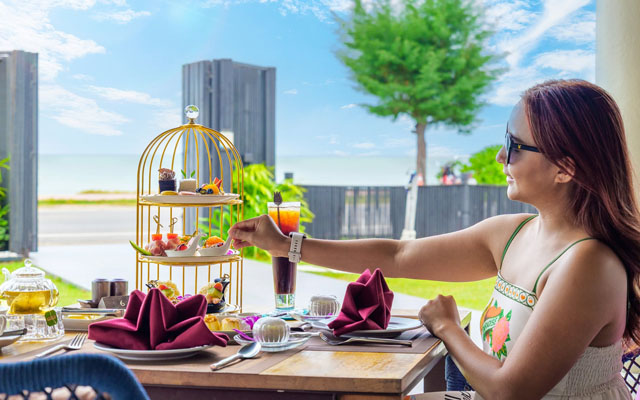
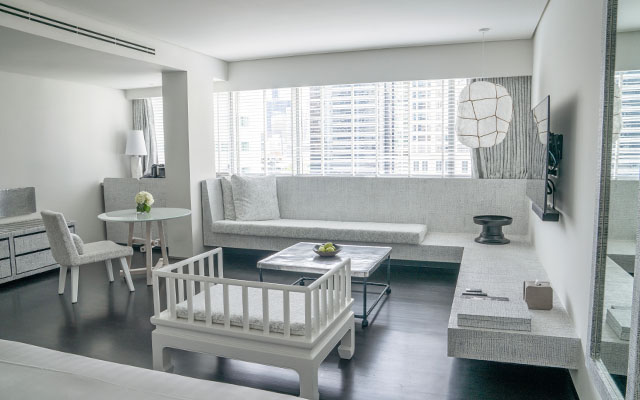
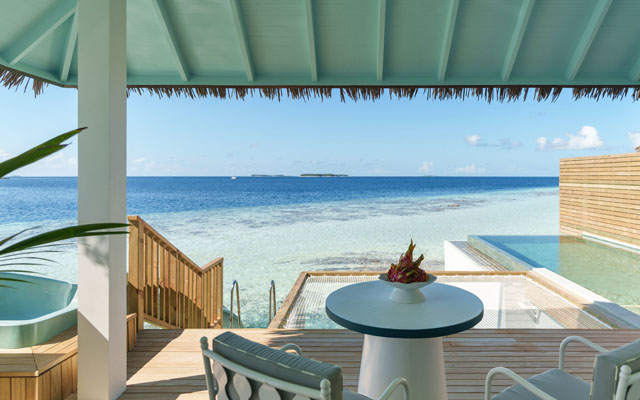
Guests can indulge in dining, wellness and island activities at Regent Phu Quoc during the April to June programme

Dining is a central component, with a series of guest chef collaborations and rotating menus across the resort’s restaurants. Programmes include multi-day residencies featuring international chefs, alongside regular beachfront barbecues, regional Vietnamese menus and seafood-focused dinners. Bars and lounges offer evening drinks and small-format dining.

Wellness activities include daily yoga, meditation sessions and spa treatments drawing on regional practices. A four-day residency in May features specialist-led treatments and workshops focused on nail and foot care, combining therapy and education.

Cultural programming includes an art exhibition showcasing Vietnamese paper art, open several days each week, alongside guided experiences designed to introduce local traditions.

Island activities are available throughout the season, including boat excursions, coastal exploration and guided outdoor experiences. The resort also operates a catamaran offering scheduled cruises around the island.

For more information, visit Regent Phu Quoc.

Millennium & Copthorne Hotels strengthens board with two appointments

0

Millennium & Copthorne Hotels has appointed David Michels and Howard Panter as non-executive directors.

Michels is chairman of Michels & Taylor and a former chief executive of Stakis Hotels, with prior senior roles at Hilton Group. Panter is co-founder of Ambassador Theatre Group, where he led its growth into a global theatre operator.

From left: David Michels and Howard Panter

In their new roles, they will contribute to board governance and strategic direction, with a focus on strengthening commercial capabilities, customer experience and international growth.

Navigating China’s digital discovery

0

The TAT has been developing the Trusted Thailand initiative for some time. How does this new partnership with Dida help advance the initiative within the Chinese market?
One of the primary challenges for any destination is ensuring potential travellers actually receive the message. The Chinese market is characterised by 1.4 billion people spread across multiple provinces, each with differing consumer habits and geographical logistics. The most effective approach is leveraging the dominant social media platforms in China, such as Xiaohongshu, Douyin, and WeChat. Chinese travellers actively share their experiences within these closed networks. Over the years, Dida has recognised the uniqueness of this consumer behaviour and worked closely with various platforms to leverage their distribution networks. Because we are a B2B business working with virtually every agency in China and a vast network of hotels in Thailand, we serve as the central matchmaker. We extend the reach of the Trusted Thailand message, align supply with demand, and ensure consistent communication across the entire ecosystem.

How do you view this partnership as being unique compared to previous collaborations with destination marketing organisations?
We work with many NTOs globally. Often, the foundational premise of these agreements revolves around hitting specific visitor arrival targets. In this instance, we do not have a rigid target for tourism volume. Thailand is not lacking in visitor numbers. This partnership represents a deliberate pivot toward luxury and traveller quality. We are targeting individuals who select a destination based entirely on the specific experiences they wish to pursue. Previously, travellers would pick a destination, book a flight, and then find a hotel. Today, they decide on the exact experience they want, whether that is a culinary class or a premier wellness treatment, and then they build the logistics around that intent. Our job is to help our hotel partners understand this shift and position their properties to capture that specific intent.

If you are targeting a luxury or wellness demographic, how do you adjust your messaging compared to volume-driven campaigns?
It is important to clarify that our data and distribution infrastructure are entirely B2B. We do not market directly to the individual traveller. However, we maintain absolute market leadership in B2B distribution across China. We work with every online travel agency, tour operator, and retail agent. This dominance gives us the confidence that if we stimulate demand at the top of the funnel through social channels, we will capture that demand through our B2B network. Typically, B2B players do not invest their own capital in destination marketing. We are doing so because our robust cash flow and expansive network guarantee we will see the return on that generated demand.

Dida identifies itself as an AI-first company. How does AI directly impact your distribution strategy?
Long before AI became an industry buzzword, we relied heavily on machine learning and advanced algorithms to solve supply and demand mathematics. The global travel industry is a trillion-dollar sector, yet it remains hugely fragmented. There are over a million hotels worldwide operating on perhaps half a million different property management systems. Matching that supply side with millions of demand-side agency systems creates severe bottlenecks. Dida bridges that gap. We process between five to six billion searches every single day for rates, availability, and property descriptions. That immense volume of data requires sophisticated processing. We deploy AI models to predict demand spikes and help hotels make superior revenue management decisions. A hotel can typically only see the booking pace within its own property. Our systems provide intelligence on what is happening across their street, their district and the wider city, whether that is a Blackpink concert or another event affecting supply and demand.

For travel operators trying to understand the current China outbound market, how do you demystify the region?
If you attempt to view China as a single entity, your strategy will fail. A traveller departing from Beijing has entirely different constraints and preferences compared to a traveller from Guangzhou. A flight from Guangzhou to Bangkok takes less than three hours, while flying from Beijing takes seven. For the northern provinces, Thailand is a mid- to longhaul destination. Furthermore, flight capacities and direct routing options vary wildly across the western Chinese provinces. You have to analyse the market as many different Chinas. What is universally true post-pandemic is that the desire for authentic experiences has skyrocketed. Chinese travellers have evolved beyond travelling just to shop. They want distinct cultural immersion. It’s frequently said that if you blindfold them, drop them in a destination, and remove the blindfold, they need to instantly know what country they are in – and Thailand delivers that distinct identity flawlessly.

What is your top advice for other NTOs looking to secure similar commercial partnerships?
Public and private sector collaborations produce excellent results because the end objectives are perfectly aligned, even when the organisational expertise is completely different. Commercial entities and government organisations both want to drive high-quality, high-yield tourism to a destination. There is no hidden magic formula. Success relies entirely on a clear understanding of what specific operational strengths each party brings to the table.

What major shifts should the travel trade prepare for over the next one to two years?
The industry must prepare for the reality that decision-making is moving above the booking platform. An increasing volume of booking decisions are finalised before the traveller ever logs onto an OTA or calls a travel agent. For hotel operators, the primary objective is delighting the guest from check-in to check-out. Distribution, technology, and upstream marketing are exceptionally difficult operational hurdles. Very few independent hotels have dedicated IT departments to navigate how AI is altering consumer search behaviour. We intend to be the infrastructure that provides hoteliers with the technological solutions and market intelligence required to capture demand before the traveller even begins the booking process.

Thailand recovers as Japan’s safety perception falls among Chinese travellers

0

Dragon Trail International’s (DTI) newest Chinese Traveller Sentiment Report on the Labour Day public holiday shows significant changes in safety perceptions since its September 2025 findings, with Thailand regaining ground but Japan seeing a decline.

Director of marketing and communications Sienna Parulis-Cook said during an April 22 webinar that the fallout from a diplomatic incident with Japan in November 2025, followed by a Chinese government travel advisory, showed safety perceptions suffering a bigger decline compared with the Gulf countries despite the ongoing conflict.

Thailand sees a recovery in safety perceptions among Chinese travellers in DTI’s latest survey

Japan’s “safe” rating is the lowest since China reopened for international travel in 2023, with its rating falling from 57 per cent in 2025 to 37 per cent in the current survey.

While this has had less impact on younger travellers for 2026, older travellers and those travelling with children view Japan as “unsafe”.

Parulis-Cook noted: “On the other hand, Thailand has improved and has moved up the rankings seven places… and at the top of the chart, Hong Kong, Switzerland and Singapore are still seen as the three safest destinations on our list.”

The good news for Thailand, she added, is that it has recorded its highest “safe” rating in the past five years, while the “unsafe” rating is the lowest DTI has seen over the same period, indicating the destination’s image has recovered from the kidnapping incident involving a Chinese actor at the beginning of 2025.

Thailand’s “unsafe” rating has dropped from 48 per cent to 34 per cent in the current survey, according to DTI.

On traveller behaviour trends, DTI market research analyst Janice Meng said spending on experiences and activities is set to grow, with younger travellers driving budget increases across all categories, including shopping and accommodation.

Meng said more than half of respondents (56 per cent) would spend more on experiences and activities, and a further 49 per cent would increase budgets for dining.

As for the rising trend of wellness travel, DTI’s survey showed a willingness to pay a premium, with 39 per cent willing to pay up to five per cent more and 31 per cent between 10 and 20 per cent more.

China’s Labour Day holiday, DTI shared, is usually a peak time for outbound trips, particularly within Asia.

Consumer desire for outbound travel remains stable, with increasing intention to travel to South-east Asia.

The survey of 1,038 respondents comprised 53 per cent female and 47 per cent male travellers who showed interest in travel and have prior travel experience.

Ascott advances AI infrastructure with focus on agent-led travel

0

Ascott is investing in AI-focused infrastructure as part of a shift towards agent-led travel planning and booking. The company is working with Accenture, Amadeus and EHL Hospitality Business School to develop its digital systems, distribution model and workforce capabilities.

The move builds on existing AI applications within Ascott’s operations. Since 2023, its digital concierge Cubby has handled more than 900,000 guest enquiries, managing routine interactions and supporting bookings. The company has also applied AI across marketing, pricing, sales and customer engagement, while adapting workflows such as lead conversion and content creation.

Cubby, Ascott’s AI concierge for planning and bookings, is set to evolve into a more autonomous travel assistant under new AI systems

The collaboration with Accenture will focus on developing a digital framework to support AI-enabled travel systems. This includes integration across reservation, property management, customer relationship and loyalty platforms, alongside testing applications based on large language models and unified commerce systems. The aim is to support automated interactions as these become more common in travel planning.

Ascott is also implementing the Amadeus Central Reservations System, which allows inventory to be structured beyond fixed room types. This approach is designed to improve how accommodation options are presented and matched to user preferences, particularly in AI-driven search environments.

Alongside technology development, the company is working with EHL to train staff through its Global Brand Academy. The programme focuses on building internal capabilities to support AI adoption while maintaining service standards across its portfolio.

“Agentic commerce represents the biggest shift in commerce in the last 20 years. In travel specifically, we see this shift taking place across the entire end to end journey; from inspiration and planning to booking and loyalty. With Ascott, we are collaborating to build that foundation, positioning Cubby to move from travel companion to booking agent,” said Emily Weiss, senior managing director and global travel industry lead, Accenture.

Kevin Goh, CEO, Ascott, shared: “Distribution shifts, labour pressures and rising guest expectations are reshaping hospitality. While AI is already helping Ascott make meaningful strides across commercial and operational functions, the bigger opportunity lies in what comes next. Instead of waiting to see how agentic AI plays out in travel, we are building the infrastructure to shape how it does.

“AI can power our operations, but only our people can exercise the judgement that turns a stay into a memory. That balance will guide how we continue to invest and operate.”

Club Med, Central Group Capital plan resort in Koh Samui

0

Club Med and Central Group Capital have signed a hotel management agreement for a new resort in Koh Samui, Thailand, marking an expansion of the brand’s presence in the region.

The development will be part of Club Med’s Exclusive Collection and will be its first under this category in Thailand. It will also be the brand’s second property in the country, following Club Med Phuket.

Courbet said the company sees an opportunity to reshape its approach to luxury in Koh Samui, focusing on boutique scale, cultural openness and seamless experiences

Located about 25 minutes from Koh Samui Airport, the 303-room resort will be set along more than 200 metres of beachfront. The property is expected to include sports and leisure facilities, dining venues and family-oriented programmes, alongside features aligned with the brand’s all-inclusive model.

Globally, Club Med operates more than 60 resorts across 25 countries. Its Exclusive Collection segment accounts for 13 per cent of total capacity and includes 21 properties across resorts, villas and other formats.

The Koh Samui project is scheduled to open in 2H2028. It forms part of Central Group Capital’s investment strategy, following the launch of a 10 billion baht (US$300 million) fund in 2023 focused on hospitality assets.

Bruno Courbet, country director for Thailand, Indonesia, India and New Markets at Club Med said: “As Koh Samui gains global attention, we see an opportunity to redefine ‘New Luxury’, combining boutique intimacy with a human-centric approach focused on freedom, cultural openness, and seamless experiences.”

“We strongly believe in Thailand’s global appeal, with Koh Samui among our top destinations,” added Soravit Chairoj, managing partner and co-head of Central Group Capital. “This redevelopment maximises its prime beachfront and natural setting.”

Western Australia promotes caravan road trips for family travel

0

With the mid-year school holidays approaching, Western Australia is positioning caravan travel as an option for families seeking a mix of outdoor activity and flexible itineraries. The state’s network of caravan parks supports coastal, forest and remote travel routes suited to short and extended stays.

Coastal routes north and south of Perth provide access to beaches, marine wildlife and national parks. Stops along the Turquoise Coast include locations near limestone formations and seasonal wildflower areas, while longer drives towards Esperance offer access to beaches and coastal wildlife. Further north, remote coastal sites between Port Hedland and Broome provide access to bird habitats, turtle nesting areas and long stretches of coastline, supported by basic facilities for extended stays.

Families travel across Western Australia by caravan, with stops at coastal parks, forest sites and national park campgrounds; photo by Tourism Western Australia

In the south-west, inland routes focus on forest and farm-based experiences. Caravan parks in timber regions offer access to walking trails, freshwater swimming areas and seasonal produce such as truffles. Farm stays near Margaret River combine accommodation with on-site activities, while coastal resorts in Busselton provide larger-scale facilities including pools, playgrounds and beach access.

For travellers seeking lower-impact stays, eco-camping options are available within national parks. These sites offer basic infrastructure and access to natural features such as coastal lakes and forest reserves, with activities including walking, wildlife observation and stargazing.

The caravan format allows families to combine multiple stops across regions, with travel times ranging from short drives near Perth to longer routes across the state.

Facilities vary by location, from full-service parks to off-grid campgrounds.

For more information, visit Tourism Western Australia.