TTG Asia
Asia/Singapore Tuesday, 8th September 2026
Page 3

Provincial merger lifts tourism fortunes for Ho Tram commune

0
xx

Vietnam’s 2025 provincial merger that saw Ho Tram commune absorbed into Ho Chi Minh City (HCMC) municipality, coupled with heavy investment in infrastructure, have led to a strong uptick in interest in the coastal area that sits about two hours from HCMC city.

Timothy Tan, vice-president of sales and marketing at The Grand Ho Tram, said the July 1, 2025 merger, which saw Vietnam reduce its provinces and major cities from 63 to 34, has proved to be a “big advantage” for the coastal destination.

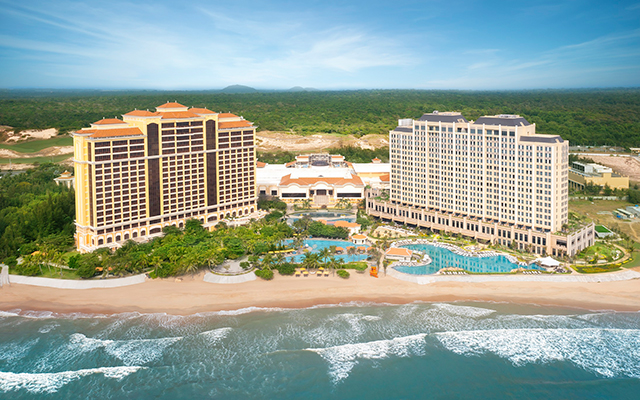
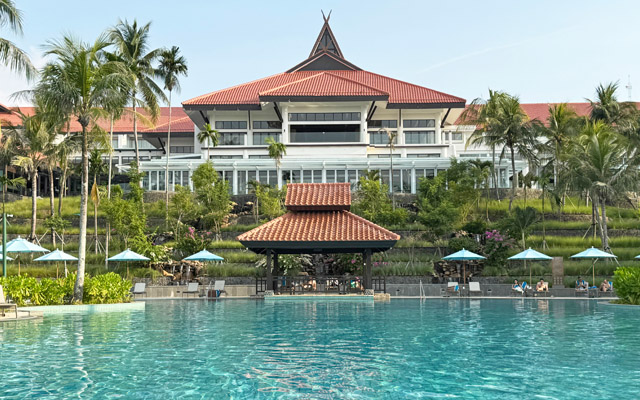
The Grand Ho Tram complex is gearing up for a next-phase opening, and is expected to benefit from improved infrastructure around Ho Tram as well as the new airport

“It now gives HCMC a coastal playground, which it never had before. We see it as a great example of how you can boost tourism numbers. Now, HCMC is growing from mainly city tourism to include corporate and leisure travel in coastal areas,” he told TTG Asia during ITE HCMC 2026.

He added that the shake-up to boundaries has given additional opportunities to raise awareness about the destination, with improved access between Ho Tram and HCMC shaving about 30 minutes off transport time to 2.5 hours.

In addition, the new Long Thanh International Airport, which is expected to start operations in December, is conveniently situated between HCMC and Ho Tram, with the 42-kilometre Ho Tram-Long Thanh Airport Expressway, which broke ground on July 1, expected to further cut travel time to about one hour.

“This puts the area in a very advantageous position. You can go to HCMC for the city experience, shopping and nightlife and then easily add on an extra two or three nights at the beach,” Tan said.

The Grand Ho Tram is gearing up for its latest phase two opening – the 575-key Ixora Grand Ho Tram by Fusion in Q4’26. It will join InterContinental Grand Ho Tram, Holiday Inn Resort Ho Tram Beach and Ixora Ho Tram by Fusion.

Tan said while phase one is focused on offering more of a resort experience, the second phase is a mixed development, also comprising condominiums and residential villas. He added that it is already drawing strong interest from long-haul markets, as well as Russia and Australia.

“We have created a new destination here at Ho Tram. A lot of projects are now eyeing up the area because they have seen what we have achieved, the improved infrastructure and the opening of the new airport,” he said.

Megaworld splits hotel unit into two divisions amid leadership changes, international expansion

0
Socrates Alvaro

Property giant Megaworld has restructured its hotel business into two distinct divisions under new leadership to support expansion and house more global franchises.

The group formed Megaworld Global Hotels and Resorts, comprising two operating arms. The first, Megaworld Hotels and Resorts (MHR), manages homegrown-branded hotels across Metro Manila, Boracay, Batangas, and Cebu.

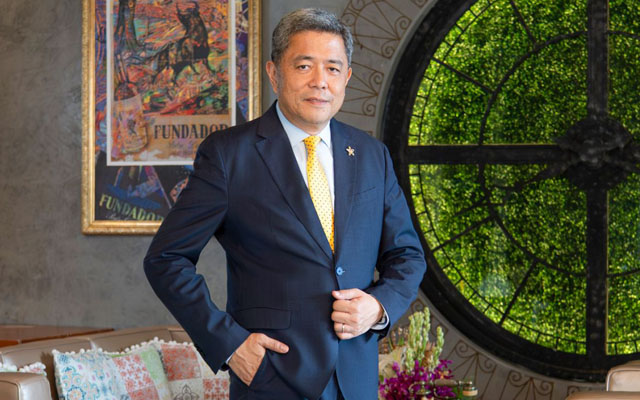
Socrates Alvaro is managing director of the restructured Megaworld Hotels and Resorts

The second, Megaworld Global Hospitality (MGH), will handle international brands, including Mövenpick Manila Bay Westside, upcoming properties in Palawan, and Courtyard by Marriott, as well as Richmonde and Belmont Hotels in Iloilo.

Prior to the restructuring, the hospitality division operated under a single unit, Megaworld Hotels and Resorts, led by managing director Cleofe Albiso since 2022. A company source confirmed that Albiso and group general manager Art Boncato Jr. have decided to step down.

Socrates Alvaro, previously cluster general manager, steps up as managing director of the newly structured MHR. Meanwhile, Anna Vergara, former general manager of Sheraton Manila Hotel, joins as managing director of MGH.

A company source confirmed that Albiso is approaching her final days with the group and completing endorsements with her successors as she moves on to her next chapter, adding that she made a significant impact during her tenure.

Albiso helped guide Megaworld to become the Philippines’ largest local hotel operator, pioneering MICE Alliances in Iloilo and Boracay, while contributing to the formation of Cebu’s MICE Alliance.

The leadership transition comes as hospitality stands as Megaworld’s fastest-growing recurring revenue segment. The unit logged an 11 per cent revenue increase in the first half of the year, driven by the recent opening of the 405-room Belmont Hotel Iloilo.

Small Luxury Hotels of the World adds seven properties to Wellbeing Collection

0
Dharana at Shillim in Pune, India is among seven new additions expanding SLH’s wellness portfolio to 21 properties globally

Small Luxury Hotels of the World (SLH) has expanded its Wellbeing Collection with seven properties, bringing the total portfolio to 21 independent hotels globally.

The additions include Dharana at Shillim in Pune, India, a 99-villa retreat set in the Sahyadri Mountains that integrates modern health diagnostics with Ayurveda, yoga, and earth-to-table dining.

Dharana at Shillim in Pune, India is among seven new additions expanding SLH’s wellness portfolio to 21 properties globally

Other newly added properties include Revivo Wellness Resort in Bali, Zabola Estate in Transylvania, Sansara Surf & Yoga Resort in Panama, Skýra Retreat in Finland, Hotel Saltus in South Tyrol, and The Retreat Costa Rica.

Launched in 2025, the collection focuses on properties that integrate physical, mental, and emotional health initiatives into guest stays through destination-specific therapies, regional cuisine, and nature immersion.

The new members join existing properties in the collection, such as Acro Suites in Crete, Namia River Retreat in Hoi An, Bhutan Spirit Sanctuary in Bhutan, and Rio Perdido in Costa Rica.

Sono sets sights on Asia-Pacific leadership

0

What does the acquisition of Cross Hotels & Resorts signify for Sono Hotels & Resorts’ global and regional portfolio?
The acquisition is a pivotal milestone in Sono Hotels & Resorts’ transformation into a premier Asia-Pacific hospitality brand. By integrating Cross Hotels’ strong regional footprint and operational expertise with Sono’s rich heritage in lifestyle and leisure, we are building a powerful platform for strategic expansion.

This acquisition also allows us to export our unique Sono Eco-system – a holistic lifestyle model that connects every step of the guest journey. It signifies our commitment to bringing a refined, multi-dimensional hospitality experience to diverse markets across the region while establishing a robust foundation for global growth.

What is your overarching business strategy for the Asia-Pacific region moving forward?
Our strategy is to establish ourselves as the fastest-growing lifestyle brand in the Asia-Pacific region by building an end-to-end eco-system that connects every stage of travel.

Instead of competing head-on in saturated markets, we focus on generating new market demand and creating a category of our own.

Central to this strategy is our partnership with Trinity Airways. We are preparing to launch an end-to-end ecosystem with an integrated loyalty programme across aviation, hotels, and retail to seamlessly connect the entire travel journey and accelerate our growth.

Which Asian countries are central to your expansion plans, and what makes these destinations particularly strategic for growth?
Our agile expansion leverages hubs connected by Trinity Airways, which connects major hubs across South Korea to key destinations in Thailand, Indonesia, Japan, Vietnam, Singapore, Taiwan, and beyond.

Currently, our Asia entity operates 17 hotels, with an additional 12 properties scheduled to open by 2029, bringing our total portfolio to 29 hotels and over 3,500 rooms. This represents a quarter of Sono International’s global operation of 15,000 rooms, highlighting the Asia-Pacific region as a primary growth engine.

Following the launch of Sono Moon Nagoya last June, we are targeting Tokyo, Kansai, Hokkaido, and Kyushu, while pushing into emerging lifestyle destinations across Indonesia and Thailand. Key upcoming developments in Indonesia include a luxury glamping retreat on Nusa Penida, a lifestyle hotel in Seminyak, and a 2027 debut in Jakarta, while expansion in Thailand includes Pattaya, Chonburi, and Bangkok.

Vietnam is our next immediate focus, debuting in Hanoi next year through local partnerships. We are also pursuing strategic entries into Singapore, Australia, and Malaysia via flexible deal structures, while keeping China and India as long-term targets once our regional foundation is fully set.

In your view, how do hotel development concepts evolve across the region to keep pace with changing traveller habits and preferences?
Modern travellers are seeking highly specialised, lifestyle-oriented, and emotionally fulfilling destinations. We see development concepts evolving to capture specific guest mindsets –such as the rise of wellness, bleisure, digital nomads, extended stay with edu-vacation and the booming medical tourism market in key hubs like Bangkok, as well as niche lifestyle positioning like our plant-based/vegan-concept hotel, Away Chiang Mai.

At Sono, we respond to these evolving habits by curating deeply specialised experiences within our properties. A key example is Sono Pet, which redefines pet hospitality. Rather than just being pet-friendly, Sono Pet offers dedicated entire facilities where owners and their companions stay, dine, receive grooming and training, enjoy curated dog parks, and access pet lifestyle retail. By continuously adapting our concepts to modern lifestyle trends, we ensure our properties remain relevant, destination-worthy, and deeply resonant with changing guest preferences.

How do you view the intensifying competition between regional hotel chains and established international brands in Asia?
Sono redefines hospitality by looking beyond traditional competition. We view true luxury not through high price tags or superficial opulence, but through cherished time spent with loved ones – positioning Sono as the ultimate destination for families to connect. By integrating aviation, travel, lodging, retail, wellness, pet lifestyle, and workation into a single intuitive ecosystem, we reflect the latest hospitality trends while prioritising long-term authenticity over rapid expansion. Every experience we create serves our core vision: bringing families closer through every journey.


Shinta Mani Wild hosts volunteer dental mission for remote Cambodian community

0
A week-long field clinic in the Cardamom Mountains will deliver free dental care and nutrition support to hundreds of local children

Shinta Mani Wild will organise a seven-day volunteer dental clinic from September 8 to 14, 2026, delivering free treatment, oral health education, and a new multivitamin programme to children in Cambodia’s Cardamom Mountains.

Organised in partnership with Global Dental Relief (GDR) and the Shinta Mani Foundation (SMF), the mobile clinic will operate at Prey Praseth Primary School. A team of seven volunteer dentists and 10 clinical support staff will transform classrooms into treatment facilities, providing examinations, fluoride applications, and restorative care for 650 to 800 children.

A week-long field clinic in the Cardamom Mountains will deliver free dental care and nutrition support to hundreds of local children

The initiative marks the first expansion of the GDR and SMF partnership into the Cardamom Mountains region. Since 2014, the collaboration has conducted annual clinics in Siem Reap, delivering an estimated US$1 million in donated dental care annually across five field operations.

Logistical support, translation, transport, and volunteer accommodation will be managed by the Shinta Mani Wild team alongside local village leaders.

“Our partnership with Global Dental Relief has transformed the lives of thousands of Cambodian children over many years. Bringing this programme to communities surrounding Shinta Mani Wild reflects our commitment to ensuring that geography is never a barrier to healthcare. By working closely with schools, families and local leaders, we hope this clinic will become the beginning of an ongoing programme that improves children’s health for years to come,” said Chhunnin, executive director at the Shinta Mani Foundation.

“Together, we can not only relieve pain and prevent disease, but also educate children and families about lifelong oral health, creating benefits that extend well beyond the week of the clinic,” added Kimberly Troggio, director at Global Dental Relief.

Trafalgar expands, takes Insight Vacations and Costsaver under its wings

0
xxx

Trafalgar will bring the 2027 portfolios of Trafalgar, Insight Vacations and Costsaver together under its trusted brand name – a move that is expected to simplify the company’s diverse portfolio, allowing agents to more easily grow their business and network.

With the expanded Trafalgar portfolio comes five travel categories – Tours, Small Groups, River Cruises, Rail Journeys and Group Sales – and three value tiers – Saver, Classic and Premium.

Trafalgar, Insight Vacations and Costsaver portfolios will fall under the Trafalgar brand come 2027

According to a press statement from TTC Tour Brands, Trafalgar’s evolution will not alter the experiences and expertise behind each journey.

Mae Cheah, managing director, Asia, TTC Tour Brands, said: “This is an opportunity to more easily match the right experience to the right traveller, with Premium offering the elevated stays, dining and experiences defined by Insight Vacations, and Saver delivering the value and flexibility Costsaver has always provided. Under one simple, easy-to-navigate and easy-to-sell portfolio, agents can more easily grow their business and their network.”

Cheah added that “travel agents have always been central to our growth and they’ll be central to where we go next”.

“Expanding what Trafalgar offers means more opportunities for agents to meet the needs of the clients they already have, reach new ones, and keep them traveling with us as their needs evolve. As we prepare for our biggest-ever investment in the Trafalgar brand in 2027, we want to bring our advisor partners along with us, giving them the time, tools and support to be ready for the demand we’re working to create and the opportunities that come with it,” she said.

Moving forward, the Trafalgar portfolio will represent more than 600 itineraries across 75 countries. With a growing river cruise portfolio, a broader range of Small Group Tours, and dedicated rail journeys and classic tour categories across a range of price points. It is gearing up for 2027 with more itineraries and experiences for agents and their clients.

New hotels: Avani Queenstown, Asai Gamuda Cove and more

0

Avani Queenstown, New Zealand
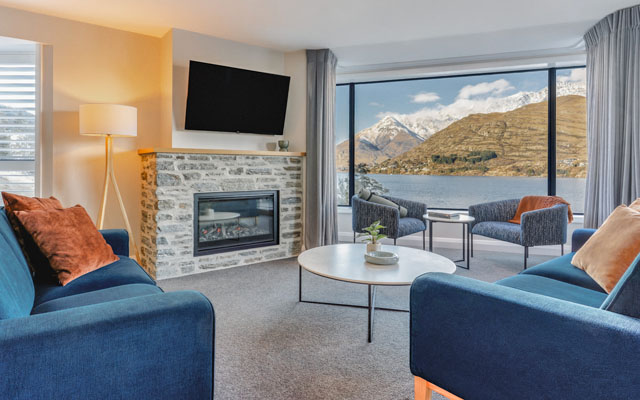
Avani Queenstown is a lakefront property comprising a full-service layout resulting from the complete conversion of the former Oaks Shores Resort.

The hotel features an all-day dining venue operating from breakfast through evening à la carte, alongside a dedicated high tea service and après-ski fireside spaces. Guest amenities encompass a spa, wellness gym, private dining areas, and flexible event spaces for gatherings.

Positioned on the shores of Lake Wakatipu, Avani Queenstown provides direct access to Queenstown’s central town district, regional ski fields, and outdoor adventure sports hubs.

Asai Gamuda Cove, Malaysia
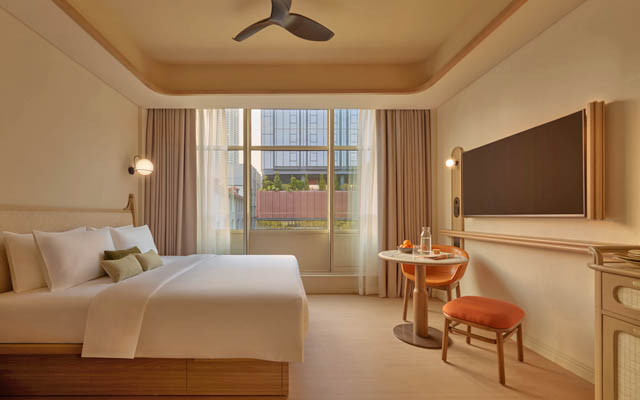
Asai Gamuda Cove accommodates guests across 280 rooms, featuring compact layouts, balcony access, bunk-bed setups, and two-room family options for up to six people. In-room amenities comprise high-speed Wi-Fi, smart televisions, walk-in showers, and integrated storage solutions.

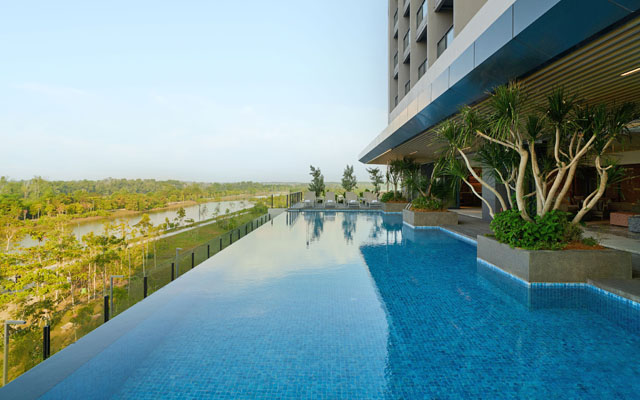
Facilities include an infinity pool, fitness gym, dedicated co-working areas, and flexible meeting spaces for up to 100 people. There are three culinary options: Nasi & Khao for Malaysian, Thai, and Western meals; Tea Shop for light refreshments; and an outdoor Pool Bar.

The hotel lies a 20-minute drive from Kuala Lumpur International Airport and Sepang International Circuit. Nearby points of interest embrace Paya Indah Discovery Wetlands, a 36-hectare Wetlands Arboretum, SplashMania Waterpark, and Discovery Park.

Hyatt Centric Sapporo, Japan
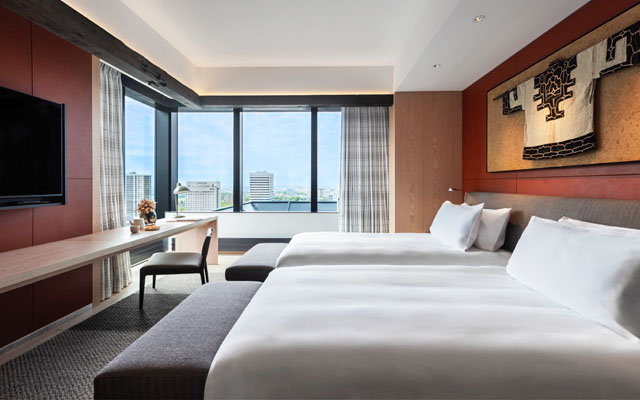
Hyatt Centric Sapporo houses 216 guestrooms, including nine suites, positioned across floors 19 to 26 of Urban Net Sapporo Link Tower. In-room provisions include floor-to-ceiling windows, digital key access, Wi-Fi, smart televisions, Nespresso machines, and bathrooms with bathtubs and rain showers.

On-site venues count Matsu Grill & Bar on the 17th floor serving wood-fired regional dishes, an adjacent bar and fireplace lounge, and Mr Fish on the first floor serving fish and chips alongside craft beers. Additional facilities include a 24-hour fitness gym.

The property sits a 10-minute walk from JR Sapporo Station via an underground passage. Landmark points nearby encompass the Former Hokkaido Government Office Building and Odori Park.

Stamford Place, Singapore

Stamford Place contains 66 design-led serviced apartments managed via the APT brand, alongside 2,787m² of shared workspace across two floors operated by The Great Room.

On-site facilities count eight ground-floor dining and retail units, including Stamford Social bistro, Blue Label Tavern, Japanese concept Yoruya, and a Cold Storage grocery outlet. Resident provisions embrace a fitness gym and laundry facilities.

Set at the junction of Stamford Road and Hill Street in Singapore’s Civic District, Stamford Place occupies the former Stamford Court clock tower site.

Philippines strengthens sports tourism pursuit

0

The Philippines is paying more attention to sports tourism, as it recognises the high-value contribution such events bring to tourism.

Philippine Sports Commission (PSC) chair, Patrick Gregorio, said all its partners including the Department of Tourism (DOT) and Tourism Infrastructure and Enterprise Zone Authority are strongly pushing for sports tourism, boosted by Philippine president Ferdinand Marcos Jr’s administrative order 38 creating the National Sports Tourism Inter-Agency Committee late last year.

The 2026 Karate One Youth League in Manila drew 3,000 participants and their accompanying family from 90 countries

Chaired by PSC and DOT as vice chair, the Committee is tasked to develop and promote the country as premier international sports tourism destination and bid for international sporting events.

PSC has “budgeted a very big amount of funds” and legislators, our senators understand their commitment to give more funding to sports tourism” not just in metro Manila but in all other areas, Gregorio said during the 7th Sports Tourism Awards organised by Sports Turismo Alliance on August 24.

Over 30 international events are lined up for hosting by the Philippines this year alone, with many more major ones coming next year.

Citing the ripple effect of hosting the 2026 Karate One Youth League three months ago, he said 3,000 kids from 90 countries have participated, joined by their grandparents or parents or siblings who stayed for over seven days, and paid for their own airfares, accommodations, tours and meals.

The Tour of Luzon cycling tournament,  graced by 17 teams from five countries, got 200 million views.

“I’ve never seen a sport with 200 million organic views,” he quipped.

Cynthia Carrion, one of the pioneers of sports tourism  and held several positions with DOT, said many athletes came but went from the airport to the competition venue and to the hotel without seeing the Philippines. She remedied this and now Boracay, Siargao, Cebu, Bohol, Clark and many other destinations are gaining renown for hosting international competitions.

Tourism undersecretary Shalimar Hofer Tamano said the DOT is “working to translate the advantages of sports tourism into programmes and partnerships….that connect sporting experiences with our destinations”.

Club Med Bintan unveils major enhancements and stronger family welcome

0
Club Med Bintan boasts an even stronger family offering following its latest transformation

Club Med Bintan, which turns 30 next year, has started to welcome guests into a transformed environment that includes brighter and more vibrant guestrooms, new family experiences, refreshed dining concepts, and enhanced leisure spaces that work together to present a stronger offering for holidaying families.

The property’s milestone is being celebrated with the APAC Media & Trade Showcase this week, an event that offers attendees a taste of the new features across the resort.

Club Med Bintan boasts an even stronger family offering following its latest transformation

Rachael Harding, CEO, East & South Asia and Pacific at Club Med, noted that the core demographic of Club Med Bintan’s guests has been families.

“Families love Bintan island and they love Club Med Bintan; 75 per cent of our guests are families. So, we wanted to start positioning ourselves a little bit more towards that,” she explained.

While the resort has gone through some renovations and rolled out different experiences throughout three decades of operations, the latest asset enhancement is the most transformative.

Harding said changes and improvements to the property have been shaped by feedback from families who take their holidays to Club Med Bintan.

Some of the new family-friendly offerings at Club Med Bintan include the Amazing Family! Hub, a 300m2 social and play space designed for families to enjoy shared experiences; the Splash Pad water playground for younger children; pickleball courts that welcome guests of all ages; updated, cheerful guestrooms, which include Deluxe Family Themed Rooms with a fun children’s sleeping area.

Families will also appreciate refreshed dining experiences that are said to align with “the way guests naturally move through the day while on holiday”. The redesigned Panorama Coffee Shop serves as a relaxed social space that evolves throughout the day, while the Terrace Gourmet Club presents an all-day dining concept that transitions from relaxed daytime brunches to intimate evening dining by the sea. Soon to come in 2027, The Grill Gourmet Club will introduce a dedicated evening dining concept centred around grilled seafood and premium meats in a convivial coastal setting.

Olivier Monceau, general manager for Club Med Singapore and Malaysia, said: “Every enhancement has been thoughtfully designed to support the rhythm of modern family travel – creating more opportunities for connection, spontaneity and genuine downtime. Beyond introducing new spaces and experiences, the ambition was to ensure that every part of the resort works together more seamlessly, so holidays feel more effortless, balanced and meaningful for today’s families.”

Harding noted that Club Med is especially proud of its Mini Club programme, which stands out from other kids club in the marketplace with its programming that is built in consultation with child psychologists.

Programmes for children are grouped by ages to facilitate interaction with peers of the same age from around the world. With teenage guests, for example, Club Med Bintan’s Teens and Chill Pass programmes pack in sports and games, opportunities for socialising, and involvement in party planning.

Jose Luis Martinez Montiel, village chief and general manager of the resort, told TTG Asia that families today value relaxed vacations where there is an option for kids to enjoy age-appropriate activities and make new friends in a safe environment as well as opportunities for parents to either relax on their own or join an activity that everyone in the family can do together.

Montiel added that the relaunched Club Med Bintan has elevated its positioning as a premium all-inclusive resort that is ideal for families that “want to do everything or nothing at all”.

The transformed Club Med Bintan is ready for guests, and additional new features will be unveiled in the coming months. An updated reception and the new Zen Lounge for guests to rest, relax or work will be ready in 1Q2027, while a renovated Kids Club will join The Grill Gourmet Club in 2Q2027.

Asia-Pacific carriers trim regional flights to protect longhaul routes amid fuel squeeze

0
xxx

Asia-Pacific airlines are protecting their longhaul networks while trimming shorthaul and regional frequencies as jet fuel prices near US$160 a barrel erode margins heading into the autumn flying season, according to Alton Aviation Consultancy.

Clark Johns, Auckland-based director at the consultancy, noted that regional jet fuel traded near US$160 a barrel as of 21 August – about 75 per cent higher than a year ago – with the crack spread between crude and jet fuel holding between US$60 and US$65.

Changes to Asia-Pacific airlines’ shorthaul and regional frequencies are not expected to be a structural shift, notes Alton Aviation Consultancy

Citing the International Air Transport Association’s June 2026 Global Outlook for Air Transport report, Johns said Asia-Pacific carriers are now expected to post a net profit of about US$6.6 billion in 2026, down from US$9.8 billion in 2025, with profit per passenger expected to drop to US$3.40 from US$5.30.

Globally, the same revision nearly halved the year’s profit forecast from US$41 billion to US$23 billion, based on jet fuel projected to average US$152 a barrel across the full year.

“There has certainly been some reduction across the Asia-Pacific region because of higher fuel prices, but where we have seen a good amount of it is more on shorthaul and regional flying,” Johns said. “You cannot cancel your one daily flight to London, because that is how you transit customers to the rest of your network. Where you fly a market five times a day, you can drop to four on some days of the week and recapture those customers on fewer flights.”

The conflict reshaped transit flows in the region’s favour in the near term. As Gulf carriers pulled capacity, demand held for nonstop Asia to Europe services and for connections through Changi, Hong Kong, and mainland Chinese hubs. Singapore Airlines and Cathay Pacific, alongside mainland Chinese operators, absorbed much of the redirected traffic, while Suvarnabhumi drew some benefit as Thai Airways expanded its European network breadth.

Chinese carriers gained further from overflying Russian airspace, which other airlines avoid, leaving a narrow corridor that lengthens trip times, increases fuel burn, and raises crew costs on rerouted longhaul flights.

Johns does not view the shift as permanent. “I wouldn’t call that a structural shift,” he said. “The Gulf carriers are still rebuilding capacity, and long term we expect a return to the equilibrium that was in place before the conflict.”

The cost pressure lands unevenly. Full-service carriers with business and premium traffic can pass more of the higher fuel bill into fares, Johns noted, whereas low-cost and ultra-low-cost operators face sharper demand impacts, as a 20 to 30 per cent fare increase deters price-sensitive leisure and visiting friends and relatives travel.

With fuel volatile and a delivery backlog of more than 16,000 aircraft forcing carriers to fly older jets longer, Johns said the region’s airlines are planning for prolonged uncertainty.

“Airlines right now are having to operate in what is a challenging new normal that requires them to be more flexible in how they plan, and adaptive from their fleet decisions to how much cash they hold on the balance sheet,” he concluded.