TTG Asia
Asia/Singapore Tuesday, 13th January 2026
Page 2683

Vietnam Airlines gets majority share in Jetstar Pacific

0

VIETNAM-based Jetstar Pacific has undergone a change in ownership, with Vietnam Airlines (VNA) picking up a majority stake in the low-cost carrier, which previously belonged to the Vietnamese State Capital Investment Corporation.

Separately, the Qantas Group’s existing 27 per cent share in Jetstar Pacific has now increased to 30 per cent. VNA now owns 69.93 per cent. A new CEO and chairman are expected to be announced soon.

Chief executive of the Qantas Group, Alan Joyce, said: “We are confident this partnership between a low-cost carrier and a full-service airline in Vietnam can replicate the success of our Qantas and Jetstar strategy in Australia, and follows our recent partnership with Japan Airlines to form Jetstar Japan.”

Through the new partnership, Jetstar Pacific will receive an initial capital injection of A$25 million (US$26.6 million), including A$7.5 million from the Qantas Group. This will be directed towards fleet renewal, with the carrier’s current Boeing 737s replaced with new A320s from mid-2012. Jetstar Pacific’s fleet will grow to 15 A320s within the next few years.

The focus will be on serving both domestic and international routes.

Expanding in India

0

Foreign and local operators alike are eyeing India’s hospitality gold mine

24feb_2_pic1
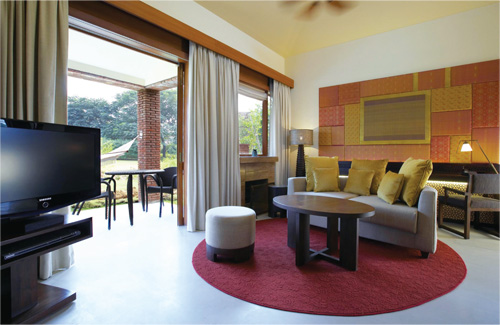
The Westin Sohna Resort & Spa

Starwood Hotels & Resorts Worldwide, Inc

Who Starwood has 1,071 properties in 100 countries and territories across nine brands: St. Regis, The Luxury Collection, W Hotels, Westin, Le Méridien, Sheraton, Four Points by Sheraton, Aloft and Element.

In operation Starwood currently operates 33 hotels in India. The Luxury Collection is the largest Starwood brand in India, which is also the brand’s second-largest market after the US.

Under development There are over 20 hotels under development in India, all scheduled to open by 2015. In 2012, Starwood will open the ITC Grand Chola, Chennai, a Luxury Collection hotel; Westin Chennai; and two Aloft hotels. W Hotels (Mumbai, Goa, Delhi NCR) and St. Regis (Delhi NCR) will be introduced to the market in 2015 and 2016 respectively.

Investment Mostly management contracts. It has also franchised a part of its Luxury Collection to ITC Hotels such as ITC Maurya and ITC Grand Central.

Adapting to the market To meet the demand generated by the increasing number of Indian customers, Starwood opened its first Customer Contact Centre (CCC) for the market in Gurgaon earlier this year. This is Starwood’s ninth global CCC and its fourth in Asia-Pacific.

Average rate Rs8,000-20,000 (US$162-406) a night

Comment “Indian consumers continue to enjoy double-digit growth in per capita income, while the population of high net-worth individuals has grown over 80 per cent in the last five years…We have a significant opportunity to grow our luxury brands.” – Dilip Puri, managing director of India and regional vice president of South Asia

24feb_2_pic2
The Leela Palace Udaipur

The Leela Palaces, Hotels and Resorts

Who The Leela is a luxury hotel group with properties across India, including palace hotels in several cities. The chain exemplifies Indian hospitality and international standards of service excellence.

In operation The Leela has seven operating hotels throughout the country.

Under development Its eighth hotel is due to open in Chennai in March, while a ninth will open in Jaipur by year-end.

Investment Although the majority of its properties are built and owned, the group is now pursuing an asset-light strategy. Most of its hotels opening over the next few years will operate under management contracts.

Adapting to the market Indian business travellers need a more elaborate and efficient room service/in-room dining menu. For leisure, Indians take quicker and more frequent breaks; look for family and couple accommodation with more hotel activities; and have a lesser need for sightseeing. They sleep late, get up late, want to have late dinners and enjoy an overdose of service.

Average rate Rs15,000-25,000 a night

Comment “I am very bullish about the Indian hospitality industry as we have just scratched the surface. The government now understands the employment potential of this industry, and this is resulting in measures that will impact investment and make it easier for foreign nationals to visit India.” – Sanjoy Pasricha, vice president, sales and marketing

24feb_2_pic3
Sofitel Mumbai BKC

Accor

Who Accor is present in 90 countries with 4,200 hotels. Its broad portfolio of hotel brands include Sofitel, Pullman, MGallery, Novotel and Ibis, providing an extensive offer from luxury to budget.

In operation Accor has 10 hotels in India.

Under development Accor’s luxury brand debuted in India last year with the Sofitel Mumbai BKC. There are two more Sofitels committed for India. Accor has also reaffirmed plans to open around a dozen more hotels in India by the end of 2012 – double its current number – and remains on track to have 90 properties in the market by 2015.

Investment A mixture of owned and managed hotels.

Adapting to the market Guest services and F&B are designed with an accent on Indian travellers’ needs such as a suitable buffet spread, relevant TV channels and multilingual reception staff.

Average rate Rs7,000-18,000 a night

Comment “Accor is focused on India as a core growth market…While we are placing a significant emphasis on the mid- and economy sectors, we are also expanding in the upscale segments.” – Michael Issenberg, chairman and chief operating officer, Accor Asia-Pacific

24feb_2_pic41
CGH Earth’s Chittoor Kottaram

CGH Earth

Who CGH Earth develops and operates properties in India, with a strong focus on nature and the environment. A family-owned enterprise, CGH defines its properties as luxurious – both in comfort and experiences.

In operation CGH Earth has 12 resorts, heritage hotels and boutique hotels across southern India.

Under development There are plans for properties in the Andaman Islands, Puducherry and North Karnataka. CGH Earth’s properties will increasingly have fewer rooms, offering customised experiences for guests.

Investment All properties are owned and managed.

Adapting to the market Guests engage with the destination and the local communities. They are served fresh produce cooked in local flavours and styles. Core values such as sustainability and community involvement are promoted.

Average rate Rs10,000-12,000 a night (winter) Rs6,000-8,000 a night (summer)

Comment “Our customer is the ‘alert independent traveller’. He is on a voyage of discovery, and luxury is determined by the quality of his experience rather than ostentatious buildings. We expect growth to be much larger than our available capacity.” – Jose Dominic, managing director

This article was first published in TTG Asia, February 24 issue, on page 8. To read more, please view our digital edition or click here to subscribe.


Aonia offers free online space for listing packages

0

SINGAPORE-based conference organiser, Aonia, has taken its new website www.aoniamice.com online, flaunting a section that allows hotels to list their latest meeting package deals for free.

According to Aonia managing director, Daniel Chua, few other PCOs offer such a feature on their websites. He said the initiative was “more of an act of goodwill” towards hotels, and “provided value add” for current and potential clients who were increasingly turning to online sources for business events suppliers.

“No leads have resulted from the package listing (feature) yet, but there are good hits on the website,” he said. “That’s good because we want to draw more traffic to the website and grow awareness of Aonia.”

Chua said enquiries about the listed packages would need to go through Aonia “for now”, which would allow the company to connect with potential clients.

The new website also presents case studies of Aonia’s past events and is available in several languages: English, Simplified Chinese, Bahasa Indonesia, French, German, Russian and Spanish, a reflection of the company’s plans to reach out to multiple markets across the globe.

Chinese MICE agents maintain positive outlook

0

OUTBOUND Chinese MICE agents at AIME have dismissed reports of China’s slowing economic growth and are projecting good business this year, with increased frequency of events and attendance numbers expected.

Din Zhou, account director-corporate accounts department of China CYTS MICE (Guangdong) Service Co, observed two key areas of growth for his company.

“Large companies such as those dealing in direct selling, pharmaceuticals and insurance did well last year and are taking more attendees on incentive trips. We are seeing more than 2,000 pax per event now. There has also been a rise in small high-end incentive groups heading to longhaul destinations,” he said.

“However, with increased headcount, individual budgets for huge incentives have gone down. Clients are maintaining budgets for the key event components but are cutting back on F&B, transfers and tours, so we have to change the way we plan large incentive programmes. To keep costs down, we have to use big cities with many hotels located close to large venues and where many flights are available from China. These would be cities such as Bangkok, Singapore and those in Australia.”

Enquiries and bookings for overseas conferences were strong this year, said Shanghai VR Conference Organizer senior account manager, Amanda Xu.

Budgets and attendance numbers were not expected to increase though, she noted, saying: “The domestic market may still be strong for my clients, but profits may have to fill shortcomings in the European or American markets, so decision-makers are still cautious about how they spend on events this year.”

Good prospects in the outbound MICE segment, driven especially by local companies starting to adopt incentive practices, have also motivated Beijing’s Deluxe MICE Tour to expand its destination offerings for meetings and incentives. It is planning to set up a website showcasing five-star hotels and surrounding attractions and venues across the world.

However, the escalation of outbound MICE demand has brought on greater competition among China’s MICE agencies. Zhou said some rivals were slashing prices to win accounts.

“This is made worse by the Chinese clients’ calculative tendencies. They keep a sharp eye on prices and will compare many options to get the best deal,” he said.

Panorama reveals new thematic, budget hotel brands

0

PANORAMA Group’s hospitality arm, PHM Hospitality, has unveiled two new brands, Alaia and BnB, adding to its existing portfolio of The Haven and The 101 offerings.

PHM Hospitality managing director Kristian Kuntadi said: “Alaia, adopted from the name of the first surfboard in Hawaii, is our new three-star premium thematic hotel (brand).”

“The properties under this brand will be specially designed with different themes depending on location and target market, and will each offer 100-150 rooms.”

Due to launch by year-end, the inaugural Alaia property on Canggu Echo Beach, a well-known surfing area in Bali, will feature facilities catering to surfers’ needs, such as dedicated surfboard racks, and flexible service centre opening hours depending on the time of day when wave height is prime for surfing.

Meanwhile, BnB has been chosen as the group’s brand banner for budget properties, with the inaugural BnB hotel to open in Jakarta by year-end.

“The concept is similar to the ones already in the market, but being a new player, we need to provide more than others,” said Kuntadi.

“Some of the features will be bigger rooms (18m2), WiFi access in the room, a minimum of two towels instead of one, and better standard of amenities than the average hotels of this class,” he added.

PHM Hospitality currently manages The Haven Seminyak and The 101 Legian, both in Bali, with another six properties under construction in Jakarta, Bogor, Jogjakarta and Bali.

Panorama Group CEO Budi Tirtawisata said PHM was aiming to develop ten new hotels this year. The group is expected to manage 15 hotels by 2013, and 30 by 2015.

– Read more about Panorama Group’s international expansion in TTG Asia, February 24 issue

Garuda puffs up its expansion strategy

0

GARUDA Indonesia shareholders approved earlier this month a motion to buy 97 new aircraft by 2016, a huge jump over the 36 planes it was originally planning to add to its fleet (TTG Asia e-Daily, January 13, 2011).

Under the beefed-up expansion programme, Garuda will purchase 20 Boeing B737-800NGs, 24 Airbus A330-200s, 25 five narrow-bodied aircraft for Garuda Citilink, and 18 sub-100 seat aircraft. An original order for 10 Boeing B777-300ERs for longhaul operations will remain or switch to other similar aircraft.

Garuda vice president corporate communications Pujobroto said: “Garuda earlier announced through the Quantum Leap Programme that it would operate 154 aircraft by 2015.”

“With the new fleet expansion programme, Garuda will operate 194 aircraft comprising of 24 A330s, nine B777s, 85 B737-800NGs, 50 A320s for Citilink, 25 Sub-100s and three freighters by 2015.”

According to Pujobroto, the enhanced fleet expansion was in anticipation of significant increases in airline passengers, both domestically and internationally.

“It is also part of Garuda’s efforts to boost efficiency, as the new aircraft are more fuel-efficient and environment friendly,” he explained. “Their maintenance cost is also lower.”

AIME 2012 kicks off with new smartphone app

0

AIME 2012, which starts today at the Melbourne Convention and Exhibition Centre (MCEC), will be the first-ever show to feature the venue’s new smartphone application, MConnect.

Said to be the first smartphone app offered by a convention venue in Australia, the tool provides information on events and facilities at MCEC, as well as the various attractions, dining establishments and entertainment options in Melbourne.

The app also features a built-in navigational mechanism that is able to guide visitors around the centre as well as its surrounding areas.

Event organisers can even publish programmes, and announcements such as lost-and-found notices and seminar alerts through the app, allowing direct access to their delegates.

MConnect can be downloaded for free via mconnect.mcec.au or www.mcec.com.au.

AIME, which is celebrating its 20th anniversary, has reported a stronger showing this year, with over 500 hosted buyers and 779 exhibitors, and 3,736 pre-registered visitors.

The two-day event is scheduled to make a return to Melbourne from March 19-20 next year.

Malaysia simplifies visa process for Chinese FITs

0

THE MALAYSIAN government’s move to relax the visa application process for Chinese FITs is expected to boost overall inbound numbers from mainland China.

Ultra Kirana, together with its Chinese partners, was appointed last April to process Chinese group applications for Malaysian visas, making it unneccesary for Chinese group travellers to visit Malaysian overseas missions to apply for their travel documents.

The visa application facilities at one-stop centres located in Beijing, Shanghai, Guangzhou and Kunming, have been expanded from this month to cater to individual travellers.

Applicants are able to collect their visas within two working days, with fees ranging from RMB150 (US$25) to RMB230.

Malaysia Convention and Exhibition Bureau general manager – sales & marketing, Ho Yoke Ping, said: “This new development will add to the existing allure of Malaysia to the Chinese market, which includes accessibility and language.”

“To date, there have already been several meetings and incentives events from China, with record-breaking attendance.”

BMC Travel’s inbound operations manager, Meddy Hor, added: “Inbound from China is growing everyday. This development is going to lead to positive growth.”

Reporting by N. Nithiyananthan

Destination marketing faces a redesign

0

Do travel marts – and the trade – still matter? NTOs weigh in

feb24_ed4-nto

Singapore

Shrinking presence

THE National Association of Travel Agents Singapore intends to take over the lead in giving the country a face at some major travel trade shows, following the Singapore Tourism Board’s (STB) decision to skip events such as WTM and ATM.

According to STB, as of January, only five shows were confirmed for 2012. It exhibited in at least eight shows last year.

STB’s executive director, exhibitions & conferences and conventions & meetings, Jeannie Lim, said while trade shows were important marketing platforms, criteria such as industry interest and audience profile were key considerations too.

However, inbound operators, worry that this may be symptomatic of the NTO’s gradual withdrawal of local trade support. Said Tour East Group’s senior vice president of sales and marketing, Judy Lum: “STB is now overtly consumer-centric to the detriment of the trade.”

Malaysia

Becoming selective

TRADE show participation will continue to be a part of Tourism Malaysia’s marketing and promotion efforts, although the NTO is “becoming selective”.

Said its spokesperson: “We are certainly moving towards the direction of an industry which is driven by the private sector. Tourism Malaysia will then be able to focus more attention on exploring new markets.”

Acting director general Azizan Nordin outlined that plans for this year included participating in more consumer events to promote and ‘hard sell’ directly. However, Tourism Malaysia would also expand cooperation with the trade through joint tactical campaigns, highlighting both traditional and niche products, he said.

Indonesia

A strong anchor

SOME 90 per cent of the Ministry of Tourism and Creative Economy’s marketing programmes involve the trade, calling its strategy ‘below the line’.

The ministry’s deputy minister, Sapta Nirwandar, said a limited marketing budget meant that “supporting the trade in participation at travel marts and sales missions” was key as such platforms were well-targeted.

“We need to involve the private sector as much as possible to help them meet their counterparts as many times as possible,” he explained.

The ministry fully pays for the exhibition space, spending between 30-40 per cent of its yearly budget on this. “A number of trade members can afford to have their own booths at travel marts, but there are many more who cannot,” said Sapta.

He added that separate table tops were organised at marts to offer in-depth business talks, while such B2B sessions were also held during consumer events within the country.

Thailand

Trying out new methods

THE Tourism Authority of Thailand (TAT) will continue to embark on traditional marketing strategies involving the trade, such as having a prominent pavilion at major shows, said Juthaporn Rerngsonasa, TAT’s deputy governor of international marketing-Europe, Africa, Middle East and Americas. It will also organise road shows.

“We will kickstart our mart-within-a-mart at ITB Berlin, where niche market specialists will be hosted to participate in a special table top session. Sellers wanting to join will be charged an extra fee besides the normal participation cost,” she added.

The niche market is seen as resilient in the face of an anticipated slowdown in longhaul markets, Juthaporn explained.

Hong Kong

Maintaining focus

THE Hong Kong Tourism Board (HKTB) is sticking to the number of trade shows it is participating in for 2012/2013 (a dozen), although it is penetrating new markets such as the Netherlands (Vakantiebeurs), India (SATTE), Russia (MITT) and the Middle East (ATM).

Executive director, Anthony Lau, said the NTO had “always been participating actively at overseas trade shows” due to the networking and business opportunities offered.

He added that HKTB would co-organise more spin-off events, including on-stand activities with destination partners such as Macau and Hainan. It hopes to facilitate more multi-destination programmes and joint product creation.

Additional reporting from N. Nithiyananthan, Mimi Hudoyo, Prudence Lui

This article was first published in TTG Asia, February 24 issue, on page 2. To read more, please view our digital edition or click here to subscribe.

Whetting appetites

0

More Asian travel firms are offering local food tours, hoping that what is currently a starter becomes the entree in future

feb24_ed3_3

While culinary tourism continues to serve up great interest across Asian countries keen to appeal to the stomachs of travellers, the reality is that only a small segment of the market is hungry for such itineraries.

Regional tourism organisations like the Singapore Tourism Board (STB), Tourism Malaysia and more recently, Indonesia’s Ministry of Tourism and Creative Economy, have all come to recognise the untapped potential of travelling gourmands, rolling out an increasing number of initiatives in recent years.

Indonesia, for example, is embarking on an exercise to select iconic dishes to be highlighted in its destination marketing, in addition to developing ‘culinary centres’ across the country. Its official data shows that international tourists’ spending on food in Indonesia ranked second after transportation expenditure, while spending on food by domestic tourists ranked third after transportation and non-food purchases.

Minister of Tourism and Creative Economy, Mari Elka Pangestu, said: “Local cuisine is one of the main things travellers want to try when visiting a destination.”

Singapore, armed with a host of new fine-dining establishments helmed by celebrity chefs at the Resorts World Sentosa and Marina Bay Sands integrated resorts, has also set its sights firmly on the top-end of the food chain by organising a series of culinary headline acts on an annual basis.

The Singapore Food Festival is now the biggest food event on the destination’s tourism calendar, registering a record attendance of over 354,000 foodies during last year’s edition. There is also the World Gourmet Summit, which showcases upmarket restaurants around the island.

In addition, STB helped launch the inaugural Singapore International Culinary Exchange one year ago to champion local cuisine, culinary talents and food products globally. As part of this initiative, a mobile kitchen named the Singapore Takeout travelled to nine cities over a one-year span, dishing out flavours of the Lion City.

Not to be outdone, neighbouring Malaysia is also jostling for attention through the promotion of culinary events under its Fabulous Food 1Malaysia branding. Its month-long Malaysia International Gourmet Festival (MIGF) saw the introduction of Gourmet Tours Malaysia itineraries in 2010, offering four nights of accommodation, complimentary limousine transfers, a choice of four meals in MGIF-featured restaurants and a half-day city tour of Kuala Lumpur.

Reaching for a slice

Inbound operators have gotten in on the act, although they receive only a handful of groups annually.

Kuala Lumpur-based Asian Overland Services Tours & Travel (AOS) offers seven-day, six-night and three-day, two-night Malaysian Gourmet Tour itineraries, which allow travellers to dig into Indian, Malay, Chinese and Peranakan cuisine across three of Malaysia’s main food hubs: Kuala Lumpur, Penang and Langkawi. Besides visiting markets and learning how to create local dishes, guests are also taken to popular street stalls and restaurants for food sampling.

The company handled three focused gourmet travel groups last year, including a 15-pax incentive from Canada that spent two nights in Malaysia and Singapore, and a 12-pax group from Sweden.

However, AOS’ assistant director, business development, Noor M Ismail, said most of the company’s gourmet travel business was generated on an ad hoc tailormade basis. Thus, it has no plans to expand its culinary offerings. “There has not really been growth (in this segment). Gourmet travel is not for everybody. It’s a niche, special interest segment, plus Malaysian food is not really exotic,” he explained.

Kuala Lumpur-based Discovery Overland Holidays is also seeing a limited number of bookings for specialised gourmet tours, according to its manager, product development, Kingston Khoo. The company takes two to three ad hoc groups to Sabah and Penang every year, from markets such as Hong Kong and the Philippines. Each consists of four to 10 friends, combining sightseeing and food sampling elements. They stay an average of three nights.

A spokesperson from RMG Tours, which last year handled a 60-pax group from Germany for two nights in Singapore and Bali, as well as a 30-pax group that stayed three nights in Singapore and Thailand, shared the same sentiment.

“It’s not often that we get travellers coming solely for food. Most food trips are held in conjunction with meetings and incentives. We only receive one to two such groups a year, and requests are mostly from culinary magazines and associations,” the spokesperson said.

Meanwhile, others like Bangkok-based Exotissimo Travel continue to make efforts to expand the market. It recently added a eight-day, seven-night Myanmar Culinary Delights package, which promises an in-depth introduction to Burmese cuisine, lessons on preparing local delicacies, food and beer sampling, and activities such as a teashop visit. Under its Culinary Journeys banner, there are already food-related packages to Thailand, Laos, Vietnam and Japan.

Who’s biting?

Demand has been trickling in. Peter McGahey, a UK-based branch representative of the International Wine & Food Society and a first-time buyer at the recent ASEAN Tourism Forum TRAVEX, cited a growing interest in Asian cuisine among his European members due to the number of Asian restaurants opening on the continent.

According to McGahey, the average budget for a five-day gourmet travel trip to Asia is between US$750-US$1,000, including accommodation at a four-star hotel and airfare. There is a separate food budget of about 100 euros (US$131) a meal, with some participants willing to spend up to 150 euros.

“It’s also fairly normal to arrive earlier or leave later,” he said, adding that dining and sightseeing itineraries are usually arranged with the help of DMCs and tourism boards, while members sometimes book hotels on their own.

Attending the mart to source for interesting gourmet travel experiences, McGahey said: “Major destinations like Singapore, Hong Kong and Kuala Lumpur are popular…(as they are) places that (our members) are familiar with. Singapore is especially sellable because of the variety of cuisine that you can find and because everybody there speaks English.”

This article was first published in TTG Asia, February 24 issue, on page 10. To read more, please view our digital edition or click here to subscribe.