He’s made Mövenpick Hotels & Resorts far bigger, deeper and wider than it ever was. Jean Gabriel Pérès, president & CEO, talks to Raini Hamdi about brand differentiation and true passion for hoteliering, which he thinks the industry has lost
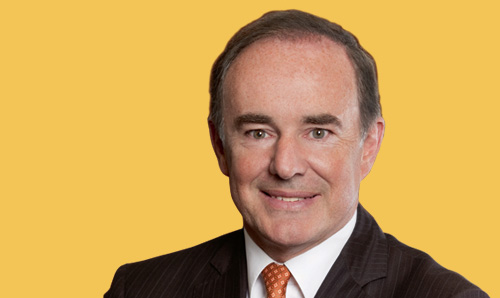
Jean Gabriel Pérès
President & CEO
Mövenpick Hotels & Resorts
You’ve helmed Mövenpick Hotels & Resorts for 13 years now. Few CEOs today stay that long with one group.
Yes, the longest-serving ones I can think of are Kurt Ritter (Rezidor Group president and CEO), Reto Wittwer (Kempinski Hotels CEO), Edouard Ettedgui (Mandarin Oriental Hotel Group CEO)…
What are the common links that make you and the others stay?
I think we’re seen as true hoteliers who are passionate about what we’re doing. My company is private (66.7 per cent Mövenpick Holding and 33.3 per cent Kingdom Group), so I’m able to develop a vision which my shareholders validate, and implement a strategy which they see materialising.
In a public-listed company, you are constrained and forced to do things you don’t like – analysts come in and say you must do this and that in the interest of the share price – whereas here I can do what I want and the board supports it. They can see that the company is changing dramatically over the years.
And how…
Yes, 15 years ago, we were in a limited number of countries – basically Switzerland, Germany and Egypt. Now we’re in 25 countries. We had 30 plus hotels. Now 73 plus, and more than 30 under construction so, by end 2015, we shall reach the 100th hotel (in operation) mark (80 per cent managed).
Our positioning has increased. Ten years ago, we were a mix of mid-market, four-star and some five-star hotels. Now all our hotels are upscale and upper upscale. That’s through attrition – around 15 hotels went out of the system as it didn’t make sense to keep them in the portfolio or they were in destinations which were not performing too well. Other hotels were renovated and we’re opening new hotels that make you dream a bit.
What did you see in Mövenpick and, in carving out a vision for it, what did you believe was the right thing to do?
I saw a golden nugget, a company with an amazing potential which was not tapped at all. And the right thing to do was to build on its fundamentals. It already had quite a few fantastic people and the roots of the brand were in F&B, authenticity and quality of service. As you know, Switzerland is the epitome of quality in the world. Three of the five top hotel schools in the world are here and the quality of service – be it in watches or chocolates, etc – is always top.
But I could see that I needed an infusion of talent coming from the five-star hotel business. This is the secret: take an upscale collection of hotels, infuse expertise from the five-star business and you get an absolute winner. Guests do not necessarily feel they are in a palace or a five-star luxury environment, yet they feel the touches of superior quality that you can only find in a five-star hotel.
It’s the same as in the automobile industry – look at Lexus, which is an infusion of luxury in a solid upscale brand, Toyota. Or Audi. When I lived in Hong Kong 15 years ago, I would never drive an Audi. They’ve infused technology and sober luxury such that it’s now one of the three most, if not the most successful automobile brands.
We’re going the same way. This is why Andreas Mattmüller (COO, Middle East and Asia) has been my accomplice for 25 years. We were with Méridien (Le Méridien Hotels & Resorts) together. He has vast knowledge of Asia and passion for food – he loves chocolates by the way. We have a lot of other people from five-star brands like Andreas (who was also with Mandarin Oriental) who have contributed, and are continuing to contribute, to our aim to be the finest player in the upscale hospitality business and we’re getting there.
“I’ve not seen too many brand creations which are amazing or significant by the hoteliers who created them.”
How is the timing right for upscale?
Basically, there are two groups of people today. One is from the emerging countries who start having access to luxury, but you know well that if you give them five-star immediately, you will miss your customer base. Their level of maturity is not yet ready for top luxury.
The other category is from old world Europe, where top bankers, until now, could afford or were allowed to stay at palaces for 500 euros (US$614) a night. Now their headquarters are saying, ‘please come down a bit’, so they seek affordable luxury and come to us. For the next five to 10 years, we’re at the crossroads of these two market segments, thus our strategy is spot on.
Another fantastic opportunity for us is that lending for new projects has become more difficult today. A lot of owners have realised that with Mövenpick, the development cost is half of what it would be for a luxury hotel but the difference in room rate is not half. So if a luxury charges 100 euros, we would be at 70-75 euros. Thus, owners and developers are also winners (not just customers).
But the upscale segment is always the trickiest to perfect, isn’t it? With luxury, you can throw money; with economy, you can standardise.
Yes, it looks simple, but it’s not that simple. Our aim to be the best upscale hospitality company in the world is to be proven. It will always be a goal; it can never be achieved.
It’s a question of brand differentiation and the need to be meaningful to guests, or risk the brand becoming a commodity. There are too many hotel brands which create too many sub-brands which people do not understand. We decided a long time ago to have just one brand, Mövenpick, so for us, no Royal Mövenpick, Grand Mövenpick or whatever.
My experience with branding – as you know, between Méridien and Mövenpick, I took care of a significant company in charge of luxury fashion distribution in Hong Kong and we had 120 brands such as Christian Lacroix, Christian Dior, Givenchy, etc – is that if you’re not able to fully differentiate your brand from the others, and give it a strong personality and character, then there is no need to create that brand.
Everyone – be it the guest, the hotel GM, the owner – needs to be able say in a few words what they would miss about your brand if it were to disappear one day. The problem – and the challenge for everyone is – what have come out so far are very artificial. All these brands are created by hoteliers who want to please themselves before pleasing the guests and who are trying to find artificial ways to charge a higher room rate.
Whatever you create must be extremely tangible, whether you decide to go one notch above or one notch under. I’ve not seen too many brand creations which are amazing or significant by the hoteliers who created them.
And so for you, you want Mövenpick to wow in the upscale segment through its Swiss heritage, quality service…?
Yes, Switzerland is loved by many people in the world. It has a positive perception. Switzerland means quality and to me it is one of the most peaceful countries in the world. Swiss quality means a lot more than French quality. I’m French – nothing wrong with French quality – but it’s a fact Swiss quality has more legs, while the French may be synonymous with wine, or the Italians with fashion.
“We have, globally, treated people with a lack of dignity. We’ve been constrained too much by SOP (standard operating procedure).”
Who do you think is doing a good job with upscale?
I don’t know – when you’re totally in love with your brand, you don’t think of the new girl on the block. We’re constantly working to be even better than we are. As you said, with luxury, there is less risk to become commoditised. In upscale, it needs a lot of passion, hard work, human intelligence and heart.
But to answer your question, overall, I think Hyatt (Hotels Corp) has done a good job as a focused, consistent hotel company. In the upscale, it’s difficult to say which names are making me dream a bit, that are sexy. Maybe Alila (Hotels & Resorts, created by Mark Edelson) – it has done pretty good stuff.
Your challenge was to reposition Mövenpick, which you’ve done successfully. What’s the next challenge?
The challenge, whatever you do, is always to find the right talent to carry the torch. The human factor is the alpha and omega of how successful your brand can be. And as we speak, we’re rolling out an internal programme which in my view will generate quite a special outcome in how we reveal the brand to our guests and deliver quality of service.
My GMs are special and, as a CEO, I don’t command them to do their best. I can only inspire them – and they their team – to do their best.
One of the ways is to for us to recognise that in each individual, there is a hidden talent which we need to bring out, so that it benefits the staff, guests and us. It could be something as simple as, say, in Ghana, where my GM recognised the staff had talent for rollerblading that he inspired them to serve around the pool in roller blades. The guests love it, the staff love it – everyone benefits.
We have, globally, treated people with a lack of dignity. We’ve been constrained too much by SOP (standard operating procedure).
For someone with a finance background, you sound more like a CEO from operations.
At heart I’m a hotelier, even though I graduated from business school and did not come from the ranks. I really am passionate about creating enjoyment for the guest through real service. I think it comes from the education my parents gave me and that I was born in a world of classical music. My family members were professional musicians; they were cellists, etc, and that has given me a sensitivity for and vibes about people and places.
That’s where my passion for hotels, hotel design, art, etc, comes from, as well as the recognition of how important it is to genuinely respect people. This includes the acknowledgement that the new generation doesn’t want to be intimidated by hotels or brands that are artificial, doesn’t want to be overwhelmed by super luxury that makes them feel dwarfed.
Do you play any musical instruments?
I used to play the piano. I wish I could open a piano, look at the score and start playing like a dream. It’s the one area that is unfulfilled in my life.
This article was first published in TTG Asia, July 13, 2012, on page 6. To read more, please view our digital edition or click here to subscribe.