TTG Asia
Asia/Singapore Friday, 19th June 2026
Page 2

COMO targets Thai luxury travellers to support European growth

0

COMO Hotels and Resorts is stepping up efforts to attract Thailand’s luxury outbound travellers as it expands its presence in Europe.

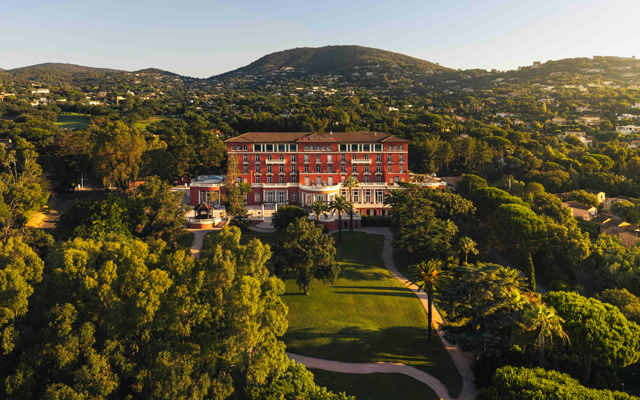
The strategy coincides with the launch of two new properties in France: COMO Le Beauvallon on the French Riviera and COMO Cordeillan-Bages in Bordeaux.
COMO Hotels and Resorts has reopened COMO Le Beauvallon, a historic French Riviera property that was once a celebrated Belle Époque palace; photo by COMO Hotels and Resorts

“Thailand has long been one of Asia’s most sophisticated luxury travel markets, with travellers who are globally minded, culturally curious, and increasingly seeking meaningful, experience-led journeys rather than purely transactional luxury,” said Doris Goh, executive vice president, commercial, at COMO Hotels and Resorts.

Goh said France continues to hold strong appeal for affluent Thai travellers, making the new openings well positioned to capture demand for travel centred on gastronomy, wine and heritage.

Alongside the new French properties, COMO said established European hotels such as COMO Castello Del Nero in Tuscany, COMO Alpina Dolomites and London’s COMO The Halkin continue to attract Thai guests seeking longer stays and wellness-focused escapes.

To strengthen its position in the market, COMO is shifting from a destination-focused sales model to a customer-centric regional structure.

“The Thai luxury traveller remains highly relationship-driven, with trust, familiarity, and personalised engagement carrying far greater influence than traditional mass-market advertising. The strategic priority is therefore not volume distribution, but precision distribution, reaching the right affluent traveller through trusted luxury channels,” Goh explained.

This restructuring involves redirecting selective marketing investments toward affluent outbound segments. Central to this strategy is the appointment of Bangkok-based Jocelyn Whiteside as global director of sales for Thailand and Hong Kong to deepen ties with bespoke travel advisors, DMCs, invitation-only communities, and luxury consortiums.

COMO is also transforming how it collaborates with local intermediaries.
Goh explained: “We are increasing direct engagement with affluent Thai travellers through intimate client events, wellness talks, chef collaborations, destination showcases, and exclusive experiences that bring the COMO lifestyle to life.

“In parallel, COMO is exploring collaborations with carefully selected Thai KOLs, celebrities, and tastemakers to deepen brand affinity through authentic storytelling and immersive experiences.”

She also highlighted the importance of priority access for DMC clients, and tailored storytelling content for Thai audiences.

“Thai luxury DMCs remain a critical gateway to the high-net-worth travel segment, given their strong influence over the end-to-end guest journey. As such, partnerships (with Thai luxury DMCs) should evolve beyond transactional contracting toward strategic collaboration,” added Goh, emphasising joint client events, familiarisation trips and co-created culinary or wellness itineraries.

Awaji Island welcomes farmstay villa concept

0

A new accommodation concept combining farm experiences with farm-to-table dining has opened on Awaji, the largest island in Japan’s Seto Inland Sea.

Farming Resort San San Villa comprises 11 villas, each with a different design and surrounded by small agricultural plots. The property sits next to Farmhouse Restaurant Haru San San, which serves breakfast and dinner using produce grown on its farm.

Farming Resort San San Villa combines accommodation, seasonal farming experiences and farm-to-table dining on Awaji Island; photo by Pasona Group

Both projects were developed by Pasona Group, which has been investing in regional revitalisation initiatives on Awaji Island since 2008.

Designed by architects from Japan and overseas, the villas are constructed using natural materials including wood, earth and straw. Guests can participate in seasonal farming activities ranging from sowing and cultivation to harvesting, with guidance from staff. Harvested produce can also be used to prepare items such as salads and herbal teas.

According to Pasona, the resort combines accommodation with hands-on agricultural experiences and opportunities to learn about sustainable food production.

The company expects the property to attract 15,000 visitors by the end of fiscal 2028.

Rates start from 44,770 yen (US$279) per person for a one-night stay that includes breakfast and a farming experience. Additional activities include dinner packages and horse-riding tours.

The villas accommodate between three and five guests, while the entire property is available for private buyouts.

The opening follows other recent investments by Pasona on Awaji Island, including the launch of Natural Circulation Winery in spring 2025. The winery offers tours and tastings featuring wines produced using organic farming methods.

Song Saa Private Island curates summer experiences for families

0

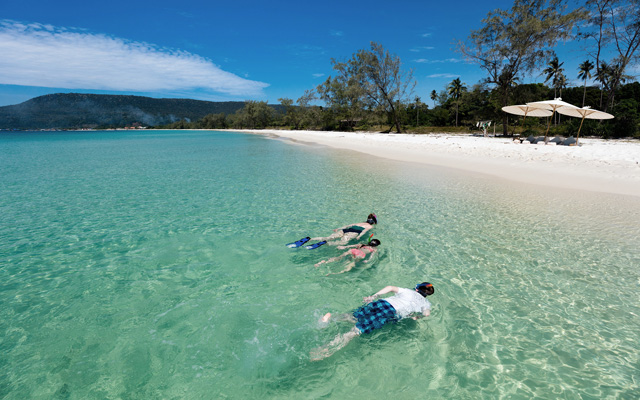
Song Saa Private Island is promoting a range of family-focused experiences this summer, combining outdoor activities, wellness programmes and nature-based learning in Cambodia’s Koh Rong Archipelago.

Located within a protected marine reserve, the resort offers activities for younger guests including treasure hunts, scavenger hunts and nature-themed discovery programmes. Families can also take part in children’s yoga sessions, mini pizza-making classes, board games and private in-villa movie nights.

Song Saa Private Island offers families a range of experiences this summer, such as snorkelling within the marine reserve

Guests seeking a deeper connection with the local environment can join guided nature walks, community visits organised through the Song Saa Foundation, and traditional monk blessing experiences.

The resort is also highlighting its botanical and wellness activities, including guided walks with the resident botanist, botanical afternoon teas, art workshops and herbarium experiences focused on native plants and traditional wellness practices.

Additional experiences include forest foraging excursions and bioluminescence trips, where guests can observe glowing plankton in the waters surrounding the island.

Set in the Koh Rong Archipelago, Song Saa Private Island is positioning the programme as a summer escape for multi-generational travellers seeking a mix of relaxation, nature and shared experiences.

For more information, visit Song Saa Private Island.

Tourism’s role beyond politics

0

What are the core themes of MTF 2026 and how were they identified in response to current regional tourism trends?

The theme of MTF 2026 is Tourism for People, Travel with Purpose. It reflects a growing shift in tourism towards more meaningful, responsible and experience-driven travel. Beyond visitor numbers, we want to focus on how tourism can support local livelihoods, preserve living culture, create opportunities for communities, and strengthen connections between people and places.

The programme was designed around these priorities, while also addressing current industry topics, such as inclusion, community-based tourism, connectivity, workforce development and destination marketing.

What is the positive impact of hosting MTF in Myanmar for the local tourism sector and for broader regional cooperation within the Greater Mekong Subregion (GMS)?
For Myanmar, we hope MTF can shine a spotlight on the people behind tourism – communities, guides, artisans, small businesses and hospitality workers whose livelihoods depend on the sector.

For GMS, hosting MTF in Yangon helps keep regional dialogue, professional exchange and cooperation moving forward. Tourism has always been built on people-to-people connections, and we believe destinations facing challenges should remain part of the regional conversation rather than be left behind.

How are you addressing concerns from industry stakeholders who may be hesitant or considering boycotting the event due to Myanmar’s political situation?
We understand these concerns and respect that different organisations may make different decisions. From MTCO’s perspective, MTF is a tourism cooperation platform, not a political one. Our focus is on dialogue, professional exchange and the people whose livelihoods depend on tourism.

We believe it’s possible to acknowledge the challenges while still supporting responsible engagement that benefits local communities, small businesses, workers and cultural practitioners. Ultimately, our focus is on people, livelihoods, culture and meaningful exchange.

How can tourism platforms like MTF serve as a bridge for dialogue, livelihoods and people-to-people connection in times of political tension?
Tourism cannot solve political challenges, but it can help maintain dialogue and connections between people. One of the strengths of platforms like MTF is that they bring together tourism stakeholders from different countries, sectors and backgrounds to exchange ideas, share experiences, and learn from one another.

In times of uncertainty, these professional and personal connections become even more important. They help build trust, encourage understanding and keep channels of cooperation open. In that sense, tourism can continue to play a valuable bridging role, even when broader circumstances are challenging.

How important is it for the regional tourism industry to maintain engagement with destinations facing challenges?
Regional tourism cooperation is important in normal times, but it becomes even more important when some destinations are facing challenges. Through regional platforms and joint initiatives, member countries can continue to benefit from knowledge sharing, capacity building, destination marketing and professional exchange.

Maintaining engagement doesn’t mean ignoring challenges. It means staying connected, supporting one another and finding practical ways to strengthen tourism resilience. In the Mekong region, our countries are closely linked, and cooperation helps ensure that no destination faces challenges entirely on its own.

How would you define success at this year’s MTF?
Delegates leaving Yangon with new ideas, stronger professional connections and a deeper understanding of how tourism can create a positive impact for local people. I also hope participants will be inspired by the diversity of voices featured at MTF, from community tourism practitioners and social entrepreneurs to youth representatives, disability inclusion advocates, women leaders and experts from across the Mekong region.

If delegates leave with a greater appreciation of the people, cultures and tourism realities of Myanmar and the wider Mekong region, I would consider that a meaningful success.

What key outcomes or commitments are you hoping attendees will take away?
I hope delegates leave with practical ideas they can apply in their own destinations. This could be a new approach to destination marketing, a stronger understanding of changing traveller behaviour, a fresh perspective on community-based tourism, or new ways to support inclusion and living culture through tourism.

I also hope the forum encourages more collaboration across sectors and borders. Ultimately, success would be if participants leave not only inspired, but with concrete ideas, partnerships or actions they can take forward after returning home.

TAT leverages AI and visual content to strengthen Thailand’s appeal in China

0

The Tourism Authority of Thailand (TAT) is using digital marketing initiatives and visual destination campaigns to strengthen consumer confidence and drive demand from the Chinese outbound market.

Following the spread of safety-related rumours on Chinese social media, TAT has stepped up efforts to address negative perceptions and reinforce confidence in Thailand as a tourism destination.

Nong Mali, TAT’s AI influencer, features in the promotional video Thailand Summer by Lydia, highlighting destinations including Bangkok’s Chinatown; photo by TAT

Siriketanong Trairattanasongphol, director of the East Asia region at TAT, said restoring confidence requires close monitoring and a rapid response to public concerns.

“Our primary strategy is meticulous media monitoring. When we encounter fabricated stories, we immediately clarify the situation to the public. For legitimate incidents, we coordinate swiftly with relevant law enforcement agencies to reach a resolution,” Siriketanong said.

Pattaraanong Na Chiang Mai, deputy governor for international marketing, Asia and South Pacific, said TAT is focused on communicating that Thailand remains a safe destination for visitors.

“We must clearly communicate that tourists are not the targets of bad actors. While visitors should exercise standard caution, Thailand is secure for leisure travel,” she said.

Pattaraanong noted that the Chinese market has performed strongly this year, with arrivals during the first five months tracking at an estimated recovery rate of 18 to 19 per cent. TAT remains on course to achieve its target of 6.7 million Chinese arrivals in 2026.

To support its marketing efforts, TAT has partnered with China Media Group (CMG) to utilise digital tools and platforms.

“To effectively counter negative perceptions, we introduced an AI influencer named Nong Mali. This digital ambassador, launched in December 2025, allows us to proactively broadcast engaging narratives directly to Chinese consumers,” Pattaraanong explained.

TAT is also developing tourism products that align with the content-sharing habits of younger Chinese travellers, with a focus on destinations that perform well on social media.

“We recently brought Chinese agents to survey the Red Lotus Sea in Udon Thani and immediately recognised its immense appeal for this market. Chinese tourists are driven by visual aesthetics and highly value unique photo opportunities,” Pattaraanong said, adding that the experience of “sitting on a boat wearing beautiful dresses provides the exact type of stunning visual content that Chinese girls actively seek”.

The tourism board is promoting such destinations through initiatives including charter flights linking Udon Thani with the Chinese cities of Yiwu and Wuxi.

Pattaraanong stated TAT’s long-term objective is to convert first-time visitors into repeat travellers.

“Ultimately, our objective is to ensure that every visitor departs with exceptional experiences. We want them to retain those positive memories, encouraging them to travel to Thailand again in the future,” Pattaraanong concluded.

Japan rail and airline partnerships aim to spread visitor demand

0

Japan’s rail operators and major airlines are joining forces to encourage international visitors to explore destinations beyond the country’s main tourism hubs.

JR West has launched two partnerships, one with Japan Airlines (JAL) and another with All Nippon Airways, to provide international travellers with easier access to domestic air and rail services through integrated booking systems and regional tourism information.

Japanese rail operators and airlines are collaborating to encourage international visitors to explore destinations beyond the country’s major tourism hubs; photo by Kathryn Wortley

“By seamlessly connecting international airports (Haneda, Narita and Kansai) with domestic flights and railway networks, we aim to expand inbound tourism to the West Japan area and alleviate overtourism in specific regions, thereby extending the length of stay across the entire area and achieving sustainable economic ripple effects,” JAL and JR West said in a joint statement.

The partners expect the integration of their reservation and payment systems to be completed during the 2030s, allowing travellers to book both air and rail journeys through a single platform.

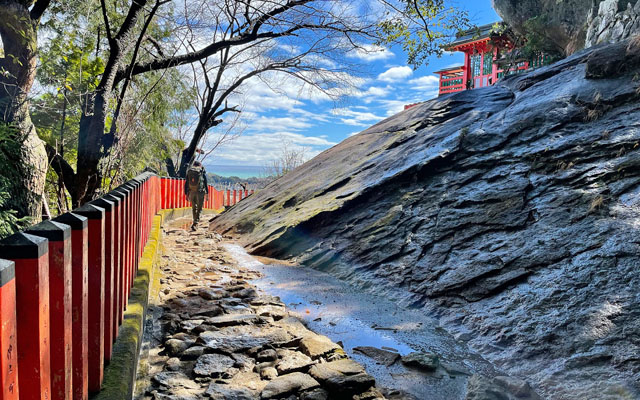
In the current fiscal year, which runs from April 2026 to March 2027, JR West and JAL will begin joint initiatives in Wakayama. These include linking domestic flights serving Nanki-Shirahama Airport with regional rail passes, making it easier for visitors to explore the prefecture by train.

Selected Kuroshio express train services between Kyoto, Osaka and Wakayama will also feature cabin crew providing information on local attractions and food experiences.

Elsewhere, JR East and JAL have signed an agreement to promote multi-destination travel in eastern Japan. The initiative encourages travellers to combine domestic flights and Shinkansen services within a single itinerary.

Travel agency JTB is supporting the programme by developing and selling tours that incorporate flexible transport options. The partners are also working with local governments and businesses to create tourism experiences in eastern Japan.

Kaohsiung rolls out new tourism brand across Asian markets

0

The Kaohsiung City Government Tourism Bureau has launched a new international tourism brand, Keep Vibrant Kaohsiung, as part of a regional marketing campaign targeting key Asian markets.

The campaign is being promoted in Japan, South Korea, Vietnam and Malaysia through outdoor advertising and destination marketing activities designed to raise awareness of Taiwan’s southern city among international travellers.

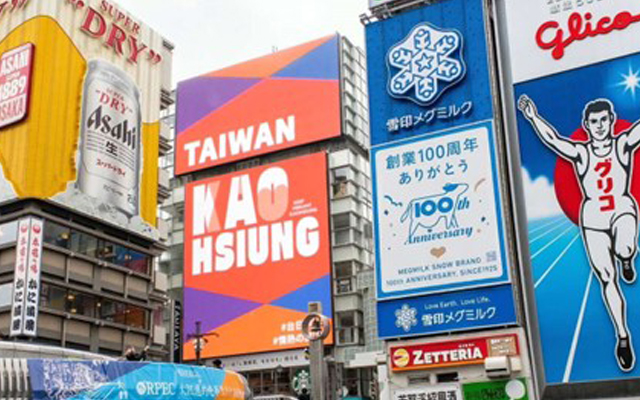
The Keep Vibrant Kaohsiung campaign is being promoted in Japan, South Korea, Vietnam and Malaysia

According to the Tourism Bureau, the campaign has an estimated annual reach of 28 million people through placements at locations including Dotonbori in Osaka, Seomyeon Station in Busan, The Café Apartments in Ho Chi Minh City and shopping districts in Kuala Lumpur.

The new brand identity incorporates three colours representing different aspects of the city: blue for its maritime heritage, orange for local hospitality and purple for creativity and technology.

To support the campaign, the bureau has produced a series of promotional videos featuring itineraries tailored to different traveller segments, including backpackers, honeymooners and Muslim families. Attractions highlighted include Cijin, Weiwuying National Kaohsiung Center for the Arts, Lotus Pond and Fo Guang Shan.

The bureau said the campaign aims to showcase Kaohsiung’s combination of natural attractions, cultural experiences and urban development.

Kao Min-lin, director-general of the Kaohsiung City Government Tourism Bureau, shared that the city’s combination of mountains, sea, rivers and harbours, together with its multicultural character and urban development, offers visitors a distinctive travel experience.

Singapore Cruise Centre shifts operations to new HarbourFront terminal

0

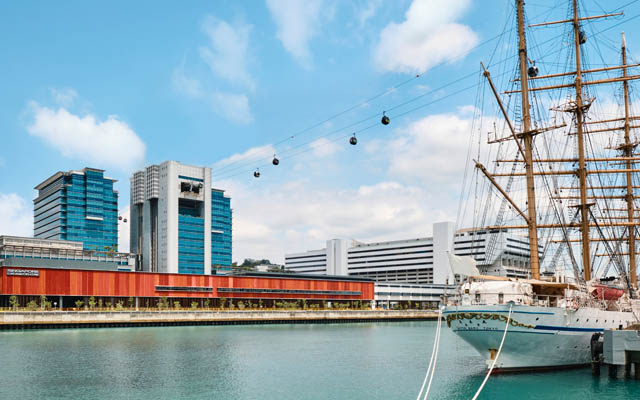
Singapore Cruise Centre (SCC) will relocate all ferry and cruise operations to its new Singapore Cruise Centre (HarbourFront) terminal in July 2026.

The transition will take place in two phases. Batam Fast Ferry will begin operating from the new terminal on July 7, while Horizon Fast Ferry, Majestic Fast Ferry, Sindo Ferry, Indo Falcon Shipping & Travel and all cruise operations will relocate from July 15.

Ferry and cruise services will move to the new Singapore Cruise Centre (HarbourFront) terminal in two phases this July

According to SCC, there will be no changes to existing ferry routes, destinations or schedules. Services to Batam Centre, Harbour Bay, Sekupang, Tanjung Balai (Karimun), Gold Coast and Nirup Island will continue as normal, while berth locations will remain unchanged.

The new terminal will remain connected to HarbourFront MRT Station, VivoCity and surrounding transport links through existing public transport services and sheltered walkways.

SCC said the terminal features upgraded infrastructure and technology-enabled services designed to improve the passenger experience. Food and beverage outlets, convenience retail services and money changers will also be available within the terminal.

Further details on the terminal’s facilities and amenities will be released at its official opening later this year.

Jacqueline Tan, CEO of Singapore Cruise Centre, said: “Regional travel continues to play an important role in how people connect and conduct business across the region.

“The new Singapore Cruise Centre (HarbourFront) terminal is an opportunity to upgrade the passenger experience and is a reflection of our commitment towards delivering a seamless and efficient travel experience.”

IHG grows India portfolio with Mandi hotel project

0

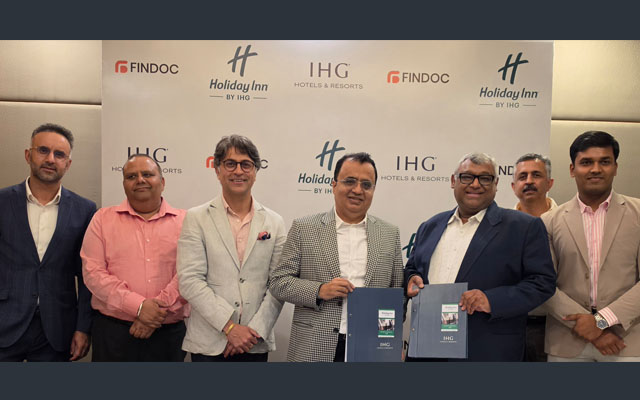
IHG Hotels & Resorts has signed a management agreement with Mac View Infrabiz to develop Holiday Inn Mandi in the Indian state of Himachal Pradesh.

The 100-room hotel will expand IHG’s presence in northern India and strengthen its Holiday Inn portfolio in the country.

Holiday Inn Mandi is expected to strengthen hospitality offerings in one of Himachal Pradesh’s emerging travel markets

Located in Mandi on the Chandigarh-Manali corridor, the hotel is positioned to serve business, leisure and transit travellers travelling between the National Capital Region and key destinations in Himachal Pradesh. The city also serves as an administrative and commercial centre for the region.

The property will feature 100 guestrooms and suites, three food and beverage outlets, and meeting and event facilities including a ballroom.

According to IHG, the project forms part of its strategy to expand in emerging commercial and transit markets supported by growing travel demand and infrastructure development.

Across the country, IHG has 52 operating hotels under seven brands, including Six Senses, InterContinental, Vignette Collection, Crowne Plaza, voco, Holiday Inn Resort and Holiday Inn Express. The company also has 98 hotels in development.

Sudeep Jain, managing director, South West Asia, IHG Hotels & Resorts, said: “We continue to see strong opportunities to expand our presence across emerging destinations in India, supported by improving infrastructure and growing travel demand.

“The signing of Holiday Inn Mandi marks an important step in strengthening our footprint in Himachal Pradesh, as we bring globally recognised brands to high-potential commercial and transit markets.”

Wyndham Hua Hin Pranburi pairs stays with nature and wellness experiences

0

Wyndham Hua Hin Pranburi Resort & Villas has launched the Pranburi Green Retreat package, combining accommodation with a choice of complimentary nature, wellness or dining experiences.

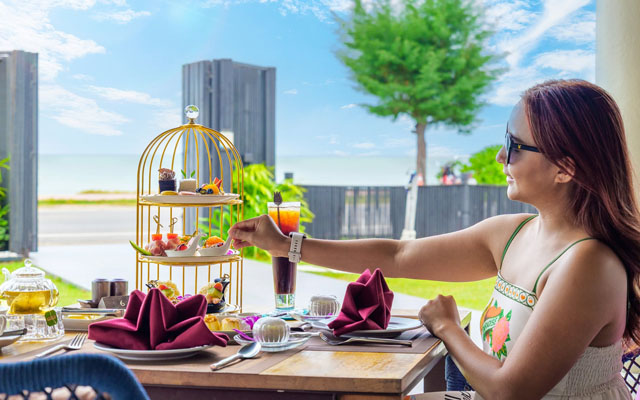
Guests booking a minimum two-night stay can select one experience, including a boat excursion to the “Kissing Rock” formation in Khao Sam Roi Yot National Park, a seaside massage for two at Blue Lotus Spa, or afternoon tea for two.

Guests booking Wyndham Hua Hin Pranburi’s Green Retreat package can choose from a boat trip to Kissing Rock, a spa treatment or afternoon tea as part of their stay

Available for bookings and stays until June 30, 2026, the package is priced from 2,880 baht (US$89) per night and includes daily breakfast for two.

The resort is also offering a “third person stays free” benefit, including complimentary breakfast, making the package suitable for families and small groups.

Located 25km from Hua Hin, the resort features tennis courts, swimming pools, a fitness centre, basketball court, surf skate park, archery range, beach volleyball and pickleball courts, a kids’ club and complimentary bicycle rentals.

For more information, visit Wyndham Hua Hin Pranburi Resort & Villas.