TTG Asia
Asia/Singapore Thursday, 27th August 2026
Page 2

Mövenpick Resort & Spa Bintan Lagoon targets longer stays, MICE market

0

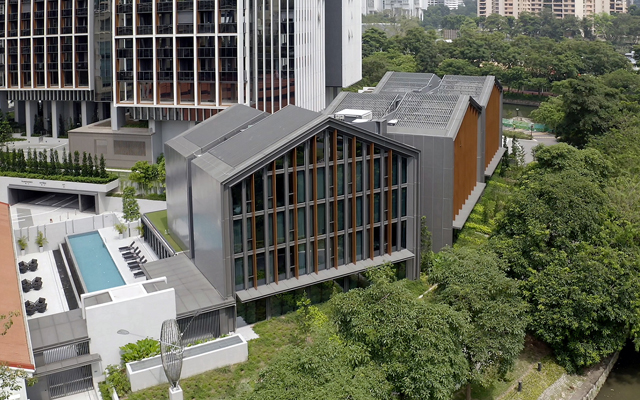
Mövenpick Resort & Spa Bintan Lagoon has opened following the redevelopment of the former Bintan Lagoon Resort, and will pursue both the leisure travel and business events segments.

The property features 408 rooms and suites, six dining concepts, two 18-hole golf courses, and more than 2,000m² of meeting space.

Margo hopes Bintan will evolve from a short-break destination into an established regional leisure and events hub that encourages longer stays and repeat visits

“Bintan has long been a favourite shorthaul destination for Singaporeans, offering an easy beach escape just over an hour away by ferry. We saw an opportunity to bring Mövenpick’s warm, family-friendly hospitality to a destination with strong leisure appeal, while contributing to Bintan’s continued growth as a leading regional resort destination,” said Richard Margo, general manager of Mövenpick Resort & Spa Bintan Lagoon.

Booking patterns show Singapore is the primary source market, with demand driven by weekend leisure traffic and multi-generational family groups. The property is also recording bookings from corporate meetings and incentive travel.

To build trade distribution, the resort works with travel agents, tour operators, and regional tourism body Bintan Resort Cakrawala. Outside Singapore, trade focus covers longhaul and regional markets, including Australia, Japan, South Korea, China, India, and Europe, leveraging Accor’s international distribution network.

“We work closely with travel agents and tour operators, with Singapore as our key focus market given its strong connectivity and importance to Bintan. We also work closely with Bintan Resort Cakrawala on joint trade initiatives and tradeshows, helping to collectively promote Bintan as a destination and drive awareness of the resort,” Margo said.

The strategy aims to increase the average length of stay from two-night weekend visits to three- or four-night itineraries through structured family and well-being programmes, as well as MICE packages combining corporate meetings with leisure facilities.

“By offering greater variety across different days and times of the day, we can encourage guests to consider a three- or four-night stay rather than seeing Bintan solely as a weekend destination. Our evolving programme also gives guests new reasons to return and experience the resort differently on each visit,” he added.

Singapore acts as the main transport gateway for the destination, providing ferry connections for regional residents and transiting international longhaul travellers.

Margo noted: “Singapore remains Bintan’s key gateway, supported by established ferry connectivity and its position as a major regional travel hub. It is by far Bintan’s largest international revenue market, reflecting strong demand across leisure, corporate and MICE travel.”

Destination infrastructure in Bintan is set to expand, supported by project developments including a planned convention centre in Lagoi expected within three years.

“Bintan has the opportunity to evolve from a destination primarily associated with short-breaks into a more established regional leisure and events destination – one that encourages longer stays and repeat visits. The planned convention centre in Lagoi will be an important part of this evolution,” Margo concluded.

How would an AI-powered journey really look and feel?

0

Ask a traveller here in Asia-Pacific how they feel about letting AI help plan their next holiday, and the answer today is very different from the one you would have heard a couple of years ago. Curiosity has quietly become habit.

That tallies with what we are seeing at Amadeus. In a recent study, we found that 40 per cent of travellers are open to AI booking travel for them, similar numbers welcome its ideas on where to go, and more than half want its recommendations on where to eat once they arrive. And it is not only travellers leaning in – our latest report on Agentic AI shows airlines around the world are already weaving the technology into retailing, servicing and behind-the-scenes work such as revenue management, with the technology presenting strong use cases across various functions.

So, the appetite is clearly there. The more interesting question for airlines is not what AI can automate, but how it changes the passenger experience at every stage of the journey. Where can we add real value along the way? Let me walk you through one.

Inspiration
Imagine scrolling through social media one evening and an island catches your eye – turquoise water, a quiet beach, exactly the kind of escape you have been daydreaming about. You tap the image and you’re provided with a handful of ways to get there, each one bookable in a click. You are not ready to commit tonight, but the idea lodges itself in the back of your mind.

Planning and booking
A week later you still can’t shake that idea. So, rather than consulting a number of different websites, you provide an overview of what you have in mind to an AI assistant:

“Plan us a week-long family trip during the school holidays to an island in Thailand – temperatures above 30°C, with some cultural things to do. Our son is nine and our daughter six, and they both love the water. I am a keen scuba diver. Our budget is modest, and we would prefer to fly to and from Tokyo.”

Within moments, the assistant suggests a tailored destination and lays out a complete itinerary, a suitable hotel, activities the whole family can enjoy, and flight options to match. You book a flight connecting through a regional hub natively within the same interface – from the airline, not the AI company.

In making the booking, you notice the recommended hotel sits right beside one of the island’s largest reefs, which is perfect for diving. You book it all through the airline without ever leaving the chat; the assistant sends a secure payment link, and you settle up with Apple Pay.

Pre-trip servicing and destination recommendations
A few weeks on, life happens. A friend’s birthday means you need to shift your dates, a change that used to mean an afternoon lost on hold trying to speak to a customer service agent. This time you call the airline and, instead of a queue, an AI voice agent picks up straight away. A short conversation later, it lays out your options, you choose one, and it rebooks the flights and hotel and initiates payment for the difference in cost.

Three weeks before you fly, the airline’s AI assistant invites you to start planning what to do once you are there. You browse a few options near your hotel, then chat your way to adding a scuba session and a boat trip to a neighbouring island.

On the day – journey management
It’s departure day, and the airport is heaving. The good news is the operations team saw it coming: their AI has been watching transport data and opened every self-service bag drop they have. Even so, the traffic was heavy and you are cutting it fine.

Bags dropped, you clear the biometric gates and make a dash for the gate. If that part sounds like science fiction, it is not; it is already happening on our doorstep. Since late 2024, Changi Airport in Singapore has let travellers clear immigration on facial and iris recognition alone, no passport in hand, trimming the average clearance from 25 seconds to 10. As someone who travels frequently out of Singapore, I have seen first-hand how quickly this has become part of the everyday airport experience. And Changi is not an outlier. A growing number of airports across the region are increasingly adopting biometric technology to make the journey faster, more seamless and less dependent on physical documents.

Back to our story: the gate agent was alerted the moment you cleared security and has held the gate open for you.

The whole family makes it aboard, but a delay on the tarmac leaves you with a tight flight connection ahead. It is now that you appreciate being seated right by the door. That was not luck: your airline’s AI noticed the short connection and seated you there on purpose.

You land, and your bag does not. Before you have even reached the Lost & Found desk, you receive a notification from the airline’s app:

“We are sorry – your bag has been mishandled. Don’t worry, we will have it at your hotel by 17.00 today, and we have upgraded your return flight for the inconvenience.”

While you wait, the assistant checks in again:

“Looks like you need to get from the airport to your hotel; it is about 10km. Shall I arrange a transfer?”

“Yes please, the first option is fine.”

“Booked. Head to the pick-up point, directions below.”

And once you are home, the assistant is back in touch but not to sell you something. Simply to ask whether you enjoyed the trip, and to offer complimentary lounge access to make up for the luggage delay. You accept and opt in to the occasional AI-curated suggestion for where to go next.

Where we come in – helping the industry orchestrate the journey
By all accounts, this trip was not smooth. There were changes, rebooking and a fair bit of disruption along the way. Today, those moments are exactly the ones that test a traveller’s patiently – the long holds, the repeated explanations, and the hours that disappear. AI has become superb at addressing these challenges and providing recommendations. Increasingly, we are seeing travellers turn to AI more actively, and that enthusiasm sometimes raises real questions of cost efficiency and accuracy, the two things that ultimately determine whether they can trust what they are told.

A friend of mine was recently pointed to a restaurant by an AI assistant, only to turn up and find it had closed down. That gap is exactly where a platform like Amadeus adds value, making sure the information behind each recommendation is accurate and up to date. None of this replaces the warmth of good service, it protects it.

The future of travel will not be defined by AI alone, but by how well the industry applies it to create journeys that are more connected, intuitive and trusted. Trust is everything for the customer, and I believe nowhere has the appetite to build that future clearer, or closer, than here in Asia-Pacific.

Gardens by the Bay launches Egyptian-themed Lilytopia floral display

0

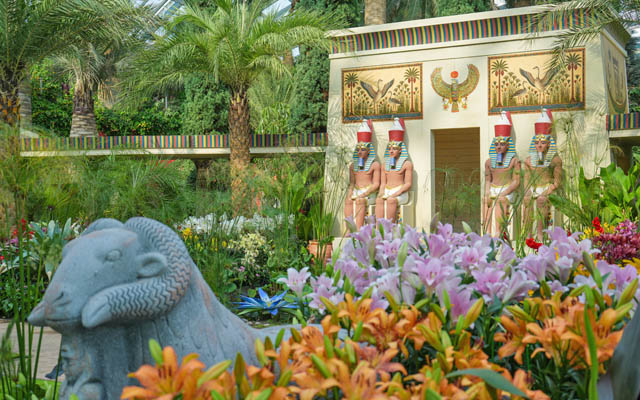
Gardens by the Bay has launched Lilytopia, its first Egyptian-themed floral display, running in the Flower Dome until September 27, 2026. Presented in collaboration with the Embassy of the Arab Republic of Egypt in Singapore, the event marks 60 years of diplomatic relations between the two countries.

The display features more than 7,000 lilies across 46 species and varieties, including garden lilies, the Egyptian blue waterlily, and giant Victoria waterlilies grown in-house by the horticultural team.

Lilytopia, Gardens by the Bay’s first Egyptian-themed display, features 7,000 lilies alongside architectural recreations of ancient Egyptian temples

At the centre of the display is a recreated formal ancient Egyptian garden featuring a central pond. The layout includes plant varieties such as papyrus, ginger, and pomegranate, along with new lily cultivars making their debut, including Lilium Tiny Massive, Lilium Tropical Dragon, and Lilium White Triumph.

Architectural structures include a 4.5-metre-tall façade modelled after the Great Temple of Abu Simbel, painted hieroglyphs inspired by the Temple of Hathor at Dendera, deity statues, a solar barque, and traditional irrigation tools such as the shaduf and Archimedes screw.

Visitors to the Flower Dome can collect a complimentary air plant until August 25, subject to availability. Admission charges apply, and the display is open daily from 09.00 to 21.00.

For more information, visit Gardens by the Bay.

Germany revives South-east Asian tourism presence with Singapore office

0

The German National Tourist Board (GNTB) has reopened its tourism office in Singapore to enhance destination presence and trade relationships around South-east Asia, as it recognises the long-term value of the region for Germany.

Petra Hedorfer, CEO of GNTB, told TTG Asia that as global travel flows shift, Asia-Pacific is becoming an increasingly important source market in global tourism.

Hedorfer (left) aims to showcase Germany’s natural and cultural attractions to high-spending travellers across South-east Asia, alongside sights like Berchtesgaden (right); photos by DZT/Farideh Diehl; DZT/Francesco Carovillano

Hedorfer pointed out that GNTB has long recognised the importance of Asia-Pacific, having made its first move into the region a decade ago with a sales agency in Singapore. Within a few short years, the office was able to establish strong regional networks and achieve significant increases in overnight stays.

However, the office was terminated in 2020 during the height of the Covid-19 pandemic.

The revival of the office is timely now as South-east Asia has “regained a strategic long-term growth” prospect for Germany.

According to the Federal Statistic Office of Germany, South-east Asia accounted for 1.73 million overnight stays in the country in 2025. The five priority markets of Singapore, Indonesia, Thailand, Malaysia and Vietnam have all recorded an increase in the number of trips to Germany, with Vietnam showing the biggest improvement (up 12.1 per cent between 2023 and 2025).

Travellers from the region spent 1.34 billion euros (US$1.56 billion) in the same year, according to IPK International. Singapore accounted for the largest share at 400 million euros, followed by Thailand and Indonesia at 300 million euros each, Malaysia at 200 million euros, and Vietnam at 100 million euros.

“A substantial share of this supports German tourism businesses – hotels, restaurants and the retail sector. With an average stay of 10.4 nights, visitors from the region also rank above average by international comparison,” detailed Hedorfer.

The South-east Asia office will strategically develop the five priority markets, and recognises that each is uniquely different.

“Singapore, for example, is a premium market with strong spending power. Malaysia shows very good potential, with visa-free travel and high daily spending. Thailand and Vietnam are seeing growing demand for leisure travel, while Indonesia offers significant long-term potential because of the size of its population,” she explained.

Hedorfer regards the reopening of the office as a crucial move in today’s volatile geopolitical landscape, as the team is able to “show our presence, build personal relationships, and nurture networks”.

“Personal encounters are key factors not only to peaceful cultural exchange, but also to stable economic relations,” she opined.

The office will activate a digital strategy, adopting coordinated B2C communications to support the travel industry. Global campaigns will consistently leverage the strengths of the destination brand to inspire travellers to choose Germany.

“From a competitive point of view, Germany is already in a strong position. In 2025, Germany ranked second among European destinations for Singapore, Thailand and Vietnam, and fourth for Indonesia and Malaysia,” she said.

Hedorfer noted that several travel trends today are advantageous for Germany. One of that is South-east Asian travellers’ move away from “classic sightseeing”.

“They want experiences that feel meaningful and authentic – historic cities, UNESCO World Heritage Sites, castles, festivals, local neighbourhoods, food culture and scenic routes. That fits Germany extremely well and connects closely with our Germany Simply Inspiring brand narrative, which presents Germany as a high-quality, service-oriented and very diverse travel destination,” she said.

The GNTB’s 2026 campaign, Next Stop: Travel Destination Germany, builds on the strong experiential travel trend by highlighting Germany’s urban diversity across both major cities and smaller towns, and focusing on authentic encounters, creative neighbourhoods, local markets, and living culture.

The GNTB’s Culinary Germany campaign taps into South-east Asian travellers’ love for food by positioning Germany as a diverse culinary destination, featuring regional specialities, seasonal produce, wine, beer, bread culture, weekly markets, festivals, and Michelin-starred cuisine.

Hedorfer is confident that her destination’s “extraordinary diversity” as well as hospitality will appeal to travellers from South-east Asia.

Bromo Tengger Semeru National Park reopens following wildfire closure

0

Bromo Tengger Semeru National Park has welcomed back visitors after a fire burned around 1,120 hectares of forest and land, ending a temporary closure of the popular destination in East Java.

The fire started on August 3 and spread across parts of the park for around 13 days. The area was closed while firefighters, park officers and local authorities extinguished the blaze, with cooling operations, safety checks and monitoring conducted prior to reopening.

Seruni Point served as an alternative sunrise viewing spot during the 13-day wildfire closure of Bromo Tengger Semeru National Park, which has now fully reopened to visitors

Following the reopening, tourism activities have resumed with a daily quota of 2,752 visitors. Online bookings can be made via the official park website.

During the closure, tour operators reported no booking cancellations, though itineraries were adjusted for travellers already on site.

Adjie Wahjono, operations manager of Aneka Kartika Tours and Travel Services, said alternative arrangements were made during the shutdown.

“Sunrise tours could still be run from Seruni Point by 4WD jeep depending on access restrictions and the latest conditions,” Adjie said.

Other alternative activities included visits to Lumbang Village to experience local community life, as well as trips to Madakaripura Waterfall. Adjie added that Bromo can now be fully integrated back into upcoming itineraries.

Park authorities have reminded visitors to follow safety guidelines and help protect the environment as tourism resumes.

“The reopening of the area for tourism still requires visitors to follow all regulations and directions from officers in the field, as well as maintain cleanliness and conservation,” said Rudijanta Tjahja Nugraha, head of the Bromo Tengger Semeru National Park Agency, adding that visitors must not smoke, light fires, or engage in any activity that could trigger a blaze, and urged anyone who sees smoke or signs of fire to report it to officers immediately.

Orchestrated growth

0

What do you see are Wyndham’s biggest growth opportunities over the next five years, and what strategic priorities will be key to capturing them?
I’ll start by saying that we are blessed because we are working in a very dynamic, fast-growth region. In Asia-Pacific, where the GDP has been growing about five per cent on an aggregated basis, the travel and tourism industry is forecasted to continue growing at about four per cent.

However, there are more than 20 different markets and territories in this region. Each market and territory is at different stages of growth. Yet, the beauty is the diversity of the market, and that has created a lot of opportunities for us.

We have signed more than 500 direct franchise and managed hotels over the past few years, and are on a strong trajectory of growth.

With regards to the sort of strategies in terms of moving forward, I’ll answer this question from two dimensions.

To grow the supply side, we need an arsenal of different strategies to deal with the different markets across Asia-Pacific. In Australia and New Zealand, there are predominantly conversion opportunities while in Vietnam we see many new builds. Singapore, given the land scarcity, presents more conversions and asset repositioning than new builds.

There is a common denominator among our different strategies. One, we are a leader in franchising; we have been doing it for many years in this part of the world, and we truly understand what it takes to do franchising.

Two, we have a collection of 25 iconic brands around the world. In this part of the world, about 19 have been deployed, and they range from upper-upscale luxury to extended stay.

Three, we bring the Wyndham Advantage, which is a collection of sales programmes, loyalty activities, digital marketing, digital distribution, and many other commercial tools that allow a franchisee to tap into our system to gain revenue.

Four, our business philosophy puts owners first.

Now, to grow the demand side, we recognise the complexity of consumers and that consumers have evolved rapidly. People used to travel and stay in hotels. Now, they are looking for experiences, which is more than simply seeing an attraction. People are also travelling in different ways – with immediate and extended family, with friends, alone, or as a leisure extension of their business trip. Furthermore, every source market in this region is different too.

So, we make sure that we are relevant to every traveller type. We want Wyndham to be the lifestyle companion of every guest on each of their journeys. Under the leadership of Eyvonne Lin (vice president of marketing and commercial performance, Asia Pacific), Wyndham has forged a lot of partnerships for our Wyndham Rewards loyalty programme that result in activities to enrich the travel experiences of our guests.

Wyndham offers both the franchise model and the management model. How do you determine which model is ideal for a specific owner?
First of all, we advocate franchising, because to us, it is the more cost economical model for the owner. Basically, the owner runs the operations as the game fits while still enjoying access to the Wyndham Advantage.

However, some owners may lack the experience to run the hotel themselves, and would therefore like us to manage it for them.

If you look across the markets, there are a lot of competitors who are very focused on management, and they push for that whether or not the owner wants it. But for us, we listen to what the owners want.

Does the franchise model work in Singapore, where it is a struggle to find the right people to run hotels? Would it be easier for the owner to leave hotel management to the experts and they just deal with the real estate?
Good question. I look at the labour issue this way: it is not a problem unique to Singapore. With all franchising, we look at the owner’s experience in hotel management. In the case of Singapore, owners here have extensive experience and so the franchising model works for them.

Now, on talent acquisition, we face the same tight market. If we are managing, we are responsible to hire. In a franchise arrangement, the owner is responsible. But that doesn’t mean we walk away and say, “your problem, not mine”. If the owner fails to hire, service will be impacted, our brand will be impacted. So, we still do provide support in talent acquisition.

What does Wyndham’s current and upcoming Singapore portfolio look like, and how does Singapore function as a hub for the group’s broader Asia-Pacific strategy?
Singapore is a vital market for Wyndham in Asia-Pacific, serving both as a premier global business hub and one of the region’s most connected travel gateways.

Our portfolio in Singapore spans a healthy cross-section of the market, catering to diverse traveller needs. At the upscale end, Wyndham Singapore Hotel caters to business, leisure, and MICE guests seeking prime city accommodation. Hotel Traveltine Downtown Singapore, Trademark Collection by Wyndham, offers a distinct lifestyle experience, while Days Inn by Wyndham Singapore Novena delivers trusted, value-driven comfort for practical travellers.

We hope to announce new developments in the near future, but our priority is always quality and sustainable growth over rapid, unchecked expansion. Every new property we introduce must enhance our overall brand awareness and bring tangible value back to our existing owners, rather than diluting the market.

Beyond hotels, Singapore functions as a critical hub for regional innovation and partnerships. Our landmark collaboration with Singapore Airlines KrisFlyer is a testament to this, strengthening the Wyndham Rewards ecosystem by connecting hospitality and airlines to create greater value for members and travellers.

You spoke earlier about the evolution of travellers. I see their expectations moving from prioritising convenience and price to seeking personalised, experience-led stays. How has this evolution influenced product design in your pipeline projects?
We have the technical services team that works closely with owners to design hotels. I have seen the shift in the range of technical services this team provides to owners over the past 20 years. It used to be just advice on building the room this way and that. Now, the team has to advise on the colour and design of the room so as to fit the theme of the hotel or the local culture or history, sustainability features, structure and location of gyms, and so on.

With conversion projects, hotel design is more restricted. There’s only so much you can do, but we try our best to incorporate (modern features that customers today and in the future would want).

Lastly, as a hotelier, what do you pay close attention to when you travel on personal time, and have your observations led to new ideas being implemented to Wyndham’s hardware and software?
When I travel, I make a conscious effort to experience a hotel as a guest first, not as an operator. This is not always easy, as I naturally notice the operational details behind the experience. I try to set those instincts aside and allow the stay to unfold as it would for any other guest. This gives me a clearer sense of what feels effortless, where friction arises, and what ultimately stays with me after I leave.

It’s often the small details that leave the lasting impression – how intuitive the arrival journey feels, whether technology genuinely makes the stay more seamless, how public spaces encourage guests to connect, and, most importantly, whether the service feels authentic rather than scripted.

One experience that comes to mind was a hotel where the front desk consisted of individual square tables rather than a traditional counter. The monitor was recessed beneath a glass surface, and the team member checking me in was standing adjacent to me, rather than on the opposite side behind a counter. It was a relatively simple design decision, but it removed a physical barrier and made the interaction feel more open, engaging and personal.

Observations like this influence how I think about both the physical and digital aspects of the hotel experience. The best hardware and software should remove friction and make it easier for guests and team members to connect. This may involve rethinking the arrival experience and the use of public spaces, or introducing technology that simplifies check-in, communication and other parts of the stay.

Not every observation translates directly into a new brand standard, but each one encourages us to challenge established ways of working. As we evolve Wyndham’s brands, we consider how these ideas can enhance the guest experience while remaining simple to operate and capable of delivering long-term value for our owners.

For me, travel remains one of the best ways to see our industry through the eyes of the guest. That perspective is essential to making better decisions.


India eyes stronger inbound tourism season 

0

The Indian inbound tourism market has seen subdued growth over the past couple of years. Domestic tourism, meanwhile, has continued to perform far better. However, industry stakeholders expect inbound demand to improve during the upcoming season, which begins in October.

According to the World Travel & Tourism Council (WTTC), India recorded 18.6 million international visitors last year, a 7.4 per cent decline over the previous year. WTTC’s figures include Indians residing overseas who visited the country during the year.

Dutta: demand is back now but there is a need to restore confidence of Bangladeshi tourists visiting India

“We expect a stronger inbound season this year driven by growing interest in experiential travel and India’s appeal as a cultural, wellness and business destination. While challenges remain, we are optimistic that targeted promotions, better air connectivity and continued government support will help accelerate inbound tourism growth,” said Subhash Goyal, chairman of STIC Travel & Air Charter Group.

KB Kachru, president of the Hotel Association of India and chairman – South Asia, Radisson Hotel Group, said: “The latest trend shows that inbound tourism is not going down. We are optimistic about the forthcoming inbound season’s outlook. The central and state governments along with tourism and hospitality associations in the country are collaborating and looking at how India can be positioned as a preferred tourist destination globally.”

The positive outlook for inbound tourism this year also stems from India resuming tourist visas for Bangladeshi citizens earlier this year, following their suspension in 2024 due to political tensions. Bangladesh has traditionally been India’s primary inbound source market.

“Before the suspension of tourist visas, Bangladesh contributed over two million visitors annually. The demand is back now but there is a need to restore confidence of Bangladeshi tourists who are looking to visit India,” added Debjit Dutta, chairman, West Bengal Chapter of the Indian Association of Tour Operators.

Japan inbound numbers dip as spend per visitor reaches new high

0

Japan is seeing its first drop in inbound tourism in five years, but spending by international visitors is on the rise.

According to the Japan National Tourism Organization (JNTO), foreign travellers totalled 21.08 million between January and June 2026, a fall of two per cent year-on-year, even as their consumption grew 0.2 per cent over the period.

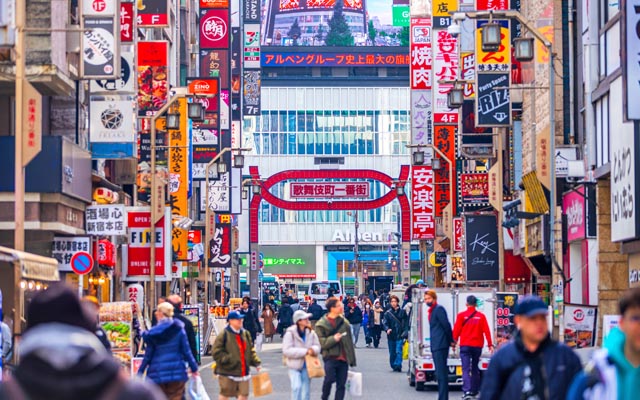
High-spending international visitors shopping in Tokyo have helped push Japan’s total inbound tourism consumption to record levels; photo by Jujumin Chu

The decline is due to a sharp contraction in visitors from China, down 56.4 per cent year-on-year, following remarks on Taiwan in November 2025 by Japanese prime minister Sanae Takaichi, which prompted Beijing to advise its citizens against travelling to Japan.

Still, the loss is being offset by growth from other source markets, including Taiwan (up 20.9 per cent), South Korea (up 18.6 per cent) and the US (up 7.1 per cent), keeping total inbound spending at record levels.

Emerging source markets are also gaining momentum, with visitor numbers from Mexico, Russia and India rising by 29 per cent, 25 per cent and 23 per cent, respectively, over the period.

These nascent markets are also home to some of the highest spenders. From January to June 2026, Mexico ranked as the top spender per capita, with average consumption of 514,925 yen (US$3,236), followed by the Middle East (483,000 yen), the UK (456,493 yen), Russia (455,000 yen), Australia (426,949 yen) and the US (387,547 yen).

Japan has welcomed the diversification of its tourism source markets as part of its goal to achieve sustainable tourism.

“Prior to the Covid-19 pandemic, visitors from Asia accounted for 83 per cent of all inbound travellers to Japan; however, this share declined to 77 per cent in 2025, while the proportion of visitors from Europe, the Americas and Oceania has correspondingly grown,” said a JNTO spokesperson.

NATAS Holidays 2026 concludes with expanded footprint and stronger NTO presence

0
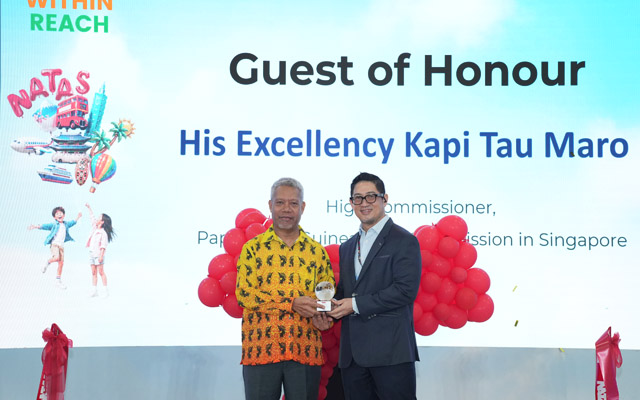
Papua New Guinea high commissioner Kapi Tau Maro and NATAS' Steven Ler
From left - Papua New Guinea high commissioner Kapi Tau Maro and NATAS' Steven Ler, photo by NATAS

NATAS Holidays 2026 wrapped up its three-day showcase at Singapore Expo under the theme A World within Reach.

The event brought together close to 100 exhibitors and featured a 25 per cent increase in exhibition space for travel agents, National Tourism Organisations (NTOs), airlines, cruise operators, hotels and resorts, banks, insurance providers, and other travel partners. A total of 14 NTOs participated this year, representing a 40 per cent increase over the previous edition.

Papua New Guinea high commissioner Kapi Tau Maro and NATAS' Steven Ler
From left: Papua New Guinea’s Kapi Tau Maro and NATAS’ Steven Ler; photo by NATAS

For NATAS president Steven Ler, the value of the fair extends beyond statistics.

Speaking at the opening ceremony, he described travel as more than moving between destinations, emphasising its role in fostering cultural understanding and connecting diverse industry partners, including airlines, cruise lines, tourism boards, and financial institutions.

Papua New Guinea returned to the fair for a second year as destination partner.

Speaking at the opening ceremony, Kapi Tau Maro, high commissioner of Papua New Guinea to Singapore and guest-of-honour, highlighted the importance of proactive market expansion. He noted that Papua New Guinea showcased its cultural heritage and natural landscapes to make these experiences more accessible to Asian travellers.

Simultaneously, national carrier Air Niugini is focused on enhancing operational reliability and network expansion, supported by ongoing promotional efforts from the Papua New Guinea Tourism Promotion Authority.

The high commissioner expressed confidence that these initiatives, paired with strong bilateral relations with Singapore, will position Papua New Guinea as a primary destination for authentic cultural and natural travel.

Fusion Hotel Group expands Indonesian footprint with Topotels integration

0

Fusion Hotel Group has integrated two established midscale Indonesian hotel brands, Ayola and Odua, into its regional portfolio. Operating under Topotels Hotels & Resorts, the collection comprises seven properties across key cities including Jakarta, Bandung, and Surabaya, serving business and leisure travellers.

The strategic addition strengthens the organisation’s presence in Indonesia, providing the two midscale brands with access to broader commercial platforms and operational support. Under the agreement, Ayola and Odua will retain their existing brand identities while integrating into a regional network that spans Vietnam, Thailand, and Indonesia.

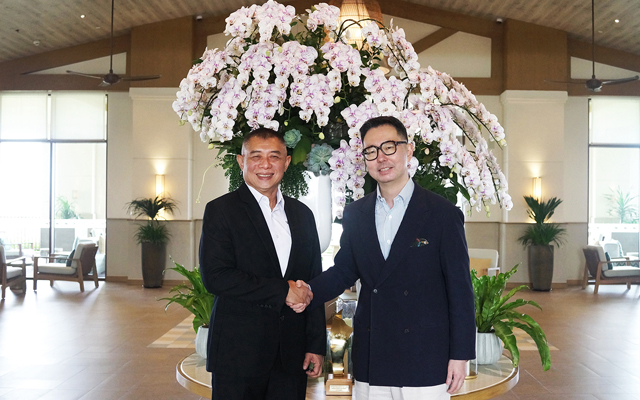
From left: Topotels Hotels & Resorts’ Willy Suderes and Fusion Hotel Group’s Christopher Hur mark the integration of the Ayola and Odua brands into the regional portfolio

The expansion forms part of a strategy to scale operations and broaden guest access to value-driven accommodation across South-east Asia.

“Joining Fusion will open new doors for our business, allowing us to deliver a better experience for our guests and provide stronger support for our owners. We’re confident that the integration with Fusion will bring fresh momentum to our hotels and teams,” said Willy Suderes, COO of Topotels Hotels & Resorts.

“We’re delighted to welcome Topotels into the Fusion family. Their strong roots in Indonesia combined with Fusion’s expertise will unlock new opportunities in key destinations across the country. This partnership strengthens our regional presence and supports our long-term vision for growth across South-east Asia,” added Christopher Hur, CEO of Fusion Hotel Group.