TTG Asia
Asia/Singapore Wednesday, 12th August 2026
Page 2

Beyond the gateways

0

Horwath HTL’s Deal Signing Report shows 84 to 88 per cent of every signed hotel deal across Asia-Pacific since 2019 has landed outside the roughly 20 true first-tier gateway cities. What is the industry still getting wrong when it talks about hotel development in this region?
To qualify everything I say, we have been running our own deal signing report for more than 10 years, since 2015. All of the major international chains and many of the regional chains provide us with their deal signings and hotel openings quarterly; we aggregate that information and we feed it back to them. It is not every hotel in the market and it is just the branded stock, but it is a very good read on an increasingly important group of hotels as the brands proliferate.

What that data shows is that in the last 15 years, about 85 to 90 per cent of hotel deals signed across Asia-Pacific are outside the top 20 first-tier gateway cities – so about 85 per cent. It is pretty huge. The conversation is still framed around the gateways, but that is not where the majority of deals are being done.

In Thailand specifically, which cities carry that volume?
Top tier in Thailand is just Bangkok. If we look at the three biggest cities in Thailand over the last six years – 2019 to 2025 – they are Phuket, Pattaya and Krabi. That is where the bulk of the deals in Thailand are happening in terms of secondary and tertiary cities, particularly Phuket and Pattaya for 2024 to 2026.

Deal volume in secondary and tertiary cities is up 452 per cent in India, 89 per cent in Japan’s regional cities and 71 per cent in China, comparing full-year 2025 with 2019. South Korea went from a single deal in 2019 to 14. Is 2025 an outlier, or has the base moved?
The base has moved. 1Q2026 tells us this is not a 2025 blip, because the secondary-city share is still sitting at 85.9 per cent this quarter. What is striking is how uniform it is across very different markets. India is the standout on percentage growth, but China is running well over a thousand secondary-city deals a year since 2021, so the absolute weight is there too.

New builds still dominate your secondary-city data, but the share has fallen from around 80 per cent in 2019 to around 60 per cent in 2025 and 1Q2026. Walk me through what that decline looks like quarter by quarter.
New builds are still dominating the secondary-city deal data, however, it is reducing. It has gone from 82 to 79, to 75, to 71, to 63, to 58 quarterly. It is a steady decline, but it has never gone back up again. Conversions have been steadily eroding the new-build share in the secondary cities for six straight years.

Conversions of existing hotels are growing, but so is adaptive re-use – actual non-hotels converted into hotels, whether they are apartments or offices. That is a small percentage now, but it is rising, and particularly in China. When we collect the data on deal signings and hotel openings, one of the questions we ask is whether it is a new build, a conversion or an adaptive re-use. Adaptive re-use never really got ticked before. It is increasingly ticked now. As construction costs increase, people are looking at conversions more readily.

Your country splits – by country (full period 2019-2026) – show real spread: Pakistan at 92 per cent new build, Cambodia 81 per cent and Vietnam 73 per cent, against the Maldives at 42 per cent, New Zealand 50 per cent, Australia and Malaysia at 52 per cent and Thailand at 55 per cent. What separates those two groups?
The conversions are more in the developed markets. If you look at Australia, Malaysia, New Zealand and even Thailand, there is a heavier proportion of conversions than there are in countries like Pakistan, Cambodia, the Philippines or Vietnam. Which is probably not a big surprise.

Narrowing to just 2024-2026, the shift toward conversions is even starker in mature/leisure markets – Australia flips to only 34 per cent new-build (56 per cent conversion), Thailand and Japan both drop to around 41 per cent new-build. Meanwhile China, India, Indonesia and Vietnam still sit in the 60 to 63 per cent new-build range, consistent with them being earlier-stage growth markets.

In the middle is where it gets interesting for the 2019-2026 data. There is a proliferation of new hotels in secondary cities in the new economic and commercial zones. The ratio of conversions versus new builds for this group sit around the middle of the pack: China (71 per cent new builds), India (68 per cent), Indonesia (69 per cent), Japan (60 per cent) – these four countries all indicate growth in those industrial Special Economic Zone (SEZ) type regions.

Vietnam, Indonesia and India’s interiors also particularly demonstrate more of that SEZ type of new destination being created out of the China Plus One policies that some of the conglomerates have. It is driving demand for rooms.

In 2019 and 2020, upscale-and-above accounted for about 20 per cent of secondary-city signings, midscale and upper-midscale for around 45 per cent, and economy for roughly 10 per cent. Where does that mix sit now?
Upscale and above have nearly doubled their combined share. It is now nearly 35 per cent, just in the secondary and tertiary cities, which makes it even more interesting, because it used to be that the secondary and tertiary cities were very midscale. Economy has fallen to around six per cent, luxury has tripled, and upscale has grown to nearly 25 per cent. Upper-midscale is still the single largest segment, so it has not disappeared, but the tail of the market is growing much faster than the base. It is certainly a shift upwards.

What is funding that shift up the chain scale?
Wealth. Particularly if you look at China and India, domestic tourism is certainly driving the growth in the secondary cities. There is obviously a lot of growth in manufacturing in India, more so than perhaps China over the last 10 years, but wealth is what is driving that reach out into the secondary and tertiary markets. Business travel is part of it, of course, because there are many cities in India and China you do not go to for leisure; you go for business.

But it is actually quite interesting how many of these growth markets are resort and leisure based as well.

Can you give me a concrete example of the kind of city that is pulling both streams?
Batam in Indonesia is arguably both, because it has its SEZs but it is also a leisure destination. In Thailand, you could argue Pattaya has the Eastern Seaboard and a bit of manufacturing, but it is also a big leisure destination. In India, there is a little more industrial weighting, but you have still got Jaipur and Goa driving quite a lot of new supply.

Danang and Phu Quoc are the biggest two secondary markets in Vietnam. Danang is becoming quite a hub for digital nomads, tech and start-ups. Anyone that does not want to favour either Hanoi or Ho Chi Minh City is setting up business in Danang. Phu Quoc is purely leisure, but they are building very large hotels there, so those will certainly be MICE destinations for you going forward, post-APEC next year. Penang in Malaysia has a bit of both, with manufacturing on the mainland and on the island alongside the leisure business. Cebu in the Philippines is quite similar to Danang in that it is getting that digital nomad and tech connectivity reputation.

What should hoteliers and owners take from the hybrid pattern, and does brand architecture make adaptive re-use easier to execute?
From a hotel perspective, if we can get hybrid destinations, that is much better than having one or the other, because then you get all-week occupancy. You can play both markets. You end up with something like Bali, which appeals to corporate and MICE, but also to leisure, as opposed to somewhere like Jakarta, which you could argue is purely a business town, so its weekly occupancy struggles because of the lack of leisure demand.

On brands, using the collection brands, which the groups all have many of, certainly makes adaptive re-use a possibility. For the hard brands, with the lack of flexibility, adaptive re-use is far more difficult. But with something like Curio, the collection brands make rebranding an office into a hotel easier.

Which cities are on your watch list over the next 12 to 24 months?
Chengdu, Chongqing, Wuhan and Kunming in China, which are already large enough to be considered secondary-gateway markets in their own right, alongside Hangzhou, Suzhou, Xi’an and Nanjing. Below that tier, the fastest emerging momentum on a smaller base is in Urumqi, Guiyang, Dali, Harbin, Sanya, Xishuangbanna and Kashgar. Outside China, I would watch Jaipur, Goa and Indore in India, Danang in Vietnam, and Bali and Batam in Indonesia. The 85 per cent of growth outside the key cities is amazing, and it seems to be quite uniform, and that change from new builds to conversions is going to keep reshaping where the capital lands.

Booking.com study finds travel optimism remains high in Asia-Pacific

0

Booking.com has launched its inaugural Travel Happiness Index, finding that travellers across Asia-Pacific continue to prioritise travel despite economic and global uncertainties, with meaningful experiences and seamless journeys shaping travel decisions.

The research surveyed more than 10,000 travellers across 10 Asia-Pacific markets and examined the emotional, financial and practical factors influencing travel behaviour.

Booking.com’s inaugural Travel Happiness Index found travellers across Asia-Pacific continue to prioritise meaningful and stress-free travel experiences

Almost all respondents (98%) associated travel with positive emotions, while 86% said having a trip to look forward to improved their mood. Nearly three-quarters (73%) said anticipation helped them cope with the demands of daily life, and 60% enjoyed the trip-planning process.

However, travel also brings challenges. Around 29% said trips could leave them feeling tired or drained, while 20% felt pressure to make the most of their holidays. South Koreans reported the highest level of negative emotions associated with travel (79%), followed by Indians (71%) and Japanese travellers (64%).

The study found travellers increasingly value simple experiences over packed itineraries. Appreciating natural scenery (35%), spending time with travel companions (28%) and enjoying food and drink (26%) were among the leading contributors to a satisfying trip. Family travel was rated the most enjoyable by 59% of respondents.

While concerns such as extreme weather (35%), health risks (34%), crime (34%), inflation (30%) and political instability (30%) continue to influence decisions, most travellers remain committed to taking holidays. Nine in 10 (90%) said they would adapt their plans rather than cancel them.

Digital tools also continue to shape travel planning, with 84% saying they make booking easier and 88% reporting greater confidence when using trusted booking platforms.

Laura Houldsworth, managing director, Asia Pacific, Booking.com, said: “This report makes it clear that for many people across Asia-Pacific, travel is more than just about getting away – it is about feeling better, having something to look forward to, reconnecting, and having the confidence to keep exploring even when the world feels uncertain.”

Happy National Day, Singapore!

0

TTG Asia, with its editorial headquarters in Singapore, will take a break for the public holiday on Monday, August 10, observed in lieu of Singapore’s 61st National Day on August 9.

TTG Asia’s online news bulletin will resume on Tuesday, August 11.

Happy National Day in advance to all Singaporean readers!
Cruise sector charts growth in the Philippines

0

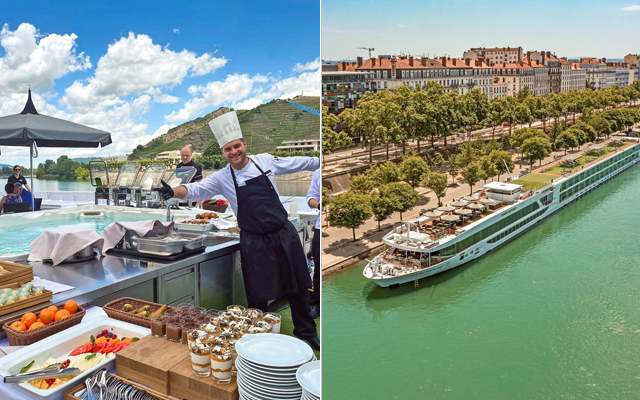
Cruising, both inbound and outbound, is experiencing strong growth in the Philippines. More international cruise lines are including Philippine ports in their itineraries amid growing interest from foreign tourists, said Travel Specialist Ventures managing director Rowena Coloma.

The Department of Tourism expects 129 cruise ship calls carrying 63,000 passengers this year, compared with 136 port calls and 25,000 passengers last year.

Scenic Sapphire is among the luxury cruise ships catering to growing demand for premium cruise experiences among Filipino travellers; photo by Scenic Cruises

As a source market for outbound cruises, the Philippines “has been continually growing and Filipinos have come to love cruising as a holiday choice”, said Wally Cervantes, senior vice president of Arpan Air, the long-time international representative in the Philippines for Royal Caribbean Group.

The launch of Royal Caribbean Philippines’ website, cruising.com.ph, reflects the growing accessibility of cruising, with offers including deferred payment options, 24-month credit card instalment plans, discounted airfares for fly-cruise packages and promotional fares.

While large cruise ships continue to attract first-time cruisers and families, more experienced travellers are increasingly seeking smaller vessels offering more personalised and premium experiences.

Shan Dioquino David, CEO of Corporate International Travel and Tours, said the agency identified growing demand for luxury cruises after the pandemic.

“I feel the market is ready for more upscale luxury cruises,” she told TTG Asia.

Today, CITTI is the preferred sales agent in the Philippines for Ponant, Silversea and Scenic luxury cruises, while also offering Four Seasons Yachts and The Ritz-Carlton Yacht Collection, with Aman expected to join its portfolio in future.

David said Ponant and Silversea will call in the Philippines next year, while Scenic, which last visited in 2025, is scheduled to return in 2028.

“While the Philippines cruise sector has great potential, its port infrastructure still requires significant improvements to become more competitive and comparable with leading cruise destinations in Asia,” noted Philippine Travel Agencies Association president Jaison Yang.

Encouragingly, Yang said the dedicated international cruise terminal under development in Manila’s Entertainment City will enhance the capital’s capacity to accommodate larger ships, improve the passenger experience and strengthen its position as a cruise destination in Asia.

Club Med Cherating to close for major renovation

0

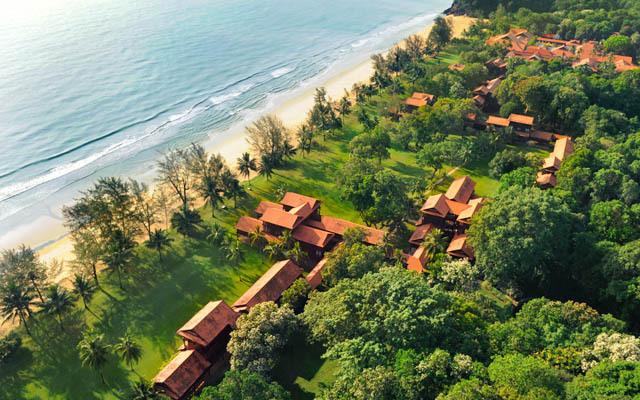
Club Med Cherating will undergo a comprehensive renovation from October 11, 2026, ushering in a new chapter for the group’s first resort in Asia.

The refurbishment will reposition the property as an all-inclusive resort centred on its 80ha jungle setting and beachfront location. Club Med said the redesign will preserve the site’s natural environment while introducing upgraded accommodation, public spaces and guest facilities.

Club Med Cherating will close on October 11, 2026, for a full renovation ahead of its next phase as an all-inclusive resort

Opened as Club Med’s first resort in Asia, Cherating remains the only property in the region with a self-contained jungle within the resort grounds.

The refreshed resort will introduce five new signature experiences, including the Jungle Express transport service through the jungle, guided nature trails, a cliffside climbing experience, farm-to-table dining at Rembulan gourmet club, and a firefly mangrove cruise.

The renovation will also follow the group’s Happy to Care sustainability programme, with plans to retain the existing low-density footprint and protect local biodiversity.

Ahead of the closure, Club Med will host a series of farewell activities from mid-August, including a weekly street market, sports challenges, a resort memory wall and charity auctions featuring memorabilia from the property. The final auction will take place on October 8, with proceeds going to charity.

Rachael Harding, CEO, Southeast Asia and Pacific, Club Med, said: “Club Med Cherating holds a special place in our history as our first home in Asia. This transformation will open a new chapter for this iconic destination, creating a more sophisticated yet deeply natural escape where guests can leave daily life behind and reconnect with the world around them.”

Walk Japan explores Aizu’s samurai heritage

0

Walk Japan is highlighting the samurai history of Aizu with two guided itineraries that explore the region’s historic towns, ancient routes and landscapes on foot.

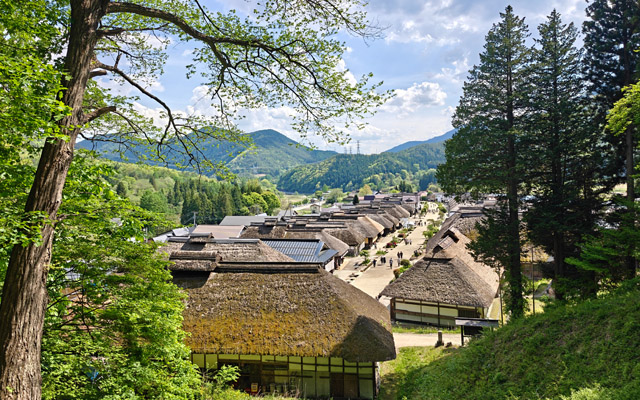
Known as “Samurai City”, Aizu was one of the last strongholds of samurai resistance during the Meiji Restoration in 1868. Today, its castles, preserved villages and historic sites continue to reflect that legacy.

Walk Japan’s guided tours explore Aizu’s samurai heritage through historic towns, ancient highways and seasonal landscapes

The seven-day Tohoku Aizu Explorer follows ancient highways once used by feudal lords and samurai, including the Shirakawa Way, Shimotsuke Kaido and Numata Kaido. The itinerary also visits sites linked to the Byakkotai, including the Sazae-do pagoda, while showcasing views of Mt Bandai and the Tadami River. Departures operate from May to November, with prices from 520,000 yen (US$3,317) per person based on twin share.

For winter travellers, the five-day Onsen Gastronomy: Snowy Aizu combines snowy landscapes with visits to samurai towns, onsen and local food and sake experiences. Highlights include Tsuruga-jo Castle, Sazae-do, Oyakuen Garden, Ouchi-juku, Hongo and the Tadami River. The tour runs from late December to early March, with prices from 598,000 yen per person based on twin share.

For more information, visit Walk Japan.

On the way up

0

Cambodia has set a target of welcoming up to 5.8 million international visitors in 2026, with its Ministry of Tourism (MoT) banking on a rebound in visitors from China – a traditionally strong source market that has seen arrivals dwindle since the pandemic – to help boost arrivals.

According to the MoT, the country welcomed about 5.57 million international visitors in 2025, marking a 16.9 per cent year-on-year decrease. Of the total figure, more than 1.2 million were Chinese. This compares to approximately 2.3 million Chinese – one-third of international arrivals – in 2019.

Angkor Wat remains Cambodia’s biggest tourism draw for international visitors; photo by Framalicious/shutterstock

“Cambodia is fully prepared and ready to welcome the return of Chinese tourists and investors,” the country’s tourism minister, Huot Hak, said. In line with this, Cambodia rolled out a pilot scheme that offers Chinese tourists multiple 14-day, visa-free stays from June 15 to October 15, 2026.

Sinan Thourn, chairman of IMCT Co and PATA Cambodia chapter, said if the scheme proved successful, he would like to see it extended to other countries, specifically Europe and the US.

For 2026, the MoT has set a target of attracting 5.6 to 5.8 million international visitors, which sits slightly above 2025’s figure. This is a revision of an early target of seven million due to tourism seeing a slowdown in the second half of 2025 as a result of the border conflict with Thailand. Subsequently, the tourism sector has been hit by the Middle East conflict and rising fuel prices.

The country was heavily impacted by the sudden halt of flights by Qatar, Emirates and Etihad, which carry the bulk of the country’s Western markets. According to Cambodia’s State Secretariat of Civil Aviation, Gulf hubs account for approximately 12,960 travellers to Cambodia a week.

Thourn said the disruption to flights, coupled with the fuel crisis, has had a major impact on travel costs and itinerary planning, with cost pressures rising in various service areas, from accommodation and food and beverage, to tours and transport.

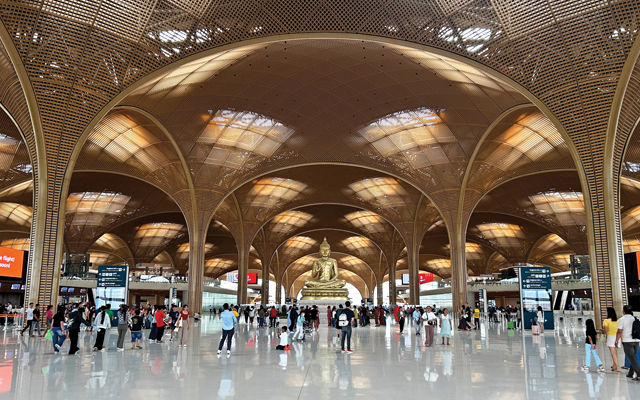
Techo International Airport is expected to strengthen Cambodia’s air connectivity and support tourism growth; photo by SariMe/shutterstock

He added that his outlook for 2026 is “cautiously optimistic”, shaped by both challenges and new opportunities. For example, arrivals from the country’s leading source market in 2024, Thailand, drastically declined in 2025 by 52.4 per cent to 1.02 million visitors.

Arrivals from South Korea have also dropped “significantly” due to travel advisories related to scam centre concerns. Thourn noted that while Vietnam remained Cambodia’s top source market in 2025, attracting 1.22 million visitors, arrivals from the country have also “softened”.

“On the other hand, Cambodia expects solid recovery and growth from longhaul and emerging markets, especially Europe, China, India and South Asia. With new airport infrastructure, improved connectivity and a stronger focus on quality tourism, 2026 will be a year of rebalancing and diversification.”

Catherine Germier-Hamel, founder and CEO of Millennium Destinations, believes it is the mounting focus on “quality over quantity” that will define Cambodia’s tourism landscape in 2026.

“What encourages me most is the growing focus on quality over quantity, with more conversations and concrete actions around service excellence, sustainability and visitor safety,” she said.

“Cambodia also appears to be gaining maturity in how it manages safety and reputation issues, while becoming more creative in diversifying its market segments, products, experiences and destinations.”

Hefty investment in infrastructure is expected to pay off, with the new Techo International Airport in Phnom Penh already attracting a raft of new connections, including a direct link to Abu Dhabi through Etihad Airways and Turkish Airlines’ direct flight to Istanbul, which launched in December.

“Investments in new and upgraded airport and transport infrastructure are sending positive signals, although their benefits are likely to materialise unevenly, with higher-quality products emerging first in established destinations and progressively in selected emerging areas that align with national tourism strategies,” Germier-Hamel said.

New hotels: Jen Hangzhou by Shangri-La, The Aarlis Hotel Panchkula and more

0
Jen Hangzhou by Shangri-La

Jen Hangzhou by Shangri-La, China
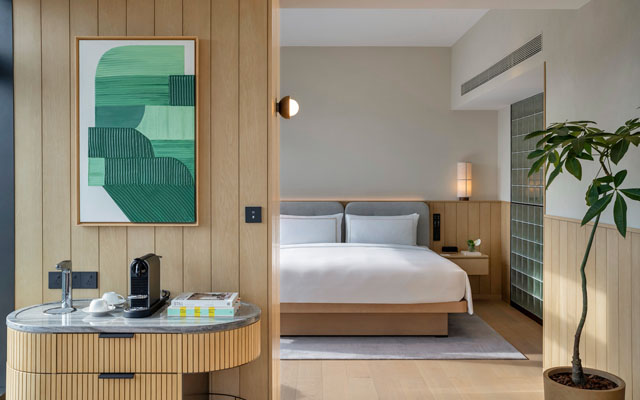
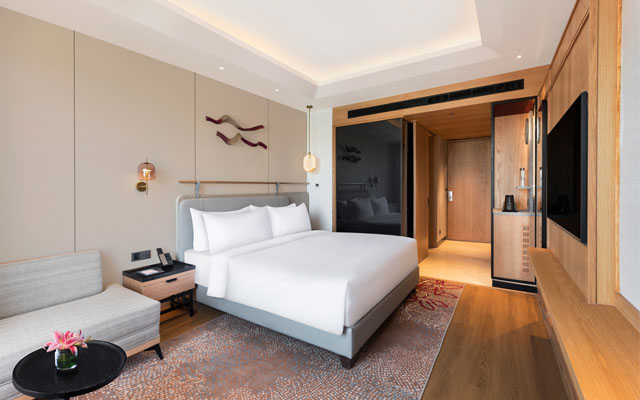
Jen Hangzhou by Shangri-La has opened in Gongshu District within Hangzhou Kerry Plaza, on the former site of the historic Hangzhou Oxygen Plant.

The hotel offers 176 guestrooms and suites, with Deluxe Rooms and above featuring double bathtubs, while all suites include private outdoor terraces. Facilities include an all-day dining restaurant, 24-hour fitness centre, indoor heated swimming pool, spa and more than 330m² of meeting and event space.

The property is directly connected to Hangyang Station on Metro Line 5 and is close to the Grand Canal, Qiaoxi Historic District, West Lake and the Wulin Star Expo Center, providing convenient access to Hangzhou’s cultural, commercial and business districts.

The Aarlis Hotel Panchkula

The Aarlis Hotel Panchkula, India
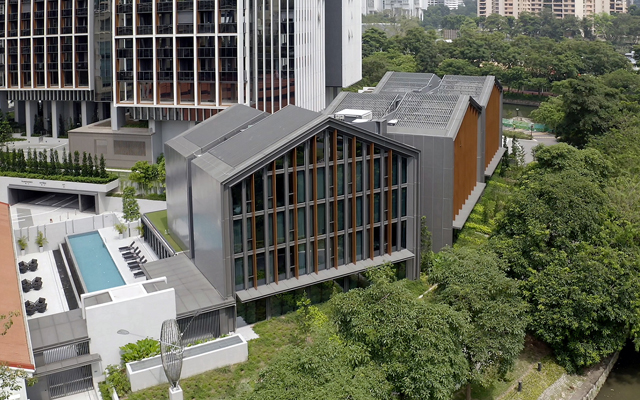
The Aarlis Hotel Panchkula has joined Vignette Collection as the brand’s first property in India and South West Asia.

Set against the Shivalik Hills in the Chandigarh Tricity region, the 145-room hotel offers contemporary guestrooms and suites with smart-room technology. Facilities include five dining venues, a spa, salon, fitness centre, swimming pool and around 2,790m² of meeting and event space, including the Aura Grand Ballroom.

The property provides convenient access to Morni Hills, Sukhna Lake, the Rock Garden and Chandigarh Capitol Complex, making it suitable for both business and leisure travellers.

Banyan Tree Mount Emei

Banyan Tree Mount Emei, China
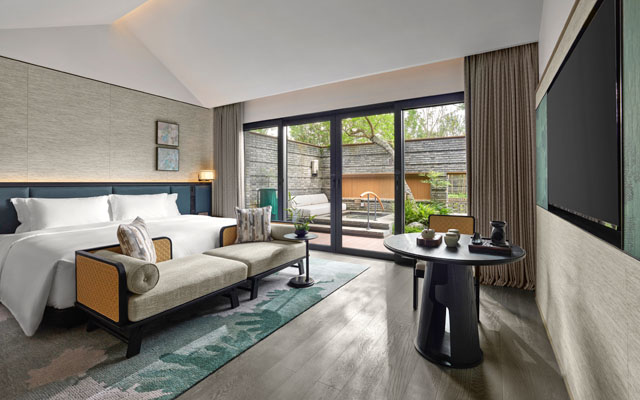
Set in the foothills of Mount Emei in China’s Sichuan Province, Banyan Tree Mount Emei offers 130 rooms and villas overlooking the UNESCO World Heritage-listed Mount Emei Scenic Area.

Accommodation ranges from Mountain View Rooms to one- and two-bedroom Lakeside Villas and a Presidential Villa, with every room featuring a private outdoor hot spring pool.

Facilities include Banyan Tree Spa, a temperature-controlled swimming pool, fitness centre, yoga studio, children’s club and three dining venues serving Sichuan, Cantonese and international cuisine. The resort also offers more than 1,200m² of indoor and outdoor event space.

Banyan Tree Mount Emei is a five-minute drive from Emeishan High-Speed Railway Station and around two minutes from the entrance to the Mount Emei Scenic Area.

NHAAN Resort & Spa Hoi An, Tapestry Collection by Hilton

NHAAN Resort & Spa Hoi An, Tapestry Collection by Hilton, Vietnam
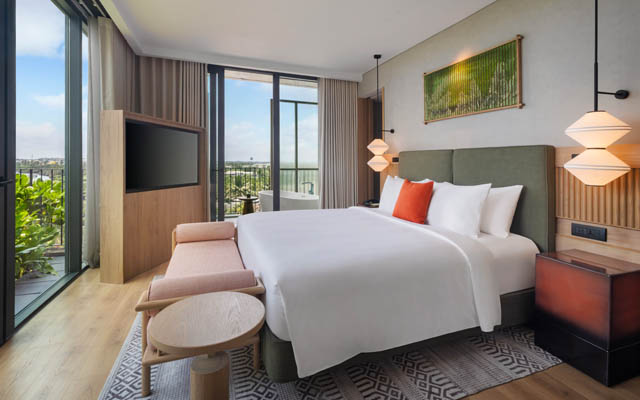
NHAAN Resort & Spa Hoi An, Tapestry Collection by Hilton, brings 174 rooms and suites to Cam Thanh village along the Co Co River, marking the brand’s debut in Vietnam.

The resort offers guestrooms and suites with garden or river views, while selected accommodation features private balconies or direct pool access. Facilities include four dining venues, an outdoor infinity pool, spa, 24-hour fitness centre, yoga deck, children’s club and a 200m² ballroom with two meeting rooms.

Located near Hoi An Ancient Town, the property also provides easy access to Cua Dai Beach and the Cam Thanh Nipa Forest. Guests can take part in local cultural experiences, including pottery, woodcarving and lantern-making workshops, as well as cycling tours around the surrounding countryside.

Tourism Australia unveils 10-year strategy to lift high-yield visitor spending

0

Tourism Australia has released its Tourism 2035 strategy, setting out a 10-year plan to strengthen Australia’s competitiveness and grow international demand.

The strategy aims to increase overnight spending by high-yield international travellers to between A$61 billion (US$39.7 billion) and A$69 billion by 2035, supporting the continued growth of Australia’s tourism sector.

Tourism Australia’s new Tourism 2035 strategy identifies nature-based experiences as a key driver of future international visitor demand; Twelve Apostles on Victoria’s Great Ocean Road, pictured

Over the next three years, Tourism Australia will focus on four priorities: adapting marketing for AI-driven search and discovery, promoting Australia’s breadth of experiences, leveraging major international events such as the Olympics, and positioning Australia as a destination for nature-based luxury travel.

The strategy also identifies 10 global trends expected to shape tourism over the next decade, including stronger competition for high-yield travellers, growing demand from Asian markets, evolving booking behaviour, the impact of geopolitical and climate uncertainty, and increasing interest in sustainable and nature-based travel.

According to the latest figures, international visitors generated A$57 billion in overnight spending over the past year, with A$33 billion attributed to high-yield travellers targeted through Tourism Australia’s marketing. International tourism also supports more than 360,000 tourism businesses and over 720,000 jobs across Australia.

Robin Mack, managing director, Tourism Australia, said: “This strategy sets an ambitious course to create and convert demand into high-value visitation to Australia by addressing factors influencing traveller choice, through harnessing technology and fostering partnerships and collaboration across the tourism sector.

“Our vision is for Australia to be the first destination every traveller dreams of, and the one they ultimately choose.”

Robert Dougan, executive general manager, strategy and culture, Tourism Australia, added:

“Tourism Australia’s efforts will be squarely focused on creating and converting demand for travel to Australia by positioning our destination offering in the best way possible. Tourism 2035 provides our industry with insight on what to be prepared for and where the opportunities lie.”

Millennium Hotels launches children’s loyalty programme

0

Millennium Hotels and Resorts (MHR) has unveiled MyMillennium Kids, introducing a loyalty programme for children staying with MyMillennium members at participating hotels.

The programme is available to children aged five to 10 staying for a minimum of two consecutive nights and will debut at selected properties across Asia-Pacific before expanding to Europe and the US in 2027.

Children staying at participating Millennium Hotels and Resorts can collect rewards through the new MyMillennium Kids programme

The first participating hotels include Grand Copthorne Waterfront Hotel Singapore, Orchard Hotel Singapore, M Hotel Singapore City Centre, M Social Resort Penang, M Social Hotel Phuket and M Social Hotel Suzhou.

Children enrolled in the programme will receive an Adventure Passport to collect stickers during eligible stays across participating hotels. Rewards are based on the number of stickers collected and include complimentary desserts, a Muriel the Cow plush toy, room upgrades on a future stay and MyMillennium Kids merchandise.

The programme also includes welcome gifts, a personalised letter from the programme’s mascot, Muriel the Cow, and a Junior Explorer ‘do-not-disturb’ sign that children can decorate.

MHR said the initiative is designed to strengthen its family travel offering as demand for multi-generational and family holidays continues to grow.

Cinn Tan, chief commercial officer, MHR, said: “The launch of MyMillennium Kids strengthens our family travel proposition while deepening engagement with MyMillennium members, creating more reasons for families to choose Millennium Hotels and Resorts across their travel journeys.”