TTG Asia
Asia/Singapore Thursday, 21st May 2026
Page 1900

Dubai airports to levy exit tax

0

dubai-international-airport

Dubai International Airport

PASSENGERS flying from Dubai can expect a hike in ticket prices for flights booked since March 1 departing after June 30.

Under a resolution recently passed by Dubai’s crown prince, every passenger leaving the UAE from any of Dubai’s airports, including transit passengers, will be charged a 35 dirham (US$9.50) departure tax. Airlines operating in Dubai airports are tasked with collecting the fee when issuing tickets.

According to a statement released by the Dubai Media Office, the collected fees will be transferred to Dubai Airports, and subsequently to the Dubai Government public treasury.

It further stated that the tax monies will be used to improve Dubai’s airport infrastructure and to boost its capacity, which is set to reach 100 million passengers by 2023.

Funds will also be used to support projects such as Dubai International Airport’s Concourse D, the expansion of Terminal 2 and the renovation of Terminal 1.

South Korea keen to attract more Middle East travellers

0

50621958_ml

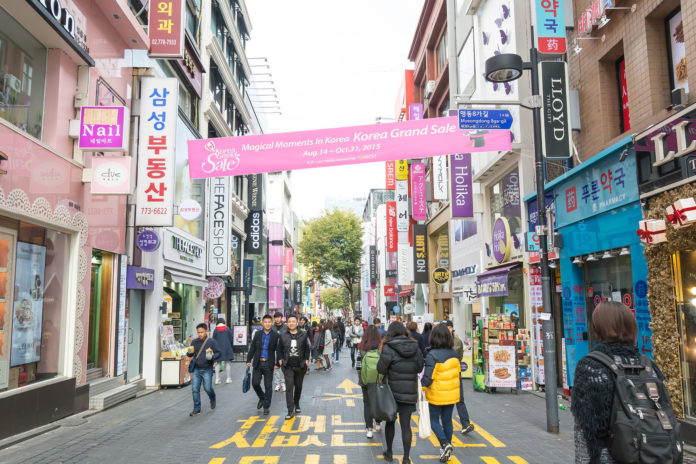
SOUTH Korea is experiencing a surge in travellers from the Middle East and industry players have plans to encourage more arrivals from this valuable market.

Arrivals from the Middle East totalled 89,200 in 2010 but soared past 168,000 last year, and would have been higher had South Korea not been adversely affected by the MERS outbreak.

Trade members interviewed suggest that the surge can be attributed to the popularity of South Korean television soap operas in the Middle East, as well as the renown of plastic surgery clinics there.

To better attract guests and to serve the religious needs of many Middle East travellers, top hotels have also begun providing prayer mats, a Koran and a compass that indicates the direction of Mecca. As well, hotels have been increasingly making halal meals available for guests.

Attracting travellers from the Middle East have become key for many South Korean hotels as they are known to be high spenders.

Statistics from Korea Tourism Organisation indicate that while a Japanese tourist will spend around 1.1 million won (US$968) and a Chinese visitor about 2.2 million won in South Korea, a guest from the Middle East on average splashes out more than 3.5 million won during his or her stay.

Anbang pulls out of Starwood bid

0

sheraton-stamford-hotel

The Sheraton Stamford Hotel

THE consortium led by Anbang Insurance Group has withdrawn its US$14 billion bid for Starwood Hotels & Resorts Worldwide, opening the way for Marriott International to merge with the international hotel chain to form the world’s largest hospitality company.

China’s Anbang, along with Primavera Capital Group and J.C. Flowers & Co., had only days earlier raised its offer for Starwood in a move to outbid rival Marriott.

According to a statement by Starwood released yesterday, Anbang pulled out of the bidding war “as a result of market considerations” and added that they do not intend to make another proposal.

Starwood’s shareholders are slated to vote on and approve the Marriott-Starwood merger as scheduled on April 8, under the terms agreed upon on March 21, which currently values Starwood at approximately US$13.3 billion or US$77.94 per share.

Starwood shareholders will own approximately 34 per cent of the combined company’s common stock after completion of the merger, based on current shares outstanding.

Thomas Mangas, CEO of Starwood reaffirmed its commitment to Marriott, saying: “The existing merger agreement provides substantial value to our stockholders through significant upfront cash consideration and long-term upside potential from projected shared synergies, including US$250 million in cost synergies and significant revenue synergies, as well as ownership in one of the world’s most respected companies.”

NH Hotels, HNA group jointly develop new hotel brand

0

nh-hna

Zhang Ling, chairman of HNA Tourism Group; Li Tie, chief executive of HNA Tourism Group; Bai Haibo, president of HNA Hospitality Group; and Federico Gonzalez Tejera, chief executive of NH Hotel Group during the unveiling of the joint venture

SPAIN’s NH Hotels is set to make its Asia debut through a joint venture with China’s HNA Hospitality Group to develop a chain of upper category properties in China, including the largest NH hotel yet on the island of Hainan.

The Beijing-based joint venture company, NH China, has created the new Nuo Han brand with the aim of running a chain of 120 to 150 hotels in China by 2020.

The first two hotels in the chain are scheduled to be opened by the second half of this year on the island of Hainan. The two properties are namely the NH Sanya Phoenix International Airport with 334 rooms, and the NH Haikou Meilan International Airport with 1,001 rooms, set to be the biggest NH-branded hotel in the world.

As well, the company hopes to increase its portfolio of management contracts to between 10 and 20 hotels by the end of the year.

“The establishment of the joint venture is a key milestone in the international development of HNA Hospitality Group together with NH Hotel Group to build a portfolio of brands in the midscale, upscale and luxury segments,” said HNA Hospitality president, Bai Haibo.

At present, NH operates nearly 400 hotels with some 60,000 rooms across 30 countries in Europe, the Americas and Africa.

HNA became NH’s biggest single shareholder in 2014 when it raised its stake in the company to 29.5 per cent.

UFI to recognise, reward new exhibition talents with grant

0

UFI, with the support of Reed Exhibitions, has launched the Next Generation Leadership Grant to reward exhibition industry professionals who show clear initiative in driving change and innovation and to involve them in the planning and realisation of the association’s high-profile annual congress.

Through the grant, UFI is looking for up to five outstanding individuals who are able and ready to plan and conduct an hour-long session at the UFI Congress 2016 in Shanghai.

The qualified candidates will benefit from global recognition among fellow industry peers; get to share ideas, explore the latest trends, and be part of an exciting initiative valued by exhibition colleagues worldwide; earn a chance to enhance their network; and gain expert guidance throughout the project.

To qualify for the grant, applicants must be actively employed full-time in the exhibition industry, must not have more than a decade of work experience in the exhibition industry; must provide a written document and a video, both in English, describing concrete ideas and initiatives to drive change and innovation in the industry, reasons for choosing to work in exhibitions and their motivation for pitching for the grant; must be able to drive the project in addition to their daily job; and must be available for UFI activities on June 13-14 in Paris and November 9-12 in Shanghai.

Applications must be submitted by April 30 this year to NGLgrant@ufi.org.

Safety must be first priority

0
As a traveller, I used to lament how tiresome flying has become…But today I’d have more stringent checks at airports, planes and trains, hotels, beach resorts, etc, please. This should be the new normal.

jul_rainiIn a mere 10 days between March 13 and March 22, there were three terror attacks. Gunmen opened fire on civilians at an Ivory Coast beach, another terror attack in Istanbul, this time on its main shopping street Istiklal, and the attacks at Brussels airport and metro last week.

Beach, airport, shopping street. As a tourist or business traveller, would you stop travelling? As head of homeland security of a country, would you tighten up security? As someone whose livelihood depends on travel & tourism, what should you do?

The UNWTO does not think tourists or business travellers will stop travelling. More than 50 million more tourists travelled the world last year than in 2014, a 4.4 per cent increase to a total of 1.2 billion people. This year, it expects another year of growth, around four per cent, despited increased volatility and uncertainty.

On the second question, it would be unlikely that security would not be tightened. But the Global Travel Association Tourism (GTAC) comprising groupings such as UNWTO, WTTC, IATA, etc, is worried that this would be done in such a way that would “end up killing the industry we are trying to preserve”, said UNWTO secretary-general Taleb Rifal. At a media conference at ITB Berlin (see Analysis on pages 4-5), he called for not just safe but ‘friendly’ passage of travel. “If we (countries) start closing borders, building walls, reducing our openness attitude, mixing the refugees issue with tourism, we will reverse our openness index,” he said.

In these times, we are indeed lucky to have GTAC speaking in one voice on behalf of global travel and tourism. But because safety and security are inextricably interlinked, GTAC must ensure it is lobbying for the right outcome. And for me, the right outcome is not more openness for tourists to enter a country, but more security measures to ensure they are as safe as possible.
As a traveller, I used to lament how tiresome flying has become, with one feeling like a criminal at security checks and immigration. But today I’d have more stringent checks at airports, planes and trains, hotels, beach resorts, etc, please. This should be the new normal. GTAC should press for more security, then run a campaign for the world tourists to understand why more stringent safety measures are needed and what tourists themselves can do to make it easier on everyone travelling (say, read up what is/isn’t allowed on planes today; don’t hold up everyone by arriving at the nick of time, etc).

Those of us whose livelihoods depend on travel and tourism should also make safety first the top priority today. Otherwise, the four per cent increase UNWTO believes we will get again this year will not happen. Immediately after Brussels, it’s the stocks of travel companies such as Carnival Corporation that went down. And with technology such as augmented reality, we can’t take growth for granted.


This article was first published in TTG Asia, April 1, 2016 issue, on page 2. To read more, please view our digital edition or click here to subscribe

Newly inaugurated INACEB ready to roll

0

THE Indonesia Convention & Exhibition Bureau (INACEB) has launched in Jakarta on March 28, 2016 after much anticipation, and will be tasked with promoting different Indonesian cities as MICE destinations with a single aim to integrate the country’s MICE industry so as to compete in the international market.

INACEB’s committee was inaugurated by Arief Yahya, Indonesia Minister of Tourism, and will be chaired by Budi Tirtawisata, CEO of Panorama Group.

Budi said: “INACEB is a non-profit, independent private organisation. INACEB will play a role as a partner for the Ministry of Tourism in supporting the Wonderful Indonesia (campaign), especially in the promotion of MICE cities in the country.”

In his speech, Arief expects INACEB to accelerate the growth of the country’s MICE market from five per cent today to 10 per cent.

Partly funded by the government and industry participation, INACEB’s focus for the next five years is to strengthen the database of MICE destinations and their target markets, conduct promotional activities and win events through bids.

Other ambitions include placing Indonesia in eighth position on ICCA’s annual ranking of top meetings countries in Asia-Pacific by 2019, an improvement from its current 12th position; improving the rankings of Indonesian cities on ICCA and UIA charts to have them sit among the world’s top 30 cities; and contributing two million MICE arrivals or 10 per cent of the 20 million overall arrival target by 2019.

Smaller European cities drawing more Asian arrivals

0
Hallstatt is the Fastest Growing European Destination for Asian Travelers (photo source is Shutterstock)

Hallstatt is the Fastest Growing European Destination for Asian Travelers (photo source is Shutterstock)

City of Hallstatt, Austria

LESSER-KNOWN destinations in Europe are quickly gaining in popularity among Asia’s travellers, according to Agoda’s latest Travel Smart study released yesterday.

Compared to the traditionally popular cities of Paris and London, which still draws the largest crowd in terms of volume, bookings for smaller European cities are growing at a much faster rate.

UNESCO-listed Hallstatt in Austria was the fastest growing European destination, with more than twice as many bookings in 2015 than in 2014. This is followed by Germany’s Fussen – home to Neuschwanstein, a 19th-century castle. Meanwhile, the port city of Glasgow in Scotland ranked third.

agoda-table

The top 10 European destinations booked in 2015 and its percentage growth from 2014

“Our travellers from Asia are broadening their reach and we are seeing faster growth rates in the types of European destinations people visit after they’ve already been to the bigger cities,” said John Brown, CEO of Agoda.

The study, which looked at destinations with more than 1,000 bookings in 2015, compared millions of transactions made by Agoda travellers in Asia in 2014 and 2015.

Avillion opens serviced residence in Cameron Highlands

0

cameron-fair

The Cameron Fair mixed-use development

AVILLION Hotel Group, a renowned home-grown hotel chain in Malaysia, has signed a management agreement with Ascendvest to open Avillion serviced suites in Tanah Rata, Cameron Highlands in 2017, part of the latest mixed-use development in the district.

Avillion’s new property caters to both foreign and domestic travellers, and will include 100 serviced suites consisting of studio and two-bedroom units, and is part of the commercial and lifestyle development, Cameron Fair.

The development is a short five-minute walk to Tanah Rata’s main public transportation hub and offers a host of retail and F&B outlets, nature walks, parks and local markets.

Gricia Gan, head, hotels & spa, Avillion Hotel Group, said: “Avillion sees great opportunity (in Cameron Highlands) for better performance in terms of tourist arrivals – domestic and foreign travellers alike.”

“The collaboration is an injection of new lifestyle and additional activities for tourists and local residents, making the holiday destination more vibrant and fascinating.”

The Cameron Fair property will be the latest addition to Avillion’s current portfolio of hotels in Port Dickson, Melaka, Sabah and Bali.

“The group is looking forward to managing more hotels and apartment suites like Cameron Fair in Malaysia and Asia,” added Gan.

Sunnier days ahead in Asia for Melia’s Sol portfolio

0

05meliabenoa-general

The Sol Beach House Benoa Bali

MELIA Hotels International is placing greater emphasis on its Sol Hotels & Resorts collection in Asia, with four to five properties slated to open this year in Indonesia and Vietnam.

Sharon Lee, vice president of sales – Asia-Pacific with Meliá Hotels International, told TTG Asia e-Daily that the Sol collection “is strong in Europe and is now looking to come in big into Asia”.

Alvaro Berton Rodriguez, operations manager with Sol Beach House Benoa Bali, a property that was rebranded from Meliá Benoa in March 2014, described the Sol collection as one that speaks to young couples, young families and even silver-haired travellers who are in search of lively, party vibes.

The bulk of Sol properties are currently in top tourist destinations like the Mediterranean, the Caribbean and the Canary Islands.

Sol Hotels & Resorts comprises four brands: Sol Hotels, a three-star family-friendly brand with larger rooms and kids facilities; Sol Katmandu, hotels with themed parks within; Sol Beach House, properties in stunning beachfront locations; and Sol House, lively, party central-type properties.

In Asia, the 132-room Sol House Kuta Bali has recently opened. It will soon be joined by Sol House Legian which is expected to open in June 2016, Sol Beach House Phu Quoc in end-2016 and Sol House Jimbaran in 2018.

“We have Meliá and Gran Meliá branded properties in Asia, and these properties are very business-style. Having Sol in this region gives the company strength in the leisure market,” explained Lee, adding that the popularity of the brand among European holidaymakers will help attract this segment of travellers to Asia.

“For Sol’s expansion in Asia, we are considering all resort destinations that will work best for the brands,” said Lee.