TTG Asia
Asia/Singapore Thursday, 5th February 2026
Page 1824

Philippine visitors to Guam surge after LCC enters market

0
Cebu Pacific Airlines' service between Manila and Guam begins with an inaugural flight at the A.B. Won Pat International Airport on March 15.

Cebu Pacific Airlines' service between Manila and Guam begins with an inaugural flight at the A.B. Won Pat International Airport on March 15.

Guests aboard CEB’s maiden flight to Guam being welcomed at the airport

This was the second busiest March in Guam’s tourism history, with 133,335 visitor arrivals, just behind March 2013 when 136,728 visitors were recorded.

“By making air travel more affordable, we help boost tourism into the destinations we fly to,” commented Alex Reyes, general manager long haul division at CEB.

CEB’s service operates every Tuesday, Thursday, Saturday, and Sunday, utilising the airline’s Airbus A320 fleet. The non-stop service departs Manila at 04.15, arriving in Guam at 10.05, with the return flight departing from Guam at 12.20, arriving in Manila at 14.05.

One-way, all-in fares on the route start from 7,212 pesos (US$153.9).

MATTA president refutes claims Kuala Lumpur is unsafe

0

hj_hamzah_rahmat

Hj Hamzah Rahmat

THE Malaysian Association of Tour and Travel Agents (MATTA) president Hj Hamzah Rahmat has refuted suggestions that crime and a conservative image are hurting Malaysian tourism, according to a MATTA statement released yesterday.

The points were levied by Bert van Walbeek, a speaker at the Global Tourism Cities Conference 2016 organised by the Kuala Lumpur Tourism Association.

Hamzah said: “The Bangkok-based expatriate is experienced in the hotel and MICE business but was quoting from a website which sourced an article from another website ranking the most dangerous cities in Asia based on input by visitors to the website and software to crunch numbers. It was not produced from official statistics or comprehensive studies.”

Walbeek, who is managing director of consultancy The Winning Edge, was reported to have said: “I don’t see you, as tourism destinations, answer that perception and try to change that perception. Most of you have not even noticed these websites.”

Hamzah insists that “isolated cases of a few tourists falling victims to crime does not make a city among the most dangerous in Asia”.

He said that safety is “relative to the measures taken by individuals as no place on earth can be totally safe”.

“In any city, (being) dressed to the hilt and standing by the roadside for a long time will run the risk of being mugged or rolled over by a passing vehicle,” added Hamzah.

Regarding Malaysia’s perceived conservative image, he pointed out that a licence is not required to sell beer in Malaysia, and is readily available at sundry and coffee shops.

“Those fancying swanky establishments can head to TREC Lifestyle and Entertainment Hub at Jalan Tun Razak in Kuala Lumpur, which is a designated entertainment zone boasting 77 units of lifestyle and food and beverage outlets, including the largest club in Asia, Zouk,” said Hamzah.

He concludes: “The fact is Kuala Lumpur is one of the most popular and safest cities. Thanks to common knowledge and word-of-mouth, 12 million foreign visitors are expected to visit the city this year.

“The last thing we need is to adopt a siege mentality and go on a defensive to counter perceived threats. Such self-fulfilling prophecies would pose a greater danger.”

Marwood deal faces legal dispute from hotel owners

0

westin-nyc-times-square

The Westin New York at Times Square

THE ink has barely dried on the shareholder approval agreement for Marriott International to acquire Starwood Hotels & Resorts Worldwide and already a wrench has been thrown into the works.

According to a Bloomberg report, the acquisition is facing legal challenges from Cityfront Hotel Associates Limited Partners and Dream Team Hotel Associates LLC, the owners of Sheraton Grand Chicago and The Westin New York at Times Square respectively.

They are arguing that the merger would violate exclusivity agreements and unfairly eat into their businesses.

The plaintiffs are thus calling for an injunction on the deal with the civil suit currently being handled by the New York State Supreme Court.

Marriott and Starwood had just last month been given the green light by their respective shareholders to go ahead with the merger, an important development that ended anintense bidding war sparked by the involvement of a third conglomerate led by China’s Anbang Insurance Group.

The Marriott-Starwood deal was last expected to close by mid-2016, according to a joint statement by the two companies in April.

Lion Air gets slapped with suspension of new route permits

0

lion-air-1

INDONESIA will stop issuing new route licences to Lion Air, a sanction imposed on the airline for its numerous flight delays.

“We have warned (the airline) and will not issue (permits for) new routes in the next six months, (as of May 11),” said Suprasetyo, director general of air transportation at Indonesia’s Ministry of Transportation.

Thousands of passengers were stranded at various airports last Tuesday as some 300 Lion Air pilots went on strike in Jakarta, demanding payment for delayed transportation allowances.

While the cause of the strike was an internal issue between the pilots and the company’s management, the licensing suspension was a result of the airline’s poor management of the situation, added Suprasetyo.

Edward Sirait, general affairs director for Lion Air, said in a statement that the company had since managed to overcome administrative problems faced by a number of crew members and operations are now back to normal.

He added however, that more flight delays should be expected in the coming days and that the management is still working on reducing those delays.

Still, ticket sales continue to be healthy despite the airline’s repeated failure to operate according to schedule.

Edwin Ismadi Himna, chairman, Association of the Indonesian Tours and Travel Agencies Jogjakarta Chapter, said: “Travellers keep getting angry with the airline when things go wrong, but they will still fly (with them). This is because the airline has extensive routes and frequencies around the country, some (exclusively by them). The airline is also known for its cheap fares.

“This, however, does not give the airline the right to take customers for granted and it is up to the government to impose rules and regulations to assure that service standards are being met.”

Calling for sterner sanctions, Pauline Suharno, deputy secretary general of the Association of the Air Ticketing Companies in Indonesia, said: “Instead of halting new route permits, the government should force the airline to improve its operational performance by cutting existing routes and frequencies.

“The airline has too many routes and frequencies, too much for the company to manage.”

Hotel consolidation: Businesses should cast a wider net

0

2015 was a year of consolidation for the hotel market – we saw three major hotel group consolidations: Marriott’s acquisition of Starwood, AccorHotel’s acquisition of Fairmont, Raffles Hotel and Swissôtel, as well as IHG’s acquisition of Kimpton. More recently in March this year, Marriott amended its agreement to acquire Starwood, boosting its initial bid made in November 2015 to US$13.6 billion.

In this new environment of mega hotel groups, the ability for other smaller hotel brands to preserve their bargaining capacity in client negotiations has been put to question. Amidst this current consolidation saga, Commune Hotels & Resorts announced plans for a merger with Destination Hotels – suggesting that smaller hotels may be going down the merger route as an antidote to being bought, or sold.

todd-arthur
Todd Arthur, managing director, Asia-Pacific, HRS

No doubt, chain hotels are able to improve their competitive positioning and negotiation power through size with OTAs like Expedia and Booking.com becoming strong competiton for the hotels. As such, consolidation may be an immediate solution to harnessing value by combining distribution strength. While hefty acquisitions like Marriott’s will see it taking top spot as the biggest hotel chain, it too carries implications; they will either have to compensate by cutting costs, increasing Average Daily Rates (ADR), or likely by doing both.

Consequently, when planning their executives’ travels, corporations may want to work on a plan B; look for alternatives and shift volume to fortify themselves against this disruption. Despite having consolidated chains, there are many private brands and independent properties that fall outside their distribution systems. This means that there is still a long way to go before the iron grip of OTAs on the hospitality industry is completely loosened.

In such an environment, having full transparency of the market and available rates becomes even more important. This level and depth of content on properties allows customers to tap into more choices. For instance, with a portfolio of 300,000 hotels globally, including 180,000 independent hotels, HRS has the scale to source on a global level – taking the fuller market into account instead of individual chains. After all, chains only make up a fraction of the total market in most regions.

Beyond the access to a wide range of hotels to optimize value, corporations should also tap on end-to-end services that go well beyond content alone. Flexible, streamlined booking conditions, corporate discounts and content-rich user experience are also made available through a platform like HRS. As HRS’ content becomes further integrated into systems of Travel Management Companies (TMCs), Online Booking Tools (OBTs) and Global Distribution Systems (GDSs), corporates are able to enjoy a holistic view of the whole process and make better-informed decisions when selecting a hotel. This will minimize both direct and indirect costs, allowing room for providing better services, upselling other products and increasing contribution to the company overall.

The trend of consolidation in the hotel industry is expected to continue, with hotels eager to improve their bargaining position with OTAs, and companies will need to look to independent hotels to drive savings to their programs and move their business forward.

By Todd Arthur

Todd Arthur is the managing director, Asia-Pacific for Hotel Reservation Service (HRS). HRS is a global hotel solutions provider and serves more than 40,000 corporate customers worldwide through its inventory of more than 300,000 hotels in 190 countries.

Todd Arthur’s core responsibilities include setting the business direction, driving organic growth with new and existing customers across Asia-Pacific markets, establishing strategic partnerships and talent development. 

Fun times ahead

0

13may_theme-parks1

Malaysia
A boost to secondary locales
S Puvaneswary
Fast becoming the theme park capital of South-east Asia, the growing crop of theme parks in Malaysia  has enhanced the country as a family-friendly destination and spread tourist footfalls out from Kuala Lumpur to secondary destinations.

Ally Bhoonee, executive director at World Avenues, said: “The opening of new theme parks in Perak and Johor have helped us to sell Malaysia to overseas partners with itineraries that go beyond Kuala Lumpur.

“Theme parks such as Legoland Malaysia Resort and Sanrio Hello Kitty Town have helped promote Johor to families. In the past, Johor used to be a passing destination into Singapore,” noted Bhoonee.

“The Lost World of Tambun in Perak has helped us develop one- and two-night itineraries in the state, whereas in the past Ipoh used to be a stopover lunch destination for tours heading to Penang,” he added. “With Movie Animation Park Studios (MAPS) opening in July, it will give us another major attraction to sell in Perak.”

Developed to a tune of RM450 million (US$111.6 million), MAPS is the first  animation theme park in Asia with attractions and characters entirely based on cartoon animation themes, according to CEO Darren McLean.

Calvin Ho, senior general manager of Sunway Theme Parks, welcomes the complimentary effect the upcoming MAPS will bring to business at Sunway’s Lost World of Tambun and Sunway Lagoon.

He explained: “More marketing dollars invested in attracting tourists to the country can only be good for the economy. Tourists may want to visit more than one theme park during their entire stay.”

As well, John Chan, business development director, Kris International Traveltours, said the recent growth of theme parks linked to international brands such as Nickelodeon (see Tried & Tested on page 16), Legoland and Hello Kitty Town will grow a new segment of tourists who do not see shopping as a main draw.

Singapore
Building on family-friendly reputation

Paige Lee Pei Qi
While the cosmopolitan Singapore is renowned to be a shopper’s paradise, its appeal as a theme park destination rocketed when Universal Studios Singapore (USS) in Resorts World Sentosa (RWS) debuted in 2010.

According to Michael Chong, manager of global business at Star Holiday Mart, travellers who enjoy theme park attractions in Singapore are mostly families from South-east Asia and China.

Judy Lum, group vice president for sales and marketing with Singapore’s Tour East Group, share similar observations: “Most visitors are groups of young people travelling together or multi-generation families from India, China, Taiwan, Hong Kong and regional countries.

“Singapore’s close proximity allows them to have holidays at theme parks of international standards as most Asian working class do not have long annual holidays to travel to the US or Europe to enjoy such theme parks,” she elaborated.

Apart from USS, the eight-hectare Marine Life Park in RWS has pulled in large numbers of tourists too.

Leong Yue Weng, general manager of interactive indoor edutainment centre KidZania Singapore, which just opened at Palawan Beach on Sentosa Island last month, said theme park operators are enticed by Singapore’s positioning as a family-friendly destination.

However, competition is just at bay. Said Star Holiday Mart’s Chong: “Singapore faces regional and destination competition for theme parks – an example is the upcoming Shanghai Disneyland which will compete with Singapore for theme park tourists.”

Hence, to sustain Singapore’s appeal as a theme park destination, Lum urged theme parks to always “reinvent and refresh” their attractions and keep costs “affordable for surrounding countries” as the Singapore dollar is just too strong against the regional currencies.

13may_theme-parks_quot1

Japan
Regular updates fan domestic love affair

Julian Ryall
The Japanese love affair with theme parks started with the opening of Tokyo Disneyland in 1983. Since then, theme parks have grown to become a key part of the domestic tourism industry, with three parks – Tokyo Disneyland, Tokyo DisneySea and Universal Studios Japan – in the world’s top five attractions by attendance.

Japan witnessed a boom in theme parks in the 1980s, Motohisa Tachikawa, spokesman for JTB, pointed out, but not all the smaller ones survived the economic downturn of the following decade.

“Parks need to open something new every year or, at most, every two years because that is what keeps visitors returning regularly,” he said. “Repeat visitors are critically important and if someone feel that one visit was sufficient, they won’t want to return.”

Universal Studios Japan has experienced just that surge in visitor numbers. The opening of the Wizarding World of Harry Potter in 2014 led to a 28 per cent increase in admissions over the following year. To meet the demand, work has recently begun on a new high-rise hotel.

Huis Ten Bosch, the Dutch theme park in Kyushu, will introduce the new Kingdom of Robots attraction this year, a move that “will definitely bring in new visitors”, said Kotaro Takada, director of the corporate planning department.

“Last year, around 200,000 of our guests were from overseas and we’re seeing foreign visitor numbers increasing by as much as 10 per cent a year,” said Chanmum Om, who oversees the park’s foreign promotion efforts. Key to that has been the establishment of offices in South Korea and Taiwan to bring in guests.

Foreign visitors have also helped to increase overall numbers to Japan’s theme parks, Johta Takahashi, USJ’s spokesman said, with the sector in general benefitting from an increase in LCCs flying into Japan, relaxation on visa regulations and the relative weakness of the yen in recent months.

At the same time, more Japanese have been visiting after being dissuaded from travelling abroad due to recent terrorist incidents, primarily in European cities.

China
Theme park boom

Caroline Boey
International theme park operators continue to make a beeline for China as the country becomes a key target market, with Italian luxury car manufacturer Ferrari the latest to announce plans to build a branded theme park in China.

For now, all eyes are on the June 16 opening of the Shanghai Disney Resort, which is three times the size of the 28ha Hong Kong Disneyland Resort (HKDL).

This will this set a new benchmark for theme parks and add a new international dimension to China’s offerings, according to Joy Liao, sales director, Inbound Center, Century Holiday International Travel Group.

Kris Van Goethem, managing director, Asian Trails China, said it would be logical for the domestic market to shift focus to the Shanghai Disney Resort.

“It is the first park of such high international standard to open here. It is also more expensive for the Chinese to travel (to Hong Kong for HKDL) compared with domestic flights to Shanghai.”

A Legoland park is currently being built in Shanghai by Merlin Entertainments, which already has five attractions in China, with another two (Madame Tussauds and Sea Life aquarium in Chongqing) due to open soon.

Opening in 2019 will be the Universal Studios in Beijing – the third in Asia after Osaka and Singapore – and at 120ha, it is reportedly the biggest in the world, according to a China National Tourism Administration report.

The homegrown theme park scene, meanwhile, is dominated by Chimelong Group and Overseas Chinese Town (OCT) Group.

Guangzhou Chimelong Tourist Resort is the group’s first world-class comprehensive resort housing several of China’s top theme parks such as Chimelong Paradise, Chimelong International Circus, Chimelong Water Park and Chimelong Safari Park.

OCT has established a network of theme parks across China over the past two decades, including Shenzhen’s Window of the World (which showcases replicas of world-famous icons) and China’s first amusement park chain under the Happy Valley brand.

Violet Wang, destination manager at Pacific World, opined that China’s massive domestic market will assure business for the various theme parks in southern China and the Yangtze River Delta.

13may_theme-parks_quote2

Hong Kong
Buckling up for rollercoaster ride
Prudence Lui
Hong Kong Disneyland Resort (HKDL) and Ocean Park Hong Kong saw visitor numbers drop last year, but players are downplaying speculations that the opening of Shanghai Disney Resort may further dampen business.

HKDL’s sales director for Hong Kong and International, Martin Leung, said: “We see the opening of new theme parks in the region as advantageous because their presence will help create top-of-mind awareness of theme parks and the Disney brand among guests.”

Similarly, chief executive of Ocean Park Hong Kong, Tom Mehrmann, believes that more theme parks in China will cater to the rising number of the Chinese middle class while strengthening the region’s appeal for longhaul tourists.

“A critical mass of attractions will actually (improve the appeal) of tourist destinations, which is exactly what has been happening in southern China that includes Hong Kong and Macau,” he said.

Still, it seems the industry senses competition from neighbouring destinations and has sought to add new attractions to keep visitor experience fresh.

For instance, HKDL’s Star Wars-themed special events will be introduced this summer, offering rides such as Hyperspace Mountain.

Ocean Park recently launched free Wi-Fi service and has in the pipeline, two new hotels – Hong Kong Ocean Park Marriott Hotel and The Fullerton Hotel @ Ocean Park; scheduled for completion by 2017 and 2020 respectively – and the 64,381m2 Ocean Park Water World (2H2018).

W Travel, managing director, Wing Wong, feels that the theme park market is already mature. “There is not much room for big expansion given (Hong Kong’s) shortage of land. I believe there won’t be any dramatic growth of visitors but new facilities may help to drive more visitors.”

Macau
Casinos still primary attraction

Prudence Lui
The theme park industry is unlikely to exist of get off the ground in Macau, as the small territory – with a minuscule population of just 650,000 – is already dominated by the gaming industry and its integrated resorts, said observers.

John Ap, visiting professor at the Institute for Tourism Studies, said: “The current lull in the casino business would not provide the impetus or likely business environment to warrant development of any large-scale theme park that would be financially viable.

“What potential exists for Macau are family entertainment centres (FECs). Studio City is one of the first casinos to introduce this concept with its current Batman Dark Ride, Golden Reel ferris wheel and Warner Bros Fun Zone. It is expected other casinos will follow suit.”

However, FECs remain secondary, not drawcard attractions, and this is what Macau will be primarily limited to, he added.

Things might change with the debut of Macau’s first theme park, Planet J. Armed with Magic Scroll – a smartphone loaded with apps and connected to a master computer – participants can adopt fantasy personae to act out a series of customised challenges to drive away malevolent forces from the mythical Stone Kingdom.

On the other hand, CITS Macau’s international department manager Cooper Zhang thinks Macau could have emulated Hong Kong in the theme park field. “Macau needs (theme parks) to draw more youth and family visitors. Since land is scarce here, the scale can’t compare to Hong Kong but in terms of creativity, it’s possible to focus on educational and cultural element given the existing commercial tourism offers,” he said.

Gray Line Tours, managing director, Andy Wu, concurred: “In the past, all attention went to the fast-growing gaming industry and other business sectors were neglected. Now, the pace of the gaming industry has slowed and the government stressed on diversification of tourism offerings so I believe more opportunities for theme park development in future.”

This article was first published in TTG Asia, May 6, 2016 issue, on page 15. To read more, please view our digital edition or click here to subscribe.

Kurt Otto Wehinger takes on dual role at PPHG

0

PAN Pacific Hotels Group (PPHG) has appointed Kurt Otto Wehinger as both area general manager Oceania and general manager of Parkroyal Darling Harbour, Sydney.

In his role as area general manager Oceania, Wehinger will be responsible for driving the financial performance and operations of PPHG hotels in the Oceania region. As general manager for Parkroyal Darling Harbour, Sydney, he will oversee all operations of the 340-room property.

kurt-otto-wehinger-takes-on-dual-role-at-pphg

Wehinger was most recently the general manager of Marina Mandarin Singapore, and prior to that, the first general manager of Grand Millennium Beijing.

During the course of his hospitality career spanning more than three decades, the Austrian national has also worked under other international brands such as Kempinski and InterContinental.

First GM named for Premier Inn’s Singapore debut

0

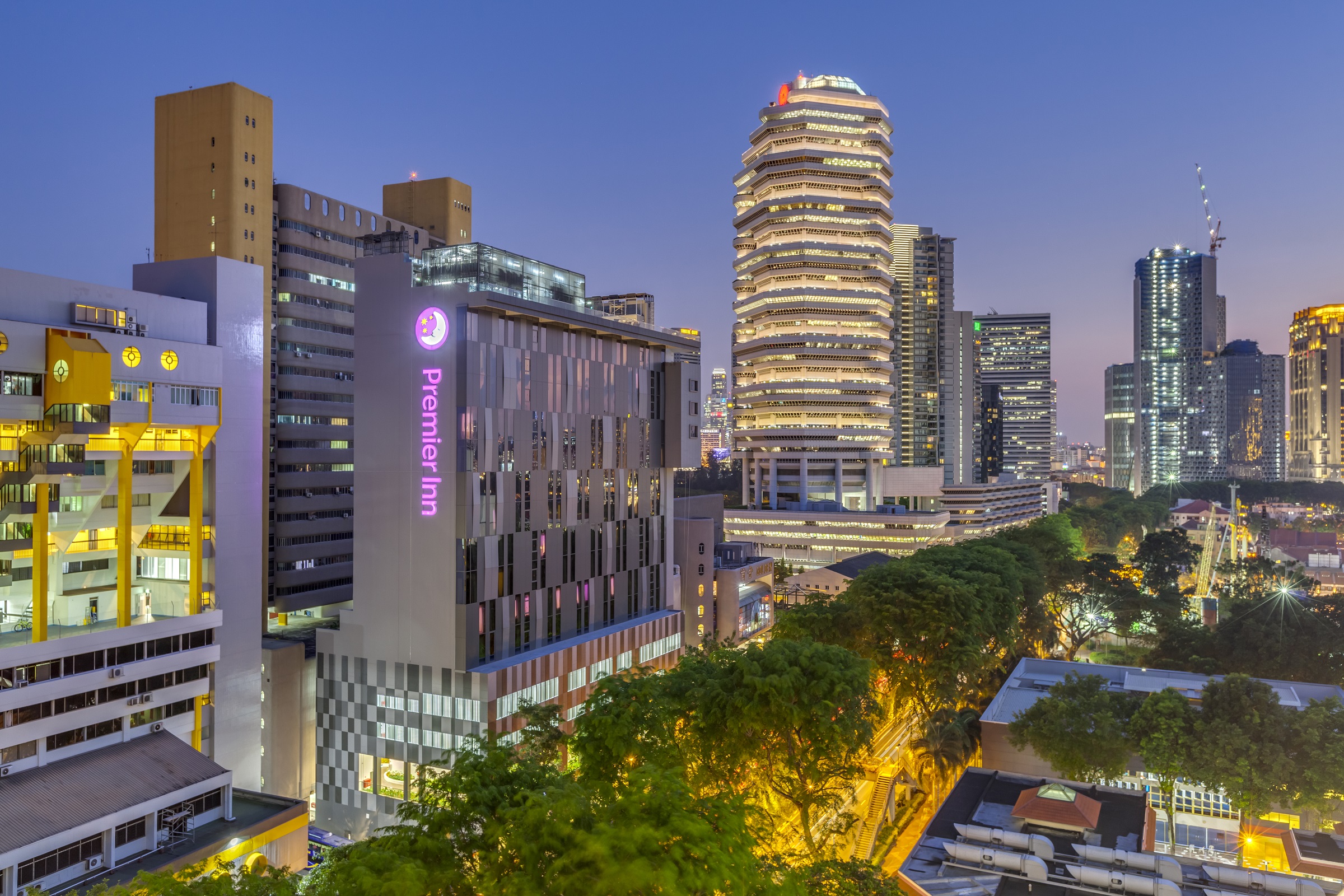
PREMIER Inn has appointed Pedro Mendes as general manager of Premier Inn Singapore Beach Road to oversee the UK brand’s first Singapore property.

Originally from Portugal, Mendes was previously based in the UK and served as cluster general manager for Premier Inn, and has covered all aspects of hotel operations in his 10 years of experience with the chain.

first-gm-named-for-premier-inns-singapore-debut

Due to open in 3Q2016, the 300-room Premier Inn Singapore Beach Road will boast facilities including a locally themed all-day dining restaurant and bar as well as a rooftop pool.

Philippines tourism collaborates with top travel influencers

0

beautifuldestinations

Various shots from Philippine destinations from Jaypee Swing (@JaypeeSwing) and Rod Ruales (@ninjarod) that were also featured on @BeautifulDestinations

THE Philippine Department of Tourism (PDOT) is collaborating with five of the biggest travel influencers from creative technology agency Beautiful Destinations to drive interest in destination Philippines.

According to the PDOT, this is the first time a South-east Asian NTO is collaborating with the Beautiful Destinations team.

The team working on this project will comprise Beautiful Destinations founder and CEO Jeremy Jauncey; head of brand partnerships and travel drone pioneer Tom Jauncey; community manager and London’s top Instagram travel photographer and videographer Jacob Riglin; iPhone-only photographer James Relf Dyer; and videographer Sam Kolder, who filmed for American DJ Duo The Chainsmokers.

Some of the destinations that the team will travel to include Cebu, Bohol, Palawan, Manila and Pangasinan.

As part of the deal, the team will share moments throughout each day of the trip on Beautiful Destinations’ Snapchat, Instagram, and Facebook channels, as well as on the PDOT’s Instagram and Facebook accounts. Videos captured will also stream outside the Philippine Center in New York.

Additionally, the PDOT will host an InstaMeet event in Manila where the Beautiful Destinations team will meet up with local travel and lifestyle influencers.

“As the social media landscape continues to develop at a rapid pace, we have to adapt to changing times in order to stay ahead of the curve,” said the Philippines’ tourism secretary Ramon Jimenez, Jr.

“Collaborating with Beautiful Destinations, which has already set the global standard for creating social content, is surely an effective way to make our country’s presence in the digital space more felt by travelers who are highly reliant on social media.”

Singaporeans still willing to splurge on travel

0

changi-airport

Departure hall at Changi Airport, Terminal 3

DESPITE a softening global economy, Singaporeans indicated that they are still willing to spend more on travel, according to a study by Wyndham Hotel Group’s loyalty division, Wyndham Rewards.

While 68 per cent stated that they are becoming increasingly cost-conscious in their personal finances this year, 81 per cent indicated that they will still travel about the same or more than the previous year.

Another 36 per cent were also willing to spend half of their discretionary spending budget or more on travel.

Additionally, the survey found 44 per cent of respondents were planning for big trips and about a third were intending to travel domestically or around the region in 2016.

As well, the findings show that travellers prefer midscale hotels followed by economy ones when choosing accommodations.