TTG Asia
Asia/Singapore Thursday, 9th April 2026
Page 1777

Rediscovering Persia

0

Freed from the baggage of sanctions, Iran is coming onto the radar of curious travellers but faces the uphill task of attracting mainstream tourists, finds TTG Asia

sept-23-vakil-bazaar

After economic sanctions on Iran were lifted in January 2016, tour operators are seeing pent-up demand among intrepid travellers for the once-isolated country, although opinions are split whether the destination will see greater footfall from Asia in the near future.

Yoshio Mogi, president of Trans Global Tour Japan, opined that the recent move is casting Iran in a more positive light as a destination steeped in history, culture and world heritage sites.

Among growth signs is AirAsia X relaunching thrice-weekly flights to Tehran from Kuala Lumpur since June, opening up new destinations for Malaysian outbound tour operators.

Said Kerry Tam, general manager of Parlo Tours, which will begin group tours to Tehran in 4Q2016: “We are targeting young people between the ages of 25 and 40 looking for exotic destinations. Iran is a new destination for Malaysia, and we think demand will be for full-board tours.”

Safuan Travel & Holidays is also looking to start full-board group tours to Iran in October, according to general manager Azizi Borhan.

Down Under, the buzz for Iran among Australian agencies is more palpable.

Louisa Virgato, product manager at  Abercrombie & Kent Australia, said: “Iran is one of the hottest emerging destinations and has become so popular that most tourism services are fully booked in the country for the peak travel period between September and November this year.

“In terms of sales, Iran is our strongest performing destination in 1H2016, with 28 per cent more bookings than the same time last year,” added Virgato.

Daniella van Haltren, destination manager for Middle East and Turkey for Australia’s Intrepid Group, noted: “Iran definitely appeals, especially to more experienced travellers who have been there, done that and are looking for the next exciting destination to explore.

“In the last 12 months we have seen sales on Intrepid Travel’s Iran Adventure trip more than double and we have had to create extra departures to match the demand,” she elaborated.

Elsewhere in Asia, demand for Iran is sizeable but limited to niche segments.

Hong Kong’s Blue Sky Travel, managing director, Angela Ng, told TTG Asia: “Clients are mostly sophisticated travellers who have travelled around the world and can afford this kind of trip. As it’s difficult to reach the minimum capacity for group tour departures, some clients come to me for tailor-made FIT programmes.”

Although Destination Consultants in Japan has been arranging visits to Iran for the past six years, sales executive Natsumi Suzuki has not seen a significant uptick in the number of Japanese visitors wanting to visit Iran as they are still concerned about US visa restrictions on people who have visited Iran.

There appears to be little change in demand from Singapore as well, with Vivian Yeo, director, content marketing at Quotient TravelPlanner, stating: “Our clients in general do not have much appetite for Iran and we have not observed any change with the lifting of sanctions.”

Despite its potential, there are still lingering concerns of Iran as an unsafe destination, travel chiefs pointed out.

Mayflower Acme Tours deputy general manager, channel management, Abdul Rahman Mohamed, urged: “The Iranian NTO has to work hard to change negative perception about the country that it is unsafe. In order to do this, it has to work with outbound tour operators and the media to organise fam trips.”

Rajji Rai, chairman, Uniglobe Swiftravels India, added: “It will take time and marketing efforts to project Iran as a destination in the minds of leisure tourists.”

Reporting by Rohit Kaul, S Puvaneswary, Julian Ryall, Paige Lee Pei Qi, Rebecca Elliot, Feizal Samath and Prudence Lui

This article was first published in TTG Asia September 2016 issue. To read more, please view our digital edition or click here to subscribe.

New hotel openings: September 12 to 16, 2016

0

The latest hotel openings and announcements made this week

intercontinental-shanghai-necc

InterContinental Shanghai NECC
InterContinental Hotels Group (IHG) has opened the 536-room InterContinental Shanghai NECC in Shanghai’s Hongqiao CBD. The property is located 5km away from Hongqiao International Airport and Hongqiao Railway Station, and is a three-minute walk to Metro Line 2 on the Shanghai subway network. Nearby attractions include Qibao Ancient Town, Zhujiajiao Watertown, Hongqiao Hub and Shanghai Outlets Mall. Facilities include four F&B options and 2,200m2 of event space.

beach_road_premier_inn

Premier Inn Singapore Beach Road
The UK’s Premier Inn hotel chain has opened the 300-room Premier Inn Singapore Beach Road, located within the city-state’s cultural Kampong Glam district and a 15-minute drive from Changi International Airport. It is also nearby the Singapore Sports Hub and Marina Bay area. Amenities at the hotel include complimentary Wi-Fi, a rooftop swimming pool and bar as well as a multi-cuisine restaurant.

THE ANAM RESORT

The Anam
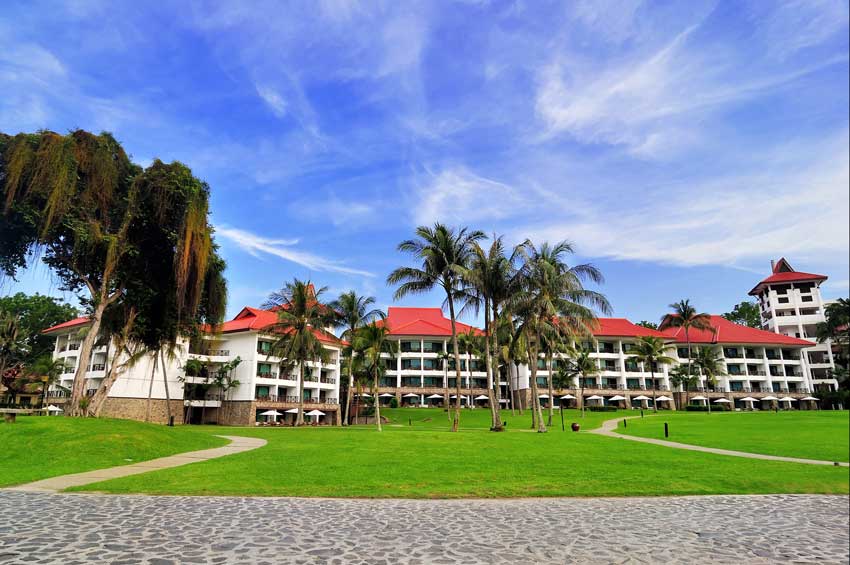
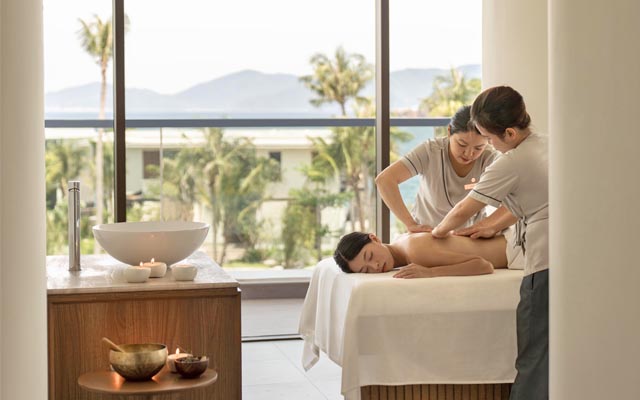
An independently operated luxury resort, The Anam, has soft-launched this month in the city of Nha Trang. It is sited on a private beach and boasts highly-trained staff and a design concept reminiscent of the colonial era. Rooms come in suite, villa and beachside accommodation categories that feature private pools. Facilities onsite include the Sri Mara Spa, a fitness centre, three swimming pools, a kids club, satay bar and signature Indochine Café serving contemporary Asian and European cuisines. A variety of activities, including watersports, are also available.

New adventure tour operator Rove to open this year

0

holly-richter
Holly Richter

A NEW adventure tour operator helmed by industry veterans is set to launch by the end of this year.

Rove, co-founded by Holly Richter previously from EXO Travel and Struan Robertson formerly from SpiceRoads, will offer adventure tours across Thailand, Indonesia, Laos and Cambodia at launch.

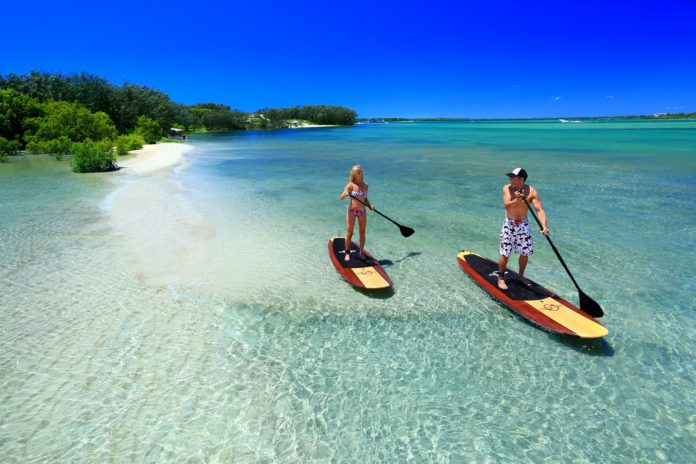
The initial lineup will include cycling, trekking, kayaking, paddle boarding and combination tours, alongside guaranteed departures throughout the year.

“There is definitely a gap in the market for a more varied and inclusive adventure operator,” said Richter.

“Unlike specialising in a single sport, we are able to offer the best mode of travel specifically catered to the environment in which it is taking place. This allows for a broader and more richly rewarding experience, as well as the uncovering of cultural encounters not accessible by other means.”

She added that their small group tours are unique in the way they enable travellers to meet other likeminded people from around the world, as opposed to segregating groups based on language and nationality as is common with other operators.

Rove will also be offering private excursions and tailored tours and have plans to expand into Mongolia, Myanmar and Sri Lanka soon.

Singapore F1 races ahead despite Zika fears

0

2015-sg-grand-prixCredit: 2015 Singapore Airlines Singapore Grand Prix

WHILE last year’s Singapore Grand Prix saw a blanket of haze overshadow the event, this year, gloom is being cast in the form of a virus.

A locally transmitted strain of the Zika virus sprouted in Singapore since August 28 and cases of infection in the city-state have reached 355 at last count.

However, the race event, which sees approximately 40 per cent of attendees from foreign countries, is not shifting to a lower gear because of Zika fears.

Tour East has not experienced any impact immediately following the outbreak, neither has it seen cancellations for the F1 window period, according to Judy Lum, senior vice-president sales & marketing of the Singapore inbound operator.

This is despite a number of countries, including Australia, Taiwan, South Korea, the UK and the US having issued travel warnings to Singapore.

The Singapore Tourism Board and race organisers Singapore GP have both voiced their confidence in a successful event and stated that ticket sales are not affected.

Almost 87,000 spectators attended last year’s race and a full crowd is expected for this year’s circuit as well.

“I am not sure if it is due to the fact that Tour East’s clients are predominantly from Europe and Australia that we did not experience any cancellations for F1,” commented Lum.

According to Q2 data from travel solutions provider Sojern, travel intent and forward bookings from Europe to Singapore during the F1 period remains strong and unchanged from last year.

“From a long-term basis, we are seeing week-on-week growth from Western Europe, which is the core region of F1 fans,” explained Russell Young, managing director Asia-Pacific at Sojern.

The allure of the event, the only night race in the F1 circuit, seems to be holding up in spite of recent worries, especially so for fans.

“Traditionally, the top markets in no particular order are Australia and the UK, as well as fans from Japan, Indonesia, Hong Kong, Malaysia, Thailand and the Philippines,” said Fiona Smith, director media and communications at Singapore GP.

Accommodations booking data from Hotels.com confirms that the major markets of Japan, Australia and the UK, among others, account for most of the reservations made over the September 15-18 period when the race takes place.

But surprisingly, South Korea took pole position for the most number of room reservations made during the F1 weekend, ostensibly signifying the market’s potential.

Concluded Lum: “With all the entertainment events and performing artistes lined up for the F1 weekend proceeding as normal and with the F1 drivers at the race as scheduled, this is a very clear message to the public that it is business as usual and perhaps the extent of the Zika fears were unwarranted.”

Royal Caribbean launches Singapore season agent contest

0

royal_caribbean_jpg

AS Royal Caribbean International’s Singapore season approaches, the cruise line has unveiled a contest to reward top selling agents.

For the first 30 bookings made on the Singapore sailings of Mariner of the Seas, Ovation of the Seas and Voyager of the Seas, agents will receive S$50 (US$36) worth of shopping vouchers. For every subsequent five bookings, an additional S$5 will be given.

The top sales agent who achieves the highest number of bookings will win a three-night cruise aboard the Mariner of the Seas in a balcony stateroom. The contest ends on October 6.

This is the longest-ever Singapore season for Royal Caribbean with 55 sailings over 8 months in total starting mid-October.

Dorsett appoints South Korean GSA

0

premier_room___dorsett_wan_chai
A premier room in Dorsett Wanchai Hong Kong

DORSETT Hospitality International has appointed Hotels & Resorts Representative Service (HRS) as its GSA for the South Korean market.

The hotel operator hopes that with the move, the Dorsett brand will be “firmly entrenched” in South Korea, which is a key source market for the group, according to Winnie Chiu, president and executive director for Dorsett Hospitality International.

“We hope to tap into HRS’ strong network of wholesalers, tour operators, travel agencies, media and airlines to assist us in not only expanding our reach and presence in South Korea but also to develop new business accounts for our hotels in Hong Kong, Malaysia, Mainland China, Singapore and the UK,” she added.

HRS is headed by president Jimmy Lee, who had worked for Harbour Plaza Hotel & Resort in Seoul, and as GSA for AccorHotels, Movenpick Hotels & Resorts, Banyan Tree, Aston & Aqua Hotels & Resorts, as well as Constance Hotels & Resorts, among others.


Talking robots that aid travellers deployed at Haneda airport

0

haneda_airport_robot

HUMANOID robots with speech capabilities have been deployed at Tokyo’s Haneda International Airport to act as mobile information providers.

Built by Hitachi, the EMIEW3 robots are at present being activated on a trial basis with plans to deploy them full-time by this year-end.

The robots – around 90cm tall and roving throughout the airport on wheels – are equipped with artificial intelligence technology that enables them to reply verbally in a number of languages to questions posed by travellers.

They are also able to share information with other EMIEW3 units and, if they are accidentally knocked over, able to independently resume a standing position, according to Hitachi.

Remarkably, they can interpret the movements of a human and autonomously initiate an interaction as well, inquiring if the traveller requires assistance, if deemed needed, such as when travellers are seen consulting a map.

Hitachi added there are plans to further develop even more advanced robots that can exist symbiotically with humans to a greater degree.

Explosion goes off on Bali boat ferrying tourists

0

passenger-boats-from-lombok-to-gili-trawanganPassenger boats from Lombok to Gili Trawangan

TWO passengers were killed and 20 others injured when a boat carrying international travellers exploded at Padangbai, Bali yesterday.

A statement from the Indonesian National Board for Disaster Management stated that the Gili Cat 2 fast boat bound for Gili Trawangan, Lombok left Pandang Bai Harbour Bali at 09.25 with 35 tourists and four crew members.

Ten minutes later, after having travelled about 500m away from the Bali Harbour, an explosion took place at the boat’s rear passenger area.

Bali Police dismissed terrorism as the cause following initial assessment by the bomb squad. Investigation is ongoing to determine the cause of the explosion.

Fast boats are popular means of transportation for tourists between Bali and Lombok. Gili Cat is one of several companies offering this service.

How far should companies go to cater to Muslim travellers?

0

In marketing to the Muslim traveler, companies should be mindful of the differences between Islamic travel markets. Travels motivated by spiritual reasons – such as the Hajj and Umrah, pilgrimages in Pakistan, Iran or Israel – are different from pure holidays that are not motivated by religious reasons.

With pilgrimages (especially Hajj), many of the elements (e.g. access to the site, rituals, time) are regulated. Whereas for holidays, tourists usually travel for cooler climates – such as when the Ramadan falls in summer and Gulf families want to escape very hot temperatures – or they might travel to discover new countries like Korea and Japan.

prof_-cedomir-nestorovic
Cedomir Nestorovic

While the motivations for these tourists may differ, travel sellers need not customize their marketing strategies too specifically. The elements for a traveler on a pilgrimage are quite fixed, so there is little capacity for travel sellers to innovate.

On the other hand, holiday-makers who choose to visit a particular city (e.g. Paris, Tokyo, or Singapore) expect to discover new things unique to that place. The experience needs to be different, otherwise, they would not have chosen to travel all the way there. Having said that, a certain amount of adaptation for halal meals and prayer facilities will be appreciated, and this can be easily arranged with practically any hotel.

Before committing to any form of investment, travel sellers should first identify the traveler profile they are targeting, because travelers come from countries with diverse backgrounds. These travelers may differ in several aspects, including purchasing power, cultural and social codes, religious teachings, and even political and legal conditions.

When it comes to purchasing power, an affluent customer who holds a strict observance of the Shariah likely has certain expectations of his accommodations, and a hotel operator would have to compute the trade-off.

Would a 5-star hotel segregate swimming pools and gyms, remove the mini bar from the rooms, restrict access to some floors, and close the night club? The compensation must be huge because a decision like that impacts not just the economic value, but also the reputation of the hotel. This is especially true if the property is part of an international chain, and the hotel has to respect the rules of the entire chain.

Separately, when it comes to the cultural differentiation and religious teachings, it is clear that a person from a Hanbali school of thought and Shafi/Hanefi school of thought will not require the same level of compliance with the Shariah. Companies looking to attract these travelers then may not have to make as many adjustments.

One of the most common pitfalls that travel sellers commit is to believe that Muslim consumers are all very rich, and that they ask for full compliance with the Shariah. If a hotel wants to cater only to this clientele, then it should consider transforming into a halal hotel.

In reality, Muslim travels do not justify the transformation of a hotel, because there would be insufficient number of guests and nights to sustain a complete transformation. It would be more feasible for a hotel to aim to be halal-friendly, where minimal changes are introduced to cater to Muslim travelers, yet not drive away the majority of non-Muslim consumers.

Nestorovic is the director, executive MBA Asia-Pacific at ESSEC Business School and the author of Islamic Marketing – Understanding the Socio-Economic, Cultural, and Politico-Legal Environment.

Contributed by Cedomir Nestorovic

Domestic travel interest in Indonesia spurs new travel mart

0

hasiyanna-ashadi
Hasiyanna Ashadi

GROWING interest from Indonesian tourism stakeholders to attract domestic travellers have prompted the Association of the Indonesian Tours and Travel Agencies (ASITA) Jakarta Chapter to organise its own travel mart.

The ASITA Jakarta Travel Mart (AJTM) 2016, a B2B table-top event held yesterday, saw 108 travel related companies from 24 cities and provinces in Indonesia selling their products to buyers who came from some 200 travel companies in Jakarta.

Hasiyanna Ashadi, chairman of ASITA Jakarta, said: “There are now many regional tourism offices doing roadshows to Jakarta. Each of them come at different times and request to meet with 20, 30, or 50 ASITA Jakarta members.

“This got us to organise a travel mart with a focus on domestic travel. We invite our members in the region to come as sellers and meet not only with a small number of buyers but hundreds of them.”

Pauline Suharno, executive committee member of ASITA Jakarta, said the growing interest to travel within the country did not only come from leisure travellers but also incentive groups.

Unlike other travel marts and fairs in Indonesia which are usually dominated by hotels and airlines, AJTM 2016 offered a greater variety ranging from car and bus rental to online solutions, souvenirs, training centres and financial products.

Said Pauline: “We have invited these different suppliers to facilitate our members with information and products that they can use to upgrade not just sellable products, but also for their own capacity building.

“We hear their concerns over the growth of OTAs consuming their business. We want to convince them that there is more they can do than just sell tickets and that there are products and services in the market that can help them.”

LIA Foundation, a language training centre, for example, has six-month courses for tour leaders and guides, offered in English and Mandarin.

Meanwhile, Permata Bank offers payment solutions especially for offline travel companies and those wanting to enter the online business.

“Some 70 per cent of Indonesian travellers use debit cards to pay for their travel products and our payment channel allows debit card payments from all banks in Indonesia,” said Sofyan, sales manager e-channel business & payment solution of Permata Bank.

“A small or new startup with limited IT infrastructure can still use our service through payment gateway partners like DOKU, Veritrans or FirstPay,” he added.