TTG Asia
Asia/Singapore Thursday, 9th April 2026
Page 1778

Terror fears a drag on arrivals into Europe

0

tourists-sultanahmet-park-near-hagia-sophia
Tourists in the Sultanahmet Park, near Hagia Sophia in Istanbul, Turkey

LONGHAUL bookings into Europe have steadily declined throughout 2016 as travellers avoid the region following a spate of terrorism related incidents.

For the period between June 1 and August 31, international travel into Europe fell 0.9 per cent compared to the same period last year, bucking the 6.2 per cent average positive growth trend of the last five years, according to data by ForwardKeys.

The decline is due to a drastic fall in volume from several major destinations, namely France (-9.6 per cent), Turkey (-26.7 per cent), Germany (-4.1 per cent) and Belgium (-21.4 per cent), which all suffered from dramatic terror attacks this year. Intra-Europe travel meanwhile fell by 6.9 per cent.

The Asia-Pacific (-2.4 per cent), African (-2.8 per cent) and Middle East (-1 per cent) source markets contributed most to Europe’s falling international arrivals, with China (-3.7 per cent), Japan (-18 per cent), the UAE (-13 per cent) and South Africa (-7.7 per cent) contributing most to the declines.

Only the North and South American markets (2.5 per cent and 4.6 per cent respectively) showed positive growth in traffic to Europe.

However, other European destinations are enjoying a diversion in longhaul traffic from affected destinations as they are deemed as being safer to travel to.

Over the same period, Spain (10 per cent), Portugal (5.2 per cent), Ireland (18.1 per cent), Scandinavia (6.1 per cent), Russia (18.2 per cent) and Poland (26.1 per cent) all benefited from the shift in traveller preferences.

The third quarter figures continue from the year’s second quarter declinations of negative 3 per cent year-on-year.

Singaporean beachgoers favour overseas destinations: Expedia

0

beach-holiday-couple

SINGAPOREAN travellers are one of the world’s most likely to travel internationally to enjoy a beach holiday, coming in second only to Austrians.

According to Expedia’s 2016 Flip Flop Report on the behaviours and preferences of beach vacationers worldwide, 96 per cent of Singaporean beachgoers travelled internationally to do so. This the second highest globally, with Austrians (98 per cent) taking the top spot.

Meanwhile, 82 per cent of Singaporean respondents further indicated that they prefer to ‘do nothing’ while on a beach vacation, compared to a global average of 74 per cent.

This signifies that Singapore travellers may be using beach holidays as an opportunity to wind down from their hectic lives back at home, according to the Expedia study.

Most of them travel with family members (73 per cent) as well, similar to other South-east Asian travellers, with 74 per cent of Malaysians and 79 per cent of Thais also opting to take their family members to the beach.

When asked to rank their top fears at the beach, Singaporeans highlighted theft (38 per cent), bad weather (15 per cent) and drowning (13 per cent) as their top three causes for concern.

Singaporeans are also tops when it comes to Wi-Fi use at the beach, with 68 per cent opting to browse the internet and their social media feeds, compared to the global average of just 48 per cent.

Silversea Cruises names Roberto Martinoli as CEO

0

roberto_martinoli_

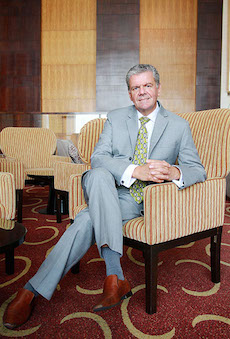
Silversea Cruises has appointed Roberto Martinoli as CEO effective from September 19, replacing Enzo Visone.

Martinoli has been a board member with Silversea since 2013 and has had a successful career in the cruise and shipping industry.

He will be based at the company’s headquarters in Monaco and will report directly to executive chairman Manfredi Lefebvre d’Ovidio.

Cloud passport in the works for ASEAN nations

0

faisal_ariff
Faisal Ariff 

MALAYSIAN startup BorderPass is set to launch a pilot test at Kuala Lumpur International Airport (KLIA) which allows travellers to pre-clear the immigration checkpoint before arriving at the destination.

The closed trial will take place once BorderPass finishes installation of automatic clearance gates at KLIA Terminals 1 and 2 by the end of this year. Public trials are then planned to follow.

Explaining how it works, BorderPass CEO Faisal Ariff said: “We replace paper immigration forms with a biometrically verified online profile, which is sent to the destination government the moment a flight is booked.

“Pre-cleared passengers use a BorderPass automated gate on arrival, skipping the manual immigration queue and forms. It is essentially a precursor to the cloud passport. It is where we feel the world is headed to in the next 10 to 20 years.”

BorderPass is being targeted at intra-ASEAN travellers for now, according to Faisal, who is speaking with various stakeholders within the 10 nation bloc to implement the pioneering solution.

“There are four key stakeholders who we have worked hard to convince: governments, airlines, airports and passengers,” he said.

“Each have a different perspective and we tailor our message to them accordingly. For governments the top three priorities are security, security and security. For airlines, it may be boosting passenger throughput and managing capacity.”

BorderPass had been in talks with the Malaysian Immigration Department since early 2014, as well as with the ASEAN Secretariats in Jakarta and three other ASEAN countries, among many others, to bring the project to its current state. The trail at KLIA is a first for South-east Asia.

Australia and New Zealand, in an initiative led by the two nation’s governments, were the world’s first to test run cloud passport technology back in October 2015.

While going paperless is an exciting prospect for end-consumers, Faisal highlights the positive effects it has for South-east Asian immigration authorities as well.

He said: “The key difference we are introducing is the ability to pre-screen passengers before they arrive, using a secure biometrically-verified profile which carries over from journey to journey across the region.

“This enables the destination government to screen visa-free visitors days, weeks or months ahead of time, as opposed to traditional last-minute manual screening. For passengers this translates to a simple, seamless, and secure journey.”

BorderPass is also currently working closely with travel technology stalwarts Amadeus via its startup programme Amadeus Next to look at integrating its systems with airlines and airports that are being powered by Amadeus solutions.

“We had the unique opportunity to head to Amadeus’ customer event, Online Connect, where we were able to pitch our idea and network with Asia-Pacific’s leading OTAs. It was great exposure to the industry and for us it validated our solution with the online community,” said Faisal.

“We were also pretty excited to be awarded Amadeus Next Startup of the Year at the event, helping us to establish international credibility, and probably it helped us in Malaysia also.”

Myanmar agents grapple with slowdown in arrivals

0

shwedagon-pagodaShwedagon Pagoda

TRAVEL agents in Myanmar are concerned about flatlining arrival numbers after experiencing a boom in recent years.

Figures from the Ministry of Hotels and Tourism reveal foreign arrivals soared from 1.6 million in 2012 to 4.6 million last year, with 5.5 million forecast for this year.

However, almost two-thirds of arrivals were day trippers from neighbouring countries who, under international standards, would not normally be counted as tourists.

With a wealth of potential for tourism to grow, industry players say major changes need to be made if it is to attract foreigners who stay for more than a day.

The strong growth in the last five years has been largely due to political reforms, said Edwin Briels, general manager of Khiri Travel Myanmar. He said the country welcomed a rush of “early adopters” clamouring to see Myanmar emerge from its political shackles and witness the country go through a historical transition.

This trend has plateaued, with agents claiming measures need to be taken to capture “early majority” travellers.

Briel said: “These people aren’t proper Burma lovers like those who used to come here. They want better facilities, they need value for money. More needs to be offered than just the temples.”

Myanmar also needs to be marketed better to the outside world, with many travellers put off by out-of-date warnings issued by foreign offices.

Sandor Leinwand, general manager of EXO Travel Myanmar, said: “There are so many areas opening up that are exciting but foreign offices warn against going there so that pulls us back. They need to bring their advice in line with the Myanmar government.”

Growth was also hampered by November’s historic elections, with many travellers hesitant to book until the new government, which officially came into power in April, settled.

High costs are also a deterrent, said Lee Sheridan, general manager of Peak DMC Myanmar. Hotel rooms are significantly higher than those of nearby countries, such as Thailand and Vietnam, with many businesses hiking up accommodation and domestic airfare prices for foreigners.

Sheridan said: “I do think these are all short-term problems. If dealt with, Myanmar has a very prosperous future in tourism.”

Photo of the Day: Korean Air’s sexy Sharklets

0

korean_air_neo_sharkletsKorean Air’s special task force and guests from Airbus at a commemorative ceremony at the carrier’s Tech Center in Busan

South Korea’s national carrier has commenced production of Sharklets – an ‘L’ shaped structure attached at the end of the wings of A320 and A330 aircrafts and designed solely by Korean Air – for the Airbus A330 NEO. According to Korean Air, the Sharklet plays an essential role in improving aircraft performance, reducing carbon dioxide emissions, air resistance and improving fuel efficiency.

Korean Air has been delivering more than 1,800 independently re-developed A320 NEO Sharklets since 2009 and will commence deliveries for the A330 NEO variants.

IHG brings accommodation support to new Shanghai convention centre

0

hotel_exterior_night_shoot_%e9%85%92%e5%ba%97%e5%a4%96%e8%a7%82%e5%a4%9c%e6%99%af%e5%9b%be

INTERCONTINENTAL Hotels Group (IHG) has opened the only luxury hotel located within National Exhibition and Convention Centre (NECC), Shanghai’s latest MICE venue.

The 536-room InterContinental Shanghai NECC boasts its own collection of events space which totals 2,200m2. These venues are suitable for high-level meetings, banquets and galas. Other facilities onsite include four F&B options.

The hotel sits five kilometres away from Hongqiao International Airport and Hongqiao Railway Station, and is a three-minute walk to Metro Line 2 on the Shanghai subway network. Nearby attractions include Qibao Ancient Town, Zhujiajiao Watertown, Hongqiao Hub and Shanghai Outlets Mall.

Bhaya’s luxury cruises flaunt new enhancements

0

halong_bay
One of Bhaya Group’s newly renovated luxury level vessels

FOLLOWING two months of renovations, Halong Bay cruise operator Bhaya Group has unveiled upgraded rooms and facilities on its two luxury-level vessels, collectively known as The Au Co.

The redesign of the ships’ 64 cabins is complemented by a revamp of onboard facilities, including a new reception area, spa, restaurant, cocktail bar, library and private cinema.

The boats are now fully-equipped to take travellers on 3D2N itineraries encompassing activities such as mountain biking on Cat Ba Island and luxury dinners in Virgin Cave. Previously, The Au Co was able to visit the more remote parts of Halong Bay for one-day excursions only.

“Every year, the twin ships undergo refurbishment lasting at least a month, but after four years in operation, we were looking to offer our passengers something different – an onboard experience that captures both traditional Vietnamese and modern luxury styles,” said Bhaya Group managing director, Ly Thuy Huynh Nhu.

bhaya_the_cabins_room
A cabin room

Guests can get the local experience onboard through taichi sessions, traditional dance performances in the evening and Vietnamese cuisine.

And to minimise engine noise and disturbance to passengers, the exhaust pipe has been moved from the top to the rear of the vessel.

Along with the refurbishments, the boats also underwent a scheduled annual maintenance for all onboard safety equipment.

[PERSPECTIVES] Maximising value through better-managed travel procurement

0

FOR procurement professionals, cost savings and tailoring organisation requirements according to compliance considerations have always been a priority. Yet, beyond just clinching discounts for their company, procurement professionals have started to take on more strategic roles within their businesses, one of which includes travel management.

With a broad range of responsibilities to juggle each day, procurement professionals often outsource travel management functions to travel management companies, some of which include evaluating and negotiating with travel service providers.

While these partnerships generally work well, if left unattended or managed poorly, there is a risk of standards slipping in the travel programme. According to data from a report released by HRS in early 2016, hotels are a key area where these standards may slip.

Furthermore, research by the Chartered Institute of Procurement and Supply indicates that a well-documented, well-implemented and well-monitored policy can reduce travel costs by at least 10 per cent and up to 30 per cent. With these savings in mind, procurement managers stand to maximise the value they are getting from the money spent on travel by closely monitoring the following key areas:

Finding the best value
When it comes to hotels, pricing can be confusing and inconsistent. Whenever someone books accommodation, they most probably would have gotten a different price for the same hotel by booking via another channel.

Travellers therefore often assume that open booking allows them to secure the best value for their accommodation. According to an internal survey conducted during the 2016 Corporate Travel Forum in March, 78 per cent of travellers believe that open booking provides them with better rates, while another 69 per cent do it out of habit.

However, lower rates do not necessarily equate to best value. Findings from the same survey reveal that over 50 per cent of open booking rates do not include breakfast or Wi-Fi connectivity; more than 60 per cent of open bookings are not accompanied by a flexible cancellation policy; 23 per cent involve a more tedious travel expense process; and 57 per cent of firms do not know where their travellers are, thereby compromising on duty of care.

Streamlined MICE solutions can help companies save time and costs spent on tedious research, and one way of optimising the procurement procedure is through HRS’ Intelligent Sourcing – a five step process in which we source, negotiate with and constantly refresh companies’ hotel portfolios based on their individual travel data. This provides not only the ideal value-for-money ratio, but also full transparency and predictability as compared to dynamic, volatile daily rates.

Ultimately, procurement professionals need to be convinced that their travel partner fully understands all the various rates that exist, is able to benchmark these against their data, and has the flexibility to clinch the best available rate.

Ensuring a simple payment solution
From our conversations with procurement professionals, we found that payment and expenses processes are a common source of frustration. As travel should be quick and easy to manage for both employees and procurement managers alike, time-consuming payment processes can be a serious problem, but it is one that can be avoided.

Some companies use more than one option for managing payment. For instance, some require employees to pay on personal cards or company cards and then expense back, while others use a bill-back system where the travel partner pays the hotel bill and then invoices back to the company the cost of the room as well as other additional costs.

These methods lack transparency, and can be complicated and expensive. To alleviate these pain points, procurement professionals can partner hotel specialists that offer digitised payment solutions. One example is an automated process that collects and integrates all booking, payment and invoice data, dramatically streamlining the expense process.

Moving beyond chain hotels
Many travel procurement managers are hesitant to incorporate independent hotels into their travel inventory due to security concerns and the fear of compromising on duty of care. This echoes the sentiment expressed by business travellers themselves, with 75 per cent of survey respondents saying that they prefer the safety of a chain hotel, in comparison to 21 per cent who would select independent hotels, according to a survey conducted by the Guild of Travel Management Companies in June.

However, in a market where hotel chains are becoming more consolidated and with younger travellers looking for more variety in their accommodation options, relying on a few players may not necessarily be the best strategy. In order to build market intelligence, procurement managers need to source more widely and talk to the entire market. This brings about cost savings opportunities too, given that hotel chains tend to absorb higher overhead fees when managing their brand distribution – as opposed to smaller, independent chains.

We are witnessing the slow shift towards independent hotels across Asia-Pacific, a region with a high proportion of millennial travellers. HRS data shows that the hotel market in the region already has an independent hotel supply at approximately 80 to 90 per cent.

With independent hotels slowly becoming the reality of business travel, HRS works to offer more choices with its portfolio of business-grade independent hotels.

Providing access to 180,000 independent hotel properties that fit into the framework of business travel programmes both big and small, travel managers are able to seek alternative options for their hotel programmes. So long as sourcing can be done at the same quality and consistency, there will be a time when reliability surpasses the brand as the primary decision-maker of which business hotel to stay in.

At the end of the day, procurement professionals who fully understand how to add value to their current travel programme and work with the right partners will be able to attain the best possible quality, value, payment solutions and advice for their business.

The result?

Even greater savings to their bottom line.


kimi_jiang_vp_apac_at_hrs

Kimi Jiang is the vice president, Asia-Pacific, of Hotel Reservation Service. HRS is a global hotel solutions provider with more than 40,000 corporate customers worldwide. Her core responsibilities include leading the organisation’s regional expansion across markets like Great China, Japan, Singapore and India. Jiang also initiated the HRS Corporate Travel Forum – an industry event for travel management in China and Japan.

By Kimi Jiang

Grand Hyatt Tokyo preps for Olympics with upgraded event spaces

0

grand-hyatt-tokyo

THE Grand Hyatt Tokyo, in the Roppongi district of central Tokyo, has completed a major renovation of its events venues.

Part of a broader drive by the hotel chain to enhance its MICE capabilities throughout Asia, Grand Hyatt Tokyo’s renovation focused on unifying the second floor of the hotel with a cohesive residential design, and expanding and enhancing the Thyme banquet room on the fourth floor. A Poggenpohl show kitchen was also added.

Moreover, there is now direct access to the property’s outdoor garden, while facilities have been spruced up with new technology such as SiliconCore’s high-resolution 192-inch LED display screens. This cutting-edge technology prevents day-time screen glare, making the Coriander room an ideal venue for day-time events and meetings.

“As the host country of the 2020 Olympics and Paralympics, Japan will draw attention from around the world and international visitors will continue to increase,” said Hiroyuki Yamada, director of event sales.

“This means that as we get closer to the Olympics, demand for leisure, MICE and onsite visits of corporations will increase as well,” he told TTmice e-Weekly.

“This is a great opportunity and we hope to see a positive impact on the hotel business and the overall economy.”

The Grand Hyatt Tokyo has hosted events ranging from large-scale movie premieres and financial conferences to luxury car shows and press events.

“Hyatt as a group has a tremendous commitment to MICE. In the past 13 years that we have been in the business, we have been able to consistently renovate our facilities to adapt to the trends and ever-changing demands,” Yamada said, stressing that the hotel intends to “aggressively grow MICE bookings” in the future.

“Our team travels strategically to different parts of the world to generate new business, and we work with Roppongi Hills and local organisations – such as Destination Marketing Roppongi – to achieve a common goal of increasing our MICE business on a larger scale,” he added.

Yamada concluded: “We have had a lot of interest from companies coming to Japan and we would like to establish our position as a leading hotel that can constantly offer creative, innovative and unique personal experiences.”