TTG Asia
Asia/Singapore Thursday, 14th May 2026
Page 1775

Karl Lagerfeld debuts eponymous hospitality brand

0

karl_lagerfeld_hospitality

Fashion house Karl Lagerfeld, in partnership with Brandmark Collective, has launched Karl Lagerfeld Hospitality, a new hotel and lifestyle brand.

The first property to carry the Karl Lagerfeld flag will open in Macau in 2017.

“Expanding our brand into the hospitality sector reflects our greater vision to broaden Karl Lagerfeld’s comprehensive lifestyle experience,” said Pier Paolo Righi, CEO and president of Karl Lagerfeld.

Karl Lagerfeld Hospitality’s projects will include not only hotels, but residential properties, restaurants and private clubs as well, where each will reflect Lagerfeld’s approach to style.

Righi added: “Developing the Karl Lagerfeld six-star hotel in Macau, which is scheduled to open in 2017, has been an exciting process for our whole team, and we look forward to further expanding in this field.”

The company is currently exploring further opportunities in gateway markets and resort destinations worldwide.

Thai outbound tour prices decline as FIT demand surges

0

thai-young-traveller

Outbound travel package prices in Thailand will be on the decline for the next two years, with longhaul destinations seeing as much as a 50 per cent drop in prices, according to the Thai Travel Agents Association (TTAA).

“In the past two months, package prices to many destinations, especially to Europe, were very low, starting at only 35,000 baht (about US$1,000). Many agents now sell packages at a loss because the projection of Thai people’s spending power was wrong,” said Suparerk Soonrangura, president of TTAA.

The financial health of Thai travellers had not bounced back as expected with many now choosing shorthaul destinations of less than seven hours. Additionally, companies and state agencies have cut budgets for overseas meetings and incentives. Travel firms have also started a price war, added Suparerk.

“The unpleasant situation will continue for the next two years at least. Only strong and flexible tour operators can survive,” he noted, advising travel agents to create new products that are in line with trends such as cycling- and marathon-related packages.

Although outbound flow for tours is tightening, the number of Thai FITs is growing.

Thai travellers, especially millennials, prefer to travel free and easy. A trove of travel information on the Internet and lower costs stemming from stiff competition among airlines, especially LCCs, has encouraged them to travel more independently as well, explained Suparerk.

TTAA expects overall outbound travel to grow 18 per cent to 6.9 million trips this year and to 7.1 million by 2017. Tours are accounting for 20 per cent of total traffic this year and is on the decline.

The top three outbound destinations for Thais are China, Japan and South Korea.

JTB invests in Indonesia, aims for 150% growth in sales

0

HAVING identified Indonesia as its second most important source market in Asia, JTB Global DMC Network is stepping up its in-market promotions to raise brand awareness of the company and to showcase its network of DMC partners across the world.

It will host its second roadshow in Jakarta today, fielding representatives from its global network of DMC partners, specifically TPI America (representing North America and Hawaii), Tumlare Destination Management (representing Europe), JTB Global Marketing & Travel Inc. (representing Japan), Lotte JTB (representing South Korea) and JTB CSO (representing Asia-Pacific).

The partners will showcase new and current programmes, and spotlight relatively fresh destinations to the Asian market. For instance, Tumlare Destination Management will highlight Scandinavia and Russia; JTB Global Marketing & Travel Inc. will promote Muslim-friendly programmes; JTB CSO will push multi-destination itineraries in the region.

The event is expected to see a stronger attendance than the first edition in 2015, when it welcomed 100 buyers from more than 50 local travel agents.

Speaking to TTGmice e-Weekly in an interview, Toshihide Ozaki, senior manager, global inbound business at JTB, said: “We consider Indonesian as one of the fastest growing and most dynamic in the (Asia) region. We are also aware of the fact that after China, Indonesia is the biggest source market for us in South Asia. Taking this into view, we want to tap the potential and create a market share for ourselves in 2017.”

Ozaki shared that JTB Global DMC Network aims to achieve 870 million yen (US$8.3 million) in sales from Indonesia by end of 2018, up 150 per cent from 2016’s forecast.

While he said business from Indonesia “was not as promising as the last”, he is confident that 2017 will be a good year for the company when the market “bounces back”.

The Jakarta roadshow follows similar showcases earlier this year in Wuhan and Nanjing, China and Hanoi and Ho Chi Minh City, Vietnam. JTB Global DMC Network started its roadshow blitz in 2015 when it kicked off a massive growth plan to expand its global footprint. Key to this plan is the company’s establishment of local sales offices and branches worldwide, as well as acquiring established DMC specialists in key regions.

New Zealand’s first pod hotel opens in November

0

jucy-snooze-christchurch

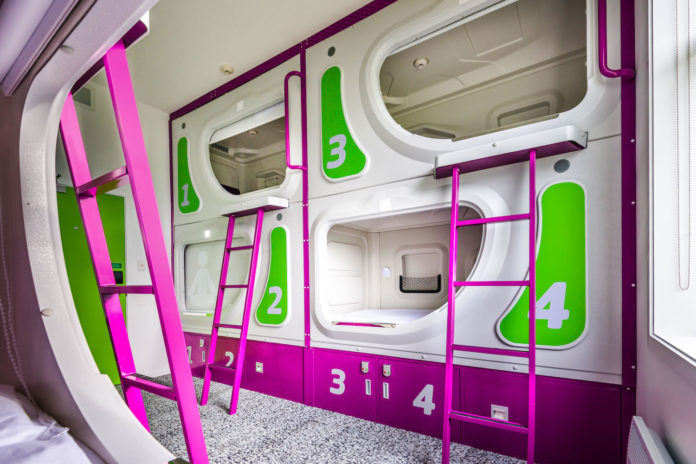
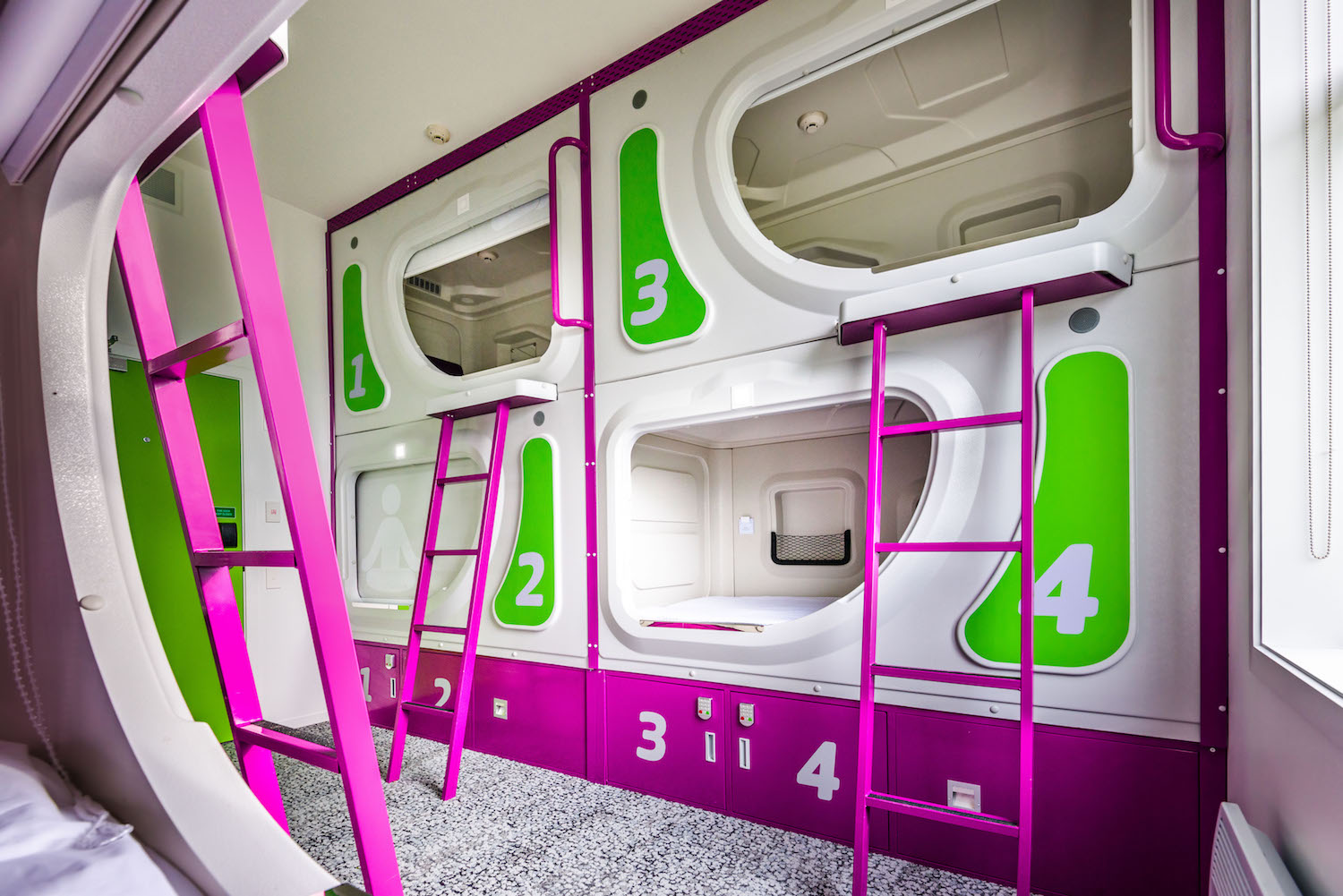
Operator Jucy will open New Zealand’s first pod accommodation on November 1, located a few minutes’ drive from the international airport in the country’s second largest city of Christchurch.

Jucy Snooze Christchurch will have 271 beds and offer self-contained accommodation capsules with beds, storage lockers, power supply and Wi-Fi connectivity. Guests can only self check-in and out with the use of a smartphone or a specially-designed kiosk.

Said Jucy’s CEO Tim Alpe: “Our research found that hotels were inadvertently causing bottlenecks for their reception staff by forcing guests to leave at the same time. Any time when customers need to queue to pay their bill creates the potential for customer satisfaction to be diminished. We wanted the first and last impression our guests have to be one of efficiency and convenience.”

Alpe added there has already been strong interest in the accommodation with 600 international bookings secured a month before its launch.

Other facilities on-site include communal spaces such as general-use lounges and desks provided for internet browsing.

Pod prices start from NZ$39 (US$27.60), and the pricing model allows travellers the flexibility of overnight stays or a stay of a few hours.

Construction on a five-storey Jucy Snooze in Queenstown will soon begin as well, targeted to open in June 2017.

Sunway Pyramid Hotel reopens after US$29 million renovation

0

sunway_pyramid_deluxe_room

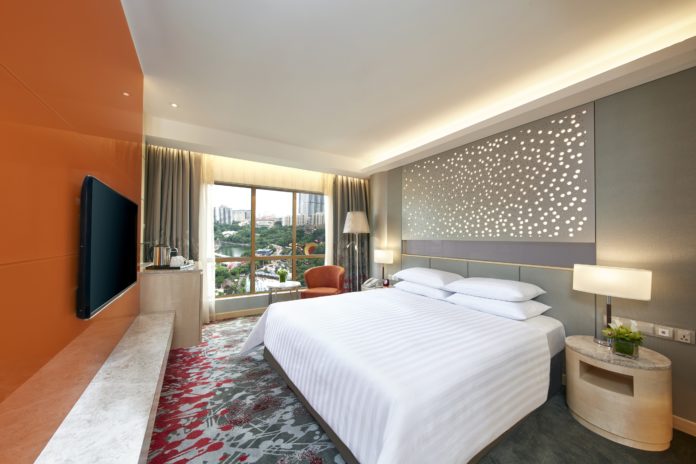
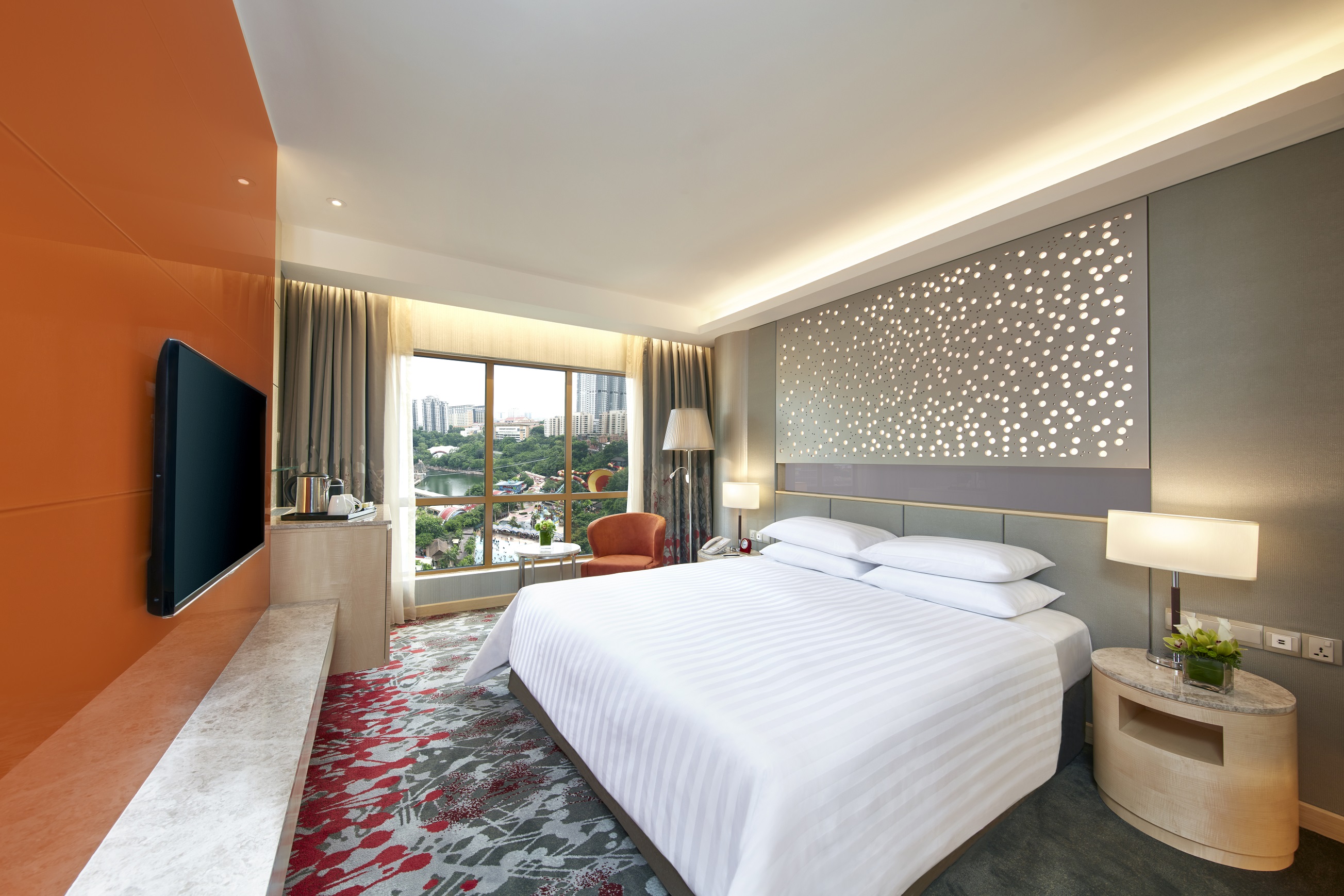
Sunway Hotels & Resorts will reopen its 4.5-star Sunway Pyramid Hotel on November 3 after a RM125 million (US$29.6 million) renovation.

Formerly known as the Sunway Pyramid Hotel East, the hotel will progressively open, and targets to have its 564 rooms fully operational by end-January 2017. Rooms feature complimentary Wi-Fi, USB charger outlets, 42-inch LED smart TVs and walk-in showers.

The newly-renovated property’s inventory has been boosted to 564 from 549, and feature 21 new purpose-built family rooms and suites. These suites will range from 53m² to 60m² in size, and have added amenities such as two bathrooms, a mini refrigerator, a microwave and bedding options for up to six people.

The hotel’s transformation also includes a makeover of the hotel’s main lobby, a new coffee lounge, lift landings, guest floor corridors and guestrooms.

Albert Cheong, CEO and group general manager of Sunway Hotels & Resorts, said: “With the full room inventory available by end of January 2017, the cluster of hotels in Sunway City including the new Sunway Pyramid Hotel will offer guests a choice of over 1,400 guestrooms and suites within a single integrated destination.”

On growing Sunway’s market share, Cheong added: “We’re leveraging on our recent opening of Sunway Hotels & Resorts’ regional sales offices in Shanghai and Dubai as well as several newly announced all-inclusive getaway packages, available exclusively for those booking direct on www.sunwayhotels.com.”

Introductory rates – valid for stays from November 3-30 – start from RM380 per room per night, inclusive of breakfast for two adults, and complimentary Wi-Fi.

Sunway Hotels & Resorts owns and manages 11 hotels and resorts in Malaysia, Cambodia and Vietnam.

US biggest winner of Muslim traveller spend

0

halal-certification

The US is the biggest beneficiary of global Muslim tourism spend, according to an economic impact report by Salam Standard.

The Economic Impact of Muslim Tourism on the United States 2015-2016 paper revealed that the Muslim travel market accounted for US$145 billion of total international tourism spend in 2015, with the US receiving a 24 per cent share or almost US$35 billion.

Muslim tourism also contributed US$16 billion to US GDP in 2015, driving the prosperity of restaurants, hotels, cultural venues, travel agents, airlines, local transport and retailers country-wide.

“The US benefits more from Muslim tourism than any other economy in the world in terms of direct GDP impact,” said Faeez Fadhlillah, co-founder and CEO of Salam Standard.

“And when you take into account multiplier effects, the total impact of inbound Muslim tourism spend on US GDP is a staggering US$50.8 billion, accounting for more than 10 per cent of total inbound tourism spend in the US. This represents a huge opportunity for the country’s travel industry, particularly given the global Muslim tourism market is expected to grow by 50 per cent in volume and 35 per cent in value over the next five years.”

Muslim travel also supports more than 600,000 jobs in the US in terms of total employment, according to the report.

The US should therefore be looking for ways to boost its halal-friendly tourism offering and market it digitally to the fast-growing Muslim travel community, the research paper suggests.

While faith-based needs of Muslim travellers can vary according to country of origin, universal requirements include the availability of halal-certified food, the observance of prayer times and the absence of alcohol.

Salam Standard’s report makes a number of recommendations to the US travel industry in this regard, including providing prayer mats and places to worship, as well as halal food.

Salam Standard, launched in October last year, is an online reference tool that categorises hotels according to their adherence to Muslim-friendly requirements and makes the content available to Muslim travellers.

Seaplane tour operator opens in Hiroshima

0

setouchi-seaplanes

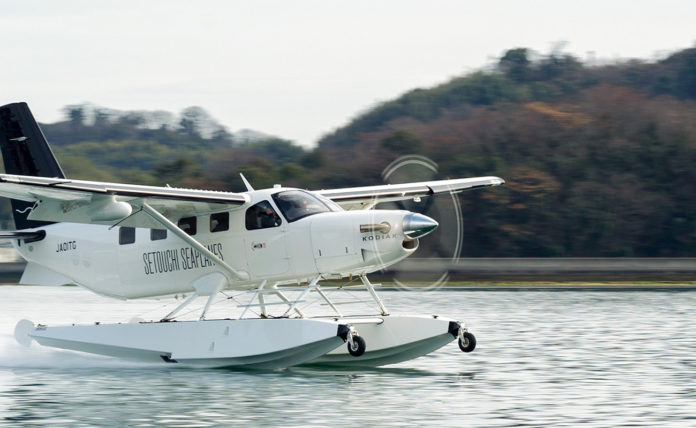
Setouchi Seaplanes has launched Japan’s first commercial seaplane operation in 50 years, to areas around the Seto Inland Sea, the body of water between Honshu, Shikoku and Kyushu that is home to 3,000 islands.

The company, located on the southern coast of Hiroshima Prefecture, is offering a 50-minute sightseeing flight over the Geiyo Islands, an area renowned for its scenic beauty. Alternatively, customers can customise their tours through special or chartered flights.

“A seaplane can be a very convenient and useful tourism tool for a country surrounded by ocean, like Japan,” said Yutaka Nakanishi, the firm’s marketing and planning department manager. “We offer tourists the chance to see the magical beauty of islands large and small, ancient ruins, and historic buildings.”

The fleet comprises Kodiak 100 amphibious planes produced by US-based Quest Aircraft. For an adult, prices range from 32,000 yen (US$310) on weekdays to 42,000 yen during holidays.

Robert Day, owner of Japan tour specialist Robert Day Travel, believes there will be quite a lot of interest but pricing is key to converting that interest to demand.

“The scenery in the inland sea area is spectacular and I think that an aerial view would only make the view better,” he said. “As long as people think that the price offers good value for money, then I’m sure there would be interest.”

Setouchi Seaplanes also plans to offer charter flights from Kansai International Airport to Hiroshima Prefecture and to expand its routes to include the bay areas of Tokyo, Yokohama and Osaka.

Indian agents launch online platform to combat OTAs

0

The Travel Agents Federation of India (TAFI) is planning to launch an online platform to compete head on with OTAs.

The platform, expected to go online this year-end, will offer a marketplace for TAFI member agents and tour operators to buy and sell hotels, specialised tours and allied services like visas, transportation and cruises

tafi-president-praveen-chugh
Praveen Chugh

“Even at a time when OTAs are growing their base alarmingly, no one can deny the expertise and contracting power of traditional offline travel agents. Some of the rates offered by us are unmatchable,” said TAFI president Praveen Chugh.

“So we are looking to help offline travel agents (by coming) together and benefit from each other’s expertise.”

The platform has the added benefit of allowing TAFI members to better engage with multiple global suppliers for their business needs in real-time.

“Together, we will be in a position to own market share and negotiate on the basis of demand. Thousands of entrepreneurs working together are much stronger than a few OTAs,” added Chugh.

He further expressed concern that OTAs are overtaking traditional agents through excessive discounting and cashbacks.

“In order to combat this challenge, we have to come together and create an online ecosystem where together we can combat OTAs.”

Thai agents shift focus as Chinese arrivals dwindle

0

bangkok-floating-market

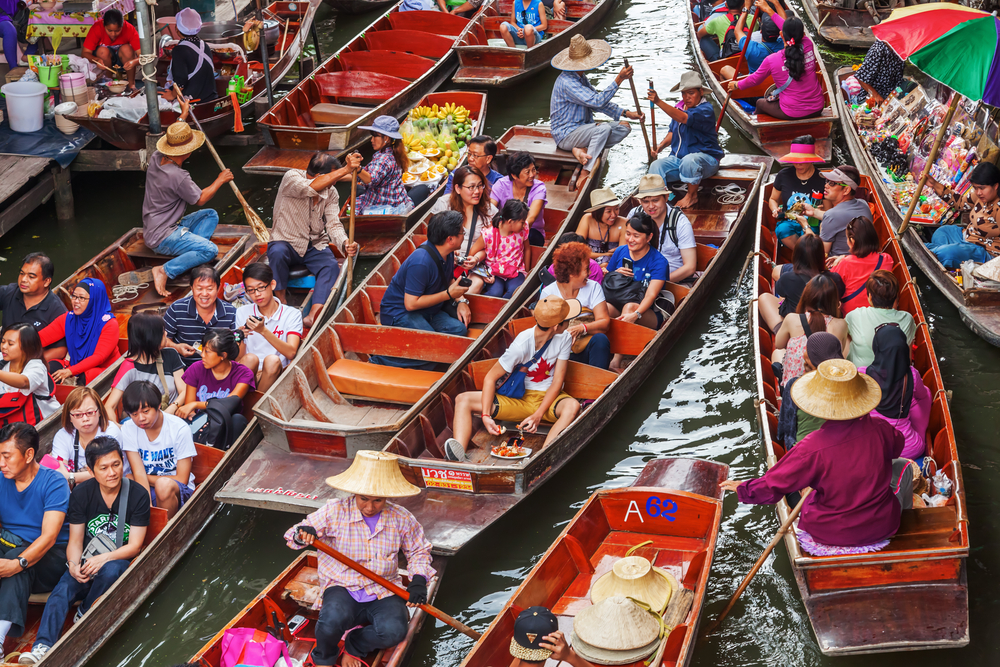
Thailand’s Chinese arrivals in October is expected to drop at least 40 per cent year-on-year and the negative sentiment is expected to drag till December due to the impact of the zero-dollar tour crackdown, projected the Thailand-China Tourism Association (TCTA).

TCTA president Ronnarong Cheewinsiriamnuai said the number of Chinese tour groups started to decline in September and plunged after the Golden Week in early October. In Bangkok, numbers fell to around 50 groups per day, compared to 300 groups per day in the past.

“We are very concerned about rising prices. If package prices to Thailand are equal to those in Japan, I have no idea how to compete. Japan and South Korea will benefit while Thailand loses,” he added.

An executive from a leading inbound travel agent said on condition of anonymity that many agents in China stopped selling tour packages to Thailand after they knew the Thai government was seriously suppressing zero-dollar tour businesses.

He revealed his company’s sales would decrease by 50 per cent this month and hoped the situation would bounce back slightly in December.

La-iad Bungsrithong, president of the Thai Hotels Association’s Northern Chapter, said hotels in Chiang Mai must shift its focus to domestic and MICE markets because of the downtrend in Chinese arrivals.

In Chiang Mai, visitors from China dropped 30-40 per cent since September, she said. La-iad projects that in 2017, arrivals from China to Chiang Mai would not grow. Therefore, hoteliers in the northern province, especially those who depended on Chinese travellers, must diversify into other potential markets.

The F1 party queen

0

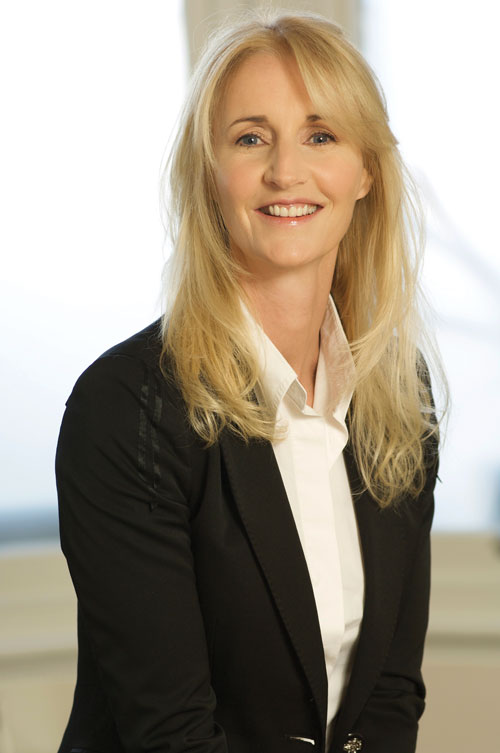
Sonia Irvine, founder of Amber Lounge, takes Raini Hamdi backstage into a testosterone-charged world and gives insights into what it takes to throw the original F1 party
oct-07-sonia-irvine

What to you is Amber Lounge’s biggest contribution to F1 and the four F1 destinations each year where you throw the party?
F1 is the most amazing brand and sport which Bernie Ecclestone built. Amber Lounge adds to the experience after the track and the two go together.

In Monaco, people never used to stay the Sunday night. Amber Lounge plays a small role in encouraging them to stay.Here (in Singapore last month, where the interview was done a day before F1 started) definitely people change their meetings on Monday morning (after the party on Sunday) and I know driver commitments are changed from Monday morning to Monday afternoon or to Tuesday. And there are some people who fly in for Amber Lounge, then fly out.

It’s the PR we create. We give a lifestyle element to F1. That then hopefully facilitates people wanting to come and participate in the whole F1 experience. But I’m just a small part.

Was it what you dreamt to do as a kid?
I never felt I had a path in my life. I was not one of these kids who knew what they wanted to be when they grew up.

One day, a friend said, I want to be a physiotherapist, and I said, what’s that? I looked it up and thought it was exciting. At 15, I ended up in one of those talks with a career teacher and told him I wanted to be a physio. He said I was not intelligent enough! I thought, how dare he said that and so I went home to my mom and dad and said, right, I’m going to be a physio.

I went to Newcastle, England, to study physio and as it turned out, I had a distinction in it, so obviously I was intelligent enough! People also said I had the right personality for it. A good physio is someone who listens, observes and analyses problems. It’s a fantastic career. There’s something really satisfying about being able to make someone walk again. Money or nothing can do that.

So why and how did you end up launching the F1 party, the first in Monaco in 2003?
As a physio (initially to her brother former F1 driver Eddie Irvine, then the whole Ferrari team), there was a lot of hanging around and I was getting bored. I ended up doing not just physio, but his PR and looking after sponsors’ commitments for the team.

There are just things you learn working in F1, the do’s and don’ts. For example, just understanding that they have a watch sponsor or a clothing brand and you need to respect their commitments. All these elements came together when I went into Amber.

In those days, there wasn’t any one place where everybody came together. F1 people hate queues, hate to be told they can’t get into places, so I thought, wouldn’t it be lovely to bring everybody together at the end of the season? I never thought how am I going to bring 22 drivers from 12 different teams to party in one place, and all their competing brands and affiliations under one catwalk? I just thought, let’s do it.

I never in my life think I can’t do something, otherwise I will never do anything.

How were you able to get competing people to come together – did your brother play a part?
No, Eddie never got involved that way. When I started Amber Lounge, I was independent of him. He supports me, but he does not get involved.

In the end, people just want to have fun and it’s about having the right people, right atmosphere, high-end sponsors, etc.

So you’re a good listener and are observant. Are those skills useful for this?
Yes, and those were the skills I brought into Amber. It’s all about the little details, so you need to listen and you need to observe. For example, when I walk into a venue, I would notice right away if a platform was not high enough, if the branding boards were not where they should be, if the lighting was dead. We also listen and cater to clients of all age groups. That’s why we give clients a choice of tables. Are you coming for business or party? If business, we put you in a quieter part. I’ve a client who comes regularly and said, Sonia, can you put me away from the dance floor this year because my wife is pregnant? So when I did the tables, I looked after them a bit more. A lot of thought goes into our setup.

What’s your budget in organising Amber Lounge?
A lot – most people won’t sleep at night (when pressed, she said well over half a million euros, i.e. over US$558,570). My Singapore budget is virtually my Monaco budget and I run only two nights here, whereas it’s three in Monaco. In Singapore, the tent takes three weeks to build, as there’s water where we build. The water has to be drained. The tiles have to be lifted. Then the tent structure starts. It’s a big, big operation.

Is it hugely profitable?
If you don’t bring in the sponsorships and sell the tables, it does not work. Definitely you need to do a minimum of two nights. Sales and sponsorship have to go together.

How has the party evolved over the years?
A lot of the elements when I first did it remain. There’s no queuing, our system allows you to go straight to your table where all drinks are waiting and you drink as much you want. The white sofas remain, because there’s something naughty about standing and dancing on a white sofa and making it dirty, even if that costs me a lot, as many are ruined and we have to clean or redo.

There’s always the outdoor terrace, so people can go out and network or talk business there instead of in the lounge. There’s a lot of business that goes on in Amber because there are a lot of decision-makers who can make decisions. A lot of production companies don’t understand why I push so hard to have an outside space. It’s because we want business to happen as well.

Along the way, we brought in more DJs, acts, a fashion show at first with just female models then the F1 drivers in support of charity. And now, the Extravaganza concept where the party just does not stop – dancers, saxaphone players, seven DJs, etc – all happening at the same time. Often, places have acts but it’s one act, then the party stops, then another it stops again. Here it’s all happening and it should never deflect from the party but add to it.

Do you feel travel planners understand Amber Lounge is open to all, not just for F1 goers, and that they can package it as part of a, say, party trip?
It is an event and experience people can have. Our objective is to have people walk away saying that was just incredible, the best party they ever had and they want to come back again next year. We do have people using it for special occasions, such as anniversaries and for charities, outside of our own charity efforts.