TTG Asia
Asia/Singapore Friday, 16th January 2026
Page 1764

Respect for animals in tourism

0

Raini Hamdi rounds up good animal welfare practices in the travel sector.

aug5_sustainable-travel1-copy

Buffalo audits elephant camps
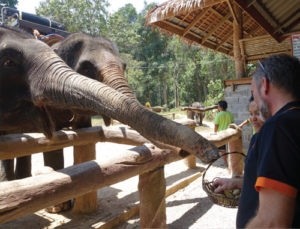
Buffalo Tours has completed an audit of 38 elephant camps in Thailand, Malaysia, Indonesia, Laos, Cambodia and Myanmar, of which only 20 camps passed its welfare and safety requirements.

Camps were graded with six classifications – Excellent Approved, Great Approved, Good Approved, Good Approved With Caution, Improvement Needed and Unacceptable – with the bottom three not recommended or sold by Buffalo. It has sent assessments to all elephant camps to maintain their positive aspects and improve negative points.

“We are now confident to advise our global partners like Flight Centre, Vakanties, Wendy Wu and Topdeck where they should send their clients,” said Graham Harper, educational travel manager and chairman of Buffalo Tours Responsible Travel Advisory Board.

SpiceRoads stops elephant rides and shows
SpiceRoads has become the first Thai tour operator to join over 100 travel companies worldwide committed to stop elephant rides and shows. It has signed the elephant-friendly tourism pledge with World Animal Protection Thailand, under the commitment to offer elephant experiences from only those operations with a high standard of elephant welfare and conservation, with responsible viewing of elephants in wild or semi-wild habitats, as well as proactively communicating this commitment to protect elephants to their customers, and encourage elephant-friendly tourism.

aug5_sustainable-travel2

andBeyond dehorns rhino 
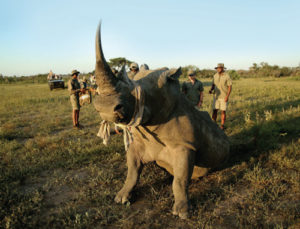
Luxury travel company andBeyond has dehorned all the rhinos at its Phinda Private Game Reserve in KwaZulu-Natal as a temporary measure to safeguard the population and relieve the pressure faced from poaching.

The mass dehorning, which andBeyond said is similar to cutting one’s nails, was safely carried out by expertly trained veterinarians. It has no known side effects, with little change in the behaviour of dehorned rhinos.

andBeyond will re-evaluate the poaching situation and make the decision about whether it is necessary to repeat the dehorning process in 18 to 24 months.

ABTA drafts global welfare guidance for animals in tourism
The UK’s leading travel association ABTA, in partnership with the Born Free Foundation and with inputs from 200 individuals and organisations worldwide, has come up with a Global Welfare Guidance for Animals in Tourism, the first report of its kind that seeks to establish concrete guidance for welfare best practice across a broad range of animal interaction experiences.

Practices that are blankly considered unacceptable today are detailed, such as elephant polo, ostrich riding and crocodile wrestling. Elsewhere, detailed specific guidance is given on the treatment of animals like dolphins and elephants in captive environments, wildlife viewing and working animals.

This article was first published in TTG Asia, August 5, 2016 issue, on page 22. To read more, please view our digital edition or click here to subscribe.

Taming a wild frontier

0

Nature can go hand in hand with tourism, Asia’s 
trade players realise as they recognise the importance of 
tapping wildlife resources in a non-consumptive manner. 
Xinyi Liang-Pholsena unearths the growing trend
aug5_sustainable1a

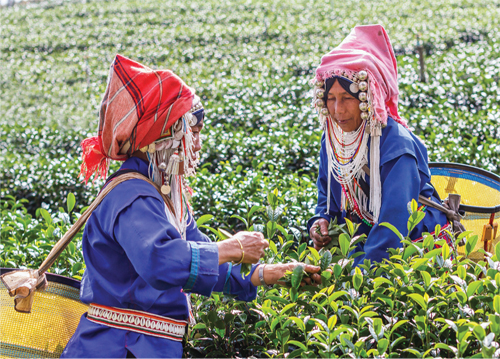
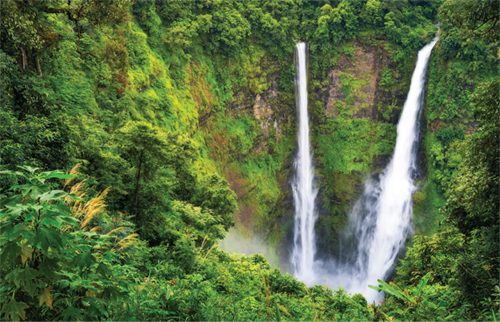
Recognising the high-yield, low-impact benefits of ecotourism, governments in South-east Asia are now putting serious efforts to develop this niche market by including principles of sustainable and responsible travel in national tourism planning frameworks and policies.

At the regional level, the first-ever ASEAN Ecotourism Forum (AEF) which took place in Pakse, Laos in June brought together tourism ministers and senior executives from the 10 ASEAN member countries plus China, Japan and South Korea to discuss regional cooperation regarding sustainable tourism development.

One clear manifestation of AEF is the adoption of the Pakse Declaration on ASEAN Roadmap for Strategic Development of Ecotourism Clusters and Tourism Corridors, which will be submitted to the heads of state for adoption during the 28th ASEAN Summit in Vientiane in September as one of the key deliverables under Laos’ ASEAN chairmanship in 2016.

The Pakse Declaration takes its inspirations from the European Green Belt – a pan-Europe ecological network that stretches along the former Iron Curtain – and seeks to develop ecotourism clusters and tourism corridors and facilitate cross-border travel as well as travel into rural areas and nature reserves; unlock economic opportunities along overland and waterways; create employment opportunities; revitalise idle natural resources; and transform impoverished areas, announced the ASEAN tourism ministers in a joint media statement during AEF.

Bosengkham Vongdara, Laos’ minister of information, culture and tourism, said during the forum’s opening that it was “appropriate and timely for ASEAN to closely join hands in realising the new ASEAN Vision 2025 and ASEAN Tourism Strategic Plan 2016-2025”.

The Malaysia National Ecotourism Plan 2016-2025 will be using the cluster approach – i.e. grouping a critical mass of competitive and/or complementary tourism products in a geographical area – as a planning tool, informed Amran Hamzah, a professor in tourism planning and director of the Centre for Innovative Planning and Development at Universiti Teknologi Malaysia (UTM).

While he declined to reveal more details of the plan at press time as the strategy was still undergoing discussion, Amran said that it will seek to avoid earlier weak points in the National Ecotourism Plan 1996 such as the absence of “buy in” from the private sector.

Frans Teguh, director of infrastructure development & tourism ecosystem at Indonesian Ministry of Tourism, sees “big potential for marine tourism” and projects ecotourism to contribute to 10 per cent of the country’s tourism market within the next five years.

The Indonesian government will integrate ecotourism into the national masterplan this year, in addition to identifying destinations like Lake Toba, Labuan Bajo and Mandalika as priority areas for ecotourism development. As well, a special pavilion dedicated to sustainable tourism will debut at PATA Travel Mart this year, Frans told TTG Asia.

Myanmar, a late entrant to the ecotourism scene compared with its regional peers, has laid out the Ecotourism Policy and Management Strategy for Protected Areas last year, following the 2013 Tourism Master Plan, revealed Yee Mon, permanent secretary of Ministry of Hotels and Tourism.
aug5_sustainable1b

Ground-up efforts, public-private partnerships take root 
On the ground, industry stakeholders are paying greater attention to public-private partnerships to drive the sector. Governments are recognising that local buy-in and community ownership will lead to better success of projects while private sector players also need the authorities to drive and enforce policies.

SB Chetry Win Tin, managing director of Journeys Adventure Travel and Myanmar Hill Lodges, posits that Myanmar is moving in the right path with a more open and democratic government in the helms, bolstered by funding from government and international development organisations like GIZ. “We were left out from most of ASEAN’s regional planning in the past but we’re now back on the map and fully engaged,” he said.

However, the widespread perception of Myanmar as a cultural destination is perhaps the biggest bugbear in growing the adventure and ecotourism sectors, opined Chetry. Few visitors are even aware that South-east Asia’s highest peak is found in Myanmar’s north, for example, he added.

Suthep Keasang, director, Office of Community-Based Tourism at the Designated Areas for Sustainable Tourism Administration (DASTA) – a government agency set up under the Office of the Prime Minister in Thailand to develop sustainable tourism in the designated areas – opines that ecotourism development in the country is progressively moving in the right direction with stronger support from the government.

“Getting coordination among all stakeholders is an all-time challenge,” Suthep admitted. “We must remember communities don’t live their lives for just tourism,” he added, emphasising the need for community involvement.

Likewise, Inthy Deuansavan, founder and owner of Green Discovery Laos, who is widely credited as a successful ecotourism entrepreneur in the country, stresses the importance of local involvement and livelihood building. Using Tree Top Explorer at Jungle Hotel Paksong as an example, Inthy stated how the zipline adventure project in southern Laos his company initiated has benefited local villages.

“Our staff strength grew from 24 to 100, and the village still has many young people unlike other Lao villages where youngsters move away to cities for work,” said Inthy. “Tourism income is now higher than coffee cultivation, which used to be the main livelihood in this village.”

Urging a “more conscious” approach to responsible tourism, Gregorio Rojas, programmer manager at Fairtrek, advocates suppliers to address all aspects of being a responsible travel provider. “Many suppliers only offer ecotourism in one aspect but ignore other components such as garbage disposal,” he remarked. “Therefore we need vendors and suppliers to have access to information, while tour operators should educate their suppliers on ecotourism.”

Industry players are increasingly cognisant of the role suppliers play in the sustainable development of ecotourism, with Bangkok-based DMCs like Khiri Travel and Exo Travel having successfully achieved Travelife certification, a leading international sustainability certification for the travel and hospitality industry.

“The Travelife assessment applies to our supply chain, internal operations and hotel assessments,” said Exo Travel’s sustainability coordinator Thuy Nguyen. “We want a globally recognised standard but at the same time we also give feedback to Travelife, which has a working group in Bangkok, on the criteria to better cater to the local and regional differences,” she said.

Establishing ecotourism certification standards for Asia was one of the aims that drove Masaru Takayama, founder of Japan Ecolodge Association and responsible tour outfit Spirit of Japan, to spearhead the formation of the Asian Ecotourism Network last year. The network is located in Bangkok under the care of DASTA, with satellite offices in India, Indonesia, Japan and Malaysia.

Takayama remarked: “There are a lot of (sustainable tourism) standards but they are usually developed by EU or the US. We want standards for Asia by Asians.”

The network has entered into a partnership with Global Sustainable Tourism Council and set up as an internal committee to look at setting up global ecotourism standards for Asia by next year.
aug5_sustainable1c

Forging a path ahead
Ultimately, people remain the most vital link for Asia’s ecotourism sector to flourish, a point that most trade players unanimously agree on.

“Public-private partnerships are definitely important but most critical is the correct people to lead the development,” said Neeracha Wongmasa, managing director of Phunacome Resort and a committee member of Thai Ecotourism & Adventure Travel Association.

What also matters, Neeracha added, is “consistency in policy”, which also leads to questions of sustainability, especially in Thailand which has seen frequent changes in the country’s leadership in recent years. She elaborated: “Authenticity is a dynamic concept, as it will change with time as a destination modifies, so what’s more important is that the aims are clear and remain unchanged even if the people involved change.”

Owing to the “high startup costs” in ecotourism ventures, Asian Development Bank’s senior portfolio management specialist of Lao PDR Resident Mission, Steven Schipani, urged governments to proactively identify viable tourism projects and provide stronger destination marketing in order to lend a helping hand for SME entrepreneurs in this niche sector.

Meanwhile, Xu Jing, regional director for Asia and the Pacific, would like to see more open visa policies. “Unless visa issues are facilitated and seriously taken up by governments, ecotourism benefits cannot be fully realised,” he commented.

As well, accessibility remains a key issue, pointed out Asian Trails Laos’ managing director Andreas Hofmann who said that better connectivity would enable tour operators and DMCs to better promote an ecotourism destination to time-starved travellers, echoing industry sentiments for more direct flights linking secondary destinations in South-east Asia.

To avoid limiting the sector potential, trade players also caution against boxing ecotourists into strict categories, as the definition of ecotourism runs the gamut from hard to soft and travellers may not be engaged in nature-based activities throughout their vacation.

“Urban ecotourism is no longer an oxymoron,” UTM’s Amran said, pointing to the many ecotourism types in Asia such as Singapore’s Gardens by the Bay.

“There’s no need for good walking shoes there,” he quipped. “And will this be the trend for Asian tourists?”

Managing river flows for tourism and development

aug5_sustainable2

As the popularity of Mekong River cruising continues to grow at a rapid pace, industry experts are urging drastic measures to be put in place to ease rising congestion and move the industry forward.

At this year’s Mekong Tourism Forum in Sihanoukville, John Boyd, director of Pandaw Cruises, said: “The main concern is there are too many ships; it’s almost out of control. We’re not against competition but it gets so congested. Passengers are fed up of bumping into other boats.”

Fears were raised that the market will be unable to sustain increased demand if operations and infrastructure are not upgraded along the Mekong. Naidah Yazdani, Asia director, CF Mekong River Cruises, said: “It’s reaching a point now where unless we develop those facilities, we cannot take the industry to the next level.”

Additional and improved docking facilities and allocating slot times for boats are necessary to avoid the “scrabble for the same dock” at destinations such as Phnom Penh, said Maarten Perdok, managing director, Heritage Line.

To ensure this happens, more cross-border communication needs to be carried out between authorities, with operators working closely with local communities to preserve the authentic Mekong experiences that travellers desire.

Yazdani said: “The Mekong is not about experiencing wines or seeing several capital cities; the Mekong is about visiting small villages. It’s about experiencing the contrasts between the countries.”

The Mekong, which spans six countries and diverse cultures, is ripe for ecotourism development. Walter Jamieson, Asian Development Bank consultant and professor at Thailand’s Thammasat University, is helping to draft a tourism strategy with the UNWTO to develop ecotourism and authentic traveller experiences along the Mekong.

Jamieson proposes breaking the waterway down into seven “sizeable products, each with their unique theme” to introduce greater focus and coordination. “We must increase the quality and variety of river-based tourism activities on the Mekong,” he added.

An example is Mekong Dawn Cruises, which offers intimate trips from Phnom Penh to Siem Reap, stopping at villages along the way so passengers can watch local craftsmen ware their goods, explore off-the-beaten-track pagodas and discover traditional floating villages.

Moreover, with river cruise passengers offering a different dynamic to the backpackers the region traditionally attracted, the river cruise market holds a lot of potential. “(River cruise passengers) tend to be older and have higher income,” said Boyd. “This is a very special market for the region, and one that can truly be developed.”

And with the majority of Mekong River cruises currently catering to Western travellers, the mass Chinese and Indian markets are yet to be targeted and offer a huge untapped potential, said trade players. However, this needs to be done such that further developments do not burden the waterway with more traffic and pollution.

“We need to be careful as this will be extremely difficult,” said Yazdani.

Additional reporting by Marissa Carruthers

This article was first published in TTG Asia, August 5, 2016 issue, on page 20. To read more, please view our digital edition or click here to subscribe.

Photo of the Day: Jaypee Group bags national tourism accolades

0

jaypee_national_tourism_awards
Ajit Sharma (second from left), joint president operations, Jaypee Vasant Continental receiving award from from Mahesh Sharma, minister of state for tourism and culture; along with Manju Sharma (second from right), managing director, Jaypee Hotels & Resorts, receiving the award from Sumitra Mahajan, speaker of the Lok Sabha

Jaypee Vasant Continental, New Delhi was awarded Best Eco Friendly Hotel at the National Tourism Awards ceremony held at the Vigyan Bhawan convention centre on July 30. The National Tourism Awards, presented by India’s Ministry of Tourism, is held annually to recognise the performance of various segments in the travel, tourism and hospitality industry and also to promote tourism.

The hotel was one of two properties under the Jaypee Group of Hotels to receive an accolade this year – the other being Jaypee Greens Golf Course, Greater Noida, which was awarded Best Tourism Friendly Golf Course.

New corporate travel tools promise to help cut costs

0

CARLSON Wagonlit Travel’s (CWT) Solutions Group has introduced four new proprietary products to help corporate travel managers cut costs and engage their travellers in new ways.

The new products help companies reduce non-compliant spending, reclaim surcharges on corporate car rentals, analyse traveller data and provide ground transportation options.

According to CWT research, travel managers don’t have visibility over nearly a third of a company’s travel and expense (T&E) spend because it isn’t consolidated in a single data set. With the new solution, CWT hopes to give them better control of expense management.

Christophe Renard, vice president of CWT Solutions Group Worldwide explained: “Our T&E platform automatically consolidates all data sources, including from the travel management company, from credit card spend, and third party suppliers. We use that information to provide an immediate view of all non-compliant spending.

“We can also reconstruct the total cost of each trip. Travel managers can then have an accurate view of all spending, compliant and non-compliant, enabling them to adjust their policy as necessary, or make sure it is better communicated internally.”

He continued: “Our new traveller segmentation platform segments travellers’ behaviour using key data including demographics, seniority and travel frequency information. It means travel managers can tailor their communication to each traveller, encouraging those travellers to comply with the policy. The end result is greater savings and a reduced overall travel spend.”

And on helping corporates save on car rental surcharge, Renard said CWT Solutions Group “shares the recovered costs” with clients and gives them “the bulk of the savings”.

CWT’s new solution also gives travel managers the means to guide their travellers to the most appropriate form of transport.

Gold Coast opens up grant to more conference bidders

0

anna-case
Case: positive response prompted
expansion of programme to more bidders

JUST eight months after launching its Future Bid Leaders Grant to attract sports-related conferences, Gold Coast Business Events has opened up the initiative to anyone affiliated with an association or company that regularly hosts national or international events.

Successful applicants of the grant, originally launched to attract business ahead of the 2018 Commonwealth Games, will receive AU$2,500 (US$1,778) to attend a national conference or AU$5,000 to attend an international conference with the goal of bringing that event to the Gold Coast.

According to Anna Case, director of Gold Coast Business Events, the grant has attracted interest from a wide range of organisations affiliated with sport, and has opened up new opportunities for the Gold Coast.

“We’ve been really excited by the positive response to the grant and recognised there was an opportunity to expand the programme to (other key) pillars of the industry,” said Case.

“We work closely with representatives from the academic community and local business leaders and have identified that this type of partnership will be of real value to them, with the ultimate aim of attracting more conferences to the Gold Coast.”

The initiative has already resulted in a conference win for the city with the Gold Coast set to host the Sport Management Association of Australia and New Zealand (SMAANZ) in November 2017.

Potential recipients must submit an application addressing a selection criteria including its history, rotation pattern and the applicant’s links and influence within the organisation.

Brisbane wins 2018 IPSA World Congress

0

centre3
The event will be held at the Brisbane Convention & Exhibition Centre

COME July 2018, the Brisbane Convention & Exhibition Centre (BCEC) will host the International Political Science Association (IPSA) World Congress, an international gathering of political science scholars.

The six-day congress is expected to attract 3,000 delegates to Brisbane and bring about an economic value of more than A$10 million (US$7.6 million).

Lord mayor Graham Quirk said: “Luring this World Congress to our city will… boost the local economy and demonstrate the success of our collaborative Team Brisbane approach to securing major business events and jobs for our hotels, venues and services.”

He added: “Major conferences of this nature also showcase our New World City as an important knowledge, innovation and research hub with world-class institutions.”

Professor Kath Gelber, deputy head, School of International Studies at the University of Queensland, said the Brisbane congress, which will be the 25th congress and a milestone for the international association, will provide a global platform to showcase the world leading research currently being conducted by political science, governance, public policy and international relations scholars in Australia.

It is the first time the IPSA World Congress will be in Australia since the congress’ inception in 1950 in Zurich, Switzerland.


[PERSPECTIVES] Opportunities and risks in geo-tracking of employees

0

PARIS, Jakarta, Istanbul – terror is no longer limited to cities like Kabul or Aleppo. Environmental events such as floods, earthquakes or volcanic eruptions are also part of daily risks. These can happen anywhere, 24/7/365. While individuals are primarily responsible for their own safety, companies have a fiduciary responsibility, especially towards corporate travellers, who are exposed to constantly changing risks.

In emergencies, TMC data is used to determine what travellers are in risk areas, however, this only provides departure/arrival airport. Direct bookings and use of OTA’s exacerbate this problem and fragment data even more.

Looking at Brussels for example: Were travellers at the airport or the downtown subway station during the attacks? Did they use public transport? Were they even in Brussels or outside the city? Can travellers be contacted to verify they’re safe? Can emergency information be sent instantaneously? Can travellers advise of emergencies, seek help or allow for notification to others?

Current data sources are woefully inadequate, however, there are new, reliable and supplier-neutral options – traveller/geo-tracking. These systems centre around the ability to locate travellers based on their mobile phone signal. With the full knowledge and consent of the traveller, an app is installed that can then transmit its location. This not only provides the true location of the traveller but allows to warn them of dangers in their vicinity, organise assistance or obtain live, on-the-ground information. This technology can revolutionise traveller safety and security.

But it also raises questions on rights to privacy and data privacy.

Geo-tracking is the most efficient method to determine the true location of travellers and solve the issue of fragmented data. Obviously these systems are not free-of-charge and putting together a business case can be tricky. The ROI is difficult to determine as, if the system is used properly and efficiently, there will be no “savings” or “return on investment” as such.

Duty of care and safety and security are not topics that can be won with a cost argument, however, the potential price tag of only one incident, one injured employee, one death, one abduction can exceed any system cost by far.

Legally, collecting personal data through geo-tracking falls under the heading of individuals’ right to privacy and data privacy, and is subject to the relevant national laws. In the past geo-tracking had a bad reputation as companies frequently used it to monitor employees and (ab)use the data to make conclusions on employee behaviour, efficiency, etc. This has caused many governments to limit or even prohibit the use of geo-tracking by corporations. However, the beneficial, non “big brother” use of this technology in the field of traveller safety and security is too new to be clearly defined by law.

An exact set of rules that companies can use worldwide does not exist. Generally the location of the traveller’s employment contract determines which national law applies. All this appears to be truly challenging, however, a detailed analysis of the different rules and regulation does allow us to draft an overarching set of rules.

  • Explain employees the advantages of emergency apps and geo-tracking, who will have access to the data and under what circumstances and when data is erased
  • Advise that use is voluntary and that employee can decline and/or withdraw consent at any time and without reason
  • No consequences or travel ban if employee declines
  • Explicitly consent in writing to track – not as part of employment contract or travel-policy
  • Never limited use to just one group of travellers e.g. management
  • Allow traveller to disable the software, however, advise of risks in doing so
  • Irretrievably delete all date once trip is completed

Limiting the tracking feature through a privacy mode is an effective alternative if the use of full-time/permanent tracking is not a suitable option.

This feature was recently introduced by Vismo, a UK global tracking solutions provider. In an emergency, the traveller can turn off the privacy mode and the exact geo-location is immediately transmitted to the company. Additionally, in the event of a crisis the privacy mode can be switched off remotely by the system administrator and the traveller is notified.

Geo-tracking can be the panacea for the safety and security concerns of our business travellers and solve many of the problems that have limited duty of care. Granted, not every employee may consent to take part in the programme and implementation may be time consuming. On the other hand, the ever increasing security threats around the world require an all encompassing duty of care programme that does not rely of fragmented booking information alone.

By Andreas J G Wellauer

***
Andreas J G Wellauer is a leading expert, author and speaker on corporate travel management. His global background includes working for UBS Hong Kong, ADB Manila, Woolworth Australia and the UN in New York. Wellauer is CEO of German based GALIANT Consulting, a company focusing on strategic, innovative and emerging travel-trend consulting.

Elephantine achievement

0
We get mystery shoppers and qualified quality inspectors to audit our retail fronts and hotels – why not audit elephant camps, or for that matter, other forms of tourism attractions where there is reason to suspect things are not done correctly?

In the wild, such as the high mountains of Switzerland where I was on vacation last month, marmots whistle when they sense danger. These cute large squirrels are a source of food for eagles, and even humans. Nature, as we know, is a survival of the fittest, so I have no argument with natural food chains. But I have a problem when humans make the natural unnatural, and how we have seen that happen in big and small ways.

In captivity, animals are totally powerless to fend for themselves. And many – elephants, tigers, dolphins, etc – are used as tourists’ amusement.

Elephant camps in particular are aplenty in our region where logging has become illegal and their masters find new uses for these pachyderms as a tourist attraction. When done in the right way, tourism helps keep these big mammals alive, as the cost of feeding them is enormous. But we know much isn’t done in the right way. This is why when I learnt that Buffalo Tours had audited elephant camps across six countries in South-east Asia, I could not help but smile, not just because a funny headline, ‘Buffalo audits elephant camps’, came to mind, but because it is such a wonderful initiative.

We get mystery shoppers and qualified quality inspectors to audit our retail fronts and hotels – why not audit elephant camps, or for that matter, other forms of tourism attractions where there is reason to suspect things are not being done correctly? The elephant audits by Buffalo Tours were not done in secret or in a way to catch errant players by surprise, and the mere knowledge there was an audit was enough to separate the wheat from the chaff.

Graham Harper, chair of Buffalo Tours Responsible Travel Advisory Group, told me: “All camps that passed the audit readily agreed to participate. All were very enthusiastic about improving overall industry standards and proud to highlight their own best practices. Any camp that refused the audit automatically failed. Unfortunately there were a few camps in a couple of countries that did not want to participate. We believe these camps would have failed the audit regardless.”

The ones that passed the test are now recommended to Buffalo Tours’ overseas operators which include Flight Centre, Vakanties, Wendy Wu and Topdeck.

And there’s more good news. Buffalo Tours is in discussion with the ASEAN Captive Elephant Working Group, which is producing a guide for travel agents, with an FAQ for clients on captive elephants to enable them to make informed decisions on what type of elephant experience to enjoy while on holiday.

In the UK, ABTA has come up with a Global Welfare Guidance for Animals in Tourism. Tourism bodies in ASEAN or Asia should take a leaf from such great initiatives.

This article was first published in TTG Asia, August 5, 2016 issue, on page 2. To read more, please view our digital edition or click here to subscribe.

Thomas Schwall named GM of The St Regis Langkawi

0

STARWOOD Hotels & Resorts South-east Asia has appointed Thomas Schwall as general manager of The St Regis Langkawi.

In his new role, the French national will oversee all management functions and hotel operations at the new property. He was most recently the general manager at the Sheraton Deva Golf & Spa Resort for four years. Before that, he was a hotel manager at The St Regis Singapore.

thomas-schwall

The St Regis Langkawi first opened in April this year.

U-Fly Alliance appoints new deputy CEO

0

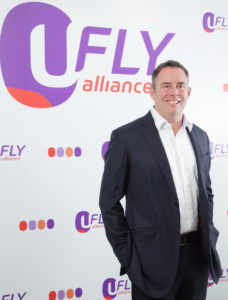
AVIATION veteran Steven Greenway has been named deputy CEO of the U-Fly Alliance, the first alliance of low-cost carriers in the world, first established in January this year.

U-Fly will leverage Greenway’s extensive experience in developing partnerships, streamlining businesses and implementing successful commercial strategies in an effort to bolster the alliance’s upcoming expansion plans.

u-fly_alliance_steven_greenway

He was most recently head of commercial at Scoot where he contributed significantly to the formation of the Value Alliance.

Greenway took on his new role on July 15.