TTG Asia
Asia/Singapore Friday, 16th January 2026
Page 1763

Going beyond growing pains

0

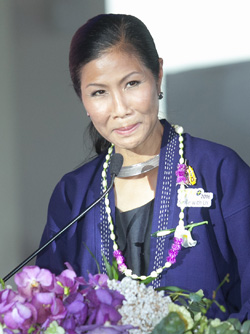
Thailand’s minister of tourism & sports Kobkarn Wattanavrangkul tells Xinyi Liang-Pholsena why creating sustainable inclusive growth in tourism remains an enduring aim and challenge
aug5_kobkarn-wattanavrangkul

What’s life after 30 (million arrivals) for Thailand?
We aim to be a quality leisure destination, and that’s definitely the route we would like to pursue. We no longer care much about the number of arrivals. The revenue, spending per head per day, length of stay, and quality of activities that we can offer tourists, etc, are our ultimate goals.

Are you making progress so far in being a quality destination?
Yes, we have improved. If comparing 1Q, 2Q or even last year with the previous year, we have seen an increase not only in terms of revenue but also spending per head. The length of stay grew a bit and we can still do more. That is why we are working very hard to introduce new destinations, and this partly explains why we are in Chiang Mai (for Thailand Travel Mart Plus; TTM+ where the interview was done) to showcase new destinations in the country.

For example, Lampang was introduced under TAT’s (Tourism Authority of Thailand) 12 Hidden Gems campaign last year, so this year’s 12 Hidden Gems Plus campaign introduced Lamphun (next to Lampang). This will help to extend the length of stay and work towards our mission of spreading tourism out for greater inclusion and wealth distribution.

We are also working on this under the National Tourism Board, which is a collaboration of 10 ministries headed by the deputy prime minister to oversee short- and long-term planning and budget for tourism. The roads, trains, national parks, airports, etc, should all be geared towards the same goal of sustainability and quality tourism.

‘Thainess’ is used to convey the tourism message. What’s Thainess to you?
It’s the way of the Thai people. There is no one Thainess – there can never be, because Thailand comprises so many ethnic groups and they’re all Thai. Chiang Mai used to be the capital of the Lanna kingdom; likewise for the south, which was another country in the olden days. Thainess means the ways of each region in Thailand, each reflecting their own identity.

To me, the Discover Thainess campaign is not just for international tourists but also to educate young Thais to value what we have and carry on the torch. This generation was born with computers, Internet, etc; they will only watch (TV shows like) Kim Kardashian, Gossip Girl and MasterChef; and think that’s value.

I used to hate ram Thai classical dance in school and now I appreciate it very much. You will pass the stage where you think the outside world is more modern and civilised.

How do you perceive Thailand’s marketing efforts on the global front? Will Amazing Thailand be changed soon?
I think we are on the right track. I have received many comments that we should change (the slogan), but I believe in the good things that we have. We should have one identity, but develop from that and keep the goodness of what we have.

Personally, I like the new Amazing Thailand logo reflecting the Land of Smiles. At the end of day it’s about the people, that Thai people love to serve, give our best and give happiness to our friends and guests – it’s in our blood.

What’s the greatest challenge in the Thai tourism landscape now?
It’s the management. With the increment of tourist arrivals, questions on how to manage the safety, convenience or even the identity of the place come into play. For example, by promoting community tourism we hope farmers will be less reliant on agriculture for a living, but if there are too many visitors, (communities) might start to lose their identity and sell their land for quick cash.

Is it hard to manage the China market, which is coming in droves?
It’s hard but manageable, and Chiang Mai and Chiang Rai are good examples. The success of the Lost in Thailand movie brought big numbers of Chinese, but the local community has learnt how to manage and communicate with the Chinese despite their initial complaints. If we understand (visitors’ motivations and intentions), that they come because they love Thailand and our culture, then that’s a good starting point already. We should seek to educate (the Chinese visitors), let them know the proper etiquette, say, refrain from talking loudly in temples or using the toilet in a certain way.

They (a discussion during TTM+) said only five per cent of Chinese have passports [laughs], and we have to ask ourselves if we want another five per cent to come to Thailand.

And do you want them?
[Pauses] Yes, but we have to prepare ourselves. I think they will learn faster than the first generation, just like Thais. I had the same problem when I took my Thai dealers abroad 20 years ago (Kobkarn was formerly the head of Toshiba Thailand) – they were loud, full of complaints, grabbed everything when they shop, must have Thai food every day, etc. The second generation (of Thai dealers) is much more sophisticated. I think it’s the same thing for Chinese. Once the country opens up, they will learn faster and faster.

How do you deal with the regular negative coverage of Thailand’s tourism sector and regain trust from visitors?  
We have to face the problem, take it seriously and talk to the people – the team, the locals, those concerned – and not give up. If we look at it from a broader view, the percentage (of incidents) has decreased (against arrival numbers). We have to continuously improve our safety measures. We will never have enough police, tourist police, equipment, so joint efforts are important – how everyone  can help to take care of tourists in each destination. A good thing is (stakeholders) now believe tourism is their duty; in the past everyone would point their finger at the other person.

What have you achieved so far to challenge your critics that you came into this role without experience in tourism?
The growth of the industry is an achievement of the team. I don’t know everything, but I believe in teamwork and supporting a good team. We have many good things and plans in place already. If anyone coming (into this position) always comes up with new things, continuity will become a problem because plans change according to the new minister, governor or the political party.

You don’t need the best ideas as much as commitment and actual implementation. (Continuity) is something the National Tourism Board has put an emphasis on in order to solve some of the past problems. I know I’ll be changed after elections next year, but the ideas and planning should not be changed so there’s continuity.

What do you want your legacy to be?
If people only think of (creating a legacy) there will be no continuity [tears]… If I were to think ‘this should be (for) me’, the new minister would think the same thing and we would go back to (square one). We should think for the country, not for the individual – it’s important to put the country above self.

This article was first published in TTG Asia, August 5, 2016 issue, on page 10. To read more, please view our digital edition or click here to subscribe.
Indonesia on the radar of longhaul MICE planners

0

LONGHAUL MICE planners who attended the Business Matching session in Jakarta last week have said they are keen to organise events, meetings or post-conference incentive tours in Indonesia.

The 12 European buyers were in the city as part of the post-tour organised by the Indonesia Ministry of Tourism, in conjunction with the Singapore MICE Forum and the Asia Meeting & Incentive Travel Exchange 2016.

Stephane Mockels, head of MICE, Emile Weber Voyages France, said: “We have confirmed plans for three conferences to take place in Singapore and we are now looking for an incentive destination for our corporate clients in the banking and insurance industries. These will be small groups with very high level (executives), and we are looking for high-end products.”

Kin Fung Michael Chow, director – corporate development & staff affairs of Provident Global Capital Group, South Pacific Asia and The Great China Region, said the group has 49 projects all over the world and organises 60 meetings and four incentive trips every year.

Chow said: “We used to organise them in Europe but with the economic situation, we now look at Asia. As we have many meetings, we keep looking for new destinations. I just did one in Bali and am looking at what Jakarta has to offer.”

Meanwhile, Shell Eastern Petroleum has just set up an events team in Singapore and the company is looking to expand its supplier base in the Asia-Pacific region; Indonesia is included, while Singapore will be the hub.

For AD Meetings & Events based in Rome, Italy, its major business is in Asia and its director, Debora Comune, said destinations like Bali are not new anymore and she was instead interested in up-and-coming ones like Toraja in South Sulawesi.

One of the sellers, Abdullah Lajam, managing director of Abbey Travel Indonesia, said regionally, Indonesia is seen as a good value destination when compared to Singapore, Thailand and Vietnam where prices have started to rise. However, the challenge is having to create awareness of the destination among event planners.

Wienna Valerie Damanik, account director of Cakrawala Event Organizer Indonesia, also sees the potential of Jakarta as a destination, and expects the Ministry of Tourism to organise such events more often to help buyers become more familiar with the destination.

PCMA Asia-Pacific Scholarship benefits 20 APAC association executives

0

TWENTY association executives from around Asia-Pacific have benefitted from the inaugural PCMA Asia-Pacific Scholarship which funded their trip to Singapore in July for the PCMA Meetings Forum.

Created by the Professional Convention Management Association (PCMA) and the Singapore Exhibition and Convention Bureau, the scholarship also drew interest and funding support from Tourism New Zealand, Thailand Convention and Exhibition Bureau, Korea Tourism Organization.

Usa Thisyakorn, president of the Pediatric Infectious Diseases Society of Thailand and congress chair of the 8th Asian Congress of Pediatric Infectious Disease 2016, was one of the scholarship recipients. She told TTGmice e-Weekly that the scholarship provided her with a “valuable learning experience” at the Forum.

“The discussions here are in-depth and the perspectives are global – not something association executives can easily access in Thailand,” Usa remarked, adding that she found the education focus on sponsorship issues especially beneficial.

Haesook Ma, assistant manager, convention team with the Korea MICE Bureau, said her organisation was motivated to field three local association executives for the scholarship as it recognised the educational value of the Forum.

Ma said: “The international speakers at the Forum provided our scholars with a precious opportunity to learn from the more experienced Western associations. While we have the annual Korea MICE Expo, we do not have anything that focuses heavily on association education.”

“Furthermore, our scholars act as ambassadors of South Korea when they converse with fellow association executives,” she added.

Commenting on the outcome of the scholarship, Jeannie Lim, executive director, conventions, meetings & incentive travel with the Singapore Tourism Board, said: “We are heartened by the interest and response to the inaugural PCMA Asia-Pacific Scholarship. The positive feedback received from the scholarship recipients underscores the need to champion and cultivate association executives and meeting planners. With our partners, we hope to grow the scholarship and further support association executives in the region next year.”

Expanded BITEC targets events from lifestyle and entertainment sector

0

bitec-expansion

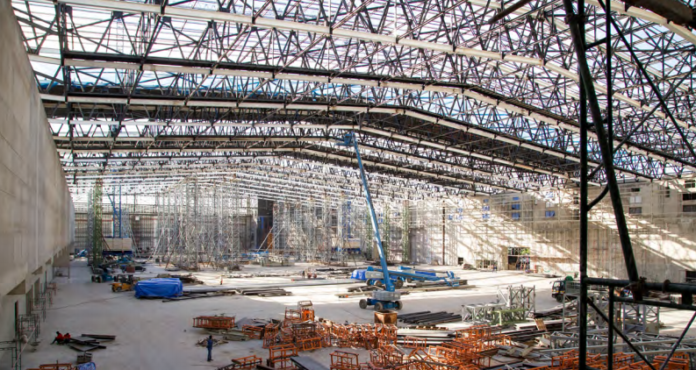
IN AN effort to capitalise on the six billion baht (US$170 million) expansion due for completion in November, the Bangkok International Trade and Exhibition Centre (BITEC) is seeking to secure major international concerts and theatre shows.

Set to become one of the largest venues in Asia – almost doubling in size to boast 70,000m2of event space – managing director, Panittha Buri, said BITEC would continue to be an industry leader for international trade exhibitions, consumer fairs and conventions.

Along with three new event halls, BITEC will add 12 meeting rooms, three convention halls, retail and dining areas, an outdoor concert area and a mixed-use office building to its existing facilities. It will also boast greater transport links with a direct connection to Bangkok’s skytrain network, a terminal for 31 coaches and a helipad.

However, its growth strategy is “geared towards the lifestyle and entertainment sector such as concerts, live entertainment and theatre productions”.

“This was one of the driving factors to create EH 100 – our new lifestyle event hall with a 25m-high ceiling. The height allows for greater possibilities in terms of staging and backdrops as well as light and sound shows,” Panittha said.

Panittha said that once Phase II was complete, BITEC would be able to accommodate 40,000 people at a time. The expansion will be ready in time for Grand Metalex 2016, which will use all 10 event halls.

“Our organisers will be able to deliver bigger events, not only in terms of space, but also in terms of profile and exposure,” she said. “There will be opportunities to deliver multiple concurrent events – different events held at the same time, but separated by halls.”

First, business class traffic surge between Europe, APAC: Amadeus

0

qatar-airways-first-class

THE Gulf carriers have recorded strong growth for first and business class passenger volumes between Europe and Asia-Pacific from 2014 to 2015, according to Amadeus IT Group’s travel intelligence team based on worldwide bookings made on the GDS.

For the 10 most popular routes between Europe and Asia-Pacific operated by Emirates, Qatar Airways and Etihad Airways, Amadeus observed a staggering 67 per cent increase in first class passenger volume and a 47 per cent increase in business class traffic in 2015 from the previous year. The increase was seven per cent across all cabin classes for these routes.

In terms of passenger numbers, the top 10 most popular routes between Europe and Asia-Pacific are Frankfurt-Bangkok, London-Bangkok, London-Delhi, London-Mumbai, Paris-Tokyo, Paris-Seoul, Munich-Bangkok, London-Hong Kong, Amsterdam-Bangkok and Paris-Bangkok.

At the same time, passenger traffic for flights between Europe and Asia-Pacific going through Doha, Abu Dhabi and Dubai airports also increased by eight per cent.

AccorHotels’ Badrinath to step down, join board as director

0

vivek-badrinath

After nearly three years with AccorHotels as deputy CEO, Vivek Badrinath will depart the company and join international telecommunications group Vodafone as head of emerging countries and the Pacific from mid-October 2016.

Badrinath has been invited to join the board as director, which will be co-opted with effect from October 10. This will ensure Badrinath remains associated with the pursuit of the group’s digital ambitions and continue to contribute his expertise and viewpoint on sector issues, said the company in a press statement.

AccorHotels is set to announce a new organisational structure as well as an offensive and ambitious strategy by October.

Crowne Plaza Changi Airport opens new Jewel Wing

0

crowne-plaza-changi-airport-jewel-wing-business-rooms

CROWNE Plaza Changi Airport, part of InterContinental Hotels Group, has added a new 10-storey extension to the property.

The hotel, the only one located outside the transit area of Changi Airport, now has a 563-key inventory, an increase of over 75 per cent from its original 320 rooms. All 243 rooms at the new Jewel Wing are Business Rooms in King (28m2) or Twin (38m2) configuration.

Rooms cater well for business travellers, with amenities such as an ergonomic work station, complimentary Wi-Fi, wireless printing of documents, and a Handy smartphone for free unlimited local and international calls to 11 countries.

Corporates and meeting groups account for most of Crowne Plaza Changi Airport’s guests, but its general manager Sunshine Wong points out that the hotel does receive customers from a broad spectrum.

“The positioning is for the business traveller and MICE. This is not to say that we don’t have other segments such as leisure,” Wong told TTG Asia e-Daily, when asked if the new wing alters its market mix in any way.

“Leisure groups, wholesale, even government for example are the different segmentation we have at the moment. Each of the segments we have right now are just going to be expanded because of the additional guestrooms.”

Seasonality plays a key part in this, added Wong, illustrating that during Australia’s winter season happening now, the hotel receives many more leisure guests transiting at Changi Airport from Down Under to Europe.

“Market segmentations do change and we just have to adjust as we go along. Certain seasons, such as the end of the year, we experience more leisure traffic and less business travellers, and we change our marketing plan accordingly,” he added.

But the property’s core clientele remains, and Wong hopes to continue reaching out to one essential group, the MNCs.

He said: “There is definitely one segment of the MICE business that we’re looking for, which is all the multinationals based in Singapore. We also believe that this hotel can be positioned as a hub, meaning regional MNCs can have their meeting here for two, three days and off they go. That’s what we’re targeting and we’ve been quite successful in going after that segment.”

Jewel Wing welcomed its first guests on August 1. The new wing is named as such as it will overlook the Jewel Changi Airport retail complex once the building is completed in 2019.

The property expansion is also coming ahead of the airport’s Terminal 4 opening slated for 2017. Crowne Plaza Changi Airport first opened in 2008.

New international association minted for hotel executives

0

iahe-logo

A NEW association for hotel executives has been launched to provide career support and other benefits to members.

Named the International Association of Hotel Executives (IAHE), the collective is is a subsidiary of the International Association of Hotel General Managers (IAHGM). The two bodies will be run as separate entities, sharing links in relevant areas.

John Cameron, CEO of both IAHE and IAHGM, explained: “During the development of IAHGM, we received significant interest from other hotel professionals looking for independent support. Therefore, we felt a responsibility to create a bespoke solution that meets their needs, without taking anything away from the exclusive offering established for general managers.”

He added: “It makes real sense for us to nurture the interests of this wider industry group, especially as they account for a large part (approximately 80 per cent) of the talent pool for future general managers.”

IAHE membership is open to hotel executives who have served as head of functions in roles across 13 categories: manager/resident manager/executive assistant manager, director of finance, director of sales & marketing, director of human resources, director of rooms, director of food & beverage, director of revenue management, director of IT, director of PR, executive chef, executive housekeeper, chief engineer and head of security.

Membership benefits include medical, life insurance and retirement/savings plan options, which will stay with the member regardless of job status and country of residence.

Those looking for career assistance and support will be able to take advantage of the Career Management Centre, which provides independent evaluation and assessment, career development plans and the formulation of a candidate package.

The association will also offer a paid service to general managers who are members of IAHGM, giving them access to an international database of potential job candidates.

Jakarta airport’s new terminal set for August 9 opening

0

garuda

ANGKASA Pura II, the airport authority of Soekarno-Hatta International Airport in Jakarta has confirmed that the airports new terminal, Terminal 3 Ultimate, will begin operations on August 9.

National carrier Garuda Indonesia will take the lead by operating all its domestic services from this new terminal.

The services are being moved from Terminal 2F to Terminal 3 and international flights will follow later, revealed Benny Butarbutar, vice president of corporate communications at Garuda.

Agus Haryadi, head of corporate secretary and legal of Angkasa Pura II, said: “An ongoing coordination with related parties, especially Garuda and Airnav Indonesia (the air traffic control service) will be done to make sure that Terminal 3 operation runs smoothly.”

Terminal 3 Ultimate has been designed as a hub for domestic and international destinations with a total capacity of 25 million passengers per year.

STB, NATAS join forces to help travel agents stay competitive

0

travel-agents-industry-forum
Lionel Yeo, chief executive, STB, speaking at the inaugural Travel Agents Industry Forum

IN AN effort to help travel agents in Singapore deal with online competitors and manpower challenges, the Singapore Tourism Board (STB) and the National Association of Travel Agents Singapore (NATAS) have jointly launched an initiative to help travel agents redesign their business models.

The Travel Agent Roadmap, launched yesterday at Singapore’s inaugural Travel Agents Industry Forum, aims to help agents move “beyond ticketing and order-taking” to become “designers of travel experiences”.

STB’s chief executive Lionel Yeo said: “With more consumers becoming discerning and going online for their travel needs, travel agents must rethink their businesses in order to value-add and remain relevant, competitive and productive in a dynamic travel landscape.”

A new committee will be set up within NATAS to help agents redesign their business and jobs to stay competitive while remaining sustainable. Together with STB, NATAS is also developing a step-by-step playbook that advises travel agents on how they can adopt new business models.

As for manpower constraints, this new roadmap will also feature a “suite of resources” that travel agents can utilise such as training and mentorship programmes and seminars.

Devinder Ohri, president of NATAS, told TTG Asia e-Daily: “We are signalling to the industry that if they don’t adopt technology and change their ways, it will be very difficult for them to survive. In this day, if you are not in a digital environment with a digital solution, you are not even on the playing field.”

Pointing out how technology promises both “wondrous possibilities and profound dislocations”, Ohri said STB and NATAS will organise regular technology showcases for agents, and provide them with an accompanying guidebook on the latest and most relevant solutions.

Acknowledging the widening disparity in terms of technological capabilities between the smaller and bigger travel agents, Ohri said this new platform will enable smaller agents to subscribe to new services “without considerable investments”, thus helping to “level the playing field”.

Travel agents are encouraged to tap on financial funding like STB’s Business Improvement Fund, which can subsidise up to 70 per cent of costs.

According to Samson Tan, CEO of GTMC Travel, who is in the midst of expanding his company’s portfolio to include a B2C component, he said: “Moving forward in the current age is a challenge. You won’t be in the business if you’re not doing something new or adopting new technology.”

The new roadmap also aims to address issues of manpower, and will feature a suite of resources that travel agents can utilise such as training and mentorship programmes and seminars.