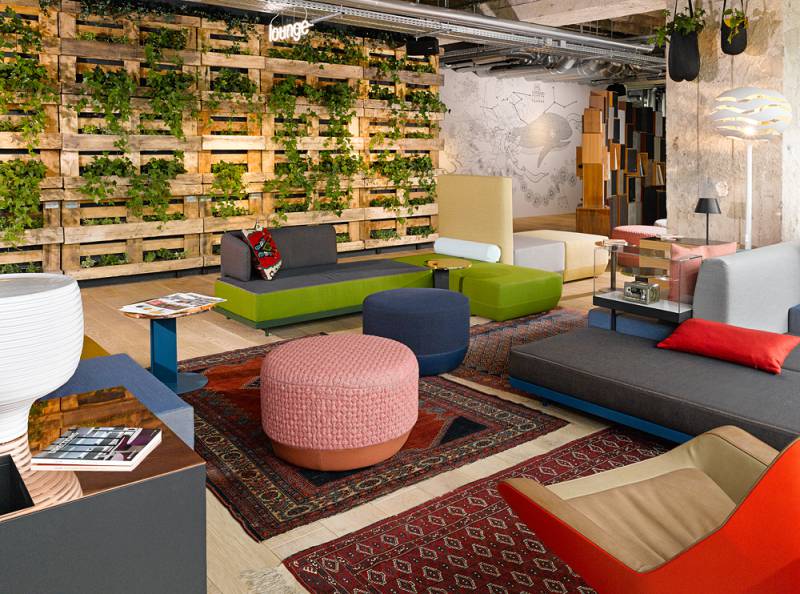
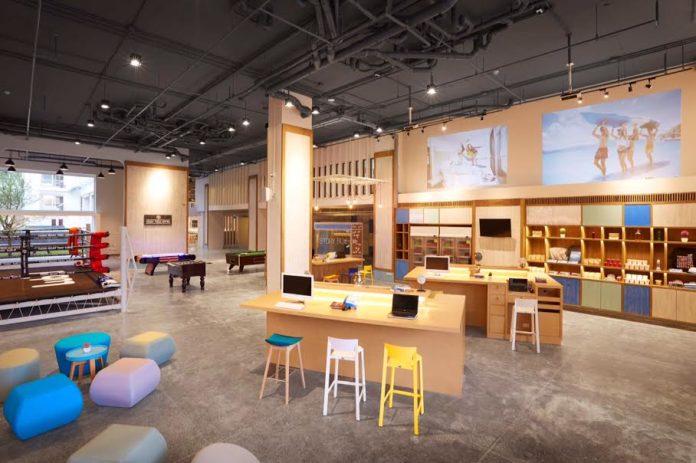
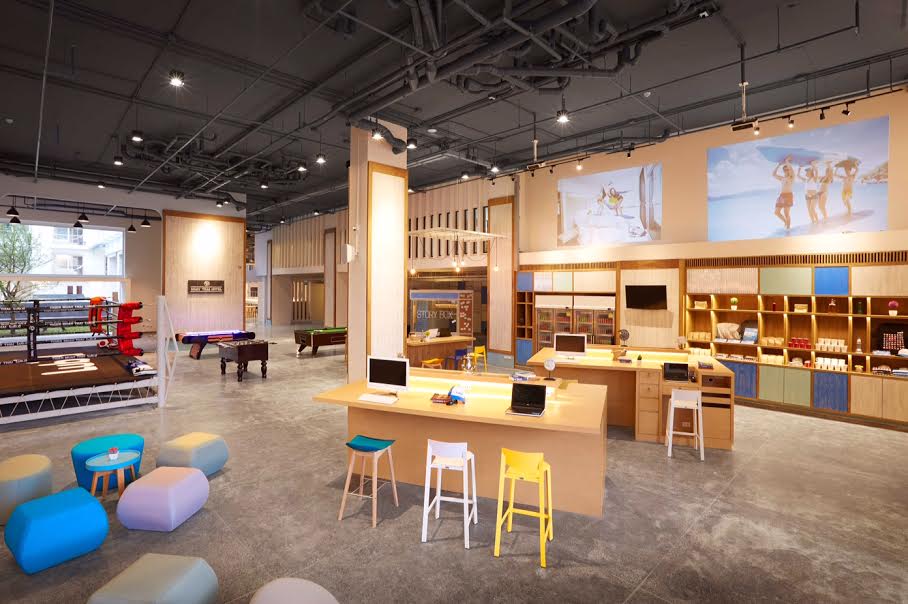
AccorHotels is acquiring a 30 per cent stake in 25hours Hotels with a view to accelerate the global expansion of the Hamburg-based boutique chain.
Explaining the move, Sébastien Bazin, chairman & CEO of AccorHotels said the group saw the appeal of design-oriented boutique hotels that serve as a “workplace for urban nomads and an ideal starting point for outings into key cities”.
“Through this partnership, AccorHotels is investing further in one of the fastest growing segments in the industry and enriching its offer to achieve scale in this segment,” he added.
On how the move will help the brand take root globally, Christoph Hoffmann, CEO of 25hours, said: “Loyal partners have supported our growth in the German-speaking market for the past ten years and we now also have the opportunity to conquer the world with a global partner.”
To that same end, 25hours also intends to expand its internal development structures and establish a creative laboratory to better build on its successes.
The number of international tourists rose four per cent to 956 million in the first three quarters of this year compared to the same period in 2015, according to the latest UNWTO World Tourism Barometer.
The growth rate has moderated compared to previous years due to setback caused by major negative events, noted the study.
“Tourism is one of the most resilient and fastest-growing economic sectors but it is also very sensitive to risks, both actual and perceived,” said UNWTO secretary-general Taleb Rifai, attributing the slower growth to the events.
“No destination is immune to risks. We need to increase cooperation in addressing these global threats, namely those related to safety and security. And we need to make tourism an integral part of emergency planning and response,” he added.
Regionally, the Asia-Pacific led growth across the world, with international arrivals up nine per cent through September. Europe saw the slowest growth at twp per cent, with solid double-digit growths in destinations such as Spain, Hungary and Portugal offset by declines in France, Belgium and Turkey.
The UNWTO Confidence Index indicates that tourism prospects remain positive for the remaining quarter of 2016.
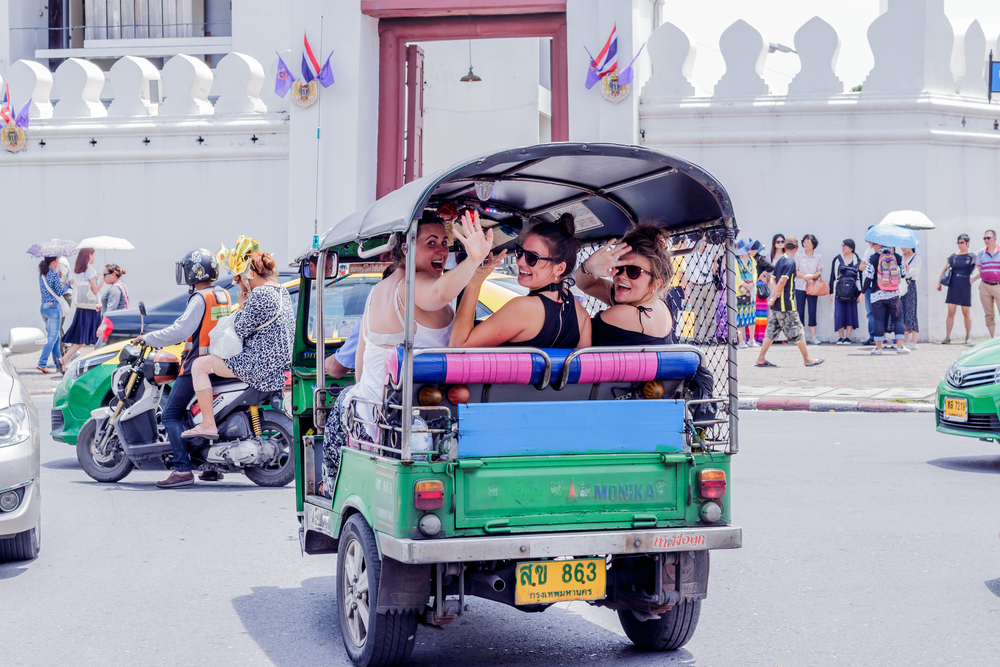
Thailand’s Ministry of Tourism and Sports expects 2016 tourism income will reach 2.48 trillion baht (US$71 billion), an amount higher than the previous projection of 2.4 trillion baht.
Kobkarn Wattanavrangkul, minister of tourism and sports, said that this is thanks to strong performance in the first nine months of this year.
International markets were a key driver and generated around 1.62 trillion baht with 32.4 million arrivals. Meanwhile, domestic travel generated income of 859 billion baht, an increase of 7 per cent from last year, albeit lower than the projected 8 per cent rise.
In October, Thailand’s tourism started to experience a noticeable downtrend. The zero-dollar tour clampdown has significantly affected the industry that month with Chinese arrivals in Thailand seeing a massive 47 per cent year-on-year plunge to 108,090 visitors.
The passing of King Bhumibol Adulyadej on October 13 was also a drag on tourism. Total international arrivals at Bangkok’s two airports dropped 25 per cent year-on-year to 252,903 visitors in the month.
This is likely to affect arrivals in the last quarter. Still, Kobkarn is confident tourism revenue will increase by 1.28 per cent to 609.6 billion baht in the period, which is Thailand’s high season.
The Catalonia region in Spain is aiming to attract two million visitors from the Asia-Pacific by 2020.
David Miro, Catalan Tourist Board’s Asia-Pacific regional director, told TTG Asia: “We are targeting Japan first as it is our most mature market and is currently sending more tourists to Catalonia than any other Asian country. This is followed by China then South Korea – where its tourists to Catalonia has increased by 65 per cent over the past few years.”
To do this, promotional campaigns will be rolled out across Asia. For the coming year, there are plans afoot to conduct social media promotions and the Catalan Tourist Board will be running more press trips for bloggers all over Asia-Pacific to raise awareness, as well as creating a wine and gastronomy showroom in Tokyo.
Miro added: “We are also republishing our digital guide in Korean and Japanese. The itineraries in the English guide will be updated as well. We also plan to conduct workshops – alongside Catalan companies – in Japan and South Korea for local tour operators.”
The Asia-Pacific market has grown exponentially over the past few years and is currently responsible for 20 per cent of all international expenditure in Catalunya. In 2015, the total number of Asia-Pacific visitors was 1.2 million, while 2016 is on track to receive 1.5 million visitors by the end of the year.
Since 2012, the Singapore-based Catalan Tourist Board has represented Catalonia as a tourist destination to markets in the Asia-Pacific such as South Korea, Japan, all South-east Asian countries, and India. The Chinese markets (China, Hong Kong and Taiwan) are handled by another office in Beijing.
When asked if new air links are coming to Asia, Miro said that the Catalan Tourist Board has high hopes for a year-round direct flight from Seoul to Barcelona, considering that the route is already serviced by a seasonal chartered flight between April and July, and October and November.
The current lack of direct flights from Asia however, is attributed to the policy of prioritising Madrid Airport links as stipulated by AENA, Spain’s Air Navigation Authority.
He lamented: “There are a few airlines that want to fly direct to Barcelona from Japan, India, and Hong Kong, but they have ended up flying to Madrid (due to the policy).”
However, all is not lost as Barcelona will be hosting the World Route Development Forum in September, and Miro is hopeful that the forum will allow the 3,000 delegates to explore Barcelona’s airport facilities and experience Catalonia.
He opines that this will help pave the way for more direct flights between Asia’s capitals and Barcelona in the near future.
Amadeus Cytric Travel & Expense, an end-to-end solution for corporate travel managers, is now available for businesses in Asia.
According to Albert Pozo, president at Amadeus Asia Pacific, this is the first fully integrated travel management tool that incorporates the entire corporate travel process, including hotel and flight booking, duty of care, travel policy, reimbursement, expense reporting, and more, under one platform accessible via desktop, mobile and tablet.
With the launch of Cytric, corporates can directly access Amadeus’ GDS inventory without having to go through an agent or TMC. Travel managers can also easily enable their travellers to book trips themselves while using Cytric to ensure bookings are made within standing travel policy frameworks.
Essentially, the solution empowers companies to be able to cost-effectively self-manage their work trips. The ability to cancel bookings, compare fares, alter flight seatings, input corporate negotiated rates, and more, can all be done within the system.
Quick to address the continued need for TMCs is Frederic Saunier, head of corporate IT at Amadeus Asia Pacific, who said: “Amadeus will never become a TMC. The ability to serve the traveller who is on the road is something we will never do.”
He points to the fact that corporates can choose to merely utilise the expense management portion of the solution while still allowing TMCs to manage travel bookings for them.
The Cytric solution however, does encroach into territory long established by TMCs and may be disruptive to them in the same way OTAs have been to offline agents.
Furthermore, Amadeus has also unveiled plans to enhance the service for its corporate clients who choose to utilise the solution. In the pipeline include direct integration with Outlook to book trips using an email message or a calendar plugin (available by early 2017) as well as the ability to use Google’s voice assistant to perform bookings on mobile.
While nothing is confirmed, Amadeus also alluded to the possibility of adding sharing economy content the likes of Uber and Airbnb into the system at some point.
Singapore’s Northstar Group has invested an unknown amount into Indonesia-headquartered B2B accommodations supplier MG Group.
MG Group’s core business, MG Bedbank, services thousands of retail travel agents through its booking platform as well as through hundreds of XML connections. MG Bedbank also supplies its content to global wholesalers, aggregators and tour operators.
William Newley, CEO of MG Group commented that the cash injection from Northstar Group, coupled with Northstar’s expertise and experience, will help accelerate MG’s growth across South-east Asia.
“With the Northstar Group onboard, our independent position within the travel industry is now fully secured. We will continue to work closely with our distribution partners, providing the very best rates and exceeding their expectations on service levels,” said Newley.
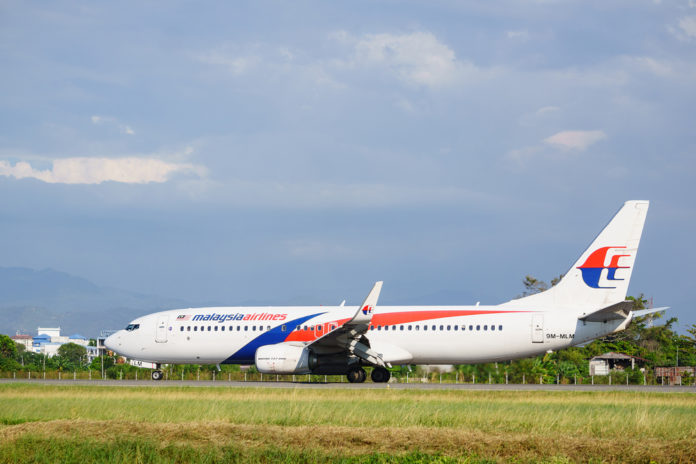
Malaysia Airlines intends to expand rapidly in China beginning early 2017.
Plans are to serve eight new destinations, introduce 11 new routes and add 35 frequencies from its hubs in Kuala Lumpur, Kota Kinabalu and Penang.
In addition to new services from Kuala Lumpur to Haikou, Nanjing, Fuzhou, Wuhan, Chengdu and Chongqing, the airline will also launch routes from Penang to Shenzhen and Shanghai and from Kota Kinabalu to Tianjin.
Stating that the airline has “huge confidence in China”, CEO Peter Bellew, said: “Malaysians relish the business opportunities and tourism experiences in China. (Also), the Chinese tourist market to Malaysia is growing rapidly due to the shared food, language and cultural connections.”
Bellew added that the airline has plans to triple their Chinese business over the next five years, and could potentially offer direct flights to 20 Chinese cities from Kuala Lumpur, Penang, Kota Kinabalu and Kuching by 2019.
“In addition to the initial (expansion), the airline will promote tourism in Malaysia and China through seasonal or ad-hoc services to key leisure markets such as Langkawi, Kuching and Kota Kinabalu,” he said.
Malaysia Airlines expansion in China comes in the wake of the government’s decision to extend visa exemption to Chinese tourists until December 2017 in view of the increasing tourist arrivals from China into Malaysia.
Chinese tourists to Malaysia increased to 1.46 million from January to August 2016, compared to 1.13 million the same period last year.
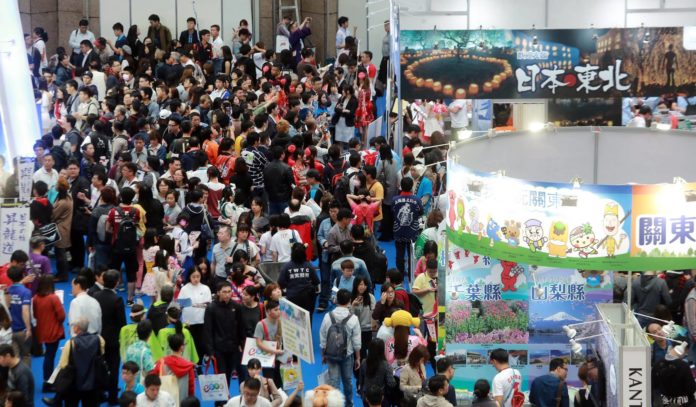
Organisers of the the Taipei International Travel Fair (ITF) welcomed more longhaul delegates this year as the event – which took place from November 4-7 – held its 30th edition at the Taipei World Trade Center.
Over 950 exhibitors from over 60 countries took part over the four days while the one-day B2B travel mart drew 104 buyers from 28 countries.
Organisers of the the Taipei International Travel Fair (ITF) welcomed more longhaul delegates this year as the event – which took place from November 4-7 – held its 30th edition at the Taipei World Trade Center.
Over 950 exhibitors from over 60 countries took part over the four days while the one-day B2B travel mart drew 104 buyers from 28 countries.
Taipei ITF’s chairman Cherng-Tyan Su said: “Our goal is to be more international and to attract more countries to choose ITF as one of the must-attend travel fairs. In order to accomplish this, we have expanded the scale of our travel mart.
“We have opened up the type of people who can join this event. Instead of inviting just exhibitors, we have invited our local inbound tour operators to register as sellers who are non-exhibitors, thus creating more business dynamics.”
New markets this year include Russia and India, while returning longhaul buyers from Brazil, France, Germany and Dubai also took part.
First time buyer Brittany Tanner, an account executive from Canada’s Journeys of Discovery, said: “I came to make new contacts and to find more tour products. Our clients are interested in sightseeing and in local experiences and activities. We try to promote it as a stopover when travelling to China.”
As well, Tommy Huang from Brazil-based Gladtur is on the lookout for suppliers to introduce cycling tours in Taiwan for his clientele. “Taiwan is only a stopover destination for our clients as it’s less popular when compared to China, Japan, Hong Kong and Thailand. However, a representative was appointed in March to promote the destination to Brazilians,” he pointed out.
Meanwhile, for Habib Malik, senior sales executive at Sharijah National Travel and Tourist Agency in the UAE, products that cater to families and availability of halal offerings are key.
“Our clients travel with family every year. It’s typical to have three to four families travelling together and they enjoy natural beauty and culture,” he said, adding that making Taiwan a mono destination is on his agenda.
Doing the same is Welcome in Asia’s general manager Andrea Capellino, who said: “Taiwan can be a very good destination if you know how to sell. We want to open up this market by combining it with China trips, but since I arrived, I realised that it can be a mono destination to spend 7-8 nights, thanks to the diversity of offers here.”
The number of beds in South-east Asia’s flashpacker segment has soared 42 per cent in the third quarter of this year compared to the same period in 2015, according to a report by C9 Hotelworks.
Thailand, Malaysia and Vietnam now boasts the most beds in the region, with Indonesia catching up with year-on-year growth of 73 per cent. Across South-east Asia, the market size has now grown to over 1,200 properties comprising nearly 52,000 beds.
Commenting on this up-and-coming accommodations space, C9’s managing director Bill Barnett said: “Hostels are unlike hotels as average rates are calculated on a per bed basis, compared to hotels which use a per room rate.
“Our research across South-east Asia shows that if comparing the two accommodation models side by side, the average room rates in newer hostel properties are matching or exceeding those in the more established budget hotel tier.”
Barnett adds that this is where future investments in the hospitality industry is likely to heat up.
“In Europe, chains such as Generator and Meininger have attracted institutional investment to spur expansion, and we are already seeing private equity players in South-east Asia start to chase the trail of what is arguably the region’s most exciting travel space,” he said.
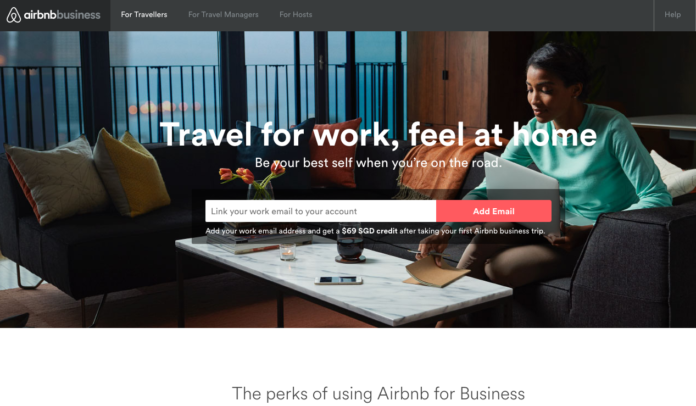
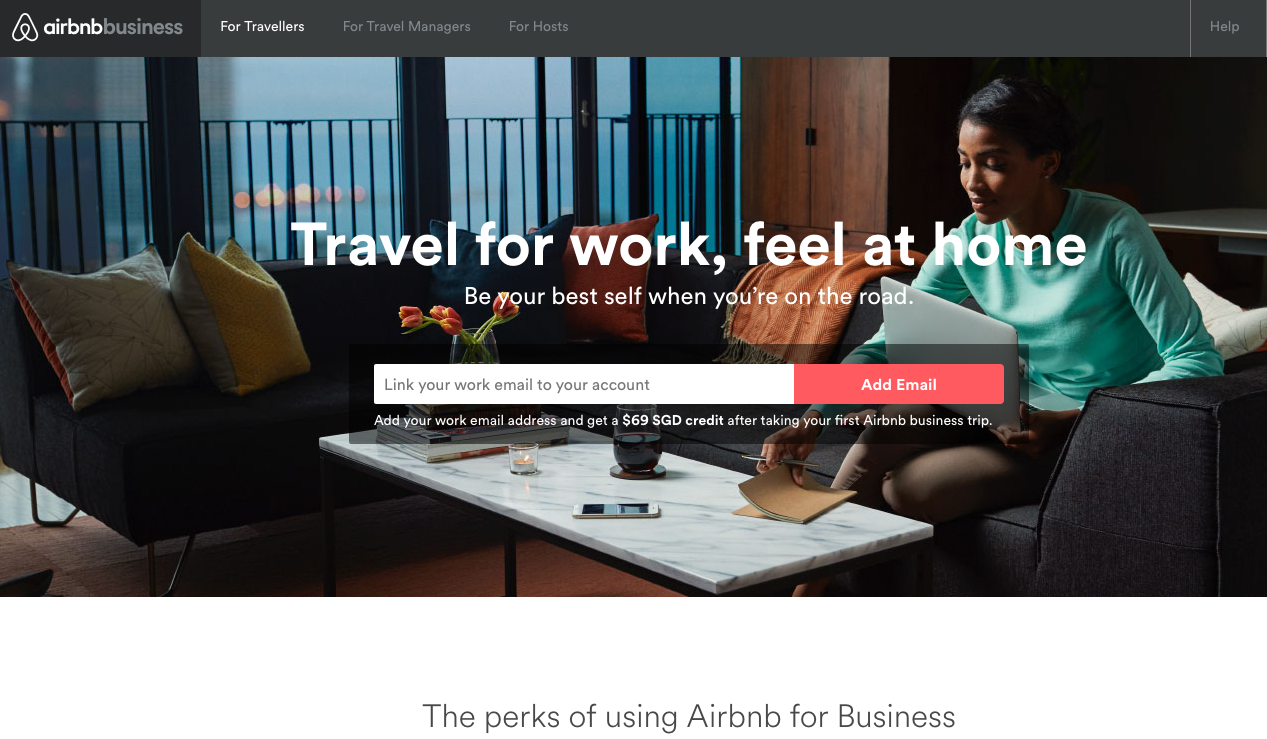
Accommodations spending by corporates on Airbnb properties grew 42 per cent year-on-year in 2Q2016 to US$77 million, outstripping spending growth on hotel chains, according to a study conducted by Concur.
This growth is coming on the back of a 32 per cent climb in number of companies using Airbnb for Business over the same period.
However, on a volume basis, total business travel spend on major hotels was more than 250 times greater than business spend on Airbnb, based on an analogous data set for several major hotel chains gathered by Concur.
Corporate Airbnb stays are also mostly centred around a few hotspots in the world, the three most popular being the cities of San Francisco, London and New York.
Between 3Q2014 to 2Q2016, businesses consistently spent more money on Airbnb stays in San Francisco than in any other city in the world, with London at second place but accounting for less than one-third of the spending in San Francisco.
Reasons for Airbnb’s popularity in the Californian city could be the high average cost of hotels, plus the dominance of technology companies based there that are more open to using sharing economy accommodation options for work trips.
Major events are also major drivers. Looking at daily volume of Airbnb expenses, bookings increase dramatically in San Francisco during Salesforce.com‘s annual Dreamforce conference held in October. Airbnb usage was six times higher than average during the 2015 meet.
“Concur travel and expense data shows us that while Airbnb usage is growing across all segments and industries, momentum is strongest among small and midsized businesses and in the tech and higher-ed segments,” said Tim MacDonald, executive vice president of global products at Concur.
“While hotel spend still accounts for the majority of business lodging spend, there’s an increase in business travelers exploring alternative lodging, especially during major conferences and events.”