TTG Asia
Asia/Singapore Tuesday, 7th April 2026
Page 1713

Tour veteran joins Asia DMC to drive expansion

0

linh-le
Linh He

Linh Le has been named group managing director of Asia DMC as the company looks to accelerate its growth across Asia this year.

Le, who has 14 years of experience in tour operations, joins the company following a six-year tenure with boutique luxury tour operator Trails of Indochina.

In his new role, he is tasked with consolidating Asia DMC’s position in Vietnam, Thailand, Myanmar, Cambodia and Laos where its existing offices are located, as well as drive expansion into Sri Lanka, China, India and the Philippines this year.

The appointment follows the rebranding of the Hanoi-headquartered company at World Travel Market in London last year after 20 years of operating under HG Travel.

Meanwhile, Tran Thanh Nam will step down from his position as CEO of Asia DMC to focus on developing the hospitality arm of HG Holdings, the owning company of Asia DMC.

Price wars threaten survival of smaller players in Thai inbound sector

0

bangkok-european-tourists
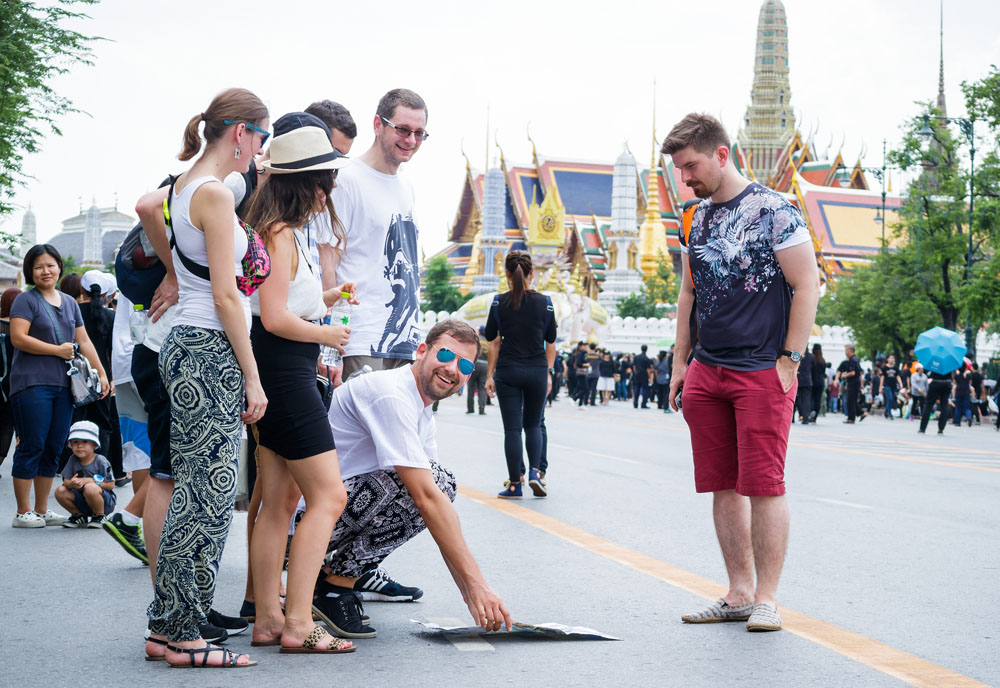
Outside Grand Palace, Bangkok

The economic slowdown in Europe and stiff competition in the marketplace are spelling a particularly tough period for smaller players in Thailand’s European inbound tour sector, who have seen tour prices plunge by half in recent years.

European travellers have become price-sensitive, resulting in a price war that put smaller businesses at a disadvantage, said Sunee Pianngam, managing director of Tai Pan Reise Center (Thailand).

“Big players cut package prices, (putting) small and medium-sized ones who have no international networks out of business. Today, the (European inbound) market is occupied by only four to five big players.”

The price of a five-day package starts at 8,000-9,000 baht (US$227-256), down from 20,000-30,000 baht five years ago, Sunee said.

Also seeing depression in tour package prices, Montri Ramruangsakul, managing director of Arlymear, said the price of a 12 day-tour package is now just 10,000 baht, down from 20,000 baht in 2011.

“It’s now a buyer’s market. Supply is higher than demand. Running business today can only generate cash flows,” he said.

The setbacks are hitting agents amid an already-challenging landscape, as Montri shared that tour operators have been losing business due to rapid technological development and the growth of LCCs and OTAs.

Affected agents are pinning their hopes on baby boomers, who they said have higher purchasing power and a preference for traditional tour agents.

AirAsia X gets nod to fly to the US

0

airasia-x

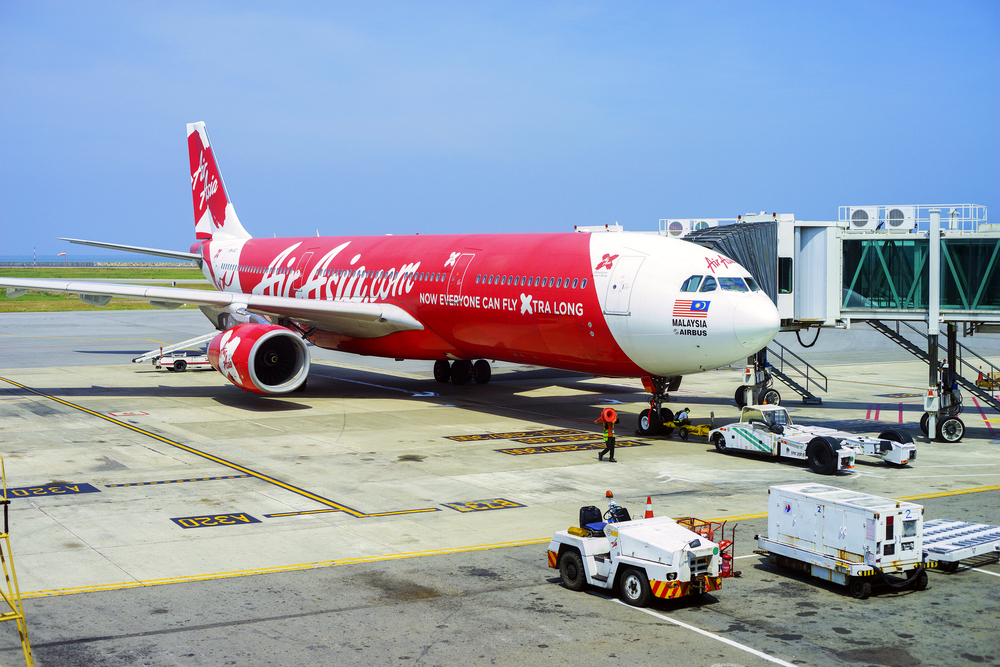
AirAsia X, AirAsia’s longhaul low-cost sister airline, has received clearance from the Federal Aviation Authority to fly to the US.

The airline is the first Asian LCC to secure approval to operate scheduled passenger flights to any destination within the US. The airline is currently considering flights to several states, as well as Hawaii, as part of its route expansion plans.

AirAsia X Group’s CEO Datuk Kamarudin Meranun said: “Our expansion up until now has concentrated on Asia, Australasia and the Middle East, and we are excited about our first foray into an entirely new market as we look beyond Asia-Pacific. We are also looking to resume our very popular London route, and are working towards securing the necessary approvals.”

He further credits the clearance to the late group COO Anaz Ahmad Tajuddin who passed away two weeks ago due to cancer.

AirAsia Group flies to over 120 destinations in the Asia-Pacific.

SITA makes two key appointments to APAC headquarters

0

SITA has appointed Sumesh Patel to succeed Ilya Gutlin as president, Asia-Pacific. Reporting directly to the CEO, Patel will develop and drive the association’s strategic direction in the region.

Based in Singapore, Patel was most recently vice-president of business management. He has been with SITA for over 24 years, starting as an engineer before moving into leadership positions in sales and business development and later drove communications and airport portfolio strategy in Asia.

Sumesh_Patel
Sumesh Patel
SONY DSC
Ilya Gutlin


Gutlin, who remains based at SITA’s Asia-Pacific headquarters in Singapore, will now assume the position of president for SITA’s new global air travel solutions division. He will lead a global team in the development and delivery of products and services to SITA’s 2,800 airline, airport and government customers.

Prior to his more recent role at SITA as president Asia-Pacific, Gutlin was also the vice-president of airport solutions and was the architect of SITA’s Intelligent Airport vision.

New destination branding unveiled for Phuket

0

phuket-branding
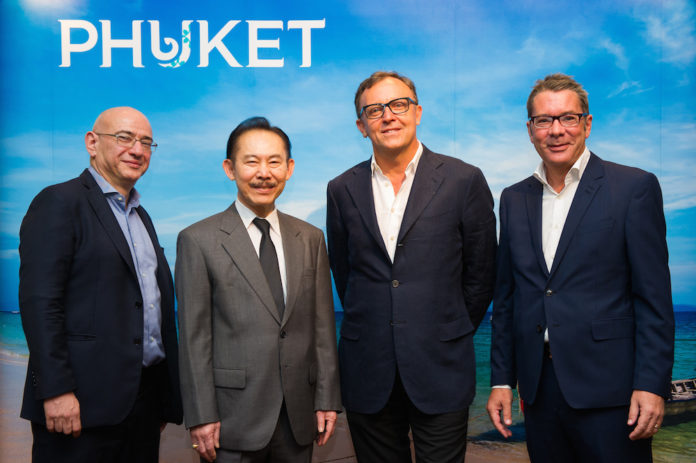
(From left) QUO’s David Keen; The Slate Phuket’s Wichit Na Ranong; Phuket Hotels Association’s Anthony Lark; and Outrigger Resorts’ Mark Simmons

Phuket Hotels Association (PHA) has unveiled at Thailand Tourism Forum yesterday a new brand identity, Brand Phuket, making the first concerted effort to develop a concise and consistent identity for the popular island destination.

Targeting to reinvigorate the profile of Phuket around the world, the brand identity was created by Bangkok-based global branding agency QUO to focus on the island’s breadth of experiences, its natural beauty and culturally-diverse communities.

As well, a new logo has been crafted, featuring ‘Phuket’ in letterform with a decorative motif within the ‘U’ which is inspired by elements in Thai handicrafts. The decorative swirls evoke the curl of the surf, while the combination of blues on the logo reflects the waters and skies at the destination.

“Thailand’s tourism industry has undergone a period of extraordinary growth and it is a time to take a step back, consolidate and position and plan for the future,” said PHA advisor Wichit Na Ranong, who is also owner of The Slate Phuket resort.

“The central and core intention of PHA is to bring the industry together to develop the destination. Tourism has been good to Phuket and we now need to ensure we are reinvesting through environmental and educational programmes to ensure benefits and advantages are spread.”

PHA was launched last year by the island’s several prominent hoteliers, comprising more than 61 hotel members representing 9,000 rooms.

Banyan Tree, Vanke join forces to expand assets in China

0

banyan-tree-huangshan
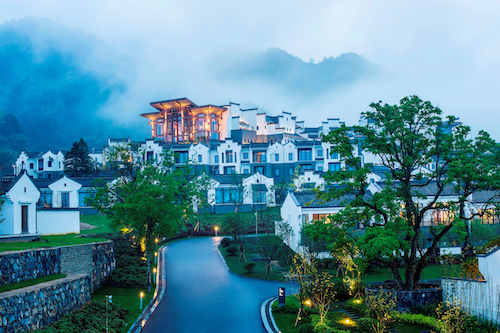
Banyan Tree Huangshan

Banyan Tree Holdings has come together with real estate company China Vanke to create a new joint venture Banyan Tree China (BTC), which will consolidate the ownership of Banyan Tree-branded hotels and assets in China.

BTC will also be the development and management platform for new projects by both parties in hospitality, senior-living and wellness, an area which both Banyan Tree and Vanke can “do a lot more in China and the rest of the world”, said Ho Kwon Ping, executive chairman of Banyan Tree, in a press release.

The initial paid-up capital of BTC is estimated to be no more than RMB2 billion (US$292 million).

The joint venture will initially be controlled 50:50 by Banyan Tree and Vanke through Banyan Tree’s injection of all its China-owned assets into BTC at valuation. The current book value of these assets (before valuation) is approximately RMB720 million.

Meanwhile, BTC will invite owners of the other 15-plus existing hotels and 20-plus hotels bearing various Banyan Tree brands under development in China to inject their hotels into BTC under mutual agreement. Vanke may also inject hotels it owns as well as future hotels under development into BTC.

BTC will also own 40 per cent of Banyan Tree’s hotel management company in China and continue the rapid expansion of the various brands under the Banyan Tree Group, namely Banyan Tree, Angsana, Cassia, Dhawa and Laguna.

Vanke will also take up approximately five per cent equity stake in Banyan Tree itself, as did AccorHotels, another strategic partner with which Banyan Tree recently signed a collaboration agreement to co-develop Banyan Tree-branded hotels around the world.

Indian agents dealt a double whammy with service tax hike

0

tax-increase

The Indian government’s new service tax on tour operators has come as a jolt to the sector, already reeling under pressure post demonetisation.

Effective January 22, tour operators are required to pay service tax on 60 per cent of the total invoice value of a package tour, according to a government notice. Earlier, the tax was levied on 30 per cent of the invoice value.

This effectively doubles service tax on tour packages to nine per cent from the earlier 4.5 per cent.

Mahesh Iyer, COO, Thomas Cook (India), said: “The impact is two-fold: a resultant doubling of the tax rate on the sector, and given that implementation was within a week, reaction time as well as time for advocacy was negligible. This will see a corresponding increase in tour pricing, which will in turn be passed onto customers.”

The move will benefit foreign tour operators and OTAs unaffected by the increased tax, Nalin Kapadia, chairman, Incredible Vacations remarked. “It seems that the government is looking to make life difficult for small travel agents,” he said.

Others added that the move will mostly hit outbound packages as operators enjoy CENVAT (Central Value Added Tax) credit for all input services for inbound tours. This can help defray service tax on services like hotels, transportation and mobile bills.

“Though CENVAT credit is huge relief to inbound tour operators, many of us also (combine) neighbouring destinations like Sri Lanka and Nepal in our tour packages. With the cost going up we may lose that business to foreign tour operators,” said Amaresh Tiwari, managing director, A.T. Seasons & Vacations Travel.

Tourasia taps emerging Polish market to SE Asia

0

ko-phi-phi-thailand
Koh Phi Phi, Thailand

Tourasia, one of Switzerland’s major specialised tour operators to Asia, expects to produce more arrivals from Poland to South-east Asia this year, having opened a subsidiary in Warsaw last month on December 1.

Managing director Stephan Roemer noted that four out of five most popular Asian destinations for Polish, in arrivals figures, are in South-east Asia. The top five, in order, are Thailand, Vietnam, Sri Lanka, Singapore and Indonesia (Bali).

“If you look at the official figures there are considerable increases, particularly to Thailand and Sri Lanka. They report increases of high double digits,” he said.

“Poland is a young market with growth potential. The population is 40 million and at present, 10-20 per cent have the comparable buying power of a market like Germany. That equals to a market size of four to eight million potential travellers. The number of travellers is growing. The annual growth in GDP is approximately four per cent, among the highest in Europe,” Roemer assessed.

Though young, Roemer said Polish are seasoned travellers who want to go farther. Tourasia is targeting the luxury segment with its refined concierge service, own deluxe vehicles and innovative roundtrips. But it will also have “an adequate offer for the tourist class segment”, he said.

Its new office, centrally located in Warsaw, is manned by four staff, led by Piotr Chojnowski, whose career rose from product director at TUI Poland to CEO of Onholidays before joining Tourasia.

“We are setting up our infrastructure and will start the promotions and sales in spring (March/April),” said Roemer.

This isn’t the first time Tourasia operates in foreign markets. The company also owns Tischler Reisen in Germany, another major specialised tour operator to Asia.

In Asia, Tourasia operates its own network of DMCs in Myanmar, Thailand, Vietnam and the Philippines under the name All Asia Exclusive, which also caters to Asian outbound markets. Presently it employs 32 employees in Switzerland and over 140 in Asia.


Hat Yai seeks new markets as Malaysian arrivals tumble

0

hat-yai-streetStreet near Hatyai Plaza market

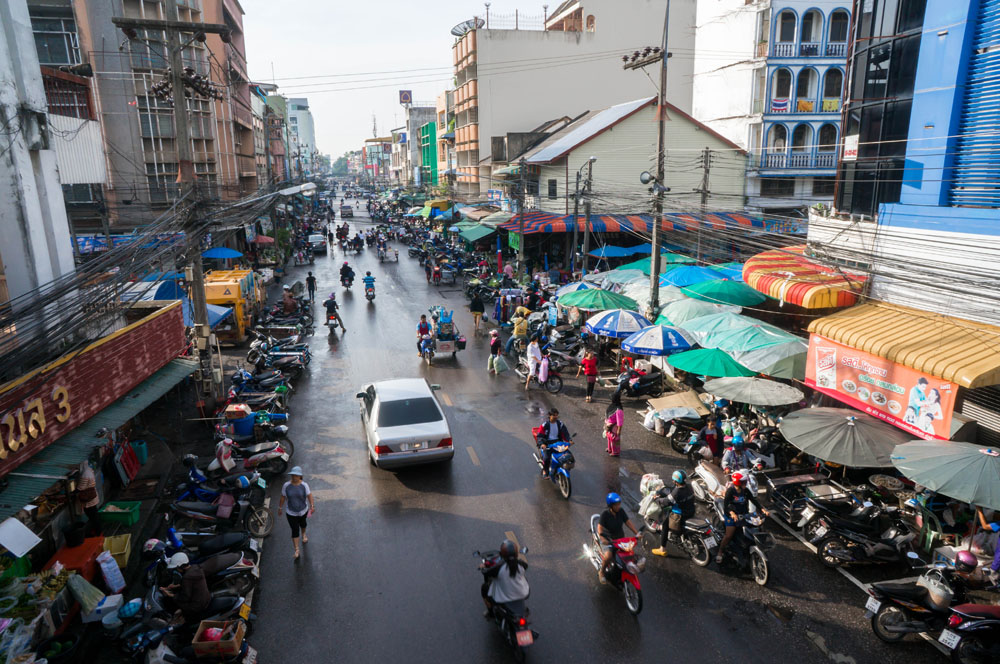
The Thai border city of Hat Yai, which depends on Malaysia as key tourism feeder market, has been hard hit by the anaemic ringgit that makes even short trips pricey for Malaysian vacationers.

The Tourism Authority of Thailand (TAT) estimated that Malaysian arrivals to Hat Yai had fallen by 10 per cent year-on-year in January 2017 while the average length of stay had gone from two nights to just one. Travel spend took a beating too, falling more than 30 per cent to 2,000 baht (US$57) per head per day.

Krit Praphanrasnikorn, managing director of President Hotel Hat Yai and former president of the Hat Yai Songkhla Hotel Association, said the ringgit had depreciated by more than 20 per cent against the baht, which means a weaker buying power for Malaysians in Thailand.

Exacerbating Hat Yai’s tourism predicament is the LCC boom, which Krit said has turned the destination into a stopover location where Malaysians park their cars and depart on flights for other Thai resort destinations like Chiang Mai, Phuket and Krabi.

“The tourism situation in Hat Yai will hit rock bottom in 20 years’ time and the poor (Malaysian performance) is likey to continue at least two years from now,” Krit said.

He urged tourism authorities to develop new destinations and products to keep up with travellers’ evolving demands.

TAT’s Hat Yai director Panu Woramit acknowledged the challenge and told TTG Asia that there are plans to create entertainment and sporting events to woo Malaysian travellers. These activities will begin after the Songkran festival in April.

Panu added that TAT and tour operators in Hat Yai are actively sourcing for new markets to reduce the destination’s dependence on Malaysia. They are pinning their hopes on China, as from April 2 there will be three regular flights a week from Kunming to Hat Yai.

Initiatives shore up arrivals into Sihanoukville

0

sihanoukville
Sihanoukville

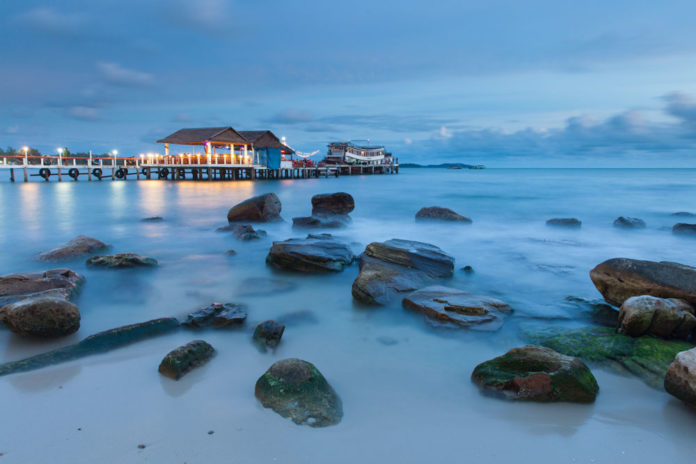
A series of measures to plant the Cambodian coastal resort of Sihanoukville on the map as one of the region’s premier beach resort are paying off.

Tourism officials hope beautification projects to clear up the beaches, plans to double the airport’s capacity to 500,000 passengers per year and efforts to secure more international flights will continue to drive visitors to the destination.

Mick Spencer, owner of ANA Travel & Tours, said the development is mostly being driven by the Chinese, with Sihanoukville being heavily marketed in China.

Several projects are also underway to build casino complexes in the destination.

“The airport expansion is to accommodate an anticipated influx of casino junket Chinese mainlanders,” Spencer said, adding the number of visitors from Europe has remained stable during the last few years.

A marketing initiative introduced in 2016 that gives cash incentives to airlines using Sihanoukville’s airport for international flights has also been renewed for another year.

Last January, Cambodia Airports started offering airlines $10 per passenger – with a maximum of $1,000 per flight – on international scheduled flights departing from Sihanouk International Airport.

Khek Norinda, Cambodia Airports spokesman, said: “This has proved successful in attracting new airlines to Sihanoukville and increased the number of visitors.”

He added passengers landing at the airport increased by 65 percent in 2016.

Bun Socheat, manager of Mekong Travels, said: “These efforts and general development in the area are paying off and will help increase Sihanoukville’s popularity in the future.”