Food-related festivals, campaigns and tours in Asia are whetting appetites for gastronomic and cultural travel, feeding a growing niche market
SINGAPORE
Food has long been an important part of the country’s national identity and heritage, and the Singapore Tourism Board (STB) is continuing its efforts to incorporate cuisine in its destination messages and promote Singapore’s food culture through partnerships and events.
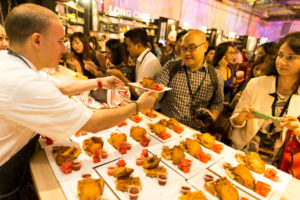 Ranita Sundramoorthy, STB’s director, attractions, dining & retail, elaborated: “We support events with good tourism potential, like the inaugural Michelin Guide Street Food Event (April 14-15, 2017), and regionally, MasterChef Asia (Season 1).”
STB also spearheaded the Singapore Food Festival (SFF) in 1994.
She added: “Till today, it is the only food festival in Singapore to spotlight Singapore cuisine, feature Singaporean chefs, and showcase the inventiveness of Singapore’s dining scene.”
Last year, STB launched the inaugural 50 Cents Fest, as part of the 2016 SFF. It transformed Chinatown Food Street into a nostalgic street hawker lane, depicting what Singapore was like back in the 1950s and 1960s.
When the Michelin guide was first launched in Singapore last year, it further elevated the country’s status as a gastronomic hub. As a result, Ranita told TTG Asia that there was “an increase of 24 per cent in F&B spending by visitors from January to September last year”.
Christine Kaelbel-Sheares, vice president of F&B, Marina Bay Sands (MBS) indicated that the resort’s Epicurean Market has brought in visitors from Australia, Malaysia and Indonesia.
Last year, the fourth edition of Epicurean Market attracted over 16,000 visitors from Singapore and the region. MBS is currently working on its fifth edition to be held in August 2017.
Kaelbel-Sheares shared: “We continue to bring in new experiences by enhancing the offerings to keep the event fresh every year. For instance, we introduced the Sands Signature Series which is a selection of premium masterclasses led by wine and spirits experts.”
As well, in September 2016, John Ng Pangilinan, CEO of Ovenbaked Ideas, launched Makan Bus – a hop-on, hop-off concept where 13-seater vans take passengers to 10 neighbourhoods known for their signature local dishes.
He started Makan Bus as he considers local hawker food gems, and it was “for the purpose of bringing tourists to the local scene in Singapore, to places where they would never think of visiting or find it hard to visit”. – Rachel AJ Lee
MALAYSIA
Malaysia’s multi-ethnic, multicultural background has given the country its diverse array of food, a strong asset for its tourism industry.
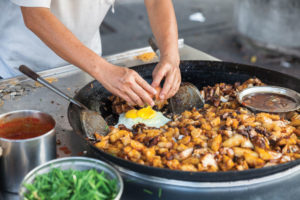 Tourism Malaysia promotes Malaysian food overseas through renowned celebrity chef, Ismail Ahmad, who is also its tourism ambassador. Ismail has helped promote Malaysian food around the world through cooking demonstrations in the US, the Middle East, Europe, Japan and South Africa.
Larger-scale events that put the country on the world map include the Malaysia International Gastronomy Festival (MIGF), in its 17th iteration this year. The month-long festival has doubled participating restaurants since its 2001 inception from 13 to 26 last year.
Steve Day, MIGF’s organising chairman, said: “The festival period is not a short-term money-making exercise. It is a time for investment, heavy publicity and cut-price promotions that will create a regular stream of customers for each participating restaurant for the whole year.”
Moreover, putting the spotlight on local chefs shows that culinary talents are in ready supply in the country to keep standards up year-round, a message that will reach Malaysians, travel agents and business event organisers.
“For this reason, we do not simply fly chefs in from overseas to prepare one or two dinners for an elite few. Instead, we build the festival around our local resident chefs and make the festival accessible to as many people as possible.”
Inbound agents like Raaj Navaratnaa, general manager at New Asia Holiday Tours & Travel in Johor, meanwhile, have found a niche creating food tours in the west coast of Peninsular Malaysia for Singaporean clients. His tours start from Johor and move up north to Penang, combining history and culture with local specialities in the different states along the way.
He said: “We take guests to small towns such as Muar and Parit Jawa… The programme is 11 days, but can be shortened and customised based on the clients’ (needs). This is a popular tour with Singaporeans as they are adventurous when it comes to food.”
Another inbound operator, Lee Choon Loong, executive director of Discovery Travel and Cuisine, specialises in food tours on Langkawi Island with visits to crab and fish farms followed by a seafood dinner. Such tours are especially popular among the affluent mainland Chinese tourists, he told TTG Asia. – S Puvaneswary
THAILAND
With a record nine entries in Asia’s 50 Best Restaurants 2017, the World Gourmet Festival’s 17th edition coming up in September and its first Michelin Guide due to debut by this year-end, Thailand is well positioned to compete as a culinary destination.
 “Tourists now want to have authentic local experiences. In the past, they would only come here for our beaches, temples and bars, but now they are interested in our local food and traditional markets. In fact, the demand for food tours is on the rise,” said Kitichai Siraprapanurat, founder of Bangkok Food Tours.
In fact, Thai street food has gained such global renown that Bangkok authorities’ recent announcement to ban street food vendors was met with wide consternation locally and abroad. Tourism Authority of Thailand (TAT) governor, Yuthasak has since come out to assure visitors that food stalls will remain on the streets of Bangkok.
Recognising the strong appeal of Thai cuisine worldwide, the TAT has launched, as part of its Amazing Thai Taste programme, the Thai-licious campaign to promote local culinary heritage among international foodies.
It has also appointed Andy Ricker, one America’s best-known chefs of Thai cuisine, as the first Amazing Thailand Culinary Ambassador. Ricker will assist TAT in promoting Thai cuisine, including taking a group of influential visitors on a journey to discover Thailand’s hidden culinary gems – the trip will be filmed and turned into a web series.
This is also the year of the Michelin Guide’s much-anticipated arrival in Thailand, after TAT pledged considerable financial support to a five-year partnership with the renowned French guide.
And at the 17th World Gourmet Festival in September, top Michelin-star chefs from across the globe will gather at the Anantara Siam Bangkok Hotel to cook their home favourites for an international gourmand crowd.
“In 2016, we had around 1,400 participants, with people flying (in) from Hong Kong, Singapore and South-east Asia to attend the festival. This year, we expect an even higher attendance from an even more international crowd,” said Anantara’s general manager Patrick Both. – Jessica Tradati
PHILIPPINES
Long under-celebrated, Philippine cuisine has started to gain interest from abroad since a month-long culinary event became a nationwide tradition in recent years.
Held in April, Flavors of the Philippines, highlighted by Madrid Fusion Manila (MFM), is in its third year as the only Asian edition of global gastronomy event Madrid Fusion.
Flavors features culinary activities held throughout the Philippines, among them pub crawls, food bazaars, farmers’ markets, food festivals, gourmet fairs and dining with celebrity chefs.
This year’s Flavors started in mid-March, making it a “longer, grander and more delicious food journey nationwide” in a bid to establish the Philippines “as a centre of culinary excellence in Asia” and “a hub for different flavour profiles, even those of foreign origins”, tourism secretary Wanda Teo explained.
Teo added that the activities “will go on an all-in-one enriching celebration of Philippine history, arts, culture, tradition, literature and music through the language of food”.
Madrid Fusion Manila 2017 was expanded to include B2B components with local culinary tours specialists, plus the International Gastronomy Congress and International Gastronomy Expo.
Another coup for the Philippines is the return of the World Food Street Congress to Manila last year after having been hosted by Singapore for two years.
The congress will take place from May 31 to June 4 this year, graced by some 28 of the world’s best Street Food Masters from 12 countries to dish out authentic street food.
These two culinary events are the joint work between the government (Department of Tourism, Tourism Promotions Board and Department of Agriculture) and the private sector (Philippine Association of Convention/Exhibition Organizers and Suppliers, plus travel agencies and tour operators).
Vilma De Claro Mendoza, president of Mart Evers Travel and Tours, who is involved in Flavors activities in Cavite, said the two events push the country to develop and improve its culinary offerings.
As Filipino cuisine gets noticed abroad, Ine Faustino, general manager of CCT 168 Tours, said more agencies are whipping up kulinarya packages, including her company which is already featuring food trips in its tour itineraries. – Rosa Ocampo
HONG KONG
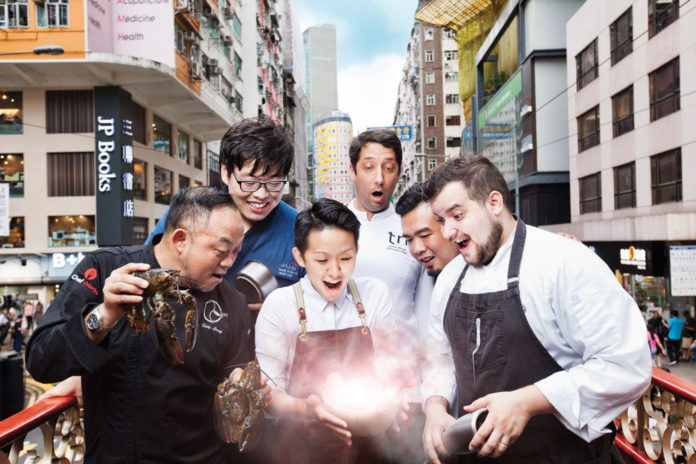
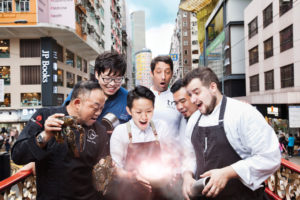 With meals outside hotels the third largest category of visitor spend in Hong Kong (after shopping and accommodation), it is no wonder Hong Kong Tourism Board (HKTB) has chosen dining as one of seven core experiences to promote in the city.
The HKTB will step up promotion of key homegrown events, including the Hong Kong Wine & Dine Festival, having received additional government funding to enrich the city’s tourism appeal.
A spokesperson said: “We will also continue to offer… epicurean culinary events, and wine and dine offers during the Hong Kong Great November Feast.”
As well, the HKTB will support the overseas promotion of local culinary events by third parties such as Taste of Hong Kong and Chill Out at the South by Ocean Park. It will highlight the local food trucks initiative for food tourism.
Inaugurated in 2016, Taste of Hong Kong is not only about sampling food but also offers social elements including cooking and cocktail making through Marriott Studio masterclasses.
A spokesperson for the event said: “We’ve had visitors from Asia coming to Hong Kong for the festival so we can definitely see that food tourism drives (visitor arrivals). So far, most fairs and F&B-related events are more focused on trade and are not consumer-driven, so we can definitely grow in this area in the future.”
New food tourism products recently introduced in the city include Crystal Bus, which brings participants sightseeing while dining on gourmet dishes, either as part of a 2.5-hour day tour or five-hour night tour charter. Dinner will be provided by its partner restaurant upon request.
Apart from gourmet dining, tours focused on humble local eateries are also growing in popularity, observed Silvana Leung, director of operations at Hong Kong Food Tours.
With many repeat clients requesting for similar tours in other districts after having experienced its signature Sheung Wan route, the company has added two routes in Sham Shui Po and Taipo, with plans to introduce another this year.
“Hong Kong is perfect for food tourism especially when you are spoilt for choices, from street hawker food to high-end restaurants. The outlets we pick are real neighbourhood outlets where Hong Kongers would go. There is language barrier issue in these outlets so we’d accompany with guests through out the journey.” – Prudence Lui
JAPAN
Japan has combined its parallel loves of technology, anime and food to promote its diverse cuisine to foreign visitors.
A new Taste of Japan campaign launched on March 1 by the Ministry of Agriculture, Forestry and Fisheries features Hatsune Miku – a 16-year-old virtual pop star with turquoise hair and a global following – singing and dancing her way on an “oishii trip” that incorporates food like Hokkaido crab, Aomori apples, sushi, sukiyaki and green tea.
Aimed at younger travellers, the web site (http://tasteofjapan-videos.jp/oishiitrip/) emphasises the wide regional and seasonal variations in its food and how Japanese cuisine has been added to the UNESCO intangible cultural heritage list.
According to the ministry, the Hatsune Miku video has been viewed around 80,000 times to date on various platforms.
Anime may not be the first thing that comes to mind when talking about food, but Hatsune Miku’s growing popularity – having opened for Lady Gaga on her 2014 tour – could be an effective way to bring attention to Japan’s cuisine.
Said Kenshi Hamaoka, who oversees the campaign for the ministry: “Washoku (Japanese food and food culture) is becoming better known around the world and we want this collaboration to create a synergy between the two.”
The Taste of Japan website has a number of short animated videos with different themes, such as Sushi and Beyond as well as a selection of documentary-type programmes examining the roots of Japanese cuisine.
Elsewhere across the country, F&B events are being used to celebrate regional cuisine and attract more visitors, both domestic and foreign. Fukushima City holds its ramen show over 10 days from late April, Hiroshima has an oyster festival in January as well as an okonomiyaki (savoury pancake) event in March, while Saitama Prefecture hosts an annual whisky festival.
National broadcaster NHK sponsors the two-day Japan Local Food Festival each March, while the B-1 Grand Prix has swiftly evolved into the nation’s largest culinary event and is a movable feast that changes location each year and promotes no-frills regional dishes. – Julian Ryall





 Last year, the airline reintroduced four-times weekly Bangkok-Moscow flights, launched a new link between Frankfurt and Phuket, as well as deployed A380s on its Paris, London and Frankfurt routes.
 The Philippine national flag carrier debuted in Clark last December by mounting flights from Incheon to Caticlan (Boracay), immediately followed by flights from Clark to Cebu, Davao to Puerto Princesa and Coron in Palawan.
 For 2017, plans will include launching services to Stockholm via Moscow, as well as introducing the A350 on more European routes. Stockholm would be the airline’s second destination in the Scandinavian region. The flights will be operated on the airline’s new Airbus 350-900s, and would complement the airline’s existing flights to Copenhagen in Denmark, boosting connectivity between South-east Asia and Northern Europe.
 “In addition to this initial growth, we will promote tourism in Malaysia and China through seasonal or ad-hoc services to key leisure markets such as Langkawi, Kuching and Kota Kinabalu.”