TTG Asia
Asia/Singapore Tuesday, 7th April 2026
Page 1709

Europe’s the official partner destination for ITB China 2017

0

itb-china-1
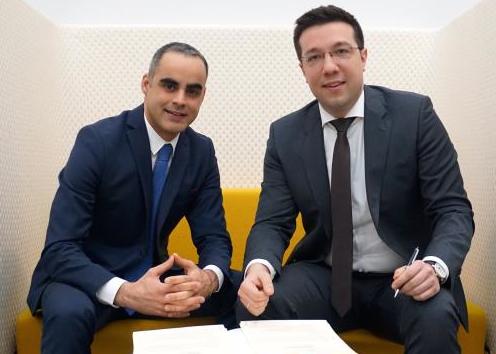
(From left) European Travel Commission’s Eduardo Santander and ITB China’s David Axiotis

ITB China’s first partner destination for its inaugural tradeshow this year will be Europe when the three-day B2B travel trade fair takes place from May 10-12, 2017 at the Shanghai World Expo Exhibition and Conference Center.

An agreement was signed between David Axiotis, general manager of ITB China, and Eduardo Santander, executive director at European Travel Commission, on January 31, 2017.

Axiotis said: “China is the driving force for growth in outbound trips and Europe as a continent remains a dream destination for many Chinese tourists. Europe, as a partner destination, will help to better understand the needs of Chinese visitors within the European Tourism Community, especially in view of the 2018 EU-China Tourism Year.”

Santander added: “European destinations acknowledge the need to remain competitive in China. It is only through deeper cooperation with the Chinese authorities and the support and commitment of the European tourism sector to engage in joint public-private marketing initiatives, like this partnership, that Europe will succeed in fostering sustainable tourism growth from China.”

A dedicated Europe Pavilion at ITB China will showcase European tourism products and destinations such as Czech Republic, Belgium, Hungary, Estonia, Latvia, Lithuania and Serbia. The show will also feature individual presences from other major European destinations such as Portugal, Finland, Greece and Austria.

The European presence on the show floor is flanked by The World Bridge Tourism project (WBT), which is co-located with ITB China 2017. The WBT is a project jointly organised by the European Travel Commission and the European Tour Operators Association to match 150 tourism suppliers across Europe with the corresponding number of Chinese travel buyers.

The event is also supported by an extensive programme of research and webinars aimed at increasing the understanding of the needs of Chinese visitors within the European tourism community.

Solomon Islands begins courtship of Asian markets

0

josefa_tuamoto_ceo_solomon_island_visitors_bureau-1
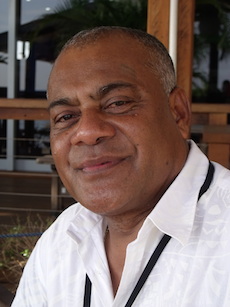
Josefa Tuamoto

The Solomon Islands saw a nine per cent increase in inbound travellers in 2016 and has set a similar target for this year, with much of its destination promotion efforts targeted at Asia.

“Australia and New Zealand have traditionally been our biggest markets for tourists, but we see countries like China, Taiwan and Thailand as the future of continued growth,” said Josefa Tuamoto, CEO of the Solomon Island Visitors Bureau (SIVB).

Around half of 22,400 tourists to the Solomons in 2016 were from Australia and New Zealand, but Tuamoto hopes that improvements in air links to Asia – notably through Air Niugini’s hub in Papua New Guinea offering connecting flights to Singapore, Japan and Indonesia – will boost numbers.

There is, however, no desire to turn the largely unspoiled Solomons into another Pacific resort such as Fiji or Bali, he stated.

“We do not want to be in that mass-market space,” said Tuamoto, himself a Fijian. “We consider the Solomons to be special and our most recent promotional campaign had By invitation only as its slogan. We want to get across the exclusivity of what we have and the campaign is gaining traction.”

Garedd Porowai, senior travel consultant for Honiara-based Charis Travel Services, said he saw a “significant rise in Asian participation on tours and packages” in 2016.

“Most are from Singapore, China and Japan, but I also (had) my first Indian customer last year. They are mainly highly-educated, multilingual and FIT or SIT stopping here en-route to their country of origin, usually via Port Moresby to Singapore, Narita or Hong Kong, flying with Air Niugini,” he elaborated.

Porowai believes the SIVB is “doing a great job marketing to Asia with minimal funding”, but would like to see the authorities relax the entry requirements for Asian tourists and improve basic facilities such as public toilets.

Other hurdles include a shortage of high-quality accommodation and national carrier Solomon Airlines being plagued by high ticket prices and unreliable service.

Still, Tuamoto is upbeat about the destination’s potential. “The problem is getting people to come here for the first time,” he said. “We are not worried about reaching out to repeat visitors because we know that after one trip, they will be back.”

Bangkok’s IMPACT diversifies into leisure offerings

0

impact-arena-muang-thong-thani
IMPACT Challenger Exhibition and Convention Center at Muang Thong Thani

IMPACT Exhibition Management has earmarked 5.6 billion baht (US$159.4 million) over a three-year period to develop a new water park, attractions and hotels at IMPACT Muang Thong Thani complex in a bid to diversify its offerings and attain a more balanced revenue stream that is currently focused on MICE.

Opening this March will be the 587-room ibis Bangkok IMPACT hotel and The Portal, a four-storey retail building; while IMPACT Speed Park, a go-kart circuit, was already launched late last year.

The three billion baht water park, set on a seven-hectare plot, is scheduled for completion by October 2018.

Meanwhile, construction of a 386-room Pullman hotel will begin next year to replace the 100-room Eastin Lakeside Hotel. The new hotel will bring IMPACT’s supply to 1,300 rooms altogether when it starts operations in 2019.

Paul Kanjanapas, managing director of IMPACT Exhibition Management, aims to position Muang Thong Thani as a comprehensive leisure and business destination. “I envision that Muang Thong Thani will become a new tourist destination and generate income not only from MICE but also tourism,” he said.

“Although the current economic situation is not promising, IMPACT sees it as a good timing for investment. When construction completes and the economy recovers, IMPACT can start generating income right away.”

Although its performance for the 2016 fiscal year was 10 per cent off target, Paul is confident that IMPACT will reach its 2017 revenue target of 2.2 billion baht as trade fairs, consumer shows and concerts are making a comeback in 1Q2017 following a spate of cancellations in October when the Thai king passed away.

Furthermore, he is also expecting some diversion of MICE traffic from Queen Sirikit National Convention Center to IMPACT when the former closes for a major overhaul in mid-2018.

Hard Rock picks ex-Sands boss to head new Japan unit

0

ed_tracy_headshot-36-3

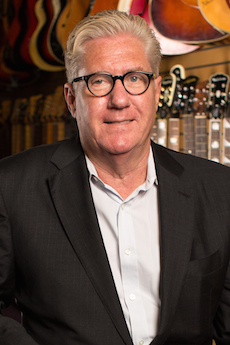
Hard Rock International will launch Hard Rock Japan with casino maestro Edward Tracy as CEO to support the new division and growth plans in Asia.

With the recent passing of Japan’s Integrated Resorts Promotion Bill, the company intends to apply its hospitality and entertainment expertise in the country and be recognised as a major contender among the bidders for resort licences.

Prior to Hard Rock, Tracy headed Sands China, a subsidiary of Las Vegas Sands, in July 2010 as its president and COO before becoming the company’s CEO in July 2011.

He had previously served as president and CEO of Capital Gaming, a multi-jurisdictional manager of regional casinos, and was also president and CEO of the Trump Organization.

Hard Rock has over 30 years of experience in the country, having opened its first Japanese cafe in Tokyo with long-time partner, WDI Group, in 1983. The company has 24 hotels and 11 casinos around the world.

Singapore to paint brighter picture of design festivals

0

mark-yong
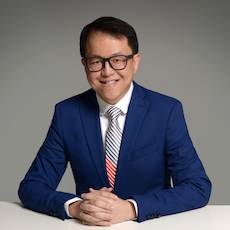
Yong: Power of design tourism is something that we have to ride on

Singapore’s art and design festivals are gaining the support of Singapore Tourism Board (STB), which is hoping to position the city-state as Asia’s design capital given its location and accessibility in the region.

Joint efforts to promote key events during the Singapore Design Week (SDW), from March 3 to 12, to the global audience are underway between STB and organisers Design Singapore Council.

Andrew Phua, director of exhibitions and conferences with STB, said: “STB promotes the SDW through our regional offices, as well as our key partners which include design-related trade media, associations and travel agents, as part of our overseas marketing and promotional efforts to profile Singapore as a business events and leisure destination.”

At SingaPlural, SDW’s anchor event, tourists make up 15 to 20 per cent of the total 28,000 visitors.

The event’s chairman, Mark Yong, said that the “power of design tourism is something that we have to ride on, as design festivals are becoming important tourist events”, with more tourists in the recent years not only travelling to see the sights but for events and festivals as well.

Now in its sixth edition, SingaPlural has developed into a holistic festival with more global names like Uniqlo and Studio Architetto Egidio Panzera among its partners.

Yong believes the presence of internationally renowned partners will help to grow foreign attendance. “International partners have their own social media outreach programmes, their own ways of marketing (and) their own fans. With Uniqlo coming onboard this year, the (global reach) will be tremendous,” Yong said.

While Singapore has an array of year-round art and design events, and is a UNESCO Creative City of Design – a title earned in 2015 – few overseas travel specialists that TTG Asia spoke to are aware of these unique selling points.

Philippine-based Shroff Travel’s spokesperson, Kristine Shroff, opined that creating tour packages catered to design festivals or having conventions to educate and connect with travel agents could have a huge impact on drawing the design-savvy crowd from the region.

M Zaki, president of RZ Travels in California, who has not seen promotions of design festivals outside of Singapore, believes that event organisers and STB should invest more on above-the-line advertising.

Industry leaders oppose Trump’s travel ban, but no impacts on Asia tourism yet

0

trump_online

The 90-day ban on travellers from seven Muslim-majority countries entering the US has riled the global travel community, with many industry leaders calling for the move to be repealed.

Following Trump’s executive order on January 27, World Travel & Tourism Council president & CEO, David Scowsill, criticised the move as a violation “against the fundamental right of freedom to travel”. He elaborated: “WTTC believes that all people have the right to cross international borders safely and efficiently for business and tourism purposes.”

The “misguided” ban could tarnish the image of the US as a tourist destination and risk impacting its tourism arrivals, forewarned PATA CEO Mario Hardy. He further highlighted that “the majority of terrorist attacks in the recent past have been perpetrated by homegrown, radicalised nationals of the country involved”.

While Trump’s executive order has caused chaos across the airlines and travel world, agents in Asia-Pacific so far have not seen any fallout on their business.

Haydn Long, global media & investor relations manager for Flight Centre Travel Group, sees limited impact on the Australian trade. He said: “Some concerns have abated in recent days, given that it now appears that dual citizens (holding Australian passports) can still travel. The biggest issues seem to be confusion and misinformation.”

Nalin Kapadia, chairman, Incredible Vacations India, commented: “It is too premature to assess the impact of Trump’s travel ban. In the short run travel to US will be affected but the lure to visit US will push Muslims from other nations to try harder for visas. There certainly is an opportunity for other markets like Europe, China and Russia to attract Muslim travellers.”

Others shared that Muslim tourist traffic could be diverted to Asia from the US.

Nicholas Mulley, COO for Destination Asia, added: “We expect to see a rise in Muslim travellers to Asia due to (relative) safety and stability, combined with a tolerance towards different religions and extensive halal food options in Malaysia, Indonesia and across the larger cities in East/South-east Asia.”

Likewise in Japan, there are hopes that Muslim travellers may begin favouring Japan as a destination over the US, according to Tatsuki Miura of H.I.S.’ corporate planning department and Keisuke Nomura of Nippon Travel Agency.

Furthermore, the US remains an aspirational destination for many Asian travellers. Alicia Seah, director of PR and communications, Dynasty Travel, said: “With (the right) co-ordination and consistent operational information with regard to its travel ban and visa issues, the US will remain an attractive destination to visit with its world renowned theme parks, national parks and night entertainment in the West Coast.”

However, some agents are bracing for more stringent visa procedures to the US in the days ahead. A Philippine travel consultant, who requested anonymity, is expecting the US to restrict the number of approved visa applications for Filipinos to curb undocumented immigrants in the country.

– Reporting by Adelaine Ng, Xinyi Liang-Pholsena, Barathi Narayan, Rohit Kaul, Rosa Ocampo and Julian Ryall

amba Taipei Songshan

0

Unveiled in July 2016, the hotel did justice to amba’s homegrown, new-gen brand identity, with a great location and functionality to boot, finds Prudence Lui

Location 
amba Taipei Songshan occupies the top floors – levels 17 to 21 – of the mixed-use Ruentex Songshan Station Complex, adjacent to Taipei Metro’s Songshan Station and connected to City Link Mall by a sheltered bridge on the third floor.

Moreover, the Songshan neighbourhood is within walking distance of icons like Rainbow Bridge, Ciyou Temple and the Raohe Night Market for tasty local snacks and crafts.

Located in eastern Taipei, the hotel is only a 15-minute drive from Songshan Airport and just 10 minutes to Taipei 101, Xinyi commercial district and Nangang business district by free shuttle service.

Corner Taipei 101 View Room | amba Taipei Songshan Hotel

Room 
I stayed in the special Corner Extra Large 101 View room, the third largest room category at 40m2.

Space is ample, and so is the daylight from the glass windows looking out to Taipei 101 and Keelung River and mountains.

It was a nice surprise that the bathroom also provides a view of the river from the semi-open air bathtub. But as I was here in winter, I was happy to stay indoors for a quick shower.

As a tech-savvy traveller, I found the Wi-Fi and super high-speed data transfer rates, six power outlets and three USB charging ports to be very useful.

The hotel’s sustainable and green efforts include the use of eco-wood flooring in the guestrooms, and phthalate-free and recycled woven vinyl carpet in the corridors.

What impressed me were the fun magnetic door signs in place of paper ones allowing guests to denote room status.

F&B 
The 150-seat Que restaurant on level 17 is the only outlet in the hotel for dining and drinking. Still, you get enjoy the dramatic Taipei skyline and wood-fired meats and seafood – all responsibly-sourced and hormone-free – from this modern chophouse.

Guests can watch chefs in action in the open kitchen set in the middle of the restaurant. And since there is no room service in hotel rooms, guest may order from Que and pick up the order by themselves.

Facilities 
With up to 928m2 of versatile event space, the hotel can be ideal for creative meetings and special events.

For instance, the Que restaurant is designed with built-in facilities like speakers and can accommodate a 150-seat meeting while The Studio on level 17 is suitable for an intimate gathering of up to 10 guests.

I appreciate the ‘thoughtful extras’ which include a self-service laundry room, ice & water machine and 24-hour fitness room on level 18, plus an array of entertainment and fitness equipment available for rent, such as weights, yoga mats, board games and an Xbox console.

Set to be completed in 2Q2017 is a a communal games room featuring a ping pong table and with room for up to 18 guests.

Verdict 
Not only is the hotel is super conveniently located, it also caters to a perfect mix of fun and business needs.

No. of rooms 189
Rates NT$5,400 (US$168.90) to NT$8,200, subject to 15.5 per cent service charge and tax
Contact details 
Tel (886) 2 2525 2828
Email reservations@amba-hotels.com
Website: https://amba-hotels.com/en/songshan

Thamm expands role to become CEO of Carnival Asia

0

Carnival Corporation has appointed CEO of Costa Group, Michael Thamm, as CEO of Carnival Asia to oversee operations in China and the region as part of his expanded role.

Thamm’s added responsibilities include promoting strategic cooperation with the Chinese government and local business partners, as well as building a long-term, sustainable Chinese cruise industry.

Michael_Thamm

With a career spanning over three decades in the cruise and shipping industry, Thamm has served as CEO of Costa Group since July 1, 2012.

Automation and the hospitality industry

0

Given the high costs and manpower shortages experienced in the Singapore hotel sector, automation and hospitality are two words rarely used in the same sentence. Other industries have embraced automation, manufacturing has massively increased its productivity thanks to machines, and Robotics Process Automation (RPA) led by companies such as UiPath promises to replace the repetitive, rules-based tasks present in many financial institutions, yet local hotels seem to be free of such technology, despite the presence of many repetitive, rules-based jobs.

This could be about to change at both the front and back-end of our hotels. On the back-end, hotels employ staff who do a lot of manual, non-routine jobs, such as cleaning tables, cleaning hotel rooms, folding towels and tidying equipment etc. While these tend to be low paid, they are harder to automate than say the routine jobs found on the factory floor or accounting departments.

hotel automation copy

A few years ago, researchers at the University of Berkeley introduced us to Brett, a robot that could pick up and fold towels, and lay them down neatly on top of each other, taking about 24.5 minutes to fold each towel. While this may seem slow, to the point of ridicule, the fact that a robot is able to detect, scan and manipulate a ‘soft’ object is impressive. Fast forward a few years, and the robot is now able to connect Lego pieces, hang shirts on a hanger and fix a toy.

Most robot testing and successes to date have occurred in highly controlled environments, where there is more predictability. A hotel room, though, is what researchers would call an ‘unstructured 3D environment’, that is traditionally very hard for robots to navigate. What the Berkeley team are doing is developing a robot that can operate in this unstructured, real-life setting, where the environment is constantly changing and the robot needs to perceive and adapt to its surroundings. If robots can learn to do this, then we are one step away from automated housekeeping.

Hotel accounts departments are also ripe for automation. Dozens of employees are hired to process the hundreds of invoices, claims and bills that run through the hotel on a daily basis. This often requires little more than checking the invoice, copy-pasting data, transferring information – rules based, repetitive tasks. Robotics Process Automation (RPA) is software that uses computer systems exactly as a human does – via the user interface (e.g. Windows). Highly accurate, and never making mistakes, RPA does the monotonous tasks that humans simply are not designed to do, and can significantly reduce cost and improve efficiency for (often cash-strapped) hotels.

A good example of this is Pilot Travel Centers LLC, a US-based firm that, back in 2010, employed 80 clerks and salespeople to track and pay for thousands of goods, spending a combined 3,200 hours a week. Today, software does much of the work, and they now employ 10 clerks working a weekly total of 400 hours to pay the same suppliers.

Technology can now detect physical items too. SAP software allows Airline-service crews to scan the number of paper cups they bring into an airplane. Hotels still employ people to conduct inventory checks on a daily basis for everything from the amount of shampoo and soap to cans of tomatoes and bottles of olive oil. Counting and recounting stock takes hours, and is the kind of mundane

Lastly, on the front-of-house end, mobile check in should make life quicker and easier for many a jet-lagged traveller. Some hotels have employed mobile check-in for many years (see France’s Formule 1 Hotels, for example), and larger chains are beginning to improve their mobile check-in infrastructure (such as Starwood Hotels’ SPG Keyless check in). The business and service case behind mobile check-in is a no-brainer. Many of the guests forced to queue up to check-in at the Front Desk would have conducted mobile/online check-in for the flights that they flew in on, and a speedy process from hotel entrance to room would surely result in happier guests. Furthermore, the automation of the check-in process may result in a rethink of the role of the Front Desk, and Front Office staff, with the opportunity for turning this area into revenue generating space.

Hotels have been battling costs – from food and beverage to manpower – for years, and have done an admirable job of keeping them low, maximising revenue while ensuring service levels remain high. However, there is still room for improvement (pun intended!), and technology such as RPA, robots and mobile check-in will continue to develop, opening up more automation opportunities for hotels. Guests may still prefer the human touch, but behind the scenes, there are many areas where robots can play a vital role.


Article written by David Topolewski, CEO of Qooco

Home is where the trip is

0

oct-07-raini-croppedA heartwarming trend this Chinese New Year (CNY) is a rise in family trips among mainland Chinese travellers, which augurs well for the industry.
According to ForwardKeys, the fastest-growing segment this CNY is family travel of up to four people, which has increased 18 per cent and accounts for more than half (51 per cent) of the overseas travel pie this CNY.

What caught my eye is that a new generation of Chinese professionals who are working in first-tier cities in China, such as Shanghai or Beijing, or in other countries outside China, are not returning home for the Spring Festival, which officially starts from January 27 to February 2 this year. Instead, according to search engine Wego, they are flying their parents and extended family to the city they work in. The family then either stays put in the city for a holiday or travel to another destination for a vacation.

Several factors are helping to drive this trend. Chinese families are getting smaller. With one or two children now, compared with seven or more before, it is more feasible to get together in a different country.

The airline industry plays a huge role. There are new routes and improved connectivity. Seat capacity rose 370 per cent in January from China to Czech Republic, Spain 178 per cent, the UK 9.3 per cent and Russia eight per cent, according to ForwardKeys, which also notes that Europe is back in favour after a 7.4 per cent dip in 2016 most likely due to the string of terrorist attacks in several European cities. There are also more direct flights from second-tier Chinese cities to Asia, along with cheaper airfares. For instance, Hainan Airlines launched a direct flight from Changsha to Sydney last July with a promotional airfare of less than US$100. SilkAir launched a direct flight from Fuzhou to Singapore.

Asia has been receiving the largest chunk of CNY travellers and this year is no different. Ctrip’s top 10 overseas destinations this CNY are, with the exception of the US, Asian countries (Thailand, Japan, the US, Singapore, Australia, Malaysia, South Korea, Indonesia, the Philippines and Vietnam).

Visa relaxation is also helping Asian countries to expand their share of the CNY travel pie. Among examples, a 10-year visa, effective last November, allows mainland Chinese travellers multiple entries to the country. Cambodia grants Chinese a three-year multiple-entry business and tourist visa from last September. Malaysia introduced e-visa services for them last March.

All the stars seem aligned for this trend to grow further and industry members should be well-equipped to handle more family travel. Take a leaf from the cruise industry. It is building new ships or reconfiguring existing ones to cater to multi-generational travel by mainland Chinese guests, for instance having more inter-connecting rooms.

My team and I wish all our Chinese readers family unity and togetherness in this Year of the Rooster.


This article was first published in TTG Asia February 2017 issue. To read more, please view our digital edition or click here to subscribe.