TTG Asia
Asia/Singapore Wednesday, 8th April 2026
Page 1702

Increased airlift, secondary gateway support China-led growth in Koh Samui

0

surat-thani1
Credit: www.suratthaniairport.com

Bangkok Airways’ international expansion and the emergence of Surat Thani as a secondary gateway are important factors in the China-led growth observed in Koh Samui, according to C9 Hotelworks’ latest Samui Hotel Market Update.

Airport arrivals pushed over 1.2 million in 2016, a 22 per cent year-on-year growth last year from seven per cent the previous year, while market-wide occupancy grew from 68 per cent to 72 per cent last year.

C9 reported that mainland Chinese travellers are now filling the gaps of a once highly seasonal destination. During the first nine months of last year, arrivals from the market surged 61 per cent compared with the same period the year before.

Much of the growth momentum can be attributed to Bangkok Airways’ expansion, which has shifted its focus from South-east Asia to North Asia. In 2Q2017, the carrier will increase flights from Samui to Chengdu to a daily frequency and is expected to add Chongqing at a later date.

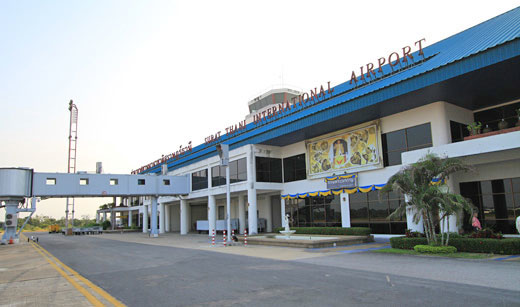
The increased airlift is also supported by an additional gateway into the destination, with flight arrivals into the nearby Surat Thani Airport spiking 30 per cent last year and further growth forecasted for 2017. Passengers flying from mainland China to Surat Thani made up 71 per cent of direct overseas arrivals to the provincial airport.

While the trend of ‘Chinacation’ has not driven down average hotel rates, with the resort-led destination primarily attracting individual travellers, there are signs of a shift in demand.

The growth of airlift to Surat Thani Airport is expected to bring a broader market of midscale and upscale segments to Samui, and pipeline hotels too point towards the rise of these segments.

Looking ahead, C9’s report reflects positive market sentiment and a strong balance between supply and demand in upcoming hotel developments, with the 175-key Ritz-Carlton Koh Samui being one of the most anticipated openings this year.


Pan Pacific Nirwana Bali Resort to cease operations in July

0

pan-pacific-nirwana-bali-resort
Pan Pacific Nirwana Bali Resort

Pan Pacific Nirwana Bali Resort will close its doors on July 31, 2017, following a decision by owning company MNC Land to redevelop the site on which the property currently resides.

The resort has been managed since April 2010 by Pan Pacific Hotels Group (PPHG), which also oversaw its US$10 million refurbishment in 2011.

Meanwhile, PPHG will continue to be represented in Indonesia with the Sari Pan Pacific Jakarta, as the country continues to be a target growth market.

Erik Anderouard, senior vice president operations of PPHG, said: “Moving forward, we will be looking to capitalise on our extensive network of business contacts and brand equity to introduce more Pan Pacific and Parkroyal properties to our customers in Indonesia.”

Elsewhere in Asia-Pacific, PPHG will launch pipeline projects over the next three years in China, Myanmar and Malaysia, starting with Pan Pacific Beijing in 2Q2017.

Garuda Indonesia takes flight for Moscow from August

0

garuda-planes

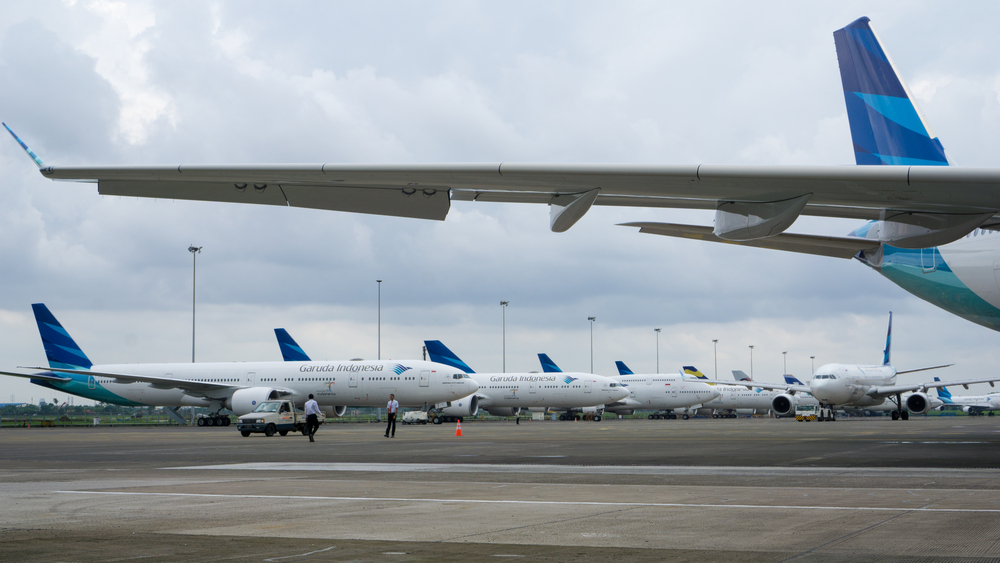
Garuda Indonesia will launch direct thrice-weekly flights – operated with an Airbus A330-200 – from Jakarta to Moscow in August this year.

Speaking during the signing of the MoU in Jakarta, Russian ambassador to Indonesia, Mikhail Galuzyn, said: “Realisation of the direct flight plan between Russia and Indonesia has become one of our main priorities in the effort to increase the numbers of tourists who visit Russia.”

The new Moscow service is projected to increase the number of Indonesian citizens to Russia from 14,000 travellers in 2015.

At the same time, the direct flights are expected to improve Russian tourist visits into Indonesia to 100,000 in 2017. In 1H2016, the number of Russian tourist arrivals to Indonesia increased 14 per cent year-on-year.

Aside from Moscow, the Indonesian flag carrier will also launch a Jakarta-Los Angeles service via Tokyo in the middle of this year.

Increased airlift, secondary gateway support China-led growth in Koh Samui

0

Bangkok Airways’ international expansion and the emergence of Surat Thani as a secondary gateway are important factors in the China-led growth observed in Koh Samui, according to C9 Hotelworks’ latest Samui Hotel Market Update.

Airport arrivals pushed over 1.2 million in 2016, a 22 per cent year-on-year growth last year from seven per cent the previous year, while market-wide occupancy grew from 68 per cent to 72 per cent last year.

surat thani(1)
Credit: www.suratthaniairport.com

C9 reported that mainland Chinese travellers are now filling the gaps of a once highly seasonal destination. During the first nine months of last year, arrivals from the market surged 61 per cent compared with the same period the year before.

Much of the growth momentum can be attributed to Bangkok Airways’ expansion, which has shifted its focus from South-east Asia to North Asia. In 2Q2017, the carrier will increase flights from Samui to Chengdu to a daily frequency and is expected to add Chongqing at a later date.

The increased airlift is also supported by an additional gateway into the destination, with flight arrivals into the nearby Surat Thani Airport spiking 30 per cent last year and further growth forecasted for 2017. Passengers flying from mainland China to Surat Thani made up 71 per cent of direct overseas arrivals to the provincial airport.

While the trend of ‘Chinacation’ has not driven down average hotel rates, with the resort-led destination primarily attracting individual travellers, there are signs of a shift in demand.

The growth of airlift to Surat Thani Airport is expected to bring a broader market of midscale and upscale segments to Samui, and pipeline hotels too point towards the rise of these segments.

Looking ahead, C9’s report reflects positive market sentiment and a strong balance between supply and demand in upcoming hotel developments, with the 175-key Ritz-Carlton Koh Samui being one of the most anticipated openings this year.

Sofitel Kuala Lumpur Damansara names new GM

0

Thomas Gassner has been appointed general manager for Sofitel Kuala Lumpur Damansara, which is scheduled to open in mid-2017.

Prior to his new role, Gassner was the hotel manager of Pullman Jakarta Indonesia and Pullman Bali Legian Nirwana.

Thomas_Gassner

A German native, Gassner has over 30 years of experience in the hospitality industry. He joined AccorHotels in 2004 as F&B manager at Sofitel Munich Bayerpost and has held various senior management positions within the group.

H.I.S. adopts Amadeus corporate travel management tool

0

amadeus-cytric-travel-expense

Japanese travel agency H.I.S. International Travel (H.I.S.) is adopting Amadeus cytric Travel & Expense to position itself as the preferred travel agency for corporations.

H.I.S. is first leveraging the tool in Singapore, where it anticipates a high and growing demand for business travel management services, before using it in other markets across the region.

With Amadeus cytric Travel & Expense, business travellers will be able to plan and book their travel and compile and generate expense reports on their mobile devices, eliminating the need to manually account for costs incurred throughout their journey.

Corporations likewise will enjoy visibility into an employee’s travel expenses, increasing compliance with policies and streamlining financial processes.

Eddie Kheng, outbound manager (Singapore market), H.I.S., said: “Singapore as a business hub is where many corporations have established their regional headquarters. They have large populations of travelling employees and we see a huge opportunity to help these corporations get more out of their corporate travel programmes.”

Princess Cruises rolls out direct bookings for SE Asia

0

princess-cruises-online-booking

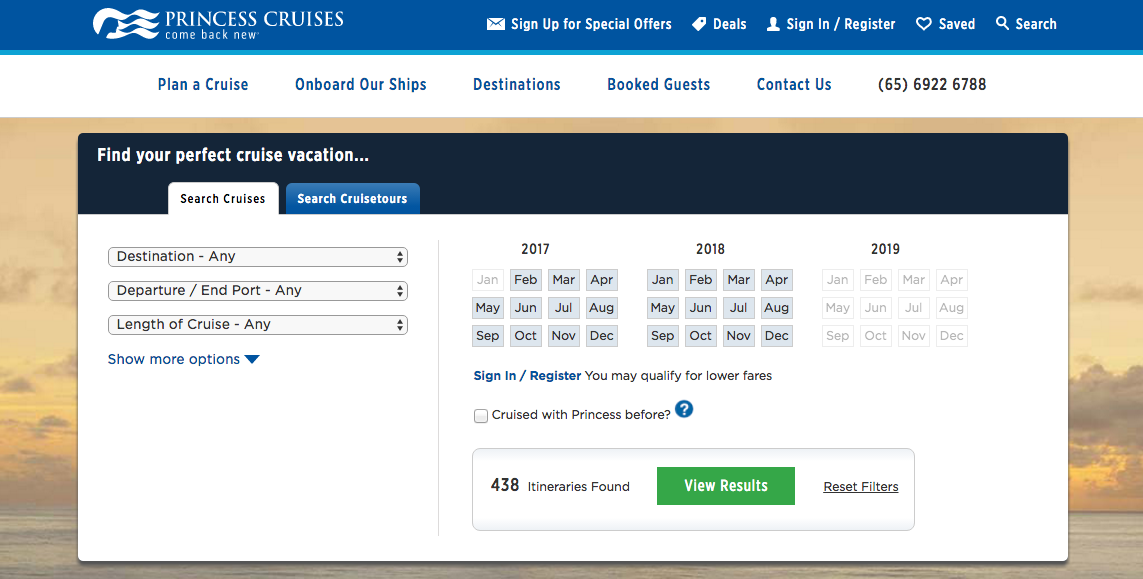
Princess Cruises has launched online cruise booking services for consumers in South-east Asia, but its director for South-east Asia, Farriek Tawfik, insists that travel agents remain “the mainstay of business”.

When booking online, guests have the option of choosing the location of their cabins and view fares for the various categories of cabins. They have three payment options: to hold the booking with no deposit; book with a deposit; or make payment in full. Payment modes include via credit card.

“Since beginning homeport cruising from Singapore three years ago, we have seen an increase in the number of repeat cruisers and our website aims to attract these guests,” said Tawfik.

“The digital age has brought a surge in travel-related online activity and we believe Internet-savvy travellers in Asia are ready for a direct online booking capability.”

Guests in mature cruise markets such as North America, the UK and Australia are already able to book their cruises online.

Tawfik added: “This does not in any way, change the important role that travel agents play as they continue to provide valuable resources to our guests and remain the mainstay of our business.”

He stressed that guests still have the option of booking their cruises with their preferred travel agent and this channel is recommended for guests who have more complex itineraries such as those requiring airline bookings, pre- and post-hotel accommodation, ground transportation and visa applications. First-time cruisers are also recommended to go through travel agents who will be able to answer queries by phone or face to face.

According to a Princess Cruises statement, various sources estimate online cruise bookings to be less than 10 per cent of the market globally, and the percentage is lower for longer sailings.

New accelerators a shot in the arm for Mekong tourism startups

0

mist

The Mekong Innovative Startup Tourism (MIST) Initiative has announced two new accelerators to help tourism business get established in Cambodia, Laos, Myanmar and Vietnam.

The MIST Startup Accelerator will take entries from early-stage companies with either travel technology or traditional tourism business plans, while the MIST Market Access Accelerator welcomes mature international tourism startups that need assistance to enter the region.

Applicants must demonstrate how they will create jobs, generate positive community impact and contribute to sustainable tourism growth in the Mekong Subregion.

“The MIST accelerator programmes give a leg up to tourism investments that create jobs, help local communities and support entrepreneurship, especially for women,” explained Dominic Mellor, senior Asian Development Bank economist and head of the Mekong Business Initiative (MBI).

Successful applicants accepted into the MIST Startup Accelerator will attend mini bootcamps to further develop their business plans. The top business plans for each country market will win MIST Innovation Grants, with the best overall receiving US$10,000 and the three runners-up receiving US$7,000.

Meanwhile, the MIST Market Access Accelerator participants will join fam tours of the relevant markets to receive coaching, custom market insights, and introductions to supplier networks and relevant stakeholders.

As well, participants in both MIST accelerators will pitch their plans to investors, global acceleration programmes and tourism leaders at the Mekong Tourism Forum in Luang Prabang in June and the APEC Summit in Danang in November. In-country teams will provide additional advisory services tailored to participants’ business needs.

“The Great Mekong Subregion is among the fastest-growing tourism destinations. Startups can disrupt traditional practices to adapt to changing consumer behaviours, but let’s also encourage responsible innovation that enhances the region’s appeal for future generations,” said Jens Thraenhart, executive director of the Mekong Tourism Coordinating Office (MTCO).

A joint venture of the MTCO and MBI, MIST receives regional funding, advisory and technical support from the Asian Development Bank, the Government of Australia, Amadeus Next, PATA and Village Capital.

Applications close March 19, 2017

Zoom Air launches into India airspace

0

zoom_air

Zoom Air, India’s newest private airline and the 10th schedule carrier for domestic skies, will commence its maiden operations today with its Delhi-Kolkata-Durgapur-Delhi daily service, after receiving its schedule operating permit from India’s Director General of Civil Aviation earlier this month.

The full-service carrier is utilising the 50-seater Bombardier CRJ-200LR aircraft on this sector, which is on a dry lease, and will be adding four more similar aircraft to its fleet in the coming months.

The new airline will focus on serving the underserved airports in the country, according to Koustav Dhar, CEO and director of Zoom Air. “We will fill the gap of connecting sectors which are less catered by other scheduled airlines. (For example), Durgapur is an industrial hub (in West Bengal) with a huge potential for air connectivity,” he said.

Moving forward, Zoom Air has plans to begin daily flights on the Delhi-Surat-Bhavnagar-Delhi sector in early April. It is also looking to connect Delhi and Kolkata to destinations such as Tirupati, Vijayawada, Mumbai, Shillong, Aizawl, Pasighat and Ziro.

Zoom Air intends to hit 32 to 35 scheduled departures a day in the next four to five months, Dhar shared.

As well, the airline hopes to begin international operations in about a year’s time to neighbouring countries such as Bangladesh, Nepal and Myanmar.

Dhar elaborated: “There is huge traffic from India’s north-east into Myanmar. As for Bangladesh, Indian carriers currently only fly to Dhaka. We are looking at unserved destinations like Chittagong there.”

Egypt’s back on radar of Malaysian outbound agents

0

giza-pyramid
Giza pyramids in Cairo, Egypt

Several outbound agents are keen to put Egypt back on the travel radar for Malaysians by leveraging cheaper ground prices and promoting the destination more aggressively at the upcoming MATTA Fair in Kuala Lumpur next month.

Egypt’s unrest and political instability in 2014 had caused some outbound agents in Malaysia to stop selling the country. The Malaysian government had earlier issued a travel advisory as well, urging Malaysian to defer or reschedule their non-essential travel there.

Desmond Lee, group managing director of Apple Vacations & Conventions, said: “We started to promote the destination again in October 2016. Last year, we had three series groups. But as of Chinese New Year until April this year, we will have five departures in total.

“In general, ground arrangements are around 20 to 30 per cent less throughout the country as compared to 2013 rates. For US$100, we can now get a five-star hotel in Cairo and Aswan; in the past, US$100 could only fetch a four-star property,” said Lee, anticipating the special package rates to drive demand for Egypt at the MATTA Fair.

Another outbound player, Cooper Huang, CEO of Malaysian Harmony Tours & Travel, will be selling a nine-day, seven-night package covering Cairo, Aswan, Abu Simbel and Luxor at the upcoming fair, for series departures from April 2017 until March 2018.

Said Huang: “Middle Eastern carriers are offering competitive fares, and ground rates are also competitive. This is enticing many first timers who have never been to Egypt before. The main draw in Egypt is still the pyramids.”

The Matta Fair 2017 will be held from March 17-19 at the PWTC Kuala Lumpur.