TTG Asia
Asia/Singapore Thursday, 2nd April 2026
Page 17

Asia-Pacific carriers cancel, divert flights following US-Israel strikes on Iran

0
Two Malaysia Airlines flights were diverted from the Middle East

Travellers across the Asia-Pacific region are facing disruptions as major airlines scramble to cancel or reroute flights to the Middle East, as the US and Israel launch a wake of strikes against targets in Iran.

Singapore’s national carrier, Singapore Airlines (SIA), and its low-cost subsidiary, Scoot, have cancelled six flights to date, as reported by The Business Times. Affected routes include SQ494 and SQ495 between Singapore and Dubai, as well as Scoot flights TR596 and TR597 serving Jeddah.

Two Malaysia Airlines flights were diverted from the Middle East

SIA has urged passengers to update their contact details to receive real-time notifications, noting that they will continue to monitor the situation and adjust flight paths accordingly.

Malaysia Airlines took immediate action as the strikes began, with two Middle East-bound flights forced to divert following urgent mid-air advisories regarding heightened airspace risks. MH160, bound for Doha, returned to Kuala Lumpur International Airport, while MH156, bound for Jeddah, was diverted to Chennai, India.

Elsewhere in Asia-Pacific, Air India has suspended all flights to Middle Eastern destinations until further notice, and Japan Airlines cancelled its Tokyo-Doha service.

Meanwhile, European carriers like Lufthansa and Wizz Air have suspended services to major hubs including Abu Dhabi, and Dubai.

Far East’s new light

0

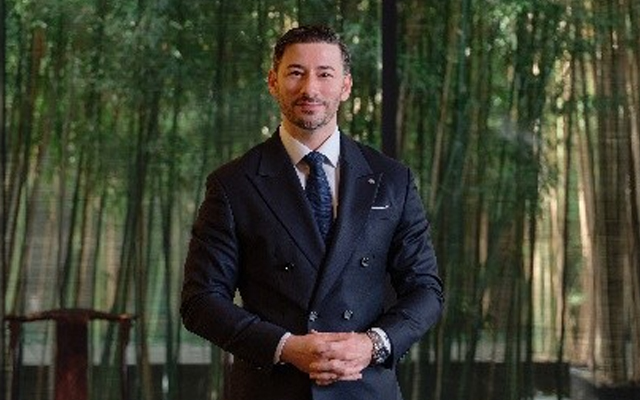
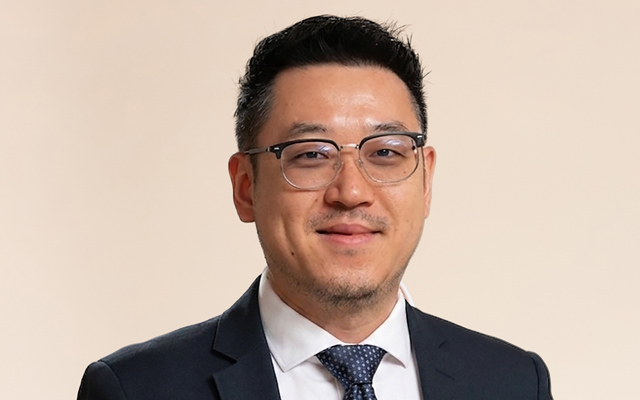
You are not new to Far East Hospitality (FEH), having joined the company in 2024. Does taking on the managing director role feel somewhat easy and natural for you and the organisation then?
That’s a very fair question. First and foremost, it is never easy to start a new role as a managing director or CEO, as that always comes with challenges and the need to rise to new responsibilities. So, I wouldn’t say that the transition comes easy.

However, I have been well prepared for the role. As you know, I started in July 2024. I was able to work with (the various departments) and all the functional heads. I was also double-hatting, taking on some of the functions and responsibilities of Arthur Kiong (who retired as managing director on December 31, 2025 and currently acts as consultant until April 30, 2026, to support the handover). His insights into the business have been very helpful.

Of course, once I am in this role, new things come up. It is good to start off with very strong insight into the business and to know what the strengths and opportunities are for FEH.

Typically, when a new leader comes into position, there are structural or strategic changes within the company. With you being a familiar face in the organisation, is that sense of trepidation among staff less intense?
Well, I think that trepidation is less intense. The team has been subjected to gradual exposure therapy for a good 18 months, and everyone in the company knows (my leadership role) is coming.

I have been on every Monday management meeting for the last 18 months. I would say that has significantly eased my transition into the new role.

At the same time, I bring a fresh perspective on things, and I am trying very hard to inculcate this sort of mindset into the company. I see myself a bit of an agent of change. FEH is a very stable company with 31 hotels, mostly in Singapore, and has a very strong stance on customer service and service excellence. But what is next and how do we move this company to the next level?

What tasks are at the top of your agenda?
I think there’s a lot that we can do in terms of building the capabilities of the company.

One: being future-ready through things like building up our revenue management systems. We have a very strong revenue management team already, but we are looking to improve processes so that there can be less manual work.

Another future-ready task is to enhance the power of loyalty, which is so effective at driving business into properties for owners. As you know, wars (in our industry) are being fought on distribution and loyalty. As a small player with 31 properties and 7,000 keys, we are at a structural disadvantage. So, how do we build a loyalty platform that works for people and corporate clients? How do we compete against OTAs as well? We have been exploring different options and have made progress on one path. We can share more on that in due course.

We are also paying attention to business intelligence, allowing data to shape our decisions, as well as strengthening our standard operating procedures in governance, compliance, etc.

Two: being focused on digital transformation. Front office and housekeeping processed are already quite digitalised, but we are keen to look at creating value as well for our guests through digital transformation. For example, not every guest wants to check in at the front desk even though they are paying US$500 for a night. The definition of luxury is changing and so are the traditional ways of doing things in the customer journey.

Three: focusing on cost, efficiency and productivity. In Singapore, where we have 25 hotels, the travel industry is facing margin pressure. We owe it to our owners and different stakeholders to maintain or increase profitability. So, we are on a big drive to see how we can increase efficiency and productivity through our major centres, like housekeeping and front office.

Four: raising the bar for our customer service and service excellence. FEH has achieved a lot in the area of customer service. Our properties score very high on TripAdvisor, even those in the mid-tier bracket. Our people go over and beyond the tier level of service that customers would expect. So, that is something that we want to continue to build while evolving our service excellence towards customer centricity. I see this as a movement away from simply providing good service and towards providing what customers actually want and then tailoring offerings to suit. To get to that sort of personal level, we will need strong data.

These are very essential pillars. I’m not surprised these tasks remain for your company going into 2027.
Well, yes. These are multi-year kind of projects. Around these pillars is our overarching goal to grow the company.

We have three third-party HMAs (hotel management agreements) at this point, and are almost like an owner-operator. We need to secure more HMAs. All the projects I mentioned earlier will help us to ultimately build the capabilities that we need to showcase to owners and deliver results to owners.

Where are you looking to grow your portfolio?
We are looking a lot at Japan, which is a natural market for us. We had two openings last year in Osaka. But, you know, everyone else is too! So, we are also looking at other cities, like Kyoto.

Another region we are looking to grow is South-east Asia – primarily Vietnam, Indonesia and Thailand because these destinations are in our backyard and owners there are familiar with some of our brands, like Village, Oasia and Quincy. It is a little easier to sell the value proposition of us as an operator to developers in these destinations.

Will there be new openings in these locations this year?
We do have targets for 2026, but openings will be more of conversions. I will share details in due course.

What I can say is that we target to sign at least two to three hotels per year. So, over a five-year period, we are looking to grow our room count from 7,000 keys to 10,000 keys. This target excludes the TFE account (Toga Far East Hotels is a joint venture with Toga Group), which takes care of our presence in Australia.

FEH is always looking out for other opportunities to grow in a faster way. It will take a very long time to grow FEH on a contract-by-contract route. So, we look at hospitality players in different markets, have conversations with them as well as with financial institutions and brokerages to see where opportunities lie.

FEH properties have responded well to emerging travel trends through the years. Your hotels started to offer curated destination experiences for guests, just as demand for unique local interactions materialised. Your Oasia brand took on a wellness focus just as interest in wellness journeys started to kindle. What other emerging travel trends is FEH keeping close tabs on?
We are not only paying attention to new trends, but also how trends are evolving. Let’s take wellness as an example. We went into wellness in 2011 with the Oasia brand. The wellness definition has changed so much since then. Along the way, guests wanted high-intensity interval training, yoga, aqua gym – all kinds of stuff that we did not have when we started. Increasingly, now, they are also looking for contrast therapy. We have a few properties with saunas, but not ice baths.

So, we have to really stay on top of trends.

Another trend we have our eyes on is pet-friendly travel. We are well aware that there are many people who want to travel with their pets. Quincy House Singapore offers pet-friendly units, and it helps that the serviced residence is integrated with a pet-friendly mall.

We are also doing things at Oasia Resort Sentosa. We have a Pawcation package for pet owners (it comes with a pet-friendly Courtyard Premier room that features an outdoor timber deck, pet amenities set, and discounts for pet-friendly dining and experiences across Sentosa).

We are also keeping an eye on digital enablement, how customers are interacting with the hotel using their phones.

Let’s talk more about FEH’s products on Sentosa island. You have a cluster of four hotel brands working together to offer guests a varied experience across different price points. Will FEH replicate this ‘village of brands’ concept elsewhere in Asia? ​
That’s a really good question because the Sentosa development is one of our most successful developments. It is a truly transformational development where we took an old army barracks and parade square and turned it into four very distinct brands (Village Hotel Sentosa, Oasia Resort Sentosa, The Outpost Hotel Sentosa, and The Barracks Hotel Sentosa) with different average rates and different segmentation.

We have won tons of awards.

The four hotels are very well-positioned, and at the same time operated with a lower cost structure due to synergies across the whole back-end.

However, we need to find a developer that is able to pull such a cluster project off. It requires a lot of capital.

There are not many other such opportunities in Singapore now, so we may have to look overseas. Maybe we will find opportunities in Vietnam, where there are proposals and concepts for massive resorts. We may be able to pull off two brands on a single site, not four like what we have on Sentosa.

I find this to be a very good question because it is a reminder for us to use this successful development to showcase what we can do in Vietnam, Indonesia or Thailand.

To close off this conversation, will you share your outlook for travel and tourism in 2026?
I am cautiously optimistic. January did not start well, but we had a seasonality advantage with Chinese New Year in February. When we look at two months combined, it isn’t too bad.

In Singapore, there will not be a ton of supply coming online this year while there is a good line-up of events and concerts. So, there is quite a lot happening in Singapore, which I hope will give us some modest growth.

Industry forecasters are quite bearish at the moment, many expect this year to be quite flat – or even slightly down on rates.

In 2025, we saw Singapore’s hotel industry competing a bit too much on price. So, while occupancy went up as a whole, ADR went down.

I hope that we can get out of that mindset this year. It is important that we maintain or increase our rates. Yet, I know that Singapore is an expensive destination (when compared to options in the region). Singapore has to keep reinventing itself and making the destination experience more layered.

Industry players have to come together to achieve this.

Thailand hotel investors focus on structure and resilience

0

Global law firm Watson Farley & Williams and hospitality consultancy C9 Hotelworks have released the Thailand Hotel Investment Guide 2026, a 30-page publication indicating that the national hotel sector has exited its recovery phase and entered an era of competitive value creation.

With nationwide hotel occupancy stabilising at 71.4 per cent and guest volumes plateauing at 175.2 million in 2025, asset performance is increasingly reliant on product competitiveness.

The Thailand Hotel Investment Guide 2026 explores why Thailand continues to attract hotel investment despite cautious global markets; photo by Saad Ibrahem

“Investment activity is increasingly concentrated in assets and locations with proven demand depth, operational transparency, and clear exit pathways, reflecting a more disciplined approach from international investors,” noted Bill Barnett, managing director of C9 Hotelworks.

“Returns are being driven by asset management strategies such as repositioning, rebranding, and conversion rather than (speculative) new supply, particularly in established resort and urban hotel markets,” he added.

Foreign investors navigating this landscape must prioritise transaction structure.

The report states that successful transactions are defined by strict governance, control rights and precise risk allocation, with joint ventures and asset-light operating models central to cross-border hotel investment strategies.

Operators are also embedding permanent expense discipline into core business models to protect gross operating profits, while labour intensity is falling through the use of digital platforms and energy management systems that optimise utility consumption.

Board of Investment promotion privileges continue to offer a commercially viable route to bypass standard business restrictions and secure land ownership rights, with financial institutions mirroring this disciplined approach.

Barnett observed that the report signals a pivotal market shift.

“Looking into 2026, the data shows Thailand evolving into a highly structured and performance-driven hotel investment market. International investors are prioritising cash flow resilience alongside operational control and flexibility. That discipline will define where capital flows,” Barnett concluded.

Marriott signs Osaka conversion to debut Series by Marriott in Japan

0

Marriott International has entered an agreement with Blackstone to convert an existing 14-storey hotel in Osaka into a Series by Marriott property, marking the brand’s debut in Japan.

The 256-room Sugata Hotel Osaka Shinsaibashi, Series by Marriott is scheduled to open in April 2026.

Rendering of Sugata Hotel Osaka Shinsaibashi, which will join the Series by Marriott brand in April 2026

The property is located approximately 300 metres from Shinsaibashi Station, within walking distance of Shinsaibashi-suji Shopping Street, Amerikamura and Dotonbori, with access to Namba and other cultural attractions. The hotel also benefits from connectivity to Osaka Itami International Airport and Kansai International Airport.

Series by Marriott is positioned as a collection brand within the Marriott Bonvoy portfolio, designed to incorporate locally recognised hotels while maintaining Marriott’s global distribution and loyalty platform. The Osaka signing forms part of Marriott’s continued expansion in Japan and builds on its existing relationship with Blackstone in the market.

Plans for the hotel include an all-day restaurant serving local and international cuisine, as well as a bar intended to serve both guests and local residents. Guestrooms and public spaces will reflect the character of the Shinsaibashi district.

Yuji Tanaka, market vice president Japan & Guam, Marriott International, said: “Japan is a strategically important market for Marriott International, and the introduction of Series by Marriott in Osaka underscores our commitment to expanding our presence in Japan with brands that resonate with today’s travellers. Launching this brand in Osaka allows us to deliver a fresh hospitality experience while responding to the evolving preferences of both domestic and international travellers.”

Daisuke Kitta, head of Real Estate Japan, Blackstone, added: “This investment demonstrates our confidence in the Osaka market and in Sugata Hotel Osaka Shinsaibashi, Series by Marriott’s potential to become a standout property, delivering exceptional experiences to both Japanese and international travellers.”

Airbnb enables pay-later bookings for Asia-Pacific travellers

0

Airbnb has introduced a Reserve Now, Pay Later payment option for guests in Asia-Pacific, allowing travellers to secure eligible stays without paying at the time of booking.

The feature applies to listings globally that have a moderate or flexible cancellation policy. Guests are not required to pay the full amount until shortly before the free cancellation period ends. Host-selected cancellation policies remain unchanged, and payment is always due before the free cancellation window closes, allowing hosts time to rebook if a reservation is cancelled.

Airbnb’s new payment option allows guests in Asia-Pacific to secure bookings without upfront payment

Airbnb said the feature was recently launched in the US, where it contributed to growth in nights and experiences booked in 4Q2025 compared with 3Q.

The rollout comes as survey data indicates strong demand for flexible payment options. In a study commissioned by Airbnb and conducted by Focaldata between January and February 2026 across Australia, Indonesia, Japan, Malaysia, South Korea and Thailand, 67 per cent of respondents said flexible payment options are important when booking travel.

The survey also found that 75 per cent plan to or may use a flexible payment option for their next trip, while 41 per cent said they had delayed or missed preferred accommodation due to coordinating payments with co-travellers.

Airbnb said the feature is particularly suited to group travel and longer-term trip planning, enabling guests to secure accommodation earlier without immediate financial commitment.

Reserve Now, Pay Later complements Airbnb’s existing payment options, including Pay Part Now, Part Later, which allows guests to split payments between booking and closer to check-in.

The new feature is available to Asia-Pacific users booking eligible listings worldwide, excluding payments made in Brazilian Real, Indian Rupee and Turkish Lira.

Airalo, Cathay to offer eSIMs with Asia Miles

0

Cathay and eSIM provider Airalo have teamed up to provide preferentially priced eSIMs to Cathay Pacific travellers, with members earning 100 Asia Miles for every eSIM purchased.

Under the agreement, customers can purchase Airalo eSIMs at discounted rates while earning miles that can be redeemed for flights, upgrades, hotels, dining and other lifestyle rewards.

Cathay travellers can now earn Asia Miles on Airalo eSIM purchases

The partnership links digital connectivity with loyalty benefits, allowing travellers to secure mobile data before departure and avoid physical SIM cards or international roaming charges.

According to Kaleido Intelligence (2024), half of all smartphones are expected to support eSIM technology by 2028. The travel eSIM segment is projected to grow by 500 per cent between 2023 and 2028, reflecting rising demand for flexible and lower-cost connectivity options.

Airalo’s eSIMs can be activated digitally, providing data access shortly after arrival at a destination. Customers can select data plans based on destination and length of stay.

Melvin Ng, senior director, APAC partnerships, Airalo, said: “Partnering with Cathay allows us to extend that promise to a broader community of travellers who value both connectivity and rewards. With just a few taps, travellers can stay connected anywhere in the world while enjoying the added bonus of earning Asia Miles along the way, making every trip even more rewarding.”

Jonathan Ng, head of customer travel & lifestyle, Southeast Asia & Oceania, Cathay, added: “Our partnership with Airalo (will offer) our customers meaningful benefits and added convenience wherever their travels take them.”

Regent Seven Seas Cruises unveils new multi-day land programmes

0

Regent Seven Seas Cruises has introduced a new collection of nearly 50 multi-day land programmes available before and after sailings in destinations across Africa and Arabia, Alaska, Asia, Australia and New Zealand, the Mediterranean and Northern Europe, and North America.

Available on select voyages departing in 2026 and beyond, the programmes span six ships in the line’s fleet. Designed to complement ultra-luxury sailings, the curated land experiences allow guests to explore embarkation and disembarkation cities in greater depth, combining cruise and land travel in one itinerary.

Regent Seven Seas Cruises will launch nearly 50 new pre- and post-cruise land programmes from 2026; photo by Regent Seven Seas Cruises

Highlights include a four-day French Riviera experience from Monte Carlo ahead of a Seven Seas Splendor sailing, featuring guided visits to Monaco, Eze and Nice, wine tasting and Michelin-starred dining. In the UK, a five-day British Countryside and Cuisine programme from London includes visits to Oxford, Blenheim Palace and the Tower of London before a themed Seven Seas Voyager voyage.

In Alaska, guests can explore the Kenai Peninsula prior to embarking Seven Seas Explorer, while in South-east Asia a four-day post-cruise extension to Luang Prabang offers temple visits, a Mekong sunset cruise and participation in a traditional Baci ceremony.

Additional post-cruise options include Galveston and Houston in Texas, Queenstown in New Zealand, and an active Cape Town itinerary featuring Table Mountain hikes and Cape Point exploration.

The land programmes are available at an additional cost and must be booked at least 90 days prior to sailing.

For more information, visit Regent Seven Seas Cruises.

Tracy Wilson takes over as SVP and GM at Disney Cruise Line

0

Disney Cruise Line appoints Tracy Wilson as senior vice president and general manager, Disney Cruise Line operations, succeeding Sharon Siskie.

Wilson brings more than 30 years of experience with The Walt Disney Company and most recently served as senior vice president, finance, Disney Signature Experiences, where she led strategic planning and negotiations supporting the expansion of the Disney Cruise Line fleet.

Her career spans leadership roles across Disney’s theme parks, consumer products, and studio operations, including involvement in the integration of Lucasfilm and Marvel.

5 Questions with Michael Ma

0

Andy Tan to lead Varel Singapore as GM

0

Varel Singapore, a Tribute Portfolio hotel, has named Andy Tan as general manager ahead of its April 2026 opening.

He brings more than three decades of hospitality and travel experience and most recently held a senior leadership role at Millennium Hotels & Resorts, supporting commercial performance and operational alignment across its global portfolio.

In his role, Tan will lead the hotel’s pre-opening strategy, team development and commercial positioning as the South-east Asia flagship of Marriott’s Tribute Portfolio brand.