The Tokyo Marathon 2025 generated an estimated 155 billion yen (US$100 million) in incremental consumer spending over three days, according to analysis by the Mastercard Economics Institute (MEI).
Mastercard is a sponsor of the Tokyo Marathon.
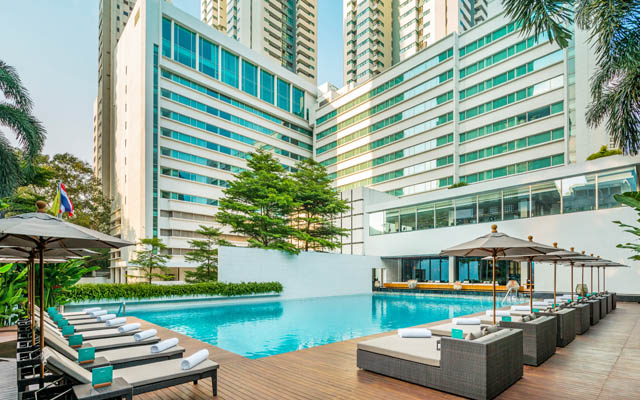
Districts including Ginza, Minato and Shibuya, pictured, recorded increased spending during the event period
Spending among merchants within a 10-kilometre radius of the finish line was approximately seven per cent higher than during a typical non-marathon weekend, indicating short-term economic impact linked to the event.
While hotels and restaurants saw gains, increases were recorded across multiple retail and service categories. Family apparel spending rose 47 per cent, cosmetics 30 per cent, drug stores 18 per cent and women’s clothing 14 per cent, reflecting event-related discretionary purchases.
District-level data showed varying impacts across Tokyo. In Chiyoda, hotel spending by Japanese visitors increased 72 per cent. In Minato, bar revenues rose 57 per cent. Ginza recorded a 37 per cent rise in theatre and museum spending, with retail and dining up around 10 per cent. In Shibuya, children’s apparel sales increased 28 per cent, while Taito saw leisure spending rise 27 per cent and department store sales increase 23 per cent.
Domestic consumers accounted for more than 83 per cent of incremental spending. International visitors also contributed, particularly in premium retail and hospitality. Travellers from the US, the UK, Germany, Italy and Australia represented a significant share of cross-border spending. Among US and UK participants, 73 per cent visited other Japanese cities within a week, extending economic activity beyond Tokyo.
The analysis compares actual spending during the event period with a modelled baseline of expected spending in the absence of the marathon, using aggregated and anonymised Mastercard transaction data.
David Mann, chief economist, Asia Pacific, Mastercard, stated: “Major sporting events are measurable economic catalysts. The Tokyo Marathon demonstrates how domestic demand and international travel combine to drive broad-based spending gains. For economies across Asia-Pacific prioritising tourism-led growth, understanding how events influence consumer movement and cross-border travel patterns is increasingly important for policy and investment decisions.”
Trip.com has partnered with East Japan Railway Company, Central Japan Railway Company, West Japan Railway Company and Kyushu Railway Company to offer Shinkansen ticket sales to international travellers.
The agreement enables overseas users to purchase high-speed rail tickets across Japan through Trip.com’s multilingual platform, allowing bookings to be made in advance of travel.
Trip.com users can now book Shinkansen tickets across Japan through the platform
Travellers can select departure and arrival stations, travel dates, train services and seat types, including non-reserved, reserved and Green Car. Tickets can be purchased online via Trip.com.
Depending on the ticket type, passengers can either enter ticket gates using a QR code or collect physical tickets from station vending machines. The Tokaido Shinkansen, Sanyo Shinkansen and Kyushu Shinkansen services are available exclusively via QR code boarding.
The move comes amid sustained inbound demand for Japan, which remains one of Asia’s most visited destinations. By enabling advance booking in multiple languages, the service aims to reduce reliance on on-site purchases and mitigate potential language barriers at stations.
Trip.com also allows travellers to combine Shinkansen tickets with flights and accommodation within a single booking flow.
The company said it will continue working with Japan’s rail operators and transport providers to expand integrated travel services for international visitors.
Amadeus has completed purchase of SkyLink, a New York-based technology company specialising in AI-driven orchestration and conversational automation, as part of its strategy to accelerate the deployment of AI across the travel sector.
The company said the acquisition aligns with its long-term AI strategy, which includes partnerships, targeted investments and a focus on responsible AI development under its ethics framework.
Maroto: Data-driven insight enables us to deploy AI in real-world production environments globally
Founded to enhance the corporate travel experience, SkyLink has developed a proprietary AI architecture and multi-layer orchestration engine designed to integrate with chat platforms. The technology enables travellers to book and manage flights and hotels through conversational interfaces, while businesses benefit from potential cost savings and productivity gains.
SkyLink has already processed tens of thousands of bookings, reflecting growing adoption of AI-based booking tools in the corporate segment.
Amadeus said the acquisition supports its broader strategy of deploying AI use cases that are scalable and integrated into operational environments. The company has long applied AI across travel operations and is progressively adding conversational layers to its product suite to help customers access insights and manage workflows more efficiently.
The acquisition is expected to strengthen Amadeus’ corporate travel offering, particularly within the Travel Management Company sector and across its customer base in North America. SkyLink’s framework will complement Amadeus’ global technology infrastructure, which operates in more than 190 markets and processes billions of search requests and millions of travel transactions daily.
Over time, Amadeus plans to extend AI-driven conversational capabilities beyond corporate travel into airlines, airports, hospitality and other areas of the travel ecosystem.
Atyab Bhatti, CEO & co-founder, SkyLink, said: “Combining our AI-native technology with Amadeus’ scale and industry reach will allow us to deploy our technology faster and bring powerful new capabilities that benefit travellers and companies across the travel industry. It’s a pivotal time to deliver concrete AI solutions and, now with Amadeus, we can accelerate the next phase of travel innovation.”
Luis Maroto, president and CEO, Amadeus, added: “Our technology is deeply integrated across the travel industry, connecting systems and workflows developed over decades. It combines industrial-grade reliability, operational resilience, and data-driven insight that enable us to deploy AI in real-world production environments globally… enabling innovation at scale and allowing AI to augment and reinforce the travel experience.”
Airports are providing welfare support for stranded passengers
Tour operator and travel agents wade through evolving updates in a fluid situation to help guests carry on with travel plans
Impact on travel to and through the Middle East is expected to be temporary
Suvarnabhumi Airport mobilised additional staff and set up dedicated waiting areas after cancelling 32 flights between February 28 and March 1, amid wider disruptions to Middle East-linked services
Asian tourism players are seeing varying degrees of disruption to both inbound and outbound movements amid missile strikes in parts of the Middle East.
Suvarnabhumi Airport in Bangkok, Thailand has faced significant disruptions between February 28 and March 1. A total of 32 flights – 16 inbound and 16 outbound – were cancelled across nine airlines, including Emirates, Etihad, Kuwait Airlines and Qatar Airways. To assist affected travellers, Suvarnabhumi Airport has mobilised extra staff, provided drinking water, and set up dedicated waiting areas at Gates 1 and 10.
Additionally, as of March 1, the Tourism Authority of Thailand (TAT) has set up a Tourism Crisis Monitoring Center to coordinate support for affected travellers, preparing for both short and medium term scenarios. The bureau reports that the Suvarnabhumi, Don Mueang, Chiang Mai, Phuket, and Krabi international airports have received notifications of 59 flight cancellations.
Singapore’s Changi Airport Group has reported 32 cancelled flights that were scheduled to depart between February 28 and March 7. The cities affected by these cancellations are Abu Dhabi, Bahrain, Doha, Dubai and Jeddah.
Malaysia Airports has reported 26 cancelled flights, comprising 13 departures and 13 arrivals across Kuala Lumpur International Airport terminals. It has teams on standby to provide guidance and coordinate with airlines on necessary arrangements and to provide assistance to affected passengers at passenger terminals.
Ground support Stephan Roemer, CEO of DTH Travel, one of the largest tour operators in Asia, told TTG Asia that his emergency teams in the region have been assisting all affected guests with rebooking, extending and cancelling tasks.
He noted that the situation is unpredictable, so his teams are dependent on information from the governments and airlines.
Bayu Buana Travel Services in Indonesia has established a task force to partner its Emergency Support Services team to manage impacted group and corporate travellers. Affected guests are those transiting in Dubai, Doha and Abu Dhabi as well as those who are due to head towards or are already in the Middle East.
Malaysian inbound specialist, Saini Vermeulen, executive director of Within Earth Holidays, is relying on updates from its overseas agent partners regarding revised arrival schedules, particularly as airlines rework their flight path to avoid areas of conflict.
Arokia Das Anthony, executive director of The Essence of Asia Tours and Travel, described the situation as fluid.
He expects some postponements from both FIT and group travellers from Eastern and Western Europe this month.
“Travellers are understandably cautious. If flight routes become longer or more uncertain, some may choose to delay their trips,” Arokia said.
On the bright side, Arokia expects Malaysia to benefit from a change in travel plans among Indian travellers who are choosing to avoid Middle Eastern air hubs and reconsider European trips due to “current uncertainties and higher airfares to Europe”. Malaysia’s visa exemption for Indian passport holders facilitates spontaneous travel plans.
Hoteliers are also stepping in to assist guests.
Duncan O’Rourke, CEO, premium, midscale & economy division for Middle East, Africa, and Asia Pacific at Accor, said the group is “committed to providing flexibility and support to our partners and clients during these uncertain times”.
Bjorn Courage, general manager of InterContinental Phuket Resort by IHG and president of the Phuket Hotels Association, shared that hotels across Thailand’s Phuket are currently offering flexible rebooking options or waiving amendment fees for guests affected by flight changes.
He added: “A small portion of our guests travelling to or from Phuket have experienced schedule adjustments, rerouting, or short-notice delays.”
Airports in Bangkok, Singapore and Kuala Lumpur reported cancellations to and from Middle East hubs, with routes linking Dubai, Doha, Abu Dhabi, Bahrain and Jeddah among those affected
Bali Hotels Association (BHA) has urged member hotels to offer flexibility, shared board member Fransiska Handoko.
“BHA is currently gathering data over the next week to determine the exact number of room-night cancellations versus reschedules. At this stage, our efforts are focused on advising hoteliers to remain flexible and to offer special rates for stranded guests, as this is a force majeure (unforeseen) situation. We also advise guests to monitor official airline, airport, and immigration websites to avoid overstaying their visas,” Fransiska added.
John Flood, CEO, Archipelago said no penalties are imposed on room cancellations resulting from flight suspensions and airspace restrictions.
“Our priority is to remain fair and flexible under the circumstances while maintaining clear communication with our partners and guests. For any guests currently stranded or facing travel uncertainty, our hotels are providing flexible extension options, preferential rates for extended stays where necessary, and direct assistance through our front office teams. Our teams are also supporting guests with coordination of revised travel arrangements, including transportation guidance and communication with airlines or agents where needed,” he told TTG Asia.
One Farrer Hotel in Singapore has arranged extensions for guests who are unable to return due to the ongoing suspension of flights, and is providing the necessary support to ensure their continuity of accommodation during this period. The hotel spokesperson added that a case-by-case approach is taken for guests who are unable to arrive as planned.
“We will continue to prioritise the safety, comfort, and support of all our guests. We hope that conditions stabilise soon and that normal travel operations can resume safely,” One Farrer Hotel’s spokesperson said.
What’s next for travel to and through the Middle East? At press time, the UAE’s General Civil Aviation Authority has approved what it terms “exceptional flight operations” across airports in the region. These are flights to get stranded passengers out of the UAE.
Most travel professionals do not expect the war to have a long-term dent on travel interest to and through the Middle East.
JTB Tours Indonesia’s CEO Hellen Xu told TTG Asia that there had been no “significant requests from clients to avoid transiting via the Middle East or to switch away from Middle Eastern carriers”.
Xu has observed a larger impact on departures within the first and second weeks of March, potentially involving around 20 groups that are bound for Europe via Middle Eastern carriers.
“For now, we have not confirmed how many passengers are stranded, as many return sectors are only due in early March. The main operational challenge for us remains seat availability, as finding alternative flights for our clients has been challenging,” stated Xu.
Agustinus Pake Seko, president director of Bayu Buana Travel Services, is confident that overall demand for Middle Eastern destinations and faith in Middle Eastern airport hubs will return once aviation schedules are back to normal.
The number of affected guests is still “manageable”, according to Agustinus, who expressed relief that customers are mostly choosing to postpone their trips instead of harsher cancellations. The situation is also causing some leisure guests to go for shorthaul destinations, which run a lower risk of transit disruptions, while corporate clients are opting to defer trips.
In an event of an extended conflict, Fransiska said Bali could see an impact on European arrivals, as many European travellers utilise Middle Eastern carriers to access the Indonesian island.
“However, the exact extent of this decline remains uncertain, as there are many alternative flight options,” she added.
Christine Kowandi, tour manager, Horas Tours, Medan, North Sumatra, holds a more cautious outlook. Her clients from Munich had planned to fly into Medan via Abu Dhabi on February 28 for a three-week holiday across Indonesia. It did not happen.
“Our other March arrivals are in a wait-and-see phase. I anticipate further cancellations as safety concerns grow,” lamented Kowandi.
“Switching to alternative airlines often results in higher costs and more complex travel routes. In these cases, agents may simply suggest alternative destinations altogether,” she added.
She also expressed concerns of a long-term impact should the US-Israel-Iran conflict persists.
She said: “I am attending ITB Berlin and am prepared to promote Etihad’s direct service to Medan. The closure of Middle Eastern airspace is very unfortunate. However, I believe both buyers and sellers are on the same boat, having to navigate the shared challenges brought on by the war.”
Sari, reservation and contracting manager at Floressa Bali Tours, shares similar worries. “If the war continues to disrupt (aviation), the impact on our industry will be significant. Even those eager to travel may switch to destinations perceived to be safer,” she said. – Additional reporting by Anne Somanas, Mimi Hudoyo, S Puvaneswary, and Tiara Maharani
The United Arab Emirates (UAE) will fund hotel accommodation costs for travellers stranded by flight disruptions, as authorities move to cushion the impact of widespread airspace closures.
Authorities in Dubai and Abu Dhabi have directed hotels to extend affected guests’ stays at no additional cost, while aviation regulators coordinate temporary accommodation, meals and rebooking support.
Authorities in the UAE have directed hotels to extend stays at no extra cost for travellers affected by airport closures
Dubai’s Department of Economy and Tourism issued a directive instructing hotels to allow affected guests to extend their stays under their original booking terms. Abu Dhabi’s Department of Culture and Tourism issued a similar directive, permitting guests who are unable to travel for reasons beyond their control to prolong their stay.
The measures follow temporary airspace closures on February 28, 2026, after US-Israel attacks on Iran, which led to flight suspensions at major airports including Dubai International Airport, Sharjah International Airport and Zayed International Airport in Abu Dhabi.
The UAE’s General Civil Aviation Authority has implemented additional support measures, including the provision of temporary accommodation, meals and refreshments, as airlines work to facilitate rebookings and restore operations.
Flight operations at the affected airports remained suspended at press time.
Centara Hotels & Resorts will introduce a new budget hotel brand through a joint venture with PTT Oil and Retail Business (OR).
This project accounts for nearly one-third of the hospitality group’s 1,429-room development pipeline announced for 2026.
The development targets domestic transit demand along major highways; photo by OR
“There are clear opportunities with gas station locations along car transport routes for people travelling to Bangkok or other major cities who may not want to stay in the city enroute,” said Thirayuth Chirathivat, CEO of Centara Hotels & Resorts.
“Stations are staffed around the clock, offering a highly accessible and secure location for salespeople and business travellers who might rest for five to seven hours before continuing their inter-provincial journeys,” he added.
The partnership will introduce six properties between 2027 and 2028, leveraging OR’s national network of over 2,000 service stations and integrated retail outlets.
Many of these sites sit in prime areas near airports and key tourist destinations. Additionally, provincial service stations span five to ten rai, providing ample space for hotel development.
These regional locations will offer an average of 69 to 80 keys priced 800-900 baht (US$25-29) per night.
The joint venture also plans at least one Bangkok property featuring approximately 120 keys with nightly rates of 1,200-1,300 baht.
The facilities will integrate dual loyalty programmes between OR and Centara, and offer electric vehicle charging access.
“At PTT stations, travellers can refuel and recharge with ease, relax in standardised comfort by Centara and enjoy even greater rewards – while restocking essential travel items, all within the ecosystem,” Thirayuth elaborated.
The move into the budget segment is driven by the potential for high profitability.
“(Hospitality) margins are highest either all the way at the high end or in the budget sector due to lower operating costs. We expect 70 to 80 per cent occupancy in the long run,” stated Gun Srisompong, chief financial officer of Centara Hotels & Resorts.
Although the joint venture has already been announced to the Stock Exchange of Thailand, the new brand will be unveiled in March 2026 along with the signing of the agreement between the two partners.
HBX Group has extended its partnership with Traveloka to expand the distribution of locally contracted hotel content across Asia-Pacific, with more than 40,000 hotels set to be integrated into HBX Group’s supply ecosystem.
The expanded agreement, signed during HBX Group’s MarketHub Asia event in Bali, will see Traveloka contribute a substantial Asia-Pacific portfolio, with a strong focus on Indonesia. The move builds on an existing commercial and connectivity relationship in which HBX Group previously supplied inventory to Traveloka, and now enables two-way content distribution.
HBX Group and Traveloka have expanded their agreement to increase Asia-Pacific hotel distribution
HBX Group said the agreement will strengthen its regional coverage, diversify supply beyond international chains and increase access to locally contracted properties in priority Asia-Pacific destinations. During their previous collaboration, the companies reported steady growth in volumes and improved content coverage, supported by directly contracted inventory and enhanced connectivity. The expanded arrangement is intended to improve availability and competitiveness across key markets in the region.
Traveloka will leverage its locally sourced hotel portfolio to broaden HBX Group’s global marketplace reach.
The agreement reflects continued consolidation within the B2B travel distribution sector, as platforms seek to strengthen inventory depth in high-demand regional markets.
Xabi Zabala, chief sourcing and operations officer, HBX Group, said: “This is about strengthening a proven partnership to accelerate mutual growth. By integrating Traveloka’s extensive, locally contracted Asia-Pacific portfolio into HBX Group’s platform, we expand our regional coverage, diversify our supply beyond traditional chains, and bring more competitive, relevant content to our customers globally.”
Tejveer Bedi Singh, VP of Commercial, Traveloka, added: “Our partnership with HBX Group brings travellers closer to the heart of Asia-Pacific. Powered by the robustness of Traveloka’s tech-enabled, digital-first platform, we ensure seamless integration and broader distribution with HBX Group, enabling more discovery, more choice, and more memorable journeys across Asia-Pacific.”
Palace Hotel Tokyo has received certification from the Global Sustainable Tourism Council (GSTC), becoming the first Japanese-owned and managed hotel to achieve the recognition.
The GSTC is an independent non-profit organisation that establishes international standards for sustainable travel and tourism.
Palace Hotel Tokyo has received GSTC certification for meeting global sustainable tourism standards
Certification is awarded following an independent third-party audit assessing compliance with 167 criteria across four areas: sustainable management, social and economic benefits to the local community, cultural heritage, and environmental impact.
The hotel’s sustainability governance includes a Sustainability Liaison Group comprising department heads and led by senior managing director and general manager Masaru Watanabe. The group meets monthly to review initiatives, and all employees are required to complete training on the GSTC framework and the hotel’s sustainability policies.
Community initiatives include supporting Food Bank Net in Saitama Prefecture through the donation of excess baked goods. In 2025, 61 per cent of the hotel’s food ingredients were sourced domestically, while 73 per cent of fresh produce was grown locally.
Cultural engagement includes the use of locally sourced materials and traditional craftsmanship in the hotel’s design, as well as staff participation in the annual Kanda Myojin festival.
Environmental measures include cooperation with the Ministry of the Environment’s Kokyogaien National Garden Office to monitor and manage aquatic plant growth in the Wadakura moat, located adjacent to the hotel. The property has also implemented long-standing waste reduction and resource management initiatives, including converting kitchen waste into fertiliser for local farms. In 2025, the hotel purchased more than 1,000 kilograms of rice grown using this compost for use in its staff canteen.
Palace Hotel Tokyo has also been recognised as a Sustainability Leader by The Leading Hotels of the World.
Watanabe said: “To us, the GSTC certification is as meaningful as our Five Stars from Forbes Travel Guide and our Three Keys from Michelin. We are wholeheartedly committed to incorporating sustainability throughout our various pursuits as we endeavour to extend our distinctive omotenashi (Japanese hospitality) to our guests, our community and greater society in harmony with nature.”
Singapore Oceanarium has launched Animal Spotlight: Seahorses, a new guided experience focused on native seahorses and local marine biodiversity.
The experience joins the oceanarium’s Animal Spotlight series, which has previously featured manta rays, corals and sea jellies.
Singapore Oceanarium introduces a small-group guided experience offering behind-the-scenes access to native seahorses and conservation efforts; photo by Singapore Oceanarium, Resorts World Sentosa
Available daily, the 45-minute programme is limited to eight participants per session and is led by animal care specialists. The experience offers close-up encounters and personalised insights into Singapore’s marine ecosystems.
Participants explore key habitats within the oceanarium before entering the newly opened Seahorse Support Area. Here, guests can observe feeding sessions and learn about seahorse care, breeding and specialised husbandry practices.
The programme also highlights the distinctive biology of seahorses, including male pregnancy and specialised hunting techniques, as well as the environmental pressures they face – habitat loss, pollution and incidental bycatch continue to threaten wild populations across the region.
Guests will gain insight into ongoing conservation initiatives and research partnerships in South-east Asia, including monitoring surveys and collaborative efforts supported by Singapore Oceanarium to help safeguard seahorses and their habitats.
Animal Spotlight: Seahorses is priced at S$28 (US$21) per participant, excluding oceanarium admission. Each session includes an exclusive programme lanyard and credential.
The General Civil Aviation Authority (GCAA) of the United Arab Emirates (UAE) has activated measures to manage disrupted passenger traffic amid the US and Israel war on Iran, which has led to airspace closures in the Middle East since February 28.
According to OAG’s 2025 Megahubs report, Dubai International Airport ranks 15th among the world’s Top 50 Global Airport Megahubs, operating more than 46,000 connections to 280 destinations worldwide. It is also the busiest airport in both the UAE and the Middle East.
Dubai International Airport is the busiest airport in the UAE, according to OAG’s 2025 Megahubs report, operating more than 46,000 connections worldwide
The GCAA has accelerated rescheduling processes, stepped up ground resources across passenger terminals to resolve congestions, and moved to provide affected passengers with welfare support.
News reports state that the GCAA is committed to shouldering the cost of assisting and accommodating affected travellers.
UAE carriers Emirates, Etihad and FlyDubai continue to maintain a flight suspension at press time, which impacts their services beyond the Middle East.
“Ongoing Middle East airport and airspace closures – particularly at Dubai, Doha and Abu Dhabi Airports, the region’s busiest hubs – are causing significant disruption to international travel,” said Mayur Patel, regional commercial and industry affairs leader, Asia Pacific, Middle East and Africa, OAG Aviation.
“As a critical east-west transit gateway linking Europe, Asia, Africa and the Americas, any suspension of operations at these hubs leads to widespread cancellations, longer rerouted flight paths, aircraft and crew displacement, and missed onward connections. The impact extends beyond passengers to cargo flows and airline economics, with higher operating costs and network instability likely to persist even after airspace reopens, as carriers work through the backlog and reposition assets across their global schedules.”
News reports as of March 1 morning stated that airports across the Middle East, including Dubai International Airport, Zayed International Airport in Abu Dhabi, and Kuwait International Airport, have suffered collateral damage from Iranian retaliatory attacks against US military bases in regional countries.
Editor’s note: This news brief has been updated with OAG Aviation’s observations.