TTG Asia
Asia/Singapore Thursday, 1st January 2026
Page 1691

Bespoke Travel Company to make first foray outside China

0

japan-streets

Beijing-based tour operator Bespoke Travel Company is set to enter the Japanese market, its first outside China, with a presence in Tokyo and Kyoto come spring 2017, according to its founder and CEO Sarah Keenlyside.

Bespoke, which produces private city experiences for contemporary travellers, had in 2015 identified New York and Tokyo as potential destinations for expansion.

“It is competitive, but Japan is a promising market with Tokyo hosting the 2020 Olympic Games and because of demand from our travel agent partners and customers from Europe and the US,” said Keenlyside.

On where else the company is looking to expand to, she said Chengdu is likely as it is growing in popularity and connectivity has improved there.

Within China, Bespoke currently has a presence in Xi’an and Shanghai besides its Beijing headquarters, which first began operations in 2009.

Newly formed FIT Ruums partners China’s DidaTravel

0

dida-ceo-rikin-wu
DidaTravel CEO Rikin Wu

Singapore-based accommodations wholesaler FIT Ruums, launched earlier this month by Australia’s Webjet, has formed a strategic partnership with Shenzhen-based DidaTravel Technology.

The partnership entails cross content sharing of at least 13,000 properties, two-way distribution, and collaboration in other areas such as market intelligence, business development and advancement of new technology.

According to a joint statement, FIT Ruums will focus on Asia in terms of content sourcing and distribution while DidaTravel will do the same in China. The two companies will then buy and sell each other’s content.

“FIT Ruums has an ambitious regional expansion strategy that will see us move into multiple Asian markets and become a one-stop-shop for the region’s travel trade,” said Daryl Lee, director of WebBeds FZ, a division of Webjet.

“To achieve this, it is vital for us to have a strong partner in Mainland China, and we are delighted to be working with DidaTravel Technology – the country’s largest B2B travel content aggregator and distributor.”

DidaTravel, first established in 2012, became the first hotel aggregator to go public in China in 2015. Its B2B distribution platform serves thousands of OTAs, airlines, tour operators, travel agencies and TMCs throughout China.

“Our focus is on enhancing the technological capabilities of our travel partners,” said Rikin Wu, CEO of DidaTravel. “By partnering with FIT Ruums we will be able to expand our network reach beyond China and accelerate our business growth. We are confident we can continue to double our sales revenue in 2017.”

FIT Ruums has also revealed future plans to act as a marketing representative for NTOs that are interested in attracting more Asian business, particularly from China, but currently lack the resources to do so.

Agents concerned as Ngong Ping 360 suspends service

0

ngong-ping-360

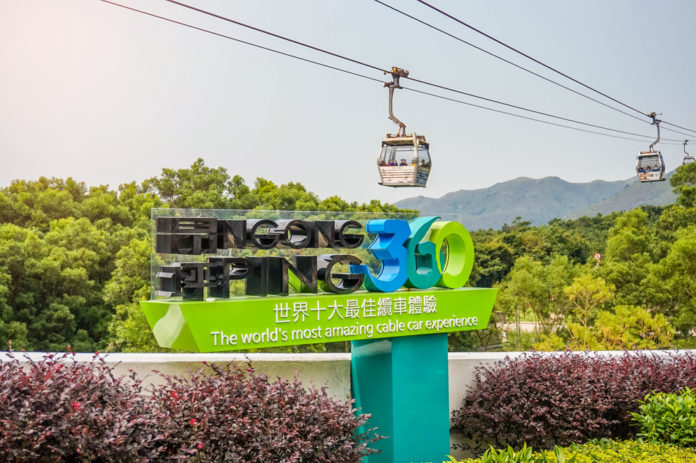
Hong Kong’s Ngong Ping 360 (NP360) cable car attraction will be suspending services from January to June 2017 in order to undergo a rope replacement project, raising concern among agents about the attractiveness of Lantau island as a destination.

During the upgrading period, the Ngong Ping Rescue Trail will also be be closed, but the Ngong Ping Village will remain open.

According to NP360 managing director Stella Kwan, a reduction of approximately 500,000 guests is expected during this period as both its Chinese New Year and Easter Holiday peak seasons are affected.

NP360 stated that disruption caused to its business partners will be mitigated with adjustments where possible to minimise impact.

But Gray Line Tours managing director Michael Wu believes business will be severely affected nonetheless. “The suspension may affect the whole Lantau tourism scene as the cable car was the key pulling factor. I forsee about a 30 per cent drop in visitors overall for Lantau, especially for the FIT market,” he said.

Tourbillon Travel, which specialises in the Indonesian market, expects business from the South-east Asian nation to Lantau to drop drastically as well.

“Indonesians visit Lantau because of the cable car so they may not consider to tour the island if it’s out of service. Given their Muslim background, the Po Lin Monastery hardly appeals to them,” said the agency’s managing director Tony Lam.

But NP360’s Kwan is banking on tours to Ngong Ping Village. She said: “To incentivise agents, we will roll out land and sea guided tours for FITs. Three to four departures are tentatively scheduled per day at a promotional price of HK$150 (US$19.30) per person.

“Moreover, we will provide scheduled complimentary round-trip shuttle services for pre-booked tour groups visiting Ngong Ping Village. During the period, guests will also be able to purchase our bus tour package from the Tung Chung Cable Car Terminal or take other modes of transport.”

APAC airlines cautious about growth heading into 2017

0

airlines

Even as the stable growth of Asia-Pacific airlines over the past few years is expected to continue into 2017, uncertainties arising from macroeconomic forces, fluctuating crude oil prices and the strengthening US currency, among other things, are expected to keep predictions muted.

The Association of Asia Pacific Airlines (AAPA) director general Andrew Herdman said that even though global passenger traffic maintained its more than 27 per cent growth this year, it is extraordinary, given the fragility of the global economy.

In fact, the low interest rate is a “warning signal” of a weak economic outlook, with international trade no longer outpacing GDP growth for the first time in 15 years, Herdman pointed out.

Still, low crude oil prices are keeping travel very affordable today, he added, with Asia-Pacific airlines accounting for 32 per cent of global passenger traffic in 2015.

But “how far those oil prices will stay at those levels we don’t know”, said Endau Analytics founder Shukor Yusuf, saying that it’s hard to make a projection for 2017 as things can change very quickly given current geopolitics.

While Cebu Pacific president and CEO Lance Gokongwei is bullish about the industry going into 2017 as the LCC is enjoying strong domestic and international demand, Malaysia Airlines CEO Peter Bellew foresees a shakeup and consolidation among LCCs “when fuel price inevitably goes back up”.

Bellew pointed out that there are too many LCCs and that they don’t have critical mass, which is fine for the next few years, but could be unsustainable afterwards due to excessive cost.

Uncertainty also arises from the continuing strength of the greenback. In the Philippines, for instance, the peso is edging near 50 pesos against the dollar, the lowest in eight years.

Thai Airways president Charamporn Jotikasthira highlights another pain point – that of limited infrastructure to cope with rising passenger demand even as visa-free facilities boost traffic.

When Thailand adopted the visa-on-arrival scheme for Chinese travellers, arrivals spiked, but immigration facilities and carousel baggage systems couldn’t cope with the increase.

“For a good 15 years we have experienced double-digit growth of passengers but infrastructure is not keeping up,” said Martin Eran-Tasker, technical director at AAPA.

This is changing, however, as he observes more airlines and airports investing into the latest technologies to make things more efficient and drive costs down.

Herdman concludes that the Asia-Pacific market will continue to lead future growth in air travel, with the region representing 40 per cent of future aircraft orders and associated infrastructure requirements.

The challenge for Asia-Pacific airlines is the ability to effectively capture that growth.

SIA reduces flight frequency on Singapore-Jakarta route

0

singapore-airlines

Singapore Airlines (SIA) is reducing its Jakarta service by five-weekly with effect from December 1.

The national carrier had been conducting 63 flights per week to and from Jakarta since July 2013, but is reducing its frequency due to maintenance works at Soekarno-Hatta International Airport, according to the Indonesian civil aviation authorities.

The five-weekly flights being cut between Singapore and Jakarta are SQ962 and SQ963 operating on Mondays, Tuesdays, Wednesdays, Thursdays and Saturdays.

SIA stated they will progressively contact customers with bookings on affected flights to accommodate them on other flights.

Competition to aid tourism startups in Mekong region

0

mekong-tourism
(From left) DNES deputy CEO Nguyen Tran, ADB MBI head Dominic Mellor, and MTCO executive director Jens Thraenhart

The newly-launched Mekong Initiative for Startup Tourism (MIST) will hold its first reverse hackathon and tourism startup competition in Danang early next year.

The contest invites local startups in Cambodia, Laos and Myanmar to develop solutions for identified market opportunities and rewards winners by matching them with suitable investors.

Organised by the Mekong Tourism Coordinating Office (MTCO) and the Mekong Business Initiative (MBI), MIST first works with local tourism players to identify industry challenges and bottlenecks and solicits global solutions from experienced innovators.

It then facilitates exchanges between global providers and budding local entrepreneurs and structures competitions among startup teams.

The winning teams will attend a bootcamp and Demo Day at the 2017 Mekong Tourism Forum in Luang Prabang, while the best Vietnamese startups will also be invited to a Demo Day at the APEC Investment Summit in November 2017 in Danang.

“Innovation and technologies are transforming the world’s tourism sector, but the Mekong region has lagged behind. We are eager to see the region’s startups innovate and create new avenues for tourism growth,” said Dominic Mellor, head of MBI at the Asian Development Bank (ADB).

Added Jens Thraenhart, executive director of MTCO: “The Greater Mekong Subregion is a magnet for tourism, but accelerating tourist volumes have also brought challenges to drive inclusive growth. The region will need to develop and innovate if it is to sustain today’s growth over the long term.”

MIST is co-organised by the Da Nang Business Incubator (DNES) in Vietnam.

Initiative launched to transform Singapore’s hotel industry

0

singapore-hotels

The Singapore Tourism Board (STB) wants to revolutionise the hotel sector with the launch of an industry roadmap yesterday by S Iswaran, Singapore’s minister for trade and industry (industry).

Named the Hotel Industry Transformation Map (Hotel ITM), the initiative’s goal is to help hospitality businesses in Singapore achieve sustainable growth.

To that end, four strategies have been identified: to build manpower-lean business models; develop new solutions through innovation; grow businesses through internationalisation; and to build a strong pipeline of quality talent.

An example highlighted by STB is the Shangri-La Hotel Singapore, which is currently undergoing renovation works. It is the first hotel retrofitting project being supported by the national agency under this scheme to boost the property’s productivity.

The hotel is doing so by centralising its kitchen and lounge work processes to replace less efficient legacy infrastructure. Through this, it expects to save up to 45 per cent in man hours in its service and culinary functions, according to STB.

A further 16 hotels are expected to build up lean operation and measurement capabilities through STB’s programme early next year.

On the talent front, a campaign to build greater awareness of hotel careers is slated to start in the first quarter of next year, complementing current initiatives such as the Professional Conversion Programme for Professional Executives (Hotel Industry), the Skills Future Earn and Learn Programme, and the SkillsFuture Study Awards for the hotel industry.

“The Hotel ITM is key to ensuring that Singapore’s hotel industry stays abreast of consumers’ changing needs and sustainably thrives amid our manpower-constrained landscape,” said Lionel Yeo, chief executive of STB.

“It is also an example of how the government, industry and its stakeholders can achieve more when we work together. We strongly encourage the industry to participate in the initiatives under the ITM.”

Self-service kiosks coming to Manila’s airport

0

manila-airport

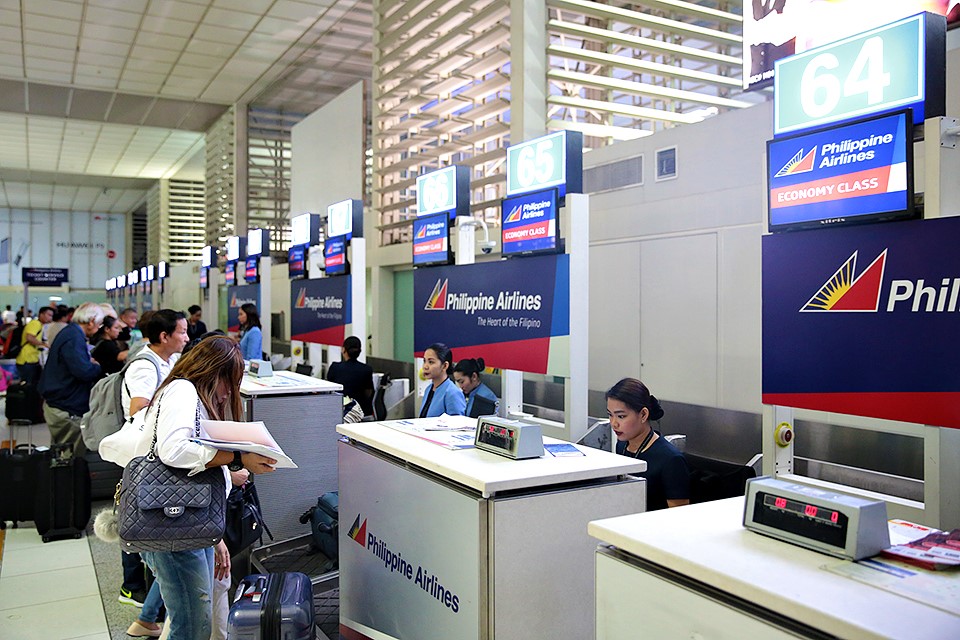
Ninoy Aquino International Airport’s (NAIA) Terminal 1 and 2 are undergoing a thorough overhaul that will see the installation of self-service check-in kiosks, bag drop and boarding gates over the next few months.

When complete, passengers can expect faster check-ins, better baggage tracking and expedited boarding times at NAIA, said Ilya Gutlin, president Asia Pacific at SITA, the company responsible for the upgrading project.

Meanwhile, NAIA’s Terminal 3 is separately requesting for a proposal from SITA, revealed Gutlin on the sidelines of the Association of Asia Pacific Airlines (AAPA) 60th Assembly of Presidents held in Manila last week.

NAIA’s management, Manila International Airport Authority, is also evaluating systems that will allow security agents to quickly and efficiently validate passengers’ paper and mobile boarding passes.

Direct air links crucial as Taiwan pushes secondary destinations

0

hualien-taiwan

The Taiwan Tourism Bureau (TTB) aims to develop more off-the-beaten path destinations in an effort to woo more international visitors.

Currently, Taichung, Tainan and Hualien are some of the more popular locales. According to a TTB spokesperson, Hualien rose in prominence thanks to chartered flights from Hong Kong by China Airlines this summer.

Taipei International Travel Fair (ITF Taipei) chairman C.T. Su stated that the goal is to lead tourist traffic out of Taipei into central and southern Taiwan. He said: “We have already developed gateway cities in Kaohsiung, Taoyuan and Taichung with international flight links. Other locations like Yilan and Hualien have potential too.”

The first international scheduled flight to Hualien, operated twice-weekly by HK Express, is set to take off on December 6, linking the county directly with Hong Kong for the first time.

Said HK Express director and CEO Andrew Cowen: “We have been wanting to connect Hong Kong and Hualien for a long time. It is located just over an hour from Hong Kong and the coastal city has so much to offer in terms of outdoor adventure, cuisine and culture. We have no doubt the flight will see insatiable demand.”

Managing director Danny Wong of Hong Kong-based Pan Asia Tourist & Study Tour International, said: “I joined ITF Taipei’s fam tour to Taichung this year. I reckon Nantou, Changhua and Chiayi are places Hong Kong people are not aware of. More promotions are needed for these areas, especially Taitung and Hualien.

“Airlines play a pivotal role. For instance, Taichung is popular but it is hard to get flights as only China Airlines, Cathay Pacific and HK Express operate the route.”

Team leader Paek Sang Hun from South Korea’s Go-On Travel, said: “North Taiwan comprises most of our itinerary but I see potential with Yilan as it’s close to Taipei.”

He added: “We pushed Kaohsiung last year but the number of bookings have dropped this year and we have no idea why. Taipei remains the key city because the central part of Taiwan is not easy to access while Kaohsiung is pretty far.”

Viator plays catch up in Asia with regional expansion plans

0

viator

Travel activity booking platform Viator is ready to capture a slice of the lucrative Asia-Pacific market, with plans underway to widen the company’s footprint across China, Japan and South-east Asia.

Anita Ngai, general manager of Viator Asia-Pacific, who was appointed to this newly-created role last year, shared that while at least 70 per cent of their users are from the US, UK and Australia, her responsibility aims to “balance this proportion” with Asia’s travellers.

While acknowledging that they are still in their early days in Asia, Ngai said: “It is not as if we never gave much thought to this part of the world (before), it was just that we didn’t have enough resources earlier.”

While Ngai is based in Viator’s San Francisco headquarters, she said that they have since employed new staff in Singapore and may likewise do so for Japan and Hong Kong as these are their current top markets in Asia.

Working closely with the Viator and TripAdvisor teams, Ngai’s goal is to localise the customer experience and marketing approach, as well as improve the relevance of its product mix with the increasing number of sophisticated FITs.

When asked if Viator is considered late in the game, especially with similar online activity platforms already established here, she said: “We have a much longer company history and this gives us a stronger relationship with tour operators and suppliers which allows us to provide more unique products and also competitive prices.

“For instance, one of our unique selling points are our skip-the-line tours which has been highly rated, and some tours that are exclusive only to us.”

Commenting on last week’s announcement of Viator’s CEO Barrie Seidenberg resigning from TripAdvisor to pursue opportunities outside the company, Ngai said: “This will not affect our plans or strategies in any way and we wish Barrie well.”

Meanwhile, TripAdvisor will expand the role of Dermot Halpin, president attractions and vacation rentals, TripAdvisor, to serve as president for both its global vacation rentals and attractions divisions.