TTG Asia
Asia/Singapore Tuesday, 30th December 2025
Page 1667

Banyan Tree, Vanke join forces to expand assets in China

0

banyan-tree-huangshan
Banyan Tree Huangshan

Banyan Tree Holdings has come together with real estate company China Vanke to create a new joint venture Banyan Tree China (BTC), which will consolidate the ownership of Banyan Tree-branded hotels and assets in China.

BTC will also be the development and management platform for new projects by both parties in hospitality, senior-living and wellness, an area which both Banyan Tree and Vanke can “do a lot more in China and the rest of the world”, said Ho Kwon Ping, executive chairman of Banyan Tree, in a press release.

The initial paid-up capital of BTC is estimated to be no more than RMB2 billion (US$292 million).

The joint venture will initially be controlled 50:50 by Banyan Tree and Vanke through Banyan Tree’s injection of all its China-owned assets into BTC at valuation. The current book value of these assets (before valuation) is approximately RMB720 million.

Meanwhile, BTC will invite owners of the other 15-plus existing hotels and 20-plus hotels bearing various Banyan Tree brands under development in China to inject their hotels into BTC under mutual agreement. Vanke may also inject hotels it owns as well as future hotels under development into BTC.

BTC will also own 40 per cent of Banyan Tree’s hotel management company in China and continue the rapid expansion of the various brands under the Banyan Tree Group, namely Banyan Tree, Angsana, Cassia, Dhawa and Laguna.

Vanke will also take up approximately five per cent equity stake in Banyan Tree itself, as did AccorHotels, another strategic partner with which Banyan Tree recently signed a collaboration agreement to co-develop Banyan Tree-branded hotels around the world.

Indian agents dealt a double whammy with service tax hike

0

tax-increase

The Indian government’s new service tax on tour operators has come as a jolt to the sector, already reeling under pressure post demonetisation.

Effective January 22, tour operators are required to pay service tax on 60 per cent of the total invoice value of a package tour, according to a government notice. Earlier, the tax was levied on 30 per cent of the invoice value.

This effectively doubles service tax on tour packages to nine per cent from the earlier 4.5 per cent.

Mahesh Iyer, COO, Thomas Cook (India), said: “The impact is two-fold: a resultant doubling of the tax rate on the sector, and given that implementation was within a week, reaction time as well as time for advocacy was negligible. This will see a corresponding increase in tour pricing, which will in turn be passed onto customers.”

The move will benefit foreign tour operators and OTAs unaffected by the increased tax, Nalin Kapadia, chairman, Incredible Vacations remarked. “It seems that the government is looking to make life difficult for small travel agents,” he said.

Others added that the move will mostly hit outbound packages as operators enjoy CENVAT (Central Value Added Tax) credit for all input services for inbound tours. This can help defray service tax on services like hotels, transportation and mobile bills.

“Though CENVAT credit is huge relief to inbound tour operators, many of us also (combine) neighbouring destinations like Sri Lanka and Nepal in our tour packages. With the cost going up we may lose that business to foreign tour operators,” said Amaresh Tiwari, managing director, A.T. Seasons & Vacations Travel.

Tourasia taps emerging Polish market to SE Asia

0

ko-phi-phi-thailand
Koh Phi Phi, Thailand

Tourasia, one of Switzerland’s major specialised tour operators to Asia, expects to produce more arrivals from Poland to South-east Asia this year, having opened a subsidiary in Warsaw last month on December 1.

Managing director Stephan Roemer noted that four out of five most popular Asian destinations for Polish, in arrivals figures, are in South-east Asia. The top five, in order, are Thailand, Vietnam, Sri Lanka, Singapore and Indonesia (Bali).

“If you look at the official figures there are considerable increases, particularly to Thailand and Sri Lanka. They report increases of high double digits,” he said.

“Poland is a young market with growth potential. The population is 40 million and at present, 10-20 per cent have the comparable buying power of a market like Germany. That equals to a market size of four to eight million potential travellers. The number of travellers is growing. The annual growth in GDP is approximately four per cent, among the highest in Europe,” Roemer assessed.

Though young, Roemer said Polish are seasoned travellers who want to go farther. Tourasia is targeting the luxury segment with its refined concierge service, own deluxe vehicles and innovative roundtrips. But it will also have “an adequate offer for the tourist class segment”, he said.

Its new office, centrally located in Warsaw, is manned by four staff, led by Piotr Chojnowski, whose career rose from product director at TUI Poland to CEO of Onholidays before joining Tourasia.

“We are setting up our infrastructure and will start the promotions and sales in spring (March/April),” said Roemer.

This isn’t the first time Tourasia operates in foreign markets. The company also owns Tischler Reisen in Germany, another major specialised tour operator to Asia.

In Asia, Tourasia operates its own network of DMCs in Myanmar, Thailand, Vietnam and the Philippines under the name All Asia Exclusive, which also caters to Asian outbound markets. Presently it employs 32 employees in Switzerland and over 140 in Asia.

Hat Yai seeks new markets as Malaysian arrivals tumble

0

hat-yai-streetStreet near Hatyai Plaza market

The Thai border city of Hat Yai, which depends on Malaysia as key tourism feeder market, has been hard hit by the anaemic ringgit that makes even short trips pricey for Malaysian vacationers.

The Tourism Authority of Thailand (TAT) estimated that Malaysian arrivals to Hat Yai had fallen by 10 per cent year-on-year in January 2017 while the average length of stay had gone from two nights to just one. Travel spend took a beating too, falling more than 30 per cent to 2,000 baht (US$57) per head per day.

Krit Praphanrasnikorn, managing director of President Hotel Hat Yai and former president of the Hat Yai Songkhla Hotel Association, said the ringgit had depreciated by more than 20 per cent against the baht, which means a weaker buying power for Malaysians in Thailand.

Exacerbating Hat Yai’s tourism predicament is the LCC boom, which Krit said has turned the destination into a stopover location where Malaysians park their cars and depart on flights for other Thai resort destinations like Chiang Mai, Phuket and Krabi.

“The tourism situation in Hat Yai will hit rock bottom in 20 years’ time and the poor (Malaysian performance) is likey to continue at least two years from now,” Krit said.

He urged tourism authorities to develop new destinations and products to keep up with travellers’ evolving demands.

TAT’s Hat Yai director Panu Woramit acknowledged the challenge and told TTG Asia that there are plans to create entertainment and sporting events to woo Malaysian travellers. These activities will begin after the Songkran festival in April.

Panu added that TAT and tour operators in Hat Yai are actively sourcing for new markets to reduce the destination’s dependence on Malaysia. They are pinning their hopes on China, as from April 2 there will be three regular flights a week from Kunming to Hat Yai.

Initiatives shore up arrivals into Sihanoukville

0

sihanoukville
Sihanoukville

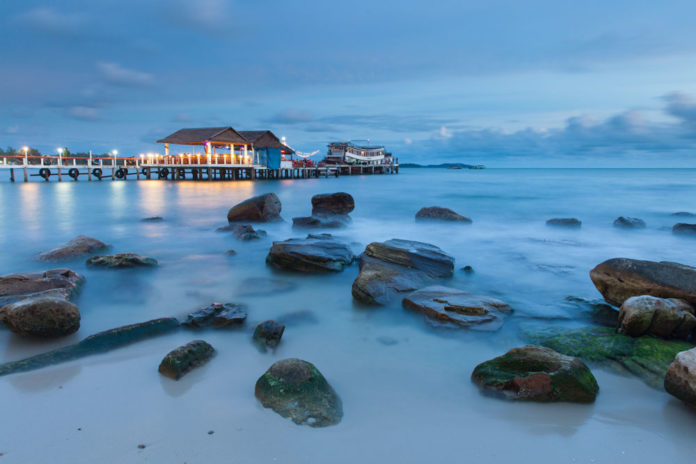
A series of measures to plant the Cambodian coastal resort of Sihanoukville on the map as one of the region’s premier beach resort are paying off.

Tourism officials hope beautification projects to clear up the beaches, plans to double the airport’s capacity to 500,000 passengers per year and efforts to secure more international flights will continue to drive visitors to the destination.

Mick Spencer, owner of ANA Travel & Tours, said the development is mostly being driven by the Chinese, with Sihanoukville being heavily marketed in China.

Several projects are also underway to build casino complexes in the destination.

“The airport expansion is to accommodate an anticipated influx of casino junket Chinese mainlanders,” Spencer said, adding the number of visitors from Europe has remained stable during the last few years.

A marketing initiative introduced in 2016 that gives cash incentives to airlines using Sihanoukville’s airport for international flights has also been renewed for another year.

Last January, Cambodia Airports started offering airlines $10 per passenger – with a maximum of $1,000 per flight – on international scheduled flights departing from Sihanouk International Airport.

Khek Norinda, Cambodia Airports spokesman, said: “This has proved successful in attracting new airlines to Sihanoukville and increased the number of visitors.”

He added passengers landing at the airport increased by 65 percent in 2016.

Bun Socheat, manager of Mekong Travels, said: “These efforts and general development in the area are paying off and will help increase Sihanoukville’s popularity in the future.”

FIT Ruums devises new programme to reward agents

0

fit-ruum

FIT Ruums, Webjet’s new B2B travel distributor in Asia, has unveiled a new rewards programme.

The programme allows travel suppliers, including NTOs, to directly incentivise and educate agents with a series of rewards such as lifestyle products, hotel stays, bespoke event invitations and fam trips. Rewards can also be tailored to the individual needs of each market.

“FIT Rewards creates a platform for our supplier partners to launch their new products, allowing more targeted product penetration, education and adoption by their key bookers in the travel trade,” said Daryl Lee, director of FIT Ruums’ parent company, WebBeds FZ.

A series of online stores, similar to the iTunes Store, will be created for each Asian market, further enhancing the suppliers’ ability to target their local clients.

Kok Sheng Sun, chief commercial officer of FIT Ruums, said: “We anticipate high demand from the agent community, and look forward to unveiling an exciting new range of products and activities, and expanding our online reward stores across Asia in the coming months.”

To celebrate the launch of FIT Rewards, travel agents who sign up FIT Rewards before January 31, 2017 will receive 1,000 bonus FIT Points. Every booking made before the end of January 2017 will earn the member an additional 500 FIT Points.

FIT Ruums will also reward the travel agency that makes the most bookings in January 2017 with rebates of 50 per cent off its booking values.

For more information, please visit rewards.fitruums.com.

Daley takes on new deputy CEO, Asia-Pacific role at AccorHotels

0

AccorHotels has appointed Louise Daley as deputy CEO, Asia-Pacific, on top of her current role as CFO, Asia-Pacific.

In her new role, Daley will work closely with chairman and CEO Michael Issenberg and the executive team, while continuing to oversee AccorPlus, focusing on growing the business portfolio under AccorPlus, Accor Vacation Club and concierge services.

Louise Daley

Since June 2015, Daley has served as executive vice president and CFO, Asia-Pacific. Previously, she assumed the role of CEO, Accor Advantage Plus (now Accor Plus) in 2011, helping to grow the business to 45 sales offices in 11 countries and expanding membership by over 30 per cent.

Daley has been with AccorHotels for 26 years, having commenced her career in Australia before relocating to Bangkok in 2002 as general manager, finance for AccorHotels Asia. In 2005, she returned to Australia as CFO for AccorHotels Pacific. She is based in Singapore since 2011.

Celebrity Cruises names new sales and marketing head for Asia

0

Celebrity Cruises has appointed Apple Woo as head of sales and marketing for Asia.

Based in Singapore, she will work alongside the company’s travel industry partners in Asia to support their business development efforts, build awareness of Celebrity Cruises’ luxury positioning and attract more affluent holidaymakers.

Apple_Woo

She will report to Celebrity Cruises’ vice president and managing director, Asia, Jo Rzymowska, who recently added Asia on top of her UK and Ireland portfolio in end 2016.

Prior to this appointment, Woo has worked with luxury hospitality brands such as Jumeriah and Mandarin Oriental in South-east Asia and Dubai.

Quality over quantity in tourism, trade urges Asian NTOs

0

tourists-in-cambodia
European tourists sightseeing in Cambodia

Countries such as China, Japan and South Korea may already dominate the visitor tables of many South-east Asian countries, but the trade thinks more can still be done to attract high-end leisure travellers and nurture the FIT market coming into the region.

Sreat Mom Sophear, director of Sophiya Travel and Tours Cambodia, said while Chinese visitors are the country’s second highest market, the European market, which lags, is of more value.

She said: “It’s not just about numbers, it’s about the value of each tourist. The North Asian market tends to do more repeat visits and come more for shopping, whereas for the European market it will be a once-in-a-lifetime trip so they have a higher budget.”

Dong Hoang Thinh, managing director of Dong Travel in Vietnam, echoes her sentiments, saying the FIT market in these countries needs to be targeted more on a national level.

Said Dong: “(China) is a particularly hard market to break. It is very competitive, there are communication barriers and they tend to use their own operators, who organise specific hotels and tours.”

Sokhom Thok, director of international cooperation and ASEAN at Cambodia’s Ministry of Tourism, said efforts are being made to welcome higher spending Chinese tourists.

These include the signing of a tourism development agreement between the ministry and China’s Shanghai Spring International Travel Service Group and the launch of the China Ready Centre to determine the demands of Chinese tourists, as well as train Cambodian tourist operators’ Chinese language and cultural skills.

It is also hoped that plans to host ASEAN travel forums in China, Japan and South Korea this year, showcasing the region’s attractions, will lure more high-end travellers.

Cambodia is not alone in its quality visitor aim, with Vietnam also shifting its focus for the Chinese market. “China is one of the most important markets in Vietnam but now we need to focus on quality rather than volume,” said Ha Van Sieu, vice chairman, Vietnam Administration of Tourism (VNAT).

China and Vietnam have just entered into an MoU this month to foster visitor exchange, while VNAT will train more tour guides in Chinese and carry out marketing campaigns in China directed specifically at the segment.

As Myanmar’s Ministry of Hotels and Tourism gears up to embrace tourism countrywide, union minister Ohn Maung says attracting “quality” tourists is top of the agenda but tour operators need to lead the way.

He said: “We are focusing on the Western market but will not neglect the East; however, we want quality. Tour operators can choose the rates and lead the market so we get this quality.”

Ascott scales up in China, makes key appointments

0

citadines_qingshan_scpg_centre_wuhan
Citadines Qingshan SCPG Centre Wuhan

The Ascott has secured contracts to manage six properties with over 1,200 apartment units in China, expanding its presence in Changsha, Shenzhen, Tianjin and Wuhan while extending its footprint to two more cities – Handan and Xuzhou.

Of the six new serviced residences secured in China, Citadines Sunhope e-Metro Shenzhen, Ascott’s largest property in China, is slated to open this year. Citadines Qingshan SCPG Centre Wuhan and Tujia Somerset Jundu Tianjin are scheduled to open in 2018 while Ascott Xiangjiang FFC Changsha, Citadines Yunlong Lake Xuzhou and Tujia Somerset Congtai Handan will start operations from 2019.

The Singapore company is also poised to boost its fee income with record opening of over 30 properties worldwide this year, of which 16 will be in China.

Lee Chee Koon, CEO of Ascott, said: “Ascott crossed the 50,000-unit milestone last year, and there will be no let-up in our efforts to build up Ascott’s global scale and accelerate our growth in 2017. We clinched a record 10,000 units in 2016 and this is expected to contribute S$25 million to S$30 million of fee income to Ascott annually as the properties progressively open and stabilise.”

Tan Tze Shang, Ascott’s newly appointed managing director for China, said Ascott’s investment in Chinese online apartment sharing platform Tujia has propelled their growth and reach in the country. “Since the launch of our Tujia Somerset brand last year to tap on the booming middle-class segment, we have secured 11 properties and surpassed our 2016 target of 2,000 units under this brand,” he said.

He added that Ascott has set a goal of 20,000 units in China by 2020, up from its current 17,300 units in 96 properties across 27 cities. Last year, Ascott opened 14 properties in China, adding over 2,000 units to its portfolio.

Ascott is targeting 80,000 units worldwide by 2020 and has appointed Kevin Goh as COO to assist the CEO in overseeing operational aspects of the business and new growth opportunities, especially relating to its digital and online strategy.

Prior to this, Goh was Ascott’s managing director for North Asia since 2013, responsible for investments and operations in China, Japan and South Korea. He was the former regional general manager for Greater China and vice president for business development.