TTG Asia
Asia/Singapore Saturday, 4th April 2026
Page 1646

Philippines’ image needs mending from martial law, advisories: trade

0

The Philippine trade is calling on the government to take the lead in counteracting the spate of travel advisories affecting parts of Mindanao and the Visayas, as well as the whole of Mindanao coming under martial law on Wednesday.

Noting that the destinations are “highly affected by cancellations”, Kirschner Travel Manila general manager, AA Yaptinchay, said: “The government should take the lead and not rely on tourism businesses (to remedy the situation). In the long term, the Philippines needs to provide better governance to… eliminate corruption, poverty and insurgency.

“The only thing agencies can do is to provide information on the actual situation (and convey that) reports are isolated to specific areas,” he added.

Rajah Tours’ president Jojo Clemente agreed: “The most we can do is to assuage fears and misconceptions but the (responsibility) falls on the Department of Tourism (DoT) to spend on image building.”

Fearing that the country’s arrivals targets would be missed this year, a travel agent noted that there’s still no word from the DoT about the cost to tourism arising from the martial law in Mindanao or the travel advisories issued last month by mostly European and North American countries, Japan and South Korea.

Cebu Pacific and Philippine Airlines, which fly extensively to and from Mindanao, are allowing rebookings and hopefully, refunds, said a travel consultant who saw booking cancellations from corporate and leisure travellers.

At yesterday’s Asia Premium Travel Mart roundtable discussion, Be Resorts director of sales Hazel Abayon, said the local government was hands-on in securing the whole area and ensuring that no tourist came to harm during the clash between Abu Sayyaf terrorists with the military last month.

Abayon added that contrary to expectations, tourist numbers are improving for May, June and July.

In areas not directly affected by the travel advisories, El Nido Resorts, for example, is running about 70 per cent occupancy, said director of sales and marketing Joey Bernardino. About 60 per cent of guests are foreigners, mostly from Europe.

Bali’s first Mumbai flight lifts prospects for Indian market

0

Indonesian trade players are sanguine about AirAsia X Indonesia’s new Mumbai-Bali service launched on May 19, which marked the first LCC service between both countries.

Pande Ardika of Balihai Cruise said that the Indian market has been on the rise in Indonesia, especially Bali, and believes the new flights will definitely further increase business from India.


Likewise, Umberto Cadamuro, COO inbound, Pacto, is confident that the new flights will drive growth of over 50 per cent from the Indian market for his company this year.

The new route has prompted some in the trade to step up efforts in India. Panorama Destination, for example, will continue to develop new products for the market, work to open new destinations and hire new representatives in New Delhi, Mumbai and Chennai.

“The Indian market however has become increasingly competitive as many other local Indonesian DMCs are expanding into India,” said Renato Domini, CEO, Panorama Destination.

The Mumbai-Bali route is operated daily on a 377-seater Airbus A330-300, with 365 seats in economy and 12 in business or premium.

India’s hospitality sector in shock over GST rate

0

India’s decision that hotel rooms charging above Rs5,000 (US$77.11) would be subject to the highest Goods and Services Tax (GST) bracket of 28 per cent has caught flak from the trade, who believes this will compromise the destination’s price competitiveness.

The tax council has pegged hotels with rooms priced Rs1,000-2,500 at 12 per cent, and 18 per cent for those between Rs2,500 and Rs5,000.

Ankur Bhatia, executive director at Bird Group, said: “The industry has already been severely impacted by the liquor ban and this GST rate comes as another shocker. The new tax structure will position India poorly as a destination in comparison to our international competitors with much lower taxation.”

“By increasing the rate to 28 per cent for mid-to-high class hotels, inbound tourism will take a hit by at least 10 per cent,” said Rishi Puri, vice president, Lords Hotels & Resorts. “More ironic is the zero tax on hotels priced below Rs1,000, which sends out the signal that India prefers backpackers and that those with more money should look for other destinations.”

Dilip Datwani, president, Hotel and Restaurant Association of Western India, added: “While neighbouring countries like Myanmar, Thailand, Singapore and Indonesia levy taxes ranging from five to 10 per cent, we cannot afford to have such kind of high taxation structure. Tourists will simply skip India.”

Not all hoteliers are unhappy, as budget chain OYO founder and CEO Ritesh Agarwal stated that lower tax brackets will spur higher standards for the lower-tier accommodation.

Muslim millennial travellers report to launch at ITB Asia 2017

0

ITB Asia has extended its partnership with CrescentRating to offer market insights on halal tourism at the Singapore show this year.

According to findings from the MasterCard-CrescentRating Global Muslim Travel Index 2017, the Muslim travel market will continue growing and is estimated to reach US$220 billion in 2020.


The report will be released at the Halal in Travel – Asia Summit 2017, which will be held as part of this year’s ITB Asia on October 26 at the Sands Expo and Convention Centre, Marina Bay Sands.

With more than 50 per cent of Muslims under the age of 30 years, insights and discussions on the impact of Muslim millennial travellers on destinations and businesses will take centre stage at this year’s conference.

This year’s conference will offer keynote speeches, panel discussions and specialist presentations to explore the latest trends and challenges to emerge in the Muslim travel market. There will be a panel discussion with social media influencers on how younger Muslim travellers are engaging with travel brands.

Fazal Bahardeen, CEO of CrescentRating and HalalTrip, added: “We are creating another exciting programme which includes insights into the sector especially looking at key profiles and behaviours of younger Muslim travellers, so that destinations and businesses can expand their offerings for this emerging segment.”

New hotel openings: Hotel Jen Beijing, Novotel Phuket Phokeethra and more

0

The latest hotel openings and announcements made this week


Hotel Jen Beijing

The 450-room Hotel Jen Beijing takes up the first 22 floors of China World’s Tower B in the CBD, with room sizes spanning between 40m2 and 75m2. Recreational facilities abound, ranging from the 3,500m2 gym and 25m-long heated indoor pool, to a boxing ring and Mixed Martial Arts area. There are two F&B options: Beersmith, a gastropub offering seasonable beers; and farm-to-table restaurant San Wu Tang. Other on-site amenities include a business centre, 13 meeting rooms and a multifunctional space for 250 people.


Cordis, Shanghai, Hongqiao
At Langham Hospitality Group’s first Cordis Hotel in China, the 396-room property is connected to the Shanghai Hongqiao Railway Station and Metro Lines 2 and 10, and is also situated near the National Exhibition and Convention Centre. Facilities include four F&B outlets, a swimming pool, 24-hour gym and spa, as well as 1,600m2 of event space comprising two pillarless ballrooms that can accommodate 600 guests each, and six breakout rooms.


Novotel Phuket Phokeethra
The first international hotel brand in Phuket Old Town has opened with 180 rooms and suites. Hotel amenities include a spa, gym and indoor pool, as well as two lounges and an all-day dining restaurant. For meetings, events and conferences, the property has available four meeting rooms, and a Grand Ballroom that can accommodate up to 850 guests.

Como Uma Ubud
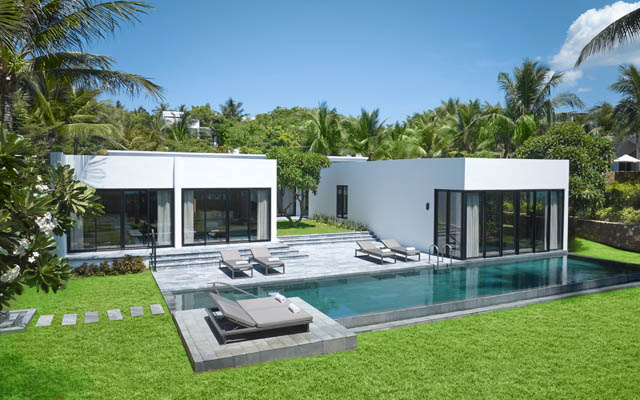
Overlooking the Tjampuhan Valley and River Oos, the upscale Como Uma Ubud has launched 10 new Garden Pool Villas to boost its portfolio to 46 keys. Each villa has its own private garden and plunge pool, and is decked out with a 42-inch TV, Bose soundbar and a free-standing bathtub. Amenities on the two-hectare property include a fitness centre, 25m-long pool, sauna rooms, yoga pavilion, four spa rooms and three F&B options.


La Siesta Resort and Spa

The Essence Hoi An Hotel and Spa has undergone a major refurbishment and rebranding to become La Siesta Resort and Spa Hoi. The five-star property is split into two wings – the 70-room West Wing and the brand-new 37-room East Wing. Rooms in the East Wing come in a few configurations, from the poolside suites to premium terrace suites kitted out with private Jacuzzis. The new wing also comprises a spa, saltwater pool and the fine-dining Temple. Elsewhere on the property, guests will be able to avail Vietnamese restaurant Red Bean, gym and a freshwater swimming pool.

A bigger Hotelbeds eyes stronger clout, value in fragmented space

0

A better value proposition that leverages technology and the synergies from its recent acquisitions is what Hotelbeds expects to offer to its clients in a “competitive” and “fragmented” market, said managing director Carlos Muñoz.

Speaking to TTG Asia in an interview on the sidelines of its inaugural MarketHub Asia event, which took place in Bangkok earlier this week, Muñoz said: “There are many (bedbank) players like us in the market. We are the biggest player but we are only taking up about seven to eight per cent of the market share (prior to Tourico and GTA acquisitions).

Muñoz at MarketHub Asia event

“The B2B wholesale accommodation space is still very fragmented, while the OTA market is dominated by two big players (Expedia and Priceline). Our aim is to better support our tour operator and OTAs customers to succeed in this environment against the big OTAs, and if we’re fragmented it’s much more difficult to compete against them.”

The acquisitions of Tourico Holidays and GTA will enable Hotelbeds to take the best practices from each and combine them into “one single platform”, according to Muñoz. “The point (of the acquisitions) is not about getting market share, it’s about creating the conditions to provide more value proposition to our clients and help them face the challenges in the marketplace,” he elaborated.

While Muñoz feels that Hotelbeds has built up a strong global footprint – with Tourico a strong player in the US, and GTA in Asia-Pacific, the Middle East and Europe – he concedes that India still leaves room for further growth and is a market the company will focus on. China, on the other hand, is where Hotelbeds and GTA already have significant presence, he revealed.

When asked if a bigger Hotelbeds will curtail its responsiveness to the market, Muñoz feels it’s the contrary. “Being small is not an advantage in this business, because you need the size to be able to invest in the best technology, products and contracts… we were missing some size (earlier).”

Hotelbeds’ ownership change last year from TUI to two private equity companies Cinven and CPPIB has also given it “access to capital”, including opportunities in inorganic growth, which would enable it to pursue further organic growth, said Muñoz. Also, he does not rule out further acquisitions for Hotelbeds.

A bigger Hotelbeds eyes stronger clout, value in fragmented space

0

A better value proposition that leverages technology and the synergies from its recent acquisitions is what Hotelbeds expects to offer to its clients in a “competitive” and “fragmented” market, said managing director Carlos Muñoz.

Speaking to TTG Asia in an interview on the sidelines of its inaugural MarketHub Asia event, which took place in Bangkok earlier this week, Muñoz said: “There are many (bedbank) players like us in the market. We are the biggest player but we are only taking up about seven to eight per cent of the market share (prior to Tourico and GTA acquisitions).

Muñoz at MarketHub Asia event

“The B2B wholesale accommodation space is still very fragmented, while the OTA market is dominated by two big players (Expedia and Priceline). Our aim is to better support our tour operator and OTAs customers to succeed in this environment against the big OTAs, and if we’re fragmented it’s much more difficult to compete against them.”

The acquisitions of Tourico Holidays and GTA will enable Hotelbeds to take the best practices from each and combine them into “one single platform”, according to Muñoz. “The point (of the acquisitions) is not about getting market share, it’s about creating the conditions to provide more value proposition to our clients and help them face the challenges in the marketplace,” he elaborated.

While Muñoz feels that Hotelbeds has built up a strong global footprint – with Tourico a strong player in the US, and GTA in Asia-Pacific, the Middle East and Europe – he concedes that India still leaves room for further growth and is a market the company will focus on. China, on the other hand, is where Hotelbeds and GTA already have significant presence, he revealed.

When asked if a bigger Hotelbeds will curtail its responsiveness to the market, Muñoz feels it’s the contrary. “Being small is not an advantage in this business, because you need the size to be able to invest in the best technology, products and contracts… we were missing some size (earlier).”

Hotelbeds’ ownership change last year from TUI to two private equity companies Cinven and CPPIB has also given it “access to capital”, including opportunities in inorganic growth, which would enable it to pursue further organic growth, said Muñoz. Also, he does not rule out further acquisitions for Hotelbeds.

Norwegian Joy readies for Chinese entry with Singapore stop

0

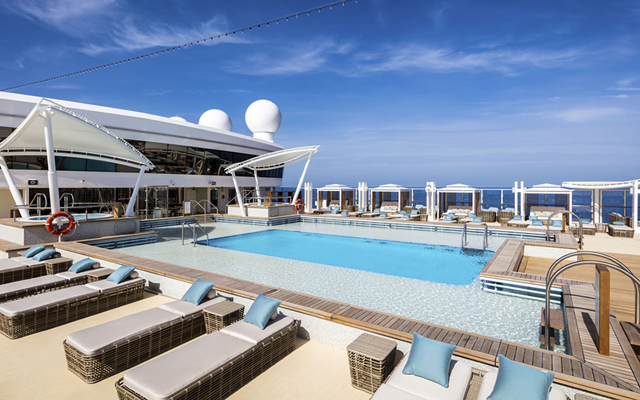
As the 3,883-guest Norwegian Joy last weekend pulled into Singapore, a month ahead of its first sailings in China, Norwegian Cruise Line Holdings (NCLH) shared that it is pursuing more than just a numbers game in China, with market understanding and brand loyalty also key to its strategy.

“It’s not our aspiration to be the largest brand in China, we just want to be the best… (the Norwegian Joy) builds on what’s been done to open up the Chinese market over the past years, providing a product that will resonate well with Chinese consumers,” said Harry Sommer, NCLH’s executive vice president, international business development.

NCLH’s partnership with Alibaba, which was announced earlier this month, is expected to not only widen the cruise line’s reach among consumers in China, but also deepen its understanding of the Chinese market.

“Alibaba controls 70-80 per cent of the online Chinese market for everything from paper towels to Maseratis and everything in between. The sheer amount of consumer data they have makes them a force to be reckoned and a partner that helps us understand consumer tastes, what drives purchase decisions, tailor marketing and sales messages and make onboard products valuable.”

NCLH’s senior vice president and managing director for Asia-Pacific, Steve Odell, cites customer loyalty as a “critical part” of NCLH’s larger business and will continue to be so as the company enters China.

In fact, past guests can make up 60 per cent or more of demand, according to Sommer.

The new ship was unveiled in its entirety for the first time last Saturday, as 800 guests in Singapore – including media, travel agents and their customers – were introduced to onboard features such as a Ferrari-branded go-kart track, gaming arcade, 28 dining options and retail brands counting Apple, Cartier, Bulgari and Starbucks.


Indonesian millennial travellers chase discovery: Agoda survey

0

Indonesian millennials are showing a greater thirst for discovery and spontaneity during their travels, according to an Agoda survey.

Gede Gunawam, country director of Agoda International Indonesia, said: “The survey shows a big shift from the relatively sedentary approach to travel in the past. We are seeing the emergence of a much more adventurous and independent-minded travellers here.”

Of the 1,000 independent millennials (travelling domestically or outbound) surveyed, 40.8 per cent were motivated by challenging experiences and 42.1 per cent the local culture.

Forty per cent indicate they do not need Google maps when travelling, preferring to walk the streets without a plan. In fact, 52 per cent of them take this further and take wrong turns on purpose.

Moreover, there is a growing demand for unconventional accommodation such as homestays with local cultural experiences or tented camps. Gede said the average accommodation spending in Indonesia is between 700,000 rupiah (US$53) and 800,000 per night, compared to 1.3-1.5 million rupiah in Japan.

Reflecting their active nature, the study reveals that as soon as they check into and step out of a hotel, 45 per cent of respondents will explore the destination and 36 per cent choose to find a place to eat.

They might not do it at home, but 67 per cent shop at the local markets, and 45 per cent like to haggle with the local shopkeeper.

While these millennials are independent travellers in many ways, they are also followers in other aspects. Forty per cent of respondents indicated they like to wear matching outfits with their friends. While travelling, 72 per cent take selfies, 64 per cent upload photos on the instagram and 50 per cent check in on Facebook.

The survey was a chapter of the ongoing #agodabasecamp campaign launched in Jakarta on May 17.

UK threat level raised to critical after Manchester attack

0

The Joint Terrorism Analysis Centre has raised the UK’s terror threat level from ‘severe’ to ‘critical’, the highest the nation has seen in a decade, following an attack in Manchester that left 22 dead and more injured.

The new threat indicator by UK security and intelligence agency Mi5 means another attack is not only highly likely but also “expected imminently”.

An explosion went off during a pop concert at Manchester Arena 

On Mi5’s website, UK prime minister Theresa May was quoted to have said: “The work undertaken throughout the day has revealed that it is a possibility we cannot ignore that there is a wider group of individuals linked to this attack.”

The prime minister has also activated the anti-terror Operation Temperer, a government plan to deploy troops to support police personnel in key locations following a major attack.

Nearly 1,000 members of the Armed Forces were being deployed as of May 24.