TTG Asia
Asia/Singapore Friday, 23rd January 2026
Page 1643

With rising risks, travel insurance take-up higher than ever

0

High-impact incidents such as extreme weather events, medical outbreaks and sociopolitical volatility are the top emerging risks for Singaporean travellers over the next 12 months, according to data and forecasts by AIG Asia Pacific Insurance.

Compared with three years ago, the insurance company has seen an 85 per cent increase in travel claims made for high-impact incidents, with natural disasters being the costliest with an average claim amount of S$2,610 (US$1,872).

AIG predicts that these trends will continue throughout 2017 and result in a 10 per cent rise in demand for premium travel products offering a greater amount of cover.

Vice-president and head of group personal insurance, Ignatius Chng, said: “As Singaporeans continue to be savvy and frequent travellers, their global mobility and increased awareness of travel insurance will see them taking a proactive approach and insuring themselves against unforeseen circumstances.”

AIG further notes that travel insurance claims relating to sociopolitical volatility have more than doubled in the last three years, with travel disruption resulting from political instability, coup d’état, increased border security and terrorist attacks.

Chng observed: “Singapore travellers are demanding greater levels of coverage… especially since the global security environment has become increasingly volatile in recent years and high-impact incidents are more prevalent.”

Meanwhile, to meet growing demand for a more seamless claims and risk management process, AIG expects travel insurance providers to expand their digital capabilities.

“We have seen an increase in customers making direct purchases digitally, but technology does not stop at distribution. The next step would be for them to embrace disruption and move more service offerings towards the digital,” Chng said.

New sightseeing bus in HK serves up Michelin-star meals

0

Crystal Bus, a 47-seater double-decker bus, has been launched in Hong Kong to offer sightseeing tours around the city while travellers dine on Michelin-star dishes.

Day tours last 2.5 hours and take place twice daily. The tour visits attractions such as the Hong Kong Observation Wheel, Lantau Link View Point and Hong Kong Space Museum, where travellers also have an opportunity to alight for photos.

Costing HK$380 (US$49) per person, day tour tickets include a Michelin-star dim sum set. Also included in the price are audio guide devices that provide guests with a history of each attraction in Japanese, Korean, Cantonese, Mandarin and English.

Meanwhile, night tours are only available for entire bus book-outs. This five-hour tour will offer a customised attraction route, while Michelin-star meals include seafood, Chinese or Western cuisine.

The booking fee from Monday to Thursday costs HK$8,800, and on Fridays, Saturdays, Sundays, public holidays and on the eve of public holidays will cost HK$12,800, including drinks and snacks. Additional charges for extra dishes or drinks apply.

For luxury travellers, it’s now experiences over dollars

0

The desire for learning and enrichment, giving something back, the rise of the ephemeral and instant as well as great service are the key trends defining luxury travel today, according to the Limited Access Luxury Travel Report, developed by MyTravelResearch.com, Executive PA magazine and the Luxperience travel show.

MyTravelResearch.com said modern luxury travel reflects wider macro-economic trends including rising levels of inequality, which make conspicuous public displays of wealth less acceptable.

In tandem with less ostentation, higher spiritual and emotional motives are now coming more into play – such as the need for inner fulfilment, creativity, self esteem, belonging and contentedness.

In short, experience transcends dollars at the higher end of luxury travel. The consequence: demand for luxury experiences seems to be growing faster than the demand for luxury goods.

The report also shows that luxury travellers are placing an even greater emphasis on service and increasingly insisting on a wider diversity of experiences, empowered by the Internet and a surplus of service providers in the luxury sector.

MyTravelResearch.com founder Carolyn Childs also singled out notable characteristics of the modern luxury travel market, including the greater number of new younger and women millionaires; the rise of wellbeing, multi-generational travel and learning; the growth of the luxury cruise market; as well as the luxury traveller’s ever-rising expectations and premium placed on value.

5 make-or-break factors for rail success in APAC: Amadeus

0

Amadeus has identified five make-or-break factors which have the potential to shift the future prospects for rail in Asia-Pacific.

1. Capturing customers old and new

Rail operators are jostling for the attention of travellers in an increasingly competitive landscape filled with more transport options than ever before. Marketing and merchandising need to become a priority when it comes to engaging and familiarising travellers with the services and conveniences of rail. Ticketing should also extend beyond existing closed channels and be more accessible to travellers across various platforms and devices.

2. Make timetables, booking and data universally available

The biggest barrier for travellers choosing rail is the difficulty to access and understand rail timetables and booking information. In view of the strong movement towards self-managed travel, travellers should have the option to book their flight, hotel and train ticket—at the same time, from the same platform. The integration of rail content in GDSsis a crucial step to making this a reality. Rail operators need to take a customer-centric approach and start collaborating towards a true and unique multi-channel, multi-modal and multi-country offering.

3. Mobile is a must

Asia-Pacific is arguably the most tech-savvy region, with an estimated four billion mobile connections region wide. Not having an intuitive mobile platform is a sure way to lose the traveller, no matter how great the onboard service might be. As such, rail operators should look into offering mobile-optimised booking sites and applications to engage increasingly mobile travellers.

4. Complement, cooperate and compete

As the travel market grows and diversifies, there is huge potential for rail operators to innovate and deliver a more personalised travel service—bringing a door-to-door experience to today’s increasingly demanding travellers. This requires collaboration between industry players to enable a seamless travel experience and make booking a flight, hotel and train all together a simple process.

5. Make payment easy

The next generation of travellers will demand even more conveniences throughout their journey. As such, rail operators need to stay ahead, and one of the ways is by automating payment. The success of embedded payments in ride-hailing and accommodation services has proven that automated payment is increasingly becoming a necessity, especially for more savvy travellers.

Amadeus’ Changing Tracks: Five make-or-break factors to unlock rail travel in Asia Pacific white paper can be downloaded here: http://hubs.ly/H06MpbV0

Uniworld’s SS Joie de Vivre sets sail with Joan Collins christening

0


(From left) Joan Collins, The Red Carnation Hotel Collection’s Beatrice Tollman and Uniworld’s Ellen Bettridge

Uniworld Boutique River Cruise Collection’s newest SS Joie de Vivre yesterday set sail on its maiden voyage along the Seine River, following a christening ceremony in Paris led by the ship’s godmother Joan Collins. Featuring two Royal Suites, eight Junior Suites and 54 staterooms for a maximum capacity of 128 guests, the 125m-long ship embarked on its inaugural journey through Northern France along Uniworld’s Paris & Normandy itinerary.

Chinese company snaps up Blackstone’s stake in SeaWorld

0

Beijing-based Zhonghong Zhuoye Group, a diversified holding company in the leisure, tourism and real estate sectors, will acquire Blackstone’s 21 per cent stake in SeaWorld Entertainment at about US$23 per share.

As part of the deal, SeaWorld will advise Zhonghong exclusively on the concept development and design of theme parks, water parks and family entertainment centres that will be operated by Zhonghong Holding – an affiliate of the group – in China, Taiwan, Hong Kong and Macau.


SeaWorld San Diego

The Chinese company has entered into a stockholders agreement with SeaWorld to increase the size of its board to 11, which will include Yoshikazu Maruyama, president of Zhonghong Group’s American operation, and Yongli Wang, chief strategy officer of Zhonghong Group.

The agreement also places restrictions on Zhonghong Group’s ability to sell its interest in SeaWorld for two years and on its ability to acquire more than 24.9 per cent of SeaWorld’s outstanding shares without the approval of the independent directors of SeaWorld’s board.

When the deal closes in 2Q2017, Blackstone and its affiliates will no longer hold any interests in SeaWorld or have seats on SeaWorld’s board.

Hilton names its first chief customer officer

0

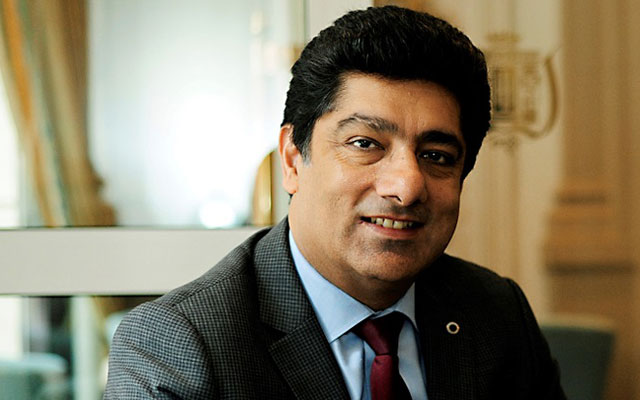
Hilton has appointed Jonathan Witter as its chief customer officer.

In this newly created role, he will oversee the global brands, marketing, loyalty & partnerships, IT and strategy teams, and report to Christopher Nassetta, president and CEO of Hilton.


Jonathan Witter

Previously, Witter served as the president of retail and direct banking at Capital One Financial Corporation. Before joining Capital One, Witter served in various positions with companies such as Morgan Stanley Private Bank, Wachovia Corporation, McKinsey and Deloitte & Touche.

Park Hyatt to make Jakarta debut in 2018

0

Jakarta will get its first Park Hyatt hotel when the Park Hyatt Jakarta opens at MNC Center, Kebon Sirih in 1H2018.

Hyatt Hotels will work with Indonesian property developer MNC Land to develop the hotel on the top 20 floors in the latter’s 39-floor, mixed-use project. The hotel is expected to house five F&B outlets.

Park Hyatt Jakarta will join the four existing Hyatt-branded hotels in Indonesia: Grand Hyatt Jakarta, Grand Hyatt Bali, Hyatt Regency Yogyakarta and Hyatt Regency Bali, which is currently undergoing renovation.

Emirates brings A380 back to Narita

0

Emirates has redeployed the Airbus A380 on its Dubai-Narita route since last Sunday to replace the smaller Boeing B777-300ER, in response to “the healthy demand for travel between Japan and Dubai”.

The airline previously operated the route with the superjumbo from 2012 to 2013.

On top of seating up to 515 passengers across three classes and two decks, the aircraft also offers the industry’s only onboard shower spa, 2,500 inflight entertainment channels, Wi-Fi and an onboard lounge for first- and business-class passengers serving canapés and cocktails.

Flight EK318 departs Dubai daily at 02.40 and arrives in Narita at 17.35. On the return, EK319 departs Narita at 22.00 on Monday, Thursday, Friday, Saturday and Sunday and arrives in Dubai at 04.15 the next day. On Tuesday and Wednesday, it leaves Narita at 21.20 and arrives in Dubai at 03.35 the following day.

The A380 was also deployed on Emirates’ Casablanca and Sao Paulo services on Sunday.

JW Marriott officially checks into Singapore

0

The first JW Marriot hotel in Singapore was officially launched last Friday with a ribbon cutting ceremony followed by a series of lively celebrations attended by 800 guests.

Commemorating the launch were (from left) Craig Smith, president and managing director of Asia-Pacific, Marriott International; Kwek Leng Beng, executive chairman of Hong Leong Group and City Developments; Koh Poh Koon, Singapore’s minister of state for the Ministry of National Development and Trade & Industry; Lee Shin Cheng, executive chairman of IOI Group; and Derek Flint, general manager of JW Marriott Singapore South Beach.

JW Marriott Singapore South Beach soft opened in December last year.