TTG Asia
Asia/Singapore Tuesday, 7th April 2026
Page 1633

New ownership to propel Swire Travel’s foray into China

0
The recent transfer of Swire Travel’s shareholdings to JMI Global – which is wholly owned by Kong Jianmin, the founder and chairman of KWG Property Holding – is expected to help the 69-year-old agency and TMC bring its corporate travel expertise to mainland China.
Gloria Slethaug, who succeeded Andrew Leung as the company’s managing director since January 1, said: “The new ownership under Kong brings a lot of synergy to Swire Travel, thanks to KWG’s strong base in Guangzhou. KWG owns residential and commercial projects like hotels (W Guangzhou and Four Points by Sheraton Guangzhou), apartments, malls and offices.
Gloria Slethaug

“KWG has a small inbound travel business in Guangzhou and hence looks for experienced hands like Swire Travel,” she added.

The company is eyeing penetration into China’s main and secondary cites where there exists “a lot of unstructured corporate travel management for SMEs or larger corporations,” she explained.

The strategy for 2017 remains focused on Swire’s corporate travel core. “We will leverage KWG’s network and local expertise to build up Great Bay Area (Hong Kong-Macau-Guangdong) business for us, strengthening corporate business as a whole.”

Adapting and diversifying, including in its leisure segment, will also be key. In response to a declining preference for standard packages, the company has started building more itineraries on private tour basis.

“We’ll also implement a B2C platform for our leisure clients who want point-to-point dynamic packages. It will soft launch this month.”

Slethaug said transition in the past five months has been smooth as all staff are retained. A Greater China MICE team was set up, headed by Eva Lai who also heads the Shanghai and Beijing branches.

Indonesian agents dread peak season impact amid Gulf disunity

0

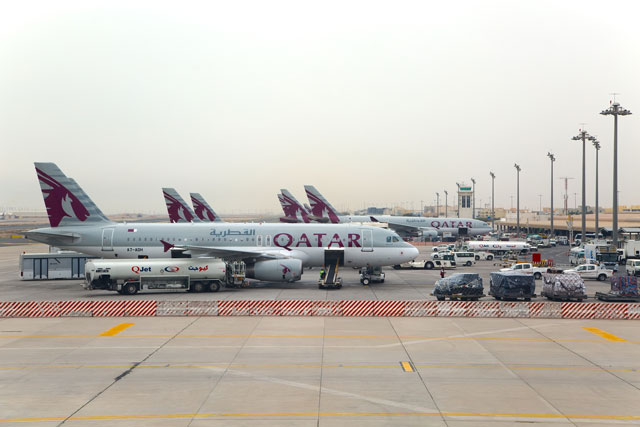
Uncertain whether Qatar Airways’ licence will be suspended in Indonesia, Indonesian outbound agents are concerned they might suffer losses from being forced to cancel packages especially with the peak Eid al-Fitr week coming up.

After a blockade was enforced against Qatar by its Gulf neighbours, Indonesia’s minister of transportation Budi Karya Sumadi stated Indonesia will temporarily suspend Qatar Airways’ flight licence, only to call it off the next day.

Rudiana, WITA tour director sales and marketing, said Umrah travellers are the main concern in the coming season. Although the government may divert the flight to other airlines, he opined “this is difficult and tedious work” in the high season.

In such a situation, the agency might have to cancel flights and packages despite incurring a loss.

“The government’s standpoint is questionable and creates confusion,” remarked ASITA Bali’s Ketut Ardana, who expects Bali’s inbound tourism to be affected as it is connected to Doha by Qatar Airways’ thrice-daily flights.

Flight Centre brings Corporate Traveller brand under FCM

0

The Flight Centre Travel Group has announced plans to merge its FCM and Corporate Traveller brands in Greater China, Malaysia and Singapore to support growing regional travel demand.

Previously operated alongside each other, the larger FCM business targeted national, regional and multi-national accounts while the Corporate Traveller brand targeted SMEs.

“This merger will simplify our structure in Asia and strengthen our brand presence in the corporate travel sector,” said FCM Asia’s general manager Bertrand Saillet.

He added: “With a renewed focus on a regional approach for the growing travel programmes of our national clients, this merger means we are more ready to quickly scale up any travel programme for our customers as their business expands.”

According to a Flight Centre statement, customers who were previously with Corporate Traveller can enjoy better integration of product roll-out and travel technology, account management and data consolidation as their travel programme regionalises.

The FCM Asia businesses will continue to operate alongside the Flight Centre brand offering, which also caters for small corporate accounts.

FIT Ruums looks to India for expansion

0

Having made moves in China since its launch in Singapore last November, Webjet’s Asian B2B travel brand FIT Ruums now has India on its radar with its recent foray into the subcontinent.

According to Daryl Lee, director of FIT Ruums’ parent company, WebBeds FZ, India was “immediately identified as a key market for the company” following its inception, owing to India’s huge population, rising affluence, buoyant economy and a government that is prioritising tourism.

Ashutosh Dogra

To make more headway in the country, the company has appointed Ashutosh Dogra to head FIT Ruums India.

Based in New Delhi, Dogra will develop FIT Ruums’ brand, relationships and operations across the country, as well as leverage on XML technology and partner with key stakeholders in the wholesale B2B market.

The seasoned travel industry professional was previously head of the Vacation Vertical for Vacation Exotica, a unit of Balmer Lawrie & Co, and also spent several years with the Kuoni Group.

Meanwhile, FIT Ruums has also launched its new industry incentive programme, FIT Rewards, in India. The rewards are showcased in a dedicated online store which has been created especially for the Indian market, further enhancing suppliers’ ability to target their local clients.

Its latest move will enable hotel suppliers to capitalise on the huge Indian domestic market and burgeoning intra-Asian inbound market, in addition to Webjet’s other global platforms such as Sunhotels and Lots of Hotels, said the company in a statement.

Boeing’s new 737 MAX 10 gets flurry of orders

0

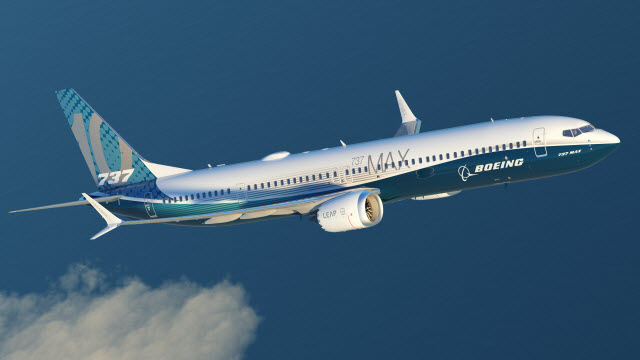
Boeing’s latest and largest version of its best-selling 737 aircraft unveiled at the 2017 Paris Air Show on Monday was met with interest from airlines worldwide.

Touted as Boeing’s answer to Airbus A321neo, the 737 Max 10 aircraft already has over 240 orders and commitments secured from more than 10 customers, among whom were launch customers at the Pairs Air Show – Lion Air Group, SpiceJet, TUI Group and BOC Aviation.

The Lion Air Group has committed to an order of 50 units, while aircraft operating and leasing company BOC Aviation agreed to 10, subject to internal approvals. The latter took delivery of its 200th Boeing airplane in March 2017 and has an additional 74 737 MAXs on order.

SpiceJet signed an MoU with Boeing valued at US$4.7 billion (at current list prices), split evenly between 20 new orders for the 737 MAX 10 and conversions of 20 of its 737 MAX 8 airplanes from its existing order to 737 MAX 10s.

Also with a conversion deal is the TUI Group, which will convert 18 of its 70 existing 747 MAX orders to the 737 MAX 10.

Seabourn Sojourn in Alaska

0

Why
I’ve always been intrigued by Seabourn, one of the revered names in luxury cruising. It popped up again on my radar in January this year when its newest ship, Seabourn Encore, had a naming ceremony in Singapore before going on its inaugural voyage, Gems of the Java Sea. Another new ship, Seabourn Ovation, will set sail next year. I guess we’ll be hearing a lot more about Seabourn, with well-heeled Asian clients always wanting new products and exotic journeys.

As it happened, Seabourn was returning to Alaska for the first time in 15 years, sailing there June to September. So I picked an ‘Ultimate Alaska’ on Seabourn Sojourn which started on June 1 in Vancouver and ended in Seward (Anchorage) in Alaska on June 12.

What
This is an ‘Inside Passage’ cruise, offering sailing inside fjords – narrow, deep inlets that protect the ship from open seas. It also means only smaller ships such as Seabourn Sojourn – 198m long, 32,346 gross tonnage, 225 staterooms – can navigate through the channels.
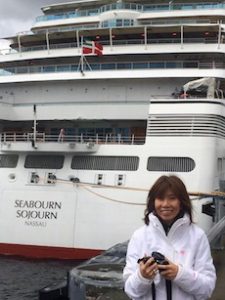
The magnificence of an Inside Passage to Alaska hit me the morning I woke up to a spellbinding scenery of high cliffs, snow-capped mountains and forested islands as the ship wound its way around narrows, bays, straits and arms.

There were six ports-of-call between Vancouver and Seward. The noteworthy ones for me were Ketchikan, Sitka and Juneau.

Ketchikan, dubbed Alaska’s first city, is a showpiece of Tlingit culture, a native group known as warriors and artisans. It has the world’s largest collection of standing totem poles and I learnt a lot about the culture from my visit to the Totem Heritage Center.

I also enjoyed strolling through its former red-light district, Creek Street, where brothels now peddle souvenirs. But their bawdy past lives on through informative signage. One said: “Dolly’s House – where both men & salmon came upstream to spawn”.

The second port-of-call which made an impression on me, Sitka, is the former outpost of Imperial Russia, which sold Alaska to the US for a song – about US$7 million in 1867, or less than two cents an acre.

The Russian influence was palpable: The Russian Orthodox church is right in the heart of downtown. The Russian cemetery located in a nearby forest, with headstones crafted from the ballasts of Russian ships, is a poignant reminder of Sitka’s Russian past.

Apart from the history, I enjoyed a visit to the Alaska Raptor Center where I was able to get a close view of bald eagles and owls. These birds are injured and are being rehabilitated to fly again. A few never recover flight and remain in the outdoors at the centre for visitors to see them in the natural habitat.

The third, Juneau, is Alaska’s capital city, popular for its shopping streets lined with historic buildings such as the Alaskan Hotel & Bar which first opened in 1913, and for exciting shore excursions. I went on a gruelling seven-hour hike to Mendenhall Glacier – after all the eating and drinking on the ship, I needed it – but what got my heart racing on this excursion was a walk through a glacier tunnel. It was less than a minute as the opening was short, but it was as scary as it was exciting.
Glaciers are a huge part of the attraction in an Alaskan cruise. In another excursion, I hopped onto a catamaran which snaked its way through the Endicott Arm Fjord to get as close as possible to a tidewater glacier and, as luck would have it, we were treated to three calvings. Two were spectacular, a cathedral of ice splitting off from the glacier and sinking straight into the sea with a thundering sound, creating a few waves in its wake.

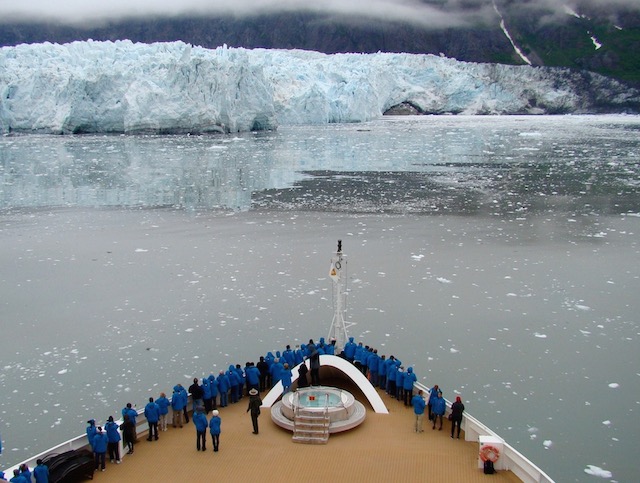
The ship’s itinerary itself culminated in a visit to Glacier Bay National Park, a UNESCO Heritage Site. Only two vessels a day are allowed in the area, which boasts seven tidewater glaciers. To view the magnificence of the Margerie Glacier, which is about 1.6km wide and 76m high, in the open deck of this fine ship, in the company of other fellow guests in Seabourn jackets as blue as the ice before us, certainly was a highlight of the trip.

How 
The ship was virtually full with 420 passengers, 266 of them from the US and the rest comprising 17 nationalities. With a crew of 42 nationalities, the onboard ambience felt fairly international, and attempts were made to cater to a diverse audience.

If I had to pick the three biggest strengths of the ship, it would have to be the F&B, room product and service.

Food was seriously good and I believe the ship’s collaboration with three-Michelin-star American chef Thomas Keller, the genius behind The French Laundry restaurant in Napa Valley, California, accounted for its delectable menus. For 11 nights, we were never bored by the F&B; in fact it became an enjoyable ritual for us each morning to go through the daily card sent to our room and see what’s on the menu at The Restaurant, the most elegant dining room serving fine Western; Restaurant 2, a small, by-reservations-only venue serving fine French cuisine; The Colonnade, which served a theme buffet dinner each night (on this journey it included Indian, Chinese, Vietnamese and Japanese); and The Patio Grill, casual alfresco dining.

I particularly like the minimal food waste. I get put off by large portions but they were perfect on this ship. If you wanted more, you could always have more.

Our service encounters, you can imagine, were mostly with the hardworking staff in the restaurants and in a total of six lounges and bars. Whether they were restaurant captains such as Diana at The Restaurant or Will at The Colonnade, experienced service staff such as Alberto and Vladdimiey at The Restaurant, and Daniel and Eiki at The Colonnade, or younger ones such as Maria and Francoise at the Observation Bar, whether they were from Columbia, the UK, Malaysia, Ukraine, Japan, Canada or South Africa, what they had in common were a warm and friendly disposition and an eagerness to be of service. No request was received as if it were a nuisance; none was ever forgotten.

As for the accommodation, my room was better than many hotel rooms I’ve stayed in. It had a large balcony, a living room with dining table and sofa, a bedroom, a walk-in closet and a bathroom with bathtub, separate shower and two washbasins. The water pressure was excellent, so was the lighting in the bathroom. There were more drawers and shelves for our clothes and belongings than we could use.

The ship also got the pricing for extras right. While the cruise was virtually all-inclusive, I found prices for, say, the laundry or spa services to be fair. We could do unlimited laundry for US$50, for example. A professional shampoo, haircut and style was US$69.

However, a serious wrong was the slow Internet everywhere, particularly in-room. I understand however that the ship, in operation for six years now, will be making a few improvements.

On the other hand, I benefited greatly from a slow Internet actually. After an initial annoyance, I found myself working less and reading more – the collection of books and magazines available onboard was simply wonderful.

The ship also brought in rangers and expedition members under a programme called Ventures by Seabourn to give pointers and lectures on wildlife, geology and nature. Destination talks were conducted by real insiders, including former Alaska state governor Frank Murkowski and first lady Nancy Murkowski. There were photography lessons, cooking demonstrations, dance classes, spa seminars – perhaps Internet speed should be slow on all cruise ships for us to fully enjoy this alternative vacation form.

Verdict
A meaningful, enriching cruise in an intimate ship that packs a punch in delivering a quality and environment-friendly experience.

Rates From US$4,999 for Alaskan sailings in 2017 (at press time)
Contact details
Email: asiaseabourn@seabourn.com
Tel: 1 800 929 9595 or 1 206 626 9191
Website: www.seabourn.com

Minor Hotels hires area GM for Vietnam

0

Minor Hotels has appointed Pieter van der Hoeven as area general manager for Vietnam.

Based out of Anantara Hoi An Resort & Spa, van der Hoeven will oversee operational and sales functions across all Minor Hotels brands in Vietnam. He will report to Thomas Meier, senior vice president, hotel operations, Asia.

Pieter van der Hoeven

Prior to joining Minor Hotels, the seasoned Australian hotelier has been with Outrigger since 2008 in various leadership positions across Asia-Pacific, except for between July 2013 and December 2014 when he was general manager with Raffles Hotels in Cambodia.

His other previous experience includes senior roles with Anantara Hua Hin Resort and Evason Hua Hin Resort, Evason Ana Mandara in Vietnam as well as The Peninsula Bangkok.


Japan trade receptive to Airbnb’s legalised status

0

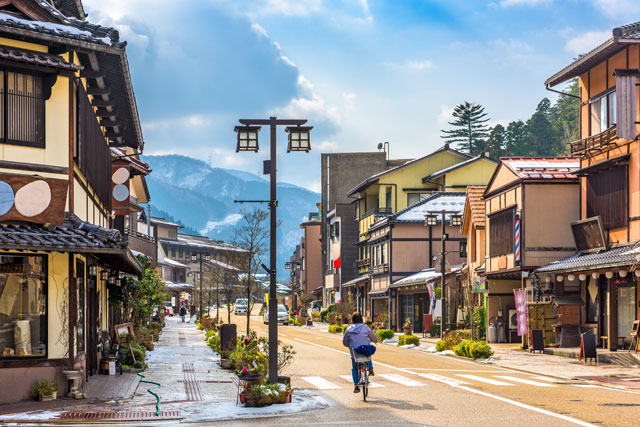
In the face of hotel room shortage and an anticipated inbound boom with the upcoming Rugby World Cup and Olympics, the Japanese trade has largely welcomed the legalisation of Airbnb in the country, which enables homeowners to now legally let out their properties for up to 180 days a year if they register with local authorities.

“Many of my fellow innkeepers have been interested in registering with Airbnb but have been hesitant for fear of tacitly supporting illegal activity,” said Tyler Lynch, proprietor of Kamesei Ryokan and member of the Ryokan Hotel Association in Nagano Prefecture.

Yamanaka, Japan 

The deregulation has paved the way for these ryokans to capitalise on opportunities brought in with the sharing economy wave. “Several travellers use only Airbnb for accommodation,” he explained.

Shuhei Akahoshi, managing director of Kyoto Convention and Visitors Bureau, welcomes the added clarity on a previously grey area.

Aside from relieving Kyoto’s shortage of family-sized accommodations and enabling visitors to have more cultural experiences, Akahoshi said legalisation “has the potential to stimulate greater competition and drive new innovation from our industry”.

A spokesperson from inbound tour operator I Love Japan Tours has not made a decision on whether to now use Airbnb, but added that the company had received cancellations from customers upon finding out that Airbnb accommodation was not offered.

Malaysia targets luxe shoppers as retail spend soars

0

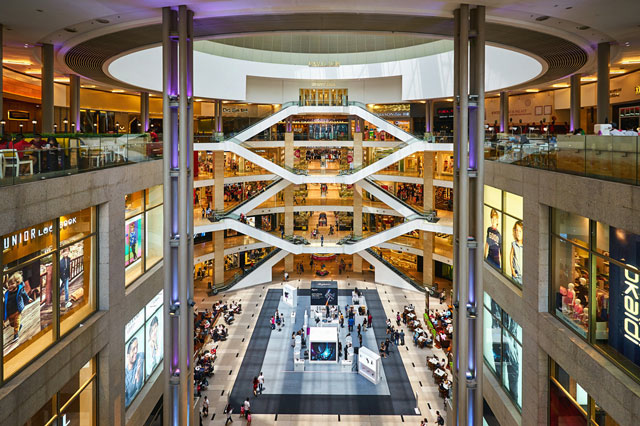
With shopping now a bigger driver of tourist spend than ever before in Malaysia, a luxury-dedicated component of the Malaysia Mega Sale Carnival was last week inaugurated by luxury retailer The Melium Group, in partnership with Tourism Malaysia and Pavilion Kuala Lumpur.

Abdul Ghaffar Thambi, secretary-general, Tourism and Culture Ministry, said: “In 2015, for the first time, shopping became the main tourist expenditure at 31.3 per cent, overtaking the share for spending on accommodation. This trend continued into 2016 with tourist expenditure on shopping taking up a share of 31.7 per cent.

Pavilion Kuala Lumpur

“We are also seeing an increase in the amount spent by tourists for shopping. In 2016, tourists spent RM26 billion (US$6.1 billion) on shopping, up 20.3 per cent from RM21.6 billion the previous year.”

Based on a report on the Tourist Refund Scheme, 43 per cent of tourist expenditure in Malaysia is on watches and jewellery, both considered luxury items. Chinese tourists are the largest spenders on these items, followed by Singaporeans, Indonesians, Indians and Bangladeshis.

Beyond the Malaysia Mega Sale – Luxury Shopping Experience, Tourism Malaysia intends to attract big spenders in Singapore, Indonesia, India, the Middle East and Bangladesh through in-market tactical campaigns.

President of The Melium Group, Farah Khan, said: “Our aim in supporting the government’s effort in the Malaysia Mega Sale launch is to engage with the luxury tourism market segment and ensure that Kuala Lumpur is well-positioned as the next global market opportunity for luxury brands.

“With our duty-free status, we can capitalise on the luxury tourist shoppers market as luxury brand prices in Malaysia are within an average of 25 per cent lower than in other countries, and with the GST refund our luxury brands prices are more attractive.”

Upgraded A380 in the works to add seats, cut costs

0

Airbus has unveiled an enhanced version of the superjumbo, the A380plus, featuring aerodynamic and capacity improvements that could result in an overall 13 per cent cost per seat reduction versus today’s A380.

“The A380plus is an efficient way to offer even better economics and improved operational performance at the same time,” John Leahy, Airbus COO customers, explained.

“It is a new step for our iconic aircraft to best serve worldwide fast-growing traffic and the evolving needs of the A380 customers. The A380 is well-proven as the solution to increasing congestion at large airports.”

New winglets – designed to improve aerodynamics and reduce drag – measure approximately 4.7m in height with an uplet of 3.5m and a downlet of 1.2m.

The optimised cabin layout based on the cabin enablers, presented at the Aircraft Interiors Expo in April this year, allows up to 80 additional seats through redesigned stairs, a combined crew-rest compartment, sidewall stowage removal, and a new 9-abreast seat configuration in premium economy and 11-abreast in economy.

With the cabin enablers, the A380 average seat count would move from 497 to 575 in four classes and generate significantly more revenue for airlines, the European planemaker said.

In addition, the A380plus will have an increased maximum take-off weight of 578 tonnes, providing the flexibility of carrying up to 80 more passengers over today’s range (8,200nm), or flying 300nm further.

Other enhancements include longer maintenance check intervals, a reduced six-year check downtime, and systems improvements, which will reduce maintenance costs and increase aircraft availability.