TTG Asia
Asia/Singapore Saturday, 27th December 2025
Page 1633

Garuda turns in US$9.4 million profit in 2016

0

Garuda Indonesia Group in 2016 posted a net profit of close to US$9.4 million and consolidated revenue of US$3.9 billion, as Garuda Indonesia and Citilink Indonesia carried a total of 35 million passengers with a load factor of 73.1 per cent and 76.8 per cent respectively.

“The trend in growth for the world aviation industry, especially for the Asia-Pacific region, has been under pressure for the last five years, especially as a result of the global economic slowdown that has affected purchasing power, but the group can still maintain its positive performance,” stated president director of Garuda Indonesia, Arif Wibowo.
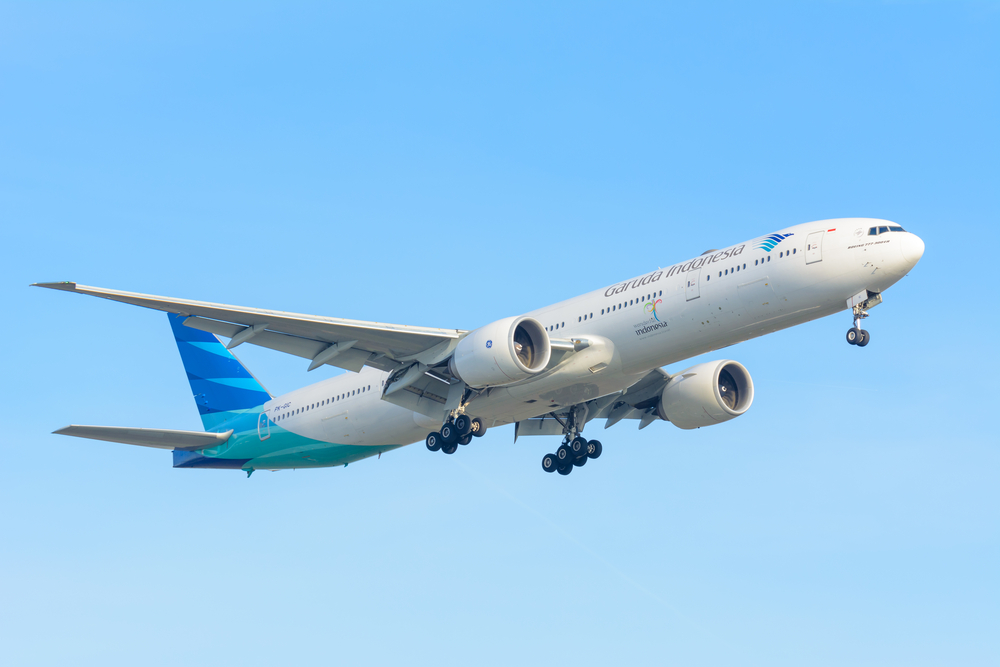
“Twenty-sixteen was a year of investment for the company, considering that we maximised utilisation of wide-body aircraft for the expansion of international routes in the middle to longhaul sectors. We expect the next fleet restructuring will happen in 2019,” he added.

The group brought in 17 new aircraft in 2016: four ATR 72-600 aircraft, four A330-300s, one B777-300ER aircraft and eight A330-200. By the end of 2016, it was operating 196 aircraft with an average aircraft age of 4.6 years.

Garuda Indonesia also began serving destinations like Medina and Mumbai, and domestic ones such as Sintang, Silangit, Nabire and Maumere, bringing its network to 19 international destinations and 64 domestic destinations.

Meanwhile, the group recorded an increase in scores of other income comprising ancillary revenue components, income sector strategic business unit and other subsidiaries, amounting to US$392 million, an increase of 13.7 per cent from US$344.6 million in 2015.

In terms of on-time performance, Garuda reached 89.5 per cent, up from 88 per cent the previous year, despite operational challenges that came with domestic service migration to the new Terminal 3 at Soekarno-Hatta, weather factors, or force majeure.

Garuda Indonesia at this time recorded a market share of 41.7 per cent in the domestic market and 26.9 per cent in international markets.

 

New partnership puts IHG in bed with Hotelbeds

0

Hotelbeds Group has entered into a partnership with InterContinental Hotels Group (IHG) to connect to the international hotel company’s CRS and 12 hotel brands.

This agreement will give the global bedbank access to IHG’s full network of 5,000 hotels in over 100-plus markets, including the InterContinental, Kimpton, Hualuxe, Crowne Plaza and Holiday Inn brands.


Hotelbeds’ Adam Krzciuk Kuna (lef) with IHG’s Rubinacci

Hotels can control rates, inventory and availability via the hotel group’s CRS and these will be transmitted to Hotelbed Groups’ distribution network in over 120 markets. This will improve distribution of IHG´s hotels and increase sales from all source markets.

Andrew Rubinacci, senior vice president, distribution and revenue management at IHG, stated: “This is a landmark deal for us and helps further our wholesale strategy by moving towards dynamic pricing and away from property based static rate agreements.”

Carlos Muñoz, managing director of Hotelbeds Group´s Bedbank business, added that the partnership with IHG “demonstrates our shared confidence in the future growth of the B2B industry”.

TAT rolls out Good Host training for tourism suppliers

0

The Tourism Authority of Thailand (TAT) has launched a Good Host Programme to raise awareness and hospitality standards among tourism stakeholders in the country.

The Good Host Programme provides extra training for public and private sector employees through seminars that impart new ways of improving tourism products and services. Knowledge sharing and practical training will also be used to teach participants on how to impress visitors and exceed their expectations about Thailand and its offerings.

Programme speakers include Thon Thamrongnawasawat who will talk about the preservation of Thailand’s natural environment and culture, and English expert Chris Wright who will talk about marketing communications and dos and don’ts for people in the tourism sector. Also making appearances at the event will be good Samaritans Vithit Duangjumpol and Chat Ubolchinda, who rescued foreign tourists stuck in thick river mud in Krabi.

Some 1,500 representatives from the public and private sectors across the country have been invited to join the Good Host Programme, which kicked off with a three-day training session last week at the Thammasat Rangsit Convention Centre, Thammasat University, Rangsit Campus.

Aman turns expansion focus westwards

0

Luxury hotel brand Aman will focus its expansion in the Western Hemisphere, after spending almost 30 years establishing its Asian foothold that spans 31 resorts, hotels, residences and expeditions across 20 destinations.

Eleven new hotels and resorts, each with a residential component, were signed in 2016 and are in development. These properties will be located in South America – the brand’s first – as well as South-east Asia, Japan, the US and Europe.


Sora Villa, Amanemu, Japan

Vladislav Doronin, chairman of the Aman Group, said: “Our strategy continues to place emphasis on seeking out new and outstanding destinations, as well as a continued commitment to curate resorts of architectural distinction by commissioning new and up-and-coming architects. We do not have plans to radically transform the brand.”

Recent Asia-Pacific additions to the collection include Amandayan in China, custom-built Phinisi cruiser Amandira in Indonesia and Amanemu in Japan. As well, another China property, Amanyangyun, will open on the outskirts of Shanghai in autumn 2017.

The company has also recently appointed COO, Roland Fasel, to oversee all facets of Aman’s hotel, resort and private residence operations.

Asian appetite for France strong despite security concerns

0

To improve the confidence of visitors from South-east Asia amid security concerns about travel in Europe, the Paris Convention & Visitors Bureau (PCVB) is deepening its collaboration with tour operators through regular visits and promotion of new products in this source market.

While PCVB has no fixed targets for Asian arrivals this year, the South-east Asian markets are seeing “very good” performance with an annual growth of 15 to 20 per cent, PCVB leisure marketing manager Patricia Barthelemy told TTG Asia during the bureau’s South-east Asia roadshow in Manila last week, which also included stops in Singapore, Bangkok and Jakarta.


Paris

“We want to regularly visit South-east Asia, not only PCVB but also our partners and suppliers,” said Barthelemy.

The bureau is already in regular contact with 50 major tour operators in South-east Asia. In the Philippines, “90 per cent of our operators are those who send clients to Europe”, she added.

Raymond Reedijk, KLM Royal Dutch Airlines country manager for the Philippines said that despite challenges in Europe, the airline has recorded encouraging signs since 2015. “Our forward bookings for summer look extremely positive. Europe is picking up (for the Philippines),” he commented.

Portia Taguinod-Santiago, operations manager, Alisto Travel and Tours, added that PCVB’s efforts to reach out to tour operators are helping to increase visitor traffic to France and Europe as airfares and tour packages become more affordable.

Furthermore, Filipinos tend to forget about threats after a few weeks and are even forming their own groups to Europe, said Rowena Maglinao, owner, Aerial Travel and Tours.

Calling for a level playing field

0

The advent of guesthouses raises fair play concerns among mid-sized resorts while DMCs fear a dilution of the Maldives brand with budget beds.

With the government welcoming small businesses, guesthouses are proliferating across the Maldives, leaving big resorts concerned that these small accommodation units do not have to go through the same rigmarole of approvals that they are subject to.
Motels, guesthouses and mid-sized resorts are offered within the same general price range, but mid-size resorts are bound by more regulations and rules. Resorts charge US$150 compared to motels/guesthouses which are offered at US$120-135.

“We don’t have a problem with competition. But this is unfair particularly because maintenance costs are high to keep products and in particular water bungalows in top shape all the time,” said a local hotelier, who declined to be named.

Shafraz Fazley, managing director of Viluxur Holidays, said guesthouses need to be controlled and categorised properly by the government.

“They should only be able to market or advertise their properties accordingly. There is a need to educate the consumers on the difference between a guesthouse and an actual resort so it does not spoil the unique image of the Maldives’ one-island, one-resort concept.”

Fazley said the surge in the number of beds in the Maldives is not in line with tourism growth. “This dilutes the business among resorts especially on high-end properties when one or two properties dreadfully (slashes) their rates to (compete with guesthouses),” he explained.

Hussain Sunny Umar, COO at Maldives Getaways, is more welcoming of diversity in accommodation types. “Guesthouses add an additional segment and complements the one-resort, one-island concept that the Maldives is well-known for,” he said.

With the rise of budget airlines and millennial travellers, Airbnb and Zen will eventually be stronger transformative forces in the industry, he added.

Hussain also disagrees that guesthouses are given preferential treatment, as any island intending to operate guesthouses must comply with regulations like having police stations, fire, health and other basic facilities.

According to official data, 120,000 tourists visited guesthouses in 2015, with the number targeted to grow to 500,000 by 2020. The number of guesthouse beds is expected to swell to 10,000 by 2020.


This article was first published in TTG Asia March 2017 issue. To read more, please view our digital edition or click here to subscribe.

Flight of reality

0

Lofty arrival targets have been set, but the country’s aviation infrastructure is sorely lagging behind.

The Indonesian government has set a high target of 20 million arrivals by 2019, but the trade feels that the airport infrastructure and seat capacity are not yet on par to meet the country’s tourism ambitions.

Bali’s Ngurah Rai International Airport, despite its terminal expansion, is still not big enough to support the arrival influx. In Yogyakarta, a new airport is needed as the existing Adisucipto International Airport has way exceeded capacity. Even Surabaya’s Juanda International Airport, considered the gateway to eastern Indonesia, needs to be expanded to accommodate arrival growths.

Gufron, director of Alpha Hotel Management and general manager of Suarti Boutique Village Ubud, said: “The Ngurah Rai airport needs an additional runway to enable more flights to come in.”

He added: “The plan to develop a new airport in north Bali needs to materialise soon. This will add to movement capacity and trigger the development of tourist infrastructure in the area. (That way), tourists will spread out more around the island.”

Besides airport infrastructure, what’s needed is also more direct connectivity from longhaul markets. Bagus Sudibya, managing director of Nusa Dua Tours and Travel in Bali, commented: “The government has spent a lot of money on the branding and promotion (of Indonesia). What they need to do next is boost direct flights into the country.

“For example, we need more direct services from Europe to grow European arrivals into the country. (It is not possible) with the current limited seat capacity,” he stated, as Garuda Indonesia flies to only Amsterdam and London in Europe.

Bagus also underscored the importance of network development in Indonesia, which will enhance travel within the archipelagic country.

Airport developments have been a top priority under the Joko Widodo administration, said Indonesia minister of tourism Arief Yahya, who cited examples such as the expansion of both airports in Labuan Bajo (the gateway to Komodo) and Bandung, the Husein Sastranegara International Airport.

“Air connectivity is another priority for us this year, as 75 per cent of international arrivals to the country is by air,” Arief remarked.

There are currently 19.5 million seats, offered by both Indonesian and international airlines, available each year. This was sufficient to fulfil the target of 12 million arrivals in 2016.

“To meet the 2019 target of 20 million arrivals, Indonesia needs to have some 30 million seats a year, or 10.5 million additional seats in the next three years,” Arief said, acknowledging that an increase in seat capacity is crucial to the development.

This year, the Indonesian Ministry of Tourism is targeting an additional four million seats. They have kicked that off with an MoU with the airport authorities – Angkasa Pura I, Angkasa Pura II and AirNav Indonesia – to open more routes, increase frequencies and launch new services from new markets.

Other ongoing efforts include giving incentives on airport charges, and the application for priority slots in a number of international gateways in Indonesia.


This article was first published in TTG Asia March 2017 issue. To read more, please view our digital edition or click here to subscribe.

Emirates rolls out laptop, tablet handling service to beat US ban

0

In response to the March 25 implementation of the US government’s electronics carry-on ban, Emirates has came up a new laptop and tablet handling service for its US-bound passengers.

Emirates’ new complimentary service will enable customers travelling to the US via Dubai to declare and hand over their laptops, tablets and other banned electronic devices to security staff at the gate just before boarding their US-bound flight. The devices will be carefully packed into boxes, loaded into the aircraft hold and returned to the customer at their US destination.

Roomonger opens door to China

0

B2B travel booking platform, Roomonger, has signed a GSA agreement on Wednesday afternoon with Shanghai Business International Travel (SBIT), a move that grants all Chinese agents access to its global products, ranging from hotel accommodation to transfers and tours.

The new partnership also allows Roomonger’s GSA partners outside of China to benefit from SBIT’s travel products and services in the country.


Tay (left most)

Peter Tay, manager, global commerce at TTG Asia Media, which owns Roomonger, said SBIT was selected as a partner for its “established name in the market and (reputation) for creativity and innovative outlook on travel”.

A member of PATA, IATA, China Travel Service Association and Shanghai Tourism Industry Association, SBIT was established in 1995 and today has offices in Shanghai, Beijing and Guangzhou, employing more than 140 individuals. Its business reach covers FIT and package tours as well as corporate travel, meetings and events.

Tay added that SBIT will help Roomonger identify and appoint a local distributor that will serve the various Chinese cities.

Hyatt Place Tokyo Bay to open in 2019

0

Hyatt Hotels will introduce its Hyatt Place brand to Japan in 2019 with the opening of Hyatt Place Tokyo Bay in Urayasu City, Chiba Prefecture.


Rendering of the property

The result of a management agreement between a Hyatt affiliate and Tokyo Bay Resort Development, the hotel will offer 365 guestrooms including two suites; 180m2 of meeting space; an all-day dining facility; and a 24-hour gym.

Hyatt Place Tokyo Bay will be located four kilometres from Tokyo Disney Resort.