TTG Asia
Asia/Singapore Friday, 26th December 2025
Page 1625

Japan on the cards as Meliá plots APAC expansion

0

Spain’s biggest hospitality chain Meliá Hotels International wants to step up its growing presence in the region, with John Alarcon, vice president for development in Asia-Pacific, revealing Tokyo, Seoul, Hong Kong and Singapore as the top four cities on its expansion wish-list.

“We opened our first hotel in the region in Bali in 1986… and presently have 15 hotels in this part of the world,” he told TTG Asia. “But Asia has become the focus of our business in our most recent three-year strategic plan, which started in 2016.


Melia Yangon City Exterior Night

“We have 21 projects opening in Asia in the next three years and the target is to have 60 properties operational by the end of 2018.”

Meliá Hotels has set up a commercial office in Tokyo and is looking into opportunities in Japan.

Alarcon added the company is confident that Japan’s inbound tourism market will continue growing and that Meliá Hotels’ loyal customer base worldwide will opt to stay with them in Japan.

“We have seven different brands and (would like) to have one of our luxury, upscale properties in Tokyo, one in Osaka, which is important as both a leisure and a business market, and resort hotels in Okinawa or Hokkaido, Kyoto or Fukuoka.

“Ideally, we would open first in Tokyo, but we are flexible and if another opportunity came up, we would be ready to take that course,” he added.

Which ITB to go to?

0

First it launched an Asia edition and now, a China edition of ITB. While Messe Berlin believes there is no confusion, the reality is tradeshow-fatigued exhibitors will have to think carefully where they should put their money.

With huge markets such as China, India and South-east Asia, the region is without doubt the current and future source, not just for Asia itself but the world. It’s the reason for Messe Berlin’s expansion into Asia, launching a new edition of ITB in China next month, eight years after inaugurating ITB Asia in Singapore.

So how does ITB China differ to the slew of tradeshows in China that includes China International Travel Mart (CITM) and Shanghai World Travel Fair (SWTF), and indeed, to its sister ITB Asia?

According to ITB China general manager David Axiotis, ITB Asia reaches out to all Asian source markets, including India, while ITB China has predominantly Chinese buyers. The first show will host 600 selected Chinese buyers from all over the country representing more than 180 Chinese companies including Ctrip, Tuniu, Caissa and Utour. Along with the 600 Chinese buyers, ITB China is also hosting 100 international buyers.

Nearly half of the buyers (49 per cent) are buying leisure, 24 per cent MICE, 21 per cent corporate and six per cent technology, he said. Forty-four per cent are final decision makers, while 29 per cent are involved in decision making and 27 per cent are in advisory capacity.

As to how ITB China differs from existing tradeshows in China, Axioms said ITB China is purely B2B whereas a show like SWTF is “rather a mix of B2B and B2C”.

He added: “ITB China will also have more focus on IT than the other shows, including various technology companies offering their products. Many shows have debuted in China in recent years and they all have their own character. CITM is a platform for image building, but I believe ITB China will showcase more information for overseas travel.”

Apart from “powerful” keynote sessions on Day 1 (May 10) which will include an interview with Ctrip’s CEO Jane Sun, there will be an Online Travel and Travel Technology Day on May 11 along with a newly-created eTravel World China, an exhibition area dedicated to online travel and travel technology solutions with exhibitors comprising the likes of Amadeus, Expedia and Booking.com.

Organisers of existing tradeshows in China did not respond at press time to TTG Asia’s queries regarding the new competition ITB China may pose to their events.

Tradeshow fatigue
An exhibitor, BCD Travel’s Greater China managing director Jonathan Kao, said “of course there will be tradeshow fatigue, given the many travel-related shows in China”.

He pointed out events already face some competition from social media channels. Citing WeChat as an example, Kao said its group chat function acts as a platform for information exchange and word-of-mouth referrals.

“Frankly, there are maximum 500 contacts within the group chat, while you may not be able to remember all your handshakes made at a tradeshow. Therefore, it’s vital for new shows to bring in new and different ideas in order to survive.”

Messe Berlin’s senior vice president travel and logistics, Dr Martin Buck, said: “We know that we are entering a very competitive marketplace with well-established tradeshows that have been around for a while. We are very conscious not only to offer a lot but also to deliver, if we want to be successful.”

With Chinese outbound hitting a mind-spinning 122 million travellers last year, exhibitors have made a beeline for the show, especially those from Europe which badly need Chinese tourism dollars for various reasons. France, for instance, has seen its China market share dwindling as a result of terror attacks. Switzerland has been wooing Chinese and Asian travellers as traditional markets stagnate or stay away due to the high Swiss franc and the top prices the destination charges because of quality and higher cost of living.

ITB China’s 12,000m2 show floor thus is sold out, with about 40 per cent of exhibitors making their way to Shanghai from Europe, 36 per cent from Asia (including Chinese sellers Tencent, Jin Jiang Hotel Group, CN Travel Group, etc), 14 per cent from the Middle East and 10 per cent from the Americas.

“The exhibition covers everything the industry has to offer – MICE, NTOs, business travel, tour operators, tourism associations and societies,” said Axiotis.

Buyers from OTAs like Ctrip and Tuniu said ITB China could help spur development and business. Ctrip aims to be a global OTA in future, while Tuniu wants to create “a big data platform” that can generate valuable intelligence for business.

Tuniu’s general manager of overseas sourcing centre, Frank Wu, said: “We now feature 1.5 million boutique itineraries that cover 150 countries and areas. In the long run, we hope to develop not just an online booking system but create a big data platform with clients’ preferences, travel patterns and habits collected. Ultimately, based on the data, we may generate valuable information for business.”

Whether or not ITB China will be the premier China and Asia tradeshow remains to be seen. For now, it’s show time for Messe Berlin as it lays out the red carpet to welcome buyers and sellers to its latest travel trade exhibition.


This article was first published in TTG Asia April 2017 issue. To read more, please view our digital edition or click here to subscribe.

Making 70 the new 50

0

Best Western International turned 70 years last year. David Kong, who has helmed the chain since 2004, will navigate it through the fast-changing industry in a fresh five-year term from this year.

What is your take on the industry consolidation?
Scale is really important. Take Marriott/Starwood consolidation. It gives them tremendous synergy. A sales person selling 15 brands now sells 30. Your investment is spread over that many more hotels, so you can afford to do more.

But I think the biggest benefit from such mergers is the ability to offer more choices to customers. Why are OTAs successful? First of all, they give the illusion that they are cheaper, which is usually not the case. More importantly, they give customers lots of choices, which now include home-sharing, hostels and all kinds of alternative accommodations.

Think of Marriott/Starwood and the locations, price points and choice of hotels they now have, which run the gamut from midscale to super luxury. Think also of how the opportunities to earn and redeem points from their loyalty programmes have just expanded exponentially. So scale is important.

If they are stronger, they are going to be much more competitive than us. I go to a developer and urge him to take an interest in one of my brands. I have Marriott going to him saying, ‘Look at the traffic we have on our websites, the loyalty programme members we have, the lower OTA commissions that we can negotiate because OTAs need us more than we need them’. So Marriott has tremendous advantage over us. And we are not even a small company with our 4,000-plus hotels.

Even we would feel the pressure.

How best should Best Western respond to this?
In my speech to our hotel members, I said the biggest opportunity in our company is our culture.

Kodak at one point was the fourth most valuable company in the world. It went bankrupt and a lot of people may say they didn’t see it coming, that they weren’t innovative. But actually, Kodak invented the first digital camera in the 70’s and invested in social media in the 90’s before anyone else did. It’s not because it was not imaginative or inventive. It’s because the culture didn’t allow it to capitalise on its innovations.

I’d ask our hoteliers to consider who are the most respected companies today. Facebook, Google, Amazon – what’s their culture? They embrace change and drive change. Why? Because all these companies came about 10-20 years ago. Our company just celebrated its 70th birthday (last year). The biggest fear I have is that it is a mature company. Our culture needs to be more like the Google’s and Amazon’s of the world. The iPhone was invented some 12 years ago, because Apple has that kind of culture. We need to emulate them otherwise we can’t be successful.

How do you try to change a mature organisation?
It’s exceedingly hard. It has to start from the top all the way down. You have to have progressive-thinking, innovative people all around you. You have to have the young people become more involved in the business.

What do you think are the necessary qualities of a hotel leader these days?
Sebastien Bazin (chairman and CEO of AccorHotels) is my hero; I think he is wonderful for our industry.

He wasn’t from the hotel industry (Author’s note: Bazin started his career in the US finance industry and was with Colony Capital before joining Accor). You have to be the kind of person who has a private equity investor point of view; you look at everything and ask, ‘How do I turn this around so I can maximise the value of this company in five years, so that it will be worth a lot more than today?’ That’s the kind of mentality the world needs today. All the innovative companies today, Amazon, Google, they do that everyday.

If you’re a typical hotelier, you’re programmed to think in a certain way. If you have a risk-averse mentality, you are not going to be successful.

Actually we made it a point to study Accor and create a kind of an MBA course for our hoteliers. We just went through a big one with our governors, the top 200-plus leaders of our company. We took half a day teaching that class, and now we’re starting our spring season where we will meet with all the hotels and do it in every district.

Accor is the most innovative hotel company today. We looked at its early innovations – it removed some of the customary hotel features, in fact took away the bidet, quite daring for a company based in France (laughs). Innovation is in Accor’s DNA although it had a series of CEOs who didn’t live up to it – until Sebastien came.

How will things pan out for the industry in the next few years you reckon?
Brands are still important, no matter how fast the world moves. That’s why getting people to trust your brand, to be an advocate of your brand, is so important. You have got to create that emotional connection with the customer.

Look at Starbucks where people stand in line at airports for coffee. But even Starbucks has issues today. So you have to constantly reinvent yourself and ask, even if you have a winning formula now, is it going to work going forward?

What about an old brand like Best Western, is it still relevant?
Oh yes, we have constantly been tweaking it. In North America, some US$2 billion is being spent on renovating the hotels. That’s around US$1 million per hotel. We pride ourselves that they aren’t cookie-cutter hotels. We have 20-30 designers going out to the properties to help them make cost-effective renovations. Typically, we take a hotel owner and the GM to visit the competition and ask how they would like to be positioned against the competition. Once they have decided, we present them with the whole renovation plan.

This year we’re going back to those who have renovated but had not done it right. We look at guest satisfaction surveys and if there are still complaints or low ratings on the physical appearance we’d go back (to fix it).

Your thoughts on Asia?
The industry there has gone through several growth phases and continues to grow, unlike Europe, which is a mature industry with all the segments covered. That’s not the case in Asia where economy and midscale actually have lots of runway. I feel good about growth in Asia for our brands. I think they are a good fit for Asia.

We’ve over 200 hotels now in Asia and, with Olivier Berrivin there (managing director, international operations Asia), we’re on a hyper growth mode.

But it’s not a numbers game. It’s been a great honour for us to be voted by TTG Asia readers for quality every year – that’s the kind of achievement we want. I’ve often mentioned that quality is the foundation of everything you want to achieve.


This article was first published in TTG Asia April 2017 issue. To read more, please view our digital edition or click here to subscribe.

Why travel agents survive

0

Travel agents have shown they deserve to keep their place in the travel industry. Their biggest strength lies in the word fulfilment…

Thousands of travel industry members attending ITB last month were stranded in Berlin when ground crew waged strikes at the two airports, causing massive flight cancellations.

My colleagues and I who were scheduled to depart on the day of the strike, Friday, March 10, could have been among them, had it not been for our luck in hearing a day earlier that the strikes were confirmed, which sent us scrambling to find alternative arrangements.

Correction – it wasn’t us who scrambled. All we did was called the company’s travel manager who called the travel agent. Then we went back to work on our ITB Daily, admittedly worried and less in a mood to work as we knew our chances of getting out as scheduled were slim. Even without strikes, delayed connections at Tegel, a small airport, are not unusual during massive events such as ITB. Plus it was already evening time in Singapore.

As I write this – onboard the plane to Singapore as per the original schedule (I had to take a train ride to Hamburg, then a flight to Munich, then connect to my flight to Singapore) – I realise that it is such incidents that remind me just how valuable travel agents are.

No wonder I am seeing talks of travel agents dying because of OTAs and direct bookings thinning. In fact, the more customers recognise there is no guarantee they won’t be hit by a disaster while on the road today, the more they yearn for a guarantee that there will be someone there for them if ever they are hit.

Thomas Stirnimann, CEO of Hotelplan Group whom I interviewed at ITB, believes safety and security concerns have brought back a lot of bookings from online to brick-and-mortar agents.

As well, contrary to predictions that the traditional European wholesale/retail  distribution system will go out of the window faster than rates get obsolete when brochures are printed, it still is the dominant business, even for markets like Thailand which are familiar to European clients.

A strong agent culture in key markets such as Germany, Switzerland and the UK, is cited as a reason. The tendency for European feeder markets to book further in advance through tour operators, compared with last-minute bookings through OTAs, is another.

Travel agents have shown that they deserve to keep their place in the travel industry. Their biggest strength lies in the word fulfilment, which encompasses the human touch, first-hand knowledge of destinations and consumer protection, to name a few. These are areas where OTAs still fall short, their strengths being in technology, marketing and branding.

I believe agents are more confident about themselves than when airlines first started cutting commissions, OTAs started appearing in the industry and hotels started focusing on direct bookings. That’s good as they can now  hone their strengths and get rid of the weaknesses.

Long live travel agents.


This article was first published in TTG Asia April 2017 issue. To read more, please view our digital edition or click here to subscribe.

New hotel openings: April 3-7, 2017

0

The latest hotel openings and announcements made this week

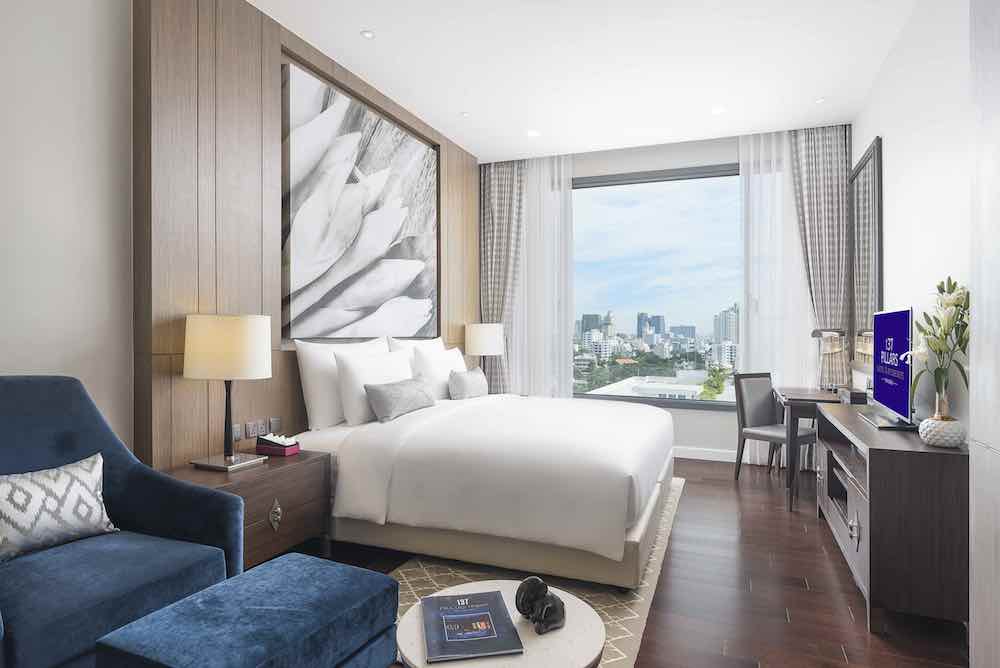
137 Pillars Suites Bangkok
Opened on April 2 on Sukhumvit Soi 39, the hotel’s 34 suites are located from the 24th to the 32nd floor of a mixed-use building. Each suite comes with a balcony, private butler service, maxi bars with wine cellars, large walk-in wardrobes, and marble ensuite bathrooms with circular baths. Amenities include three F&B options, a rooftop infinity pool on the 32nd floor, spa, and a wellness centre with a separate yoga and meditation sala.

Hotel Mono
Occupying a row of six conservation shophouses and sporting a black-and-white façade along Singapore’s Mosque Street is Hotel Mono. The independent boutique property has 46 minimalist rooms in a number of configurations, from a single room up to a family room which can sleep four. All rooms come with regular mod cons such as complimentary high-speed Wi-Fi, coffee- and tea-making facilities, and flatscreen TVs.

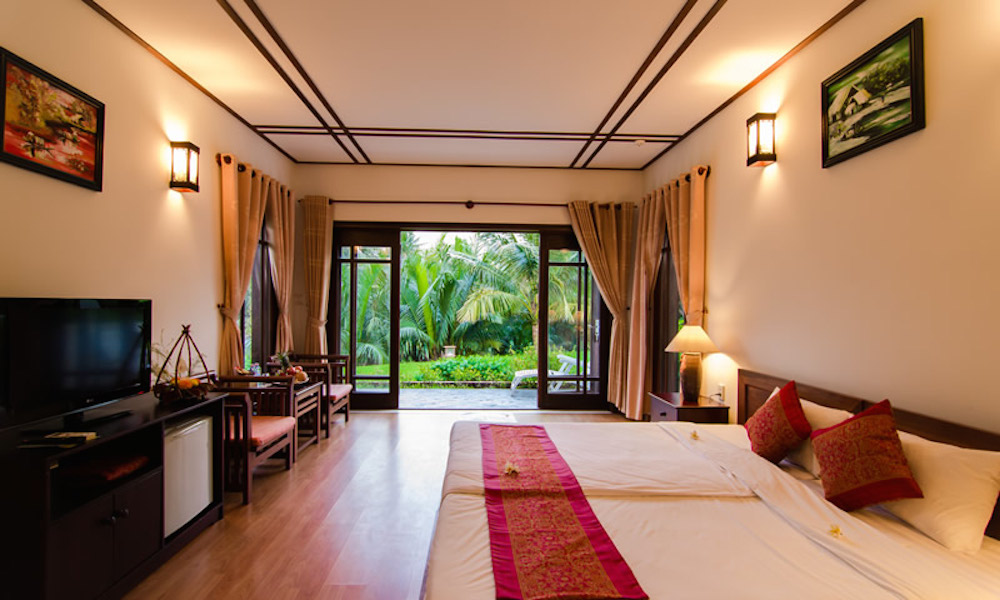
Karma Cây Tre
The Karma Group has launched its first resort in Vietnam, Karma Cây Tre, near Hoi An. The 10,000m2 property offers 22 rooms, all of which feature a balcony that looks out to the river or garden. Facilities on-site include an outdoor pool and a semi al fresco courtyard restaurant.

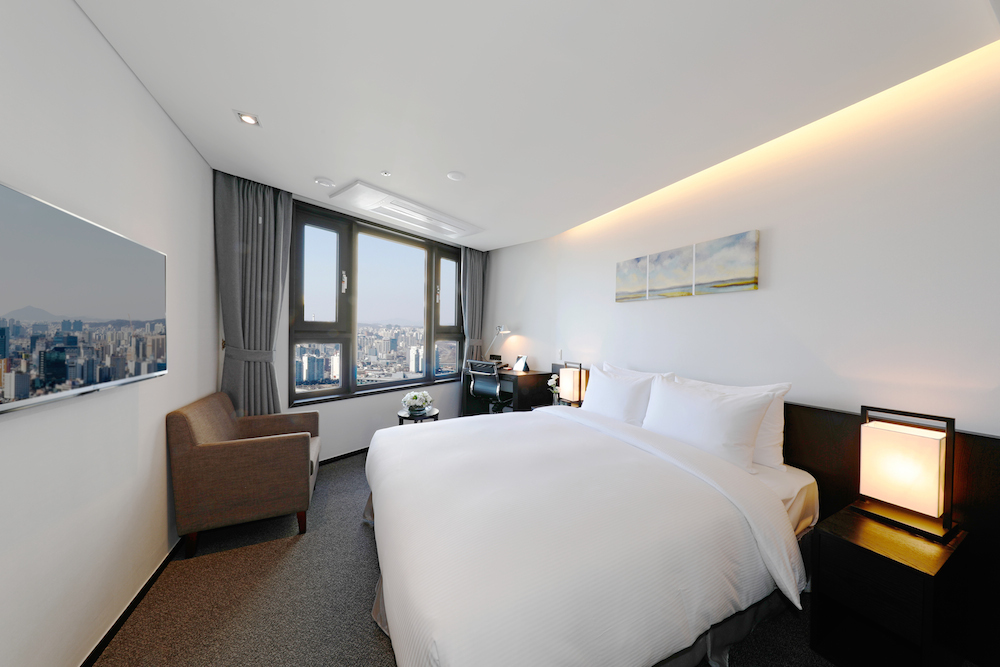
Ramada Encore Seoul Magok and Ramada Encore Pyeongtaek
Wyndham Hotel Group has opened two new hotels in South Korea. The 12-storey Ramada Encore Seoul Magok (above) offers 228 rooms, and amenities on-site include an all-day dining restaurant, meeting rooms, a fitness centre and business hub.

Meanwhile, the 302-room Ramada Encore Pyeongtaek is located in Pyeongtaek, Gyeonggi province. Hotel amenities include free Wi-Fi, meeting rooms, an all-day dining restaurant, and gym.

ibis Styles Makassar Sam Ratulangi
AccorHotels has opened the ibis Styles Makassar Sam Ratulangi in Makassar. The property’s 117 rooms all come with Sweet Bed by ibis Styles signature bedding, a flatscreen TV, mini bar, and in-room safe. Facilities on-site include a restaurant, an outdoor swimming pool, gym and spa. As well, the hotel has four modern meeting rooms – that can cater up to 180 guests – for meetings or events.

Emirates’ Bali service to go double daily

0

Emirates will introduce a second daily service to Bali on July 2, 2017.

The additional service will be operated on the Boeing 777-300ER aircraft in a two-class configuration with 42 seats in Business Class and 386 seats in Economy Class.

The outbound flight, EK360, will depart from Dubai at 01.25 and arrive in I Gusti Ngurah Rai International Airport at 14.30. The return flight, EK361, will depart at 16.30 and arrive in Dubai International Airport at 21.30.

Emirates has also been operating daily flights connecting Bali and Dubai since June 2015.

Savant Vela Hotel Bangkok adds to Cachet’s portfolio

0

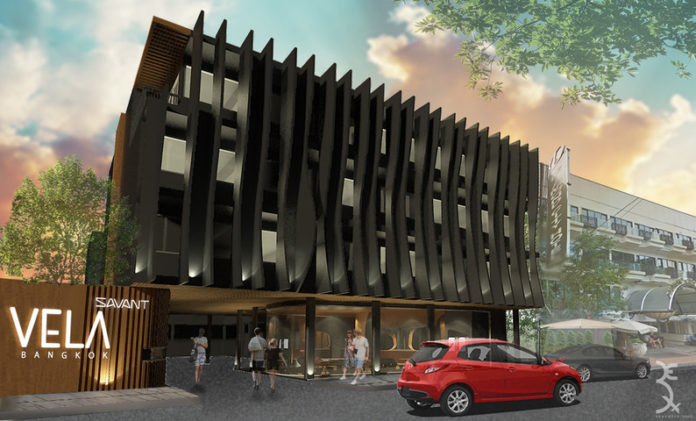
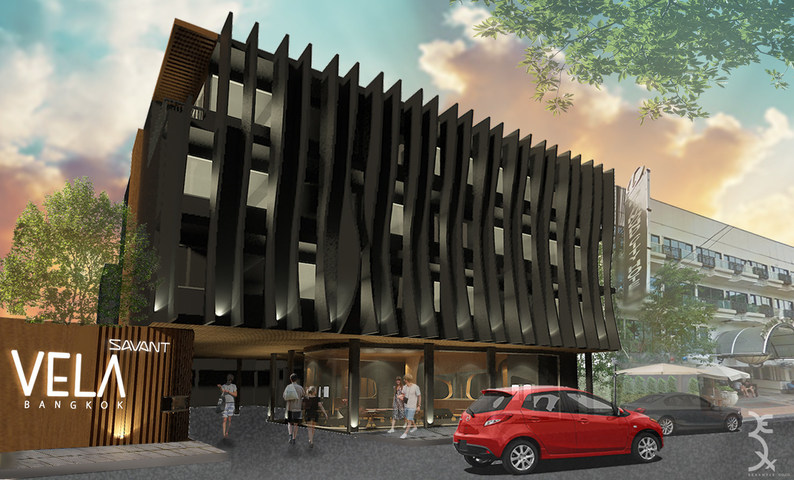
Cachet Hospitality Group (CHG) will launch Savant Vela Hotel Bangkok in November 2017, marking its second property in the Thai capital and first Savant hotel in South-east Asia.

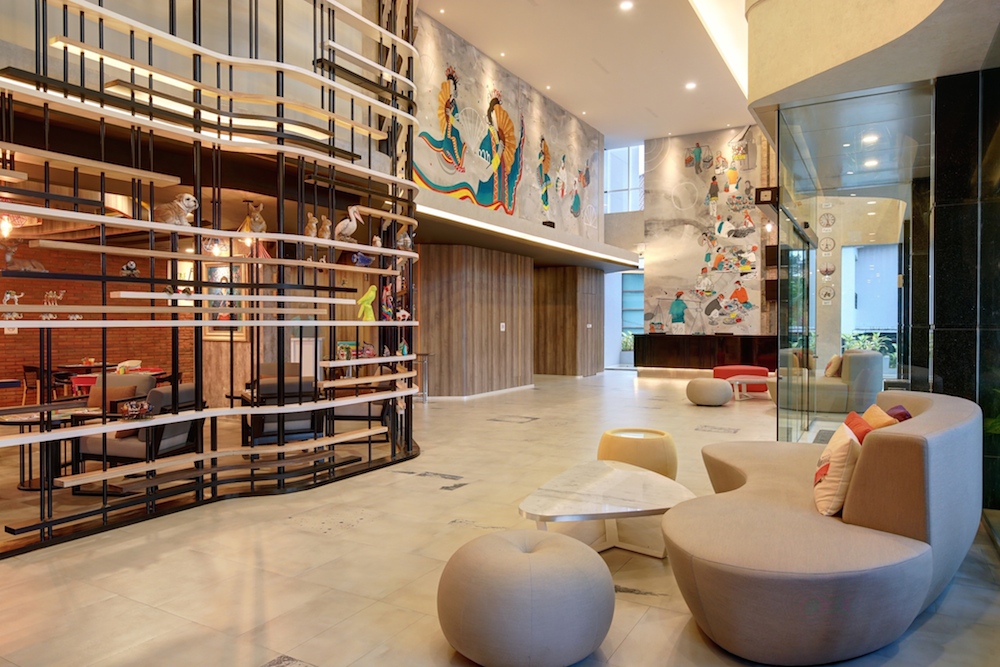
Located in the heart of Bangkok near Siam Square, the affordable lifestyle hotel features 72 Brilliant Rooms averaging 20m2, and amenities such as Interactive Mobility to offer guests convenient check-in and check-out, streamlined booking and payment processes through WeChat.


Savant Vela Hotel Bangkok

For F&B, The Scholar Bar features an interactive table with affordable wines and automated dispensers, while The Habitat on the first-floor lobby offers a space for guests to lounge and mingle. The Cardio Zone, a workout studio featuring TRX equipment and spinning bicycles, rounds up the hotel’s facilities.

To oversee its expanding portfolio in the region, CHG has promoted Kimy Chen to president of South-east Asia, managing business development for the entire region. She was previously responsible for Cachet’s development in Greater China. In her new position, Kimy will oversee the current projects in Bangkok and the pipeline of at least ten hotels and resorts in advanced stages of negotiations located in Phuket, Koh Samui, Singapore and other markets in South-east Asia.

Meanwhile, Jitsak Lim-Pakornkul joins CHG South-east Asia as director of brand marketing, bringing over 17 years of hospitality industry experience. Prior to CHG, Jitsak previously worked in brand marketing at Starwood Hotels & Resorts and has served as general manager for several hotels in Thailand.

Also joining the regional team is Sorachai Rojanasuwan, director of business development, South-east Asia. Sorachai brings over 10 years of industry experience and has worked at several Southeast Asian real estate developer companies including The Erawan Group.

Hilton plans six new hotels in Sri Lanka

0

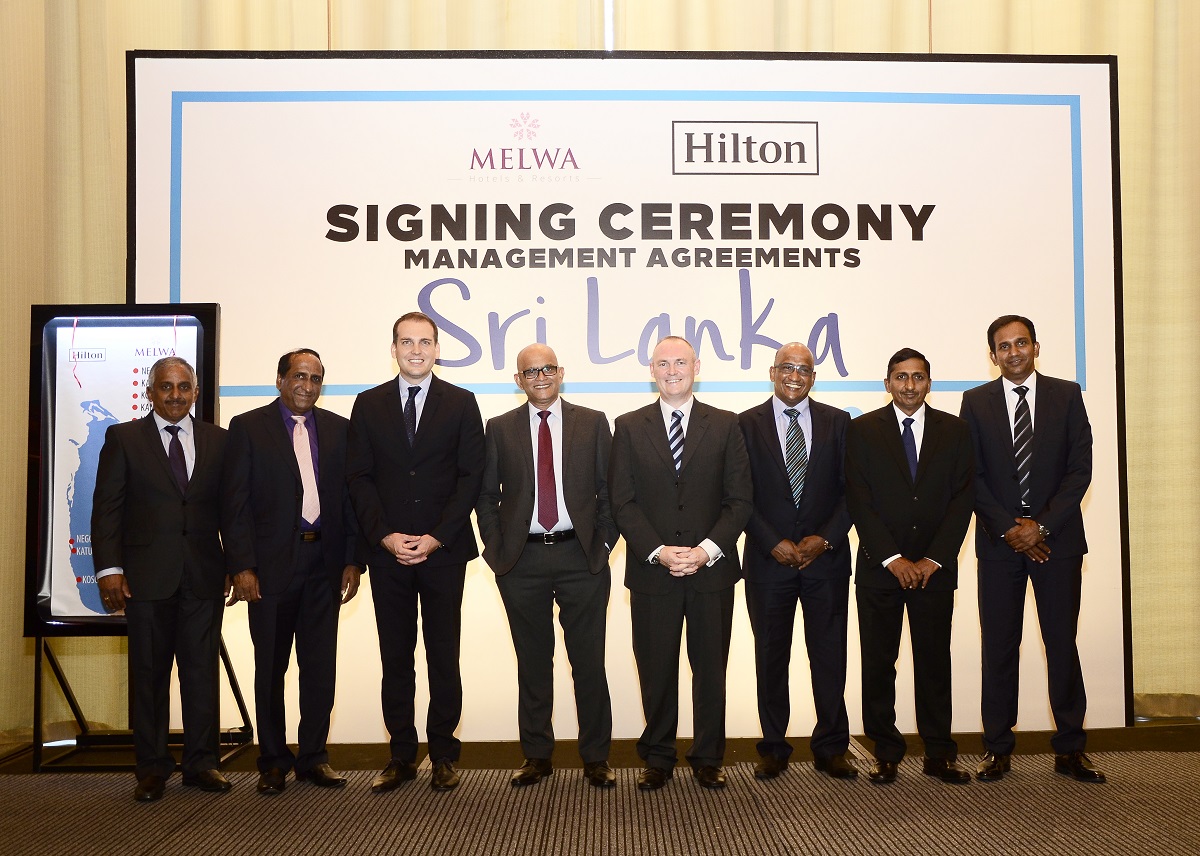
Hilton has signed six management agreements with Melwa Hotels & Resorts to manage three Hilton Hotels & Resorts and three DoubleTree by Hilton properties in Sri Lanka.

The six new-build properties – Hilton Kandy Resort, Hilton Yala Resort & Spa, Hilton Kosgoda Resort, DoubleTree by Hilton Nuwara-Eliya, DoubleTree by Hilton Colombo International Airport and DoubleTree by Hilton Negombo – are scheduled to open between 2020 and 2021.

(From left) Melwa Hotels & Resorts’ P P Barathakumar and P P Barathamanickam; Hilton’s Kieran Bestall; Melwa Hotels & Resorts’ Ranjith Bandara; Hilton’s William Costley; Melwa Hotels & Resorts’ P P Murganandhan, P P Anandharajah and P P Devaraj 

Guy Phillips, senior vice president, development – Asia & Australasia, Hilton, said: “Our hotels are strategically located in the heart of key tourist destinations of Kandy, Yala, Kosgoda, Nuwara-Eliya, Colombo and Negombo, allowing them to reap the full benefits of the burgeoning growth in tourism in Sri Lanka,”

Sean Wooden, Hilton’s vice president, brand management, Asia-Pacific, added: “With few international hotel brands having a widespread presence throughout the country, Hilton will enjoy the first mover advantage in riding on Sri Lanka’s growth trajectory.”

In 2016, the total international arrivals to Sri Lanka hit a new milestone of more than two million – a 14 per cent increase from 2015.

India eases e-visa rules, adds two new categories

0

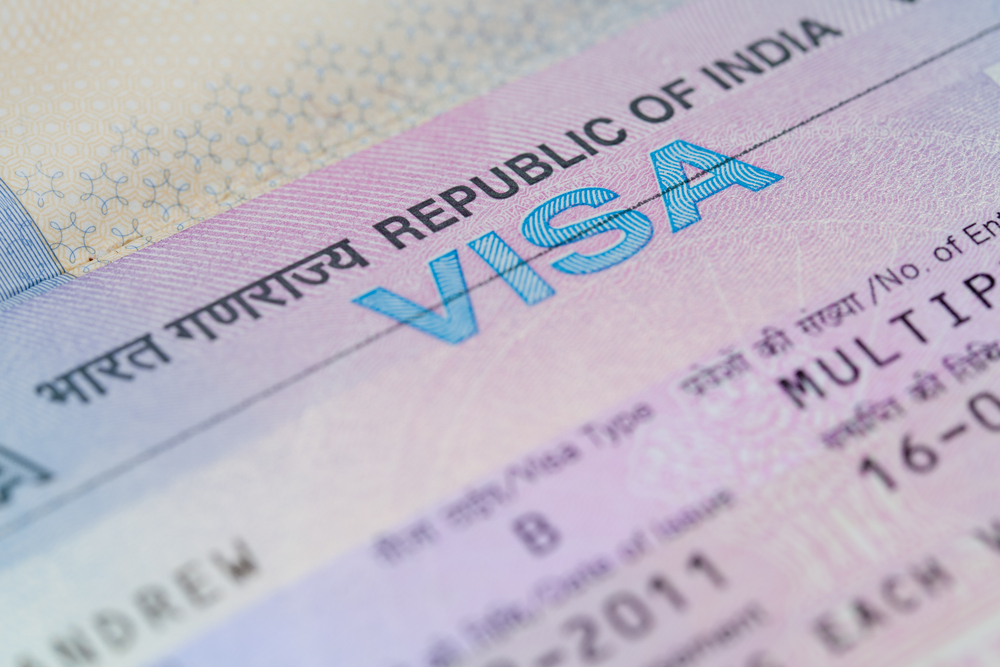
The Indian government has from April 1 eased visa regulations, allowing tourists coming into the country on e-visa to stay for up to two months instead one and double-entry benefits. Furthermore, the window for e-visa application is now extended from the earlier 30 days to 120 days.

As well, new medical and business categories are added to the e-visa facility, and are given triple- and double-entry benefits respectively.

Reactions to the relaxed regulations have been positive, as the trade has been demanding a more robust e-visa regime to enhance convenience for international tourists availing the facility.

Arun Anand, managing director, Midtown Travels, said: “The earlier e-visa facility only allowed single entry, which was a bottleneck for tourists keen to combine their visits to India with neighbouring destinations. Though a multiple-entry e-visa would be ideal, at least a double-entry e-visa will allow us to suggest the facility to clients looking to visit neighbouring countries as well.”

While Lally Mathews, honorary secretary, Indian Association of Tour Operators, thinks it’s too early to speculate if the new move will increase inbound arrivals, it is nevertheless beneficial that travellers can “now apply for an e-visa well in advance to make the most out of competitive airfares”.

At present, e-visas are only available for nationals of 161 countries for entry through 24 airports and three ports – Cochin, Goa and Mangalore. Authorities are looking to extend the e-visa facility at the ports of Mumbai and Chennai to promote cruise tourism.

Spykerman takes over from Jegge at Worldhotels

0

Christina Spykerman has taken over the role of executive vice president Asia-Pacific of Worldhotels from Roland Jegge, who has decided to have some ‘me’ time and will return to the company to focus on hotel development after his sabbatical.

Jegge will supplement Worldhotels’ director hotel development James Koh as “we didn’t want to lose Roland and he didn’t want to leave us completely”, said Worldhotels’ new CEO, Geoff Andrew, interviewed on the sidelines of the International Hotel Investment Forum in Berlin last month.


Christina Spykerman

Jegge was instrumental in establishing Worldhotels in the region and has been with the company for 25 years, with Spykerman as his number two for most of the years.

Worldhotels was recently acquired by Associated Luxury Hotels International, a move Andrew believes will strengthen Worldhotels’ offerings at a time when hotel representation companies face huge challenges, including industry consolidation, chains’ encroachment into their territory, OTAs’ dominance and the rise of sharing economy.

– Read the full interview, TTG Asia, soon