TTG Asia
Asia/Singapore Friday, 26th December 2025
Page 1624

Tepid reactions to Air India’s new incentive scheme

0

Air India’s announcement to reward IATA agents with two per cent incentive on top of the original one per cent commission beginning April 1 has drawn mixed response from travel agent associations in the country.

The move is expected to help Air India consolidate its base of IATA travel agents, who were otherwise buying airline tickets through intermediaries due to the better commissions offered.

“Air India doesn’t have a large percentage of ticketing coming through IATA agents. Our proposal was that most IATA agents should directly buy from Air India and not be tempted to buy from an intermediary, said Sunil Kumar, president of TAAI, a key proponent of the airline’s revised incentive scheme.

“It is important that irrespective of any target, IATA agents must be rewarded with better margins,” added Kumar. “The intermediaries should not be given higher remuneration in the name of performance-linked bonuses (PLBs) when the business they offer is coming through other agents.”

Many airlines in India offer PLBs ranging from three to nine per cent to favoured travel agents and OTAs.

Praveen Chugh, president, Travel Agents Federation of India (TAFI), commented: “Air India has moved in the right direction, but the income of a travel agent who was earlier earning one per cent commission plus four to five per cent PLB has gone down to three per cent. Ideally, Air India should have announced three per cent commission plus PLBs as its new model.”

On the other hand, the move has received flak from IATA Agents Association of India (IAAI), with national president Biji Eapen labelling Air India’s new offer as “just an eyewash”.

He remarked: “These incentives are temporary and can be deferred or withdrawn without prior notice. It is very sad to see that some associations are still beating around the bush to claim this as an achievement. The law clearly mandates that PLB or transaction fee or such incentives cannot replace a commission.”

To grow new source markets TUI looks to China, India

0

No longer content with its Europe stronghold, giant tour operator TUI now wants to tap China and India as new source markets for its hotel and cruise ship business in South-east Asia in the next five years.

Disclosing the company’s 2022 strategy to TTG Asia, Friedrich Joussen, CEO of TUI Group, wants to replicate the success the company has made in the Caribbean by targeting Chinese and Indian customers as new source markets to bring into South-east Asia.


Joussen: China and India could supply one million visitors by 2022

These new markets are expected to contribute a million customers and with a revenue of one billion euros (US$1.1 billion) by 2022, Joussen shared. TUI currently brings about 200,000 customers, mostly Europeans, to Thailand each year.

Thailand, Vietnam, the Maldives, Mauritius and Sri Lanka have been identified as the five main destinations. TUI Group will work with Chinese and Indian charter flight operators for its South-east Asian packages.

Seeing good potential in Thailand, Joussen had spoken with Thai tourism minister Kobkarn Wattanavrangkul about TUI’s business master plan for the country, where he believes cruise tourism will be a key contributor.

But Thailand needs better cruise infrastructure to attract more cruise ships and offer attractive itineraries, he pointed out. “Thailand is a major cruise destination so we would like to see more ports. We also put two more ships into South-east Asia next year.

“We have (identified) more than 20 potential areas, including Thailand where we could build hotels,” said Joussen. “We are now looking for new plots and partners in order to create more capacities.”

Birth of Jin Jiang Louvre Asia

0

Two years after it bought Louvre Hotels Group, China’s Jin Jiang International has created Jin Jiang Louvre Asia and put the French chain’s CEO, Pierre Frédéric Roulot, in charge of the new entity to grow Louvre’s brands and four of Jin Jiang brands in Asia.

“By entrusting us with the development of Asia and with its historical brands, Jin Jiang acknowledges the expertise of the Louvre Hotels Group team, which gives us a great sense of pride. As the Asian market is very buoyant, the aim is to open more than 1,200 new hotels within the next three years,” said Roulot.

The four Jin Jiang brands are Metropolo, Jin Jiang Inn, Bestay and Goldmet Inn. Entities Vienna and Plateno, of which Jin Jiang is also a shareholder, remain independent. Louvre’s brands meanwhile include Première Classe, Kyriad, Campanile and Golden Tulip. It also acquired India’s Sarovar recently, whose brands include Sarovar Premiere, Sarovar Portico and Hometel.


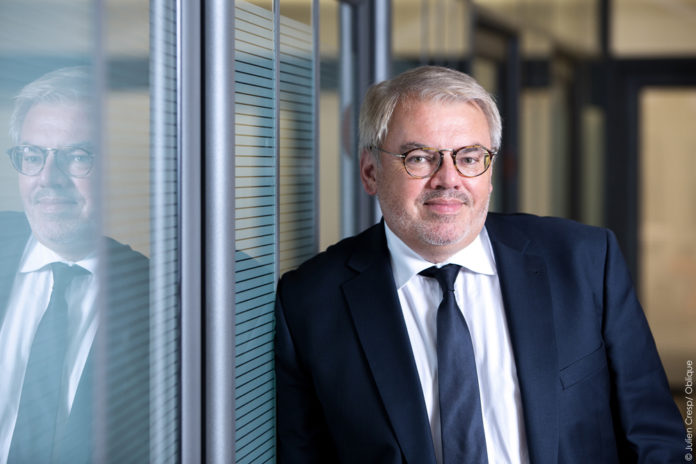
Roulot: 1,200 hotels in three years (Photo credit: Julien Cresp)

Interviewed on the sidelines of the International Hotel Investment Forum in Berlin recently, Roulot said Jin Jiang wanted to increase its network of hotels and introduce the western brands Campanile and Golden Tulip in Asia.

The first Campanile opened last October in Shanghai, following renovation and rebranding of the Jin Jiang Inn located on the Bund.

“Since the conversion, we doubled the RevPAR of the property. We plan to add more than 600 Campanile hotels throughout China. The first step is to show that you can get good results with this brand,” Roulot said.

Outside China, there are also huge opportunities, he said. The first Campanile hotel will open in Vietnam in Danang this August. The hotel owner, Empire Group, also plans to open a Golden Tulip in Vietnam.

But the “big” markets will be China, Indonesia and India. “In Indonesia, for example, we started with one brand, Golden Tulip and later introduced Kyriad when we had critical size. Soon, we will introduce Campanile, as the Chinese will now be familiar with the brand through the Campanile in Shanghai and there are lots of Chinese travelling to Indonesia.

When asked if Chinese domestic brands such as the four Jin Jiang brands could be brought out of China, he said: “Yes. One of Jin Jiang’s famous brands in China is the Metropolo. It is very Chinese but it is a good brand and I want to export Metropolo everywhere in the world. Perhaps the first will open at the end of this year in Paris, or another city in Germany.”

As to how he is able to drive Jin Jiang Louvre Asia from Paris, Roulot said he would divide his time equally between Paris and Shanghai and will have two CEOs in charge of Europe and Asia reporting to him.

Roulot has appointed Joël Guiraud, Louvre’s vice president operations, as CEO of Jin Jiang Louvre Asia. Replacing Guiraud at Louvre is Krystel Blondeau in charge of France and Andreas Tscherning in charge of Europe.

– Jin Jiang’s Louvre affair, read the View From the Top with Pierre Frédéric Roulot, TTG Asia, May 2017

Sabre brings tech solutions for Sri Lankan agencies

0

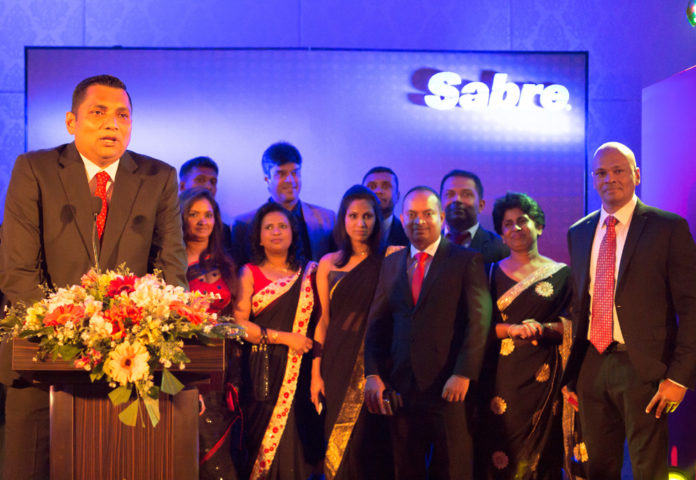
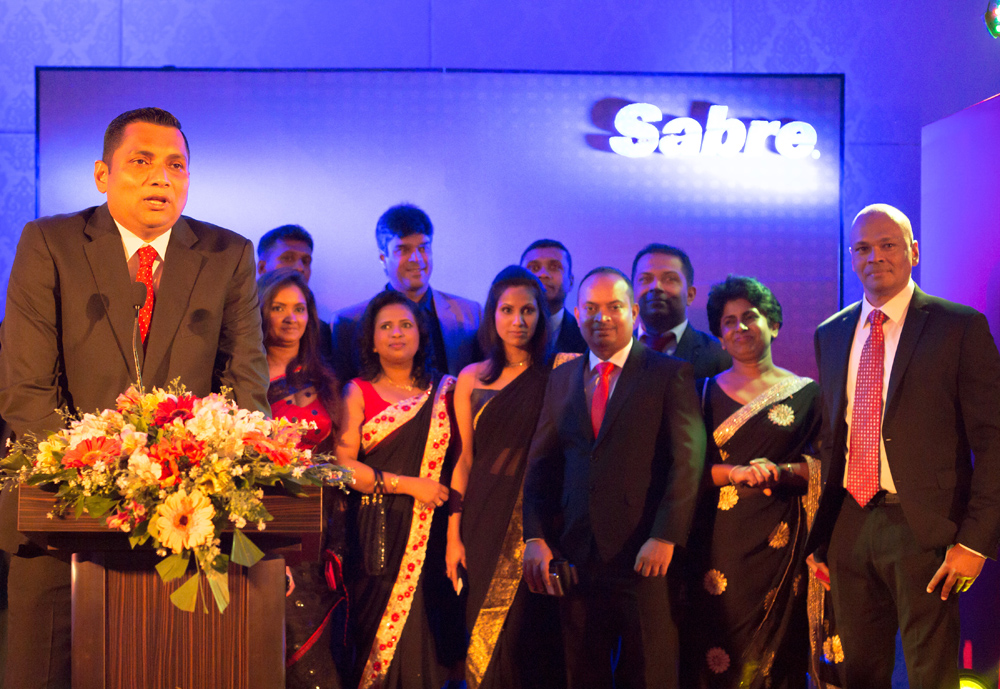
Sabre Corporation is working with travel agencies in Sri Lanka to bring more services online for consumers as the country’s travel and e-commerce market take off with increasing mobile and Internet penetration.

During a recent Sabre technology roadshow event held in Colombo, Sabre introduced its WebStart solution, a white-label Internet booking engine that allows travel agencies to establish an active online business without the high costs and lengthy process typically associated with launching a website.


Sabre’s Perera

“Agents using WebStart can service their customers more efficiently through a simple online booking process that combines access to the best available airfares and more than 300,000 hotel properties worldwide – among hundreds of other non-air options – with dynamic packaging and extensive cross-selling opportunities. Through a local payment gateway provided by Sampath Bank, travellers can book multiple travel services in one single transaction,” commented Sanjika Perera, Sabre Travel Network’s Sri Lanka country manager.

Sabre is also introducing data analytics tools that will help travel companies to track and manage their customers’ evolving profiles better and create more personalised experiences. This includes the integration of Google Analytics with Sabre’s WebStart solution to access a complete view of website traffic and conversions.

The travel technology company also presented its TripCase mobile application, a travel itinerary management app designed for travel agents to stay connected with customers on-the-go through their mobile devices.

Expedia’s new innovation lab to understand psyche of Asian travellers

0

Science will speak where consumers can’t at Expedia’s first innovation lab in Asia, which will replicate the capabilities of earlier labs in London and its Bellevue headquarters in Seattle but with an added focus on mobile use.

At the launch of the lab in Singapore last week, technology to delve into user behaviour was demonstrated, showing how responses indicating delight, frustration and tension in test participants were matched to their various interactions with the site.


Arthur Chapin (far left), Dara Khosrowshahi and Jonty Neal (far right)

Expedia has been fine-tuning its study methods, from using heat maps to identify parts on the webpage users focus on to now bringing the more precise eye-tracking technology combined with facial electromyography to its Singapore lab.

But why go to such lengths when more primitive feedback methods are readily available? For Arthur Chapin, Expedia’s senior vice president for product and design, it is often more practicable to identify and remedy pain points than to simply ask consumers what they want.

The innovation lab hence serves as one of the engines powering Expedia’s test-and-learn culture, which Chapin said has given it the competitive advantage of speed. The company, which champions the “try fast, fail fast, learn fast” mantra, now introduces one or two changes to its sites daily.

In particular, the Expedia executives see Asia teeming with potential for online travel. “In the region, online travel is about 36 per cent of (bookings). This is a good number but certainly (lags behind) what we are seeing in America so there are opportunities for growth,” said Jonty Neal, CEO of Expedia Asia.

Neal further shared that Asia is leading in mobile use, as mobile roomnights grew more than 65 per cent in 4Q2016. But with greater traffic on mobile than the transacting site, there is work to be done “to push people through the funnel and transact on mobile.”

While taking a harder look at Asia and mobile behaviour through the lab in Singapore, Expedia will also continue working to better understand its unique markets. “In regions like Europe… you can afford to have commonalities in a single city to run the European business. Asia’s very different. The localisation and understanding of customer experience and expectation is critical in defining how we look at our product,” Neal said.

“(Beyond the) three innovation labs, we will occasionally go around the world to set up labs and work with partners to gain insight on different consumers,” he added.

Commenting on staffing plans to back its technological drive, Expedia’s president and CEO Dara Khosrowshahi said: “Technology has been one of our fastest-growing areas of spend and will continue so globally. (In terms of engineering manpower), India will be a big centre and continue to scale. We will also hire more in China and Singapore…. We are looking at another 5,000 (engineers) in the next five years and a significant number will be in Asia.”

Sun shines on smaller beaches

0

With the growing international connectivity into southern Thailand, European visitors are seeking out lesser-known beach destinations and booking later than ever before.

The last-minute booking trend among European tourists into Phuket is becoming more apparent than ever before, in part driven by international carriers’ aggressive expansion into southern Thailand in recent years which have led to competitive pricing and greater flexibility in holiday planning for longhaul travellers.

“Four to five years back, if you don’t have your Thailand winter holiday booked by October, you wouldn’t be able to get flights or hotels,” said Tobias Fischer, business development director at Go Vacation Thailand, observing shorter booking lead times among the European market. “That’s not the case anymore.”

It’s a situation that DMCs are becoming more accustomed to, and Destination Asia’s Thailand general manager, Philip Wigglesworth, said: “Inbound booking patterns from Northern Europe have changed somewhat over the years as travellers become more at ease with booking holidays with shorter lead, sometimes up to six weeks or less. They are familiar with the destination and younger FIT couples prefer flexibility and are not keen to lock themselves into long-lead bookings.”

Lisa Fitzell, group managing director, Diethelm Travel Group, further notes an increase in the “pure beach segment customer”, which she discerns is a different clientele from the traditional European customer who combines a Thai beach vacation with other destinations.

“The beach holiday client just wants good value, sun and sea, so (Thailand’s) competing with destinations such as Cuba or Mexico. Full-board options are on the rise from our European customers.

“The arrival of the direct flights into Krabi and Phuket mean we need to offer more competitive and meal-inclusive deals to compete within the worldwide beach segment,” added Fitzell.

With better direct connectivity into Phuket from longhaul markets, secondary beach destinations in southern Thailand are now picking up as favoured holiday spots for European visitors.

Destinations like Krabi, Trang, Koh Lanta and Khao Lak no longer have to “suffer in Phuket’s shadow”, Fischer remarked. “We’re seeing more roomnights booked by the German-speaking markets in Khao Lak than Phuket.”

He added: “More than 60 per cent of repeat travellers look to new destinations and it doesn’t help that the influx of charter markets flooding Phuket right now are pushing the Europeans out of the island.”

The direct connectivity is also driving the surge of “twin-centre breaks” in southern Thailand, where Phuket is paired with Koh Yao Noi, Krabi with Koh Lanta, and Khao Lak with Khao Sok, Wigglesworth told TTG Asia.

Bill Barnett, founder and managing director of C9 Hotelworks, isn’t surprised with the destination shifts among the European visitors. “The legacy European market is very much alive. These ‘snowbirds’ from Scandinavia, the UK, Germany, Austria, etc, are long-stayers so they have migrated to less expensive destinations like Khao Lak, Krabi and Koh Lanta.”

As well, issues such as a pricier Phuket, the island’s sun lounger ban imposed by the Thai government and Krabi’s easier access with growing charter airlift are some of the factors that have pushed Europeans to other southern Thai destinations, he observed.

But Barnett’s not quick to write off the legacy markets for Phuket yet. “The world changed after the global financial crisis and Asia markets have become more prolific as the ‘East is now new West’, so it’s not that drastic as Phuket’s European markets remain strong while other segments have outpaced them.”

Sharing similar sentiments, Anthony Lark, president, Phuket Hotels Association, commented: “Phuket is changing, as are the world travellers… Asia and Russia are becoming more prolific (source markets) than in the past, yet the legacy markets from Northern Europe and Scandinavia remain firmly intact as Phuket is an important destination for these markets.”


This article was first published in TTG Asia April 2017 issue. To read more, please view our digital edition or click here to subscribe.

Diethelm Travel turns 60

0

Diethelm Travel Group, one of Asia’s oldest inbound tour operators, recently marked its 60thanniversary on April 2 with celebrations across all its regional offices. Diethelm Travel was originally established in 1957 in Bangkok and now boasts operations in 12 countries. Among its milestones is receiving a royal warrant of appointment from the late King Rama IX, one of the highest honours in Thailand to recognise businesses for their significant contribution towards the country’s economic and social development.

Bangkok’s Chatuchak says sawasdee to Best Western

0

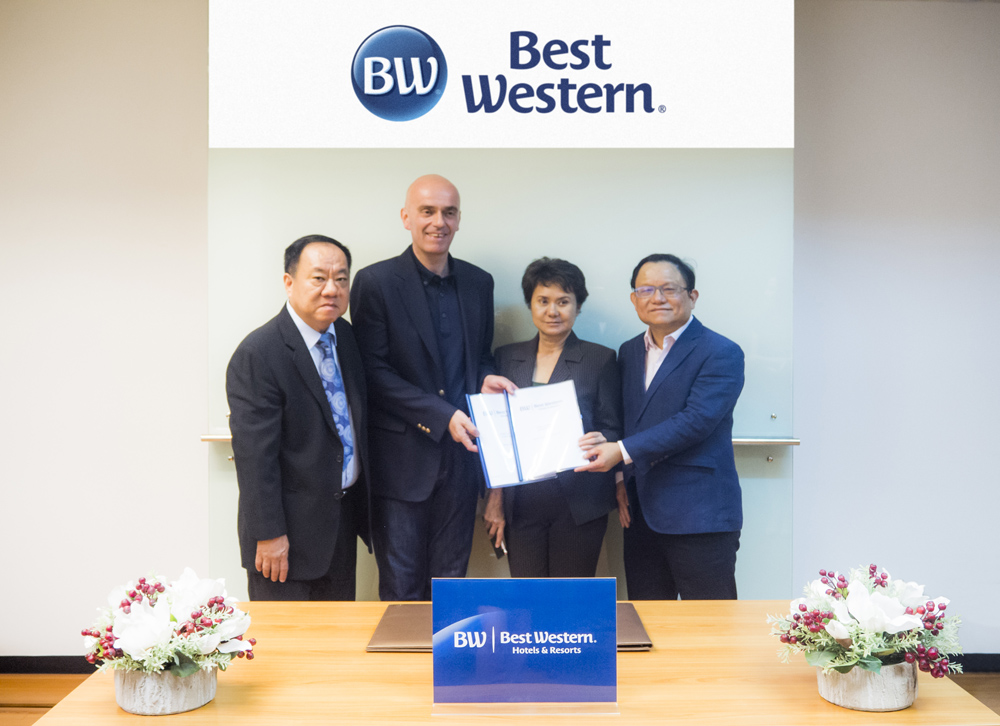
Best Western Hotels & Resorts has entered into a partnership with real estate company JJ Siam Pattana to build a brand-new hotel near Bangkok’s most famous weekend market in Chatuchak district.

Slated to open in 2020, the mid-scale Best Western Chatuchak will feature 168 rooms offering free Wi-Fi and modern in-room amenities. It is located within walking distance from Bangkok’s Chatuchak Market, adjacent to the Kampang Phet MRT subway station, and close to the Mo Chit BTS skytrain station.


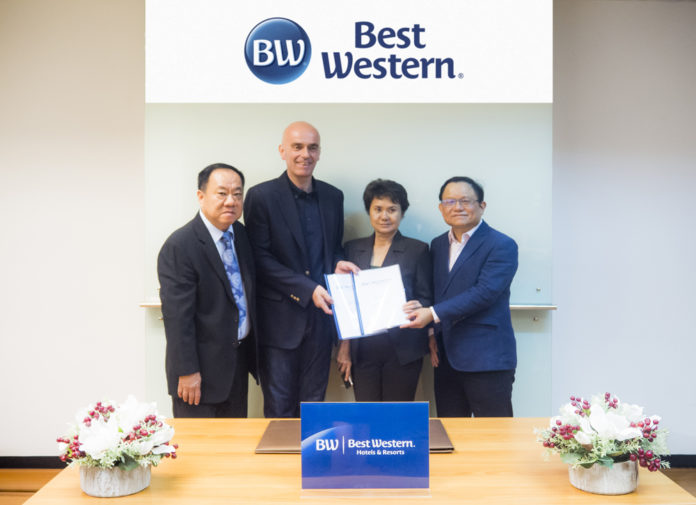
Berrivin (second from lef): no reputed hotel options so far for those visiting Chatuchak 

“Chatuchak Market has long been one of Thailand’s most popular visitor attractions and a thriving retail hub for locals and tourists alike,” said Olivier Berrivin, Best Western’s managing director of international operations – Asia. “Until now however, the thousands of visitors who flock to Chatuchak every weekend had no reputed local place to stay.”

The company is currently developing its first Vīb hotels in Bangkok, as well as two upscale properties – Best Western Premier Montien Riverside Hotel and Best Western Premier Montien Bangkok. These, and Best Western Chatuchak, will join the company’s existing portfolio of four hotels in the city.

SIA, Ethiopian Airlines broaden codeshare deal

0

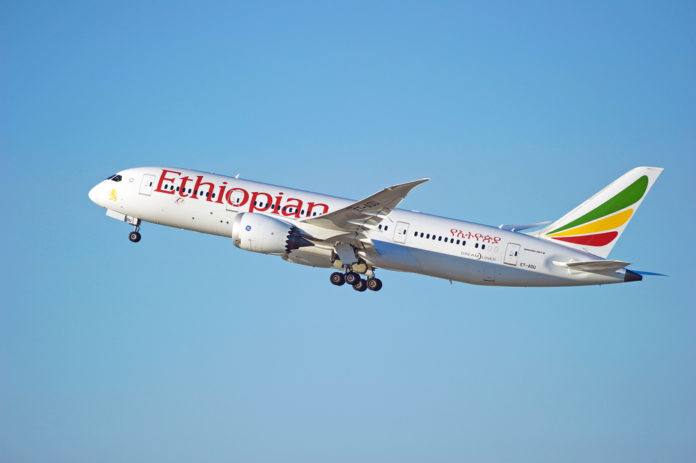
Star Alliance members Singapore Airlines and Ethiopian Airlines will expand their codeshare agreement as of June 1, 2017, which will include the latter’s upcoming daily Singapore-Addis Ababa service scheduled for launch in June 2017.

Under the expanded agreement, Singapore Airlines customers will enjoy access to Ethiopian Airlines’ intra-African network including countries like Botswana, Burkina Faso, Chad, Cote D’Ivoire, Kenya, Nigeria, Mozambique, The Republic of the Congo, Rwanda, Seychelles, South Africa, Tanzania and Zimbabwe.

In turn, Ethiopian Airlines customers will be able to access destinations in Australia, China, Japan, Malaysia, New Zealand, Thailand and Vietnam across Singapore Airlines’ network.

Acting vice president, strategic and alliances, Ethiopian Airlines, Girma Shiferaw, remarked: “The two airlines will synergise their respective networks in Asia and Africa to offer customers the best connectivity options with one ticket and a single check-in at the first boarding airport.

“It will also play a critical role in enhancing investment, trade and tourism ties between a rising Africa, and a highly developed, innovative, and business-friendly Singapore.”

The two airlines first began codesharing on each other’s flights to and from Dubai in 2011.

Another day, another AccorHotels acquisition

0

AccorHotels is on an acquisition trail, as barely days after its VeryChic purchase it has now bought over Availpro, a European leader in providing digital services to independent hotels and has more than 6,500 clients.

The acquisition of Availpro, which has more than 6.500 clients, is expected to complement AccorHotels’ “digital factory”, the company said in its press release.

In 2015, the hospitality giant had acquired Fastbooking, which has more than 2,000 independent hotels listed on AccorHotels.com and works with more than 4,000 clients worldwide to increase direct bookings.

Steven Daines, CEO, new business at AccorHotels, said: “The acquisition of Availpro enables the group to reach another milestone in its transformation by establishing the first B2B services division focused on hoteliers in Europe. Its combination with Fastbooking, now more than ever before, positions AccorHotels as an hotelier serving the hoteliers.”