TTG Asia
Asia/Singapore Tuesday, 23rd December 2025
Page 1588

Lanson Place gets new chief development officer

0

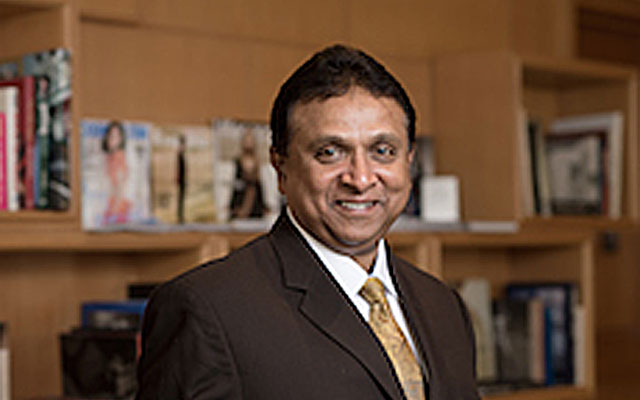
Lanson Place Hospitality Management has named Augustine Silva as its chief development officer.

Based in Kuala Lumpur, Silva will be responsible for driving the group’s strategic growth by acquiring new management contracts, as well as new investment or joint-venture projects in South-east Asia and Australia.

Prior to joining Lanson Place, Silva was the COO for Avari Hotels. With 33 years of experience under his belt, the seasoned hotelier has served in companies such as Ascott, Frasers Hospitality, Millennium & Copthorne International and Ascendas Hospitality Trust in South-east Asia, China, Australia and the US.

Singapore, China get new lyf under Ascott’s co-living brand

0

Ascott has secured the first three properties under its new co-living concept, lyf, in China and Singapore.

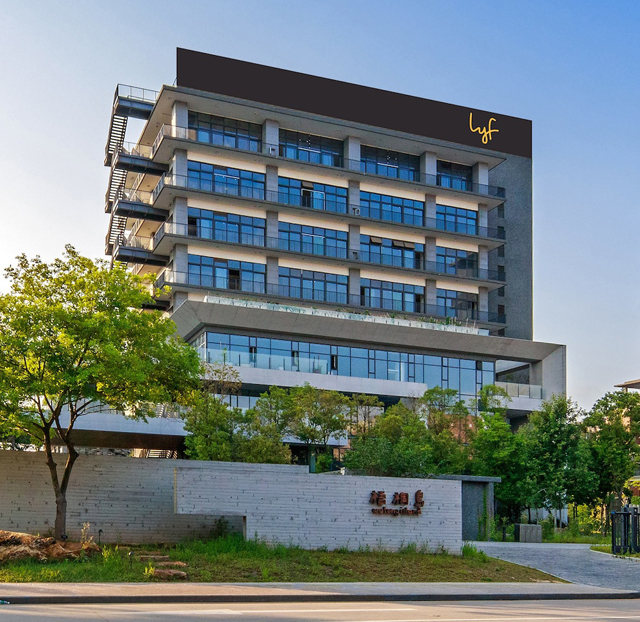
The 112-unit lyf Wu Tong Island Shenzhen is scheduled to open in 1H2018; the 120-unit lyf DDA Dalian in end-2018; and lyf Farrer Park Singapore, the biggest of the three with 240 units, in 2021.


lyf Wu Tong Island Shenzhen


The brand, first announced in Singapore last November, is designed for millennial types including technopreneurs and those in the creative industries, said Ascott’s CEO Lee Chee Koon. All three confirmed lyf properties have economic zone or innovation park locations.


“With the launch of lyf in these two key markets for Ascott, we are gathering momentum to capture this booming social generation… China is among Ascott’s top customers globally and has the world’s second largest millennial population,” said Lee.


“As global fintech hubs, China and Singapore are also homes to start-ups raking in billion-dollar deals. We are therefore expecting to see more lyf properties in gateway cities in China as well as another in downtown Singapore.”


Ascott targets 10,000 lyf units globally by 2020, and is looking at other potential markets including Australia, France, Germany, Indonesia, Japan, Malaysia, Thailand and the UK.

Old ‘hoods, new buzz

0

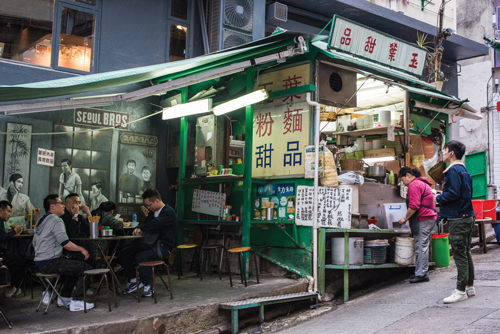
Hong Kong’s traditional enclaves are now a breeding ground for new tour ideas centring on its heritage and culture.

What was once perceived as Hong Kong’s historic enclaves are now seeing new life as tourism hotspots, as the Hong Kong Tourism Board (HKTB) becomes the latest to jump onto the neighbourhood tourism bandwagon with its five themed Old Town Central walking routes.
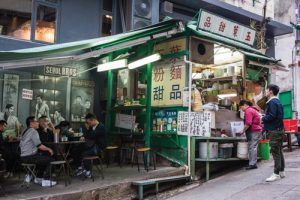
Covering Central and the adjacent Sheung Wan neighbourhood, outlined by Wyndham Street, Caine Road, Possession Street and Queen’s Road Central, with Hollywood Road running through the middle, these self-guided walks are targeted to help travellers discover the heritage, cuisine and art in the area’s streets and alleys by spotlighting colonial monuments, temples, hole-in-the-wall local eateries and restaurants.

A spokesman elaborated: “HTKB will also work with trade partners to promote guided tours that focus on the richness of Central, and its locals and expats, (to publicise) the district’s charms and hidden gems through PR campaigns and on digital platforms.”

The spokesman added that HKTB “will continue to explore similar tours in other historic areas such as Wanchai”.

The Hong Kong trade sees HKTB’s latest initiative as a good effort to create more experiential travel opportunities in Hong Kong.

Walk in Hong Kong’s co-founder and CEO, Paul Chan, remarked: “HKTB realised that it can’t compete with other destinations in theme parks; but city culture, living history and heritage are something we have and shouldn’t waste.”

The walking tours operator has more than 20 routes in its portfolio, ranging from market food tours in Kowloon to old trades and artisan tours in Sheung Wan.

However, walking tours of Hong Kong’s cultural neighbourhoods require special expertise and cater to just a niche segment, explained Chan. “Neighbourhood tourism is still in its infancy as it’s not a mainstream product like bus tours. It requires experts, R&D as well as a strong local network.

“What’s more, this type of tour can’t accommodate big groups so growth is organic, not explosive. It needs someone with social pride and passion to run it. The lack of quality tour guides is the biggest crunch,” Chan lamented.

When asked if Airbnb Trips, which has been launched in several cities in Asia-Pacific to focus on local experiences, poses a threat to the future prospects of tour outfits specialising in neighbourhood tourism, Chan said: “We don’t treat it as competition, but a large platform to drive more inbound traffic for such a niche experience. Frankly, the pie is small and it would be great we can learn how other players run such operations.”

To stay sustainable, Walk in Hong Kong has trained its sights on high-value segments like FITs as well as working with luxury hotel concierges to provide special experiences for their VIPs and business travellers, Chan added.

As well, more support from HKTB is required to grow and develop neighbourhood tourism, trade players pointed out.

Via Vai Travel’s director, Sef Lam, said: “I believe most visitors come (to Hong Kong) for business while others come to shop, eat and sightsee. Not many may want to spend their time exploring local neighbourhoods, but if these tours are offered free, it might be a good start.”

She added: “Recently, I joined a Lei Yue Mun walk organised by the Maritime Museum with resources from the Society of Hong Kong History. HKTB can certainly do more by liaising with the different museums and hotels and offering these as free tours.”


This article was first published in TTG Asia June 2017 issue. To read more, please view our digital edition or click here to subscribe.

Ailsa Brown to lead Travelport Digital in APAC

0

Travelport Digital, part of Travelport, has appointed Ailsa Brown as vice president, Asia-Pacific.

Brown’s responsibilities include maximising new opportunities and promoting Travelport Digital’s business-transforming mobile engagement solutions for travel brands across Asia-Pacific.

She previously led Travelport’s sales and commercial strategy in the region for a number of years.

Coast is clear for more change

0

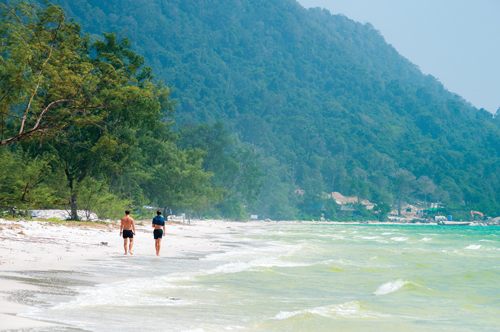
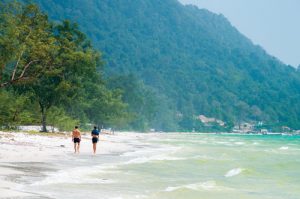
Agents say a cleaned-up Sihanoukville still doesn’t provide enough draw to keep visitors in Cambodia.

Improvements to Cambodia’s main coastal resort of Sihanoukville are helping to increase visitors’ length of stay, but more efforts are needed for it to become a standalone destination, agents opined.

Recent years have seen huge resources ploughed into cleaning up Sihanoukville, in a bid to entice international visitors to choose the destination for a relaxing beach stay after a trip to the temples, rather than jetting off to neighbouring Thailand or Vietnam.

The progress is palpable: infrastructure in the town has improved, clean-up campaigns conducted, beaches cleared of the hordes of touters, and more upmarket products introduced.

While this has helped transform the town from backpacker haven to family-friendly paradise – latest figures show 80,589 people visited the coast in February, an 18.3 per cent year-on-year increase – agents say the destination’s potential is still unfulfilled.

Sinan Thourn, chairman of B2B Cambodia and of PATA Cambodia Chapter, said: “The first thing people talk about is Angkor Wat. There are now many new things coming up and one of our best assets is the coastal area.”

Kimhean Pich, CEO, Discover the Mekong, said the beautification of the beach has increased the length of international visitors’ stay in Cambodia, with many adding three days to relax there or, increasingly, explore the islands.

Still, it is not enough to keep people in the country, with many still seeing Cambodia as an add-on to Thailand or Vietnam.

Thourn acknowledged that more four- and five-star hotels are needed in Sihanoukville, but the main focus needs to be shifted to the sprawling outlying areas with their untouched beaches and landscapes.

Chin Chantha, manager of Sun Tours in Sihanoukville, sees the need for more international air links, as is improving access from Siem Reap to Sihanoukville. “If we can provide (easy access) and more products, then visitors have no reason to leave Cambodia.”

The latest connection is AirAsia’s four-times weekly flights from Kuala Lumpur to Sihanoukville commencing August 9.

Hopeful that Sihanoukville and the coastal region can help Cambodia become a standalone destination, Thourn remarked: “Sihanoukville will be the real rising star of Asia’s countries. The town, the province and the coast can be astounding for tourists.”


This article was first published in TTG Asia June 2017 issue. To read more, please view our digital edition or click here to subscribe.

Melbourne Airport completes T4 enhancements

0

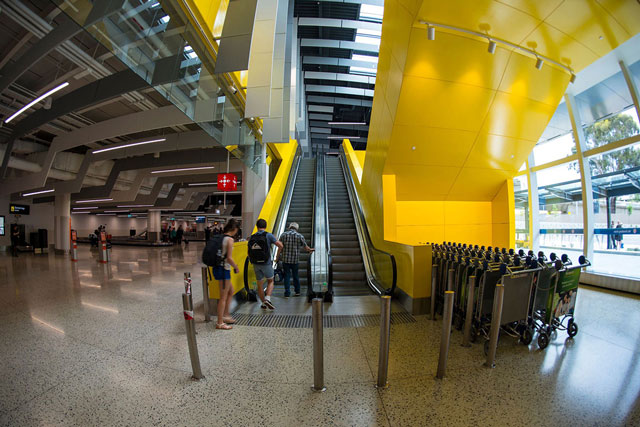
Melbourne Airport has unveiled the final stage of its Terminal 4 (T4) upgrade, and infrastructure enhancements at its international terminal are set for completion in the coming months.

In this stage of the upgrades, 1,600m2 of space was added to Pier F to create a 2,000m2 area. Other upgrades include more seating, additional toilet facilities, lift access and improved wayfinding.


T4; photo credit: http://www.t4you.com.au/

The airport is currently undergoing a transformation project announced in 2014, and is expected to see A$10 billion (US$7.6 million) invested over 20 years in the development of airport terminals, road networks and airfield as well as capacity upgrades.

Melbourne Airport chief of aviation Simon Gandy, said: “At Melbourne Airport we are continuing to exceed the industry’s growth expectations and are on target for annual passenger numbers to reach 60 million by 2033. In the past 12 months alone, more than 10 million passengers travelled through T4, making it a very busy domestic hub.

“In the coming months we look forward to unveiling a number of other significant infrastructure upgrades including an eighth baggage carousel in our international terminal and our new T2 Luxury Precinct.”

Tigerair Australia’s head of communications, Vanessa Regan, said: “Last year alone we flew nearly three million passengers in and out of Melbourne Airport. The redeveloped T4 is a huge step change for our customers and supports future planned growth of Tigerair.”

Singaporeans granted visa exemption for longer Mongolia stays

0

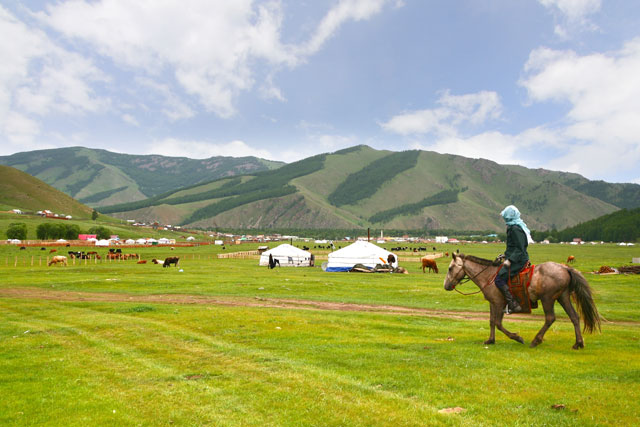
Starting last week, Singapore nationals can travel visa free to Mongolia for stays of up to 30 days, instead of the previous limit of 14 days.

The Mongolian government had in July 2016 agreed to waive visa requirements for Singaporeans after a visit by Singapore’s prime minister, and discussions for its implementation since got underway.


Gorkhi-Terelj National Park in Ulaanbaatar, Mongolia

According to a statement by the Singapore Ministry of Foreign Affairs, the exemption is expected to facilitate greater tourism and business exchanges, as well as strengthen the relations between Singapore and Mongolia.

The waiver applies to both leisure and business travel.

South Sumatra guns for recognition as sports tourism destination

0

As Palembang, the capital city of South Sumatra, casts its sights on becoming a sports tourism destination by leveraging the 2018 Asian Games – which it will co-host with Jakarta – some in the trade expressed concern about sustaining visitor volume beyond the event.

With the support from the central government, the regional government is currently beefing up infrastructure in South Sumatra. The Jakabaring sports stadium is undergoing expansion to become a ‘sports city’, with the addition of sporting facilities, athlete accommodation, a convention hall and more.

Also under construction are a Light Rail Transit connecting the airport, two new bridges across Musi River that runs through the city, and the 22km toll road between Palembang and Indralaya.

Jakabaring aquatic centre

Speaking during the opening dinner at last week’s Bali & Beyond Travel Fair, of which South Sumatra was a co-host province, governor of South Sumatra Alex Noerdin said: “We are getting ourselves ready to host Asian Games 2018 and showcase our tourist attractions. Following the Asian Games we will host the Moto GP Circuit too.”

Ahmad Najib, assistant governor, government affairs and community welfare, South Sumatra, added: “From the central government budget for infrastructure, we received 70 trillion rupiah (US$5.2 billion). From the regional budget we spent eight trillion rupiah plus funding from some businesses in South Sumatra.”

The destination is expecting a combined 10,000 athletes and spectators during Asian Games.

However, this demand may be more seasonal than is desired. Jonathan Mokalu, corporate director of sales and marketing, Sintesa Hotels Group, questioned: “It is great to have new facilities, but what will happen after the games? The destination needs to sustain traffic to fill hotel rooms.”

While lauding the efforts the provincial government has taken to develop Palembang as a sports destination, Muhammad Erfandi, owner of Muba Wisata Tour & Travel in Palembang, commented that the industry could benefit from some government budget diverted to improving tourist attractions.

Responding to the concerns, Ahmad said the regional government has collaborated with international sports federations, which could help keep up a stream of events in Palembang. “In 2011 we hosted SEA Games and University Games. In 2015, there were 23 single and multi-sporting events.”

For him, the benefits of hosting major sports events are undeniable. “Before 2011 (the year Palembang hosted SEA Games), there were only nine flights per day, today there are 52 flights per day and four direct flights from Singapore and Kuala Lumpur,” he pointed out.

Data from the South Sumatra Tourism Office showed international arrivals to the destination last year totalled 64,257, a 34 per cent increase from 42,321 in 2015.

Frasers plans expansion of millennial-targeted Capri brand

0

To meet rising millennial travel demand, Frasers Hospitality is eyeing an expansion of the Capri by Fraser brand to a total of 16 cities over the next four years, including Leipzig, Shenzhen, Wuhan, Jakarta, Johor Bahru, Balikpapan, Kalkara and Gurgaon.

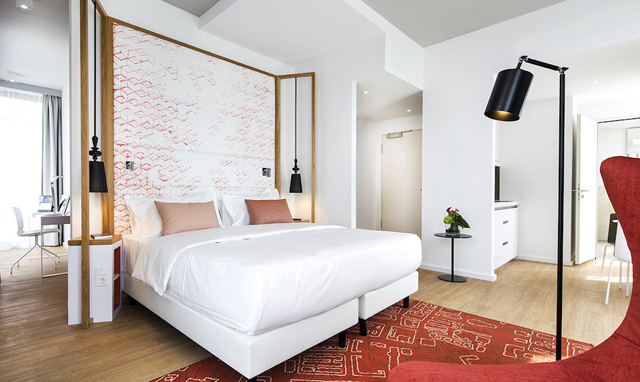
The most recent addition is the 143-unit Capri by Fraser Berlin, which marks Frasers Hospitality’s seventh operating Capri-branded property globally and the second in Germany. With the millennial preference for cultural originality in mind, it carries features such as an archaeological excavation site discovered during construction, now preserved and showcased through a glass floor.


Capri by Fraser Berlin

“We will also anchor our presence in key gateway cities such as Singapore and Kuala Lumpur… This will extend the Capri by Fraser portfolio to 19 properties with over 4,000 keys by 2021,” added Choe Peng Sum, CEO of Frasers Hospitality.

Choe added that the Capri by Fraser brand was created to cater to the evolving lifestyle needs of millennial travellers, whose travel spending is set to increase as this generation enters its prime working and spending years.

Millennial-friendly concepts of the Capri brand include Spin & Play, where laundrettes come equipped with games consoles, kickboxing and other activities. Meeting and conference facilities are also equipped with capabilities including interactive touch-screen panels and integrated whiteboard-projector features.

Wafelbakker joins Tourism NZ as Asia GM

0

Tourism New Zealand has appointed Gregg Wafelbakker to the role of general manager Asia.

Wafelbakker joins Tourism New Zealand
from the Shanghai-based Westland Milk Products, where he was the general manager China and general manager marketing for the past three years.

Gregg Wafelbakker

He has over 20 years’ experience in the F&B industry, and has held a variety of technical, sales and general management roles in New Zealand, the US, Singapore, Thailand and Germany.

Tourism New Zealand’s chief executive Stephen England-Hall said: “(Wafelbakker)’s expertise in marketing and experience of working in several parts of Asia for many years make him an excellent fit for the role, which manages New Zealand’s second biggest tourism market, China, along with major emerging markets India and Indonesia.”