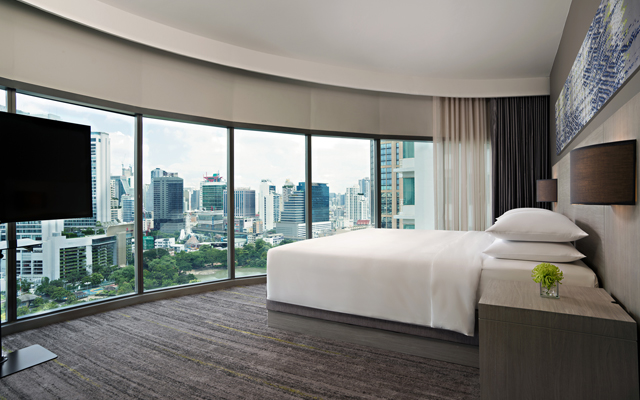
Hyatt Place Bangkok Sukhumvit, which will open later this year, has begun accepting bookings and is offering special opening rates that are 30 per cent off BAR.
Located close to shopping complex EmDistrict in the heart of Phrom Phong, the hotel will offer 222 rooms and suites.
Offering special opening rates
Facilities include a 24/7 Gallery Menu and Gallery Market offering cooked meals and grab-‘n’-go items; Aire Bar on the 27th floor; an outfoor swimming pool and gym on the 19th floor; an Odds & Ends programme for forgotten items that guests can buy, borrow or use for free; four flexible meeting spaces for medium-sized meetings and events; and free Wi-Fi throughout the hotel.
Special opening rates start at 2,500++ baht (US$75) for stays that fall between opening and April 30, 2018.
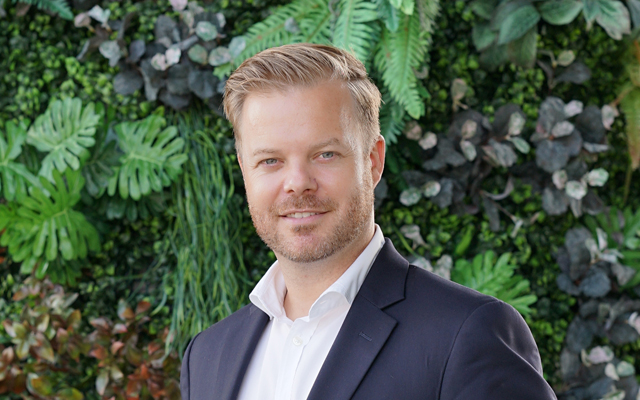
Banyan Tree Hotels & Resorts has appointed Alexander Sheppard hotel manager of Banyan Tree Bangkok.
Prior to joining Banyan Tree, he was executive assistant manager of Dusit Thani Lakeview Cairo, Egypt.
Originally from New Zealand, Sheppard has lived and worked for International hotel brands including Hyatt and Dusit Thani hotels in Egypt, Indonesia, Australia and the US in a career spanning two decades.
He also brings with him luxury hotel and hospitality experience, having had a hand in opening F&B projects and concepts including restaurants, bars, multipurpose function spaces and private member clubs around the globe.
Kobori: efforts to disperse tourist traffic to rural regions have seen results
Japan National Tourism Organization (JNTO) is in the midst of setting up a new office in Manila, with the Philippines having risen as its 10th top inbound market contributing 347,861 visitors in 2016.
Last year, it opened offices in Moscow, Hanoi, Kuala Lumpur, Delhi, Rome and Madrid. In total, the organisation has 21 offices around the globe that engages in promotional activities.
Kobori: task of dispersing tourist traffic to rural regions has yielded results
As of September 15, 2017, Japan surpassed the 20 million visitor mark, and is well on its way to surpass its record of 24 million arrivals last year.
Japan is having some success in dispersing this huge number across the country. During a press conference on the first day of Visit Japan Travel & MICE Mart 2017, Mamoru Kobori, JNTO director, said the growth rate of foreign tourists staying in regional areas rose 9.5 per cent year-on-year, compared to the 3.4 per cent in the eight prefectures of Tokyo, Kanagawa, Chiba, Saitama, Aichi, Osaka, Kyoto and Hyogo.
This is in line with JNTO’s three tourism policies as it works towards 40 million arrivals by 2020.
First, JNTO wants to utilise tourism resources to disperse tourists from main cities; second, develop the tourism industry as a new economic pillar; and improve the country’s infrastructure.
When asked what was the biggest challenge to get tourists out into the regional destinations, Kobori said: “One major challenge is the lack of updated information for potential visitors. To rectify this, JNTO is collaborating with local governments to consolidate the information.”
Kobori also pointed out that there was a need to make it easier for people to travel out of the main cities, and said JNTO is working on making it easier to have access to accommodation or dining in a tourist’s own language such as English or Mandarin. JNTO is also currently working on destination campaigns, some of which are digital, for lesser-known regions such as Tohoku.
He added: “We also have to change the mindsets of the people living in the countryside, and educate them about how they can be hospitable to overseas guests.”
Dassi: swooping in as industry attempts to adapt to fast changing, fragmented market
Thomas Cook China, a joint venture between Thomas Cook and Chinese investment conglomerate Fosun, is gunning for a tenfold times increase in customer numbers in the next 12 months, after serving 20,000 customers in its first year of business.
Officially launched in September 2016, Thomas Cook China said in a statement it has developed into a one-stop, full-service travel company, operating inbound, domestic and outbound tourism from offices in Shanghai and Beijing.
Dassi: swooping in as industry attempts to adapt to fast changing, fragmented market
Thomas Cook China managing director Alessandro Dassi said: “The ambition is to make China a sizeable market for Thomas Cook Group, comparable, over time, with our more mature source markets in Europe.”
A big opportunity for newcomers such as Thomas Cook comes from the rapid change in the behaviour of Chinese travellers, who are moving away from traditional group tour tavel towards a more independent and higher quality type of travel, according to the statement.
The market, on the other hand, remains fragmented and puts a great focus on price.
“The industry is not yet keeping up with the pace of change in the behaviour of Chinese consumers. To exploit this gap we have focused on developing products that are truly unique and differentiated, leveraging Thomas Cook’s resources across key tourist destinations,” Dassi said.
Amadeus and Off Airport Check-In Solutions (OACIS) have joined forces to launch what they say is the world’s first pop-up check-in service, which enables travellers to check-in and drop off their bags away from the airport.
Virgin Australia is the first airline to adopt the service and has already piloted it in Sydney for cruise ships and oceanliners.
Pop-up check-in
With Amadeus’ Airport Common Use Service cloud technology, OACIS can access any airline’s check-in system in the cloud with just a laptop and internet connectivity. This allows it to provide travellers with an off-airport check-in service that can be set up at any location, be it a cruise terminal, hotel, train station or a major conference or event.
Sarah Samuel, head of airport IT sales, Asia Pacific of Amadeus, said: “In the past, airlines and airports have been constrained by low innovation and legacy technology, but cutting-edge cloud technology is enabling new business models and opportunities, such as OACIS.
“Through this partnership, airlines are no longer restricted in the way they manage passenger flow. Airlines can be agile in their service offerings, avoid queues and congestion, and create a better traveller experience. In the future, they may be able to do away with the airport check-in desk all together, opening up that space for other revenue opportunities,” added Samuel.
Soft adventure one of the Kiulu river activities highlighted
Sabah Tourism Board has begun promoting rural tourism and will ramp up the effort in 2018 for its top source markets Brunei, South Korea, China, Taiwan, Europe and the domestic market from Peninsular Malaysia and Sarawak.
Areas promoted are Kiulu, Kandamaian, Kundasang, Tambunan and Kudat – all within a 45 minute to 2.5 hour drive from Kota Kinabalu.
Welcoming the move, Monika Tigges, product manager Asia – Arabia at Dusseldorf-based Explorer Fernreisen, interviewed at the recent PATA Travel Mart, said: “Sabah Tourism Board is on the right track. It is a smart move (that) will attract the savvy traveller who has been around the world, stayed in hotels and are now looking for new experiences. Also it will attract the visitors who have already been to Kota Kinabalu.”
Tigges said the company already offers Borneo tours beyond capital cities and that they are “doing very well”.
Soft adventure one of the Kiulu river draws
Likewise, Adam Kamal, CEO at Olympik Holidays, based in Kuala Lumpur said: “Gone are the days that you can make a broad assumption that Asians just like shopping, city experiences and hotel accommodation. We find that Asian millennials are more adventurous, they like to discover new places and get new experiences compared with Gen X. Rural tourism, (in allowing) them to live like locals and share their experiences on social media, is something they will be attracted to.”
However, both Adam and Tigges said they need more from the NTO support in the form of training and product updates.
Sabah Tourism Board said it is working with local inbound agents to assist them to package rural tourism into their itineraries, in addition to leveraging social media to promote the niche.
Under the theme of The Future of Travel, the conference component of ITB Asia 2017 will spotlight artificial intelligence and OTAs, as well as first-to-ITB Asia features such as a cruise panel and an innovation travel track.
Speakers for the first day’s keynote will include Tony Menezes, vice president of industrial and distribution sector at IBM Asia Pacific; Rob Torres, managing director of advertising and marketing at Google; and Jane Sun, CEO of Ctrip.
On the second day, the keynote panel will focus on the travel trends and market conditions and how OTAs are are transforming travel, particularly in South Korea, Japan and India. The panel will include Ike Anand, vice president at Expedia, Min Yoon, CEO of Tidesquare, Amit Taneja, chief revenue officer of Cleartrip, Ken Mishima, vice president of eCommerce Strategy at iJTB, and Jose Murta, global head of hospitality at trivago.
Google, IBM to touch on AI at the conference
This year will also see ITB Asia introducing its first cruise panel, bringing together global cruise operators such as SkySea Cruise Line, Norwegian Cruise Line Holdings, Princess Cruises, Carnival Asia and Royal Caribbean Cruises, with Christina Siaw, CEO of Singapore Cruise Centre, as moderator.
Another first is an innovation travel tech track hosted by Israeli startup InnoVel that will connect travel companies with startups. The cross-sharing is designed to address pains in areas such as revenue management, customer engagement and online marketing.
Hiverlab and Zebra Design will share their experiences on the opportunities for augmented reality and virtual reality in hospitality and tourism. Savioke, a Silicon Valley startup that makes autonomous indoor delivery robots, will also present key takeaways from its pilot project at M Social, Asia’s first deployment of front-of-house service robots.
ITB Asia will inaugurate a Corporate Day on October 26, with Global Business Travel Association, Egencia, Corporate Travel Management, UOB Travel and Airbnb delivering presentations and workshops.
MICE Day will return for the second edition on October 25.
ITB Asia 2017 will take place at the Sands Expo and Convention Centre, Marina Bay Sands from October 25 to 27.
Pan Pacific Yangon
Myanmar will get its first Pan Pacific hotel when Pan Pacific Yangon opens within the Junction City integrated development on Shwedagon Pagoda Road come November. The hotel will feature 336 rooms and suites, a ballroom and several meeting rooms, a swimming pool, spa and fitness centre, as well as F&B outlets including an all-day dining and a Cantonese restaurant. On the sixth floor is a sky lobby that looks out to the Shwedagon Pagoda.
Travelodge Sukhumvit 11
Travelodge’s second Thailand property, Travelodge Sukhumvit 11, has begun accepting online reservations ahead of its official opening on November 1. Located a few minutes from the Nana BTS sky train station in a dining and entertainment district, the hotel offers 224 guestrooms enjoying complimentary Wi-Fi, a rooftop restaurant, outdoor swimming pool, and fully equipped fitness centre.
Swiss-Belinn Airport Surabaya
Swiss-Belinn Airport, Surabaya has opened at just two kilometres from Djuanda International Airport, featuring 120 Deluxe and nine Grand Deluxe rooms as well as four Suites with bathtubs. Ranging from 24-48m2, each room and suite comes with Wi-Fi access, laptop-sized in-room safes, mini refrigerators and 40” LCD TV with cable channels. The hotel also offers all-day lobby dining and lounging at BaReLo, a BBQ area, a swimming pool, a gym, 24-hour room service, in-room massage and laundry service.
Four Points by Sheraton Hefei
Four Points by Sheraton Hefei, Baohe has opened in the ancient Chinese city. It features 271 guestrooms and suites, three stylish restaurants and bars, and more than 2,400m2 of flexible, multi-functional meeting spaces. It is an hour’s car ride from Hefei Xinqiao International Airport and 15 minutes from Hefei South Railway Station.
Hong Kong-based Pavilions Hotels and Resorts has announced two developments in Hokkaido, Japan, part of plans to introduce a series of hotels and residences in aspirational locations across Asia and Europe.
Artist impression of Pavilions Niseko
When open in 2019, The Pavilions Niseko hotel will feature 40 suites, a spa, indoor/outdoor onsen, gym, yoga studio and a fine dining restaurant.
It will sit adjacent to Pavilions’ The Ginto Residences, which is nestled in pinewood forests at Ginto Hirafu, with access to ski lifts and slopes.
Artist impression of a villa at Ginto Residences
Meanwhile, Pavilions Lisbon Hotel will be launched in the first quarter of 2018 and involve the renovation and restoration of two 18th century buildings, due to open in 2020.
Theses will join the company’s existing operating hotel inventory of six boutique hotels and resorts in Bali, Phuket, Nepal Himalayas, Amsterdam, Madrid and Rome.
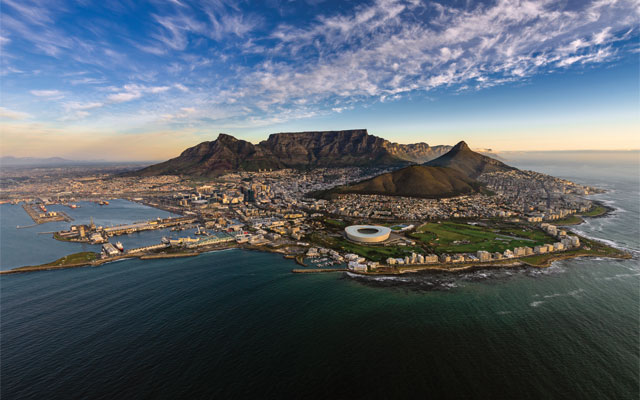
South Africa is getting more air connections from Asia; Table Mountain in Cape Town pictured
With Asia accounting for 10.2 per cent of total traffic and a 30.3 per cent growth in 2016, South African Tourism is optimistic the upward trend will continue this year especially with additional marketing budget and new experiences introduced for the market.
South Africa is getting more air connections from Asia; Table Mountain in Cape Town pictured
Asia-Pacific president, Bradley Brouwer, said: “2015 was a bad year given the Eboli outbreak in West Africa but this year’s outlook looks good as our weakening economy and the depreciating rand make it cheaper to travel to South Africa.
“We see massive growth from South Korea (42 per cent) for the first five months of this year. Despite a slight drop, China still registered a 38 per cent increase. Markets like Malaysia picked up while India is also strong,” he added.
“I believe South Africa will be the next hot destination for Asians given our aggressive promotions in Asia each year as well as the 12.7 per cent increase on marketing budget this year. We’ll (focus on) China a lot more due to its potential despite insufficient air access.”
According to Brouwer, Asia is seeing more flights connections to South Africa, Kenya and Ethiopia in recent years. For instance, Kenya Airways started Guangzhou-Nairobi (Kenya)-Livingstone (Zambia)-Cape Town service last July.
Amrho Tourism Aviation has introduced a charter service from China in 2016 and will double its Tokyo-Port Elizabeth charter services from two to four or eight in September/October to target the high-end FIT and group travel segments from Japan, said operations manager, Naseer Ismail.
In addition to established products like the Big Five and self-drive safari, South African Tourism has also rolled out a new ocean safari for the Asian market early this year, offering travellers opportunities to witness the world’s largest breeding colony of African penguins on St Croix Island or get up-close with thousands of bottlenose dolphins in Port Elizabeth in Nelson Mandela Bay. Another new experience is a tour to a mohair factory in Nelson Mandela Bay to see the production of the silk-like fabric spun from the hair of the Angora goat.
For operators such as E Travel SA, niche tours like wild flower tours along the west coast are a way to attract the burgeoning China market. Operating executive Suki Wu told TTG Asia: “This product is rare for Asian travellers but very popular for the western market. Rather than doing mundane tours without character, we want to push something new.”
Last year, the NTO introduced additional languages such as Chinese, Japanese and Korea to its two online training courses launched three years ago. So far, 800 specialists have been trained in China and 300 in South Korea.
As well, two more visa facilitation centres will open in China’s Chongqing and Kunming by end-2017. Brouwer hopes the online visa application service will be ready within the two years to increase the ease of travel of Chinese nationals to South Africa.


 Originally from New Zealand, Sheppard has lived and worked for International hotel brands including Hyatt and Dusit Thani hotels in Egypt, Indonesia, Australia and the US in a career spanning two decades.