TTG Asia
Asia/Singapore Tuesday, 23rd December 2025
Page 1581

WTTC’s Scowsill on future of travel & tourism

0

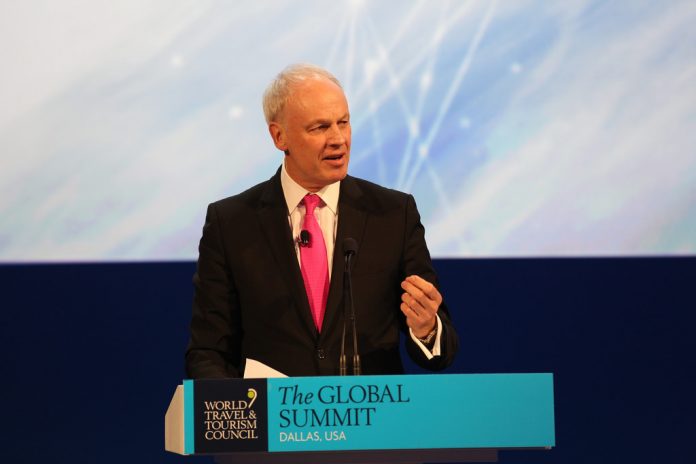
Outgoing World Travel & Tourism Council (WTTC) president & CEO David Scowsill sets out what he sees are the trends shaping the future of Travel & Tourism (T&T):

The world of 2017 is very different from that of 2010, when I first took the helm of WTTC. We have seen major geopolitical movements  –  from the Arab Spring to the rise in populism; the rising number and changing nature of terrorist attacks, particularly in Western countries; the growing economic power of China and India; the rise of the sharing economy; the move to mobile; and a wide awareness of and almost complete acceptance of the urgency with which we need to address climate change.

Our world in 2017 is uncertain, vulnerable and unpredictable. Despite this, T&T growth has remained at around four per cent a year. Disruption has been part of the sector’s DNA for the past 20 years, and the sector has emerged stronger and more resilient for it. LCCs, TripAdvisor, online hotel aggregators, the sharing economy  –  these new business models and approaches have changed the landscape of T&T forever. But throughout this time, all sectors of the industry have weathered their storms, survived, pivoted their business models and thrived. No large brand name has gone bankrupt, even with the competitive pressures and impacts of the global financial crisis.

This ability to adapt to market forces, respond to consumer demand and adopt new technologies is what I believe ensures the future of T&T, as the sector has to face up to the macro level challenges of our time, be they terrorism, climate change or the fourth industrial revolution.

I am often asked whether technology will bring ultimate pressure on T&T  –  will robots replace tourism workers; will virtual reality and augmented reality replace the need to travel; will video conferencing wipe out business travel? To all of these I say a resounding ‘no’.
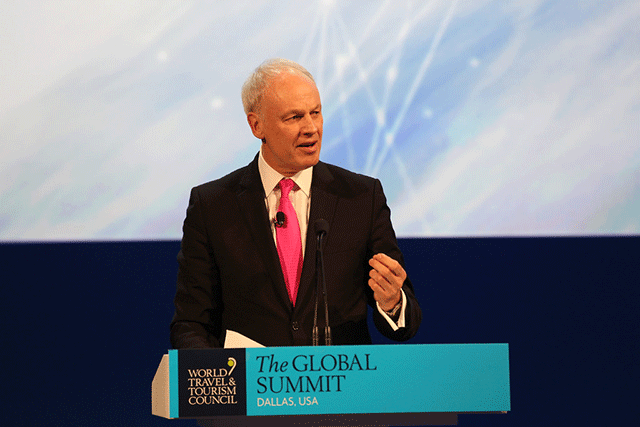
David Scowsill. Photo credit: www.wttc.org

Will robots replace tourism workers?
Artificial Intelligence, machine learning and robotics will certainly impact jobs in the sector over time. Many jobs will become redundant, but others will be created. Service delivery in T&T relies on the people contact, it is the people that ultimately define the experience whether you are travelling for business or leisure.

Will virtual reality and augmented reality replace the need to travel?
The speed of movement in this area will be phenomenal, but it will enhance the industry rather than compete with it. At the moment T&T is just playing with the technology, but the opportunities  –  be it children learning in a classroom, training tourism workers to spot potential terrorists, engineers learning how to diagnose problems and replace fan blades on jet engines, or a terminally ill person visiting the world from their bed  –  are huge.

Will online communications wipe out business travel?
This debate has been raging for twenty years. Now we are seeing Skype, WhatsApp, WeChat, Twitter, Facebook and video conferencing communications merging smoothly over time on communication devices, for both business meetings and leisure experiences with friends. But while these platforms facilitate connectivity, people will still want to travel to see the world. Business travel will increase as the human contact required for deal making will never disappear. More of the approach work can be done using technology to ensure that face-to-face meetings achieve what is desired.

Do I, however, foresee the end of tourism websites?
Yes. I believe we will see the end of websites as apps become all consuming on mobile devices. In fact, mobile connectivity will continue to dominate, and people will learn to switch off to guard their leisure time from the ‘always available’ mentality demanded by corporations.

But however much the sector is able to grow off the back of technological developments and opportunities, this will all come to nothing if T&T does not firmly establish its credentials as a force for good in the world. We know that the economic and social impact of the sector is significant in all corners of globe, however we also know that there is still a lot of work to be done to ensure that T&T growth really is inclusive and environmentally sustainable. The UN’s Sustainable Development Goals provide a great framework for making and monitoring change. I urge all players in T&T to engage with the SDGs and show how their activities are aligned with them.

For while government recognition of T&T has come a long way since the founding fathers of WTTC first met in the early 1990s we are still operating in a world where tourism is often too low down the list of priorities. Policymakers need to understand that T&T can and does contribute positively to sustainable development, and is committed to growing this contribution. In these disrupted and disruptive times, knee-jerk responses to threats be they from terrorism to climate change or immigration more often than not can impact T&T disproportionately. This not only affects the bottom line of businesses, but has a direct and often devastating effect on all those people  –  currently around 292 million  –  whose livelihoods depend on tourism.

As I step down from WTTC I call upon the whole T&T sector, from the CEOs I have represented to the government ministers I have worked with, to the 1.2 billion people who travel each year, to come together to ensure that travel, be it for business or leisure, continues to improve lives, protect the planet and be a force for peace, security and understanding in an ever more uncertain world.

South Korea now on IHG’s growth radar

0

The 2018 Winter Olympics as well as the country’s strong leisure and MICE tourism potential is keeping South Korea high on the expansion radar of InterContinental Hotels Group (IHG), which recently appointed a dedicated developer to oversee the market growth.

Hired as IHG’s in-market development representative, Steven Choi will be working closely with the group’s newly appointed vice president of development in South-east Asia and Korea, Serena Lim, to identify strategic growth opportunities and strengthen relationships with local developers.


Steven Choi (left) and Leanne Harwood

Leanne Harwood, IHG’s vice president operations, South-east Asia and Korea, said: ‘On a regional level, we have our eyes firmly set on (South) Korea. With a robust domestic market and a steady flow of foreign leisure and business visitors, our brands cater to guests from winter sports fans in the mountain resort town of Alpensia Pyeongchang, to corporate travellers in some of the major cities.

“(South) Korea also represents a substantial outbound market for us, where Korean business and leisure travellers make a sizeable contribution to our network across South-east Asia.”

The PyeongChang 2018 Olympic and Paralympic Winter Games are expected to attract 20 million tourists and see members of the International Olympic Committee stay at IHG hotels, added Harwood.

IHG currently operates nine hotels across three brands in South Korea – InterContinental Hotels & Resorts, Holiday Inn, Holiday Inn Express, with a further hotel in the pipeline.

New Beijing travel mart to debut in November

0

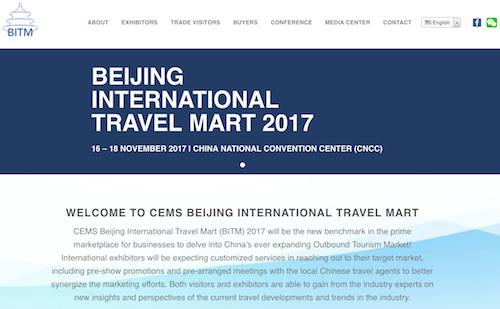
The first Beijing International Travel Mart (BITM) will take place at the China National Convention Center in Beijing from November 16 to 18, 2017, with South-east Asia in the spotlight as part of the current ASEAN-China Year of Tourism Cooperation 2017.

Covering a gross area of 10,000m2, BITM 2017 will feature over 400 international exhibitors from over 60 countries. The three-day event expects to attract some 400 local and international buyers and 6,000 trade visitors, in addition to 10,000 public visitors when the show opens to the public on day three.

In view of the ASEAN-China Year of Tourism Cooperation, the countries of South-east Asia are expected to form a sizeable ASEAN Pavilion to highlight the touristic attractions and programmes along the Maritime Silk Route.

A panel discussion on the first day would feature industry captains from both ASEAN and China, who will explore inter-regional cooperation in sync with the initiatives formulated under the Maritime Silk Route.

Another forum on the second day would be dedicated to big data and analytics as well as the latest travel technologies.

To generate awareness for the exhibition and forums, organiser Conference & Exhibition Management Services (CEMS) will also invite exhibitors to join pre-event roadshows in China.

CEMS is the founder of Beijing International Travel Expo (BITE) series in Beijing, with a track record of 25 professional international tourism exhibitions counting BITE, CGITE, XSPRITE and CITE.

Growing industry drives launch of cruise hospitality diploma in HK

0

The Hong Kong Cruise Academy (HKCA), a member of Hong Kong Cruise & Yacht Industry Association (HKCYIA), and Hong Kong Cruise Services Academy (HKCSA) are joining forces to launch the first-ever diploma programme in cruise service and hospitality management.

Launching in September, the one-year programme covers cruise and hospitality knowledge, cruise operations, overview of tourism industry, customer services, foreign languages, Standards of Training, Certification and Watchkeeping for Seafarers (STCW) Certificate, as well as other vocational skills and management knowledge.

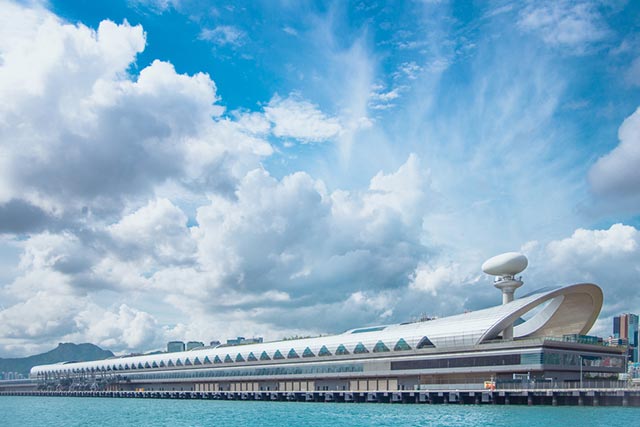
Kai Tak Cruise Terminal, Hong Kong

This is the first diploma programme in Hong Kong that includes the STCW Certificate. Graduates of this programme who have completed an internship and passed the examination can get a STCW Certificate, the minimum legal requirement for working in the hotel department on international cruise lines.

As well, the course will provide students with internship opportunities in ground services in cruise terminal and commercial yacht management services. Internship opportunities in international cruise lines will also be arranged to allow students to apply their knowledge to real-world situations.

The entry requirement for the programme is five HKDSE subjects at Level 2; or five passes in HKCEE; or other equivalent qualifications. The programme will be held at Kai Tak Cruise Terminal.

Enrolment for the programme is now open. For details, please visit www.hkcsa.edu.hk or call (852) 2728 0638.

First Wyndham-branded hotel coming to Perth

0
ProEXR File Description =Attributes= cameraAperture (float): 36.000004 cameraFNumber (float): 12.008417 cameraFarClip (float): 1000000015047466200000000000000.000000 cameraFarRange (float): 1000000.000000 cameraFocalLength (float): 35.024555 cameraFov (float): 54.399544 cameraNearClip (float): 0.000000 cameraNearRange (float): 0.000000 cameraProjection (int): 0 cameraTargetDistance (float): 49927.441406 cameraTransform (m44f) channels (chlist) compression (compression): Zip dataWindow (box2i): [0, 0, 3999, 2999] displayWindow (box2i): [0, 0, 3999, 2999] lineOrder (lineOrder): Increasing Y name (string): "" pixelAspectRatio (float): 1.000000 screenWindowCenter (v2f): [0.000000, 0.000000] screenWindowWidth (float): 1.000000 type (string): "scanlineimage" vrayInfo/camera (string): "PhysCamera013" vrayInfo/computername (string): "render2" vrayInfo/cpu (string): "INTEL/Model:15,Family:6,Stepping:2,Cache:0" vrayInfo/date (string): "10/12/2016" vrayInfo/filename (string): "NXT_Hotel_A_SKY2.max" vrayInfo/frame (string): "00000" vrayInfo/h (string): "0" vrayInfo/mhz (string): "0MHz" vrayInfo/numPasses (string): "0" vrayInfo/numSubdivs (string): "0.00" vrayInfo/os (string): "Win10" vrayInfo/primitives (string): "0" vrayInfo/ram (string): "32672MB" vrayInfo/rendertime (string): " 0h 0m 0.0s" vrayInfo/time (string): "8:32:05 PM" vrayInfo/vmem (string): "134217728MB" vrayInfo/vraycore (string): "3.25.01" vrayInfo/vrayversion (string): "Internal V-Ray version Adv 3.40.03" vrayInfo/w (string): "0" =Channels= A (half) B (half) G (half) R (half) VRayRawReflection.B (half) VRayRawReflection.G (half) VRayRawReflection.R (half) VRayRawRefraction.B (half) VRayRawRefraction.G (half) VRayRawRefraction.R (half) VRayRawTotalLighting.B (half) VRayRawTotalLighting.G (half) VRayRawTotalLighting.R (half) VRayReflection.B (half) VRayReflection.G (half) VRayReflection.R (half) VRayRefraction.B (half) VRayRefraction.G (half) VRayRefraction.R (half) VRaySpecular.B (half) VRaySpecular.G (half) V

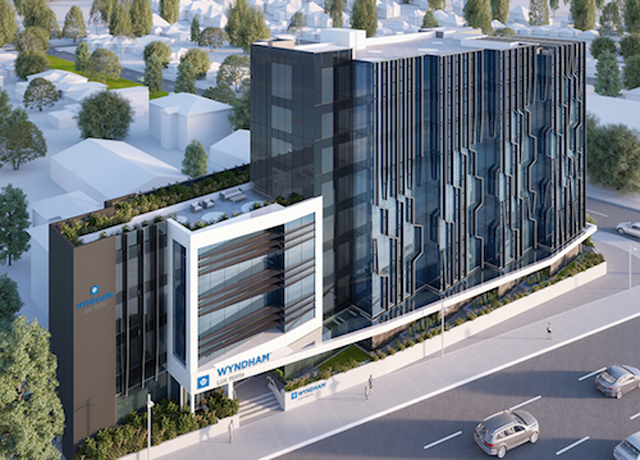
Wyndham Hotel Group will soon open a Wyndham-branded property in Perth come 2018, the first for the destination under the upscale brand.

Situated on the corner of the Great Eastern Highway and Fitzroy Road, the 120-room Wyndham Lux Perth will offer facilities including meeting rooms, a swimming pool, gym, restaurant and rooftop bar with views of the Swan River.

“We’re strategically expanding our flagship Wyndham brand in capital cities like Perth where there is a low supply – but increasing demand – for upscale accommodations,” said Barry Robinson, president and managing director of Wyndham Hotel Group South-east Asia and Pacific Rim.

Wyndham Lux Perth will be managed by Resort Management by Wyndham, which currently oversees a further 11 properties across Australia. This is the fifth Wyndham location in Australia, after Sydney, Melbourne, the Gold Coast and Torquay, Victoria.

Wyndham Hotel Group currently has 28 hotels open and operating in Australia under its Wyndham, Ramada and Tryp by Wyndham brands.

New hotel openings: MACq 01, Grand Park Kodhipparu and more

0

The latest hotel openings and announcements made this week.


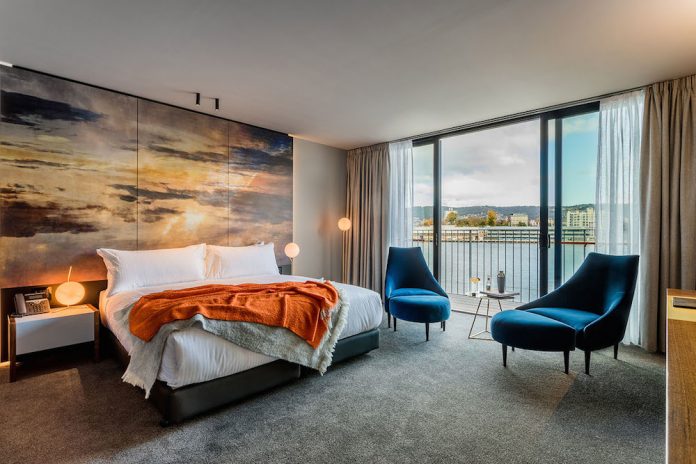
Photo credit: Adam Gibson

MACq 01 
Situated on the working docks of Hobart’s Old Wharf is Tasmania’s latest opening, a storytelling hotel. The property offers 114 rooms and suites, each inspired by a Tasmanian character whose story is conveyed through the design – think unique illustration on every door and artefacts relating to that character inside. Facilities on-site include a gym on the third floor, a lounge complete with a fireplace, The Story Bar and the Old Wharf Restaurant.


Grand Park Kodhipparu
Park Hotel Group has opened an all-villa resort a 20 minutes’ speedboat drive from Maldives’ Velana International Airport. Located on North Malé Atoll, the property features 120 beachfront and overwater villas, including 65 with private pools. Facilities on the island include an infinity pool, three F&B venues, a spa with seven treatment rooms, a fully-equipped water sports and dive centre, a fitness centre, a games and TV lounge, a kids’ club and a Cigar Room.


Hilton Xi’an High-tech Zone
Hilton’s second hotel in Xi’an city features 318 European-inspired guestrooms that feature floor-to-ceiling windows, an LCD TV, ergonomic desk and complimentary Wi-Fi. Amenities include a heated indoor swimming pool, the eforea spa, a 24-hour fitness centre and three F&B concepts. For meetings and events, the property has eight function rooms, as well as a 304m2 grand ballroom.


Shenzhen Marriott Hotel Golden Bay
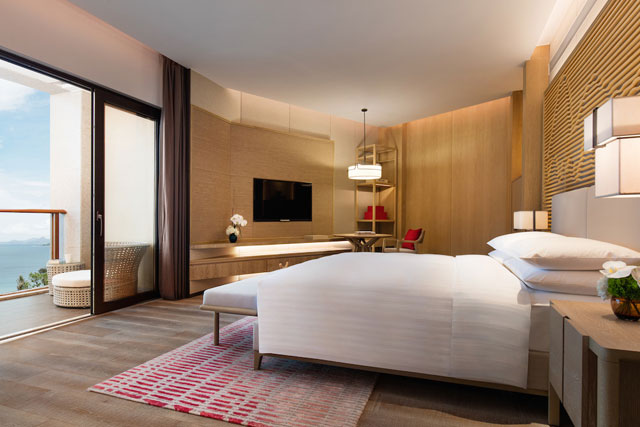
Marriott International has opened the Shenzhen Marriott Hotel Golden Bay in Dapeng New District. Located on Golden Bay’s beachfront, the hotel offers 317 guestrooms and suites and facilities such as a 24-hour fitness centre, kids’ club, spa, indoor and outdoor swimming pools, four restaurants and a lounge. For meetings and events, the property offers over 3,000m2 of event space which includes the 1,000m2 Kaisa Grand Ballroom, a 480m2 entrance foyer with a sea view and a public outdoor lawn.

Oakwood Premier OUE Singapore names GM

0

Roy Liang has been named the general manager of the recently-opened Oakwood Premier OUE Singapore.

His responsibilities include directing the launch strategy, initiating strong internal team structures, and ensuring a memorable and unparalleled guest experience.

Liang was most recently general manager at The Ascott’s Somerset Serviced Residence Liang Court and Bencoolen in Singapore.

He has also spent time in overseas management roles at Somerset-branded properties. In Malaysia, as residence manager, he led the pre-opening of Nusajaya Johor and Petaling Jaya, while in Jakarta, he spearheaded the planning and renovation process of the Somerset Grand Citra Jakarta.

A matter of location

0

Mimi Hudoyo examines why having more hotels is not the answer for some destinations in Indonesia

The Indonesia Ministry of Tourism is focusing on developing homestays to anticipate the influx of travellers, but sentiments at the recent Hospitality Investment Conference Indonesia in Jakarta suggested that some areas are facing a room oversupply and price wars.

A STR report placed Indonesia in second place after China in Asia-Pacific in terms of hotel rooms in the pipeline. By March 2017, there were around 60,000 rooms in the pipeline in the five main areas of Jakarta, Bodetabek (Bogor-Depok-Tangerang-Bekasi, the cities surrounding Jakarta), Bali, Surabaya and Bandung.
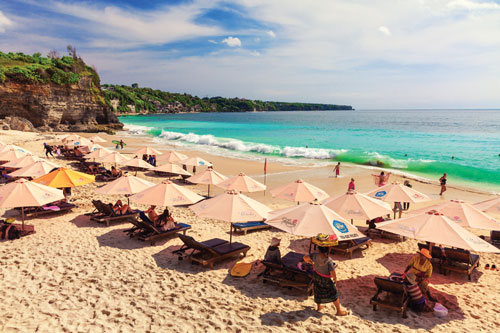
In 1Q2017, supply in Bali rose 3.9 per cent while demand grew 11.6 per cent, the latter in part driven by the visit of Saudi Arabian King Salman and his huge entourage in March.

A closer look at the island’s performance reveals varying supply and demand across Bali, said Christy Megawati, business development manager of STR. “In areas like Nusa Dua and Tanjung Benoa, where some luxury properties are, performance is more stable. The Kuta-Legian-Seminyak area struggles as competition is fierce.”

Although arrivals, especially from China, continue to grow, it is not enough to fill rooms in the Kuta-Legian area, driving prices down, she added.

In Bandung, room surplus is also an issue. “The hotels there used to have government meetings (to fill the working days) but when the government stopped public offices from organising meetings outside their premises (in 2015), they lost a big chunk of the market,” Christy said.

While the government has since loosened the restriction, the market has not bounced back to pre-2015 levels. “The

city is now (primarily) dependent on weekend travellers, and with a large room supply, visitors are (scattered) everywhere (pressing) growth in occupancy,” she said.

Samudra Hendra, owner of Milestone Pacific Hotel Group, an Indonesia hotel management company, said many Indonesian investors want to build a hotel in their hometowns to give back to society.

“We need to convince them, however, to build the right model in the right place. If the destination needs a three-star property but you build a four-star, you will end up selling at three-star rates,” he remarked.

What Milestone Pacific Hotel Group has been doing, according to Samudra, is investing where there is infrastructure development, including tertiary cities.

While this is a sensible approach, he acknowledged that when a hotel investment is successful, more would follow.

“The thing is that the local governments do not know when to stop issuing licences, so price competition will ensue,” he said.


This article was first published in TTG Asia June 2017 issue. To read more, please view our digital edition or click here to subscribe.

Taking staff seriously

0

Upcoming vocational facilities are much needed for the country to supply sufficient trained professionals and support the growing tourism industry.

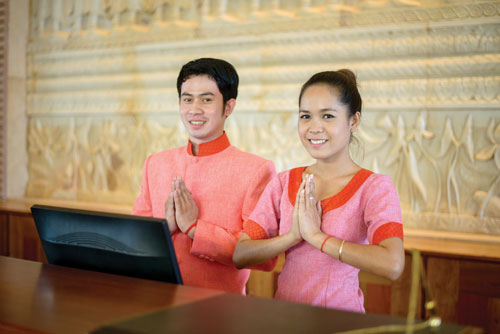
The Cambodian government is now taking serious steps to address the country’s dearth of skilled tourism workers, raising hopes that manpower and service standards gaps that long afflicted the industry could finally be plugged.

The country currently suffers a shortfall of about 200,000 trained tourism employees, with only 2,000 certified professionals graduating each year. If Cambodia is to hit its target of attracting seven million tourists annually by 2020, officials estimate it will need almost 10 million hospitality workers.

The Ministry of Tourism (MOT) has unveiled plans to build two vocational training facilities – one in Phnom Penh catering for 1,000 students, and the second training 300 students in the coastal town of Sihanoukville.

Both are slated for completion by end-2018, with enrolment starting in 2019. The centres will focus on training students to work at travel agencies and as tour guides and hotel service specialists – areas where the country falls behind regional rivals.

Luu Meng, restaurateur, hotelier and co-chairman of the Government-Private Sector Working Group on Tourism, believes training centres are essential to drive the industry forward.
He said: “Cambodia lacks a lot of the skills needed to meet tourists’ demands. We need more investment in proper training, and there are a lot of job opportunities in the tourism market that need filling.”

And with tourism still growing at a rapid rate and new hotels mushrooming across the country, Chin Meanking, restaurant owner and CEO of Cambodian Experiences, finds existing training efforts inadequate.

“The industry is growing by the day,” he said. “Specialised schools that are professional and deliver high-quality training in all areas are essential.”

Furthermore, training centres are necessary in producing high-quality employees – including at all levels of management – to make Cambodia self-sufficient and bolster the local workforce, said Chin.

“A big problem is finding qualified local staff to fill senior positions, like hotel manager at a five-star property or restaurant,” he said. “If we can’t find them locally, then we have to look abroad and this is not good for growing Cambodia’s human resources. These training centres are urgently needed.”

While there are several hospitality training centres led by NGOs operating across Cambodia – e.g. Friends International’s Mith Samlanh in Phnom Penh, and Sala Baï Hotel and Restaurant School in Siem Reap – these tend to focus on service staff such as waiters, chefs and hotel workers, rather than tour guides and operators.

Many hotels and restaurants also run their own in-house training programmes to plug the professional gap. Late last year, Cambodian hotel group, Sokha, launched its Sokha Culinary Graduates Programme for its staff.

The current lack of training facilities across the country means Exo Travel has to source its own employees and organise annual training. This includes Exo management training for department managers and supervisors, and Exo Academy for all staff. It also trains 150 independent guides each year.

Pierre-Andre Romano, Exo Cambodia’s general manager, said: “Education is a major value with Exo culture, so we have to compensate internally for what we cannot find in schools and universities here.”

Meanwhile, Cambodia’s largely unregulated service standards system is expected to get a leg up when the MOT introduces a rating scheme for recreational venues targeting tourists.

Developed to boost the quality of tourism goods and services, the coming months will see inspectors visit sights across the country, awarding restaurants that pass up to five stars; venues such as nightclubs, bars and karaoke joints of up to three orchids; while event venues, including conference halls, will receive a certification of recognition from the ministry.

According to the latest MOT figures, as of end-2016 there were 647 hotels, 1,996 guesthouses, 1,844 restaurants, 588 tourist agencies and 5,088 guides registered with the Ministry of Commerce and Cambodia Hotel Association.

However, Prum Veasna, general manager of Golden Tours, claims there are many more operating outside the realms of the law. “Those which do not pay taxes (or) comply with laws can bring down the industry for the rest of the hard workers. We need proper regulations and standards, and for them to be enforced.”

While the industry welcomes the move for its potential to eradicate “rogue operators” and elevate tourism standards countrywide, it is felt that tighter regulations need to be implemented across the board to create a level playing field.

“There are several major issues that need addressing,” said Romano, citing agents working without a Cambodian tourism license and foreign agents operating directly within the country, bringing their own operations staff, guides and bus groups, as common examples.

Last year, the MOT introduced minimum standards to the MICE industry and rolled out plans for capacity building.

“This is a good starting point,” said Romano. “But we need more for leisure. That is an important market.


This article was first published in TTG Asia June 2017 issue. To read more, please view our digital edition or click here to subscribe.

Aviation roundup: Thai AirAsia, Xiamen Airlines, plus codeshare updates

0

Here’s our weekly roundup of new air routes and codeshare partnerships.


Thai AirAsia to start Bangkok-Malé route

Come August 11, Thai AirAsia will begin daily services between Bangkok and Malé on a 180-seater Airbus A320, breaking Bangkok Airways’ monopoly on this route.

FD177 will depart Bangkok’s Don Muang Airport at 09.30 and arrive in Malé at 11.40, while the return flight will depart Malé at 12.30 and arrive back in Bangkok at 19.00.

Xiamen Airlines begins flights to Los Angeles
Xiamen Airlines on June 27 launched the Xiamen-Los Angeles service, the airline’s third American route.

Utilising a Boeing 787-9 Dreamliner, MF829 departs Xiamen at 20.00 every Tuesday, Thursday and Sunday, and arrives in Los Angeles at 18.00 the same day. The return flight, MF830, departs Los Angeles at 00.15 every Monday, Wednesday and Friday, and arrives in Xiamen at 05.30 the following day.

With this route, Xiamen will operate a total of 10 flights weekly between China’s Fujian Province and the US. The carrier also plans to launch a Los Angeles-Qingdao-Xiamen service later this year in December.

SIA, Eurowings launch codeshare operations
Singapore Airlines (SIA) has signed a new codeshare agreement with Eurowings, a Dusseldorf-based subsidiary of Star Alliance partner Lufthansa.

The new codeshare partnership will provide Singapore Airlines customers access to 15 routes on Eurowings-operated flights, including Berlin, Budapest, Dresden, Hamburg, Leipzig, Manchester, Nuremberg, Prague, Vienna, Warsaw and Wroclaw (via Duseeldorf); Edinburgh and Rome (via Munich); and Hamburg (via Manchester and Zurich).

The new codeshare flights will be progressively made available for booking through Singapore Airlines’ various booking channels.

Jet Airways expands codeshares with three airlines
Indian airline Jet Airways has announced codeshare enhancements with Air France, KLM Royal Dutch Airlines and Delta Air Lines.

In the first instance, Air France and Delta are codesharing on Jet Airways’ current service between Mumbai and Paris. Additionally, Air France, together with KLM and Delta, also codeshare on Jet Airways’ newly announced flight between Chennai and Paris, scheduled to begin October 29.

KLM and Delta will also codeshare on Jet Airways’ daily flight between Bengaluru and Amsterdam commencing October 29. Additionally, Delta will also codeshare on Jet Airways’ third frequency between Mumbai and London.

Jet Airways also codeshares on Air France services connecting Mumbai and Paris, as well as KLM’s thrice-weekly service between Mumbai and Amsterdam, beginning October 29.

Under the expanded scope, Jet Airways’ guests have access to as many as 43 European destinations via Amsterdam, 27 via Paris, and 34 in North America. Meanwhile, guests travelling from Europe or North America will gain easy access to 45 Indian cities on Jet Airways’ domestic network via Bengaluru, Chennai, Delhi and Mumbai.

Frequent flyer members of Jet Airways, Air France, KLM and Delta will continue to enjoy network-wide accrual and redemption of points on each other.