

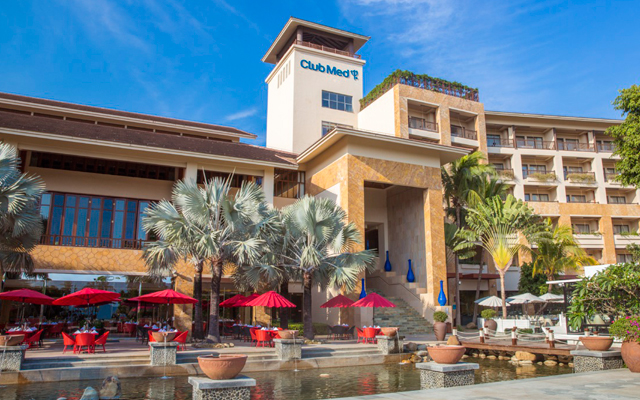
All-inclusive resorts operator Club Med has joined hands with Hong Kong-based premium travel agent Wincastle Travel to launch its first in-store boutique in the city targeting affluent Hong Kong travellers.
Located at the Wincastle flagship store in Grand Plaza, the boutique features brightly coloured furniture and floor-to-ceiling backdrops of Club Med locations, while Wincastle’s customer service consultants are on hand to explain how Club Med works.
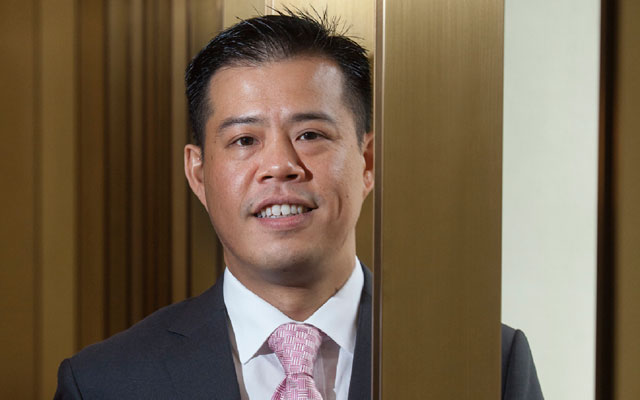
Sebastien Portes, general manager of Club Med for Hong Kong and Macau, said: “We wanted to bring to life some of the Club Med experience to our potential guests and creating an in-store boutique with a like-minded partner, Wincastle Travel. This is an innovative way to reach our core customers in the Hong Kong market of affluent couples, active families and executives.”
Jamie Lam, assistant general manager of Wincastle Travel, said: “In a time when so much travel engagement takes place online or in the digital sphere, travel agents still have an edge where trusted human interaction can make a difference complemented by offers that are not available online.”
Club Med plans to roll out further in-store experiences across Hong Kong with other travel agent partners, the company said in a statement.
To celebrate its grand opening, the Club Med Boutique is running an exclusive Wincastle Travel special offer – available until Feb 14 – where a child (aged between 4 and 11) travels free to selected Club Med resorts in Asia. These include Kabira, Japan; Bali and Bintan, Indonesia; Cherating, Malaysia; Phuket, Thailand; and Guilin, Yabuli and Sanya, China. This offer is also available for the Chinese New Year and Easter holidays.
The boutique is located at Wincastle Travel, Room 1608, 16/F, Office Tower One, Grand Plaza, 625 & 639 Nathan Rd, Mong Kok.



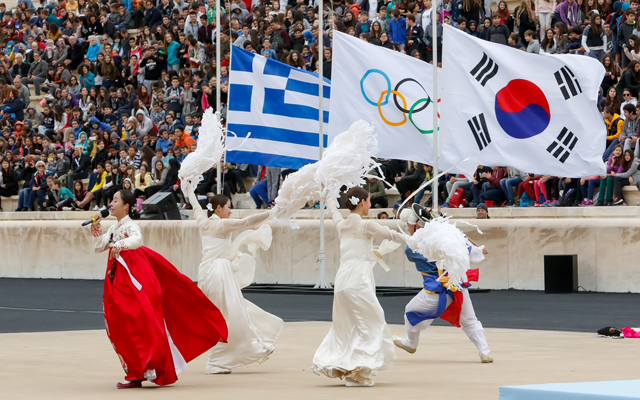







The 2018 Winter Olympics taking place in Pyeongchang from February 9 to 25 is unlikely to fix South Korea’s tourism troubles, providing only a short-lived boost, according to ForwardKeys.
Based on its analysis of 17 million flight booking transactions, ForwardKeys found that inbound flight bookings for February are 15.4 per cent ahead of the same period last year, but bookings for March are 24.9 per cent behind.
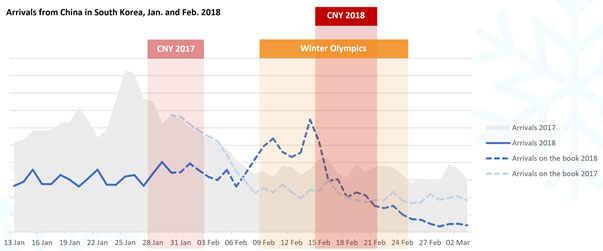
ForwardKeys further stated that one would expect there to be a steep year-on-year decline in Chinese travel to South Korea prior to the Games, and a strong surge during, with the 2017 Chinese New Year falling on January 28 and this year on February 16.
However, Chinese bookings for February are just 5.6 per cent ahead of where they were at this time last year, a stark contrast to the 108.6 per cent increase in overall Chinese outbound bookings.
There is also a marked shift in profile of Chinese visitors. In February 2017, 65 per cent came in organised groups, as opposed to independently. ForwardKeys said that this year, 82 per cent will be independent travellers, attributing this to a likely overhang from Beijing’s ban on group travel.
 On the bright side, the Winter Olympics has helped boost inbound tourism from certain longhaul markets. Excluding China, overall bookings for the Olympic period are currently 20.1 per cent ahead. Flight bookings from Hong Kong are up 24.8 per cent, from the US 23.8 per cent, from Germany 30.7 per cent, from Canada 41.6 per cent and from Malaysia 19.1 per cent.
The most spectacular growth came from Vietnam, 555 per cent ahead, the result of the combination of improved air connectivity, a visa waiver for the Olympic period and Tet holidays (Vietnamese New Year).
Olivier Jager, CEO, ForwardKeys, commented: “The reality is that South Korea is very heavily dependent on China for its tourism exports and, right now, the strongly growing outbound Chinese market is headed elsewhere in Asia. The rebuilding of diplomatic relationships between Seoul and Beijing is the key to its recovery.”
Inbound tourism to South Korea was hit after the Chinese government introduced measures to discourage its citizens from visiting, with political tensions heightened when South Korea deployed US-made THAAD missiles in response to sabre rattling from North Korea. In the year to April 1, 2017, visitor arrivals fell by 67 per cent, according to ForwardKeys.
In late November 2017, China relaxed its ban on group tours to South Korea and, in early January North and South Korea held talks which resulted in the North Koreans planning to attend the Winter Olympics in Pyeongchang.