TTG Asia
Asia/Singapore Sunday, 21st December 2025
Page 1560

Mantra Group adds Art Series to collection

0

Australia’s Mantra Group has entered into an agreement with Deague Group to acquire the local Art Series Hotel Group for approximately A$52.5 million (US$41.7 million), excluding transaction costs.

The move will see seven luxury hotels representing more than 1,000 guest rooms added to Mantra Group’s management portfolio of 128 properties and over 21,500 rooms across Australia, New Zealand, Indonesia and Hawaii.

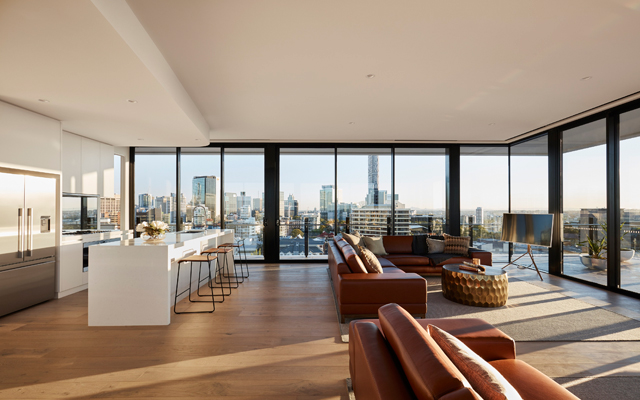
Penthouse of The Johnson, one of the Art Series properties

The seven hotels, inspired by namesake Australian contemporary artists, are The Cullen, Prahran, Melbourne; The Larwill Studio, North Melbourne; The Olsen, South Yarra, Melbourne; The Blackman, St Kilda Road, Melbourne; The Chen, Box Hill, Melbourne (currently in the final stages of construction and set to open in November 2017); The Johnson, Spring Hill, Brisbane; and The Watson, Walkerville, Adelaide.

The hotels will continue to operate under the Art Series brand.

Mantra Group CEO Bob East said: “This acquisition enhances our existing portfolio and presents a unique opportunity for Mantra Group to increase its footprint across three key locations (Melbourne, Brisbane and Adelaide) in a single transaction.”

The deal is expected to complete late this year.

Marriott, Cathay Pacific team up with Alibaba in separate deals to woo Chinese

0

Chinese e-commerce giant Alibaba Group Holding and the world’s biggest hotel chain Marriott International have entered into a joint venture to tap the growing number of Chinese travelling abroad.

The joint venture will leverage the strengths of both companies – Marriott International’s global portfolio of brands and Alibaba’s huge user base, payment system and platforms – to offer reciprocal benefits.


At the ceremony to announce the joint venture (from left) Marriott International’s Stephen Ho, Peggy Fang Roe, Craig S. Smith and Arne Sorenson; with Alibaba Group’s Daniel Zhang, Li ShaoHua, Jiang Fan and David Chai

Chinese travellers will be able to book Marriott hotels through Fliggy, Alibaba’s travel service platform. The partnership will also market directly to Alibaba’s customer base, provide a link between the loyalty programmes of both companies, and support Marriott hotels globally with content, programmes and promotions customised for the Chinese traveller.

Alipay, Alibaba’s online payments platform, will be accepted at Marriott hotels in select global markets with further expansion expected around the world.

Arne Sorenson, president and CEO, Marriott International, said: “By forming this partnership, we are pairing our hospitality expertise with Alibaba’s digital travel platform, retail expertise and digital payment platform, Alipay, and driving membership to our loyalty programmes. With the growing number of Chinese consumers exploring new destinations, this venture will introduce our hotels worldwide to this new and growing travelling class.”

In a separate partnership, Cathay Pacific has also entered into a strategic cooperation with Alibaba Group to broaden the Hong Kong-based airline’s reach to more potential customers in China.

Alibaba’s travel services platform Fliggy will enhance travel planning customisation for carrier’s passengers and promote global travel among Chinese consumers.

Alibaba Cloud, the cloud computing arm of Alibaba Group, will support Cathay Pacific through its data centres and network resources in 14 regions.

As well, Alipay will work with Cathay Pacific on marketing initiatives and explore payment service options at different touch points along the passenger journey.

New association launched to feed growing appetite for food tours

0

As the appetite for culinary tourism increases worldwide, operators can now turn to The Independent Food Tour Association (TIFTA) for support and referrals.

TIFTA was launched by eight founding members in Asia, including SingaBites, Food Tour Malaysia, Oishii Tokyo, Taste of Thailand Food Tours, Saigon Street Eats, Lost Plate Food Tours, Eating Adventures Food Tours and Queenie’s Food Tours.

Demand for food tours on the rise; food lovers in Hong Kong pictured (photo credit: Eating Adventures Food Tours)

James Pelham, co-founder of TIFTA and founder and chief taster of Singapore-based Singabites, said: “The food tour sector is constantly growing and becoming more and more popular. By starting TIFTA, we want to make it easier for food travellers to find the best tours as well as create a community where we can all help each other grow.”

Pelham envisions TIFTA as a platform that travellers can use to find reliable and high-quality food tours around the world. The association is now concentrating its efforts in Asia with the goal of recruiting 30 tours by the end of 2017.

The association accepts only operators that are “locally run and use local vendors during their tours thus putting money back into local food communities”, Pelham told TTG Asia.

“We don’t accept members who are owned by big agencies or government organisations. We want to help the small guys,” he elaborated.

TIFTA will also consider customer and peer reviews as part of its recruiting process, said Pelham, and will “keep (members’) standards high” by monitoring reviews and changes in company activity.

The corporate travel segment is also on the plate for the association’s expansion. “With our contacts across the region, we could definitely help corporate event planners,” said Pelham. “Food is one thing that everyone can agree is a good reason to get out of the office and have fun.”

Tourism Tasmania

0

Company: Tourism Tasmania
Position: Destination Representation Services for Tourism Tasmania – China; Hong Kong; Singapore
Job Specs: Tourism Tasmania is seeking professional destination representation services in the key international markets of China, Hong Kong, and Singapore. Tenderers must be based in the market for which they are tendering, and can only tender for one market. Each successful contractor will be responsible for the delivery of Tourism Tasmania’s annual marketing plan and management of all partner activities and relationships in that market.

Documents are available from www.tenders.tas.gov.au or by contacting Ms Cathryn Carey, Executive Manager – International Markets by telephone on +61 3 61655 310 or by email below.

Tenders must be submitted by 2pm Tasmanian time on 31 May 2017 by electronic lodgement at www.tenders.tas.gov.au
Contact: cathryn.carey@tourism.tas.gov.au

GM changes at Dorsett’s Malaysia hotels

0

Dorsett Hospitality has made appointment changes to two of its hotels in Malaysia.

Christina Toh, area general manager of Dorsett Kuala Lumpur, has moved to Dorsett Grand Subang to replace Hugo Gerritsen, who has taken up a new posting with Agora Hospitality International in Japan; one of the group’s business affiliations.

Christina Toh (left) and Adele Ang

In her new appointment, Toh will continue to drive strategic business directions of Dorsett Grand Subang, as well as oversee the three hotels under the Silka Hotels brand in Malaysia – Silka Cheras Kuala Lumpur, Silka Maytower Kuala Lumpur and Silka Johor Bahru.

She began her hospitality career with the Holiday Inn Penang before moving on to the then Regent Hotel Kuala Lumpur (rebranded as Parkroyal Kuala Lumpur) and Parkroyal Hotels & Resorts Group.

Toh then took up her first general manager position with Dorsett Kuala Lumpur before being promoted to area general manager in July 2011 to oversee Dorsett Kuala Lumpur, Silka Maytower Kuala Lumpur and Silka Cheras Kuala Lumpur. She also sits on the Board of Malaysian Association of Hotels as honorary secretary-general (2016-2018).

Meanwhile, taking over from Toh at Dorsett Kuala Lumpur is Adele Ang in her first general manager role.

Prior to joining Dorsett Kuala Lumpur, Adele was the area director of sales for Parkroyal Kuala Lumpur for seven years. Ang began her career in the hospitality industry as a statistician with the Pan Pacific Hotel Kuala Lumpur, followed by positions including director of sales at Le Meridien Kuala Lumpur and director of business development at Sunway Resort Hotels.

Second Four Seasons for South Korea to launch in Jeju

0
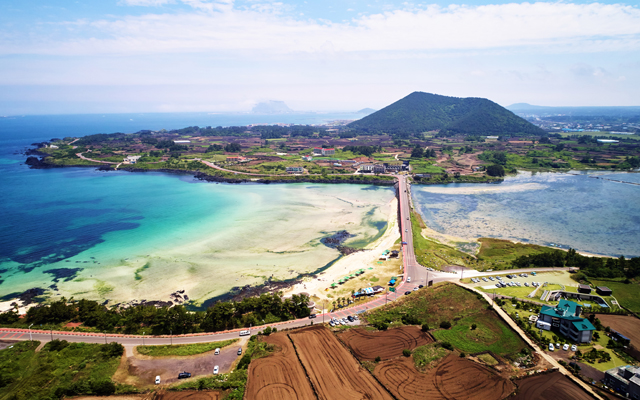
Jeju island

Following its first urban hotel in Seoul, Four Seasons’ second South Korean property is set to open in Jeju Shinhwa World, a 2.5km2 integrated development opening in phases since early 2017 on Jeju.

Four Seasons Resort Jeju Island will include approximately 240 guestrooms, suites and exclusive villas, plus restaurants and bars, state-of-the-art meeting facilities for weddings and corporate events, and a luxurious spa designed in the style of a traditional Korean tea house.

Jeju island

Including Four Seasons Resort Jeju Island, the resort development will incorporate a series of premium hotels offering more than 2,000 rooms and extensive MICE facilities.

Said to be the first of its kind on the island, Jeju Shinhwa World will encompass high-end hotels, upscale resort condominiums and villas, and retail space for international and Korean fashion brands.

The integrated development will also feature an array of entertainment options including a waterpark, theme park, international-style casino and K-pop entertainment centre.

Surging demand for Phang Nga highlights urgent need for airport

0
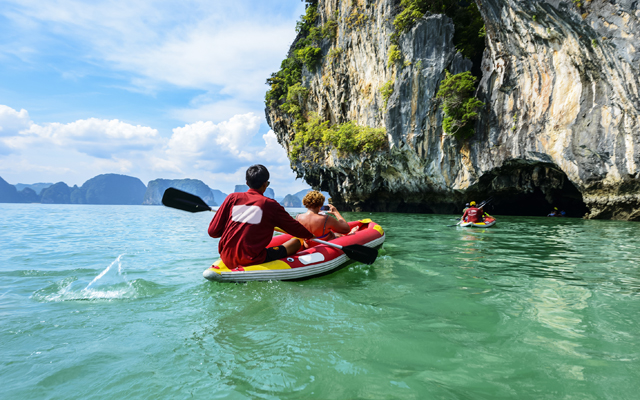
Kayaking in Phang Nga

As Thailand’s Phang Nga Province recorded a record high of nearly 4.5 million visitors in 2016, the lack of a gateway airport is looking to be a key stumbling block, according to a new report by consulting group C9 Hotelworks.

Annual arrivals growth has slowed since 2014, but the compound annual growth rate for the five years ending 2016 remains high at 29 per cent, with strong uplift from the overseas market.

Kayaking in Phang Nga

And despite strong growth from Chinese visitors led by lower margin wholesale business, average daily rates still rose eight per cent.

This is attributed to the increasing mix of overseas source markets, while Western Europe remains the key international feeder market for room nights. The report identified South Korea (+62 per cent), Hong Kong (+57 per cent), Russia (+40 per cent), China (+37 per cent) and Australia (+27 per cent) as top growth markets.

Looking at average length of stay, the number for international visitors is significantly longer at 6.7 days, compared to 2.4 days for domestic visitors.

While international visitor markets pick up, the destination is also battling a “pronounced fluctuation of visitor arrivals throughout the year”. The province last year achieved 65 per cent of its tourism receipts during the high season, which runs from October to March. Cumulatively, revenue totalled more than US$1.1 billion in 2016, with a peak in February due to the Chinese New Year.

Bill Barnett, managing director, C9 Hotelworks, stressed that “Phang Nga desperately needs a gateway airport in order to become a sustainable year-round leisure destination”.

Phang Nga and its leading resort area Khao Lak heavily rely on Phuket’s overloaded international airport. With over 12,000 registered hotel rooms in the province and a burgeoning pipeline of new projects (289 keys are expected to be added this year), something has to give, C9 opined.

Plans for the development of a privately operated airport in Thai Muang District by Bangkok Airways is currently under review as part of the Environmental Impact Assessment. While Phang Nga’s provincial government has been a strong advocate, the project has faced local opposition from the agricultural sector.

C9 pointed out that the province experienced a key shift in 2014 and 2015 when the hotel and restaurant sector surged ahead of agriculture and fisheries to become its leading industry.

“If the situation is allowed to continue the-long term limitation will stunt the province’s most important industry,” C9 stressed.

Lured by Game of Thrones world, more Singaporeans head to the Balkans

0
Peles Castle, Sinaia, Romania

Singaporean travellers are eschewing traditional favourites in Central and Western Europe in favour of more novel destinations in the Balkans, observed travel agents at the Travel Revolution fair last weekend.

The recent terrorist attacks in popular cities such as London and Paris are driving the demand for exotic locations elsewhere in Europe, said Alice Lai, assistant general manager of CS Travel.

Peles Castle, Sinaia, Romania

According to Stavri Cifligu, product manager of Balkans destination management company Albania Experience, travellers are starting to venture even further into South-eastern Europe to countries like Romania and Montenegro in what he describes as a “domino effect”.

A big draw of this region, said Cifligu, is its abundance of filming locations for popular shows such as Game of Thrones and Star Wars.

Capitalising on this trend, CS Travel rolled out low rates for its popular 10-day Europe itineraries at the fair to target family year-end travel from Singapore, said Lai.

Agency Travel Star is also providing more customised land tours and translator-guide services for these destinations, said marketing & HR manager Zheng Lingna.

“The trend now is that customers are adding land tours to their free-and-easy itineraries,” said Zheng. “They prefer to buy their own flight tickets online, then come to us with their own set of itineraries and plan their tour with us.”

Held from August 4-6, Travel Revolution also featured a line-up of Turkey, Finland, Norway and Eastern Europe specialist speakers to meet the climbing demand for the Balkans, as well as persisting interest in Scandinavia.

Wyndham Garden gets planted in Phu Quoc

0

Vietnam’s southernmost island will welcome the Wyndham Garden Phu Quoc come 2020, adding to Wyndham Hotel Group’s growing portfolio in the country, which includes the newly-opened Wyndham Legend Halong Bay and the 3,200-key Wyndham Soleil Danang opening in 2018.

The 150-villa resort will be located in Phu Quoc’s Duong To Commune, with close access to Bai Truong, the longest beach on the island; Phu Quoc International Airport; and Duong Dong Town.


Wyndham Garden Phu Quoc

Operating under a franchise agreement with Hong Phuc Land, the resort will be South-east Asia’s first Wyndham Garden to feature the brand’s new prototype design, which will feature the use of natural materials, lush colours and abundant natural light to evoke a serene environment.

Wyndham Garden Phu Quoc will feature lush landscaping throughout the resort, with an emphasis on environmental sustainability and eco-friendly materials such as wicker and wood complemented by neutral-toned textiles. The resort’s open-concept architecture will also integrate design and function with full-length windows letting in natural light to create an inviting ambience while cutting back on energy use.

The villas will be modelled to evoke the Vietnamese village-style experience, with clusters of five to seven villas sharing a large courtyard. The two- and three-bedroom villas each come with its own private pool and patio, ideal for larger groups.

Other on-site facilities include a restaurant, lounge bar, pool, gym, spa, commercial centre, and function rooms that can host up to 300 guests for meetings and events.

How OTAs can promote customer loyalty in a new era

0

What kept customers happy 10 years ago no longer works today. Internet and new technologies have completely changed consumer consumption behaviours and in turn, companies find themselves constantly adapting just to keep up.

The travel sector, for example, has evolved as a result of digitisation. When consumers began to shift towards online purchases, with the rise of online travel portals such as Expedia in the mid-1990s, physical travel agencies responded by building their presence over the web. New online players including OTAs began to emerge.

In these early days, the goal was simple: to provide consumers a new way to research and book their travel. Back then, customers were still serviced through call centres, where company representatives focus only on answering queries, and customer relationship building post-booking remained offline.

Now, with the rise of digitally empowered customers, customer expectations are evolving yet again. Many OTAs are still behind and need to change their approach yet again to create a new era of customer experience management. The OTAs that thrive will be the ones that evolve their model from an online/offline model to a true omni-channel contact centre that services the entirety of the customer journey.

Five characteristics of a digitally empowered customer:

• Well-informed and always online. Mobile phones and connected devices now play an essential role in our daily routines – whether it is texting, having access to emails or browsing through the web, chances are most of our waking hours are spent online.

• Pressed for time. Being well-connected also means that customers are now used to having instant access to information, amplifying any negative effects from having delays.

• Little attention. As a side effect from the high volumes information constantly pushed out, customers’ attention spans have reduced significantly over the years, making it increasingly challenging for businesses to stand out.

• Non-linear shopping journeys. A digitally empowered customer’s path to purchase is complex – ranging from online sources including websites and social media to physical stores, there are multiple touchpoints that could influence purchase decisions.

• Expect best price, best quality and best service. With the endless amount of choices readily available today, customers have better control over what they want than ever before.

The changing consumption behaviours have evolved customer expectations in three main ways:

• Immediate: Customers today demand assistance with more immediacy than they ever have, expecting a resolution in just 30 minutes for urgent requests conducted over phone. Almost all of them rate the speed of response as the most critical factor in service.

• Exhaustive: Customers expect a seamless experience when interacting with brands, no matter which channel – from call centres to digital messaging apps, emails and in-store services.

• Personal: Customers respond positively to personalised content and services – almost seven out of 10 customers say that they feel valued when customer services know them by name. Almost half of them feel that it is critical for their service history is remembered.

Designing a positive customer experience

OTAs that want to most fully engage with today’s digital consumers must take the perspective of the traveller to achieve long-term customer loyalty. They need to design a positive customer experience at every touchpoint of a traveller’s journey – pre-booking, purchase, pre-travel, in-travel and even post-travel.

Customer services must be strategic and designed to each customer experience. OTAs should make their assortments and product ranges transparent, while curating a relevant and engaging booking experience that keeps the customer’s interest.

When it comes to customer communications, it is essential to connect with customers across all channels, while taking advantage of the benefits afforded by each channel, and noting customer preferences.

For example, generally, most customers (75 per cent) prefer to discuss transactional matters by phone, while phone or emails are good for discussing product information and finalising administrative matters.

However, speed is also an important factor. Almost all (91 per cent) of travellers are happy to use knowledge base or automated systems as long as these are tailored to meet their needs.

While offering services through multiple channels may be complex, it is important to remember that every customer is unique and prefer to communicate via the channel of their choice. OTAs need to support this by deploying an omni-channel servicing model that offer seamless and personalised customer interactions across all channels.

Simply put, OTAs need to create an end-to-end travel experience that is easy, personal and convenient to successfully build customer loyalty from today’s digitally empowered customers.


Hunter Johnson is the director of Sabre Global Consulting, Asia-Pacific.