Genting Cruise Lines is pioneering cruise journeys to a private island in the south of Myanmar in partnership with local resort operator, Tint Tint Myanmar Group.
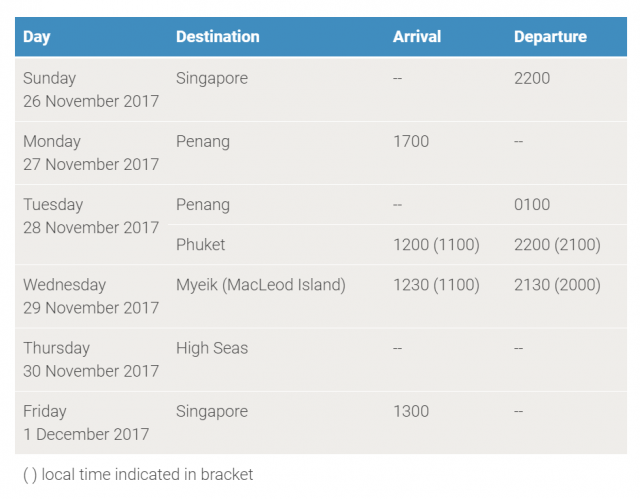
The SuperStar Libra made its inaugural arrival at Mac Leod Island on November 3 as part of its latest four-night roundtrip cruise itineraries, which also stop at Kuala Lumpur, Phuket, and Penang.
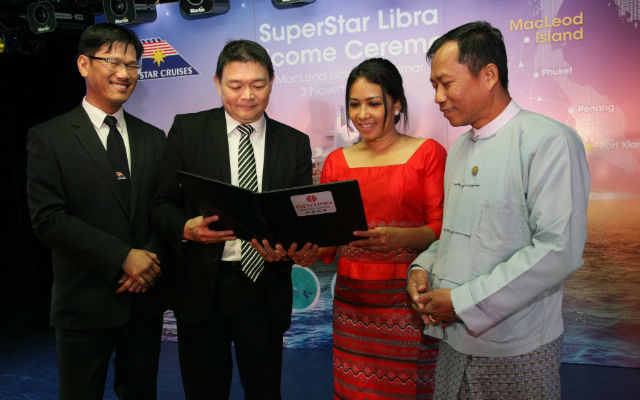
Joining hands to promote cruise tourism to private Myanmar island: (from left) Star Cruises’ Ang Moo Lim, Genting Hong Kong’s Raymond Lim, Tint Tint Myanmar Group’s Tint Tint Lwin, Myanmar Ministry of Hotels and Tourism’s Myint Htwe
The Genting Hong Kong subsidiary said this would be the first time an international cruise enterprise is partnering a Myanmar company in cruise port development, which it expects will open new opportunities for the domestic and regional cruise tourism market.
“Private Islands are a key feature for many cruise lines in the Caribbean and, as a pioneer of the Asian cruise industry, we are excited to be partnering with Tint Tint Myanmar Group to help create the infrastructure on MacLeod Island to become a key private paradise for Genting Cruise Lines’ guests and to start Myanmar on its journey to become a worldwide cruise destination,” said Kent Zhu, president of Genting Cruise Lines.
As part of the collaboration, the Yangon-headquartered Tint Tint Myanmar Group will also leverage its expertise to provide entertainment and experiential shore excursion options for visiting guests.
Genting Cruise Lines has also announced itineraries for Star Cruises and Dream Cruises that include the opportunity to cruise to to MacLeod Island.
Fight for automy in Catalonia has had an impact on tourism
International air reservations for Catalonia fell 22 per cent from the beginning of October up to October 25, benchmarked against the equivalent dates last year, according to ForwardKeys.
Olivier Jager, CEO, ForwardKeys said: “Domestic political unrest almost always deters visitors and that is what we are seeing now. This will also have a knock-on to other parts of Spain because many visitors arriving in Catalonia will travel around the country.
Fight for automy in Catalonia has had an impact on tourism
“If the political crisis worsens, I fear we will see a further decline in bookings. This trend will be of great concern because travel & tourism represents such a large proportion of the Spanish economy, over 14 per cent of GDP.”
ForwardKeys analyses 17 million flight booking transactions a day to forecast future travel patterns.
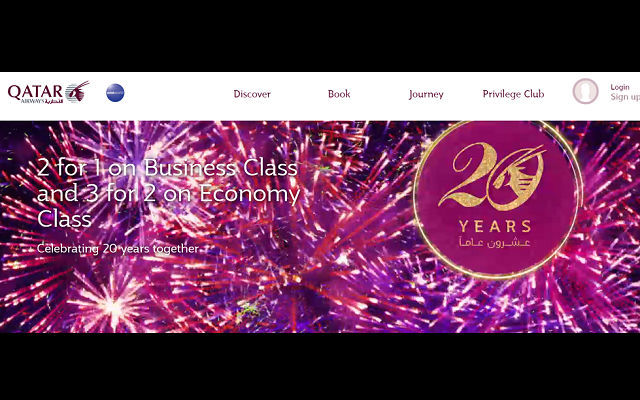
To commemorate its 20th anniversary, Qatar Airways is offering two Business Class tickets for the price of one, and three Economy Class tickets for the price of two, from November 1 to 10.
The promotion is valid for all Qatar Airways’ flights to all 150 destinations in its network spanning six continents, including the new ones added in 2017. Flights for destinations to be added next year are currently not available for booking, thus not included in this promotion.
Two for the price of one fares for a limited time
The offer applies for travel in the period of November 1, 2017-October 31, 2018.
Additionally, Qatar Airways is also offering 20 Privilege Club members Gold membership and discounts of up to 50 per cent on redemption tickets to select destinations.
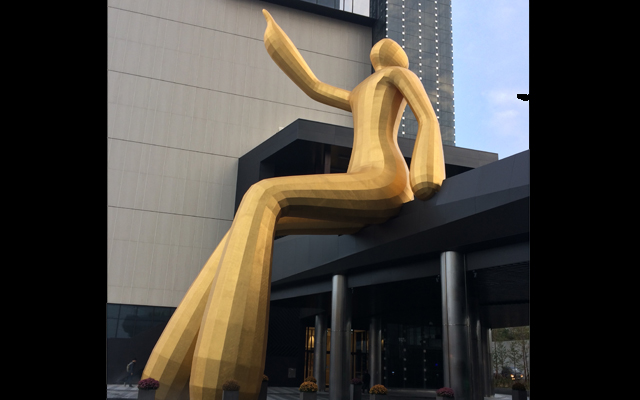
All that glitters is gold. This sculpture, an emblem of the complex, beckons guests to visit
Aside from the challenge of filling 1,700 new rooms in a soft market, AccorHotels’ new ‘lifestyle hotelplex’, Seoul Dragon City, is a test of whether four Accor brands of different price points can co-exist without any downsides in one complex.
The brands are Grand Mercure (202 rooms), Novotel Suites (286 rooms), Novotel (621 rooms) and ibis Styles (591 rooms).
Interviewed about this in Seoul on Wednesday, Accor’s chairman and CEO Sebastien Bazin told TTG Asia that Seoul Dragon City is a “bigger, stronger” push by the chain in co-locating brands under one roof.
“Novotel and Ibis have shared a common lobby space, same back of the house – there’s a lot of efficiency which the clients won’t notice,” said Bazin. “Why should we limit this to only two brands when three or four will bring us even greater economies of scale?”
All that glitters is gold. This sculpture, an emblem of the complex, beckons guests to visit
On the question if a Grand Mercure client would take kindly to sharing space with an ibis guest, Bazin said: “If we have clients who don’t accept differences in means, social status, colour of the skin, religion, culture, they shouldn’t be staying with us. They should accept these differences. The more they cross, the better their experiences will be. It is totally part of my strategy to mix them, as well as with the locals, as much as I can (in areas such as F&B and entertainment).”
Bazin said hotels had been “too draconian” in their thinking that a restaurant in Novotel should only be for Novotel guests, or a bar in ibis should only be for Ibis guests.
“It’s totally wrong to me. When you go to a restaurant in any place, you do not know who the person having dinner next to you is. He could be a student, an investment banker, a government official, a CEO. Why do we accept that elsewhere and not in hotel restaurants? This is precisely why we built the Sky Kingdom,” he said.
Sky Kingdom, suspended on the top between ibis Styles and Grand Mercure buildings, comprises four full floors of entertainment. Highlights include the King’s Vacation, a lounge bar that reinterprets the royal European vacation, with a range of cuisines and beverages on offer; an indoor swimming pool, Skywalk; and a performance stage.
Another is the Sky Beach, a private beach club with music and international cuisine with a setting reminiscent of the legendary beach clubs of Greece or Las Vegas.
The only downside to the hotelplex that Bazin could think of, was the possible price comparison.
“People have to understand why they pay US$20 more to be in the same facility,” he said. “Other than that, the design is superb, the location is great and, don’t be afraid of the size, 1,700 rooms. Hotels in Las Vegas have 6,000 rooms.”
Patrick Basset, Accor’s COO Upper South-east and North-east Asia, added that Seoul Dragon City was a mixed-use development with multiple market segments including MICE, long- and short-stay service apartments, and is designed to be a new destination in its own right.
A site inspection led by cluster general manager of Seoul Dragon City, Jerome Stubert, shows a jaw-dropping ultra-modern complex with each hotel easily the next-gen product of its brand.
MICE facilities are equally contemporary in design and have “the highest technology possible”, said Basset. There are two grand ballrooms of 1,200m2 each, 17 meeting rooms, and 11 restaurants and bars.
The developer, KOSDAQ-listed Seobu T&D Corporation, is said to have spent some US$400 million on the construction, which represents its foray into hotel investment, said a source.
Accor started its partnership with the Ambassador Hotel Group 30 years ago managing the latter’s hotels. Since 2005, the joint venture, Accor Ambassador Korea, has been managing other people’s assets.
Seoul Dragon City takes its name from the Yongsan (Dragon Mountain) District where it is located. This is in the centre of Seoul close to major business districts such as Yeouido and Gangnam, and commercial districts including Itaewon and Myeongdong, said Accor. The complex is adjacent to malls and shopping centres, movie theatres, tourist attractions and embassies, it added.
The hotelplex is 57km from Incheon International Airport and 22km from Gimpo International Airport.
Two of Indonesia’s major travel agency associations have launched online platforms, as the industry pushes forward in its integration with the digital economy.
Both the Association of the Indonesian Tours and Travel Agencies (ASITA) and the Association of Air Ticketing Companies (ASTINDO) emphasised the importance of being present in the online space in order to compete with OTAs, which they said have been “eating up” offline business.
Indonesian stakeholders are pushing for greater digital integration to streamline the tourism industry
“Together with Alexia, a local IT company who has experience in airline business, ASTINDO created a B2B2C platform to help the brick-and-mortar, middle and small scale travel companies to get back and stay in business,” said Sjachrul Firdaus, ASTINDO’s national board executive director.
The Astindohub platform is white-labelled, which means agents may use their own brands while being fully supported by Astindohub.
“There will be no Astindohub label on the agent’s websites,” explained Sjachrul.
The Astindohub online system accommodates GDSs and allows every association member to present products even if they are not an IATA, an appointed agent, or have owned a tour product.
Meanwhile, ASITA launched the B2B AsitaGo website on July 2017 to help members in 34 provinces across Indonesia transition to digital with an affordable investment.
“We as online intermediaries establish partnership between agents and airlines or hotels,” said Prastyo Hendarso, general manager of AsitaGo.
Prastyo explained that AsitaGo is a marketplace where travel agents meet with airlines and hotel operators to negotiate prices and rooms or seat allotments.
To enter the system and use the engine, agents need only to select the chapter they belong to, and log in with their access code.
Meanwhile, Astindohub activity comrpises four layers. The first is of the IATA wholesale agent (the “organiser”); airlines and hotels; API (Application Programme Interface) owners; and airline appointed agents. Each is required to pay the 20 million rupiah (US$1,538) rupiah joining fee.
The second layer is the reseller, be it an IATA agent and or agents that have been appointed to some airlines. The joining fee is 10 million rupiah. The third is the sub-agent that only owns a legal entity to open a travel agent, and the fourth is the individual agent who does not own anything but is willing to be in the business.
“The wholesaler will look for its reseller down-liners to sell their products. The reseller will look for its sub agent to sell the products and so on,” Sjachrul said.
Both Astindohub and AsitaGO charge 2,500 rupiah per domestic transaction and 5,000 per international transaction.
Dyah Permatasari of Jendela Tours and Travel, an organiser at Astindohub, said that the system has benefited her business in various ways.
“The system has sped up every transaction, cut the cost in human resources, and broadened the business in terms of range,” she said, expressing optimism that there will be a 20 to 30 per cent increase in sales in the year to come.
“We are still in the process of ensuring the system works perfectly. Now, we are in the second phase with seven organisers doing the pilot project. We will accomplish the second phase by December of this year, and target to complete the third phase by mid of 2018,” explained Sjachrul.
He shared that that the association is targeting to have at least 50 per cent of the over 700 ASTINDO members join Astindohub.
The obstacles, Sjachrul said, come from traditional travel agents who are resisting the shift to digital. “We are working very hard to change their mind set,” added Sjachrul.
Chinese online travel giant Ctrip has acquired Trip.com, a Silicon Valley-based travel planning and recommendation startup, which will allow Skyscanner to leverage Trip.com capabilities to launch in-trip content.
According to an announcement on the Trip.com website, the acquisition means “on a daily basis, we’ll be working with Skyscanner, Europe’s largest flight metasearch and part of the Ctrip Group as well, to bring some of what you’ve known and loved about us to their… app and audience”.
Skyscanner users would be able to see points of interest along with travel ideas
Skyscanner’s chief technology officer Bryan Dove commented: “Our aim has always been to make travel search as simple as possible, providing travellers everything they need in one single place.”
“Adding Trip.com’s content to Skyscanner’s offering represents the next step towards that goal. Trip.com is inherently social and mobile, and we’re hugely excited to learn from, and work alongside, their team.”
Trip.com’s team of 30 will continue to operate from their current office locations, alongside co-founders Travis Katz and Ori Zaltzman.
Founded in 2010 as Gogobot, the company has since raised US$39 million dollars in total funding from investors including Expedia, Battery Ventures, Redpoint Ventures, Google Chairman Eric Schmidt’s Innovation Endeavors, TechCrunch founder Michael Arrington, MySpace founder Chris DeWolfe, Square CEO Keith Rabois and angel investor Oren Zeev.
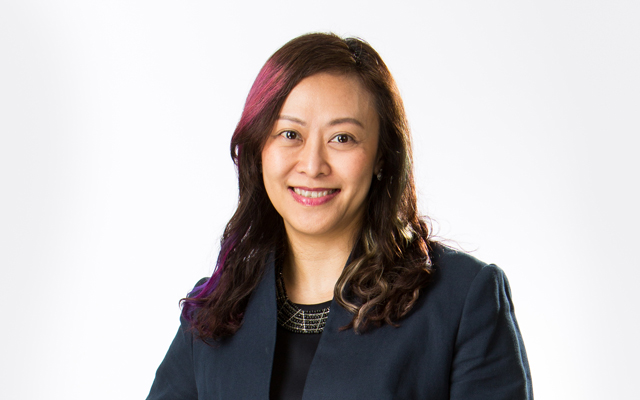
Ang: greater awareness of attractions beyond Universal Studios
Although Sentosa continues to receive high international arrivals, the island grapples with the challenge of attracting visitorship beyond its centrepiece attraction, Resorts World Sentosa.
To draw visitors to other areas on the island, Sentosa Development Corporation (SDC) is reaching out to the trade by participating in international roadshows with Singapore Tourism Board, during which it rolls out special bundles for buyers.
Ang: greater awareness of attractions beyond Universal Studios
It has also stepped up its digital efforts to reach out to international visitors. One effort is partnering with Ctrip to push attraction tickets, editorial content and special promotions to outbound Chinese, one of its biggest source markets.
SDC’s chief marketing officer, Lynette Ang, told TTG Asia: “For our key tourist markets, Sentosa has very high brand recognition… Most people know about Universal Studios Singapore because that’s a brand name, but they’re not sure what else there is (on Sentosa).”
She said that “fun experiences that you cannot get anywhere else in Singapore”, including Skyline Luge Sentosa and AJ Hackett Tower, can benefit from greater awareness among international markets.
Ang added that SDC is currently building a new mobile app, on which visitors can purchase attraction passes, plan their itineraries on the island and access maps and trail information. The app is set to launch in early 2018.
To complement these efforts, SDC has also recently formed an internal data analytics committee to look into problem statements – such as how to improve guest experiences – that can be addressed using data.
“Data is very critical. Our island partners have a lot of data, but we’ve not accessed it,” said Ang. She added that with the new focus on data, SDC can now offer its partners insights in exchange for transaction and survey data.
With efforts to launch Japan National Tourism Organization (JNTO)’s Manila office underway, newly-appointed executive director of the preparation office, Daisuke Tonai, is optimistic that a stronger presence in the market will help drive more traffic to the Land of the Rising Sun.
Previously, Tonai was a director with the Japan Convention Bureau, but he is currently in Manila and working to get the new office up and running as soon as possible. Assisting him in Manila is Daiki Nobekawa, who transitions from being senior assistant manager of JNTO’s inbound promotion department South-east Asia to the director of the Manila preparation office.
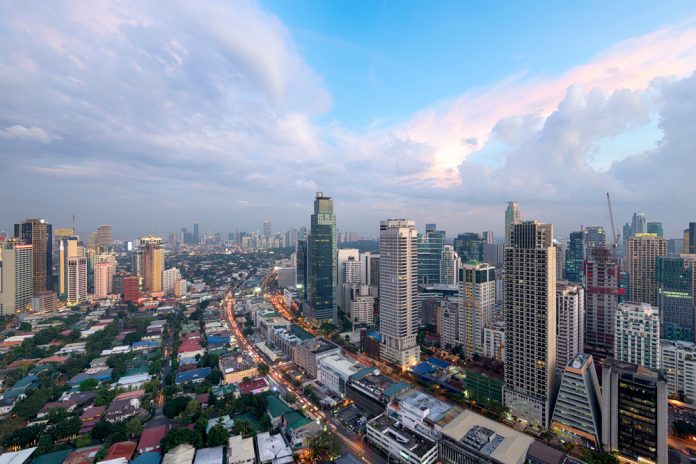
The skyline of Makati, a city in the Metro Manila region
While the launch date is yet to be announced, Tonai proffered other details to TTG Asia. For example, JNTO plans to have five staff members when the office officially opens, and will place equal emphasis on both the leisure and business events markets.
On why JNTO decided to open a branch in Manila, Tonai shared: “Philippines is one of the prospective markets, as the number of Filipino visitors to Japan has been rapidly growing in the past few years. The number of Filipinos who visited Japan in 2016 was 347,861, which was a 29.6 per cent growth year-on-year.”
Currently, the Philippines is the 10th top inbound market. From January to September this year, the number of Filipinos who visited Japan numbered 292,800. This is a 22.1 per cent increased compared to the same period last year.
“Aside from the Philippines, other markets in South-east Asia have also increased, and that is why the region is one of Japan’s most important markets,” Tonai pointed out.
As of September 15, 2017, Japan surpassed the 20 million visitor mark, and is well on its way to surpass its record of 24 million arrivals last year. The Japanese government’s eventual goal is to increase the total number of international visitors to Japan to 40 million by 2020.
“To achieve this goal, marketing and promotion in emerging markets is very important,” he said.
Aside from the soon-to-open Manila office, JNTO opened two other South-east Asian offices in Hanoi and Kuala Lumpur, in February and March this year, respectively. In total, the organisation has 20 offices around the globe that engages in promotional activities.
Reigning European soccer champions Real Madrid are to participate in a giant new leisure park in southern China as part of their promotional campaign to capture new fans in Asia, and in doing so help attract more visitors to their home city.
The plan is to set up a museum at the Hengqin Novotown cultural and entertainment complex in Zhuhai, near Macau. This was presented in Beijing by former Real and Spanish national team forward Emilio Butragueño, now the club’s director of institutional relations.
The attraction will open as part of a project by Lai Sun Group; photo credit: IP2 Entertainment
Due to open in 2021 as part of a development by Hong Kong’s Lai Sun Group, the 12,000m2 pavilion will offer various interactive experiences, a team kit shop, and a themed restaurant.
Other companies involved in the project include National Geographic and film producer Lionsgate.
“The Chinese market is full of opportunities and it is only by working from the inside that we can be successful,” said the club’s director general, José Ángel Sánchez.
Real Madrid, which has set up its own business office in Beijing, is the most successful club in European football history, having won the UEFA Champions League 12 times, and its predecessor, the European Cup.
The main aim of the park is to further attract the interest of the estimated 185 million Chinese people who regularly follow world football, he said.
A spokesperson from the Spanish capital’s tourism board Destino Madrid said Real Madrid is “one of the most valued tourist attractions for this market”.
Real Madrid’s original museum forms part of its home ground complex, the Santiago Bernabeu Stadium, which the spokesperson has pointed out “has become one of the most visited (attractions) in the city”.
“Football is an asset and a recognisable brand for Madrid. The successes of the Madrid teams have made these clubs great ambassadors, and promoting the city beyond our frontiers.”
Taking luxury on planes to the next level, Singapore Airlines is adding Suites – complete with full beds and bathrooms – to its A380 fleet.
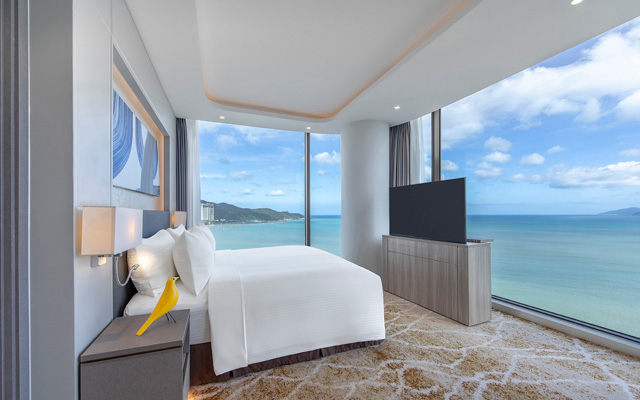
Each Suite is now furnished with a flat bed with an adjustable recline and a separate chair. For couples travelling together, the beds in the first two Suites of each aisle can be converted to form a double bed. When not in use, the bed can be stowed completely, creating even more space within each Suite.
A bed in the Suite
Each Suite also has a 32-inch full HD monitor that can swivel for different viewing angles, a full-sized personal wardrobe, customised handbag stowage compartment and amenity box. The Suites cabin also features two lavatories, one of which has a sit-down vanity counter.
The new cabin products will enter service next month on the first of five new A380 aircraft entering the fleet. Retrofit work will also take place on 14 existing aircraft to ensure product consistency across the airline’s entire A380 fleet.
Lavatory within the Suite
The research, design, development and installation of the new products on all 19 Singapore Airlines A380s represents an investment of about US$850 million.
The new Singapore Airlines A380 will be configured with 471 seats in four classes, featuring six Suites and 78 Business Class seats on the upper deck, as well as 44 Premium Economy Class seats and 343 Economy Class seats on the main deck.