TTG Asia
Asia/Singapore Thursday, 21st May 2026
Page 1554

Ctrip’s colossal ambitions

0
Sun: breaking into second-tier Chinese cities

Ctrip is at the top of its game. What is its future direction as a Chinese brand, and as an international brand? What work still needs to be done?

Ctrip is dedicated to serving Chinese outbound travellers and still has a long way to go. We are very lucky to be in this huge market and we are only touching the tip of the travel opportunity.

Through online and offline stores, our brand strategy in China covers all customer bases and types, especially mid- to high-end customers. We have invested in Skyscanner, a leading flight meta-search company with approximately 65 million monthly active users and over 200 million global searches every month. Our omni-channel strategy enables us to understand and serve Chinese travellers through our comprehensive product offerings and 24/7-customer service, which is at the core of our DNA.

Following our customers’ global footprint, Ctrip aims to bring prosperity to the destinations with the Chinese traveller’s strong spending power. From Ctrip’s report and data of 2017 National Holiday destination distribution, 46 per cent of the six million Chinese travellers went to South-east Asia, making this region a favourite destination. Ctrip contributed over four million hotel roomnights to the region in 2016 and this number is expected grow to 6.5 million last year. Travellers from first-tier cities such as Shanghai and Beijing spent an average of well over US$1,400 per head.

As our Chinese customers travel internationally, Ctrip will remain by their side and ensure that our service capabilities can cater to their needs and bring ease and efficiency to their travel experience, and at the same time promote cultural exchange and contribute to the world.

Tell us about the additional Priceline Group investment and the Skyscanner acquisition. Where have these recent developments taken Ctrip so far?

Priceline and Skyscanner are Ctrip’s important business partners. We work closely together to increase product offerings and improve efficiency and service quality. Our partnership with Priceline and Skyscanner enables Ctrip to better serve the ever-growing Chinese outbound tourists and their needs.

With Priceline Group’s international travel resources, Skyscanner’s technology and quality service in air ticket search and Ctrip’s own understanding of Chinese customers, we are confident of creating enjoyable experiences for all of our users.

Where are the growth opportunities?

The online penetration rate of the Chinese travel market is only about 15 per cent. While customers from first-tier cities are familiar with online travel booking, those in lower-tier cities are not. We see the need to educate and provide a personalised service to this new customer base.

Also when you compare China’s 10 per cent passport-holder rate to that of the US at roughly 40 per cent, and the population size of China, it is very clear there is still a very large untapped opportunity for outbound business.

Travellers from secondary cities are spending as much, if not more than their first-tier counterparts. During last year’s Labour Day Holiday, eight of the top 10 cities with the highest per capita travel spending were Dalian, Shenyang, Hangzhou, Nanjing, Jinan, Fuzhou, Xiamen and Changchun. The other two were Shanghai and Beijing.

Ctrip turns 20 in 2019. What other strategic moves are needed to take the company to the next level and what is the next level?

Apart from ongoing technical innovations, Ctrip is expanding into lower-tier cities in China (with the opening of 5,500 physical stores) and increasing our ability to serve Chinese outbound customers. In full support of China’s Belt and Road Initiative, Ctrip has also set out to allow travel to connect and bridge the East with the West. With more integrated products and services, we can better serve the 120 million-plus Chinese outbound customers who wish to seek services that are holistic and efficient.

Lower-tier cities will be the key driver of the growth of China’s travel industry for the coming decade. Ctrip is well positioned to benefit from both increasing online penetration as well as consumption of growth trends in lower-tier cities. We have created omni-channels through our network of about 6,000 travel agencies across China. We have expanded our product offerings in these markets and have streamlined user experience by allowing multi-product reservation and order changing services.

Diversity, efficiency and a more global and innovative approach will take us to the next level.

What is Ctrip’s biggest challenge and who is its biggest competitor?

We have been dedicated to drive travel innovation since 1999 (when Ctrip was founded). It will not be easy to replicate the experience and talent that we have accumulated through the years. The only way for us to deliver sustained value to our users and partners is by focusing on our core competencies.

We have established a well-grounded travel ecosystem through investments and partnerships. This helps Ctrip to offer efficient and long-lasting win-win relationships with all partners on our supply chain. In order to deliver the most excellent travel experience for our customers, we will need to pay close attention to develop the required expertise. From global SOS systems to 24/7 call centres, we need to maintain and ensure that high-quality customer service is always our top priority. These solid foundations have allowed Ctrip to overcome challenges and to remain a travel friend to our Chinese customers.

Share some examples of Ctrip’s’ innovations.

As a 24/7, one-stop-shop, customer-centric travel platform, Ctrip continues to invest more than 15 per cent of revenue to invest in the ABC of technology – AI, big data and cloud computing.

Customers who book any travel product with Ctrip are invited to join our free Virtual Tour Manager (VTM) service on the Ctrip app as well as the WeChat platform. Customers can join the group chat to exchange information with other Ctrip customers in the same destination and directly contact our tour managers and local tour guides for help. VTM has been serving millions of travellers per year. Ctrip’s global SOS service is also provided on the basis of VTM. Whenever and wherever anyone is in an emergency situation, Ctrip customers can call for help through VTM.

During the Las Vegas shooting incident in early-October, Ctrip knew within two minutes where its customers were, identified those in the city in 20 minutes, located them in an hour and offered those who wanted to go home, to fly out the next day.

Crip’s QR code ticket purchase app has resulted in a 20 per cent increase in admission ticket sales for Zhangjiajie National Forest Park, where the prototype for various elements in the movie Avatar were taken. Overseas, the app helped the Sydney Aquarium, Sydney Tower, Sydney Wild Park and Madame Tussauds increase sales by a whopping 460 per cent.

Leveraging on AI technology, our new online chatbot has been helping customers solve their problems, serving 70 per cent of Ctrip’s total hotel-related customer services and 40 per cent of flight ticket-related customer services.

How has Ctrip changed since you joined the company and what is your mission as CEO?

I have grown alongside the company as I made the transition from CFO to COO and now to CEO. Ctrip is currently operating in an ever-growing market with evolving travel trends and customer needs to fulfil. Apart from ensuring top customer service and experiences, we are also looking into providing wider high-quality travel products and services. This cannot be achieved without investments in R&D and our ability to innovate to ensure that AI and big data can better serve our customers and partners.

We are also fostering a culture of innovation through hosting special (start-up) programmes, most notably the Baby Tiger Programme, which drives and transforms new business ideas into innovative products that serve our customers and partners.

My mission is to ensure that Ctrip creates more enjoyable travel experiences for our customers and that we grow with all of our stakeholders. With the right resources, flexibility and innovative culture within our reach, we will continue to be that one-stop platform where all questions are answered, where needs are fulfilled and where everyone mutually benefits from being in this ecosystem.
Melco to replace Crown Towers with new NÜWA brand

0

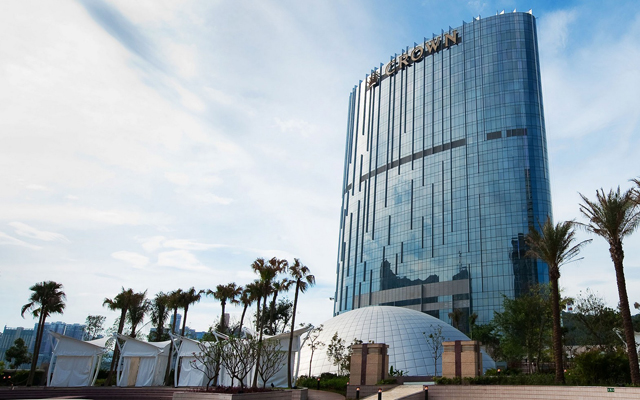
Gaming and entertainment developer Melco Resorts & Entertainment will rename its Crown Towers hotels NÜWA with effect from January 16.

A brand of former Melco investor, Crown Resorts, Crown Towers hotels sit within Melco’s flagship City of Dreams properties in Manila and Macau.

NÜWA is Melco’s newest luxury hotel brand

According to Melco, the new brand marks the first step towards the launch of phase three of City of Dreams Macau in the second quarter of 2018.

Inspired by the eponymous heroine from Chinese mythology, NÜWA represents classic Asian refinement. Lawrence Ho, chairman and CEO of Melco Resorts and Entertainment said: “We are excited to introduce NÜWA. The new hotel brand embodies the very essence of Melco’s pursuit to provide our guests the very best in sophistication, quality and innovation.”

Cebu City Marriott Hotel set for relaunch under Seda brand

0
Marriott out of Cebu Business Park after 20 years

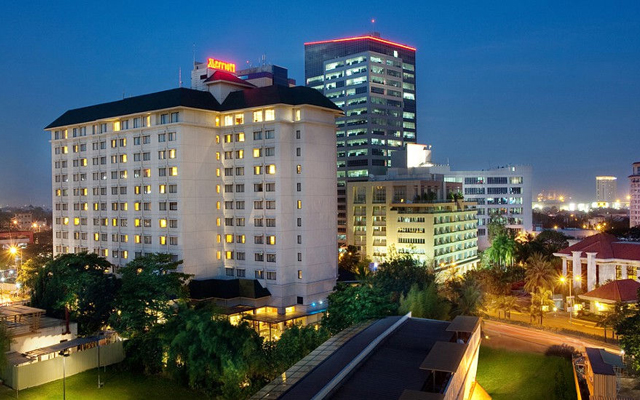
With Marriott International’s contract to manage Cebu City Marriott Hotel ending December 31, 2017, hotel owner AyalaLand Hotels and Resorts Corporation (AHRC) has announced the property will reopen under its own brand, Seda, later this year.

The hotel has closed its doors and will undergo refurbishment on rooms and amenities before its relaunch.

Marriott out of Cebu Business Park after 20 years

Cebu City Marriott Hotel, which opened in 1997, has over the years helped position Cebu Business Park as the premier business district in the city and region, said AHRC’s president and CEO Al Legaspi.

But now, Seda, which has more than 1,400 rooms throughout the Philippines, is “ready to fill the needs of Cebu Business Park locators and visitors”, Legaspi continued.

Since launching in 2012, the Seda brand has expanded its footprint across the Philippines, including in the Bonifacio Global City in Taguig, Bacolod, Cagayan de Oro, Davao, Iloilo, Nuvali in Laguna, and Quezon.

Seda in the Cebu Business Park will be the brand’s biggest in the Visayas island, Legaspi shared. Construction on another Seda hotel will begin at Cebu IT Park, set to be the first Seda hotel and serviced apartments outside of Metro Manila.

Mövenpick names new Asia head

0

Mövenpick Hotels & Resorts has appointed Mark Willis as president Asia as the company works towards its target of 30 properties in the region by 2020.

Responsible for overseeing Mövenpick’s Asian operation, he will take over from former senior vice president for Asia, Andrew Langdon, who will now focus solely on his role as chief development officer.

Willis brings with him two decades of management, operations and business development experience in the global hospitality sector, most recently as senior area vice president Middle East, Turkey & Africa, at Carlson Rezidor Hotel Group.

British-born Willis has completed a number of senior management programmes at Cornell University in the US and also holds an MBA in International Business from Oxford Brookes University in the UK.

Dusit Thani Bangkok postpones closing date

0
The iconic hotel has postponed its closure until January 2019

Originally slated to close for redevelopment on April 16 this year, Dusit Thani Bangkok will now operate as usual until January 5, 2019.

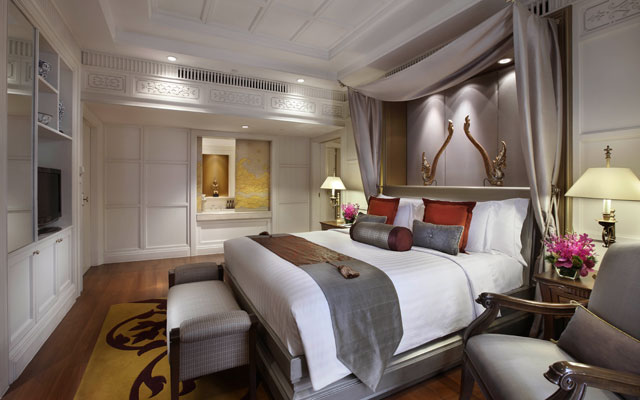
According to Dusit International, the closing date has been postponed to allow the hotel company and its partners more time to add greater value to the new version of the hotel, which will open as part of a 36.7 billion baht (US$1.1 billion) mixed-use project to be built in partnership with Central Pattana.

The iconic hotel has postponed its closure until January 2019

Suphajee Suthumpun, group CEO, Dusit International, said that while the majority of guest feedback on redevelopment was positive, there were also those who wondered how Dusit could “embrace our heritage and continue our legacy in a new building”.

“The answer, of course, lies in taking our time to ensure we get it right,” Suphajee said. “We are exploring many ways to add value to the new hotel and mixed-use project in terms of design and innovation. This includes embracing a green concept,… creating direct links to both the MRT and BTS mass transit rail systems, and alleviating traffic in the area by providing new infrastructure.”

The Motogirl behind an all-female motorbike tour company

0

What started as a tool to pay their way through school has grown into a full-fledged business for a trio of young Cambodian women, who have developed a series of female-led motorbike tours exploring the capital.

When Chea Renou’s father fell sick in 2015, she quit her job at a finance company to help her mother deliver groceries from the family-run market stall. Despite him returning to work after recovering, the 27-year-old knew she needed to find a flexible form of income that could support her studies and enable her to help out at home, if needed.

See Cambodia in a different light while on a tour with MotogirlTour

Said Renou: “My Aunty lives on the border with Thailand and told me about Thai girls on motorbike taxis taking local people around to pay for their school. My cousin is a tour guide and only works when she has tours, so I thought, ‘This sounds interesting’. I can drive a motorbike, I speak English, and I love meeting new people and sharing my culture; why not start motorbike tours?”

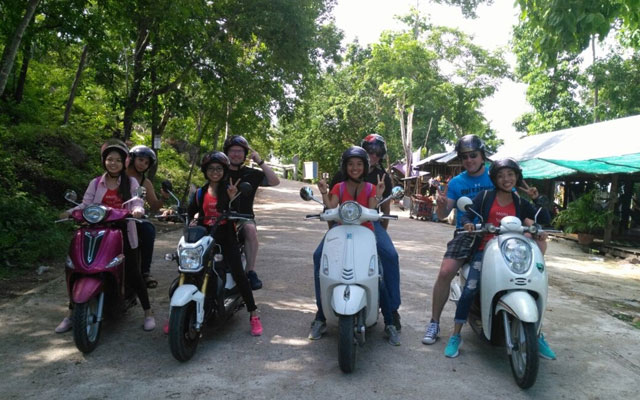
Her brother, who works in IT, created a website and Renou recruited her sister Chea Chanraksmey and cousin Horm Sreynich, both 23, to help launch all-female tour company, MotogirlTour in December 2015.

Tapping into Cambodia’s growing tourism industry while trying to offer more unique experiences to Phnom Penh’s visitors, the girls spent a year researching how to start and run a business, scouring the city for top spots to include in itineraries and, with no marketing budget, devising social media campaigns.

Said Chanraksmey: “The real challenge was finding good places for customers to experience. We want them to really feel what Cambodia is; what we like to eat, what Cambodian people believe. We want people to go away knowing what Cambodia is all about.”

The result is a series of scooter tours that offer guests a glimpse into the capital’s local life, taking in iconic attractions along the way. They include a shopping tour, a countryside jaunt and a night time cruise through the capital. Custom tours can also be created on request.

“Tourism is growing a lot here, so it seemed like a good business to make,” said Sreynich. “When we started, there were no other scooter tours in Phnom Penh so it was one more experience for tourists to do.”

Today, the company boasts six female drivers, including Sreynich, Chanraksmey and Renou, with more available if larger groups book.

“We started off thinking this would be a good way to make some money to pay for our school,” said Chanraksmey. “Now it is a full-time business for us.”

Hoping to build on their success and tap into the predicted 7.5 million annual foreign arrivals by 2020 – latest figures from the Ministry of Tourism show over 3.9 million people visited the country between January and September, an 11.5 percent year-on-year increase – MotogirlTour is planning to expand to Siem Reap and build on their customers, who mainly come from Europe, the US, Australia, Singapore, Malaysia and Hong Kong.

“The best thing is being able to show people our country, meeting so many different people, sharing experiences and creating great memories,” said Renou.

Gems of the Java Sea

0
Seabourn Encore

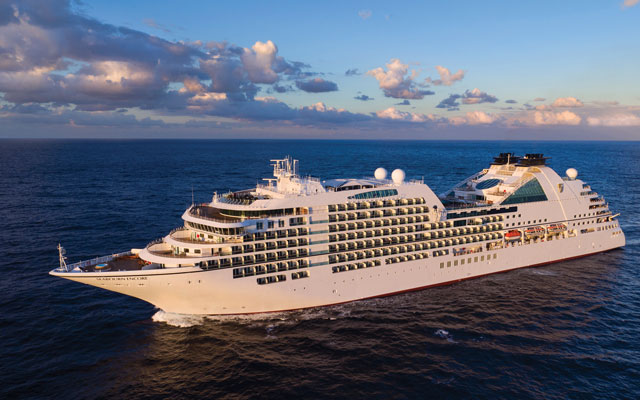
A great value on this sailing, especially for clients who live in Singapore, Indonesia and the rest of the region, is that only a one-way air ticket is needed. Another value is sailing on a new ship, the Seabourn Encore, covering exotic ports-of-call in Indonesia.

The 10-day Gems of the Java Sea starting March 12 starts from Benoa (Denpasar) and the itinerary covers Komodo Island, Celukan Bawang, Probolinggo, Surabaya and Semarang before arriving in Singapore on March 22.

Seabourn Encore

Pricing is also sharp, starting from US$3,499 per person, double occupancy for the 10 days.

This year marks the 30th anniversary of Seabourn and the celebration started on New Year’s Eve across the Seabourn fleet. Additional 30th anniversary-inspired enticements await guests throughout 2018 on their Seabourn cruise, where special touches will be seen in suites and at special events and dinners, promised the luxury line.

For instance, while guests always enjoy a wide variety of complimentary fine wines and spirits onboard, a special 30th Anniversary Wine Package, featuring a selection of top quality wine and champagne, will also be available for purchase during the celebration. Additionally, The Shops will feature a special collection of pearls this spring along with commemorative 30th anniversary merchandise. Guests will even be challenged on their knowledge of Seabourn during onboard trivia matches.

The cruise line will also debut its Seabourn Ovation in spring 2018, bringing its fleet size to five ships.

[Sponsored Post] Tourism Industry Night 2017

0

View more photos from the gallery here.

Agung’s eruption worse than Bali bombing, say hoteliers

0
Impact of Mount Agung's eruption on Bali's tourism segment is being keenly felt

Hoteliers in Bali say the impact of Mount Agung’s eruption is larger than the 2002 Bali bombing, and are crying for more efforts and a bigger promotional budget to recover business losses.

Anak Agung Yuniarta Putra, head of Bali Tourism Office (BTO), said: “When the Bali bombing took place, (Jakarta injected) a budget of 750 billion rupiah (US$56 million today or worth US$81 million in 2002) immediately. But nothing has been offered for Bali’s recovery yet.”

Impact of Mount Agung’s eruption on Bali’s tourism segment is being keenly felt

He stressed the need for the central government to continue promotions overseas to attract international travellers back to the island.

Haryadi Sukamdani, chairman of Indonesia Hotel & Restaurant Association (IHRA), told TTG Asia on the sidelines of the Visit Wonderful Indonesia 2018 launch recently that hotel occupancy post the airport closure was “alarming”.

“The impact is bigger than the Bali bombing. After the bombing, the recovery process could be done right after, while today we still do not know when the eruption is going to end. With travel warnings in place and insurance companies declining protection, it is not easy to convince travellers to come under such circumstances,” he lamented.

While Haryadi declined to mention the current occupancy of IHRA members in Bali, reports reveal that it is between 15 per cent and 25 per cent. This compares with an occupancy of around 80 per cent during the same period last year, according to BTO’s Putra.

In addition, the Indonesia National Air Carriers Association (INACA) was quoted by Kontan.co.id as saying that flights to Bali had declined by 30 per cent as the result of the eruption. INACA’s head of flight affairs, Bayu Sutanto, opined that the trend would continue up to early next year as long as the high alert status of the volcano remains.

Last week, Indonesia’s tourism minister Arief Yahya estimated that there has been a loss of around a million arrivals due to the eruption.

Arief said: “Following the closure of the airport, daily arrivals to Bali was between 3,000 and 9,000 passengers, while average arrivals (on a normal day) is 15,000. This means a loss of around 250 billion rupiah per day.”

The minister has urged for “domestic travellers to spend their holidays in Bali and companies to stage events on the island”.

However, Indonesia’s two major inbound tour operators Panorama Destination and Pacto claimed that the impact on their business was low as the eruption took place during the low season. Although it is now the December holiday season, it is not as big as the June-August peak season.

Marcel Schneider, managing director of Panorama Destination, said: “With the exception of some group cancellations from India, we have had few cancellations. The reason for that might be that the majority of our clients come from European source markets (and this is not the season for Europeans).

“There is never a good moment for this to happen as it will affect the livelihood of lots of people. But in the low season, consequences will hopefully be less severe,” he shared.

Ratty Ning, president director of Pacto, said: “We lost around nine billion rupiah due to the eruption and closure of the airport, (but) that is only about three to four per cent of our total business this year.”

It’s going to be a bumpy ride for Philippines’ Tourism Congress

0
Clemente:

The Tourism Congress of the Philippines (TCP), which was created by law to be a private sector consultative body in partnership with the Department of Tourism (DoT), is in for a major overhaul under its new board led by incoming president Jojo Clemente.

The board, which will be inducted early next year, has sat down to brainstorm and come up with a wishlist of what is required to strengthen TCP, and to ensure it is “in tune with the needs of the private sector, and can fulfil its mandate”, said Clemente who is also president of Rajah Tours.

Clemente: aspires to have a working partnership between TCP and DoT

One of his top priorities is to convince members who have left to return, and persuade those who are not members to join. Currently, membership stands at a dismal 99 members and, as such, has no clout.

Clemente hopes to gain membership that constitutes tourism-related enterprises in the country, in a bid to present a unified voice to the government when it comes to the needs and wants of the private sector. To do so, TCP has scheduled consultations with private sector stakeholders throughout the country.

“What I want is a partnership between the DoT and the private sector. “We look forward to the support of the DoT in partnering with the TCP for its projects in the coming months,” Clemente said.

“As constituted, the TCP relies on the DoT for the funding of its projects, and as such, hopes to come out with programmes that will positively affect stakeholders. We are committed to working with the DoT in achieving the goals of more arrivals and revenues for the country.”

Also on TCP’s list is the need to address the nomination of private sector in government-owned and controlled corporations, which at the moment is still not enough.