Bangkok-headquartered InVision Hospitality will manage the 2.1 trillion Vietnamese dong (US$93.4 million) Scenia Bay complex in Nha Trang, slated to open in 2020.
Covering 7,666m2, the project is set to feature 700 condominium units for sale and over 270 Glow Hotel guestrooms.
Nam Tien Lao Cai’s Cao Thi Thu Hien (left) and InVision Hospitality’s Kevin Beauvais at the signing ceremony
Scenia Bay marks InVision Hospitality’s fifth signing in Vietnam, after Glow Ma Belle Danang (2019), Mai House Saigon (2018), Mai House Hoi An Beach (2020) and Montgomerie Links Hotel & Villas, Danang (2017).
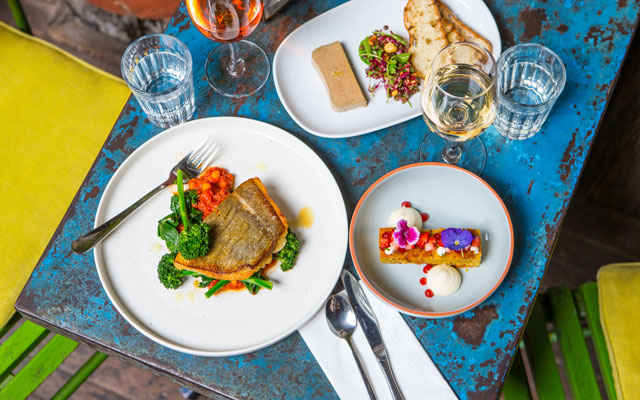
Singaporean travellers tend most to seek local food when overseas, with 79 per cent of respondents indicating that preference, according to a recent Tourism New Zealand and Blackbox Research survey.
As well, more than four in 10 look forward to enjoying the best of a country’s natural scenery and wildlife, and just a quarter (25 per cent) ranked the engagement in local cultural activities as an enjoyable holiday activity.
Food from Olive Café in Wellington during the city’s annual culinary festival, Visa Wellington On A Plate (Credit: Visa Wellington On a Plate; Tourism New Zealand)
Just over three in 10 (34 per cent) chose travelling on a local train as the preferred mode of travel while on holiday overseas, while 23 per cent showed a preference for self-drive holidays.
Given the findings, Tourism New Zealand is highlighting cultural and food experiences available in the destination, including feasting with the Maoris and culinary festivals.
The latest figures released by Stats NZ revealed that the country has seen a total of 57,696 Singaporean travellers this year ending in June, a 7.9 per cent increase on the previous year.
“Singapore is currently our largest market in South-east Asia, and our fourth largest in Asia,” said Tourism New Zealand’s regional manager for South and South East Asia, Steven Dixon.
Andaz Singapore, which is scheduled to open in October, has appointed Chikako Shimizu as its director of operations.
In her new role, Shimizu will oversee the hotel’s daily operations and managing the teams from concierge, front office, F&B, engineering, security and housekeeping.
She was most recently the executive assistant manager, rooms at Grand Hyatt Singapore.
The Japanese national brings with her over 23 years of industry experience, and has held various positions at Hyatt properties across Macau, Australia, Japan, China and Indonesia.
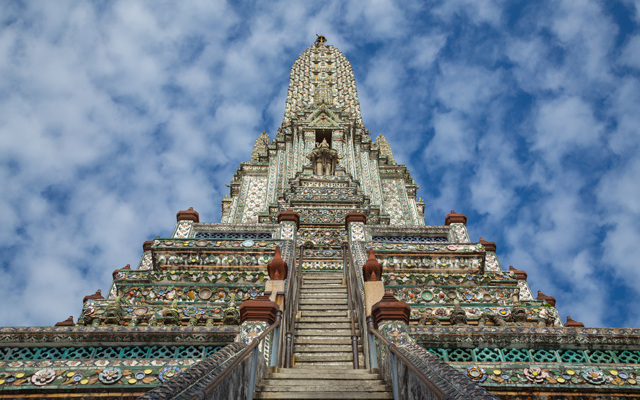
Bangkok’s Temple of Dawn pagoda, also known as Wat Arun, will officially reopen this year-end after a three-year closure for repairs and renovation.
Under direction from Thailand’s Fine Arts Department, Wat Arun started undergoing renovation over three years ago, specifically to secure the base of a 66.8m-high pagoda decorated with seashells and bits of Chinese porcelain, the main feature of the temple.
Renovations to secure the base of the pagoda
Yuthasak Supasorn, governor, Tourism Authority of Thailand, said: “This was the biggest repair and renovation work to take place on the temple in recent memory using the latest restoration technology.”
The completion of renovations will be commemorated in a 10-day long celebration from December 27, 2017 to January 5, 2018. The festivities will include a tribute to King Taksin, who ordered the previously mentioned restoration of the temple during his reign, along with Thai dance performances and an exhibition on the temple’s history.
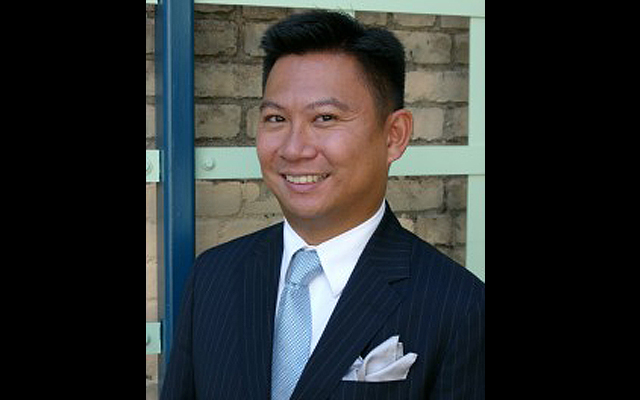
American-born Ong will head up the DMC's new LA office
Vietnam-based Asia DMC will launch a North American sales office in Los Angeles, which will be led by director of sales and marketing Derek Ong in the US.
American-born Ong will head up the DMC’s new LA office
Establishing a US office will allow Asia DMC to connect with North American travel companies and develop an increased presence in the country, in addition to facilitating communication with stateside partners, the company said in a statement.
With over 14 years of experience selling South-east Asia travel, including 3.5 years spent living in Thailand, the American-born Ong will be responsible for introducing Asia DMC’s products and services to his native market.
Jeju Dream Tower integrated resort to be developed by Korea's Lotte Tour and a Chinese developer
The 1,600-room Grand Hyatt Jeju – Hyatt’s sixth property in South Korea and set to be the world’s second largest under the brand – will open within an integrated resort development in South Korea’s Jeju.
Jeju Dream Tower integrated resort to be developed by Korea’s Lotte Tour and a Chinese developer
The Dream Tower Integrated Resort will feature two towers and a retail podium, with Lotte Tour the lead developer along with Greenland Group, one of China’s largest state-run real estate developers.
Grand Hyatt Jeju will feature 11 F&B outlets, approximately 1,200m2 of meeting space, indoor and outdoor pools, a fitness centre, two spas (Western and Korean) with a total of eight treatment rooms, and two kids clubs.
Toronto-based consultancy Bannikin Travel & Tourism has launched a satellite office in Hong Kong to service destinations and tour operators targeting the Asian adventure traveller.
Natasha Martin, managing director of the newly-opened Bannikin Asia, explained: “Asia has been the fastest growing region in the world for international tourist departures for the past 10 years – due mainly to the incredible wave coming out of China.
“As well, adventure and experiential travel is the fastest growing segment of the industry, and that is only getting bigger. We believe, and the numbers confirm, that the more travellers from Asia-Pacific explore the world, the more adventurous they are becoming.”
The Bannikin Asia team will connect clients with experiential outbound Asian travellers through media and travel trade in major Asia-Pacific source markets – including Hong Kong, Singapore, Kuala Lumpur, Taipei – and China’s first-tier cities such as Beijing, Shanghai, Guangzhou and Shenzen.
The Hong Kong office will also provide destinations and tour operators around the world with training to help them become “Asia-Ready”.
For more information about Bannikin Asia, visit www.bannikin.com/you/bannikin-asia
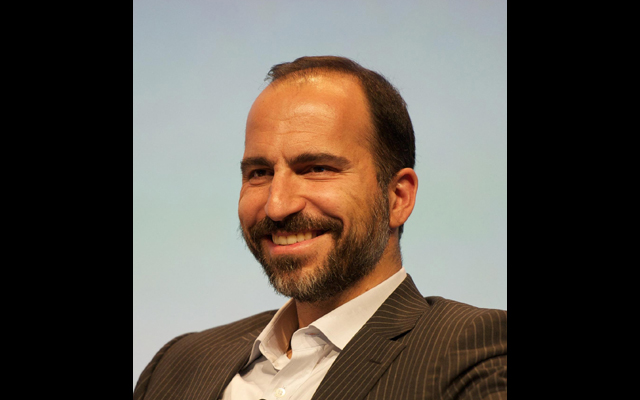
No word on who might be succeeding Khosrowshahi (pictured) at Expedia
Uber’s search for a new chief may finally come to a close with Expedia CEO Dara Khosrowshahi reportedly chosen for the role, although the company has made no official announcement.
The chief executive post at the ride-hailing company was left empty after co-founder Travis Kalanick resigned in June under investor pressure. Other candidates in consideration for the job were Hewlett Packard Enterprise’s Meg Whitman and General Electric’s Jeffrey Immelt, according to CNBC.
No word on who might be succeeding Khosrowshahi (pictured) at Expedia
Kalanick still holds a seat in the board, 10 per cent of stock and 16 per cent of voting rights.
Meanwhile, Khosrowshahi has been at the helm of Expedia since 2005, growing the online travel company’s annual revenue from US$2.1 billion to US$8.7 billion in 2016 through expanding considerably into new geographical markets and verticals, Tech Crunch wrote.
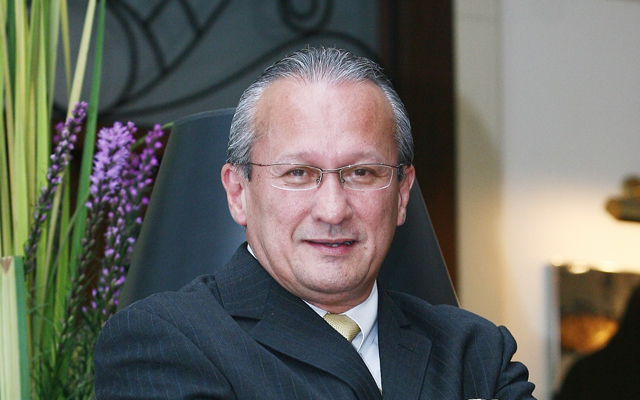
Shaharuddin expects there will initially be some guests who will refuse to pay the tax
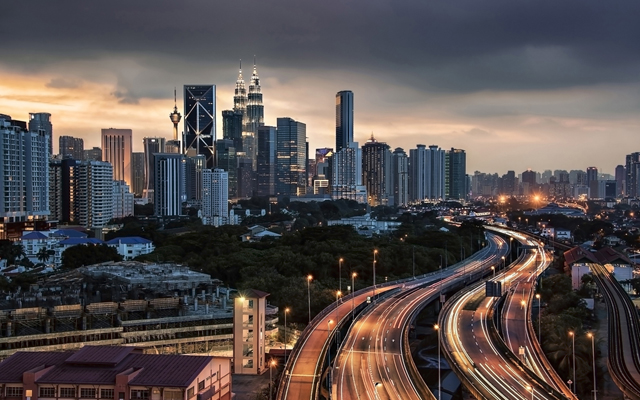
In Malaysia, the unpopular tourism tax will be enforced nationwide on September 1 but grievances continue to pour in from local hoteliers and agents.
Among them, any tourist who checks in early or checks out late at hotels from September 1 will be made to pay a tourism tax of RM10 (US$2.34) for the extension, on top of the RM10 tax per room, per night.
Shaharuddin expects there will initially be some guests who will refuse to pay the tax
“It is unfair but hotels have no choice but to charge because we have no letter in black and white from the government telling the hotels otherwise. If we don’t charge the guest, the hotel will have to pay the tax for the guest,” revealed Shaharuddin Saaid, Malaysian Association of Hotel Owners (MAHO) executive director.
Guests who receive complimentary rooms from hotels will also have to pay the tourism tax.
Other issues brought up at the meeting last week with Royal Malaysian Customs Department, the Ministry of Finance and the Ministry of Tourism and Culture include whether budget accommodation operators with dormitories of four to six beds are going to charge guests.
Shaharuddin challenged: “Do you charge only one person, or every guest in the room? Also with such budget accommodation where the room rates are as low as RM100, the tourism tax of RM10 per room per night is more than the Goods and Services Tax (GST) of six per cent. This is unfair!”
He had also expected a certain amount of confusion in the early days of implementation. He said: “Tourists may argue with hotels and refuse to pay. We will then be made responsible and pay on their behalf. The government had also not given enough time for hotels to upgrade their accounting systems to facilitate the collection of the tourism tax. The GST should not be charged on the tourism tax but if the systems have not been upgraded properly, this may show.”
He opined that the tax will also have an impact on long stay guests such as corporate clients. The association had proposed a cap on the number of days the tax can be applied to, regardless of the number of days the guest is staying.
“We have also stressed to the authorities in our last meeting that starting the tourism tax on September 1 gives unlicensed accommodation operators in the country an unfair advantage as they have not been registered with the Ministry of Tourism and Culture to collect the taxes. There are more than 8,000 of them listed on accommodation portals like Booking.com and Airbnb website.”
Moreover, the exemption for clients of agencies that have signed contracts with overseas partners for the current contracting period until March 31, 2018 will not be implemented without an official letter from the Ministry of Tourism and Culture.
Nanda Kumar, managing director of Hidden Asia Travel & Tours, said the agency still has to pay over RM120,000 in tourism tax to hotels for advance bookings made before the tax was introduced.
Update The Royal Malaysian Customs Department issued a circular on August 29 stating:
– no tourism tax will be levied on early check-in and late check-out so long as no room charges are imposed. However, complimentary stays offered by an operator to a tourist will still be subject to the tax;
– in cases where more than one tourist is staying in the same accommodation at the same time, e.g. dormitory arrangement, and the tourism tax for that accommodation has been paid by any one of the tourists, the other tourists are not liable to pay tourism tax for that accommodation.
As a young hotel management company, ‘less is more’ is a strategy that Bangkok-based Kosmopolitan Hospitality abides by when it comes to cultivating relationships with hotel owners.
Established in 2015 by CEO Glenn de Souza – formerly Best Western International’s head honcho in the region – the firm was selected by Wyndham Hotel Group (WHG) to be its preferred development partner in Asia. The alliance has so far seen the launch of six hotels and 761 rooms under WHG in the region since the deal was inked two years ago.
De Souza: managing ambition of younger owners
“Our company philosophy is to work with less owners than more owners. We want to go for one hotel with one owner, then go to the second, the third and so on,” said de Souza. “Delivery of the bottomline to the owner of the hotel we manage is critical, because the bottomline is where they can generate additional properties for us as well.”
While relationships remain the core to its business, an interesting challenge that has arisen is the increasingly younger profile of hotel owners in South-east Asia.
“Owners are much younger and demanding, averaging around 20 to 35 years old, and they have drastically changed the hotel scene (from) 20, 30 years ago,” said de Souza. “Most of them are using or have inherited the money from their parents, and we have to teach them about the hotel business.”
Managing owners’ ambitions and earning their trust is hence important, he pointed out, especially when some of them are eager to build five-star properties for the prestige factor without fully understanding the requirements and investment needed for high-end hotels.
“Our business is run from the business to economy class – that’s where the success is. F&B business is diminishing and outsourced; rooms is where you make 80 per cent of the profit and three- and four-star segments is where you make the most money,” de Souza explained.
But when it comes to the hotel development, Kosmopolitan Hospitality’s ambitions is anything but small as it targets 50 hotels under WHG’s brands in the next five years. Under construction over the next two years are another 10 WHG hotels spanning 1,960 keys, with six of them in Thailand, three in Myanmar and one in Christchurch.
Ramada is the “easiest sell” among the WHG brands, de Souza told TTG Asia, due to the brand’s good visibility and lower investment costs in the region. While Howard Johnson boasts prominence in North Asia, Kosmopolitan Hospitality is currently in talks with several owners to bring this brand into South-east Asia.
When asked which are the growth spots in the South-east Asia hotel sector, he said: “Thailand is a mature tourism industry but still have growth. Emerging markets like Myanmar and Vietnam, like Halong, Phu Quoc and Hoi An for the latter, are still new to international brands.”
However, the problem of finding “good manpower” remains a perennial challenge across South-east Asia, which is exacerabated with the opening of more hotels in the region, he added.







 “As well, adventure and experiential travel is the fastest growing segment of the industry, and that is only getting bigger. We believe, and the numbers confirm, that the more travellers from Asia-Pacific explore the world, the more adventurous they are becoming.”