
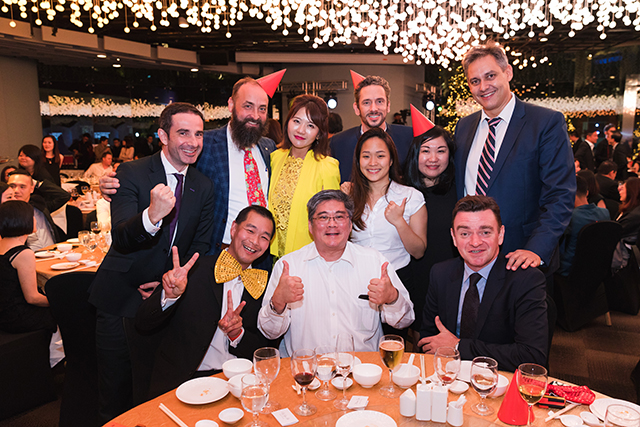
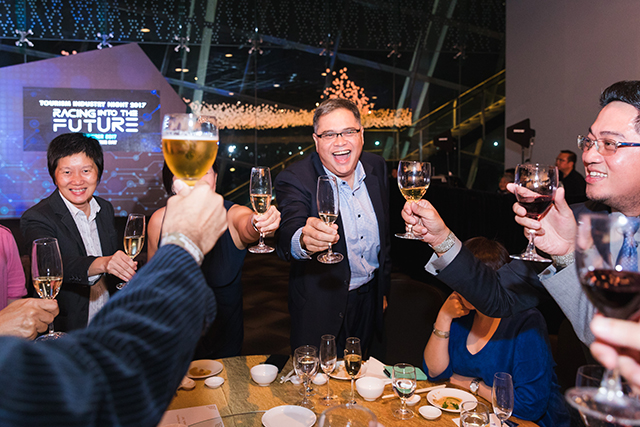
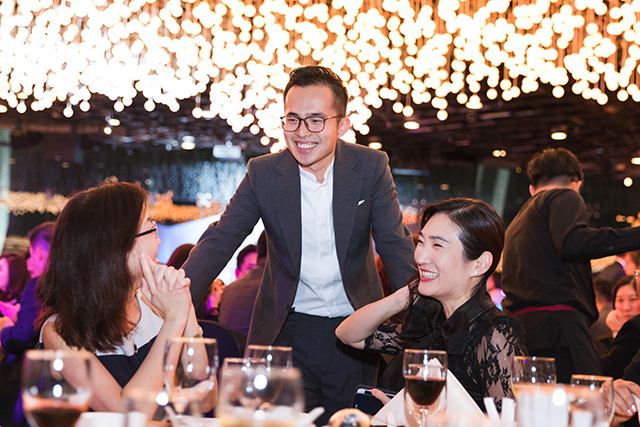
View more photos from the gallery here.
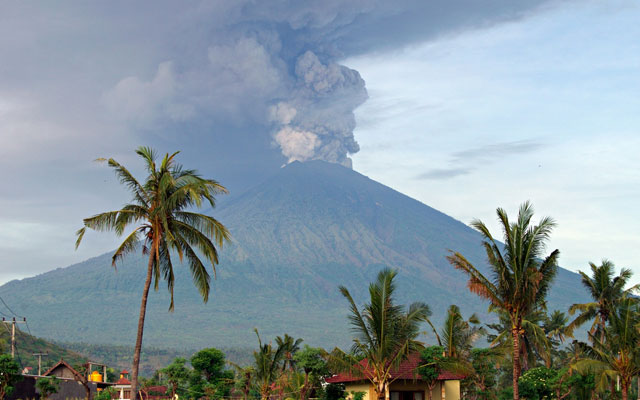
Hoteliers in Bali say the impact of Mount Agung’s eruption is larger than the 2002 Bali bombing, and are crying for more efforts and a bigger promotional budget to recover business losses.
Anak Agung Yuniarta Putra, head of Bali Tourism Office (BTO), said: “When the Bali bombing took place, (Jakarta injected) a budget of 750 billion rupiah (US$56 million today or worth US$81 million in 2002) immediately. But nothing has been offered for Bali’s recovery yet.”
He stressed the need for the central government to continue promotions overseas to attract international travellers back to the island.
Haryadi Sukamdani, chairman of Indonesia Hotel & Restaurant Association (IHRA), told TTG Asia on the sidelines of the Visit Wonderful Indonesia 2018 launch recently that hotel occupancy post the airport closure was “alarming”.
“The impact is bigger than the Bali bombing. After the bombing, the recovery process could be done right after, while today we still do not know when the eruption is going to end. With travel warnings in place and insurance companies declining protection, it is not easy to convince travellers to come under such circumstances,” he lamented.
While Haryadi declined to mention the current occupancy of IHRA members in Bali, reports reveal that it is between 15 per cent and 25 per cent. This compares with an occupancy of around 80 per cent during the same period last year, according to BTO’s Putra.
In addition, the Indonesia National Air Carriers Association (INACA) was quoted by Kontan.co.id as saying that flights to Bali had declined by 30 per cent as the result of the eruption. INACA’s head of flight affairs, Bayu Sutanto, opined that the trend would continue up to early next year as long as the high alert status of the volcano remains.
Last week, Indonesia’s tourism minister Arief Yahya estimated that there has been a loss of around a million arrivals due to the eruption.
Arief said: “Following the closure of the airport, daily arrivals to Bali was between 3,000 and 9,000 passengers, while average arrivals (on a normal day) is 15,000. This means a loss of around 250 billion rupiah per day.”
The minister has urged for “domestic travellers to spend their holidays in Bali and companies to stage events on the island”.
However, Indonesia’s two major inbound tour operators Panorama Destination and Pacto claimed that the impact on their business was low as the eruption took place during the low season. Although it is now the December holiday season, it is not as big as the June-August peak season.
Marcel Schneider, managing director of Panorama Destination, said: “With the exception of some group cancellations from India, we have had few cancellations. The reason for that might be that the majority of our clients come from European source markets (and this is not the season for Europeans).
“There is never a good moment for this to happen as it will affect the livelihood of lots of people. But in the low season, consequences will hopefully be less severe,” he shared.
Ratty Ning, president director of Pacto, said: “We lost around nine billion rupiah due to the eruption and closure of the airport, (but) that is only about three to four per cent of our total business this year.”

The Tourism Congress of the Philippines (TCP), which was created by law to be a private sector consultative body in partnership with the Department of Tourism (DoT), is in for a major overhaul under its new board led by incoming president Jojo Clemente.
The board, which will be inducted early next year, has sat down to brainstorm and come up with a wishlist of what is required to strengthen TCP, and to ensure it is “in tune with the needs of the private sector, and can fulfil its mandate”, said Clemente who is also president of Rajah Tours.
One of his top priorities is to convince members who have left to return, and persuade those who are not members to join. Currently, membership stands at a dismal 99 members and, as such, has no clout.
Clemente hopes to gain membership that constitutes tourism-related enterprises in the country, in a bid to present a unified voice to the government when it comes to the needs and wants of the private sector. To do so, TCP has scheduled consultations with private sector stakeholders throughout the country.
“What I want is a partnership between the DoT and the private sector. “We look forward to the support of the DoT in partnering with the TCP for its projects in the coming months,” Clemente said.
“As constituted, the TCP relies on the DoT for the funding of its projects, and as such, hopes to come out with programmes that will positively affect stakeholders. We are committed to working with the DoT in achieving the goals of more arrivals and revenues for the country.”
Also on TCP’s list is the need to address the nomination of private sector in government-owned and controlled corporations, which at the moment is still not enough.
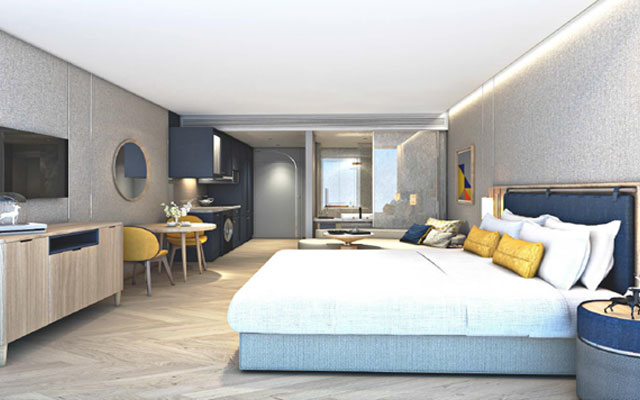
Staybridge Suites, the all-suite hotel brand by InterContinental Hotels Group (IHG) for extended stay guests, will have two outposts rising in Bangkok, Staybridge Suites Bangkok Thonglor and Staybridge Suites Chonburi Sriracha, in 2019 and 2020 respectively.
Rajit Sukumaran, IHG’s chief development officer, Asia Middle East Africa, said Bangkok is ideal as the first location for a Staybridge property in the region.

“As Asia-Pacific’s most popular destination by tourist arrivals, Thailand’s tourism industry continues to grow and demonstrate not only a resilience to adversity, but also a demand for a variety of hotel and accommodation options.
“With Thailand’s tourism industry projected to achieve US$78.25 billion in spend by the end of this year, we are confident in long-term growth and see the market as an ideal place to introduce new regional brands.”
Sukumaran pointed out that Thailand has served IHG well with the regional launches of its other brands such as Holiday Inn Express and Hotel Indigo.
The 303-room Staybridge Suites Bangkok Thonglor is situated along Sukhumvit Soi 55 road, a 10-minute walk from Thonglor BTS station. The 400-room Staybridge Suites Chonburi Siracha is located along the main Sukhumvit Road directly opposite Tukcom Siracha IT Mall, and close to Robinson Department Store and Aeon Siracha Shopping Centre.
Suites in both hotels will feature fully-equipped kitchens, separate working areas, entertainment and free Wi-Fi. In addition, both properties will provide a complimentary hot breakfast daily, and feature facilities such as a business centre, fitness room and pantry. Guests can also socialise with other guests at The Evening Social, an evening reception held weekly, with complimentary refreshments, in every Staybridge Suites hotel.
The two Staybridge Suites in Bangkok will target corporate and middle-class travellers, as these segments are most likely to seek extended stay options, said Sukumaran.
Globally, there are 250 Staybridge Suites in operation, with a further 151 opening in the next three to five years. Sukumaran said IHG is assessing opportunities in other Asia-Pacific markets including Singapore, Japan, Australia, Philippines, and Vietnam.
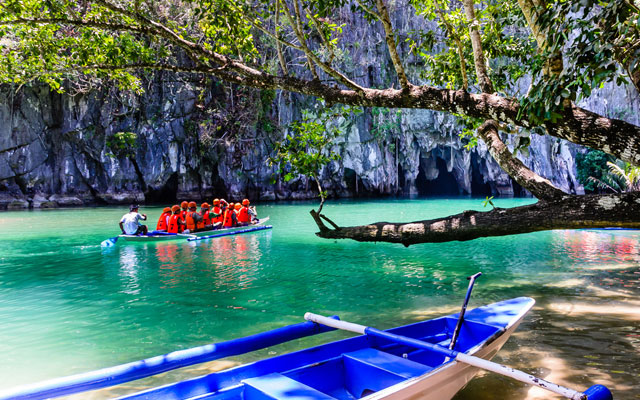
China has overtaken US as second top feeder for the Philippines with 810,807 arrivals, comprising a 14.8 per cent market share.
South Korea remains the country’s top visitor market with 1.3 million arrivals, representing 24.3 per cent of the total arrivals, while the US is in third place with 785,269 (14.3 per cent) arrivals, Japan with 490,857 (nine per cent), and Australia with 206,443 (3.8 per cent).
Data released by the Department of Tourism (DoT) indicate there were a total of 5.5 million international arrivals for from January to October this year, an increase of 11.5 per cent when compared to the same period last year.
Compared to last year’s figures for the same period, Chinese arrivals jumped 39.3 per cent, while India visitors rose 20.3 per cent.
Total international visitor arrivals to the Philippines are on track to reach at least 6.5 million this year, the target set by the National Tourism Development Plan for 2017-2022.
In terms of revenue, visitor receipts recorded a double-digit gain of 36.3 per cent to 243.23 billion pesos (US$4.8 billion) for the period of January to September, a significant rise from the 178 billion pesos for the same period in 2016.
DoT secretary Wanda Corazon Tulfo-Teo said: “The department will continue an aggressive marketing efforts, including through social media. We will promote emerging or developing destinations to entice more visitors from across the globe.”
As well, the DoT has launched the It’s More Fun in the Philippine Farms campaign, and revived the Bring Home A Friend programme as part of its strategy to hit 12 million tourists by 2022.
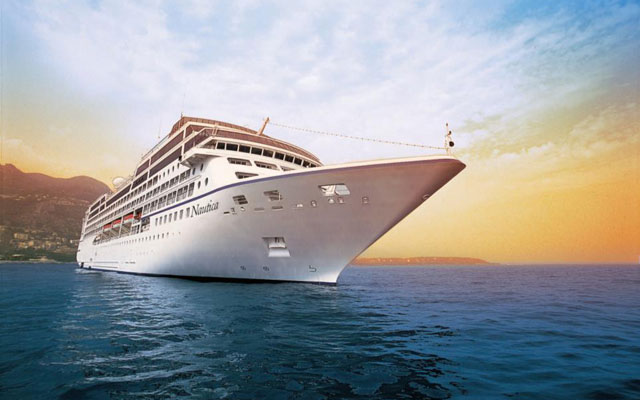
Oceania Cruises, the cruise line dedicated to epicurean enthusiasts, is offering a season of voyages – starting January – dedicated to exploring Asia’s culinary cities.
Oceania Cruises’ ships Nautica and Insignia will be calling on more than 50 ports in the region starting next month.
Itineraries include the 15-day Pagodas and Shrines cruise aboard Nautica from Singapore to Hong Kong. Beginning January 20, destinations along the way include Koh Samui, Bangkok, Sihanoukville, Ho Chi Minh and Hanoi before ending in Hong Kong.
There is also the 15-day Eastern Escapade cruise, beginning February 4, aboard Nautica from Hong Kong to Bangkok. Guests will cruise through Ha Long Bay in Hanoi, before stopping at coastal city Nha Trang and the historic Ho Chi Minh City. Singapore and Koh Samui will be the next ports- of-call before the ship concludes its journey in Bangkok.
Meanwhile, Insignia’s cruises include a 20-day sojourn from Singapore to Beijing beginning March 15, and a 25-day journey from Tokyo to Singapore starting on March 31.
Both Nautica and Insignia field 342 suites and staterooms and are able to carry 684 guests and 400 staff. Facilities onboard include four restaurants, fitness centres, spas, lounges, bars and a casino.
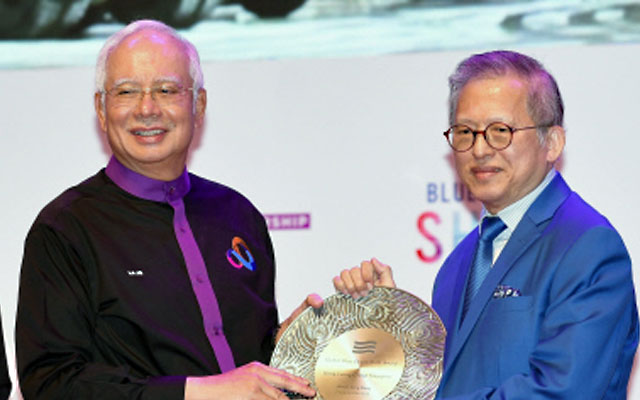
Malaysian prime minister Najib Tun Razak presented Kwek Leng Beng, executive chairman of Hong Leong Group Singapore and chairman of Millennium & Copthorne Hotels, with the Global Blue Ocean Shift Award at the Global Entrepreneurship Community Summit held in Kuala Lumpur held on December 13.
Centred on the philosophy of global bestsellers, Blue Ocean Strategy and Blue Ocean Shift, the award was given to Kwek in recognition of his efforts in opening up new frontiers of opportunity and growth, and creating a new pipeline for economic expansion.
The Blue Ocean Shift ideology focuses on identifying untapped growth opportunities by moving from “red oceans” crowded with competition to “blue oceans” of uncontested market space and explosive growth.
M&C’s hotels have taken steps to implement various activities to support Kwek’s Blue Ocean vision. Activities include a monthly staff recognition programme where the most innovative idea wins S$100 (US$74). M&C’s hotels in Singapore include Grand Copthorne Waterfront, M Hotel, Orchard Hotel, Copthorne King’s and Studio M.

TTG Asia will be taking a break from December 18 after a wonderfully-hectic (read: crazy) year which has given us a bumper crop of highlights to remember, including a revamp of this online channel, two awards from the Media Publishers Association of Singapore and a slew of special projects, especially the special edition commemorating the 50th anniversary of ASEAN.
Do continue to visit our website to read us – keep discovering the new-look TTG Asia Online with many web-only articles.
We look forward to coming back stronger on January 8 and to continue bringing you the most interesting news in the travel trade.
Won’t miss you and we think you shouldn’t miss us too! Take it from us dear readers: Have a break from news, ditch the desktop and mobile, take time to ‘be present’ with family and friends, whether at home or someplace great.
From all of us at TTG Asia Media, happy holidays and here’s to a sane 2018!
Location
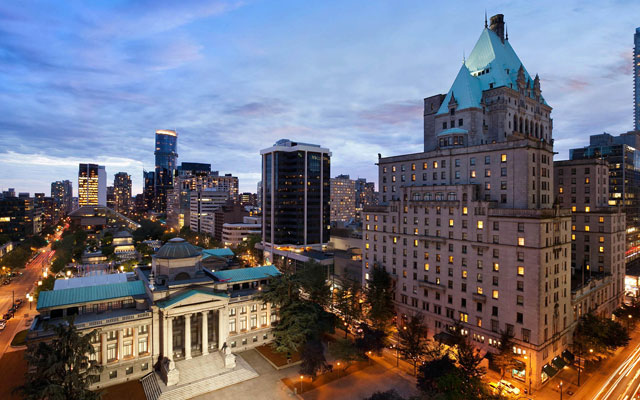
‘Location, location, location‘ is what hotels swear by. In this case, however, Fairmont Hotel Vancouver defines the location, not the other way round. An imposing building with a distinct green copper castle-shape roof, the hotel brings glamour and reverence to the heart of Vancouver’s shopping and entertainment district.
Ambience
The lobby is artistic and stylish, giving a great sense of arrival. There’s a feeling of lightness, spaciousness and joy, the modern design appealing to me more than the classic interiors of grand old dames.
What’s more the renovation of the lobby, which also includes a new restaurant, Notch8, hasn’t robbed the hotel’s history. White walls are adorned with framed architectural drawings of the property, which was originally opened in May 1939 by King George VI and Queen Elizabeth.
Notch8 itself pays homage to the hotel’s role with the Canadian Pacific Rail, its decor reflecting the romance of rail travel, while its name refers to the ultimate running capacity only attained by engineers after years of experience. And that’s how the word ‘top-notch’ is derived. There is so much to learn from this hotel!
I love its idea of having canine ambassadors at the lobby to welcome guests – you should see how our faces ‘pawsitively’ lit up when lovable Ella, a two-year-old Labrador/Golden retriever mix, is around.

Rooms
My room is a Deluxe King Non Smoking room, it too newly-renovated and continues the modern, residential theme, with touches of Victorian elegance. The room is highly comfortable. But the bathroom can hardly fit two people, however I do recognise this is not unusual in old structures.
My partner is a member of Fairmont President’s Club and we arrive at this hotel from a stay at Fairmont Chateau Lake Louise. But the data isn’t captured. There’s no turndown service, a privilege accorded to members, despite my asking for it. There are no bathroom slippers and no drinking water.
Coming from Asia, it’s a bit of a cultural shift: Turndown in luxury hotels is not a privilege, it is a given. It’s also funny there’s a bucket of ice in the room, but no water, let alone champagne.
Facilities
The fitness centre is just great, with technogym machines and kinesis wall. Other facilities include an indoor pool, the Absolute Spa and 5,110m2 of flexible meeting space. And lovers of luxury brands, rejoice – Lobby level boutiques include Canada’s flagship Dior while Hermes is just opposite the hotel.
Service
Friendly.
Verdict
A must-visit when in Vancouver, even if it’s just for a drink or meal – for a dash of style to the trip.
No. of rooms 557
Rates From $299 CAD (US$233)
Contact details
Tel: 1 (604) 684-3131
Email: hvc.concierge@fairmont.com
Website: http://www.fairmont.com/hotel-vancouver/

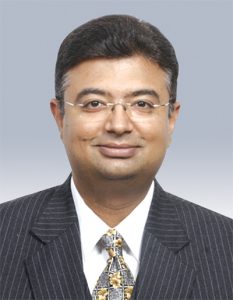 Amit Kalsi, founder & CEO, Experiential Travel Journeys, India
1. Describe 2017 in three words
Unpredictable, adaptive, evolving
2. How does this impact you?
The world has become unpredictable. When I say this I am referring to unexpected natural or man-made incidents, which continued to dominate the travel landscape in 2017 (natural calamities, acts of terror, political tensions, etc). This has led to a growing need of adaptive approach in our handling, planning and forecasting strategies (destinations, trips, experiences) for our discerning clients.
Such incidents are sure deterrents and can have short or longterm affects. We need to work around them or offer alternatives, and bounce back when the situation improves, and this can happen with a continuous source of reliable information on destinations we promote and sell and with help/support of our DMC and hotel partners.
The world of travel is also changing rapidly with new entrants in luxury travel, for which we need to adapt our strategies and offerings: Examples, luxury home stays, luxury villa rentals, Uber and the likes, hotel concierge revamped teams becoming effective DMCs, credit card concierges, rise of travel networks and communities, etc.
3. What’s the most outlandish piece of business you had in 2017?
Discerning clients in India are exploring the world, from established destinations to remote corners. This is very satisfying to me as a travel designer since this authenticates the fact that the Indian outbound market is maturing, tourists are becoming travellers, they are travelling deeper, they are exploring destinations and discovering experiences outside their comfort zones. They are moving away from being typecasts and willing to discover what can be achieved in complete safety, reliability and accessibility.
I have not yet come across a request which cannot be executed, or something which is outlandish enough to be mentioned.
4. What’s the biggest lesson for you about luxury travel in 2017?
The biggest lesson is that luxury travel is always evolving, always redefining itself, never settled or stagnant in its appeal or reach.
With new products, new destinations, news ways of explorations and discoveries, it’s all new every year. I have been selling luxury travel for many years, but with every client, destination, product and experience, I get a new perspective on the market. This excites me to a great extent. Authenticity, uniqueness, time and space, attention to detail, experiences, privacy, flexibility have all become synonyms to luxury travel.
5. Your assessment of business in 2018?
Business will continue to grow. But we need to keep a close watch on global and travel industry developments, and continue to alter/amend our offerings strategically. Discerning luxury clients are more sensitive to destination news and developments, as compared to mass-market package tourists.
Clients will continue to travel, but we need to feed them with inspirations, alternatives and newer experiences. Fortunately as outbound travel designers we can do this, but it’s surely a challenge for inbound operators who face deeper challenges in case their destination gets affected.
I am also very positive due to new investments, new openings in remote locations which were earlier deprived of, to name a few: Bisate Lodge, and One & Only (2018) in Rwanda; Miavana in Madagascar, Jabali Ridge in Ruaha National Park Tanzania; Wild Coast Lodge Yala in Sri Lanka, Gran Hotel Manzana Kempinski La Habana in Cuba, and a long list of new openings listed in 2017 and beyond. Such developments give us growing options to offer inspirations and revive growth to destinations.
6. What are the pros and cons of ILTM having three Asian offshoots, Japan, Asia-Pacific and China?
Moving to Singapore will offer a more Asia-wide perspective among exhibitors and I think a wider Asian buyer database. Singapore as a venue is also more neutral, accessible and have fewer hurdles (cannot survive without VPN override).
ILTM China can focus more on China (worldwide exhibitors seeking best of Chinese luxury travel buyers), since in terms of numbers, China surely surpasses all other markets including India, and hence demands a luxury show of its own.
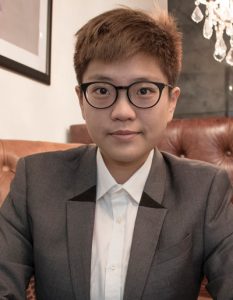 Eldi Lau, head of sales – travel, Quintessentially Travel Group, Hong Kong
1. Describe 2017 in three words
Transformational, celebratory, personal
2. Kindly elaborate why
TTransformational 2016 was the year of experiential travel which saw vacationers looking for ways to tap into native cultures, meaningfully interacting with locals and becoming more than ‘just a tourist’. This year, transformational travel has emerged as a key motivator, building on the idea of experiential travel but with vacationers seeking experiences that are motivated and defined by a shift in perspective, self-reflection and development, as well as a deeper connection with nature and culture.
Celebratory Whether a 60th birthday celebration in Marrakech (complete with exclusive use of Villa Des Orangers, a desert camp dinner, snake charmers and fire eaters), an eight-week trip following the sale of a business, or even reliving a honeymoon 30 years later, more clients are marking special occasions or lifetime milestones by experiencing new or much-loved destinations with family and friends.
Personal Travel has never been more personal; it empowers travellers to achieve what they want during their trip. Discerning travellers are now seeking trips that are tailored to their interests and abilities, and are venturing all over the globe to find them. What might be ordinary for one client, may be extraordinary to another, so by understanding our clients’ likes, dislikes, and how to anticipate their needs allows us to make their journeys special and unique to them.
3. What’s the most outlandish piece of business you had in 2017?
To celebrate a joint 50th birthday, one of our clients wanted to travel the world by the alphabet. Abu Dhabi, Brazil and Chile have been completed so far (at press time), and family and friends will be joining the couple in various destinations over the next 12 months.
4. What’s the biggest lesson for you about luxury travel in 2017?
Luxury is such a broad term, and means different things to different people. But across all its definitions, the moments people treasure tend to be those unexpected personal touches or rare experiences that hold emotional value. Luxury is becoming redefined, with its focus being on the creation of unforgettable memories over just property aesthetics.
5. What is your assessment of business in 2018?
Leisure travel will be motivated more by the need for rest and relaxation, spending time or reconnecting with loved ones, exploring new destinations and seeking authentic experiences.
Business and incentive travel will become more popular than ever, with more companies creating travel experiences to reward staff and loyal customers to increase their return on investment.
Geopolitical issues (threat of terrorism, Brexit, etc) will impact travel decisions.
‘Last-chance tourism’ will rise, due to those destinations that are rapidly changing or even disappearing (Cuba, the Arctic, Lanai, Venice). This sense of urgency may also encourage more conscientious travel, so sustainable tourism and eco-friendly travel choices may become more popular.
Demand for international trips will increase both in popularity and length of travel.
Upscale trips will thrive and sell out earlier than in previous years.
More requests for business and first-class travel, as well as non-stop flights.
6. What are the pros and cons of ILTM having three Asian offshoots, Japan, Asia-Pacific and China?
Pro: ILTM becomes more specific and dedicated as an event, which is great for opening up new business opportunities as more international sellers will want to participate.
Con: Some sellers might only be able to join one event due to a limited budget.
 L.Hammond, independent incentive travel consultant, Singapore
1. Describe 2017 in three words
Connected, redefined, simplified
2. Kindly elaborate why
In this digital age, travel planning and customer interactions need to be available on a mobile basis, anytime, anywhere, as speed of response, immediacy is crucial for staying ahead.
Redefined in terms of what it means today to be luxury by the totality of rich exclusive experiences and how these experiences need to be redefined and personalised. Luxury does not mean one thing to everyone.
Simplified in that luxury travel is going back to the core values of simple luxury living, i.e. eating simple clean, farm-to-table food, nothing overdone. Just good in
its core.
3. What’s the most outlandish piece of business you had in 2017?
Sorry, nothing outlandish…
4. What’s the biggest lesson for you about luxury travel in 2017?
Personalisation
5. What is your assessment of business in 2018?
Pros: More travel opportunities for consumers than ever before; including more creative offers from luxury hotels.
Cons: Diluted definition of luxury, safety of travel in terms of terrorism.
6. What are the pros and cons of ILTM having three Asian offshoots, Japan, Asia-Pacific and China?
Pro: The biggest advantage of the multiple shows is the opportunity to deep dive into the opportunities of that culture, giving focus for planners and suppliers to more effectively explore possibilities for that region.
Con: More time away for travel planners and suppliers.
 Alison Gilmore, director, ILTM Collection, based in London
1. How is the luxury market evolving and what’s the impact on providers?
Since the birth of ILTM 16 years ago, we have seen customers grow more demanding and standards becoming higher and higher. Even outside the luxury sector, consumers are looking for added value in whatever form it takes. Brands are having to evolve, think smarter and anticipate future consumer demand. We live ‘virtual’ lives where we all think our next travel goal is to reach Everest Base Camp or to float in a hot air balloon over the Nullarbor Desert because that is what we have seen in incredible Instagram posts or YouTube videos. Our expectations are high, and not only travel suppliers but travel advisors know that they not only have to meet these expectations but exceed them.
The fact that the industry has anticipated this demand is the reason that luxury travel is continuing to grow and grow – we are groundbreakers, instigators and as long as we continue to raise the travel experience bar higher and higher, our industry will continue to evolve.
2. Will ‘luxury’ travel become more mainstream?
We actually believe the upper end of mainstream will become more luxury.
3. Will there be a lot more luxury travel agencies as a result?
We are now in a world where everyone has the potential to be a luxury travel planner but relationships will still be key.
Trust is still the word we hear most often so, as the world of luxury consumer travel is diversifying, so is the world of luxury travel agencies, inbound and outbound.
4. What is your take on luxury travel in Asia-Pacific for 2018 and beyond?It is clear that travellers from each sub-region and country have their own preferences and unique demands when they travel. This is the thinking behind launching an event targeted at the Chinese HNW traveller (ILTM China, Shanghai (October 31 to November 2, 2018) as well as relocating ILTM Asia to Singapore (May 21-24, 2018, see Gasp!) to widen the reach of this event.
The recent earthquake in Mexico City just a week before ILTM Americas came at a time where it was right to bring the world of travel not only together but to Mexico: the event was defined by a strong feeling that more travel not less is vital to transforming the world we live in.